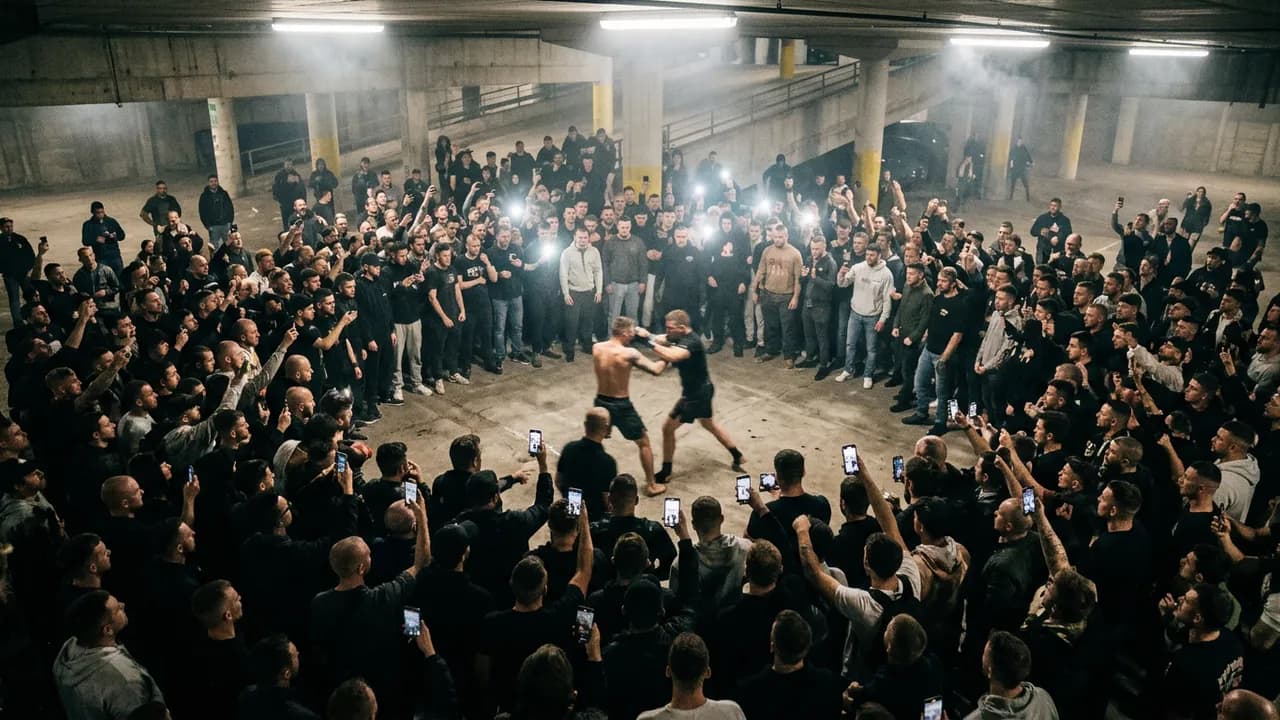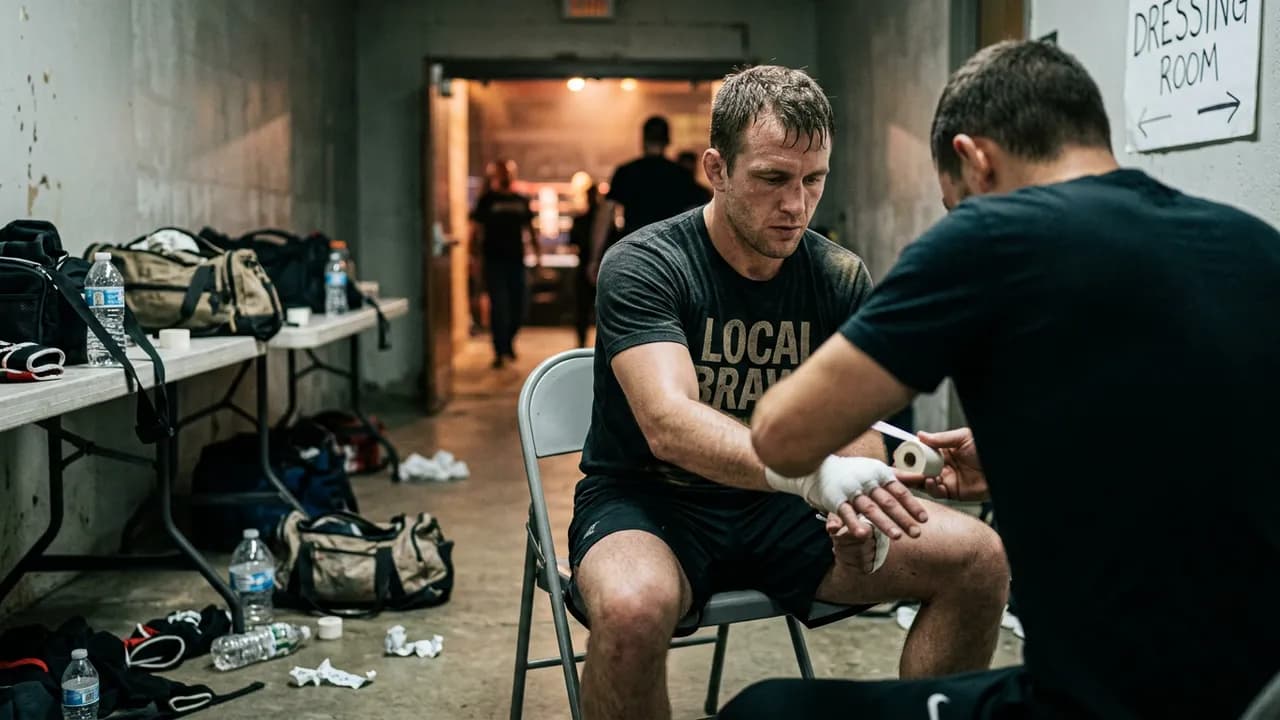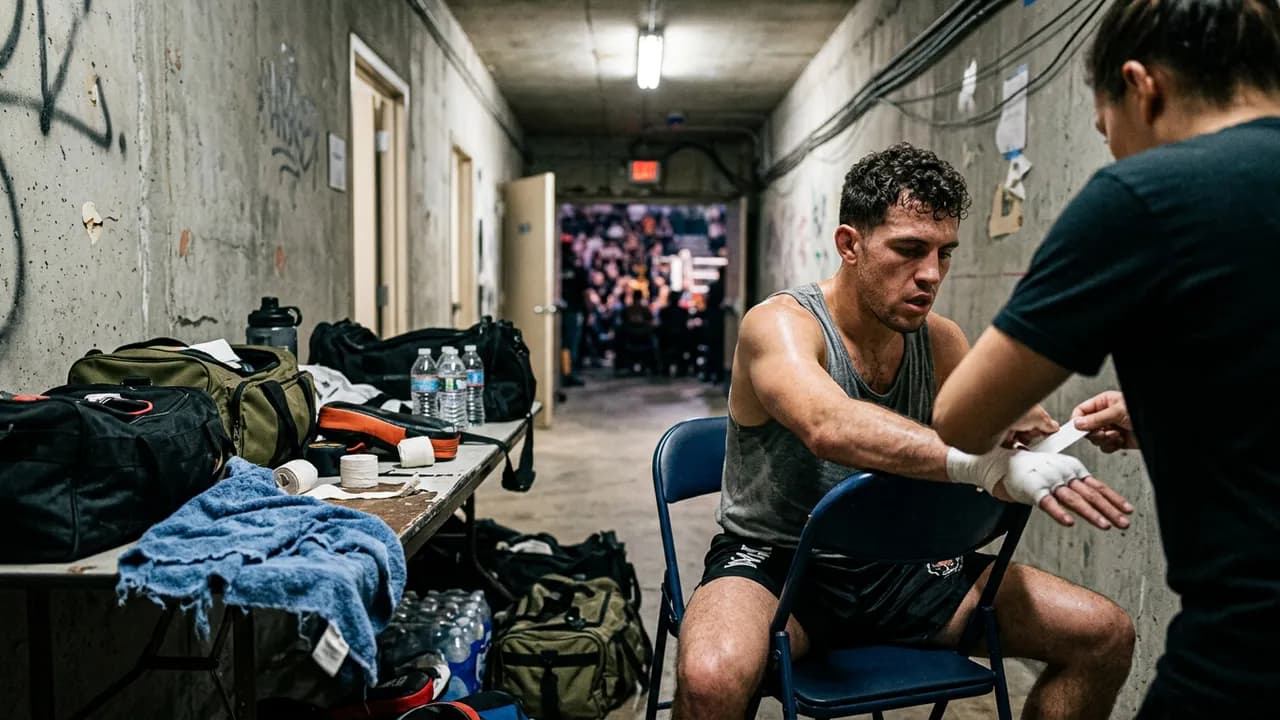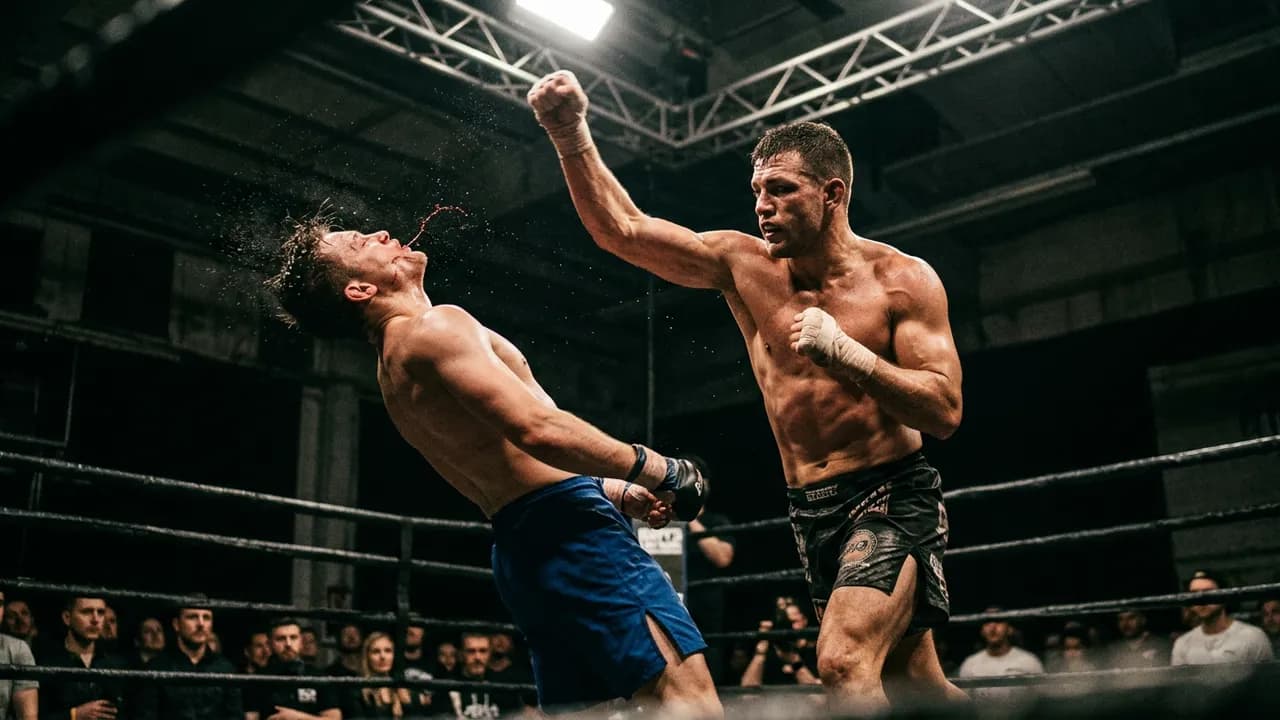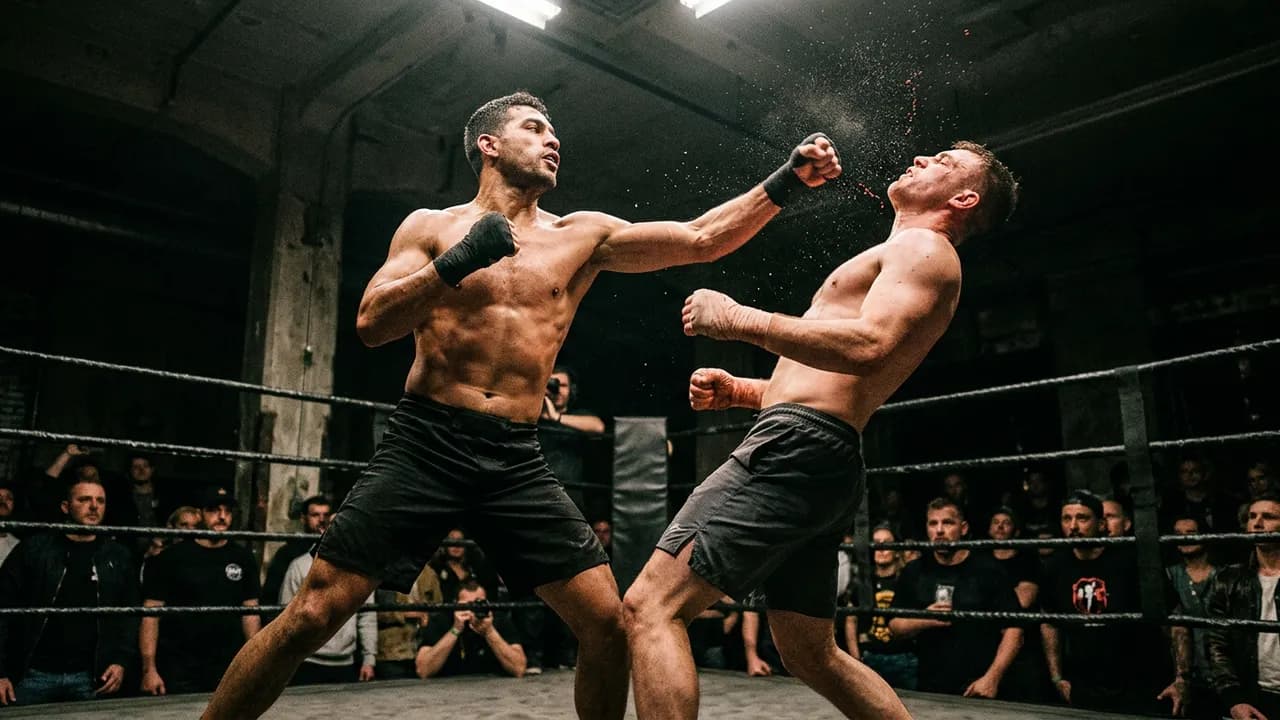
There is a moment in every no-rules fight that separates it from everything else in combat sports. It is not the first punch or the first takedown. It is the sound. The sound of a body hitting concrete. Not the padded thud of a canvas mat, not the muffled crunch of sand or grass, but the flat, unforgiving crack of a human being striking a surface that will not give. That sound is the defining feature of no-rules fighting, and it is the reason this format exists in a category entirely its own -- beyond MMA, beyond bare knuckle boxing, beyond backyard brawls, beyond anything that operates within the boundaries of what civilized society considers acceptable.
No-rules fighting is the most extreme form of organized combat in the modern world. Fighters compete without gloves, without rounds, without time limits, and without the safety infrastructure that every other combat sport takes for granted. Headbutts are legal. Eye gouging is legal. Biting is legal. Ground stomps to a downed opponent's head are legal. And all of this happens on bare concrete -- the surface that transforms every knockdown into a potential life-altering event.
What began as filmed street fights in Gothenburg, Sweden, in 2013 has grown into a continental movement that stretches across Europe, drawing fighters from hooligan firms, martial arts gyms, and working-class neighborhoods from Scandinavia to the French Riviera. This guide covers all of it: the history, the organizations, the rules (or deliberate absence of them), the danger, the culture, and the spreading movement that no government has been able to stop.
What No-Rules Fighting Actually Means
The term "no rules" is both a literal description and a philosophical statement. In practice, no-rules fighting means organized combat with virtually no restrictions on technique, no protective equipment, and no concessions to fighter safety beyond the presence of a referee who can stop a fight when a competitor is clearly unable to continue.
Here is what is typically permitted in a no-rules fight:
- Headbutts -- Full-force headbutts to the face and body
- Eye gouging -- Permitted in most organizations, though KOTS has disincentivized it since December 2022 by stripping prize money from fighters who win exclusively by gouging
- Biting -- Legal in most no-rules formats
- Ground stomps -- Stomping on a downed opponent's head, body, or limbs
- Strikes to the spine and back of the head -- Banned in every sanctioned combat sport, permitted here
- All forms of striking -- Punches, kicks, knees, elbows, with no restrictions on target areas
- All forms of grappling -- Takedowns, chokeholds, joint locks, and submissions
- Hair pulling, fish-hooking, and throat strikes -- Techniques universally banned in professional fighting
Here is what defines the format beyond technique:
- No gloves -- Fighters compete bare-knuckle. Some may wrap their hands with cloth or tape for wrist support, but knuckles are exposed
- No rounds -- Each fight is a single, continuous bout with no rest periods
- No time limit -- The fight continues until one fighter is knocked out, submits, is unable to continue, or the referee intervenes
- Concrete surface -- The fighting area is bare concrete, whether it is a warehouse floor, a parking structure, or the ground level of an abandoned building
- No medical personnel -- No ringside physicians, no ambulances on standby, and no pre-fight medical screening of any kind that is publicly reported
- No drug testing -- No testing protocols exist
The philosophical dimension is equally important. No-rules fighting is a deliberate rejection of the sanitization and commercialization of combat sports. Where boxing and MMA have evolved toward greater safety -- padded gloves, weight classes, timed rounds, medical oversight, drug testing -- no-rules fighting strips all of that away. The premise is that the truest test of a fighter is one where nothing is prohibited and no safety net exists. KOTS has stated that "authentic No Rules fights have to be fought on concrete only," making the surface not an incidental detail but a core element of the ideology.
Whether this philosophy produces a purer form of fighting or simply a more dangerous one is the central debate surrounding the movement.
History: From Pankration to Parking Structures
No-rules fighting did not appear out of nowhere. It is the latest expression of a human impulse that stretches back thousands of years -- the desire to test combat ability under conditions as close to real as possible, with as few artificial constraints as the era will tolerate.
Pankration: The Original No-Rules Combat (648 BC)
The earliest organized no-rules fighting was Greek pankration, introduced at the 33rd Olympiad in 648 BC. The name translates to "all powers," and the format lived up to it. Punches, kicks, joint locks, chokes, throws, and groin strikes were all permitted. Only eye gouging and biting were formally prohibited, and enforcement of even those rules was inconsistent. Pankration produced legends like Dioxippus of Athens, who defeated an armed Macedonian soldier bare-handed, and Arrichion of Phigalia, who won an Olympic title while dying from a chokehold. The sport thrived for over a thousand years and was, in every meaningful sense, the first mixed martial art. For the full ancient history, see our Complete Timeline of Underground Fighting.
Viking Holmgang (800 - 1014 AD)
The Norse holmgang was a legally sanctioned duel fought on a small demarcated area -- often a cloak or hide spread on the ground, roughly three meters square. Each combatant was typically allowed three shields and fought with axes or swords under surprisingly specific rules. The challenged party struck first. Stepping outside the boundary meant forfeiture. Early holmgangs were fought to the death, though the system later permitted fights to first blood. The practice was eventually outlawed in Iceland in 1006 and Norway in 1014 after professional duelists exploited the system as a form of legalized robbery.
02 / Up next / Vale Tudo: Brazil's Anything-Goes Tradition (1920s - 1990s)
The holmgang name has resurfaced in the modern era. A German-based underground organization called Holmgang has adopted the name for a format where participants fight with medieval weapons and minimal protective gear -- one of the most dangerous fighting operations in contemporary Europe.
Vale Tudo: Brazil's Anything-Goes Tradition (1920s - 1990s)
Brazil developed its own no-rules tradition through Vale Tudo, Portuguese for "anything goes." Originating in the 1920s as challenge matches between practitioners of different martial arts -- most notably involving the Gracie family and their Brazilian Jiu-Jitsu -- Vale Tudo escalated over decades into televised events with minimal rules. The International Vale Tudo Championship, launched in 1997, embraced headbutts and groin strikes as part of the format. Vale Tudo was the direct ancestor of modern MMA and the UFC, though those successors added extensive rules that their predecessor deliberately lacked.
The Birth of Modern No-Rules Fighting: KOTS (2013)
The modern no-rules fighting movement has a specific point of origin: Gothenburg, Sweden, 2013. Members of what would become known as the Hype Crew began organizing and filming street fights on the concrete streets and parking structures of Sweden's second-largest city. The footage was uploaded to YouTube under the banner of King of the Streets.
The early videos were raw and unproduced -- two fighters, a circle of spectators, and concrete underfoot. No walk-out music, no ring announcements, no graphics packages. But the content hit a nerve. It offered something that no sanctioned combat sport could: the feeling of watching a real fight on a real surface with real consequences.
By 2018, KOTS had evolved from a local curiosity into a continental operation, drawing fighters from across Europe and crossing one million YouTube subscribers within roughly six years. More importantly, KOTS had birthed a movement. Independent no-rules fight clubs began appearing across Europe, adopting the same format without any affiliation to the Swedish originators. The no-rules era had begun.
The Organizations
The no-rules fighting landscape is populated by a handful of established organizations and a growing number of independent fight clubs. Here is a breakdown of the most significant operations.
King of the Streets (KOTS) -- Sweden
| Detail | Info |
|---|---|
| Founded | 2013 |
| Base | Gothenburg, Sweden; events across Europe |
| Founder | Hype Crew (anonymous collective) |
| Format | No rules / K.O. Only, concrete surface |
| YouTube | 1,000,000+ (peak); 500,000+ (current) |
| Website | kingofthestreets.com |
King of the Streets is the organization that started it all and remains the most prominent no-rules fighting brand in the world. Founded by an anonymous collective called Hype Crew in Gothenburg, KOTS operates two primary formats: No Rules (everything permitted, win by knockout or submission) and K.O. Only (everything permitted except submissions, win by knockout or referee stoppage only). Both formats take place on bare concrete with no gloves, no rounds, and no time limits.
KOTS events are held in secret locations -- abandoned warehouses, industrial buildings, infrastructure tunnels, underground parking structures -- across Europe. Locations are disclosed to participants and pay-per-view buyers at the last possible moment, typically 24 hours before the event goes live. Fighters can wear masks and balaclavas to protect their identities. Only the winner receives prize money.
The organization's YouTube channel peaked above one million subscribers but has been subject to repeated takedowns due to YouTube's violence policies. KOTS has responded by diversifying across platforms including BitChute, Telegram, Instagram, and its own pay-per-view website.
The most successful fighter in KOTS history is Simon "The Savage" Henriksen, a Danish Muay Thai fighter who compiled an undefeated 5-0 record in the organization's no-rules format.
For a full organizational profile, see our KOTS Complete Guide.
FPVS (F.P.V.S Social Fight Club) -- France
| Detail | Info |
|---|---|
| Founded | ~2023 |
| Base | French Riviera (Cannes / Alpes-Maritimes) |
| Founders | Leon and Victor |
| Format | No rules, concrete surface, bare knuckle |
| Recruitment | Telegram |
| Social Media | Instagram: @fpvs.fr |
FPVS is the most prominent no-rules organization to emerge from France. Founded by two young men from the French Riviera -- Leon and Victor, both approximately twenty years old at the time -- FPVS stages fights in abandoned buildings along the Cote d'Azur. The organization is entirely unaffiliated with KOTS but follows the same format: bare knuckle, no rules, concrete surface, no rounds, no time limits.
What makes FPVS distinctive is the contrast it embodies. The French Riviera is synonymous with wealth and glamour. FPVS fighters are the young working-class men who serve that wealth -- waiters, construction laborers, retail workers. The fight club gives them something the service economy does not: agency, respect, and the primal satisfaction of proving themselves under pressure.
FPVS gained international attention through journalist Jake Hanrahan's "Away Days" documentary series and subsequent coverage in L'Equipe and on France 3 television.
FPVS has developed rituals that set it apart. Before fighting begins, the entire group sings "La Marseillaise," the French national anthem, with hands over their hearts. After each fight, regardless of outcome, combatants embrace. The violence is savage, but the code of respect is genuine.
FPVS gained international attention through journalist Jake Hanrahan's "Away Days" documentary series and subsequent coverage in L'Equipe and on France 3 television.
UUF (Ultimate Underground Fights) -- Denmark
| Detail | Info |
|---|---|
| Founded | Unknown (active by 2022) |
| Base | Denmark (nationwide) |
| Format | No gloves, no weapons, basic protection (shoes, mouthguards) |
| Communication | Encrypted messaging |
| Social Media | TikTok: @uufights, Instagram: @uufights2022 |
| Affiliation | Listed on KOTS website |
UUF operates across Denmark, staging events in abandoned warehouses, industrial halls, and vacant lots. The organization uses makeshift cages and draws up to 100 spectators per event, with international fighters flown in for major cards. UUF was exposed to a wider Danish audience through the podcast "Undergrunden: Den danske fightclub." Unlike FPVS, which is entirely independent, UUF is listed on the KOTS website, suggesting at least a loose affiliation with the broader KOTS umbrella.
The fighter demographics are striking in their ordinariness. Participants include mechanics, office workers, and fathers -- regular people drawn to the format for reasons that range from competitive drive to personal challenge to the sheer adrenaline of fighting under extreme conditions.
Holmgang -- Germany
| Detail | Info |
|---|---|
| Founded | Unknown |
| Base | Germany, spread across Europe |
| Format | Medieval weapons (swords, etc.) with minimal protective gear |
| Status | Illegal, extremely dangerous |
The modern Holmgang is arguably the most dangerous fighting operation in existence. Named after the Viking dueling tradition, the German-based organization features combatants fighting with medieval weapons -- swords, axes, and other bladed implements -- while wearing only T-shirts and minimal safety equipment. Full-power strikes are permitted. The risk of deep lacerations, serious injury, and death is not theoretical but inherent in every encounter.
Holmgang represents the absolute extreme of the no-rules spectrum, going beyond even fist-based fighting into armed combat. Detailed information about the organization is scarce, which is consistent with the operational security practiced by illegal European fight clubs.
Unaffiliated Clubs Across Europe
Beyond the named organizations, dozens of independent, unaffiliated no-rules fight clubs have emerged across Europe. These operations have appeared in:
- Germany -- Multiple organizations drawing from the country's extensive hooligan subculture
- England -- UK-based no-rules clubs operating alongside more structured organizations like King of the Ring
- Ireland -- No-rules fighting finding a natural home in a culture with deep bare-knuckle traditions
- Poland -- The country's large and active hooligan scene proving fertile ground for the format
- Other nations -- Scattered reports of no-rules events in Belgium, the Netherlands, and across Eastern Europe
These clubs share the format that KOTS popularized -- concrete surface, bare knuckles, no rounds, no restrictions -- but operate entirely on their own terms. The movement has no central authority, no governing body, and no coordination between organizations. It is a decentralized phenomenon, spread through social media and hooligan networks rather than through any formal organizational structure.
The Rules Breakdown: What Is Actually Allowed
The phrase "no rules" is both accurate and slightly misleading. While the format permits techniques that every other combat sport prohibits, even the most extreme organizations maintain certain baseline interventions. Understanding what is and is not permitted provides essential context.
What Is Allowed
| Technique | Status in No-Rules Fighting | Status in MMA | Status in Boxing |
|---|---|---|---|
| Punches to the head | Allowed | Allowed | Allowed |
| Kicks to the head | Allowed | Allowed | Prohibited |
| Knees and elbows | Allowed (unrestricted) | Allowed (with restrictions) | Prohibited |
| Headbutts | Allowed | Prohibited | Prohibited |
| Eye gouging | Allowed (disincentivized at KOTS) | Prohibited | Prohibited |
| Biting | Allowed | Prohibited | Prohibited |
| Strikes to the spine | Allowed | Prohibited | Prohibited |
| Strikes to the back of the head | Allowed | Prohibited | Prohibited |
| Ground stomps to the head | Allowed | Prohibited | Prohibited |
| Hair pulling | Allowed | Prohibited | Prohibited |
| Fish-hooking | Allowed | Prohibited | Prohibited |
| Throat strikes | Allowed | Prohibited | Prohibited |
| Groin strikes | Varies by organization | Prohibited | Prohibited |
| Submissions and chokes | Allowed (except in K.O. Only format) | Allowed | Prohibited |
What Is Restricted
Even within the no-rules format, certain practical limits exist:
- Referee intervention: All major no-rules organizations employ a referee or designated observer who can stop a fight when a competitor is clearly unable to defend themselves. This is not formalized the way it is in sanctioned combat sports, but it provides a minimal layer of protection
- Eye gouging disincentive at KOTS: Since December 2022, KOTS fighters who win exclusively by eye gouging are ineligible for prize money. Eye gouging itself remains technically permitted, but the financial disincentive discourages it as a primary strategy
- Weapons: Bare-handed fighting is the standard across all no-rules organizations (with the exception of Holmgang's medieval weapons format). Bringing external weapons to a fight is not permitted
The Two KOTS Formats
KOTS offers two distinct formats within its no-rules framework:
No Rules: Everything is permitted. Fighters can win by knockout, submission, verbal surrender, or referee stoppage. This is the purest expression of the format.
04 / Up next / The Concrete Surface: Why It Changes Everything
K.O. Only: Everything is permitted except submissions. The only path to victory is by knockout or referee stoppage. This format eliminates the possibility of a ground-based submission finish, forcing fighters to pursue a stoppage through strikes.
The Concrete Surface: Why It Changes Everything
The concrete surface is the single most important element of no-rules fighting, and it is the feature that most clearly separates the format from every other form of combat sports.
The Physics of Concrete
When a fighter is knocked down, tripped, or taken down in professional MMA, they land on a canvas-covered mat with padding underneath. In boxing, they land on a canvas floor with similar padding. In Strelka, they land on sand. In Streetbeefs, they land on grass or dirt.
In no-rules fighting, they land on concrete.
Concrete does not compress. It does not absorb impact energy. When a human skull strikes a concrete surface, the full force of the impact is transmitted directly into the bone. The deceleration is nearly instantaneous, meaning the brain experiences maximum force as it impacts the inside of the skull. In medical terms, this is the mechanism that produces the most severe traumatic brain injuries -- not the gradual, cumulative damage of repeated concussions, but the catastrophic, single-impact injury that can cause skull fractures, subdural hematomas, and death.
Every knockdown on concrete is a potential emergency. Every takedown is a potential catastrophe. Every trip, slip, and stumble carries consequences that simply do not exist on any other fighting surface. This is not an incidental feature of no-rules fighting. The organizations that promote this format have explicitly stated that the concrete surface is what makes a fight "real." It is a conscious philosophical choice, and it is the primary reason no-rules fighting occupies a risk category that no other form of organized combat approaches.
Tactical Implications
The concrete surface fundamentally alters fight strategy:
- Takedown defense becomes critical: In MMA, being taken down is a tactical disadvantage. In no-rules fighting on concrete, being taken down can be fight-ending. Fighters with strong wrestling or judo backgrounds can weaponize the surface itself, using slams and throws as fight-finishing techniques
- Ground fighting changes: In MMA, fighters willingly go to the ground to work submissions. On concrete, extended ground work is punishing to both fighters. The surface grinds skin, bruises bones, and makes every position change uncomfortable
- Standing fighters have a massive advantage: The risk asymmetry between standing and being on the ground is amplified enormously by the concrete surface. A standing fighter over a downed opponent can deliver soccer kicks and stomps with the concrete serving as a second striking surface beneath the downed fighter's head
- Caution increases: Despite the "anything goes" reputation, many no-rules fighters are actually more cautious than their MMA counterparts, precisely because the consequences of a mistake are so much more severe
The Hype Crew and the European Hooligan Connection
Understanding no-rules fighting requires understanding the subculture that created it. The movement did not emerge from combat sports gyms or martial arts traditions. It emerged from European football hooliganism.
What Is Hype Crew?
Hype Crew is the anonymous collective that founded and operates KOTS. Made up of hooligans, organized criminals, and seasoned street fighters rooted in Gothenburg's football hooligan subculture, Hype Crew functions as KOTS's organizers, matchmakers, referees, and production team. Members do not reveal their real identities publicly. The collective maintains strict operational security -- no public-facing leaders, no corporate registration, no official spokespeople.
Hype Crew has also developed KOTS into a merchandise brand, selling bandanas, T-shirts, and other apparel through the official website, along with individual fight streams available for purchase.
The Hooligan Infrastructure
Swedish football hooliganism has a long history, particularly in Gothenburg and Stockholm. The firms attached to major clubs -- IFK Gothenburg, AIK Stockholm, Djurgarden, Hammarby, Malmo FF -- developed along lines familiar to anyone who has studied the English or Russian hooligan scenes: organized groups of young men, often from working-class backgrounds, who bonded over loyalty to a football club and expressed that loyalty through physical confrontation with rival firms.
By the 2010s, Swedish hooligan culture had evolved beyond the terraces. Firms were training together, sparring at gyms, and staging arranged fights in forests, industrial areas, and parking structures. These encounters were governed by informal codes: no weapons, agreed-upon numbers, and a mutual understanding that the fight was the point. KOTS grew directly out of this ecosystem.
The Continental Network
The hooligan connection gave no-rules fighting a built-in recruitment pipeline and distribution network across Europe. By 2018, prominent hooligans from Denmark, Germany, Poland, England, Ireland, and France were traveling to compete in KOTS events. Fighters often represent their firms or supporter groups, adding a layer of tribal identity to an already intense competitive environment.
His opponent at KOTS 74, Ronin030, represented the Hertha Berlin hooligan contingent from Germany.
Simon "The Savage" Henriksen, the most successful KOTS fighter in history, fights under the banner of New Gen Brondby -- an affiliation tied to the supporter culture of Brondby IF, one of Denmark's most prominent football clubs. His opponent at KOTS 74, Ronin030, represented the Hertha Berlin hooligan contingent from Germany. These are not random matchups. They carry the weight of inter-city, inter-nation rivalries that extend far beyond the fighting surface.
The Controversy
The hooligan connection brings controversy. Media reports have documented overlap between the hooligan subculture that feeds KOTS and far-right extremist groups active in Scandinavia and beyond. KOTS itself does not publicly espouse a political ideology, but the organization's roots in European hooligan culture -- which has well-documented links to far-right movements in multiple countries -- means that the connection is a persistent subject of criticism. The 2021 Netflix Swedish film "The Cage" drew inspiration from the real-world phenomenon of underground fight clubs in Sweden, exploring the intersection of fighting, extremism, and criminal enterprise.
How No-Rules Fighting Differs from Everything Else
No-rules fighting occupies a unique position in the combat sports landscape. Understanding exactly where it sits relative to other formats clarifies what makes the movement distinctive.
No-Rules vs. MMA
| Aspect | No-Rules Fighting | Professional MMA (UFC, etc.) |
|---|---|---|
| Surface | Bare concrete | Padded canvas mat |
| Gloves | None | 4oz MMA gloves |
| Rounds | None | 3 or 5 rounds, 5 minutes each |
| Time limit | None | 15 or 25 minutes total |
| Headbutts | Legal | Prohibited |
| Eye gouging | Legal | Prohibited |
| Strikes to back of head | Legal | Prohibited |
| Ground stomps | Legal | Prohibited |
| Medical screening | None | Pre-fight physicals, blood work, MRI |
| Referee authority | Minimal | Full authority with commission backing |
| Drug testing | None | USADA or equivalent |
| Weight classes | None | Strictly enforced |
| Regulation | None | Full athletic commission oversight |
MMA evolved from no-rules formats -- the early UFC events in the 1990s were essentially Vale Tudo. But over three decades, MMA has layered on an extensive safety infrastructure. No-rules fighting is a return to the pre-regulation era, a deliberate rewinding of the clock to a time before commissions, weight classes, and banned techniques. For a deeper comparison of underground fighting and professional MMA, see our full comparison.
No-Rules vs. Backyard Fighting
Backyard fighting and no-rules fighting are both forms of underground combat, but they are fundamentally different in philosophy and danger level.
| Aspect | No-Rules Fighting | Backyard Fighting (Streetbeefs, etc.) |
|---|---|---|
| Gloves | None | Boxing or MMA gloves |
| Rules | Virtually none | Modified boxing, kickboxing, or MMA rules |
| Surface | Concrete | Grass, dirt, outdoor terrain |
| Rounds | None | Typically 3 rounds |
| Eye gouging / biting | Legal | Prohibited |
| Headbutts | Legal | Prohibited |
| Referee role | Minimal intervention | Active refereeing with authority to stop |
| Medical staff | None reported | Registered nurse (at Streetbeefs) |
| Mission | Test of ultimate toughness | Conflict resolution, community building |
The contrast is stark. Streetbeefs was founded to prevent violence -- its motto is "Fists up, guns down." No-rules fighting embraces violence as its defining product. For a detailed head-to-head comparison, see our KOTS vs. Streetbeefs breakdown.
No-Rules vs. Bare Knuckle Boxing
Bare knuckle boxing shares the absence of gloves with no-rules fighting, but the similarities end there. Bare knuckle boxing as practiced by BKFC and BKB follows boxing rules (punches only), uses timed rounds, employs licensed referees and ringside physicians, and operates under athletic commission sanctioning. Bare knuckle boxing is a regulated sport. No-rules fighting is not.
Even Top Dog FC, which operates in a regulatory gray area in Russia, uses a hay-bale ring, defined rounds, weight classes, and a significantly more structured format than any no-rules organization.
Danger and Injury Analysis
No-rules fighting is the most dangerous form of organized combat available today. This is not a subjective assessment but a function of the combined risk factors present in every bout.
The Risk Stack
No single element of no-rules fighting makes it uniquely dangerous. It is the combination that creates a risk profile unlike anything else in combat sports:
- Bare knuckle striking -- Exposed knuckles cause more facial lacerations and direct bone-on-bone trauma than gloved strikes
- No banned techniques -- Headbutts, stomps, strikes to the spine and back of the head are all strikes that carry elevated risk of catastrophic injury
- Concrete surface -- Transforms every knockdown into a potential skull fracture or brain bleed
- No rounds or time limits -- Fighters cannot recover between rest periods. Exhaustion compounds injury risk
- No medical screening -- Fighters with undiagnosed conditions (heart problems, brain abnormalities, blood disorders) compete without the basic health checks required by every athletic commission
- No medical personnel -- When serious injuries occur, there is no ringside physician to provide immediate care and no ambulance on standby for transport
- No drug testing -- Fighters may compete under the influence of performance-enhancing drugs or recreational substances, both of which can mask pain and impair judgment
Injury Categories
The specific injuries most associated with no-rules fighting include:
- Traumatic brain injury (TBI): The most severe risk. Heads striking concrete on knockdowns or receiving soccer kicks and stomps while grounded carry the highest TBI potential in any combat format
- Skull fractures: The concrete surface eliminates the impact-absorbing buffer that padded surfaces provide
- Facial lacerations: Bare knuckle strikes produce significantly more facial cuts than gloved strikes. Research on bare knuckle boxing shows 34.8% of combatants sustaining lacerations
- Eye injuries: The legality of eye gouging creates risks of corneal abrasion, orbital fracture, and permanent vision damage
- Cervical spine injuries: Strikes to the back of the head and slams onto concrete create elevated risk of neck and spinal cord damage
- Broken hands: Without glove protection, hand fractures from striking the skull are common, though research suggests bare knuckle fighters naturally moderate their head-targeting to compensate
Fatality Risk
There are no publicly confirmed fatalities at KOTS, FPVS, or other named no-rules organizations. However, the organizations' secretive nature means that comprehensive safety and incident records are not publicly available. The combination of risk factors present in no-rules fighting -- particularly the concrete surface and the absence of medical personnel -- creates conditions where a fatality is not a question of "if" but "when" from a statistical risk perspective. Medical professionals and combat sports regulators who have commented on no-rules fighting have uniformly described the format as carrying a meaningful risk of death.
Legal Status Across Jurisdictions
No-rules fighting is illegal virtually everywhere it takes place. The format's combination of extreme violence, absence of regulation, and lack of safety infrastructure places it firmly outside the law in every European jurisdiction.
Sweden
KOTS operates illegally in its home country. Swedish law does not have a specific statute criminalizing underground fight clubs, but organizers and participants face liability under general criminal provisions relating to assault, battery, and causing bodily harm. Consent to serious bodily harm is not recognized as a complete defense under Swedish law. KOTS navigates this through operational security: anonymous leadership, no corporate registration, secret locations, and last-minute event announcements.
France
FPVS events are unsanctioned and illegal under French law. Organized fighting without sanctioning from an athletic commission or government body is prohibited. FPVS operates clandestinely, using encrypted Telegram channels and abandoned buildings along the French Riviera. Growing media attention from outlets like L'Equipe and France 3 has raised the organization's profile, which inevitably increases law enforcement scrutiny.
Denmark
UUF operates illegally in Denmark. The organization uses encrypted messaging to communicate event details and stages fights in abandoned warehouses and industrial spaces. Danish authorities have not publicly reported major enforcement actions, though the podcast "Undergrunden: Den danske fightclub" brought the phenomenon to wider public attention.
Germany
German no-rules fight clubs, including the modern Holmgang operation, function outside the law. Germany's criminal code provisions on assault and bodily harm apply to organized fighting, and consent does not negate criminal liability for serious injury.
United Kingdom, Ireland, Poland, and Beyond
No-rules fighting is illegal across every jurisdiction where it has appeared in Europe. The consistent pattern is one of clandestine operation: encrypted communications, secret locations, anonymous organizers, and a deliberate effort to stay below law enforcement radar.
The Enforcement Gap
Despite the clear illegality, no-rules fighting organizations have largely continued to operate without major legal consequences. The reasons are practical:
- Anonymous organizers are difficult to identify and prosecute
- Secret locations disclosed at the last minute reduce the window for police intervention
- Cross-border operations create jurisdictional complications
- Willing participants mean there is often no victim complaint to initiate investigation
- Limited law enforcement resources are typically directed at higher-priority threats
The result is a de facto tolerance -- not because authorities approve, but because the operational model is designed to be difficult to disrupt.
The No-Rules Movement Spreading Across Europe
Perhaps the most significant development in no-rules fighting is not any single organization but the movement itself. What KOTS started in Gothenburg in 2013 has become a decentralized, continent-wide phenomenon.
The Proliferation Pattern
The spread of no-rules fighting across Europe follows a consistent pattern:
- Exposure: Young men in hooligan or streetfighting subcultures discover KOTS content on YouTube, Telegram, or social media
- Replication: Local groups organize their own no-rules events, adopting the format -- concrete surface, bare knuckles, no rounds, no restrictions -- without any formal connection to KOTS
- Distribution: Fights are filmed and uploaded to social media platforms, generating local followings and attracting new participants
- Growth: Successful events attract more fighters, larger crowds, and wider online audiences, which in turn inspire further replication in other cities and countries
This is a grassroots movement, not a franchise. There is no central authority coordinating the spread. Each new organization arises independently, connected to the others only by a shared format and the online content that inspired it.
KOTS's Role
KOTS has attempted to formalize some of these connections. The organization has branded affiliations through its "Euro Connection" series, and UUF (Denmark) is listed on the KOTS website, suggesting an umbrella relationship. But the vast majority of European no-rules fight clubs are entirely independent. They have simply adopted the format that KOTS popularized and made it their own.
What Is Driving the Movement?
Several factors explain why no-rules fighting has spread so effectively:
- Hooligan infrastructure: Europe's extensive network of football hooligan firms provides a ready-made recruitment pipeline. The firms already train together, value physical confrontation, and operate outside mainstream society
- Working-class alienation: No-rules fighting disproportionately attracts young men from working-class backgrounds who feel disconnected from mainstream institutions. The fight club provides community, identity, and a form of agency that their economic circumstances do not
- Social media amplification: Viral fight clips on TikTok, Instagram, and YouTube expose the format to audiences far beyond hooligan networks, creating demand for local events
- The authenticity appeal: For a segment of combat sports fans, no-rules fighting represents a rejection of the corporate, sanitized product that MMA and boxing have become. The rawness is the selling point
- Low barrier to entry: Starting a no-rules fight club requires no equipment, no licensing, no venue rental, and no organizational infrastructure. A concrete surface, a few willing fighters, and a phone camera are sufficient
How to Watch No-Rules Fighting
No-rules fighting content is distributed across multiple platforms, reflecting both the organizations' desire for audience and their need to navigate content policies and legal exposure.
YouTube
YouTube remains the primary discovery platform for no-rules fighting, though content is subject to frequent takedowns and demonetization:
- KOTS -- KING OF THE STREETS. The channel has experienced multiple reinventions due to policy violations, with subscriber counts fluctuating
- Strelka -- Tron MMA. While Strelka operates with more structure than pure no-rules organizations, its mass brawl format and street fighting ethos make it essential viewing for no-rules fans
- FPVS -- Clips appear on YouTube, though the organization distributes primarily through social media
- Various independent channels -- Smaller no-rules organizations and repost accounts maintain YouTube presences
Must-Watch No-Rules Fight Videos
These videos capture the essence of no-rules fighting and are essential viewing for understanding the movement:
-
KOTS: Simon "The Savage" vs Ronin -- The greatest fighter in KOTS history, Danish Muay Thai specialist Simon Henriksen, in one of the most anticipated no-rules matchups ever. Elite striking on concrete.
-
Strelka -- Petrantsov Dominance -- One of Strelka's most technically gifted fighters dismantling opponents in the Russian street fighting format. Shows that skill translates even in the most chaotic environments.
-
Top Dog FC Best Knockouts -- While Top Dog operates with more structure than KOTS, its bare knuckle format and knockout-heavy fights appeal to the same audience. Devastating power on full display.
Pay-Per-View
- KOTS offers live event pay-per-view through its website at kingofthestreets.com. Buyers are notified 24 hours before an event. Individual fight streams are available for approximately $14 each
Social Media
- Instagram -- KOTS (@king.of.the.streets), FPVS (@fpvs.fr), UUF (@uufights2022) all maintain active presences
- TikTok -- UUF (@uufights), FPVS (@fpvs.frrr), and numerous independent accounts share no-rules fight clips
- X (Twitter) -- KOTS posts updates at @KOTSFightClub
Telegram
Telegram is a critical platform for no-rules fighting, serving as both a content distribution channel and a communication tool for organizing events. KOTS, FPVS, and other organizations maintain active Telegram channels where event announcements, fight footage, and community discussion take place. For organizations operating illegally, Telegram's encryption provides security that mainstream platforms cannot.
Alternative Platforms
- BitChute -- KOTS maintains an archive of older fights on BitChute, where content moderation is less restrictive than YouTube
For a comprehensive viewing guide across all underground fighting organizations, see our How to Watch Underground Fights hub.
Cultural Significance and Controversy
No-rules fighting is more than a combat format. It is a cultural phenomenon that touches on questions of masculinity, class, identity, and the role of violence in modern society.
The Appeal
The people who participate in and watch no-rules fighting are not, by and large, sociopaths seeking gratuitous violence. The appeal is more nuanced:
- Authenticity: No-rules fighting offers something that the increasingly corporate world of mainstream combat sports cannot -- the feeling of witnessing something real, unscripted, and genuinely dangerous. There are no multi-million-dollar contracts, no marketing campaigns, no carefully managed images. The fighting is the product, stripped of everything extraneous
- Community and belonging: For working-class young men across Europe, no-rules fight clubs provide the same thing that football firms, motorcycle clubs, and military units have always provided -- a tribe, a shared purpose, and a sense of mattering
- Test of self: The desire to know how you perform under extreme pressure is a fundamental human impulse. No-rules fighting is the most extreme test available. Fighters are not only testing their skills but testing their courage, their will, and their capacity to function when everything is at stake
- Rejection of the mainstream: No-rules fighting is an act of defiance against the sanitization of modern life. It says: not everything can be regulated, insured, and made safe. Some things remain raw
FPVS's pre-fight ritual of singing "La Marseillaise" captures this dynamic perfectly. These young French men are not simply fighting. They are performing an act of collective identity in a society that, in their view, offers them little recognition otherwise.
The Criticism
The criticism of no-rules fighting is equally substantial and well-grounded:
- Medical professionals uniformly condemn the format. The combination of bare-knuckle strikes, banned-everywhere-else techniques, and a concrete fighting surface creates conditions that carry a meaningful probability of permanent injury or death
- Combat sports regulators view the no-rules movement as a regression that undermines decades of safety progress in boxing and MMA
- Far-right connections complicate the cultural picture. The documented overlap between hooligan subculture, far-right extremism, and no-rules fighting organizations raises legitimate concerns about the ideology embedded in the movement
- Exploitation concerns arise from the fact that participants are overwhelmingly young, working-class men with limited economic options. Critics argue that no-rules promoters profit from the willingness of vulnerable people to risk catastrophic injury for modest payouts
- The normalization argument suggests that the spread of no-rules fighting desensitizes audiences to extreme violence and may inspire imitation by individuals without even the minimal structure of an organized event
The Documentary Lens
The growing body of documentary work on no-rules fighting reflects its cultural significance. The KOTS documentary, directed by Victor Palm with two years of embedded access, aims to provide a nuanced perspective on the organization. Jake Hanrahan's "Away Days" episode on FPVS documents the humanity behind the violence. The Danish podcast "Undergrunden" exposed UUF to a mainstream audience. These works treat no-rules fighting as a social phenomenon worthy of examination rather than simple condemnation, which has further fueled public interest and debate.
Frequently Asked Questions
What is no-rules fighting?
No-rules fighting is the most extreme form of organized combat, featuring bare-knuckle fights on concrete surfaces with virtually no restrictions on technique. Headbutts, eye gouging, biting, ground stomps, and strikes to the spine are all permitted. Fights have no rounds and no time limits, continuing until knockout, submission, or referee intervention. King of the Streets (KOTS) is the most prominent no-rules organization.
Is no-rules fighting legal?
No. No-rules fighting is illegal in virtually every jurisdiction where it takes place. Organizations operate clandestinely, using anonymous organizers, encrypted communications, and secret locations to avoid law enforcement. The legality issues stem from the absence of athletic commission sanctioning, the lack of medical safety infrastructure, and the extreme nature of the permitted techniques.
Has anyone died in a no-rules fight?
There are no publicly confirmed fatalities at named no-rules organizations such as KOTS, FPVS, or UUF. However, the secretive nature of these organizations means comprehensive safety records are not publicly available. Medical professionals have consistently stated that the combination of risk factors in no-rules fighting -- concrete surfaces, bare-knuckle strikes, no banned techniques, no medical personnel -- creates conditions where fatal outcomes are a realistic possibility.
What is the difference between no-rules fighting and MMA?
MMA is a sanctioned, regulated sport with extensive safety infrastructure: padded surfaces, gloves, timed rounds, weight classes, medical screening, drug testing, licensed referees, and dozens of banned techniques. No-rules fighting has none of these protections. Techniques that are illegal in MMA -- headbutts, eye gouging, strikes to the spine, ground stomps -- are legal in no-rules fighting. For a detailed comparison, see our Underground Fighting vs. Professional MMA breakdown.
What is KOTS?
King of the Streets (KOTS) is the most prominent no-rules fighting organization in the world. Founded in 2013 in Gothenburg, Sweden, by an anonymous collective called Hype Crew, KOTS stages bare-knuckle fights on concrete with no gloves, no rounds, no time limits, and virtually no restrictions on technique. The organization has inspired a wave of independent no-rules fight clubs across Europe.
What is the Hype Crew?
Hype Crew is the anonymous collective that founded and operates KOTS. Rooted in Gothenburg's football hooligan subculture, the group functions as KOTS's organizers, matchmakers, referees, and production team. Members do not reveal their real identities, and the organization maintains strict operational security.
Who is the best no-rules fighter?
Simon "The Savage" Henriksen is widely regarded as the greatest no-rules fighter. The Danish Muay Thai practitioner holds an undefeated 5-0 record in KOTS, built on relentless forward pressure, an iron chin, and elite cardio. He has also competed in GROMDA, the Polish bare knuckle organization, demonstrating his ability to perform across multiple formats.
How do I watch no-rules fights?
No-rules fighting content is available through multiple channels. KOTS distributes through YouTube, its own pay-per-view website (kingofthestreets.com), Telegram, and BitChute. FPVS distributes through Instagram, TikTok, and Telegram. UUF maintains presences on TikTok and Instagram. For a complete viewing guide, see our How to Watch Underground Fights hub.
Can anyone join a no-rules fight club?
In theory, yes. KOTS accepts fight applications through its website and Telegram. FPVS recruits through Telegram. However, acceptance is not guaranteed, and organizations draw primarily from European hooligan networks and the broader underground fighting community. The reality of competing on concrete with no safety measures means that participation carries extreme physical risk that prospective fighters must weigh seriously.
Is no-rules fighting spreading?
Yes. What started as a single Swedish organization in 2013 has grown into a continent-wide movement with named organizations in Sweden, France, Denmark, and Germany, plus independent fight clubs in England, Ireland, Poland, and beyond. The spread is driven by social media, hooligan networks, and the format's low barrier to replication.
What is the connection between no-rules fighting and football hooliganism?
Deep and direct. KOTS was founded by hooligans from the Gothenburg football scene. Fighters frequently represent their hooligan firms at events. The values of hooligan culture -- loyalty, physicality, defiance of authority, willingness to fight -- map directly onto the no-rules format. The hooligan networks that exist across European football provide the recruitment, communication, and organizational infrastructure that the movement depends on.
This guide is updated regularly as the no-rules fighting landscape evolves. Last updated: March 2026.
For more on related topics, explore our companion guides: