Underground fighting is not a modern invention. Long before cameras, commissions, and pay-per-view, human beings settled disputes, tested their courage, and entertained crowds through organized combat outside the bounds of law and polite society. The thread connecting a Greek pankratiast choking an opponent unconscious in 648 BC to a Streetbeefs bout on a Virginia lawn in 2024 is unbroken -- it is the same primal impulse, shaped by different centuries.
This is the complete timeline. Every era, every turning point, every organization that matters.
The Ancient World: Combat Before Rules (3000 BC - 393 AD)
Sumerian and Egyptian Origins (3000 - 700 BC)
The earliest evidence of organized fighting dates to Sumerian relief carvings from roughly 3000 BC depicting wrestlers in competitive bouts. Egyptian tomb paintings from 2000 BC show fighters using techniques recognizable to any modern grappler -- hip throws, holds, and takedowns performed before spectators. These were not street brawls. They were organized, witnessed, and celebrated.
But the ancient world's most significant contribution to fighting history came from Greece.
Greek Pankration (648 BC)
In 648 BC, pankration was introduced at the 33rd Olympiad, and the sport immediately became the most popular event in the ancient Games. The name translates literally to "all powers" or "all force," and the rules reflected that philosophy. Almost everything was permitted: punches, kicks, joint locks, chokes, throws, and strikes to the groin. Only eye gouging and biting were forbidden -- and even those prohibitions were loosely enforced.
Pankration was not a sideshow. It was the premier combat event of the ancient world, producing legendary fighters like Dioxippus of Athens, who defeated an armed Macedonian soldier using only his bare hands, and Arrichion of Phigalia, who famously won the Olympic pankration title while dying from a chokehold -- his opponent tapped from a broken ankle just as Arrichion drew his last breath.
The sport thrived for over a thousand years. It was, in every meaningful sense, the first mixed martial art.
Roman Gladiatorial Combat (264 BC - 393 AD)
Rome absorbed Greek fighting traditions and amplified them with characteristic brutality. Gladiatorial combat began in 264 BC as funeral rites and evolved into the defining spectacle of the Roman Empire. By the Imperial period, Romans had adopted pankration (spelled pancratium in Latin) into their arena games, with fighters equipped with the caestus -- leather hand wraps loaded with iron plates, blades, or spikes.
The gladiatorial games operated on a scale that dwarfs any modern fighting organization. The Colosseum held 50,000 spectators. Fighters were slaves, prisoners of war, or volunteers drawn by the promise of wealth and fame. The death rate was high but not universal -- trained gladiators were expensive investments, and many fought dozens of bouts.
In 393 AD, the Christian Emperor Theodosius I abolished gladiatorial combat, pankration, and all pagan festivals. Organized fighting went underground for centuries.
Viking Holmgang (800 - 1014 AD)
While southern Europe suppressed public combat, the Norse developed their own formalized fighting tradition. The holmgang -- literally "going to the island" -- was a legally recognized duel used to settle disputes over property, honor, and accusations of cowardice.
Holmgang operated under surprisingly detailed rules. The challenger recited the terms before combat began. Fighters were typically confined to a cloak or hide spread on the ground, roughly three meters square. Each combatant was allowed three shields, since blows with axes or swords would destroy them. Stepping outside the boundary meant forfeiture. The challenged party struck first.
Early holmgangs were fought to the death, but over time the rules evolved to permit fights to first blood. The system was eventually corrupted by professional duelists -- often berserkers -- who used holmgang as legalized robbery, challenging landowners and claiming their property through superior fighting skill.
Iceland outlawed holmgang in 1006 after a particularly controversial duel. Norway followed in 1014. Formalized European combat would not resurface in organized form for seven hundred years.
The Bare-Knuckle Era: The Birth of Modern Fighting (1681 - 1889)
The First Prizefights (1681 - 1719)
The modern history of underground fighting begins in England. The first documented bare-knuckle fight was recorded in the London Protestant Mercury on January 6, 1681, when Christopher Monck, the 2nd Duke of Albemarle, organized a bout between his butler and his butcher. The butcher won.
02 / Up next / Broughton's Rules and the First Regulations (1743)
Prizefighting quickly took root in London, with regular bouts held at the Royal Theatre. These were illegal events with set purses and heavy side betting -- the original underground fighting circuit.
In 1719, James Figg established himself as England's first recognized bare-knuckle champion, opening a fighting academy in London and claiming the title through an astonishing career of nearly 300 fights without a loss. Figg's era was a free-for-all: contests included not just fistfighting but also fencing and cudgeling, with minimal rules governing any of it. He held the championship until his retirement in 1730.
For a deep dive into this era, see our full history of bare knuckle boxing.
Broughton's Rules and the First Regulations (1743)
Jack Broughton, the "Father of Boxing," transformed the sport after one of his opponents died from fight injuries. On August 16, 1743, Broughton drafted the first standardized rules for prize fighting: a round continued until a fighter went down, followed by a 30-second rest period, after which the downed man had to "come to scratch" -- stand within a yard of his opponent -- or be declared beaten. Hitting a downed opponent was forbidden.
Broughton also introduced "mufflers," padded hand coverings that were the ancestors of modern boxing gloves, though they were used only for sparring, never in actual prize bouts.
London Prize Ring Rules (1838) and the Golden Age
The sport continued to evolve. In 1838, the British Pugilists' Protective Association formalized the London Prize Ring Rules, creating a comprehensive framework that addressed the chaos and inconsistency of earlier codes. The rules mandated a 24-foot square ring enclosed by ropes, banned butting, gouging, scratching, kicking, biting, hitting a man while down, and using resin or hard objects in the hands.
This was the golden age of bare-knuckle boxing. Champions like Tom Cribb, who held the title from 1809 to 1822, became national heroes. In 1860, the first international championship bout took place when English champion Tom Sayers faced American John C. Heenan in a secret field near Farnborough. The fight lasted 42 rounds over two hours and twenty-seven minutes before spectators invaded the ring and police shut it down. Both men were awarded championship belts.
The Last Championship and the End of an Era (1889)
The bare-knuckle era ended on July 8, 1889, when John L. Sullivan defeated Jake Kilrain in 75 rounds at Richburg, Mississippi, in the last heavyweight championship fought under London Prize Ring Rules. The fight lasted two hours and sixteen minutes in brutal summer heat. Sullivan, battered by the experience, insisted his next defense be fought under the Marquess of Queensberry Rules with gloves. He lost to James J. Corbett in 1892, and bare-knuckle championship fighting vanished from the mainstream for 129 years.
The Underground Years: Fighting Goes Dark (1889 - 1993)
The Prohibition Era and Underground Pits (1890s - 1960s)
With bare-knuckle fighting criminalized throughout the English-speaking world following the landmark 1882 English court ruling R v. Coney -- which declared that a bare-knuckle fight constituted assault causing bodily harm regardless of consent -- prizefighting went fully underground. Throughout the late 19th and early 20th centuries, illegal bouts continued in back rooms, gambling dens, and waterfront dives on both sides of the Atlantic.
These fights left few records by design. Participants, organizers, and spectators all faced prosecution. What we know comes from scattered newspaper reports, court records, and memoirs. The fighting never stopped. It just disappeared from public view.
Vale Tudo in Brazil (1920s - 1990s)
While bare-knuckle boxing hid in Anglo-American shadows, Brazil developed its own tradition of no-rules fighting. Vale Tudo -- Portuguese for "anything goes" -- emerged in the 1920s through challenge matches between practitioners of different martial arts, most famously involving the Gracie family and their Brazilian Jiu-Jitsu.
By the 1990s, Vale Tudo had become a televised phenomenon in Brazil. The World Vale Tudo Championship (WVC), organized in 1996, and the International Vale Tudo Championship (IVC), launched in 1997, became the premier platforms. The IVC in particular embraced the original no-holds-barred spirit, allowing headbutts and groin strikes. These promotions were crucial breeding grounds for fighters who would later dominate the UFC and Pride FC.
Vale Tudo was the direct ancestor of modern MMA, and its influence on underground fighting culture cannot be overstated.
The First Wave: Underground Fighting Finds Its Stage (1993 - 2003)
UFC 1 and the MMA Explosion (1993)
On November 12, 1993, the Ultimate Fighting Championship held its first event in Denver, Colorado. UFC 1 was explicitly modeled on Vale Tudo -- an eight-man tournament with virtually no rules, pitting martial arts styles against each other. Royce Gracie, a relatively small Brazilian Jiu-Jitsu practitioner, submitted three larger opponents in a single night, reshaping the world's understanding of fighting.
04 / Up next / East Bay Rats Fight Nights (1994 - Present)
The early UFC was legal but barely regulated, and its near-lawless format inspired a generation of underground fighters who wanted to test themselves outside the emerging regulatory framework.
East Bay Rats Fight Nights (1994 - Present)
In 1994, Trevor Latham founded the East Bay Rats Motorcycle Club in Oakland, California. The club became legendary for its fight nights -- organized bouts held in a boxing ring behind their clubhouse, promoted with merchandise reading "Support Consensual Bloodshed."
The East Bay Rats represented a distinctly American tradition of fight culture: blue-collar, community-driven, and defiantly outside the mainstream. Their events blurred the line between sport and social gathering, attracting fighters, bikers, and curious locals to a permanent ring at their former barbershop clubhouse. The fights were real, the atmosphere was raw, and the whole operation ran on goodwill and the honor system.
Underground Combat League in New York City (2003 - Present)
When New York state banned MMA in 1997, promoter Peter Storm responded by creating the Underground Combat League (UCL). Operating in a legal gray area -- amateur events were technically not prohibited -- Storm organized fight cards in rotating locations throughout the Bronx and Manhattan: old boxing gyms, martial arts schools, any space with a ring or a mat.
To attend a UCL event, you had to be on Storm's personal list. Locations were shared via text message shortly before each show. The atmosphere recalled the earliest days of the UFC -- boxing versus kung fu, wing chun versus judo, with fighters of wildly varying skill levels testing themselves in genuine style-versus-style matchups.
The UCL produced legitimate talent. Former UFC champion Frankie Edgar fought on the underground circuit, as did numerous fighters who went on to professional careers. Over 40 UCL events were held, making it one of the longest-running underground fight promotions in American history.
The Viral Era: Kimbo Slice and the Birth of Internet Fighting (2003 - 2008)
Kimbo Slice Changes Everything (2003)
The single most important figure in the history of underground fighting's transition to the mainstream was Kevin "Kimbo Slice" Ferguson. In 2003, a bare-knuckle backyard fight between Kimbo and a man known as "Big D" was filmed and uploaded to the internet. The four-minute clip showed Kimbo opening a massive cut over Big D's eye, and the footage spread like wildfire -- first through the adult website SublimeDirectory, then across every corner of the early internet.
That one video earned Kimbo $3,000 and transformed him into the world's first viral fighting star. The nickname "Slice" came from internet fans who watched him cut opponents open in fight after fight.
By 2006, Kimbo Slice was a folkloric figure. Rolling Stone called him "The King of the Web Brawlers." His backyard fight videos accumulated millions of views at a time when YouTube itself was barely a year old. He proved something that no one in the fighting industry had fully understood: there was a massive, untapped audience for raw, unregulated combat -- and the internet was the delivery mechanism.
From Backyards to Primetime (2007 - 2008)
Kimbo's viral fame attracted the attention of professional promotions. In 2007, he signed with EliteXC and began his transition to sanctioned MMA. In 2008, at age 34, he headlined the first MMA card ever broadcast in primetime on a major American television network (CBS). The card drew 4.86 million viewers.
The Kimbo Slice era proved two things definitively. First, underground fighting content had mainstream commercial appeal. Second, the internet had permanently changed how fighters could build audiences. Every backyard fight channel, every YouTube promotion, and every social media fighting star that followed owes a debt to Kimbo Slice.
He passed away on June 6, 2016, at age 42. His legacy as the bridge between underground fighting and mainstream entertainment is secure.
The YouTube Explosion: Fight Clubs Go Digital (2008 - 2018)
Streetbeefs: Guns Down, Gloves Up (2008 - Present)
In 2008, a Virginia man named Christopher "Scarface" Wilmore lost a friend to a shooting in a dispute over a woman. His response was to create Streetbeefs -- a backyard fighting organization built on a simple philosophy: "Guns Down, Gloves Up." If you had a beef with someone, you could settle it with fists instead of firearms.
Wilmore started the YouTube channel in 2009, posting a handful of fights each year.
Wilmore started the YouTube channel in 2009, posting a handful of fights each year. By 2014, video production had ramped up significantly. In late 2015, the channel was monetized. The formula was straightforward: two willing participants, basic safety equipment, a referee, and a camera. Fights were conducted under boxing, kickboxing, or MMA rules depending on what both fighters agreed to.
Streetbeefs operated in a legal gray area. Since there was no admission fee and no fighter payment, the events fell outside state athletic commission jurisdiction. The organization received coverage from The New York Times, The Washington Post, ESPN, and The New Yorker, with a 2016 NYT documentary titled Backyard Fight Club: Guns to Gloves bringing national attention.
As of 2025, the Streetbeefs YouTube channel has surpassed 1.3 billion views and 4.2 million subscribers, making it one of the most successful fighting channels in internet history. Wilmore has hosted events at locations across the East Coast, though the primary base remains Harrisonburg, Virginia.
Strelka: Russia's Democratic Fight Club (2011 - Present)
In 2011, a promotion called Strelka launched in St. Petersburg, Russia, offering something genuinely unprecedented: a decentralized amateur MMA tournament where anyone could fight. Factory workers, taxi drivers, students, and off-duty soldiers all stepped into makeshift outdoor rings on sand, grass, or bare ground.
Strelka's format was brutally simple: one round, no time limit, MMA rules with the exception of elbows and knee strikes to the head. Fighters could choose MMA, Muay Thai, or boxing rules. Gloves were worn -- either MMA or boxing style -- but the surface was whatever ground was available.
The genius of Strelka was accessibility. Most fighters received no payment; the adrenaline was the reward. The promotion expanded to nearly 50 cities across Russia, registered its trademark in the United States, and built a YouTube channel with over one million subscribers. It proved that the appetite for grassroots, democratic fighting was not limited to American backyards.
The Global Underground Expands (2013 - 2018)
This period saw underground fighting organizations sprout across the globe:
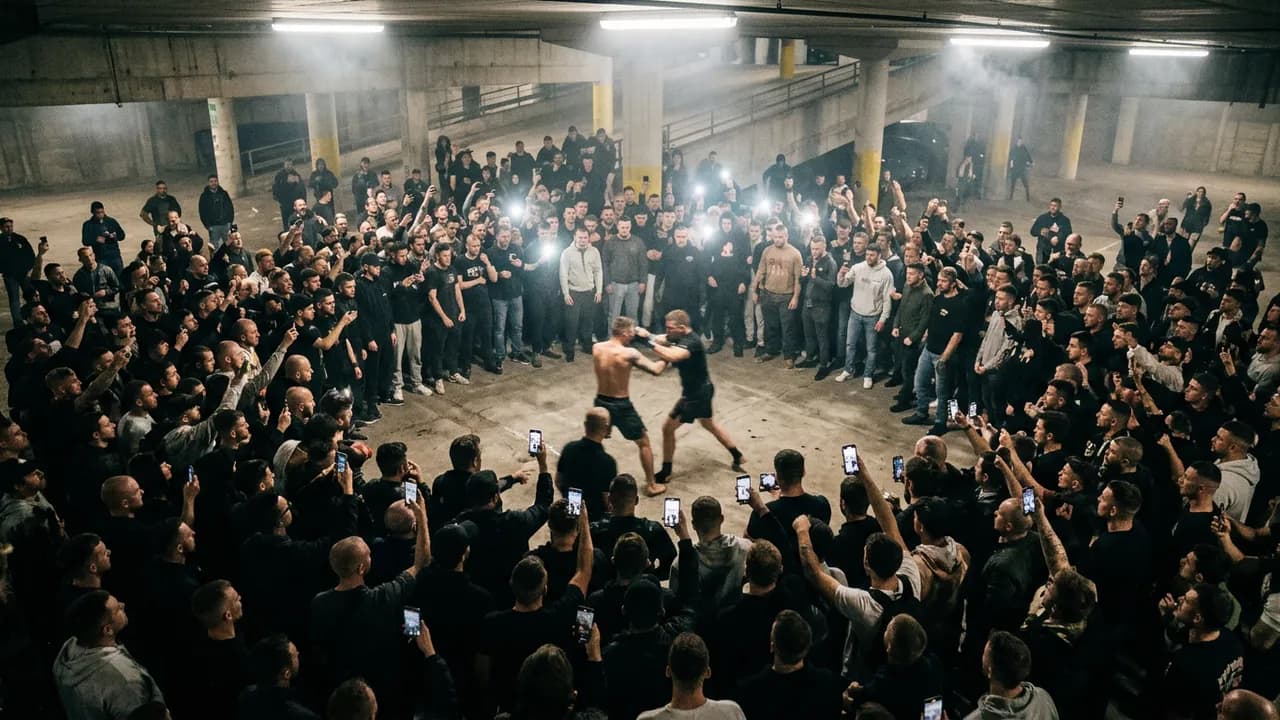
King of the Streets (2013) -- Founded in Gothenburg, Sweden, by an anonymous collective known as "Hype Crew," KOTS introduced the world to truly no-rules fighting on concrete. With roots in European football hooligan culture, the promotion attracted fighters from organized crime, hooligan firms, and combat sports backgrounds. Fights had no rounds, no time limits, and no weight classes for grudge matches. By 2018, KOTS events were drawing over a million views per video on YouTube.
King of the Ring UK (2021) -- Manchester-based KOTR launched in a back garden with foam-wrapped fence posts and construction tape. Founded by a promoter known as Remdizz under the banner "Put Down the Knife, Use Your Left and Right," it mirrored Streetbeefs' philosophy of channeling street violence into controlled combat. The promotion grew rapidly, amassing millions of YouTube views and becoming one of the UK's most visible grassroots fighting brands.
The Modern Era: Legalization, Professionalization, and Global Growth (2018 - Present)
BKFC Brings Bare Knuckle Back (2018)
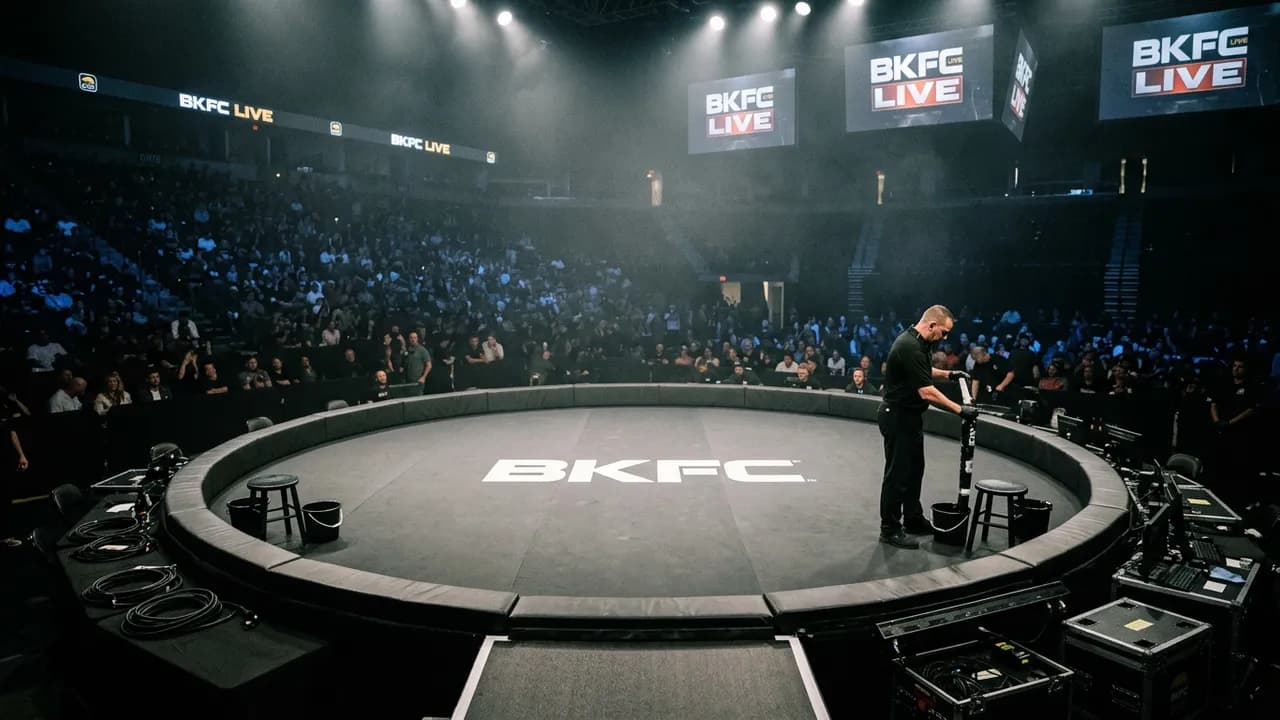
On June 2, 2018, the Bare Knuckle Fighting Championship held its first event in Cheyenne, Wyoming -- the first legally sanctioned bare-knuckle boxing event in the United States since John L. Sullivan's fight with Jake Kilrain in 1889. BKFC founder David Feldman had secured approval from the Wyoming Combative Sports Commission, ending a 129-year prohibition on regulated bare-knuckle fighting in America.
BKFC 1 also featured the first sanctioned women's bare-knuckle fight in modern American history. The promotion grew rapidly, holding 142 events through December 2025 and expanding to the United Kingdom, Thailand, and Mexico.
For a complete breakdown of BKFC's rules and format, see our rules comparison guide.
Top Dog: Russia's Bare-Knuckle Spectacle (2020 - Present)
While BKFC pursued American legalization, Russia developed its own bare-knuckle brand. Top Dog Fighting Championship began broadcasting fights from parking lots in early 2020, with bouts taking place inside a circle of hay bales. Fighters wore jeans or sweatpants instead of boxing trunks, and the production deliberately cultivated an underground aesthetic despite featuring highly trained boxers and kickboxers.
Top Dog's format -- three rounds of two minutes, no gloves, clinch strikes and shoulder strikes permitted -- proved enormously popular on YouTube, and the promotion eventually graduated to renting out Moscow sports arenas while maintaining its gritty visual identity.
Conor McGregor and the Mainstream Embrace (2024)
In April 2024, Conor McGregor acquired a minority ownership stake in BKFC through his company McGregor Sports and Entertainment. The move signaled that bare-knuckle and underground-adjacent fighting had crossed a threshold of mainstream commercial legitimacy that would have been unthinkable a decade earlier.
07 / Up next / Mahatch: Ukraine's Sandbag Ring (2020 - Present)
McGregor's involvement accelerated BKFC's international expansion. The organization unveiled a $25 million global tournament and announced plans to launch in India through a partnership with Bollywood star Tiger Shroff, introducing a team-based bare-knuckle league format -- a first in the sport's history.
Mahatch: Ukraine's Sandbag Ring (2020 - Present)
Ukraine entered the underground fighting landscape with Mahatch Fighting Championship, a bare-knuckle promotion that stages bouts in a ring made of sandbags. Fighters wear jeans and sneakers -- mandatory dress code -- and compete under rules that allow kicks, elbows, and clinch strikes but prohibit ground fighting. Three rounds of two minutes, no gloves, with draws possible.
Mahatch attracted international attention when former UFC fighter Artem Lobov competed on its platform in 2021, lending credibility to a promotion that had previously been viewed as a regional curiosity.
Gamebred Bareknuckle MMA (2023 - Present)
Former UFC star Jorge Masvidal launched Gamebred Bareknuckle MMA in 2023, creating a promotion that applies the unified rules of MMA -- takedowns, submissions, ground fighting -- but removes the gloves. Three five-minute rounds with hand wraps permitted below the knuckles.
The format has produced striking differences from gloved MMA: higher knockout rates, more submissions (fighters "slip like blankets" without glove friction to maintain control), and a fundamentally different pace. In 2026, Gamebred announced two 16-man tournaments at heavyweight and lightweight, each carrying a $500,000 grand prize.
The Current Landscape (2025 - 2026)
Underground and semi-regulated fighting has never been more visible, more varied, or more global than it is right now. The landscape includes:
- Fully sanctioned bare-knuckle promotions (BKFC, BKB) operating under state athletic commissions with medical staff, drug testing, and professional broadcasting.
- Semi-regulated YouTube promotions (Streetbeefs, KOTR, Strelka) operating in legal gray areas with basic safety measures and massive online audiences.
- Underground organizations (KOTS) operating fully outside the law with minimal rules and locations disclosed only to participants.
- Hybrid promotions (Top Dog, Mahatch) that blur the line between underground aesthetics and professional organization.
- Celebrity-backed ventures (Gamebred, Rough N Rowdy) leveraging star power and media partnerships to bring raw fighting content to mainstream audiences.
The trajectory is clear. What began with two men fighting on a Greek hillside in 648 BC, went underground for centuries, and re-emerged through shaky camcorder footage on early internet forums has become a global industry. The rules vary. The formats differ. The surfaces range from ancient sand to modern concrete.
But the impulse -- to test yourself, to settle disputes through combat, to watch others do the same -- has not changed in three thousand years. It has only found new stages.
Complete Timeline at a Glance
| Year | Event |
|---|---|
| 648 BC | Pankration introduced at the Greek Olympics |
| 264 BC | First recorded Roman gladiatorial combat |
| 393 AD | Emperor Theodosius I bans gladiatorial combat and pankration |
| 800-1014 | Viking holmgang tradition flourishes across Scandinavia |
| 1006 | Holmgang outlawed in Iceland |
| 1681 | First documented English bare-knuckle fight |
| 1719 | James Figg becomes first recognized boxing champion |
| 1743 | Jack Broughton drafts the first boxing rules |
| 1838 | London Prize Ring Rules formalized |
| 1860 | Sayers vs. Heenan: first international championship bout |
| 1882 | R v. Coney ruling criminalizes bare-knuckle fighting in England |
| 1889 | Sullivan vs. Kilrain: last bare-knuckle heavyweight championship |
| 1920s | Vale Tudo emerges in Brazil |
| 1993 | UFC 1 held in Denver, Colorado |
| 1994 | East Bay Rats Motorcycle Club founded in Oakland |
| 1996-1997 | WVC and IVC launch professional Vale Tudo in Brazil |
| 2003 | Underground Combat League begins in New York City |
| 2003 | Kimbo Slice's first backyard fight video goes viral |
| 2008 | Kimbo headlines first MMA card on primetime network TV |
| 2008 | Streetbeefs founded in Harrisonburg, Virginia |
| 2011 | Strelka launches in St. Petersburg, Russia |
| 2013 | King of the Streets founded in Gothenburg, Sweden |
| 2018 | BKFC holds first legal bare-knuckle event since 1889 |
| 2020 | Top Dog Fighting Championship launches in Russia |
| 2020 | Mahatch Fighting Championship launches in Ukraine |
| 2021 | King of the Ring UK launches in Manchester |
| 2023 | Gamebred Bareknuckle MMA launched by Jorge Masvidal |
| 2024 | Conor McGregor acquires ownership stake in BKFC |
| 2025 | Streetbeefs surpasses 1.3 billion YouTube views |
| 2026 | BKFC announces $25 million global tournament and India expansion |
Milestone Videos: Key Moments in Underground Fighting History
The footage that marks the turning points in three thousand years of underground fighting, from the earliest viral clips to the modern professional era.
- Kimbo Slice vs Big D — The Viral Era Begins (2003): The single most important video in the history of underground fighting content. The fight that proved the internet could make a street fighter famous and launched every fight channel that followed.
- Jorge Masvidal Backyard Fight — Future Champions in Backyards: Before the UFC, Masvidal fought in the same Miami backyard scene that produced Kimbo. The video that connects the backyard era to the professional mainstream.
- Streetbeefs: Death Sentence — The YouTube Revolution: Streetbeefs at its peak -- the organization that proved backyard fighting could sustain millions of subscribers and a sustainable business through YouTube.
- Strelka: Petrantsov — Russia's Fight Club Goes Global: The viral Strelka clip that demonstrated underground fighting's global appeal, transcending language and culture through the universal language of combat.
- KOTS: Simon vs Ronin — European No-Rules Fighting: King of the Streets at its most dramatic -- the no-rules, concrete-surface fights that established KOTS as Europe's most notorious underground organization.
- BKB at the O2 Arena — Bare Knuckle Goes Mainstream (2018): Professional bare knuckle fighting at a world-class venue, marking the sport's return to legitimacy after 129 years in the underground.
- Top Dog FC: Best Knockouts — The Pandemic Era (2020): The Russian bare-knuckle promotion born during COVID lockdowns that grew from parking lot fights to arena shows, embodying the pandemic's role in supercharging underground fighting growth.
The history of underground fighting is still being written. New promotions emerge every year, technology continues to reshape how fights are consumed, and the line between underground and mainstream grows thinner with each passing event. What remains constant is the thing that has always been constant: two people, willing to fight, and an audience that wants to watch.