Stockholm is not where Sweden's underground fighting movement was born. That distinction belongs to Gothenburg, three hours to the southwest, where King of the Streets launched in 2013 and created a no-rules fighting phenomenon that has spread across Europe. But Stockholm is Sweden's largest city -- its capital, its cultural center, and the home of nearly a million people in the city proper and over two million in the metropolitan area. In a country with ten million inhabitants, Stockholm's gravitational pull is immense. Whatever happens in Sweden eventually touches Stockholm, and the underground fighting movement is no exception.
The relationship between Stockholm and Gothenburg in the context of Swedish underground fighting is one of capital and birthplace -- the administrative and cultural center versus the gritty port city where the revolution started. Stockholm provides the audience, the fighters, and the market. Gothenburg provides the origin story and the organizational infrastructure. Together, they define the Swedish contribution to the global underground fighting landscape.
History
Sweden's combat sports history is richer than its reputation for social harmony might suggest. The country has produced world-class boxers, including Ingemar Johansson, who became the heavyweight champion of the world in 1959 by knocking out Floyd Patterson. Swedish MMA has developed rapidly, with fighters competing in the UFC and other major international promotions. The country's martial arts infrastructure includes well-established traditions in boxing, wrestling, judo, and various Asian martial arts.
Stockholm's specific contribution to underground fighting predates the KOTS era. The city's nightlife, its immigrant neighborhoods, and the tensions between Sweden's social democratic ideals and the realities of economic stratification have always produced street-level violence. Informal fights in the city's rougher neighborhoods, disputes settled with fists outside nightclubs, and the low-level violence of the drug trade have been features of Stockholm life for decades.
The emergence of KOTS in Gothenburg in 2013 transformed this diffuse violence into something organized and exportable. The KOTS model -- no rules, fights on concrete, content distributed through YouTube -- provided a framework that elevated underground fighting from spontaneous to structured. Stockholm, as Sweden's largest city, was an immediate beneficiary of this transformation. The demand for no-rules fighting content and the pool of willing participants both existed in Stockholm before KOTS existed to serve them.
The KOTS founders -- the anonymous collective known as the "Hype Crew" -- included individuals connected to hooligan culture, organized crime, and seasoned street fighting. Their backgrounds in Gothenburg's rougher circles gave the organization its authenticity, but the expansion beyond Gothenburg required connections to Stockholm's parallel networks. The bridging of these two Swedish cities created a national underground fighting scene with reach across the entire country.
Organizations
KOTS in Stockholm
King of the Streets is headquartered in Gothenburg, but its operations extend to Stockholm and beyond. Events staged in the Stockholm area draw from the capital's larger population and its deeper pool of potential fighters and spectators. The organization's YouTube channel (over one million subscribers), its presence on Bitchute and its own website (kingofthestreets.com), and its social media accounts ensure that Stockholm-based fans and fighters can engage with the movement regardless of their physical distance from Gothenburg.
KOTS fighters from Stockholm have traveled to Gothenburg for events, and the organization's Telegram-based communication system for sharing spectator locations extends to Stockholm-area events. The rotation of event locations across Sweden means that Stockholm residents do not need to travel to Gothenburg to participate -- events come to them.
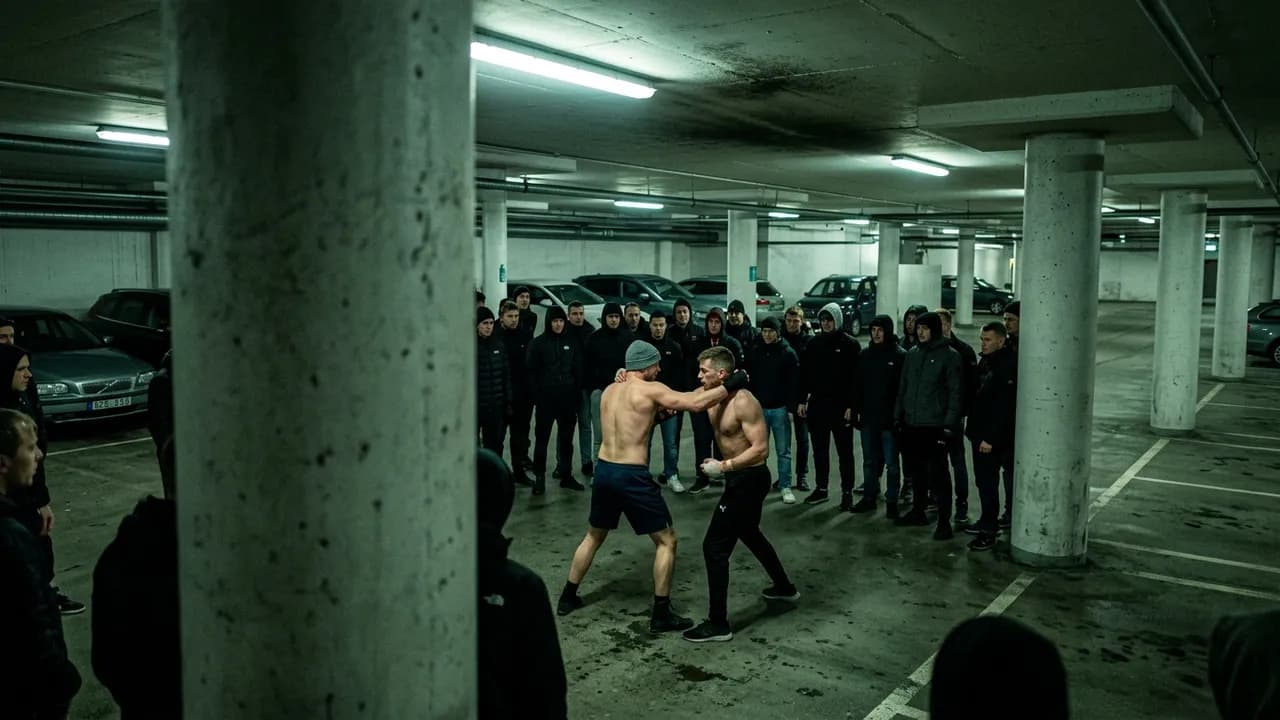
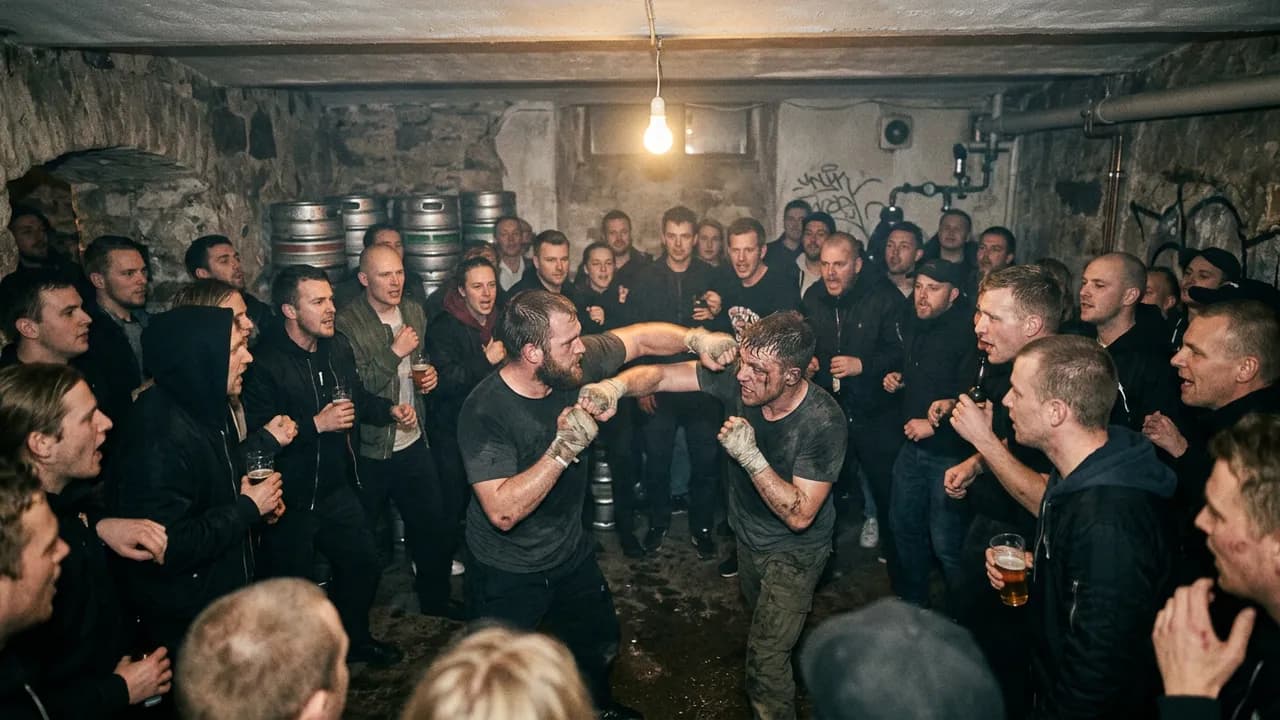
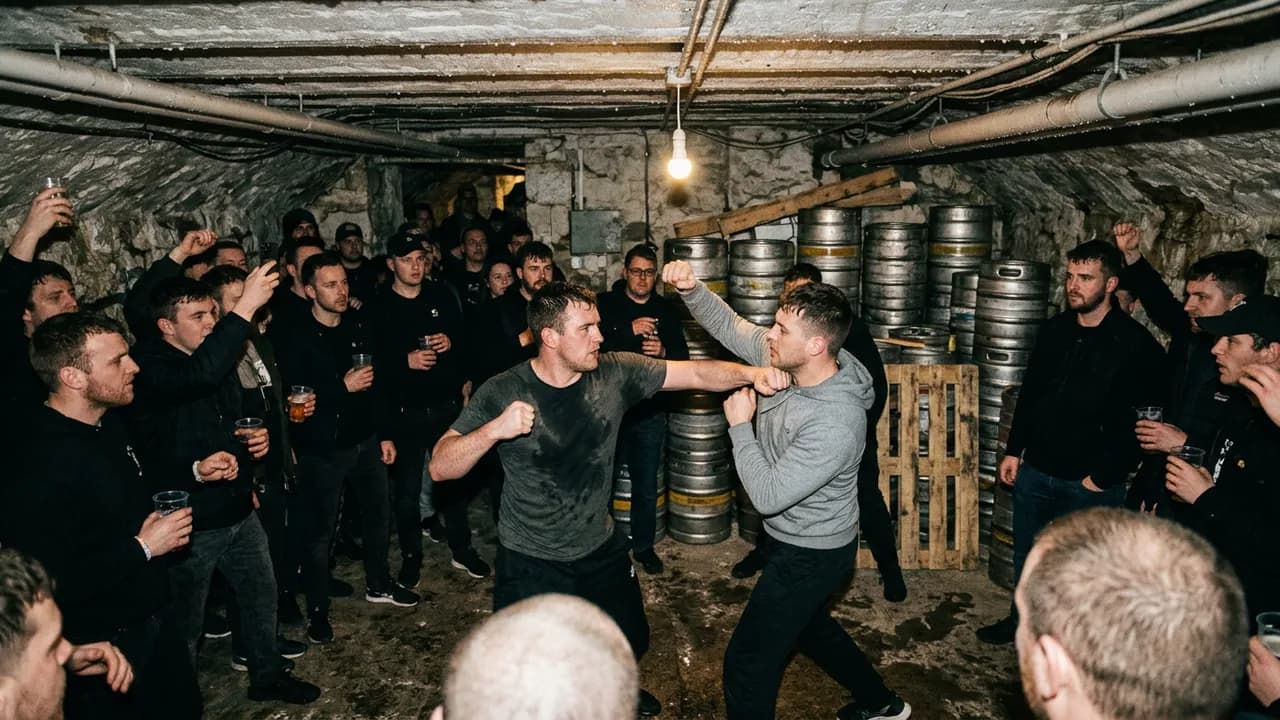
The KOTS format is uncompromising. Fights take place on concrete. There are no rounds, no decisions, and no time limits. Biting, eye gouging, choking, head stamping, elbows, and headbutts are all permitted. Fights continue until surrender or inability to continue. The format has not been softened for Stockholm's consumption -- the capital gets the same brutal, unfiltered product that Gothenburg produces.
Affiliated and Independent Fight Clubs
Beyond KOTS proper, Stockholm hosts independent fight clubs that operate within the broader no-rules movement. These organizations may or may not have formal connections to KOTS, but they share the philosophical framework and operational model that the Gothenburg organization pioneered.
The distinction between KOTS-affiliated and independent clubs is often blurred. The no-rules movement in Europe functions as a network rather than a hierarchy, with local organizations maintaining autonomy while drawing on shared practices, shared values, and sometimes shared fighters. Stockholm's independent clubs exist within this network, connected to KOTS by influence if not by formal structure.
Swedish MMA and Combat Sports
Stockholm is Sweden's primary market for sanctioned combat sports. The city hosts MMA events, boxing cards, and kickboxing competitions throughout the year. Promotions like Superior Challenge have staged events in Stockholm, providing a legal outlet for competitive fighters.
02 / Up next / Notable Fighters
The relationship between Stockholm's sanctioned and unsanctioned fighting scenes follows a pattern common across the cities covered on this site. Fighters train at the same gyms, share the same cultural space, and sometimes cross between the two worlds. A fighter might compete in a sanctioned MMA event one month and attend or participate in a no-rules event the next. The two scenes are distinct but not separate.
Notable Fighters
The KOTS organization does not publicly identify its fighters in the conventional sense. Fighters apply through the KOTS website and compete under the names and identities they choose. The organization's roots in hooligan culture and organized crime mean that anonymity is a feature, not a bug -- many participants have reasons to avoid public identification that extend beyond the fighting itself.
Stockholm's contribution to the broader Swedish fighting scene is measured more through the sanctioned world, where Swedish fighters have achieved international recognition. Alexander Gustafsson, one of the most accomplished Swedish MMA fighters in UFC history, trained in Stockholm. His career -- including two legendary title fights against Jon Jones and Daniel Cormier -- put Swedish combat sports on the global map and inspired a generation of fighters, some of whom have gravitated toward the underground scene.
The KOTS documentary (released through kotsfilm.com) has brought wider attention to the fighters who compete in the Swedish no-rules scene, though the documentary's focus is primarily on the Gothenburg origins rather than the Stockholm extension.
How to Get Involved
Stockholm offers multiple pathways into combat sports. For those seeking sanctioned competition, the city's boxing clubs, MMA gyms, and martial arts schools provide comprehensive training. The Swedish combat sports infrastructure is well-developed, and opportunities for amateur and professional competition are available through established federations.
The KOTS website -- kingofthestreets.com -- is the primary entry point for those interested in the no-rules scene. Fighters can apply through the website, and the organization manages a matchmaking process that pairs fighters of comparable size and experience. The website includes a membership wall that controls access to certain content and event information.
KOTS spectator information is distributed through Telegram, with event locations shared to subscribers shortly before events. Access to these channels requires navigating the organization's communication infrastructure, which is designed to filter out those who are not serious participants or committed spectators.
For those interested in bare knuckle fighting through sanctioned channels, BKFC has not established a regular presence in Scandinavia, though the promotion's international expansion could eventually bring events to the Swedish market. The overlap between KOTS's audience and potential bare knuckle consumers makes Sweden an interesting potential market for professional bare knuckle promotions.
Swedish law treats unsanctioned fighting events as illegal, and participation carries legal risk. The KOTS organization's continued operation despite this legal framework reflects the difficulty of enforcing these laws against mobile, secretive, and digitally networked organizations.
Related Cities
- Gothenburg -- Birthplace of KOTS and the organizational center of Sweden's no-rules movement
- Copenhagen -- UUF Denmark, the nearest Scandinavian expression of the movement outside Sweden
- Berlin -- Germany's underground scene with KOTS connections
- Warsaw -- Polish fight club scene within the broader European network
- Dublin -- Irish no-rules fighting with connections to the European movement