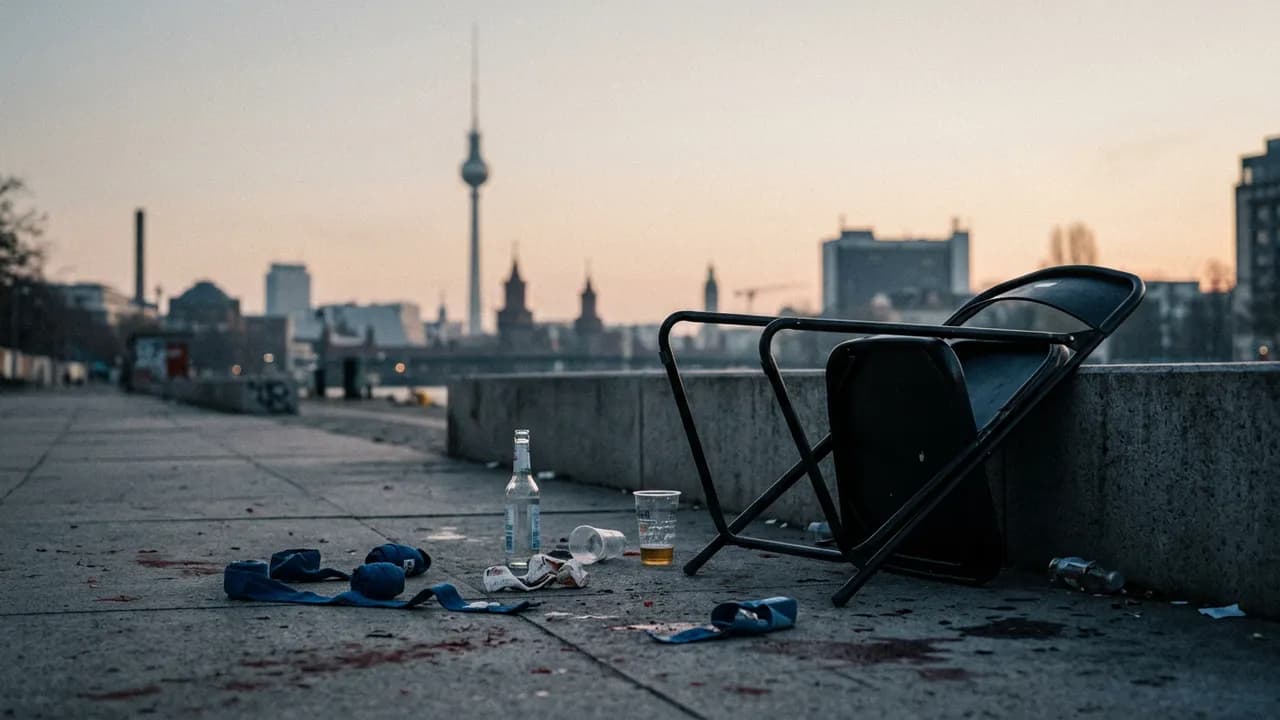
Berlin is a city that has been rebuilt from rubble more than once. Its identity is rooted in destruction and reinvention -- the bombing of the Second World War, the division of the Cold War, the fall of the Wall, and the chaotic reunification that followed. The city's underground culture is legendary in music, art, and nightlife. It should surprise no one that this extends to fighting.
Germany's underground fighting scene operates across multiple layers. At the most extreme end is Holmgang, a modern revival of the Norse dueling practice that involves medieval weapons, minimal safety equipment, and a level of danger that exceeds anything else documented on this site. Below that, a network of no-rules fight clubs inspired by the KOTS movement operates in cities across Germany, with Berlin as the largest urban center and therefore the most significant hub. And woven through all of it is the influence of German hooligan culture -- one of the most organized and violent in Europe -- which provides both fighters and the cultural framework within which underground combat is understood.
History
Germany's relationship with combat sports is shaped by the country's broader cultural attitudes toward violence -- attitudes that are themselves shaped by the unique weight of German history. The country that produced the concept of Studentenmensur -- academic fencing duels that left deliberate facial scars as badges of honor -- has a tradition of ritualized combat that predates the modern era.
Holmgang itself is a Norse practice that dates to the Viking Age. The historical holmgang was a formalized duel used to settle legal disputes, conducted on a cloak or animal hide spread on the ground, with rules governing weapons and the conduct of combat. The practice was outlawed in Scandinavia between 1006 and 1014, but its cultural memory persisted in the Germanic and Norse traditions that influence Northern European identity.
The modern revival of holmgang takes the name and the spirit of the original practice while adapting it to contemporary conditions. Participants fight with medieval weapons -- swords, axes, and other bladed implements -- wearing minimal protective equipment. The fights are conducted at full power. The risk of serious injury, including deep cuts and potentially fatal wounds, is inherent in the format.
German hooligan culture provides the other major tributary feeding the underground fighting scene. German football hooliganism has a long history, with firms associated with clubs like Borussia Dortmund, Hertha Berlin, FC Union Berlin, and others maintaining organized structures for both football-related violence and prearranged fights with rival firms. The German hooligan scene was among the first to adopt the KOTS-style no-rules fighting model, and connections between German hooligan groups and the Gothenburg-based KOTS organization have been documented through social media and fight event attendance.
Organizations
Holmgang
Holmgang is not a fight promotion in any conventional sense. It is better understood as a subculture -- a community of people who practice a revived form of medieval combat that exists at the extreme edge of what can be considered consensual fighting.
The format involves real weapons. Participants fight with swords, axes, and other medieval arms, wearing t-shirts or minimal protective gear that provides effectively no defense against edged weapons. Strikes are delivered at full power. The result is a form of combat that carries the genuine risk of severe laceration, dismemberment, and death.
The legal status of holmgang in Germany is unambiguous -- it is illegal. German law does not provide a consent-based defense for activities that carry the risk of serious bodily harm or death. Participants face criminal charges if events come to the attention of authorities, and the organizers of holmgang events could face charges related to facilitating dangerous activities.
Despite the legal risk, holmgang has spread beyond Germany into other parts of Europe. The appeal appears rooted in a combination of historical romanticism, adrenaline-seeking, and the desire to participate in something genuinely dangerous in a society that has systematically eliminated risk from most aspects of daily life. For participants, holmgang is an encounter with mortality that modern life otherwise denies.
KOTS-Affiliated Fight Clubs
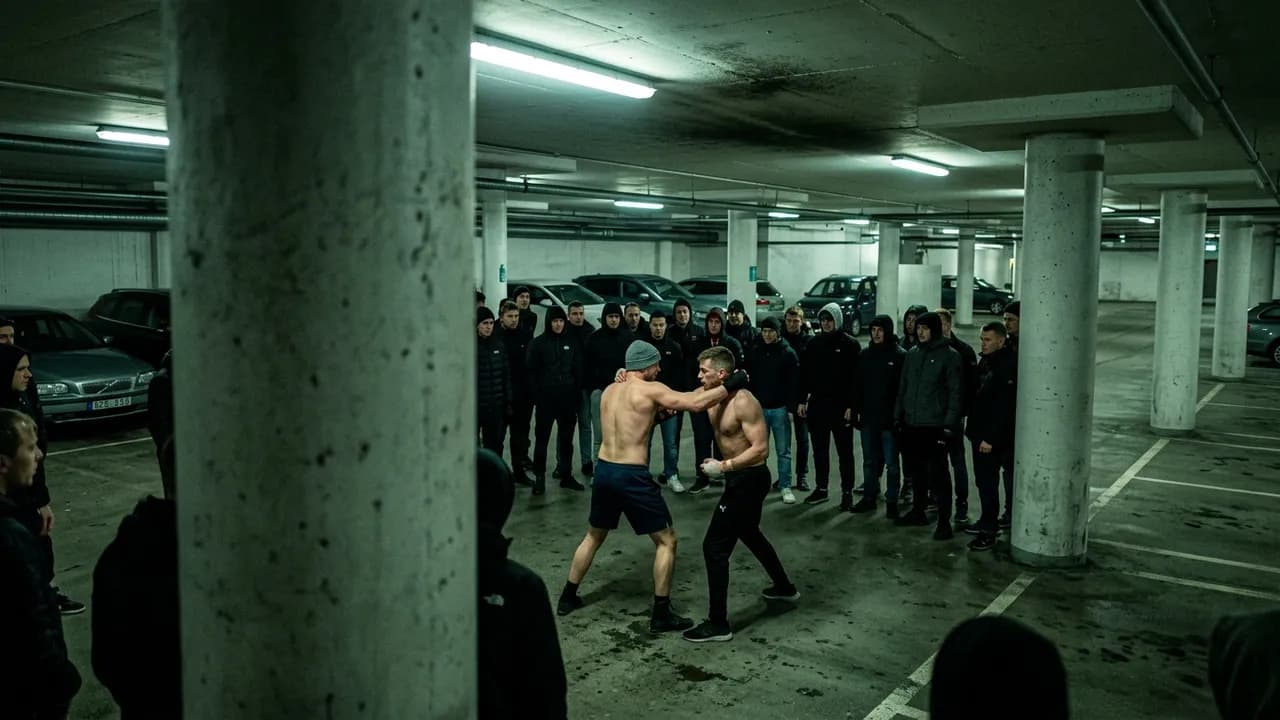
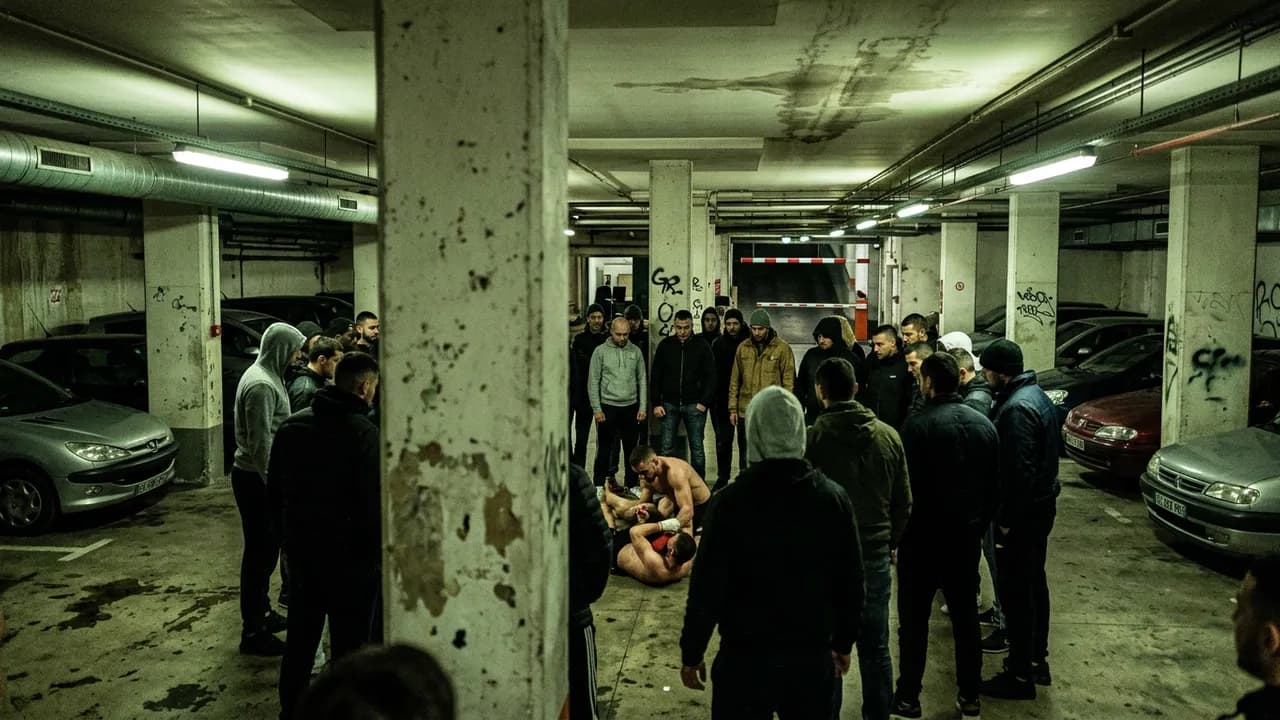
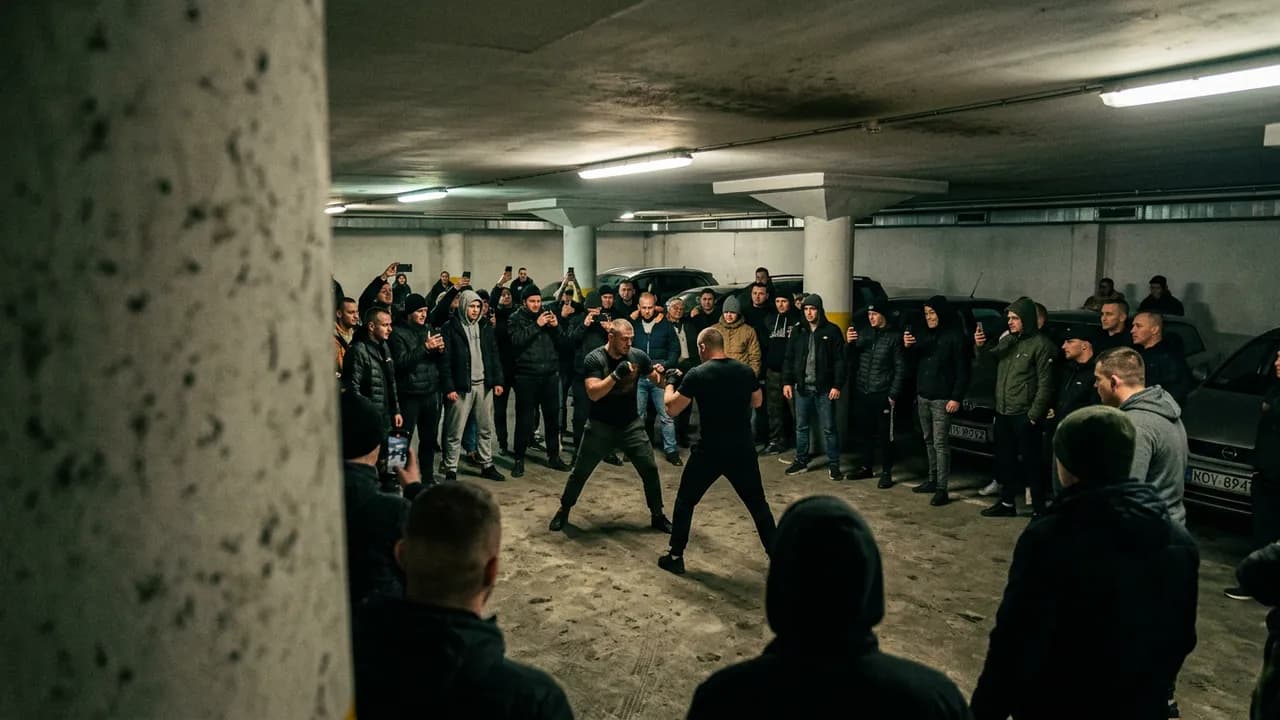
Germany hosts multiple fight clubs affiliated with or inspired by the King of the Streets movement. These organizations operate independently but share the KOTS format -- no rules, no rounds, fights on hard surfaces. Berlin, with its large population and permissive underground culture, is a natural base for these operations.
Hooligan firms already have the communication channels, the culture of secrecy, and the willingness to engage in violence that underground fighting requires.
The German no-rules scene benefits from the country's extensive hooligan network, which provides an organizational infrastructure and a pool of willing fighters. Hooligan firms already have the communication channels, the culture of secrecy, and the willingness to engage in violence that underground fighting requires. The transition from arranging fights between rival firms to participating in organized no-rules events is a short step.
Events are organized through encrypted messaging and word of mouth. Locations -- typically industrial sites, forests, or rural clearings outside city centers -- are communicated to participants shortly before events. The format follows the KOTS template but may vary based on local preferences and the specific hooligan cultures involved.
The Berlin Underground Scene
Berlin's broader underground culture provides a unique environment for fighting events. The city's tradition of illegal raves, squatter communities, and countercultural spaces means that clandestine events of all kinds have a natural infrastructure. Abandoned buildings, industrial sites, and the vast spaces left by the city's interrupted development provide venues that would be unavailable in more controlled urban environments.
The intersection of Berlin's underground culture with its fighting scene creates events that can combine elements of nightlife, performance art, and combat. This is not a universal phenomenon -- most underground fights in Germany are straightforward combat events without cultural pretension -- but Berlin's particular character occasionally produces events that blur the line between fighting and spectacle.
Notable Fighters
The German underground fighting scene does not produce publicly identifiable fighters. The combination of legal risk, hooligan culture's emphasis on anonymity, and the extreme nature of holmgang means that participants are deliberately invisible to the broader public.
Within the hooligan community, fighters are known by reputation -- their performances witnessed by the closed networks of firm members and fight event attendees. This reputation economy operates entirely outside the public sphere, and the names that circulate within the underground are not shared with outsiders.
Holmgang participants are even more anonymous, given the extreme legal consequences that would follow public identification. The people who engage in medieval weapons combat are known to each other but remain invisible to the rest of the world.
How to Get Involved
The German underground fighting scene is among the most difficult to access in Europe. The combination of legal strictness, hooligan culture's insularity, and the genuinely dangerous nature of holmgang creates barriers that are higher than in many other countries.
For those interested in combat sports in Berlin through legal channels, the city offers a comprehensive range of options. German boxing has a strong tradition, with clubs operating throughout Berlin. MMA gyms have proliferated in recent years as the sport has gained mainstream acceptance in Germany. Historical European Martial Arts (HEMA) organizations offer a sanctioned and significantly safer alternative to holmgang for those interested in medieval weapons combat.
The KOTS website provides a potential connection point for the broader no-rules network, though access requires navigating the organization's membership systems and establishing trust within the community.
Anyone considering involvement in the German underground scene should carefully evaluate the legal implications. German law treats unsanctioned fighting, and particularly weapons-based combat, with a seriousness that reflects the country's broader approach to public safety and violence prevention.
Related Cities
- Gothenburg -- Birthplace of KOTS, the movement that has directly influenced German fight clubs
- Paris -- French no-rules movement with similar hooligan connections
- Warsaw -- Polish fight club scene emerging from comparable hooligan culture
- Copenhagen -- UUF Denmark, another Northern European expression of the no-rules movement
- Stockholm -- Sweden's secondary city in the KOTS orbit