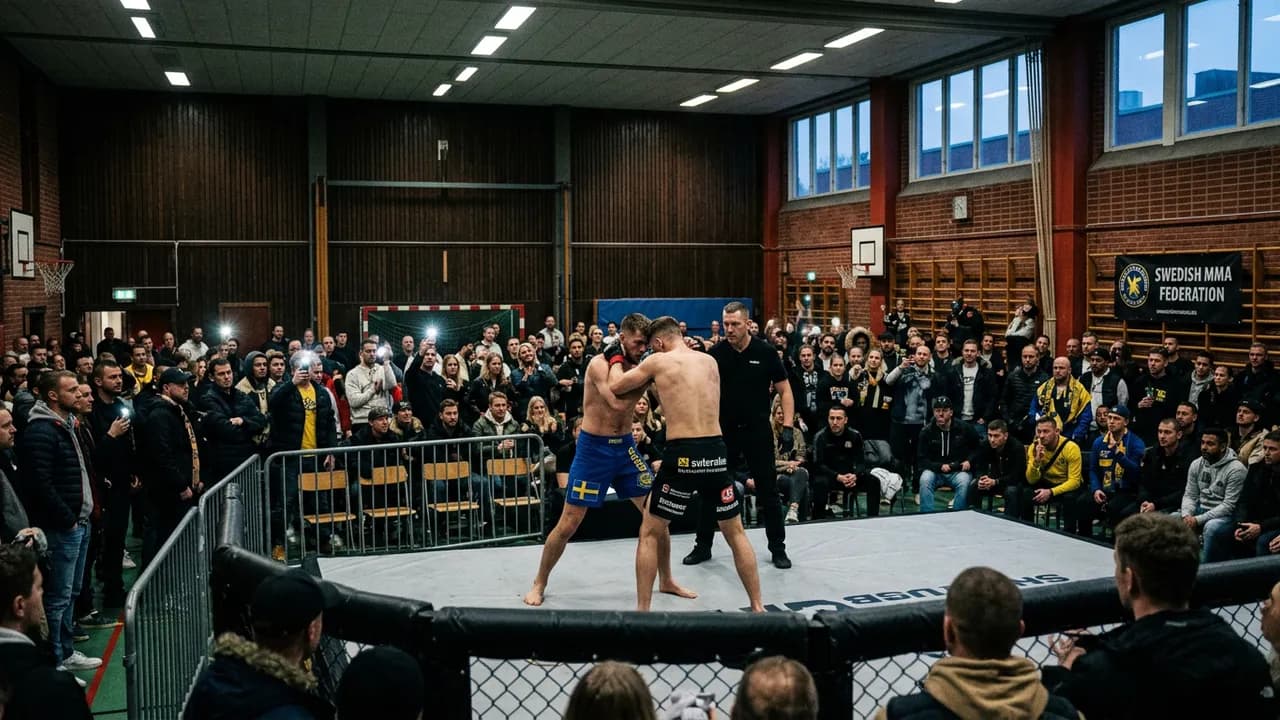
Sweden is not the first country that comes to mind when you think of underground fighting. It is known for ABBA, flat-pack furniture, generous social welfare, and a reputation for consensus-driven civility. But beneath that polished surface, Sweden produced something that has reshaped the global underground fighting landscape: King of the Streets, the most notorious no-rules fight club in Europe, and the movement it spawned across the continent.
Founded in 2013 in Gothenburg by an anonymous collective called Hype Crew, KOTS took everything that sanctioned combat sports considered taboo -- fighting on concrete, no gloves, no rounds, headbutts, eye gouging -- and made it the entire point. The result was a phenomenon that attracted hundreds of thousands of YouTube subscribers, drew fighters from hooligan firms across Europe, and inspired copycat organizations in Germany, England, Ireland, France, Denmark, Poland, and beyond. No other country has exported an underground fighting format so effectively or so controversially.
This guide covers the origins, organizations, culture, and current state of underground fighting in Sweden.
History
Football Hooliganism: The Seedbed
To understand how a Scandinavian welfare state became the birthplace of no-rules fighting, you have to understand the football hooligan subculture that incubated it.
Swedish football hooliganism has a long and well-documented history, particularly in Gothenburg and Stockholm. The firms attached to major clubs -- IFK Gothenburg, AIK Stockholm, Djurgarden, Hammarby, Malmo FF -- developed along lines familiar to anyone who has studied the English or Russian hooligan scenes: organized groups of young men, often from working-class backgrounds, who bonded over loyalty to a football club and expressed that loyalty through physical confrontation with rival firms.
By the 2000s and early 2010s, Swedish hooligan culture had evolved beyond the terraces. Firms were training together, sparring at gyms, and staging arranged fights in forests, industrial areas, and parking structures. These encounters were governed by informal codes: no weapons, agreed-upon numbers, and a mutual understanding that the fight was the point, not random violence against uninvolved civilians.
It was in this environment -- structured violence, physical training, a taste for confrontation, and a subculture that operated deliberately outside the law -- that the idea for KOTS took root.
The Birth of King of the Streets (2013)
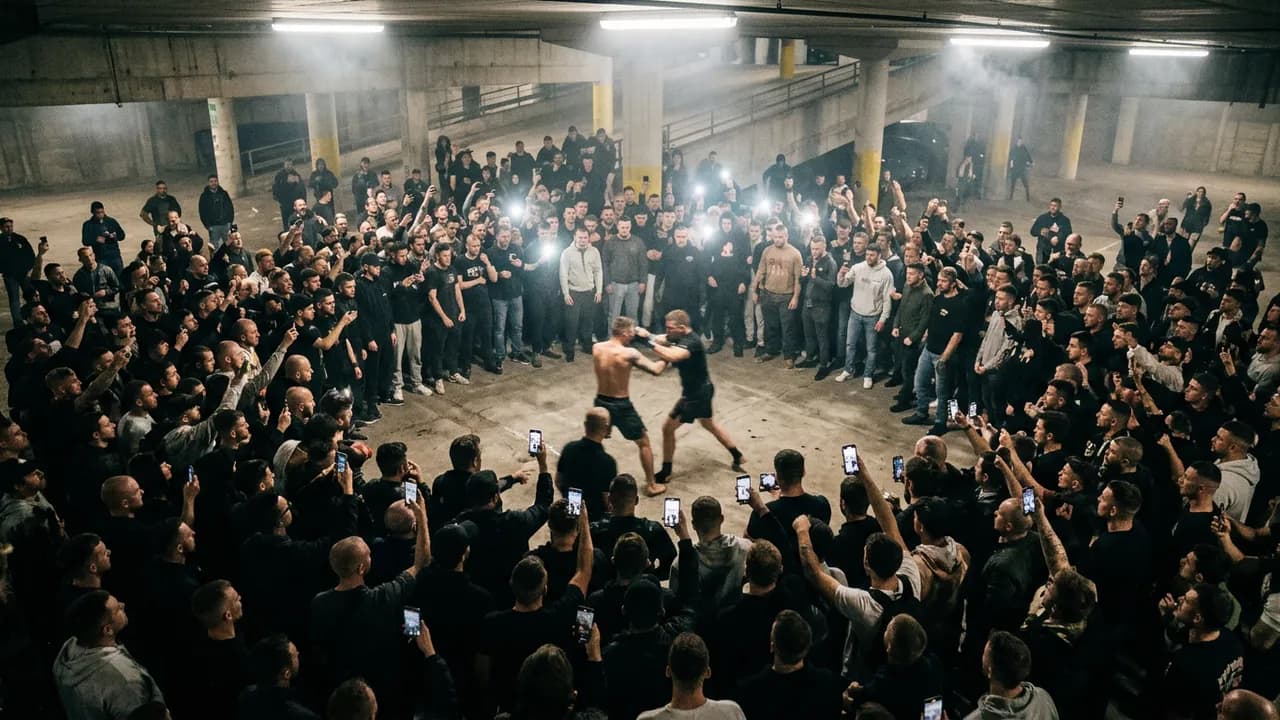
Around 2013, a group that would become known as Hype Crew began organizing and filming street fights in and around Gothenburg, Sweden's second-largest city and the home of some of the country's most passionate football culture. The early KOTS fights were raw and unpolished: two willing participants squaring off on pavement or concrete, surrounded by a circle of spectators, with a camera capturing the action.
The footage was uploaded to YouTube under the King of the Streets banner. The production values were minimal, but the content was undeniably compelling. Unlike sanctioned combat sports, where rules, gloves, and referees insulate fighters from the rawest consequences of their choices, KOTS stripped everything away. The concrete floor was unforgiving. The absence of gloves meant every punch landed with skeletal directness. And the no-rules format meant that a fight could involve striking, grappling, headbutts, or anything else the participants brought to the encounter.
The channel grew slowly at first, then faster as word spread through hooligan networks across Europe. By 2018, KOTS had evolved from a local Gothenburg curiosity into something much larger.
The No-Rules Movement Goes Continental (2018-Present)
The period around 2018 marked the inflection point. KOTS began organizing events in abandoned warehouses and industrial spaces, drawing fighters not just from Sweden but from across Europe. Hooligans, streetfighters, and combat sports enthusiasts from Denmark, Germany, Poland, England, Ireland, and France traveled to compete. The YouTube channel's subscriber count climbed steadily, eventually crossing one million within roughly six years of the organization's founding.
More significantly, KOTS inspired a wave of imitators. The no-rules format -- fighting on hard surfaces without gloves, with minimal rules and no rounds -- was simple enough to replicate and dramatic enough to generate its own audience. Independent no-rules fight clubs began appearing across the continent, completely unaffiliated with KOTS but clearly inspired by its model:
- Germany -- Multiple no-rules organizations emerged, drawing from the country's own hooligan subculture.
- England -- Underground fight clubs adopted the KOTS-style concrete format.
- Ireland -- No-rules fighting found a natural home in a culture with deep bare-knuckle traditions.
- France -- FPVS and other organizations staged illegal no-rules fights on concrete, sometimes in abandoned buildings.
- Denmark -- KOTS's geographic neighbor became one of the first expansion targets.
- Poland -- The country's large and active hooligan scene proved fertile ground for no-rules fighting.
KOTS itself recognized the movement it had created. The organization's media described the phenomenon as proof that the appetite for raw, unregulated fighting extended far beyond Gothenburg, and it began laying plans for international expansion, with Los Angeles, Germany, and Denmark identified as priority markets.
Major Organizations
King of the Streets (KOTS)
King of the Streets is the only underground fighting organization of note based in Sweden, but it has had an outsized impact on the global scene. Its significance lies not just in its own events but in the movement it created.
02 / Up next / Hype Crew
Format: No-rules fighting on concrete. No gloves, no rounds, no time limits. Fights end by knockout, referee stoppage (TKO), submission (tap-out), or verbal submission. KOTS offers two primary formats:
- No Rules: Everything is permitted, including headbutts, strikes to the spine, and chokeholds. Eye gouging is technically allowed but fighters who win by eye gouging have been ineligible for prize money since December 2022.
- K.O. Only: Everything is allowed except submissions; victory can only come by knockout or referee stoppage.
Locations: Events are held in secret locations -- abandoned warehouses, industrial spaces, tunnels underneath roads, and other confined venues throughout Sweden. Locations are disclosed to participants and approved attendees only, and the timing of events is deliberately unpredictable. Pay-per-view buyers are notified just 24 hours before an event goes live, presumably to minimize the risk of police intervention.
Fighter Identity: Fighters can cover their faces with masks and balaclavas, preserving anonymity in an organization that operates outside the law. Only the winner receives prize money, creating a winner-take-all dynamic that intensifies the stakes.
YouTube Presence: At its peak, the KOTS YouTube channel surpassed one million subscribers. However, the channel has been subject to repeated takedowns and content removals due to YouTube's policies on violent content. The organization has migrated across platforms, maintaining presences on Bitchute, Telegram, and its own website alongside whatever YouTube footprint survives content moderation.
Documentary: A documentary film following KOTS has been in production, with independent filmmakers granted exclusive access to bring cameras into events. Funded by independent investors, the project represents one of the most in-depth looks at the no-rules fighting subculture ever attempted.
Hype Crew
Hype Crew is not a fighting organization in itself but the anonymous collective behind KOTS. Made up of hooligans, organized criminals, and seasoned street fighters rooted in Gothenburg's hooligan subculture, Hype Crew functions as both the organizational brain and the cultural identity of KOTS. The group maintains strict anonymity -- no public-facing leaders, no corporate registration, no official spokespeople.
Hype Crew's ethos is captured in KOTS's own self-description: "The most notorious fight club, the one and only place for the unwanted ones, delivering the most stressed out and fucked up environment you can find." This is an organization that does not apologize for what it is or attempt to present itself as a legitimate sporting enterprise. The rawness is the point.
Fighting Culture
The Hooligan Connection
Sweden's underground fighting scene is inseparable from its football hooligan culture. The firms that follow IFK Gothenburg, AIK Stockholm, Djurgarden, Hammarby, and other major clubs have long served as the social infrastructure for organized fighting. Members train together, spar regularly, and view physical confrontation as a core expression of firm loyalty and personal identity.
KOTS grew directly out of this ecosystem. The fighters who competed in early KOTS events were overwhelmingly drawn from hooligan circles, and the organization's aesthetic -- masks, balaclavas, industrial locations, an ethos of deliberate transgression -- reflects the visual language of European hooligan culture.
The No-Rules Philosophy
What distinguishes Sweden's contribution to the global underground fighting landscape is not just the existence of an illegal fight club -- those exist in many countries -- but the specific philosophy that KOTS codified and exported.
The no-rules format is a deliberate rejection of everything that sanctioned combat sports represent. Where boxing and MMA seek to minimize unpredictable danger through rules, weight classes, timed rounds, and medical oversight, KOTS embraces that danger as its defining feature. The concrete floor is not an unfortunate necessity but a conscious choice. The absence of gloves is not a cost-saving measure but a philosophical statement. The permission to headbutt, gouge, and bite is not oversight but intent.
This philosophy proved exportable because it tapped into a widespread dissatisfaction with the sanitization of combat sports. For a segment of the fighting community -- particularly those rooted in hooligan culture -- the appeal of no-rules fighting is precisely that it cannot be domesticated, packaged, or made safe for mainstream consumption.
The Controversy
KOTS and the no-rules movement have attracted significant criticism and controversy. Media reports have linked the organization to far-right extremism and neo-Nazi elements, noting overlap between the hooligan subculture that feeds KOTS and organized far-right groups active in Scandinavia. The 2021 Netflix Swedish film "The Cage" drew inspiration from the real-world phenomenon of underground fight clubs in Sweden, highlighting the intersection of fighting, extremism, and criminal enterprise.
03 / Up next / Legal Status
Critics argue that no-rules fighting on concrete is not a combat sport at all but an organized form of assault that exposes participants to catastrophic risks -- traumatic brain injuries, spinal cord damage, eye injuries, and worse -- without any of the safety infrastructure that even the most permissive combat sports provide.
Supporters counter that all participants are willing adults, that KOTS does employ referees who can stop fights, and that the organization serves a social function by providing a structured outlet for violent impulses that would otherwise manifest in less controlled environments.
Legal Status
Underground fighting in Sweden exists firmly in the illegal category. Unlike Russia, where the regulatory environment for combat sports is relatively permissive and organizations like Strelka and Top Dog FC operate openly, Sweden does not provide a legal pathway for unsanctioned fighting events, particularly those involving no-rules formats on hard surfaces.
Swedish law does not have a specific statute criminalizing underground fight clubs. Instead, organizers and participants face potential liability under general criminal provisions relating to assault, battery, and causing bodily harm. The fact that participants consent to the fighting does not necessarily provide a legal defense under Swedish law, as consent to serious bodily harm is not recognized as a complete defense in all circumstances.
KOTS navigates this legal landscape through secrecy and operational security. Events are held at undisclosed locations, announced at the last possible moment, and organized by anonymous individuals who are difficult for law enforcement to identify and prosecute. The organization's structure -- anonymous leadership, no corporate registration, cryptocurrency-friendly payment systems -- is designed specifically to minimize legal exposure.
To date, there have been no high-profile prosecutions of KOTS organizers or participants that have been publicly reported, though this may reflect the difficulty of building cases against an anonymous organization rather than a lack of law enforcement interest.
How to Watch
Pay-Per-View
KOTS offers events through pay-per-view on its website at kingofthestreets.com. Buyers are notified 24 hours before an event goes live. The short notice window is deliberate, designed to minimize the risk of law enforcement intervention while still allowing paying customers to watch.
YouTube and Alternative Platforms
KOTS content has been subject to repeated removals on YouTube due to the platform's policies on violent content. The organization maintains a presence across multiple platforms:
- YouTube -- Subject to frequent takedowns; subscriber counts have fluctuated between peaks above one million and lower levels after channel removals.
- Bitchute -- An alternative video platform where KOTS maintains a channel with fewer content restrictions.
- Telegram -- A key platform for KOTS communications and content distribution, particularly popular among European audiences.
- Instagram -- The official account @king.of.the.streets shares fight clips and event announcements.
- X (Twitter) -- @KOTSFightClub provides updates and fight promotions.
The KOTS Documentary
An independent documentary has been in production, offering unprecedented camera access to KOTS events. Funded by independent investors and produced without organizational control over the final product, this documentary represents the most comprehensive visual record of the no-rules fighting movement. Updates on the film's release are available at kotsfilm.com.
Key Cities
Gothenburg
Gothenburg is the birthplace of KOTS, the home base of Hype Crew, and the spiritual capital of the no-rules fighting movement. Sweden's second-largest city, with a population of roughly 600,000, Gothenburg combines a working-class industrial heritage with passionate football culture -- a combination that proved to be the perfect incubator for the organization. IFK Gothenburg, the city's most prominent football club, has one of Sweden's most dedicated and active supporter bases, and the hooligan elements within that fanbase provided the original pool of fighters and organizers for KOTS.
The specific locations of KOTS events within and around Gothenburg are deliberately kept secret, but the city's abundance of abandoned industrial spaces, warehouses, and infrastructure tunnels provides no shortage of potential venues.
Stockholm
Sweden's capital and largest city has its own active hooligan scene, driven by the rivalries between AIK, Djurgarden, and Hammarby. While KOTS is primarily associated with Gothenburg, the broader no-rules fighting subculture extends to Stockholm, where fighters from the city's firms have traveled to compete in KOTS events and where informal organized fighting occurs within the hooligan ecosystem.
Malmo
Sweden's third-largest city, located in the far south near the Danish border, has a diverse and sometimes volatile social landscape. Malmo's proximity to Copenhagen makes it a natural bridge for the cross-border fighting connections between Swedish and Danish hooligan communities.
FAQ
Is KOTS legal?
No. King of the Streets operates illegally in Sweden. Events are held at secret locations, organized by anonymous individuals, and designed to evade law enforcement detection. Participants face potential criminal liability under Swedish assault and battery laws.
How do you watch KOTS events?
KOTS offers pay-per-view events through its website at kingofthestreets.com. Buyers are notified 24 hours before an event. Content is also distributed through YouTube (subject to takedowns), Bitchute, Telegram, and social media.
Are there really no rules in KOTS?
Almost none. Headbutts, strikes to the spine, biting, and eye gouging are all technically permitted. The only meaningful restriction is that fighters who win by eye gouging are ineligible for prize money, a rule introduced in December 2022. Fights have no rounds and no time limits, ending only by knockout, referee stoppage, submission, or verbal surrender.
What is Hype Crew?
Hype Crew is the anonymous collective that founded and operates KOTS. Rooted in Gothenburg's football hooligan subculture, the group includes hooligans, organized criminals, and experienced street fighters. Hype Crew members do not publicly identify themselves, and the organization maintains strict anonymity.
Has KOTS inspired other fight clubs?
Yes. The no-rules format pioneered by KOTS has been replicated by independent organizations across Europe, including in Germany, England, Ireland, France, Denmark, and Poland. These organizations are not affiliated with KOTS but clearly draw on its model of fighting on hard surfaces without gloves, rounds, or conventional rules.
Is there a connection between KOTS and neo-Nazi groups?
Media reports have documented overlap between the hooligan subculture that feeds KOTS and far-right extremist groups active in Scandinavia. KOTS itself does not publicly espouse a political ideology, but the organization's roots in European hooligan culture -- which has well-documented links to far-right movements -- means that the connection is a persistent subject of concern and criticism.
How is KOTS different from Strelka or Top Dog FC?
The differences are significant. Strelka is an amateur MMA organization that fights in sand rings with modified rules prohibiting elbows and knees to the head. Top Dog FC is a professional bare-knuckle boxing promotion with timed rounds, weight classes, and events at major arenas. KOTS is a no-rules fight club that operates on concrete with no gloves, no rounds, and virtually no restrictions. The three organizations occupy very different positions on the spectrum from organized sport to raw street fighting.
Can anyone fight in KOTS?
KOTS accepts fight applications through its website at kingofthestreets.com. However, acceptance is not guaranteed. The organization draws primarily from European hooligan networks and the broader underground fighting community, and applicants are presumably vetted for their willingness and ability to compete under no-rules conditions.