Streetbeefs: 4.39M YouTube Subs, 1.4B Views, Zero Fighter Pay
Quick Answers
Where is Streetbeefs located?
Winchester, Virginia, for the monthly cards today; Harrisonburg is where it started. The original venue — "Satan's Backyard", or just "The Yard" — was the lot behind founder Christopher "Scarface" Wilmore's home in Harrisonburg, in the Shenandoah Valley. ESPN, which reported from the property, described it as a narrow lot behind Wilmore's two-storey home, with punching bags hung from the trees and the grass worn to dirt around a makeshift ring. Since January 2024 every "OG Yard" card on the organization's own event pages has been listed at a private property in Winchester, on the first Saturday of the month. Recent event pages say the address is emailed to fighters the week before; no admission is charged. Affiliated branches run cards in Las Vegas, Nevada; Tidewater, Virginia; and Gig Harbor, Washington, and Wikipedia records that Wilmore has also staged events at other locations on the East Coast. Every venue and branch is covered in our guide to StreetBeefs venues and branches.
Is Streetbeefs legal?
It is unlicensed rather than legally permitted. Virginia's combat-sports law (Title 54.1, Chapter 8.1) is a licensing regime: it defines a professional as anyone who has fought for "money, compensation, or reward other than a suitably inscribed memento" (§ 54.1-828) and exempts amateur boxing and amateur exhibition bouts (§ 54.1-830). Because nobody is paid, Streetbeefs stays outside that regime. That is not a permission to fight: nothing in the chapter sets aside Virginia's assault and battery statute (§ 18.2-57), and whether anyone is ever charged is left to local police and prosecutors.
Do Streetbeefs fighters get paid?
No. Streetbeefs fighters do not receive any compensation for their bouts. This is a deliberate, non-negotiable feature of the model — by not paying fighters and not charging admission, Streetbeefs stays outside the jurisdiction of state athletic commissions. Revenue comes from YouTube ads, merchandise, and brand partnerships.
Who founded Streetbeefs?
Streetbeefs was founded in 2008 by Christopher "Scarface" Wilmore, a former personal trainer with a combat sports background. Wilmore created the organization in Harrisonburg, Virginia, after witnessing a friend's fatal shooting on Christmas Eve 2013 — the founding philosophy is "Fists Up, Guns Down."
Two things people ask constantly get their own guides, because the short answer isn't much use on its own: where StreetBeefs is located covers the venue, the branch network, and why addresses stay unpublished until you're on a card — and how to join StreetBeefs covers eligibility, the sign-up channels, the waiver, and what fight day is actually like.
Quick Facts
| Detail | Info |
|---|---|
| Founded | 2008 |
| Location | Winchester, Virginia (monthly cards since January 2024; founded in Harrisonburg); multiple branches across the U.S. |
| Founder | Christopher "Scarface" Wilmore |
| Format | Boxing, kickboxing, MMA, and jiu-jitsu in a backyard ring |
| YouTube Subscribers | 4.39 million+ |
| YouTube Views | 1.4 billion+ |
| Videos | 3,600+ |
| Website | streetbeefshq.com |
| YouTube | Streetbeefs on YouTube |
| @streetbeefs_official | |
| Streetbeefs Official Group | |
| Wikipedia | Streetbeefs on Wikipedia |
Overview
Streetbeefs is the largest and most well-known backyard fighting organization in the United States. Founded in 2008 by Christopher "Scarface" Wilmore in Harrisonburg, Virginia, the organization hosts amateur combat sports events across multiple disciplines including boxing, kickboxing, mixed martial arts, and Brazilian jiu-jitsu. With over 4.39 million YouTube subscribers, more than 1.4 billion total views, and upwards of 3,600 videos, Streetbeefs has grown from a local dispute-resolution mechanism into a genuine cultural institution that has been profiled by The New York Times, ESPN, The Washington Post, and The New Yorker.
What separates Streetbeefs from virtually every other underground fighting organization is its founding philosophy: fights should replace shootings. Wilmore created the organization as a structured alternative to the gun violence plaguing his community, and that mission -- "Fists Up, Guns Down" -- remains the operational and moral cornerstone of everything Streetbeefs does.
Do Streetbeefs Fighters Get Paid?
No. Fighters at Streetbeefs events do not receive any financial compensation, and there is no admission fee charged to spectators. This is a deliberate, non-negotiable feature of the model: by not paying fighters and not selling tickets, Streetbeefs keeps its events outside the regulatory jurisdiction of state athletic commissions. The organization itself generates revenue through YouTube advertising, merchandise, and brand partnerships rather than fight purses or pay-per-views. Some Streetbeefs alumni have later monetized their following through their own YouTube channels and sponsorships, but those earnings come from outside the Streetbeefs structure.
04 / Up next / History and Origins
The contrast with the other big American amateur promotion is instructive. Rough N' Rowdy built the opposite model — a $29.99 pay-per-view, a Barstool production crew, and prize money for winners at the original West Virginia cards — and that dependence on PPV buys is exactly what has left it without a card since August 2024. Streetbeefs, funded by YouTube rather than by ticket buyers, has kept running throughout.
History and Origins
The story of Streetbeefs begins with tragedy. On Christmas Eve 2013, Christopher Wilmore witnessed a friend's fatal shooting stemming from a personal conflict. The experience crystallized something Wilmore had already been thinking about since he first started hosting backyard scraps in 2008: there had to be a better way for people to resolve their disputes than reaching for a weapon.
Wilmore, who had worked as a personal trainer and had a background in combat sports, began formalizing his backyard operation. He set up a ring, established basic rules, and started offering his property as neutral ground where people with serious beefs could settle their differences with gloves instead of guns. The fights were filmed and uploaded to YouTube, initially as a form of documentation and community accountability.
The concept was deceptively simple but remarkably effective. By creating a space where violence was controlled, consensual, and governed by rules, Wilmore provided an outlet that his community was desperately lacking. Word spread, the YouTube channel gained traction, and by the mid-2010s, Streetbeefs was attracting fighters from across the East Coast and beyond.
The YouTube revenue eventually allowed Wilmore to quit his day job as a personal trainer and run Streetbeefs full time. The organization grew from hosting a handful of fights per year to staging upwards of 180 fights annually, with a steady pipeline of willing participants and a ravenous online audience.
"Satan's Backyard" Explained
The nickname "Satan's Backyard" has become synonymous with Streetbeefs events, but its origin is more colorful than most people realize. The name came from a fighter in the early days of the organization who, after being knocked out in the oppressive Virginia heat, described his experience of fighting in Wilmore's yard as being like fighting in Satan's backyard -- a place of punishing heat, physical stress, and unrelenting intensity.
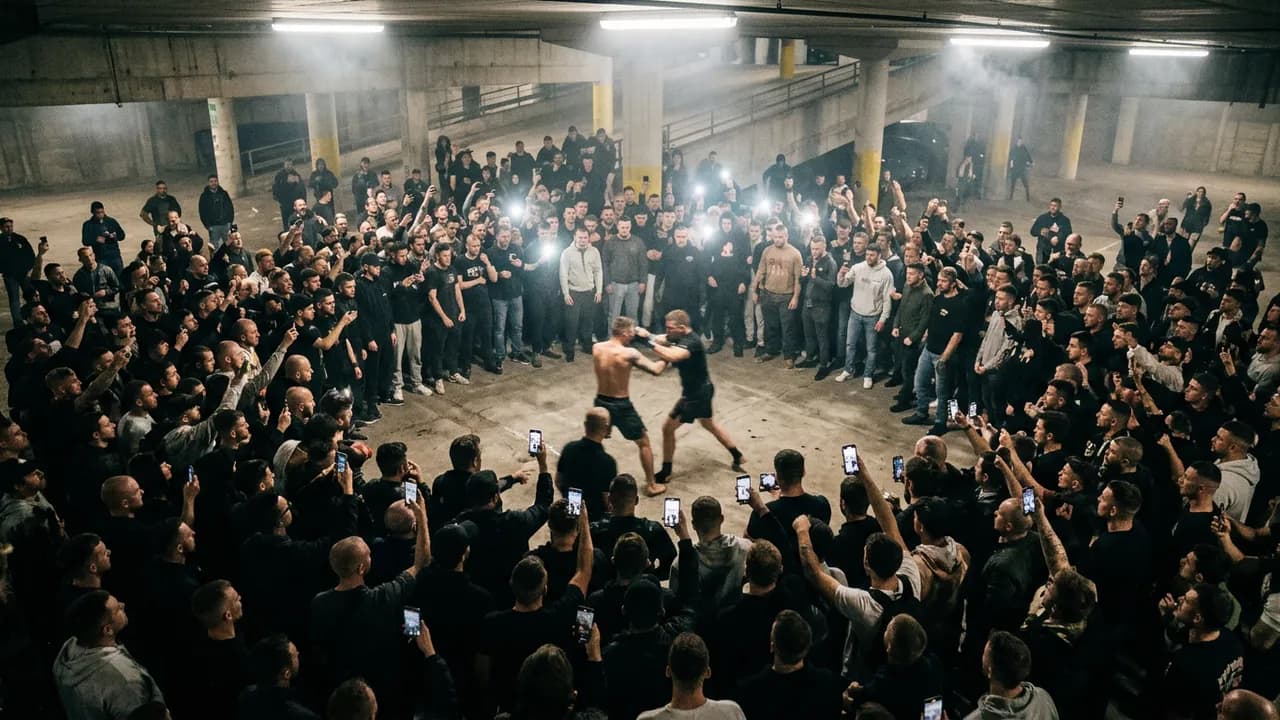
The name stuck. Satan's Backyard (also known simply as "The Yard") became the unofficial name for the primary Streetbeefs fighting location; the monthly cards are still billed as "OG Yard" events, held in Winchester since January 2024. The original Yard was a residential lot, not a field: ESPN, reporting from the property, described a narrow lot behind Wilmore's two-storey home in Harrisonburg, with vine-covered tree trunks, rusty clothesline poles beside a charcoal grill, punching bags hung from the trees, and a makeshift ring set on a central patch where the grass has been worn to dirt. Wikipedia records that Wilmore has also staged events at various other locations on the East Coast over the years, but the Satan's Backyard branding has followed wherever Streetbeefs goes.
The moniker captures something essential about the Streetbeefs experience: this is not a climate-controlled arena with padded floors and medical teams on standby. It is an outdoor, exposed, raw environment where fighters face not just their opponents but the elements themselves.
Format and Rules
The format-by-format breakdown — what each of the four disciplines allows and bans, the 18+ ID rule, and how titles are won — lives in the Streetbeefs rules page; the summary below covers the essentials.
Despite its underground reputation, Streetbeefs operates with a surprisingly structured set of rules and safety protocols.
Disciplines
Fighters can compete in multiple combat sports formats:
- Boxing: 12-ounce boxing gloves, standard boxing rules
- Kickboxing: 12-ounce boxing gloves with kicks permitted
- Mixed Martial Arts (MMA): 4-ounce MMA gloves, full MMA ruleset
- Brazilian Jiu-Jitsu / Grappling: Submission-only matches
Weight Classes
Weight classes are enforced at Streetbeefs events. Fighters are weighed and matched against opponents of similar size to ensure competitive balance and fighter safety.
Safety Protocols
- All fighters must be 18 or older (the "18 to 60" range often quoted is the Scrapyard branch's rule, not HQ's)
- Government-issued photo ID is required to verify age
- Fighters sign waivers before competing
- A referee is present for all fights
- Matches can be stopped by referee decision, knockout, submission, or verbal surrender
- No weapons of any kind are permitted
What Is Not Allowed
- No fighters under 18
- No payment to fighters (this is what keeps the events outside the jurisdiction of state athletic commissions)
- No admission fees charged to spectators
- No unsanctioned "street rules" fighting -- every match has a defined ruleset agreed upon before the bout
Fighter Roster and Notable Champions
ATrain
Widely regarded as one of the most dominant fighters in Streetbeefs history, ATrain compiled an impressive winning record across multiple appearances. Known for his technical striking and ability to finish fights, ATrain became a fan favorite whose bouts consistently drew high view counts on YouTube.
Delvin "Kuntry Hoodlum" Hamlett
Delvin Hamlett earned the Streetbeefs 205-pound heavyweight championship and went unbeaten in eight fights since joining the organization in December 2017. A powerful, aggressive fighter with knockout power in both hands, Hamlett became one of the most feared competitors to step into the Streetbeefs ring.
Shinigami (Danny Uribe)
Perhaps the most unlikely star in Streetbeefs history, Danny "Shinigami" Uribe defied every stereotype about what a backyard fighter should look like. A self-described goth and devoted karate student who trained at The Lab BJJ in Lancaster, California, Shinigami compiled an 8-2 record in Streetbeefs competition and earned the Streetbeefs West Coast Championship. His spinning techniques and unorthodox style made him a viral sensation, and his success helped launch a transition into professional competition.
Cornflake
The heavyweight boxing champion of Streetbeefs who went on to run the Streetbeefs Pound 4 Pound branch in Tidewater, Virginia. Cornflake represents the Streetbeefs pipeline at its best: a fighter who competed, earned respect, and then gave back by helping to operate a satellite branch of the organization.
For more on Streetbeefs' most memorable bouts, see our Legendary Streetbeefs Fights and Top 10 Streetbeefs Knockouts lists.
Title System
Streetbeefs maintains a championship title system across multiple weight classes and disciplines. Titles are defended at regular events, and champions earn recognition within the Streetbeefs community and its substantial online following. The championship structure gives fighters something to work toward beyond individual victories and provides narrative continuity across events -- a feature that has helped Streetbeefs build a loyal audience in the same way that traditional promotions do.
09 / Up next / How to Watch
While the specific weight classes and current champions change over time, the title system covers the major combat sports disciplines (boxing, kickboxing, MMA) and multiple weight divisions within each. Championship fights follow the same basic rules as regular bouts but carry additional prestige and community recognition.
How to Watch
Streetbeefs content is freely available across multiple platforms:
- YouTube: The primary platform. The main Streetbeefs channel hosts over 3,600 videos with full fights, highlights, and behind-the-scenes content. All fights are uploaded for free.
- Website: streetbeefshq.com serves as the organizational hub with event information, fighter sign-ups, and links to all content platforms.
- Social Media: Streetbeefs maintains active presences on Instagram and Facebook with fight clips, announcements, and community engagement.
Watch on YouTube
The official Streetbeefs YouTube channel is the primary destination for all fight content:
Streetbeefs on YouTube -- Over 3,600 fights uploaded for free, plus highlights, behind-the-scenes footage, and fighter interviews. Subscribe for new fight uploads.
Unlike some underground fighting organizations that charge for content or restrict access, Streetbeefs has always made its fights available for free. The organization generates revenue through YouTube advertising, merchandise sales, and brand partnerships rather than pay-per-view or subscription models.
Who Gets to Compete
Streetbeefs is open in a way almost no other combat-sports organization is. There are no tryouts, no membership fees, and no long-term commitments — the bar is being 18 or older with a government-issued photo ID. That openness is the point: the organization exists to absorb disputes that would otherwise be settled with a weapon, so turning people away would defeat the purpose. Matchmakers pair by weight, discipline, and experience, and nobody gets paid, which is what keeps the whole operation outside the athletic commission's jurisdiction.
The step-by-step process — where to apply, what disqualifies you, the waiver, and what fight day actually looks like — is in how to join StreetBeefs.
Legal Status
Streetbeefs operates outside a licensing regime, not inside a legal permission. Virginia regulates combat sports through Title 54.1, Chapter 8.1 of its Code, administered by the Department of Professional and Occupational Regulation (DPOR). § 54.1-828 is the chapter's definitions section: an "amateur" is someone who has never fought "for money, compensation, or reward other than a suitably inscribed memento", and anyone who has is a "professional". § 54.1-829 requires promoters, boxers and martial artists to be authorized by DPOR or a sanctioning organization it approves, and § 54.1-830 exempts amateur boxing, amateur wrestling and amateur exhibition bouts. Breaking the chapter is a Class 1 misdemeanor (§ 54.1-834). Paying fighters would make them professionals, which is why the organization's own site says it is illegal in Virginia to pay amateur fighters. The 2025 amendments to the chapter (SB 1245, 2025 Acts cc. 95 and 111) changed ringside-physician and fee rules, not these exemptions.
Two caveats matter. The amateur martial-arts exemption in § 54.1-830 covers only school, Department of Corrections and U.S. Olympic Committee events, so the "no pay, no commission" position is the organization's reading for its MMA and kickboxing bouts rather than anything the statute spells out. And the chapter is a licensing law: it does not make a fight lawful. Virginia's assault and battery statute (§ 18.2-57) still applies, and whether it is ever used against a consensual bout is a matter of police and prosecutorial discretion.
Wilmore has been meticulous about maintaining these legal boundaries. The organization's YouTube videos and social media consistently emphasize that all matches are "100% legal" for participants aged 18 and older. No money changes hands between Streetbeefs and its fighters, no admission is charged to spectators, and all events take place on private property with the consent of all participants. That same distance from commission oversight is why the promotion sits outside every sportsbook's catalog.
This legal structure has allowed Streetbeefs to operate openly for over 15 years without significant legal challenges. Law enforcement in Virginia has generally taken a hands-off approach. That is discretion, not a legal ruling in the organization's favor.
Media Coverage
Streetbeefs has received extensive coverage from major national and international publications:
- ESPN: A long-form feature by ESPN profiled Chris "Scarface" Wilmore and the organization's mission of keeping violence off the streets by channeling it into the ring.
- The Washington Post: Photographer Matt McClain has covered Streetbeefs events multiple times, producing a photo-documentary series that captured the raw atmosphere of the fights and the diverse backgrounds of participants. A major interactive feature was published in 2024. An earlier feature in 2019, "For eight years, he held a grudge", followed individual fighters through the conflict resolution process.
- The New York Times: The 18-minute documentary "Guns to Gloves" examined the social dynamics and cultural significance of backyard fighting in America.
- The New Yorker: An in-depth profile exploring the intersection of violence, community, and conflict resolution that Streetbeefs represents, including a photography project by Brian Finke.
- WMRA (Virginia Public Radio): A segment exploring Streetbeefs as "a different kind of mediation."
- MEL Magazine: Featured Streetbeefs under the headline "Fists Up, Guns Down."
- JMU's The Breeze: Local university newspaper coverage examining the organization's presence in the Harrisonburg community.
For more on how media has covered underground fighting, see our history of how YouTube created underground fighting and the Streetbeefs zero-to-4-million subscribers story.
13 / Up next / Sub-Brands and Branches
This level of mainstream media attention is unprecedented for an underground fighting organization and speaks to the unique cultural niche that Streetbeefs occupies.
Sub-Brands and Branches
Streetbeefs has expanded beyond its Virginia base through a network of affiliated branches:
Streetbeefs West Coast
Operated by Martin Rubio and Alex Chenard, Streetbeefs West Coast runs events in Las Vegas, Nevada, and parts of California. The branch maintains the same rules, format, and ethos as the original while serving the western U.S. combat sports community. Shinigami (Danny Uribe) earned his championship through the West Coast branch.
Website: streetbeefswc.com | Instagram: @streetbeefs_westcoast
For more details, see our Streetbeefs West Coast guide.
Streetbeefs Pound 4 Pound
Based in Tidewater, Virginia, this branch is run by Cornflake, the former Streetbeefs heavyweight boxing champion. Pound 4 Pound extends the Streetbeefs presence in the Mid-Atlantic region.
Streetbeefs Scrapyard
Located in Gig Harbor, Washington, the Scrapyard is operated by a promoter known as Firechicken and serves the Pacific Northwest. The Scrapyard describes itself as "a LEGAL backyard fight organization" and is an official branch of the Streetbeefs network.
Each branch operates semi-independently but adheres to the core Streetbeefs principles: no fighter payment, age verification, weight class enforcement, and the overarching mission of providing a constructive alternative to street violence. A full breakdown of every branch and its territory is in where Streetbeefs is located.
Read More About Streetbeefs
- Streetbeefs Rules: the four fight formats, eligibility and the title system.
- Underground Fighting by City: where backyard and underground cards run, city by city.
FAQ
Is Streetbeefs legal?
It is unlicensed, which is not the same as legal. Because no fighter is paid, the events stay outside Virginia's combat-sports licensing law (Va. Code §§ 54.1-828 to 54.1-830). That law grants no permission to fight; assault law still applies, and enforcement is up to local police and prosecutors. The organization has operated openly since 2008 without significant legal challenges.
Do Streetbeefs fighters get paid?
No. Fighters at Streetbeefs events do not receive any financial compensation. This is a deliberate choice that keeps the organization outside the jurisdiction of state athletic commissions. The no-payment policy is a non-negotiable aspect of the Streetbeefs model.
How old do you have to be to fight at Streetbeefs?
Fighters must be 18 or older; the HQ event pages set no upper limit. A government-issued photo ID is required to verify age before any fighter is allowed to compete. The "18 to 60" range quoted elsewhere is the Scrapyard branch's rule.
What is the difference between Streetbeefs and the UFC?
Streetbeefs is an unsanctioned, amateur backyard fighting organization. The UFC is a professional, globally sanctioned MMA promotion. Streetbeefs fighters are not paid, events are held outdoors on private property, and there is no path to official professional records through the organization. However, some Streetbeefs alumni like Shinigami have used the platform as a stepping stone to professional careers.
Can anyone fight at Streetbeefs?
Any person 18 or older with a valid government-issued ID can sign up to fight. There are no experience requirements, tryouts, or membership fees. However, matchmakers do attempt to pair fighters of similar size and experience levels.
How is Streetbeefs different from KOTS?
Streetbeefs uses gloves, enforces weight classes, maintains a referee, and operates within a defined legal framework. KOTS fights are bare-knuckle, on concrete, with essentially no rules. Streetbeefs is focused on community conflict resolution; KOTS is focused on extreme combat. The two organizations represent opposite ends of the underground fighting spectrum.
Has Streetbeefs produced any professional fighters?
Yes. Several Streetbeefs alumni have gone on to compete in professional or semi-professional combat sports. Shinigami (Danny Uribe) is perhaps the most notable example, transitioning from the Streetbeefs West Coast circuit to professional competition. See our guide on underground fighters who went pro for more examples.
Has Streetbeefs ever been shut down or prosecuted?
No. The organization has run openly since 2008 without a significant legal challenge. Paying nobody keeps the events outside Virginia's combat-sports licensing law, and Wilmore has held that line deliberately, but that law does not authorize fights and assault law still applies. Local law enforcement has generally taken a hands-off view, which is a matter of discretion rather than a legal guarantee.