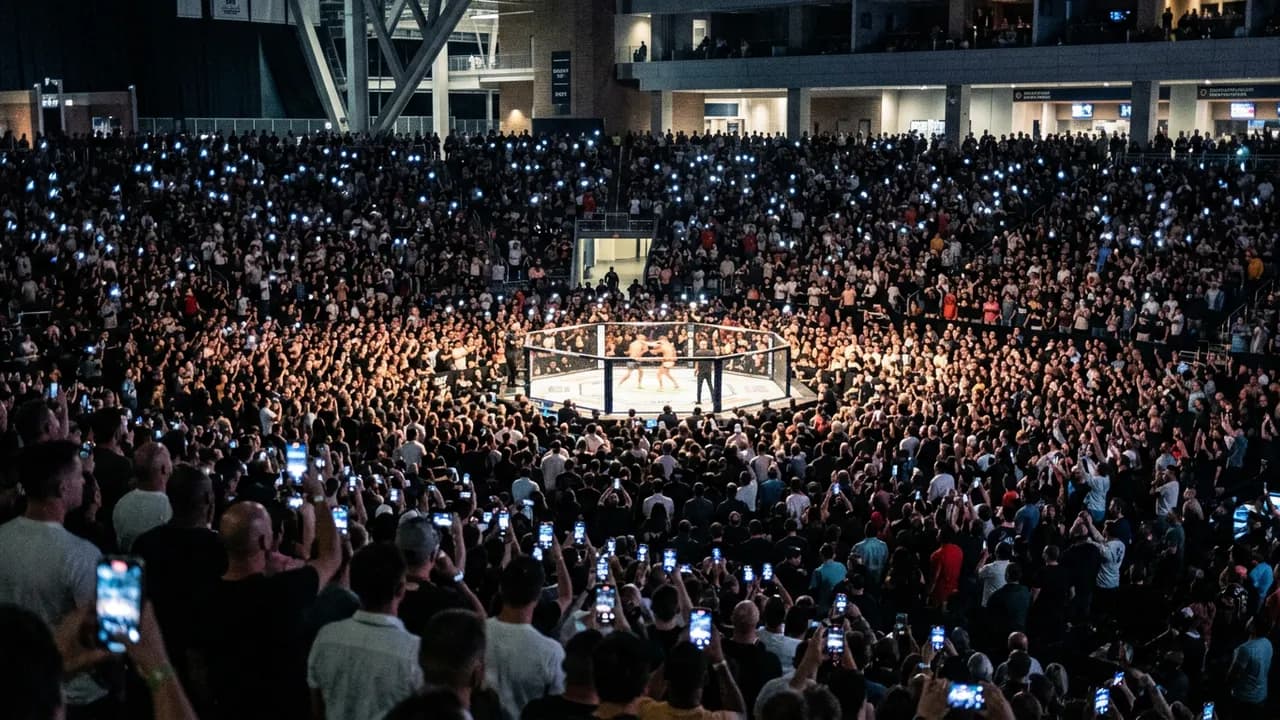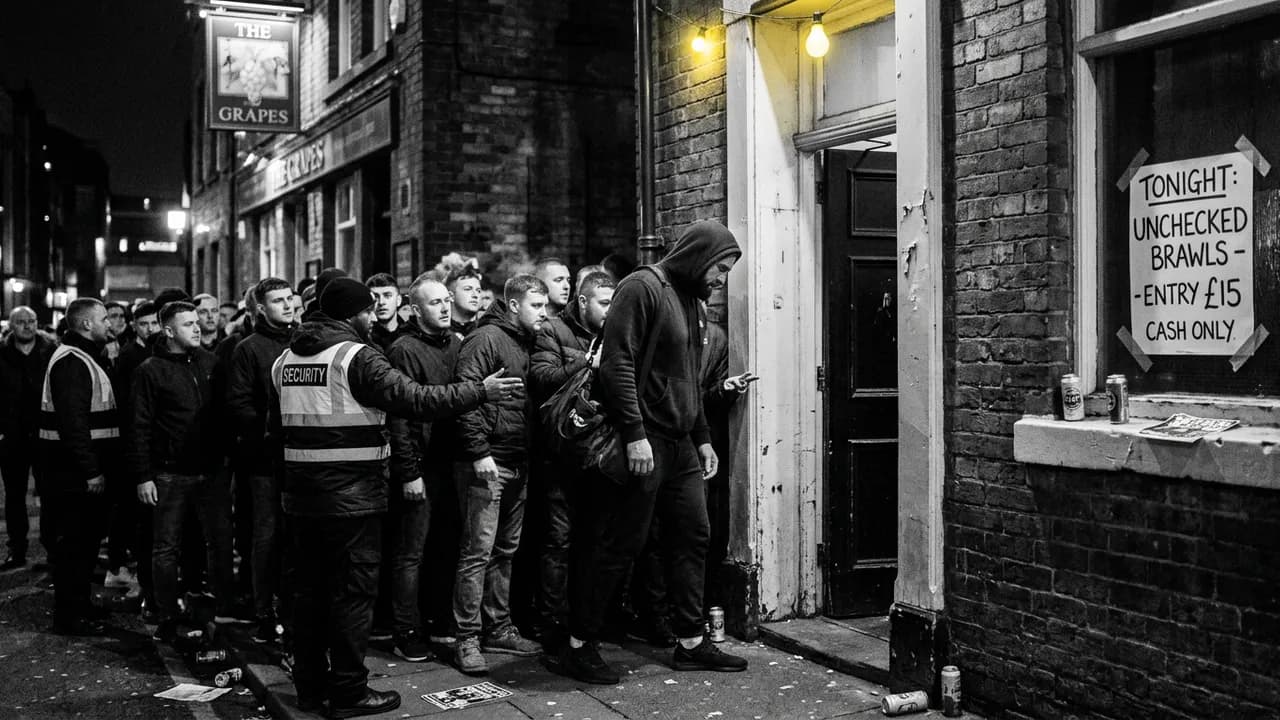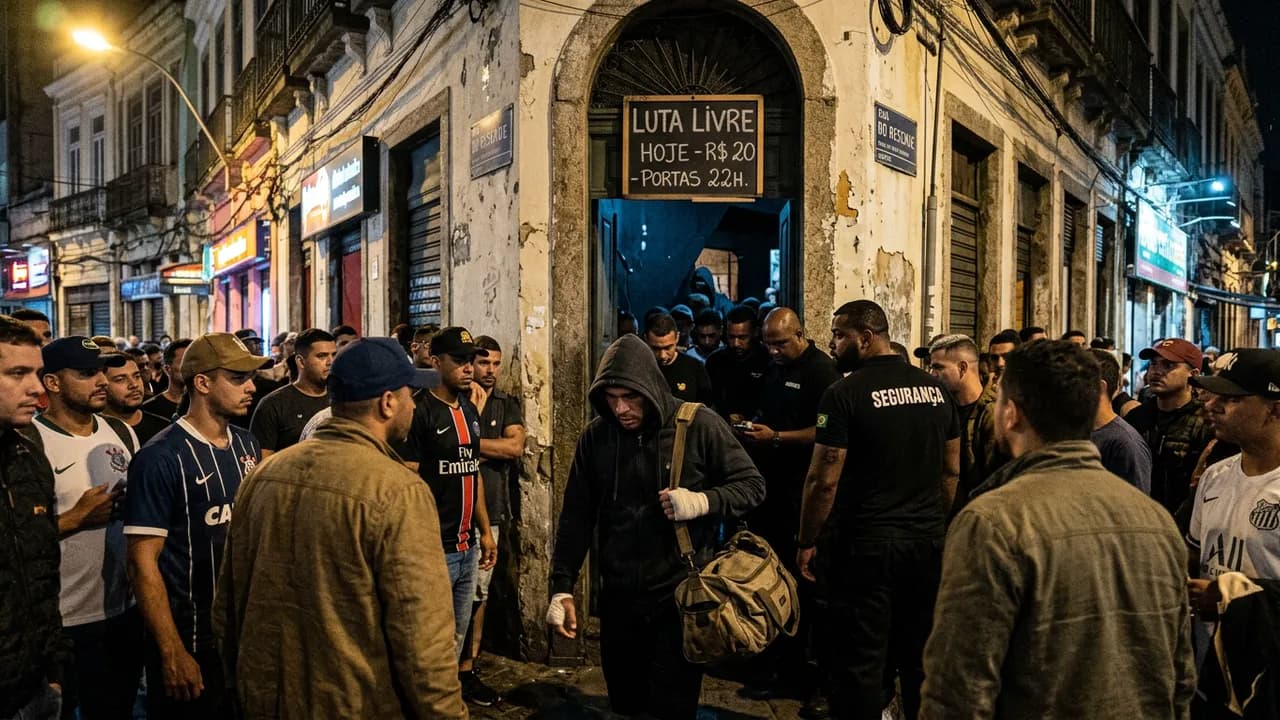
Brazil is where it all began. Before there was MMA, before the UFC, before Strelka or King of the Streets or Streetbeefs, there was Vale Tudo -- Portuguese for "anything goes" -- the original no-rules fighting format that emerged from the beaches of Rio de Janeiro and the academies of Sao Paulo in the early 20th century. Every underground fighting organization operating today, whether they acknowledge it or not, exists in the shadow of what Brazil created.
The story of Brazilian underground fighting is inseparable from the story of the Gracie family and the development of Brazilian Jiu-Jitsu (BJJ). The Gracie challenges -- open invitations for fighters of any style to test themselves against BJJ practitioners in no-rules combat -- were the template for every "come one, come all" fight event that followed. When Royce Gracie entered the first UFC tournament in 1993 and submitted three larger opponents in a single night to win the inaugural championship, he was not introducing a new concept. He was exporting a tradition that had been thriving in Brazil for decades.
But Brazil's fighting culture extends far beyond the Gracie family and BJJ. The country's favela communities have their own fighting traditions, rooted in capoeira, street survival, and the harsh realities of life in Brazil's urban margins. Vale Tudo events, stripped of the professionalism and production values of the modern UFC, continue to operate at the grassroots level across the country. And Brazil's sheer size -- 215 million people spread across a continental landmass -- ensures that the underground fighting scene is as vast and varied as the country itself.
History
Capoeira: The Hidden Martial Art
Brazil's martial tradition begins with capoeira, the Afro-Brazilian martial art that was developed by enslaved Africans as both a fighting system and a form of cultural resistance. Disguised as dance to avoid suppression by slaveholders, capoeira was practiced in secret throughout the colonial period and continued to be criminalized after abolition in 1888 until it was finally legalized in the 1930s.
Capoeira's history as a forbidden fighting art establishes a pattern that recurs throughout Brazilian martial culture: combat practiced outside the law, sustained by community networks, and transmitted through informal channels. The rodas (circles) where capoeira was practiced in the favelas and working-class neighborhoods of Salvador, Rio de Janeiro, and Recife were the original Brazilian fight clubs -- clandestine gatherings where combat skills were developed, tested, and passed down.
The Arrival of Jiu-Jitsu and the Birth of Vale Tudo
The story of modern Brazilian fighting begins with Mitsuyo Maeda, a Japanese judoka who emigrated to Brazil in 1914 and began teaching judo in Belem. Among his students was Carlos Gracie, who, along with his brothers -- most notably Helio -- adapted Maeda's techniques into what would become Brazilian Jiu-Jitsu, emphasizing ground fighting and submissions as methods for a smaller fighter to defeat a larger opponent.
The Gracie family's innovation was not just technical but promotional. Beginning in the 1920s, the Gracies issued open challenges to fighters of all styles, offering to fight anyone under Vale Tudo rules -- no rounds, no time limits, minimal restrictions. These challenges were advertised in newspapers and staged at academies, gyms, and eventually large public venues.
The first widely documented Vale Tudo event in Brazil took place in 1959, when the Gracies organized fights at the Maracanazinho gymnasium in Rio de Janeiro that drew thousands of spectators. The events pitted BJJ practitioners against boxers, wrestlers, capoeira fighters, and practitioners of various other martial arts. The Gracies won consistently, establishing the superiority of their system in the popular imagination and creating a blueprint for cross-style competition that would eventually become MMA.
The Golden Age of Vale Tudo
The 1960s through 1990s represented the golden age of Vale Tudo in Brazil. Events were staged regularly in Rio de Janeiro, Sao Paulo, and other major cities, drawing large crowds and significant media attention. The fights were brutal, with minimal rules -- typically limited to prohibitions on eye gouging and biting -- and no time limits. Matches could last for hours.
Key moments in Vale Tudo history include:
-
The Gracie-Kimura fight (1951): Helio Gracie fought Masahiko Kimura, one of the greatest judokas in history, in a Vale Tudo match at the Maracanazinho. Kimura broke Helio's arm with the reverse ude-garami (now universally known as the "Kimura lock" in his honor). The fight established Vale Tudo as a serious international combat event.
-
The early TV era: In the 1960s and 1970s, Vale Tudo fights were broadcast on Brazilian television, bringing the format to a national audience. The television exposure was intermittent and controversial, with broadcasters torn between the events' enormous popularity and concerns about the violence.
-
The Gracie Challenge fights: Throughout this period, the Gracie family continued to issue open challenges, creating a continuous stream of Vale Tudo events that served as both martial arts testing grounds and public spectacles. Rickson Gracie, regarded by many as the greatest fighter in the family, compiled an extraordinary undefeated record in challenge matches.
-
The IVC and WVC eras (1990s-2000s): The International Vale Tudo Championship (IVC) and World Vale Tudo Championship (WVC) were organized promotions that brought a degree of structure to the format while maintaining its no-rules character. These events produced fighters who would go on to compete in the UFC and PRIDE FC, including Wanderlei Silva, Vitor Belfort, and Pedro Rizzo.
The UFC and the Export of Vale Tudo
The creation of the Ultimate Fighting Championship in 1993 was, in essence, the export of Vale Tudo to the United States. Art Davie and Rorion Gracie conceived the UFC as a way to showcase BJJ's effectiveness in cross-style competition, directly replicating the Gracie Challenge format on American soil and American pay-per-view.
Royce Gracie's victories in the first UFC tournaments sent shockwaves through the global martial arts community and launched the modern MMA industry.
Royce Gracie's victories in the first UFC tournaments sent shockwaves through the global martial arts community and launched the modern MMA industry. But the UFC's evolution from a "no rules" spectacle to a regulated professional sport with weight classes, time limits, and extensive rule sets gradually distanced it from its Vale Tudo origins. As the UFC became more structured and more mainstream, the underground spirit of Vale Tudo retreated back to Brazil, where unsanctioned events continued at the grassroots level.
Active Organizations
Grassroots Vale Tudo Events
Vale Tudo never died in Brazil. While the international spotlight moved to the UFC, Bellator, and other sanctioned promotions, grassroots Vale Tudo events have continued to operate across the country, particularly in smaller cities and rural areas where regulatory oversight is minimal.
Format: The original Vale Tudo format: minimal rules (typically limited to no biting, no eye gouging, and no groin strikes), no rounds or limited rounds, no time limits or generous time limits. Some events use a ring or cage; others use a marked-off area on the ground.
Venues: Gyms, community centers, outdoor spaces, and makeshift arenas. Events range from small gym challenges with a dozen spectators to larger public events drawing hundreds.
Participant profile: Grassroots Vale Tudo draws from Brazil's enormous combat sports talent pool. BJJ practitioners, boxers, Muay Thai fighters, capoeira practitioners, wrestlers, and self-taught fighters all participate. The democratic ethos of the original Gracie challenges -- anyone can fight -- persists in modern grassroots Vale Tudo.
Academy Challenge Matches
The tradition of the Gracie Challenge has evolved into a broader culture of inter-academy challenge matches. BJJ academies and MMA gyms across Brazil regularly issue challenges to rival schools, with matches conducted under Vale Tudo or MMA rules. These inter-academy rivalries can be fierce, and the fights -- while not "underground" in the sense of being illegal -- operate outside the formal sanctioning structure of professional MMA.
Challenge matches serve multiple purposes: they test fighters and techniques in real combat, they establish the reputation of academies and instructors, and they maintain the competitive edge that has made Brazilian fighters among the most successful in the world. The culture of challenge matches is particularly strong in Rio de Janeiro's Zona Norte and in Sao Paulo's fighting communities.
Favela Fighting Culture
Brazil's favelas -- the sprawling urban communities that house millions of people in Rio de Janeiro, Sao Paulo, and other major cities -- have their own fighting traditions that operate entirely outside the mainstream combat sports infrastructure. Fighting in the favelas is shaped by the realities of life in communities where state authority is limited, gang conflicts are persistent, and the ability to fight is a practical survival skill.
Informal fighting events in favelas range from organized amateur boxing shows staged by community organizations to street fights that are filmed and shared on social media. The fighting culture in favelas draws from capoeira, boxing, BJJ, and street fighting, creating a hybrid style shaped by necessity rather than theory.
Notable Fighters
Brazil has produced more legendary fighters than perhaps any other country in the world. While the most famous have competed on the professional stage, many of them emerged from the underground Vale Tudo and challenge match culture:
-
Rickson Gracie -- Widely considered the greatest Gracie fighter and among the greatest martial artists ever. Rickson's Vale Tudo record, while disputed in its specifics, includes victories in challenge matches and organized events over a career spanning decades. His 1994 and 1995 victories at the Japan Vale Tudo tournament brought Vale Tudo to Japanese audiences and laid the groundwork for PRIDE FC.
-
Helio Gracie -- The patriarch of the Gracie fighting dynasty, whose Vale Tudo career from the 1930s through the 1950s established BJJ as the dominant martial art in no-rules competition. His fight against Kimura in 1951 is one of the defining moments in combat sports history.
-
Wanderlei Silva -- Known as "The Axe Murderer," Silva came up through the IVC Vale Tudo circuit before becoming one of PRIDE FC's most iconic fighters. His brutal, aggressive style was forged in Brazil's underground fighting scene.
-
Vitor Belfort -- Another product of Brazil's Vale Tudo system who transitioned to professional MMA, winning the UFC heavyweight tournament at age 19 before a long career in both the UFC and PRIDE.
These fighters represent the tip of an enormous iceberg. For every Rickson Gracie who became world-famous, there are thousands of Brazilian fighters who competed in Vale Tudo events, challenge matches, and informal fights without ever reaching international audiences.
Legal Status
Brazil's legal framework for combat sports is complex and varies significantly across the country's 26 states and federal district.
Professional MMA has been regulated at the federal level since 2013, when the Brazilian MMA Athletic Commission (CABMMA) was established. CABMMA oversees the sanctioning of professional MMA events, including fighter licensing, medical requirements, and event safety standards.
04 / Up next / How to Get Involved
Vale Tudo, in its original no-rules format, exists in a legal gray area. Events that operate with some degree of organization, safety measures, and participant consent are generally tolerated, particularly in states where regulatory oversight is less rigorous. Events that result in serious injury or death can attract criminal prosecution under Brazil's assault laws.
The practical reality is that enforcement varies enormously by location. In major cities like Rio de Janeiro and Sao Paulo, where regulatory infrastructure is more developed, unsanctioned events face greater scrutiny. In smaller cities and rural areas, grassroots Vale Tudo events operate with minimal interference from authorities.
Brazil's cultural acceptance of fighting -- shaped by centuries of capoeira, Vale Tudo, and the national passion for combat sports -- creates a permissive environment for events that would face immediate shutdown in many other countries. The line between "sanctioned" and "unsanctioned" is blurry, and many events operate in a space that is neither clearly legal nor clearly illegal.
How to Get Involved
As a Spectator
Grassroots Vale Tudo and challenge matches are accessible through Brazil's combat sports gym network. Attending events typically requires a connection to a gym or academy that is involved in the local fighting scene. Social media -- particularly Instagram and YouTube -- is increasingly used to publicize events and share footage.
For sanctioned professional MMA, Brazil hosts events from major international promotions (UFC regularly stages events in Brazil) as well as domestic promotions.
As a Fighter
Brazil offers what is arguably the deepest and most accessible combat sports training infrastructure in the world. BJJ academies, boxing gyms, Muay Thai schools, and MMA gyms exist in virtually every city and neighborhood. The concentration of world-class instruction, particularly in Rio de Janeiro and Sao Paulo, is unmatched.
Foreign fighters who travel to Brazil to train -- a common practice known as a "training camp" -- can immerse themselves in the culture that produced Vale Tudo and BJJ. Many academies welcome international students and can facilitate connections to the local fighting scene.
For those seeking competitive experience, inter-academy challenge matches and grassroots Vale Tudo events provide opportunities to fight outside the formal sanctioning structure. The pathway from grassroots events to professional competition is well-established in Brazil, and many successful professional fighters began their careers in unsanctioned events.
Related Countries
- United States -- The UFC was the export vehicle for Vale Tudo to the world. Brazilian fighters have been central to American MMA from the beginning, and Streetbeefs and other American underground organizations owe a philosophical debt to the Vale Tudo tradition.
- Japan -- Rickson Gracie's Vale Tudo victories in Japan helped create the conditions for PRIDE FC, which became the world's premier MMA promotion in the early 2000s. The Brazil-Japan fighting connection is one of the most important in combat sports history.
- Russia -- Russia's underground fighting scene, while culturally distinct, shares with Brazil a deep national fighting culture and a willingness to operate outside sanctioned frameworks. Strelka and Top Dog FC occupy a similar cultural space to grassroots Vale Tudo.
- Thailand -- Brazil and Thailand share a culture of combat sports as national identity, and Brazilian Muay Thai fighters frequently train and compete in Thailand.
- United Kingdom -- The UK's bare knuckle scene has drawn inspiration from Vale Tudo's no-rules ethos.
FAQ
What is Vale Tudo?
Vale Tudo (Portuguese for "anything goes") is the original no-rules fighting format that emerged in Brazil in the early 20th century. Vale Tudo matches feature minimal rules -- typically only prohibitions on biting, eye gouging, and groin strikes -- and originally had no time limits. Vale Tudo is the direct ancestor of modern MMA.
How did Vale Tudo influence the UFC?
The UFC was created in 1993 by Art Davie and Rorion Gracie as an American version of the Gracie Challenge / Vale Tudo format. Royce Gracie's victories in the first UFC tournaments demonstrated the effectiveness of BJJ in no-rules competition and launched the global MMA industry.
Does Vale Tudo still exist in Brazil?
Yes. While the professional MMA circuit has absorbed much of the talent and attention that once went to Vale Tudo, grassroots Vale Tudo events continue to operate across Brazil, particularly in smaller cities and rural areas. Inter-academy challenge matches, which follow Vale Tudo principles, also remain common.
What is the Gracie Challenge?
The Gracie Challenge was an open invitation issued by the Gracie family for fighters of any style to test themselves against BJJ practitioners in Vale Tudo rules. The challenges, which began in the 1920s, served as both a proving ground for BJJ and a public spectacle. The tradition continues in modified form through inter-academy challenge matches.
Is underground fighting legal in Brazil?
The legal status is complex and varies by state. Professional MMA is regulated by CABMMA. Grassroots Vale Tudo operates in a legal gray area, generally tolerated when conducted with some organization and safety measures. Events resulting in serious injury can attract criminal prosecution.
How important is Brazil to the history of underground fighting?
Brazil is foundational. The Vale Tudo tradition and the Gracie Challenge format are the direct ancestors of modern MMA, and every underground fighting organization in the world -- from KOTS to Strelka to Streetbeefs -- operates within a lineage that traces back to the beaches and academies of Rio de Janeiro and Sao Paulo.