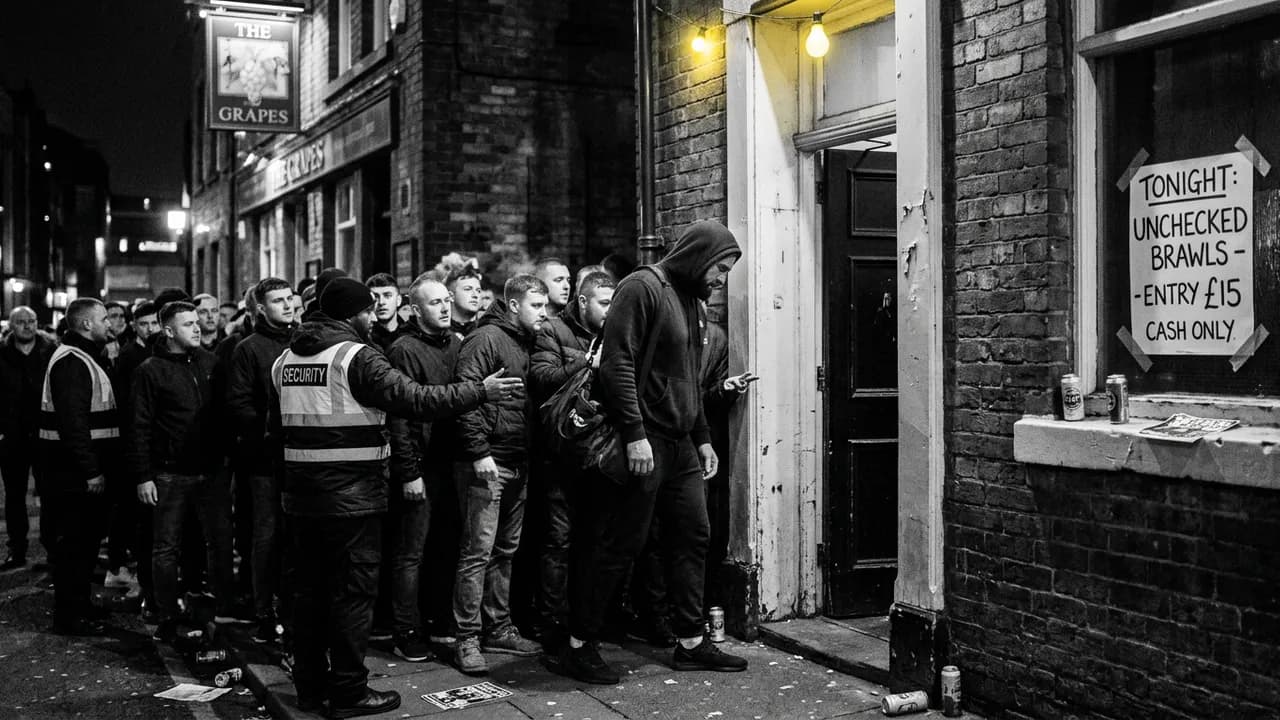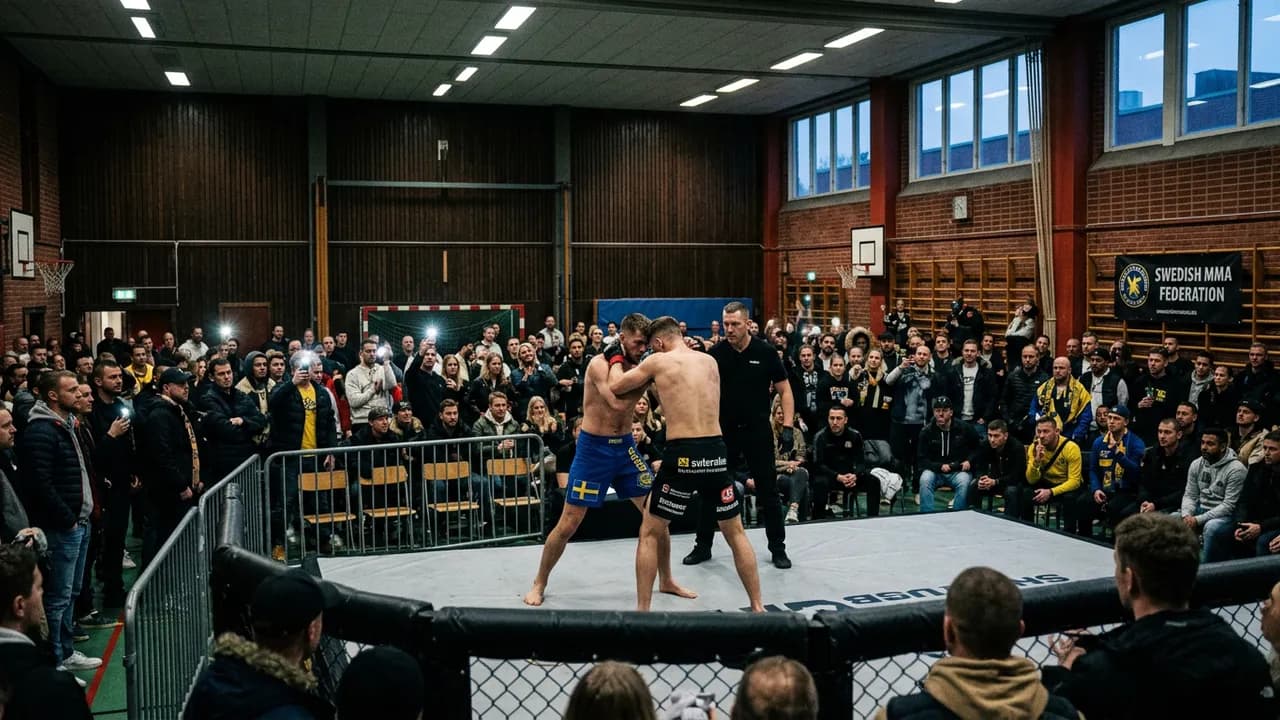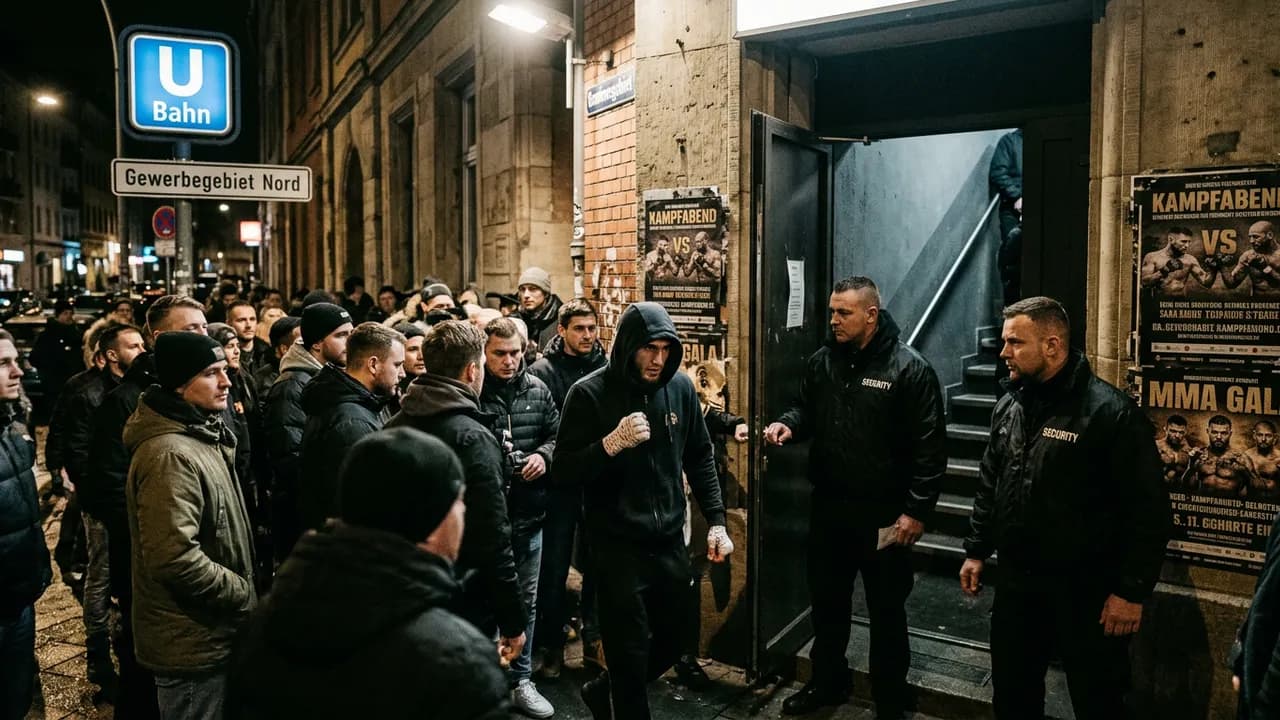
Ireland has one of the oldest and most culturally embedded bare knuckle fighting traditions in the world. Long before BKFC staged the first legal bare knuckle event in the United States since 1889, long before King of the Streets created the no-rules movement in Scandinavia, and long before YouTube turned underground fighting into a global content category, Irish men were settling disputes, defending family honor, and testing their courage with their bare fists on country roads, in fair grounds, and behind pubs across the island.
The Irish fighting tradition is inseparable from the culture of the Irish Traveller community, whose fair fights -- pre-arranged bare knuckle bouts between members of rival families or clans -- represent one of the most continuous and well-documented forms of underground fighting in the Western world. But Ireland's fighting culture extends well beyond the Traveller community. The country's deep boxing heritage, its pub culture, its history of political violence, and its fierce sense of personal and family honor have all contributed to a society where fighting carries less stigma and more cultural weight than in most other Western European nations.
In the modern era, Ireland has connected to the broader European underground fighting movement. No-rules clubs inspired by KOTS have established a presence on the island, drawing from Ireland's natural pool of tough, willing fighters. The country's proximity to the UK, with its developed bare knuckle boxing infrastructure, creates a constant flow of Irish fighters across the Irish Sea to compete in British promotions. And the enormous Irish diaspora -- particularly in the United States, the UK, and Australia -- means that Irish fighting traditions have shaped underground scenes far beyond the island itself.
History
The Fair Fight Tradition
The Irish fair fight is one of the oldest formalized fighting traditions in the English-speaking world. Rooted in Gaelic culture and sustained through centuries of colonial oppression, the fair fight served as a means of dispute resolution, honor defense, and community entertainment in a society where access to formal legal institutions was often limited or actively hostile.
Fair fights were typically held at fairs, markets, and other public gatherings, where the presence of a crowd ensured that the fight would be witnessed and the outcome acknowledged by the community. The fights were governed by informal but well-understood rules: bare fists only, no weapons, no kicking a downed man, and a system of "seconds" who served as both corner men and arbiters. The fights continued until one party could no longer continue or acknowledged defeat.
The tradition was not limited to the lower classes. Irish gentry participated in dueling with both swords and pistols, and the culture of personal honor that drove formal dueling at the upper levels of society was mirrored by the fair fight tradition at the popular level.
Traveller Bare Knuckle Culture
The Irish Traveller community has maintained the most continuous bare knuckle fighting tradition in the modern world. Traveller fair fights -- pre-arranged bouts between members of rival families or clans -- serve as a formalized system of conflict resolution that operates outside and parallel to the state legal system.
Traveller fair fights follow a specific protocol. A challenge is issued, often publicly and sometimes through social media in the modern era. Terms are negotiated, including the location, the time, and who will serve as referee. The fight takes place at the agreed-upon location -- a quiet road, a field, a lay-by, or increasingly a car park -- with family members and supporters from both sides present as witnesses.
The fights are bare knuckle, fought standing, with no kicking, biting, or ground fighting. A man who goes down is given time to rise. A man who refuses to continue has lost. The outcome is accepted by both sides as binding, and the dispute is considered settled.
This tradition has been extensively documented, most famously in the 2011 documentary Knuckle, which followed the bare knuckle feuding between the Quinn-McDonagh, Joyce, and Nevin families over a period of twelve years. The documentary revealed a fighting culture that was at once brutally violent and bound by a strict code of honor that both participants and spectators understood and enforced.
01 / Up next / Boxing Heritage
Traveller fair fights have become increasingly visible in the internet age, with fight videos regularly surfacing on YouTube and social media. This visibility has generated both fascination and controversy, with critics arguing that the public circulation of fight videos glorifies violence and exploitation, and defenders maintaining that the fair fight tradition is a legitimate cultural practice that deserves respect and understanding.
Boxing Heritage
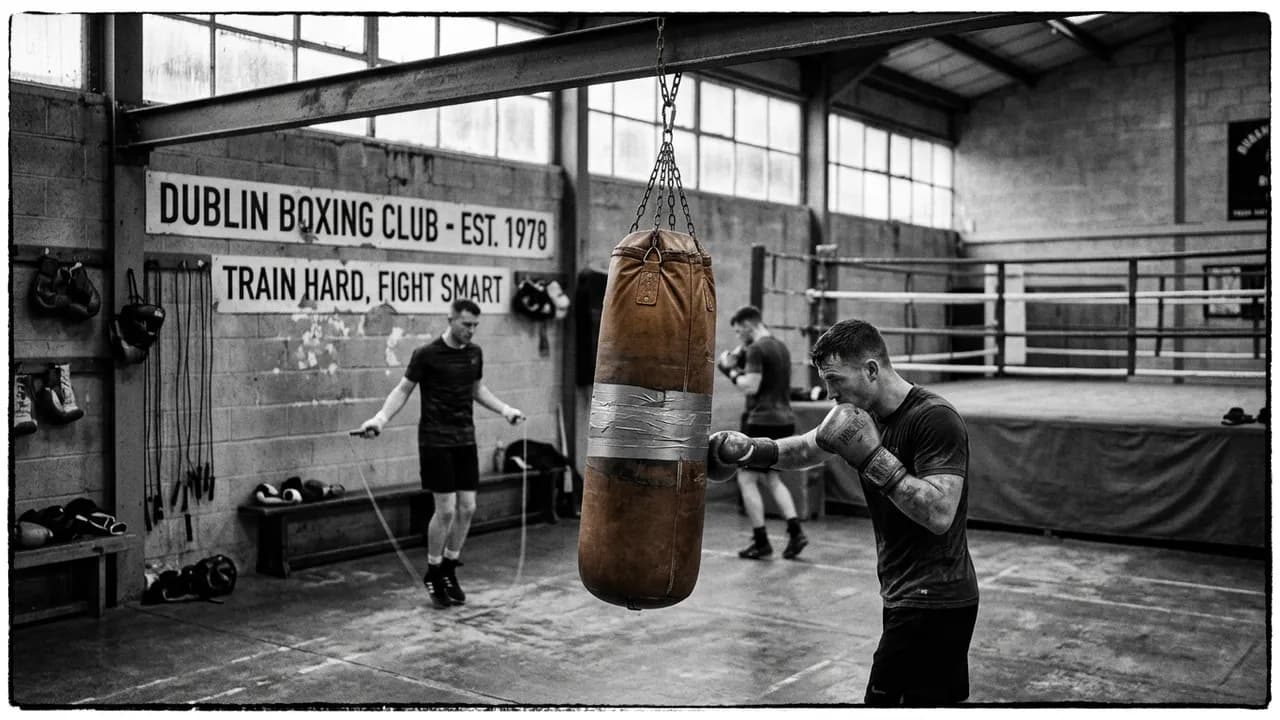
Ireland punches far above its weight in professional and amateur boxing. The country has produced world champions across multiple eras, from Barry McGuigan to Steve Collins to Carl Frampton to Katie Taylor, arguably the greatest female boxer in history. The amateur boxing infrastructure, supported by the Irish Athletic Boxing Association (IABA), extends into virtually every town and city on the island.
This boxing heritage feeds directly into the underground scene. Irish men grow up in a culture where boxing is normal, accessible, and respected. The skills developed in amateur boxing gyms are transferable to bare knuckle fighting, and the distinction between a tough sparring session in a club gym and an informal fight behind a pub can be thin.
Active Organizations
KOTS-Connected No-Rules Clubs
Ireland hosts no-rules fight clubs that draw their format and philosophy from the King of the Streets movement. These clubs have emerged primarily in Dublin and other urban centers, drawing from the broader European underground fighting network.
Format: The KOTS-inspired format: bare fists, no rounds, no time limits, hard surfaces. Fights continue until stoppage by knockout, submission, or corner intervention. Headbutts, elbows, and clinch striking are permitted.
Organization: Events are organized through encrypted messaging channels, with locations disclosed shortly before events. The clubs draw participants from both the boxing/MMA gym community and from social networks where fighting is culturally normalized.
Scale: Ireland's relatively small population (approximately 5 million on the island) limits the scale of the organized no-rules scene compared to larger European countries. Events tend to be smaller and more intimate than their counterparts in Germany or Poland, but the quality of fighters -- given Ireland's deep boxing culture -- is high.
Traveller Fair Fights
While not organized as a "fight club" in the modern sense, the Traveller fair fight tradition functions as an ongoing, decentralized system of arranged bare knuckle combat. Fair fights continue to occur regularly across Ireland and among Irish Traveller communities in the UK.
The fair fight tradition has adapted to the modern era in several ways. Challenges are now frequently issued through social media, particularly Facebook and YouTube. Fight videos are recorded and distributed online, creating a visibility that the tradition never had in previous generations. And some elements of modern combat sports -- hand wrapping, seconds with water and towels, designated referees -- have been incorporated into the fair fight format.
Cross-Border Bare Knuckle Competition
Ireland's proximity to the UK, combined with the free movement of people within the Common Travel Area, means that Irish bare knuckle fighters have easy access to the more developed British scene. Irish fighters regularly compete on UK cards run by promotions including BKB, UBKB, and Spartan BK.
The relationship flows both ways. UK-based fighters of Irish descent, many from Traveller backgrounds, compete in events on both sides of the Irish Sea. The Irish-British fighting connection is one of the strongest cross-border fighter pipelines in European underground combat.
Notable Fighters
Ireland's most notable underground fighters come predominantly from the Traveller community's bare knuckle tradition, where certain family names carry enormous weight.
The Quinn-McDonagh, Joyce, and Nevin families were documented extensively in the film Knuckle (2011), which followed their inter-family feuds across more than a decade. These families have produced generations of bare knuckle fighters, with fighting skill and reputation passed down as a form of family inheritance.
Beyond the Traveller community, Ireland's rich boxing tradition means that a large pool of skilled fighters exists who may participate in informal or unsanctioned fighting. The line between tough amateur boxing and underground fighting is blurred in many Irish communities, where boxing culture is deeply embedded in everyday life.
Irish fighters have also made significant impacts in the international underground scene. The Irish diaspora in the UK has produced bare knuckle competitors who fight on British cards, and Irish-Americans have been a presence in the American underground scene since the days of bare knuckle prize fighting in the 19th century.
Legal Status
Underground fighting is illegal in both the Republic of Ireland and Northern Ireland, though the legal frameworks differ.
In the Republic of Ireland, assault causing harm is a criminal offense under the Non-Fatal Offences Against the Person Act 1997. Participation in unsanctioned fighting events does not benefit from the sporting exemption that protects licensed boxing and MMA, and both fighters and organizers face potential prosecution. In practice, enforcement against Traveller fair fights has been inconsistent, reflecting both the practical difficulties of policing events that are organized informally and at short notice, and a broader societal ambivalence about interfering with Traveller cultural practices.
In Northern Ireland, which is part of the United Kingdom, assault laws under the Offences Against the Person Act 1861 apply.
In Northern Ireland, which is part of the United Kingdom, assault laws under the Offences Against the Person Act 1861 apply. The legal environment for unsanctioned fighting in Northern Ireland mirrors that of the rest of the UK, where unlicensed boxing and no-rules events are treated as assault.
Sanctioned combat sports operate legally across Ireland. Boxing is regulated by the IABA and the Boxing Union of Ireland (BUI) for amateur and professional competition respectively. MMA operates under the oversight of various governing bodies, with Ireland benefiting from a strong MMA culture driven in part by the success of Conor McGregor, whose rise from Dublin's Straight Blast Gym to UFC stardom has been one of the defining stories of modern combat sports.
The legal ambiguity surrounding Traveller fair fights is a persistent issue. While the fights are technically illegal, they serve a dispute resolution function within a community that has historically had an adversarial relationship with state institutions. Some advocates have argued for a formal recognition framework that would acknowledge the cultural significance of fair fights while introducing safety measures and oversight.
How to Get Involved
As a Spectator
Traveller fair fights are, by their nature, community events attended by family members and supporters of the participants. Outside observers are not typically welcome, though fight footage frequently appears on social media after the fact.
No-rules clubs inspired by KOTS operate through encrypted channels with restricted access, requiring personal connections within the network to attend.
For legal combat sports, Ireland offers a vibrant boxing and MMA scene with events staged regularly across the country. Dublin, Belfast, Cork, and Galway all host professional and amateur combat sports events that are open to the public.
As a Fighter
Ireland's extensive network of boxing and MMA gyms provides the foundation for any aspiring fighter. The IABA amateur boxing system is accessible throughout the country and provides structured competition at local, regional, and national levels.
For fighters interested in bare knuckle competition, the UK promotions -- particularly BKB and UBKB -- accept applications from Irish fighters. The proximity of the UK and the ease of travel within the Common Travel Area make cross-border competition straightforward.
For no-rules fighting, connections within the broader European underground network -- accessible through gym communities, combat sports social media, and personal networks -- are the pathway to participation.
Related Countries
- United Kingdom -- Closest neighbor and the primary destination for Irish bare knuckle fighters. Home to KOTR, BKB, UBKB, and Spartan BK. The Irish-British fighter pipeline is one of the strongest in European underground combat.
- Sweden -- Home of KOTS, whose no-rules format has influenced fight clubs in Ireland.
- United States -- The Irish diaspora shaped American bare knuckle fighting culture in the 19th century. Modern connections include BKFC, which has attracted fighters of Irish descent.
- Russia -- The global leader in underground fighting content, whose organizational models have influenced the European scene that Irish fighters participate in.
- Germany -- European partner in the KOTS-inspired no-rules movement, with cross-border fighter connections.
FAQ
What are Traveller fair fights?
Traveller fair fights are pre-arranged bare knuckle bouts between members of rival Irish Traveller families or clans. They serve as a formalized dispute resolution system with specific protocols: challenges are issued, terms negotiated, and fights conducted with bare fists under rules that prohibit kicking, biting, and striking a downed opponent.
Is bare knuckle fighting legal in Ireland?
No. Unsanctioned fighting, including bare knuckle bouts, is illegal under assault laws in both the Republic of Ireland and Northern Ireland. However, enforcement against Traveller fair fights has been inconsistent, and the cultural status of the tradition complicates the legal picture.
How does Ireland connect to KOTS?
King of the Streets, based in Sweden, has inspired no-rules fight clubs in Ireland, particularly in Dublin and other urban centers. These clubs adopt the KOTS format -- bare fists, no rounds, hard surfaces -- while operating independently of the Swedish organization.
What role does boxing play in Irish underground fighting?
Boxing is deeply embedded in Irish culture, and the skills developed in amateur and professional boxing directly transfer to bare knuckle and underground fighting. Ireland's boxing infrastructure, one of the strongest per capita in the world, produces fighters who are technically sophisticated and physically prepared for unsanctioned competition.
Where can I watch Irish underground fighting?
Traveller fair fight footage regularly appears on YouTube and social media platforms, though it is frequently removed for violating content policies. The Knuckle documentary (2011) provides the most comprehensive filmed account of the Traveller bare knuckle tradition. KOTS content on YouTube occasionally features Irish fighters competing in European no-rules events.