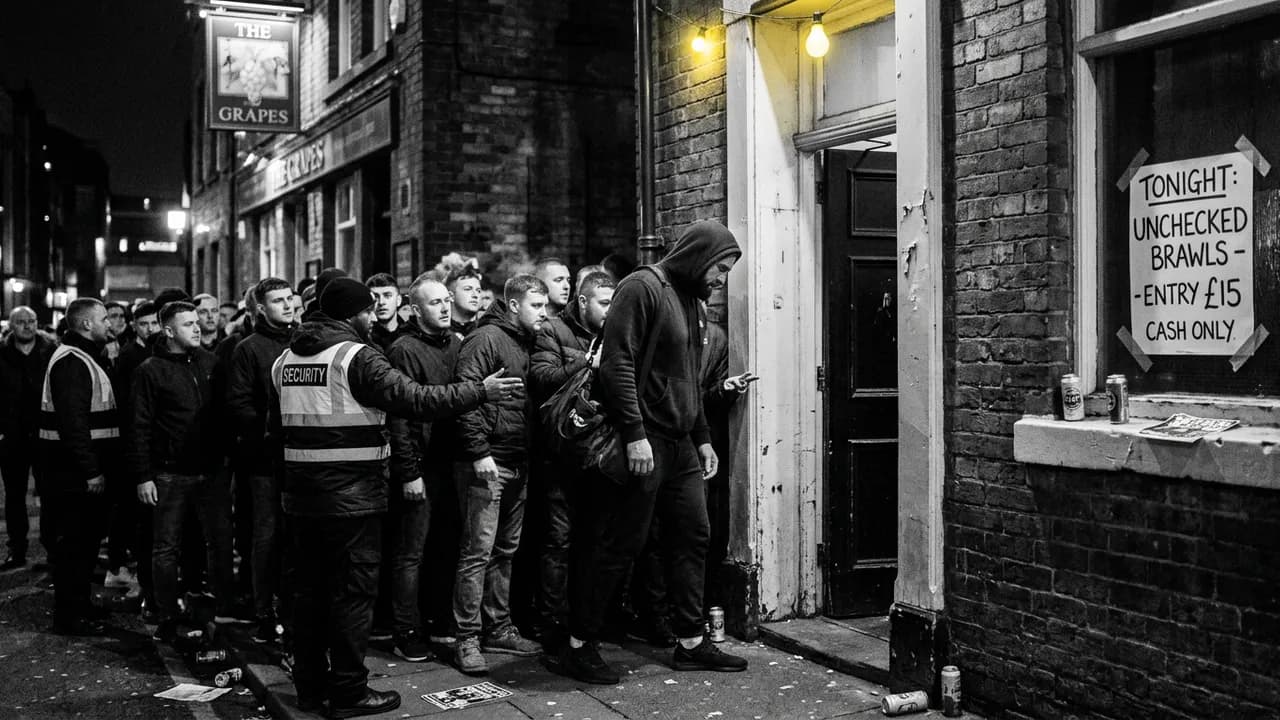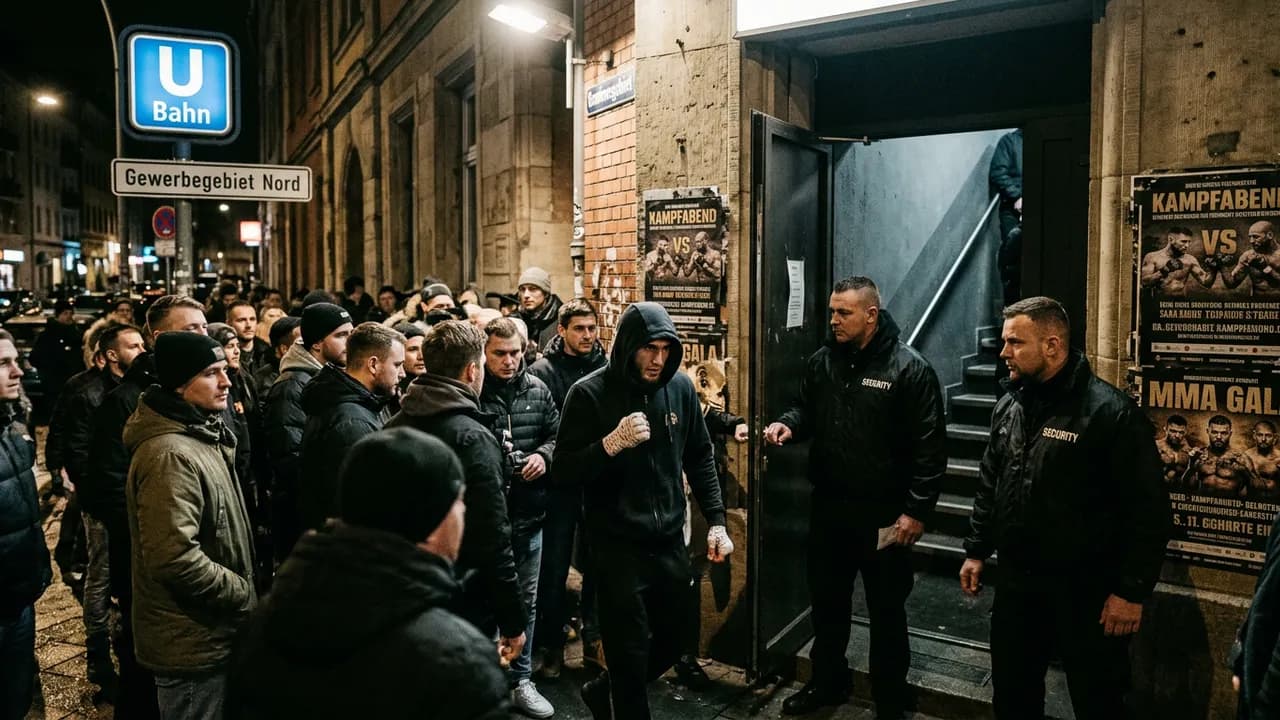
Germany occupies a singular position in the European underground fighting landscape. It is the only country where fighters settle disputes with medieval swords and axes under the banner of Holmgang, an organization so extreme that it makes bare-knuckle boxing look like a sanctioned sport. At the same time, Germany's deep hooligan culture -- rooted in the fanaticism of Bundesliga and lower-division football -- has produced a network of no-rules fight clubs directly inspired by Sweden's King of the Streets (KOTS). And beneath both of those layers, a growing bare knuckle boxing scene is taking root, drawing from the same working-class energy that has made the format explode across Europe.
What makes Germany distinctive is the range. From Viking-era dueling traditions revived with sharpened steel to concrete-floor brawls organized through encrypted Telegram channels, Germany's underground fighting scene spans a wider spectrum of violence than almost any other country on the continent. The infrastructure is there: a population of 84 million, massive urban centers with dense fight-gym ecosystems, a football culture that breeds organized aggression, and a tradition of martial discipline that runs from Teutonic knights through Prussian military culture to modern combat sports academies.
This guide covers Germany's underground fighting landscape from all angles: the organizations, the history, the legal environment, and the culture that sustains it.
History
Medieval Roots and the Judicial Duel
Germany's relationship with formalized combat stretches back more than a thousand years. The Germanic judicial duel, or Zweikampf, was a legally recognized method of settling disputes throughout the medieval period. Under the laws of the Holy Roman Empire, free men could challenge one another to single combat, with the outcome accepted as divine judgment. These duels were governed by elaborate codes that specified weapons, armor, and conditions, and they were overseen by officials who ensured compliance.
The tradition of academic fencing, or Mensur, emerged from this lineage. German university fraternities institutionalized dueling with sharpened blades as a rite of passage, a practice that continues in modified form to this day within certain Burschenschaften (student corporations). The scars earned in Mensur bouts -- the Schmisse -- were historically worn as badges of honor, visible markers of courage and social standing.
This cultural comfort with edged-weapon combat provides the context for understanding why an organization like Holmgang could emerge in Germany rather than elsewhere in Europe.
Hooligan Culture and Football Violence
Germany's football hooligan scene is among the most organized in Europe, though it receives less international attention than its English or Russian counterparts. The firms attached to clubs like Borussia Dortmund, Schalke 04, FC Cologne, Dynamo Dresden, and Hansa Rostock have maintained structured fighting units for decades. The rivalry between Dortmund and Schalke, in particular, has produced some of the most intense inter-firm violence in European football history.
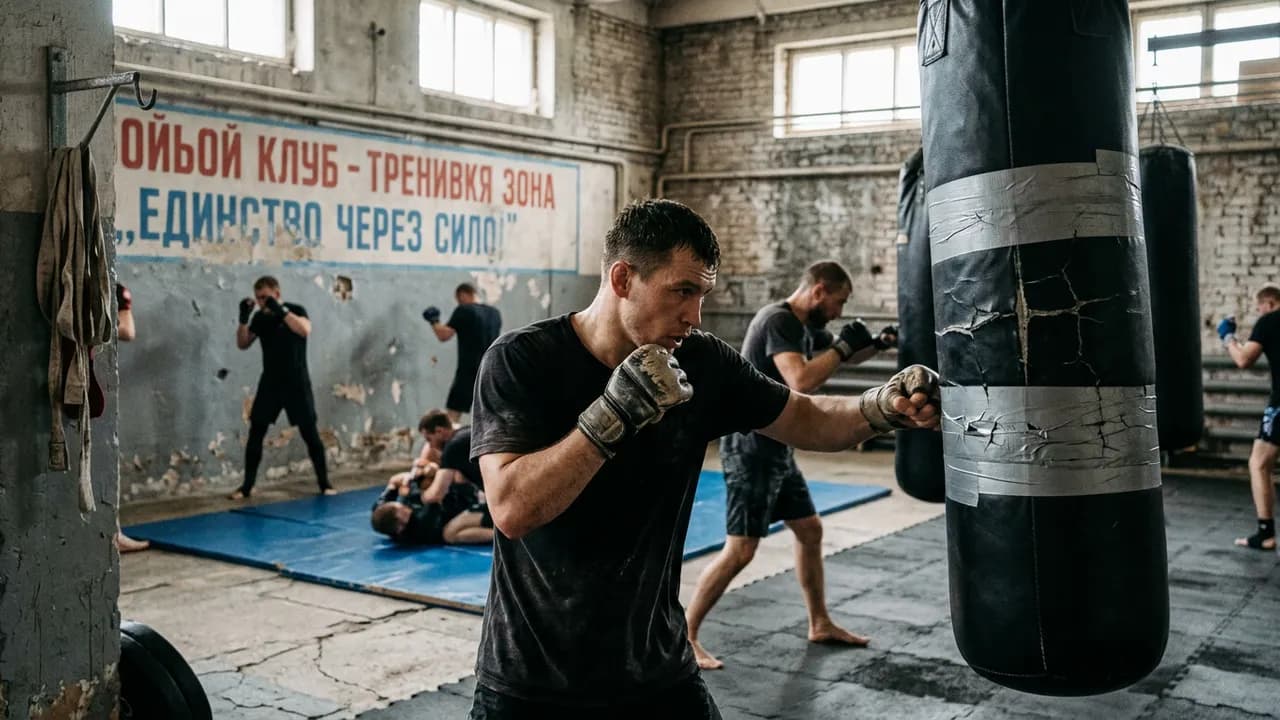
German hooligan firms were early adopters of the training-focused model pioneered by Russian and Polish firms in the 2000s. Rather than relying on chaotic street brawls, German firms began organizing structured training sessions in boxing, kickboxing, and MMA, with the explicit goal of fielding better-prepared fighters in pre-arranged confrontations with rival firms. This shift from spontaneous violence to organized combat created a ready-made audience and participant pool for the no-rules fight club movement when it arrived from Scandinavia.
The KOTS Wave
When King of the Streets emerged from Gothenburg, Sweden in 2013 and began distributing no-rules fight content on YouTube, Germany was one of the first countries where copycat organizations appeared. The KOTS model -- fights on concrete, no gloves, no rules beyond a loose prohibition on weapons, all filmed and distributed online -- resonated deeply with Germany's hooligan networks. By the late 2010s, multiple independent no-rules fight clubs were operating in German cities, using encrypted messaging apps to organize events and recruit fighters.
These clubs operate in deliberate obscurity. Unlike KOTS itself, which maintains a public website and social media presence, most German no-rules clubs avoid any public-facing identity. Events are announced through Telegram channels with restricted access, locations are disclosed only hours before fights begin, and footage is distributed selectively to avoid attracting law enforcement attention.
Active Organizations
Holmgang
Holmgang is the most extreme fighting organization operating in Europe, and possibly the world. Named after the historical Norse dueling practice that was outlawed across Scandinavia between 1006 and 1014, the modern Holmgang revival centers on Germany but has spread across the continent.
02 / Up next / KOTS-Inspired No-Rules Clubs
Format: Fighters use medieval weapons -- swords, axes, maces -- with minimal safety gear. Participants typically wear nothing more than T-shirts and basic padding. Strikes are delivered at full power, and the risk profile includes deep lacerations, broken bones, and potentially fatal injuries.
What makes it unique: There is nothing else like Holmgang in the modern fighting world. While historical European martial arts (HEMA) communities exist globally, they operate within structured safety frameworks with protective gear, scored points, and controlled contact. Holmgang dispenses with all of that. The fights are real, the weapons are dangerous, and the consequences are severe.
Legal status: Holmgang operates illegally. Organizing or participating in armed combat outside of sanctioned sporting frameworks violates German criminal law, specifically provisions governing assault with a deadly weapon and endangerment. The organization's clandestine nature reflects this reality.
Current status: Active but deeply underground. Information about specific events, locations, and participants is extremely difficult to obtain. The organization's existence is documented primarily through limited footage that has surfaced online and through reporting by combat sports media.
KOTS-Inspired No-Rules Clubs
Germany hosts multiple independent no-rules fight clubs that draw their format and philosophy from the King of the Streets movement. These are not KOTS affiliates in any formal sense -- they are autonomous organizations that have adopted the KOTS template.
Format: Bare fists on concrete or hard surfaces. No rounds, no time limits, no judges. Fights continue until knockout, submission, or a fighter's corner throws in the towel. Headbutts, elbows, clinch strikes, and ground-and-pound are all permitted. The only consistent prohibition is on weapons and eye gouging.
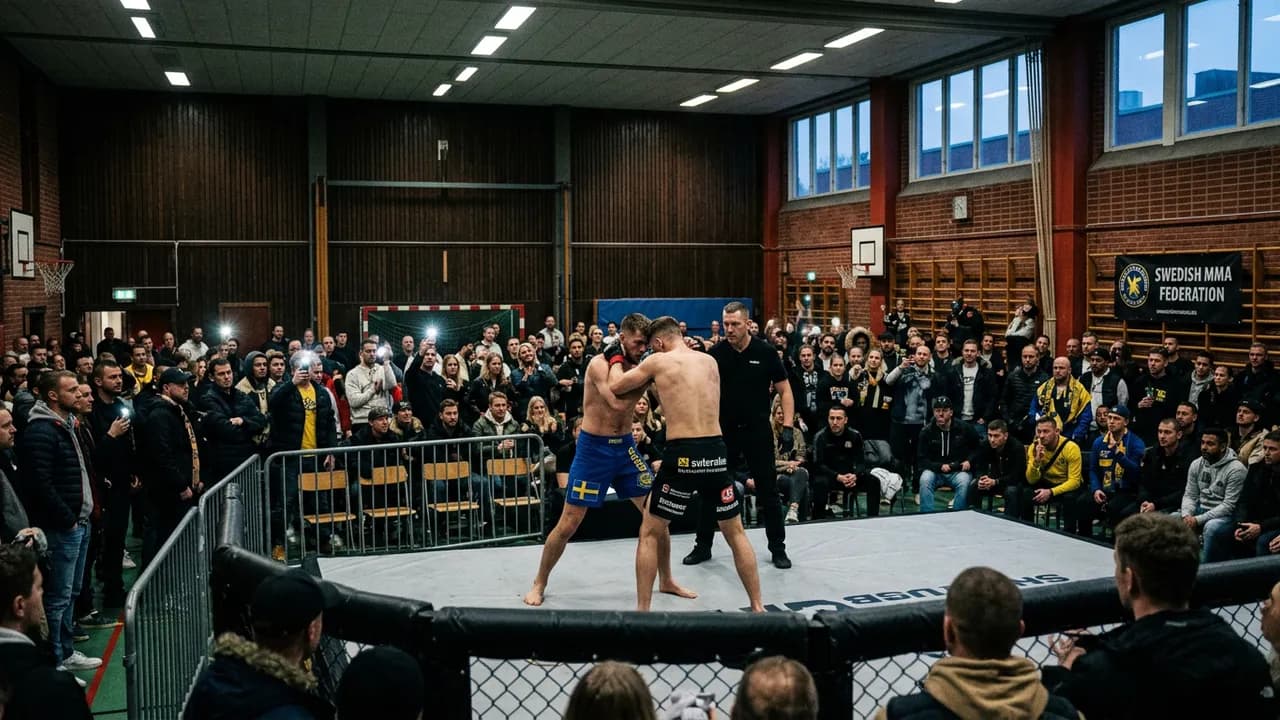
Organization: Events are organized through encrypted Telegram channels with vetted membership. Locations -- typically industrial spaces, parking structures, or rural properties -- are disclosed to fighters and spectators shortly before events. Attendance is typically capped at 50-100 people.
Participant profile: German no-rules clubs draw heavily from the hooligan community, but participation extends beyond football firms. Gym fighters looking for experience outside sanctioned competition, bouncers, security professionals, and combat sports enthusiasts all participate. The common thread is a willingness to fight without the safety net of gloves, rules, or medical supervision.
Growing Bare Knuckle Scene
Germany's bare knuckle boxing scene is less developed than the UK's but growing steadily. The success of BKFC internationally and the visibility of promotions running UK cards like BKB, UBKB, and Spartan BK have created interest among German fighters and promoters.
Several small-scale bare knuckle events have been staged in Germany, primarily in the industrial Ruhr Valley and in Berlin. These events operate in a legal gray area, as Germany lacks the specific regulatory framework for bare knuckle boxing that exists in some US states and the UK. Promoters have attempted to structure events as private sporting exhibitions to avoid regulatory scrutiny.
The German bare knuckle scene is closely connected to the broader European network, with German fighters traveling to compete in UK and Eastern European events, and fighters from those regions appearing on German cards.
Notable Fighters
Germany's underground fighting scene produces fighters who, by the nature of the scene's secrecy, remain largely anonymous. The no-rules clubs and Holmgang operate without public fighter profiles or tracked records. What is known comes from limited footage and word-of-mouth within the community.
German fighters have appeared on KOTS cards in Sweden, bringing the technical striking and conditioning developed in Germany's extensive boxing and kickboxing gym infrastructure. Several German fighters with hooligan backgrounds have competed in bare knuckle events across Europe, though tracking individual careers across the fragmented underground scene is nearly impossible.
The anonymity is intentional. In a country where participation in unsanctioned fighting events carries real legal consequences, fighters have strong incentives to keep their identities hidden.
Legal Status
Germany's legal framework for combat sports is relatively well-developed for sanctioned activities but creates significant risk for unsanctioned fighting.
Professional boxing and MMA are legal and regulated at the state (Land) level, with each of Germany's sixteen federal states maintaining its own regulatory approach. The German Boxing Federation (Bund Deutscher Berufsboxer) oversees professional boxing, while MMA operates under the umbrella of various martial arts federations.
Unsanctioned fighting events -- including no-rules clubs, Holmgang, and unlicensed bare knuckle boxing -- are illegal under multiple provisions of German criminal law. Participation can result in charges of assault (Körperverletzung), and organizers face additional liability for endangerment (Gefährdung). The severity of charges escalates significantly when weapons are involved, as in Holmgang, where organizers could face charges related to assault with a deadly weapon.
The bare knuckle scene, which operates more openly and with less extreme violence, faces a lower risk of prosecution but remains legally vulnerable.
In practice, enforcement is inconsistent. German police prioritize no-rules clubs and Holmgang when they become aware of specific events, but the encrypted communication and last-minute location disclosure used by organizers make proactive enforcement difficult. The bare knuckle scene, which operates more openly and with less extreme violence, faces a lower risk of prosecution but remains legally vulnerable.
German fighters who travel to compete in events in other countries -- particularly in Sweden, the UK, or Eastern Europe -- face no legal consequences in Germany for participation abroad, which has contributed to the cross-border flow of fighters within the European underground scene.
How to Get Involved
As a Spectator
The clandestine nature of Germany's underground fighting scene makes spectator access difficult. For no-rules clubs and Holmgang, attendance requires a connection to someone already within the network. Entry into Telegram channels where events are announced typically requires a personal referral from an existing member.
For the emerging bare knuckle scene, events are somewhat more accessible, with information occasionally posted on social media and combat sports forums. Following German-language combat sports accounts on Instagram and Telegram is the most reliable way to learn about upcoming events.
International events that feature German fighters -- particularly KOTS events in Sweden -- are more accessible, with information available through the KOTS website and social media channels.
As a Fighter
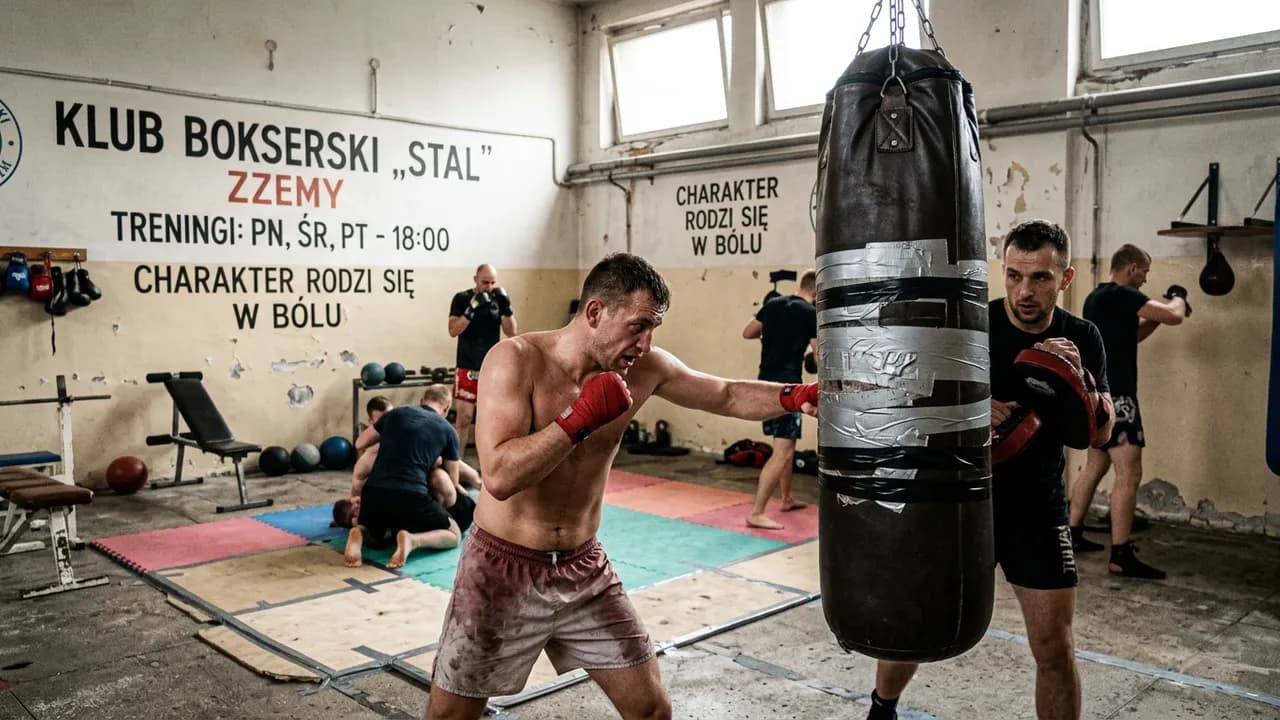
Aspiring fighters interested in Germany's no-rules scene should first develop a solid foundation in at least one combat discipline through a legitimate gym. Boxing, kickboxing, MMA, and wrestling gyms across Germany's major cities -- Berlin, Hamburg, Munich, Cologne, Frankfurt, and the Ruhr Valley cities -- can serve as entry points into the broader fighting community.
Connections to the underground scene are typically made through gym networks and social circles rather than through public recruitment. Fighters with established reputations in amateur or semi-professional combat sports are more likely to receive invitations to participate in no-rules events.
For bare knuckle boxing, the pathway is more straightforward. German fighters can apply to compete on UK cards run by BKFC UK, BKB, or Spartan BK, or seek out the emerging domestic bare knuckle scene through combat sports social media.
Related Countries
- Sweden -- Home of KOTS, the organization whose no-rules format has been most widely adopted in Germany.
- Denmark -- Neighbor with a growing underground scene through UUF, sharing fighters and organizational connections with Germany.
- Poland -- Eastern neighbor with deep hooligan-driven fight culture and cross-border fighter exchange.
- Russia -- The epicenter of global underground fighting, whose content and organizational models have influenced the German scene.
- United Kingdom -- Home to the most developed bare knuckle boxing infrastructure in Europe, a key destination for German bare knuckle fighters.
- France -- Home of FPVS, part of the broader European no-rules movement that includes German clubs.
FAQ
Is underground fighting legal in Germany?
No. Unsanctioned fighting events violate German assault laws. Organized combat with weapons, as in Holmgang, carries particularly severe legal consequences. Even bare knuckle boxing without sanctioning operates in a legal gray area. Only sanctioned boxing and MMA events operate legally in Germany.
What is Holmgang?
Holmgang is a medieval weapons fight club that operates primarily in Germany and across Europe. Named after the historical Norse dueling tradition, participants fight with swords, axes, and other medieval weapons with minimal protective gear. It is the most extreme form of underground fighting currently active in Europe.
How did KOTS influence the German scene?
King of the Streets, founded in Sweden in 2013, created the template for no-rules fighting on concrete that was adopted by independent clubs across Germany. German hooligan networks, already organized for inter-firm combat, were natural adopters of the KOTS format. While German clubs are not formally affiliated with KOTS, they follow the same basic rules and philosophy.
Where does underground fighting happen in Germany?
Events are staged in industrial spaces, parking structures, rural properties, and other locations that offer privacy and space. The Ruhr Valley, Berlin, Hamburg, and other major urban areas are the primary centers of activity. Specific locations are disclosed only shortly before events to minimize the risk of police intervention.
Is there bare knuckle boxing in Germany?
Germany has a small but growing bare knuckle boxing scene, influenced by the success of BKFC and UK-based promotions. Events have been staged primarily in the Ruhr Valley and Berlin, though the scene remains significantly less developed than in the UK or the United States. German fighters also travel to compete in bare knuckle events in other European countries.