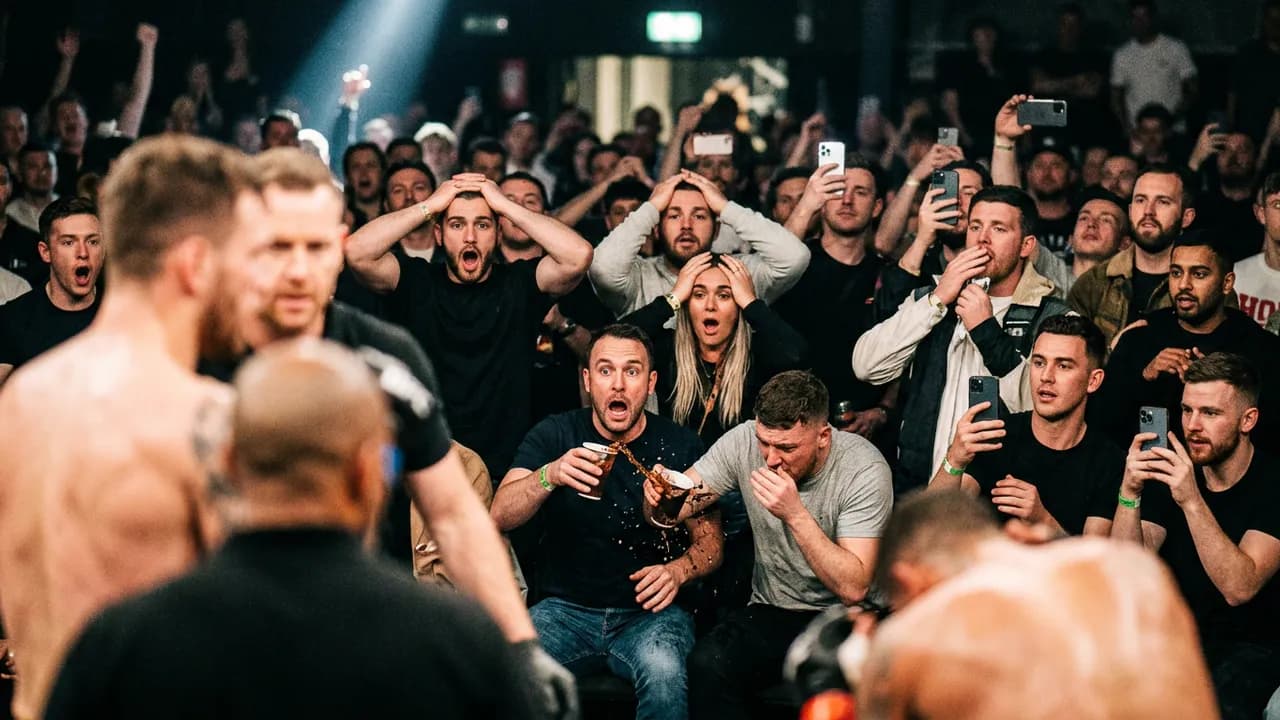
Quick Facts
| Detail | Info |
|---|---|
| Full Name | FPVS |
| Location | French Riviera, France (expanding nationwide) |
| Founders | Leon & Victor |
| Founded | Unknown (active as of mid-2020s) |
| Format | No rules, no gloves, concrete surface |
| Affiliation | Unaffiliated -- same rules as KOTS movement |
| Recruitment | Telegram |
| @fpvs.fr (100K+ followers) | |
| TikTok | @fpvs.frrr |
| Participants | Young men, ages 18-25 |
| Culture | National anthems, hand-wrapping rituals, mutual respect |
Overview
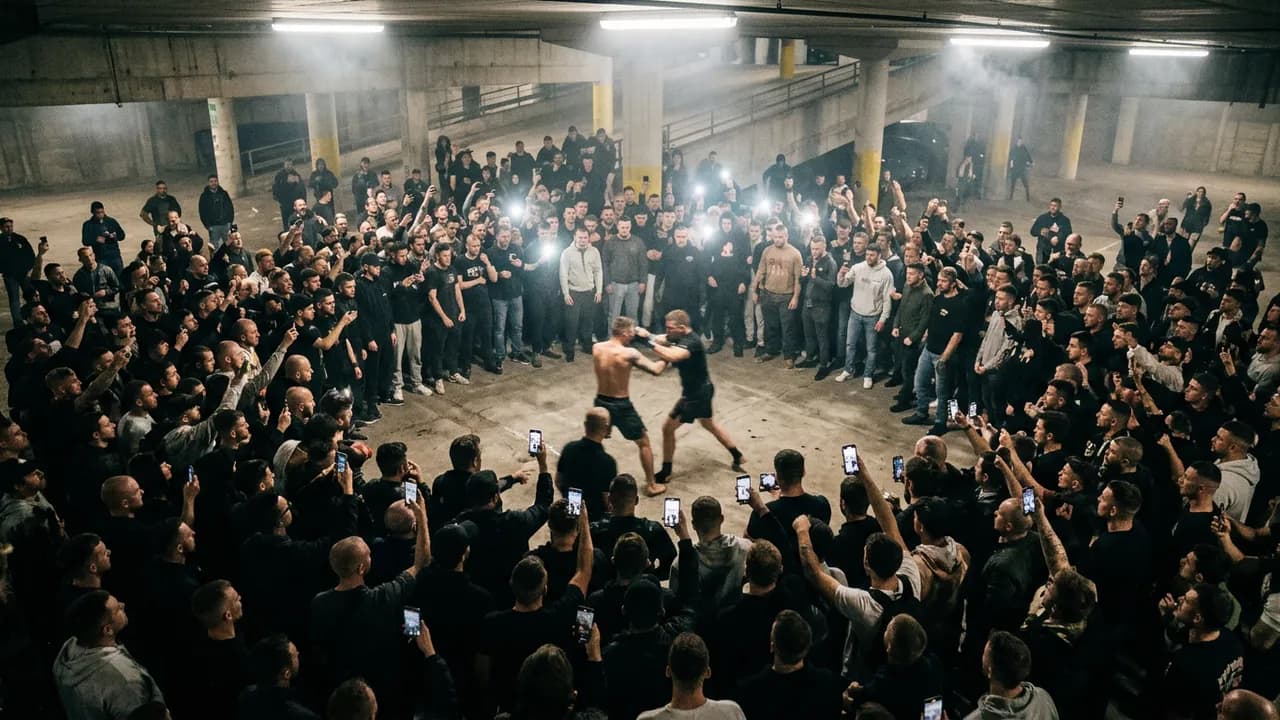
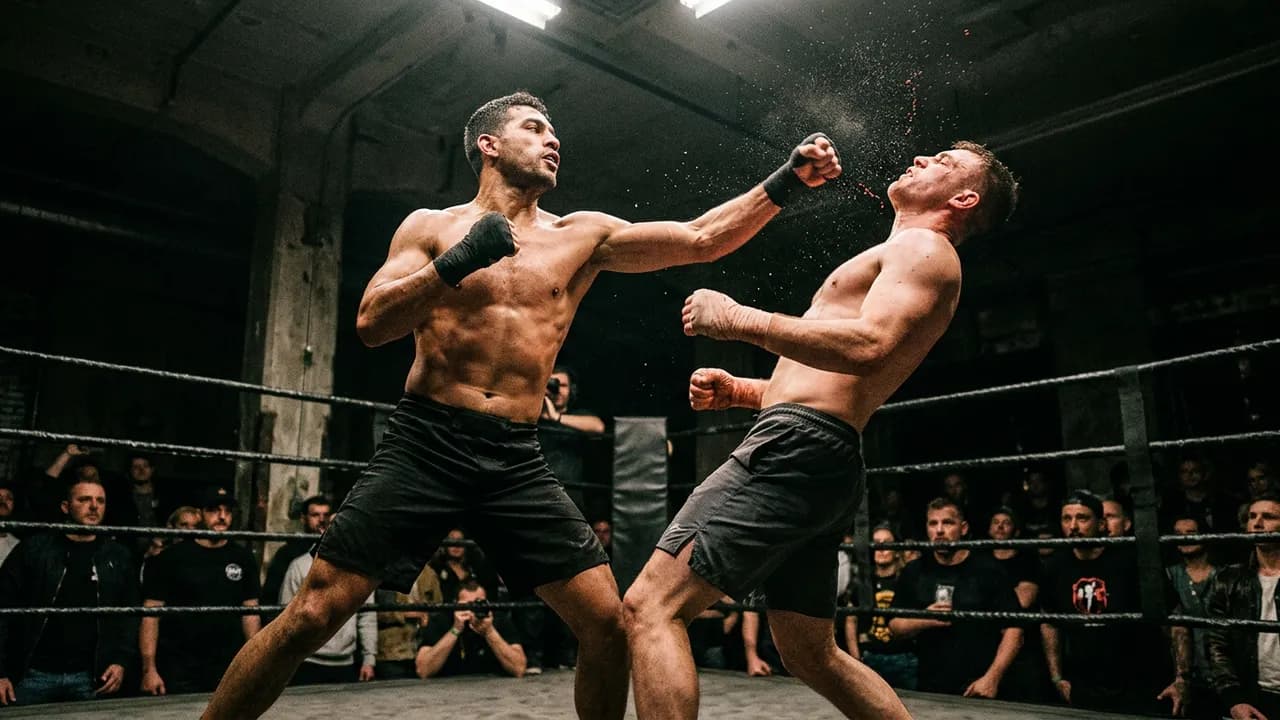
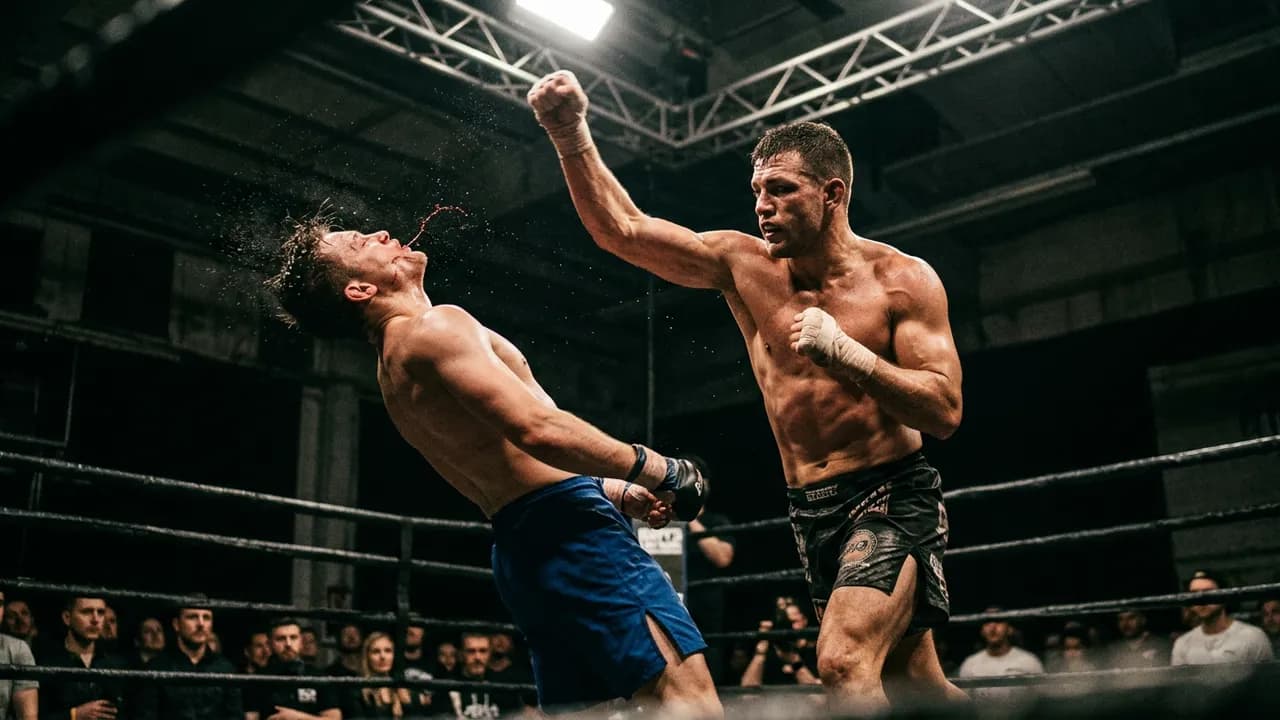
FPVS is a French underground fighting organization that stages no-rules bouts on bare concrete, without gloves, protective equipment, or referee intervention of the kind found in sanctioned combat sports. Founded by two twenty-year-olds known as Leon and Victor on the French Riviera, FPVS represents France's entry into the broader European no-rules fighting movement that King of the Streets birthed in Gothenburg, Sweden in 2013 and that has since proliferated across the continent through organizations like UUF Denmark and Holmgang.
FPVS operates under the same essential ruleset as KOTS -- no rounds, no decisions, no gloves, fights on hard surfaces until one combatant can no longer continue -- but it is not a KOTS affiliate, branch, or franchise. It is an independent operation that emerged organically from the same cultural current: young European men seeking physical confrontation stripped of the institutional framework that governs boxing, MMA, and even bare knuckle promotions like BKFC or BKB.
What distinguishes FPVS from the dozens of other copycat clubs across Europe is its cultural layer. Bouts are preceded by national anthems. Fighters wrap their hands in a ritualized process. Combatants shake hands or embrace after fights. The culture is one of respect between men who have chosen to test themselves under the harshest possible conditions, and FPVS's young founders have been deliberate about cultivating that ethos from the beginning.
History and Origins
The No-Rules Movement Reaches France
In 2013, an anonymous group calling themselves "Hype Crew" founded King of the Streets in Gothenburg, Sweden. KOTS introduced a format that was radical even by underground fighting standards: no rules, no rounds, no judges, no decisions. Fights took place on concrete. Biting, eye gouging, choking, head stamping, elbows, and headbutts were all permitted. KOTS posted its footage to YouTube, where it accumulated over a million subscribers. By the early 2020s, the KOTS model had spawned unaffiliated copycat operations across Europe -- in Germany, England, Ireland, Denmark, Poland, and eventually France.
FPVS emerged from this wave. Leon and Victor, both approximately twenty years old at the time of founding, were products of the French Riviera -- the stretch of Mediterranean coastline from Marseille to Monaco that is simultaneously one of Europe's most glamorous and most socially stratified regions. Beneath the yacht harbors and luxury hotels exists a large population of working-class young men -- construction workers, restaurant servers, laborers in the tourism industry -- for whom the gilded surface of the Cote d'Azur has little relevance to daily life. FPVS gave these men a space where physical courage mattered more than economic status, where a restaurant server could face a construction worker on equal terms, and where the outcome was determined by nothing more than will and ability.
Building Through Telegram
Unlike Streetbeefs, which built its audience on YouTube, or King of the Ring, which leveraged TikTok, FPVS chose Telegram as its primary communication and recruitment platform. Telegram's encrypted messaging, large group capacity, and minimal content moderation make it the preferred platform for underground fighting operations across Europe -- KOTS itself uses Telegram to share spectator locations before events. For FPVS, Telegram serves multiple functions: fighter recruitment, event coordination, location disclosure, and community building.
The choice also reflects the legal reality of operating an unsanctioned fighting organization in France. Organizing fights without sanctioning body approval carries legal risk, and Telegram provides operational security that posting openly on Instagram or YouTube would not. Footage from FPVS events has circulated on social media, but the operational core -- event scheduling, location sharing, fighter recruitment -- runs through encrypted channels.
The Founders
Leon and Victor represent a generational shift in underground fighting. Most major organizations were founded by men with significant life experience in violence or the criminal underworld. Chris "Scarface" Wilmore founded Streetbeefs after years of street life. The KOTS founders were described as "hooligans, organized criminals, and seasoned street fighters." Trevor Latham of the East Bay Rats was a product of the Bay Area punk scene.
03 / Up next / Format and Rules
Leon and Victor were approximately twenty years old when they started FPVS -- young working-class men who had watched KOTS videos online, absorbed the no-rules philosophy, and decided to create their own version in France. FPVS exists for and is run by the same demographic it serves: young men between eighteen and twenty-five who are looking for something that mainstream society and even mainstream combat sports do not provide.
Format and Rules
The No-Rules Framework
FPVS operates under the same fundamental ruleset that defines the broader KOTS-inspired no-rules movement:
- No gloves. Fighters compete bare-fisted. There is no hand protection of any kind beyond the cloth hand wraps that fighters apply before bouts.
- No rounds. There are no timed intervals. A fight begins and continues without interruption until it ends.
- No decisions. There are no judges and no scorecards. A fight does not go to a decision. It ends when one fighter submits, is knocked unconscious, or is physically unable to continue.
- Concrete surface. Fights take place on bare concrete. There are no mats, no canvas, no ring floor. When a fighter goes down, he hits concrete. This is the single most dangerous element of the format and the one that most sharply distinguishes it from every sanctioned combat sport in existence.
- Minimal restrictions. The no-rules label is largely accurate. The format permits striking techniques -- headbutts, elbows, knees -- that are banned in virtually every sanctioned combat sport. The practical limits of what is permitted are defined by the culture of the group rather than a formal written rulebook.
- Consent-based participation. Both fighters must agree to fight. This is not a forced-combat operation. Participation is voluntary.
The Concrete Factor
The concrete surface places FPVS in a fundamentally different risk category from operations that use rings, cages, or even outdoor surfaces like the sand rings used by Strelka. A fighter knocked down on concrete hits an unyielding surface with his skull, elbows, knees, and spine. The risk of traumatic brain injury, skull fractures, and spinal injuries is dramatically elevated. This is a deliberate choice that serves the same philosophical function as the absence of gloves: it forces fighters to confront the full consequences of physical combat without any institutional safety net.
Hand Wrapping
Although FPVS does not use gloves, fighters wrap their hands before bouts. The wrapping process has taken on a ritualistic quality within the organization -- a transition from everyday identity to combatant identity. The wraps provide a degree of support for the small bones of the hand and wrist, but their primary function within FPVS culture is ceremonial. The wrapping of the hands marks the moment when a young man from the French Riviera becomes a fighter.
Culture and Ritual
National Anthems
One of the most distinctive features of FPVS is the playing of national anthems before bouts. The anthem elevates the event from a street fight to a ceremony, connects the fighters to something larger than individual aggression, and establishes a tone of solemnity that carries through the bout. La Marseillaise -- a revolutionary battle hymn that calls citizens to arms -- connects the combatants to a tradition of French martial courage that predates modern combat sports by centuries.
Respect Between Combatants
FPVS places heavy emphasis on mutual respect between fighters. This may seem contradictory in an organization that permits bare-fisted combat on concrete, but it is consistent with the culture of the broader no-rules movement. King of the Streets events routinely feature fighters embracing after bouts. UUF Denmark participants describe the experience as bonding. The pattern holds across the movement: the more extreme the format, the more emphasis the culture places on respect, consent, and post-fight reconciliation.
In FPVS, this manifests in handshakes and embraces after fights, in the absence of trash talk or performative hostility, and in a general ethos that treats combat as a shared experience between two willing participants. The organization's culture explicitly rejects the idea that fighting is about hatred or humiliation.
The Demographic
FPVS draws its participants almost exclusively from young men between eighteen and twenty-five -- the youngest fighter demographic of any major underground fighting organization. The participants are working-class: construction workers, restaurant servers, laborers, and tradesmen. They are young men doing physically demanding work for modest wages in one of the most expensive regions of France, and FPVS gives them a form of status, identity, and community that their day jobs do not provide.
How to Watch
Online
FPVS footage circulates on social media platforms, but the organization does not maintain a dedicated YouTube channel or public social media presence comparable to operations like Streetbeefs or King of the Streets. Video clips from FPVS events can be found through searches on platforms like Telegram, Instagram (@fpvs.fr), TikTok (@fpvs.frrr), and YouTube (search "FPVS fight club"), often shared by participants or spectators rather than the organization itself.
06 / Up next / In Person
The decentralized nature of FPVS content distribution means there is no single reliable source for watching their fights. This is consistent with the organization's Telegram-centric operational model and its emphasis on operational security over audience building.
In Person
Attending FPVS events requires access to the organization's Telegram channels. Event locations are shared through encrypted messages to vetted participants and spectators. This is the same model used by King of the Streets, which sends spectator locations via Telegram before events, and by King of the Ring, which sends postcodes by text days before events.
How to Join
FPVS recruits fighters through Telegram. Prospective participants must connect with the organization through its Telegram channels, which function as both recruitment pipeline and community hub. The process is informal compared to sanctioned promotions -- there are no tryouts, no athletic commission physicals, and no formal application process of the kind that BKFC or BKB require.
The essential requirements are straightforward: you must be willing to fight under no-rules conditions on concrete without gloves, and you must be able to reach event locations on the French Riviera or wherever FPVS stages its bouts. The typical fighter is a young man between eighteen and twenty-five, though the organization's exact age requirements -- if any exist beyond the legal minimum -- are not publicly documented.
Prospective fighters should understand what they are signing up for. This is not a gloved boxing event in a padded ring. It is bare-fisted combat on concrete with no rounds and no decisions. The risk of serious injury is real and significant.
Legal Status
FPVS operates in a legal gray area. France does not have mutual combat exceptions like some American states, and organizing unsanctioned fighting events without approved federation oversight can carry criminal penalties. No publicly documented legal actions against FPVS have been reported as of early 2026, but the organization's low public profile may be a factor in its continued operation.
Related Organizations
FPVS exists within a network of European no-rules fighting organizations that share a common philosophical heritage:
- King of the Streets -- The Swedish organization that originated the no-rules concrete fighting format in 2013 and inspired FPVS and dozens of other copycat operations across Europe.
- UUF Denmark -- Denmark's underground fighting operation, which stages events in abandoned warehouses and industrial spaces. Listed on the KOTS website as an affiliate.
- Holmgang -- The German-based medieval weapons fighting organization that represents an even more extreme iteration of unsanctioned European combat.
- King of the Ring -- Manchester's underground boxing operation, which targets a similar young demographic but operates with gloves and timed rounds.
FAQ
What does FPVS stand for?
FPVS is the organization's identifying acronym used across its Telegram channels and within the French underground fighting community. The full expansion is not widely publicized outside the organization's inner circle.
Is FPVS affiliated with King of the Streets?
No. FPVS operates under the same no-rules, no-gloves, concrete-surface format that King of the Streets popularized, but it is an independent organization with no formal affiliation, partnership, or franchise relationship with KOTS. It is part of the broader no-rules movement that KOTS inspired, but it is not a KOTS branch.
How old are FPVS fighters?
FPVS fighters are predominantly young men between the ages of eighteen and twenty-five. The founders themselves, Leon and Victor, were approximately twenty years old when they established the organization.
Where does FPVS operate?
FPVS was founded on the French Riviera and primarily operates in that region of southern France. The specific locations of events are shared through Telegram and are not publicly disclosed in advance.
Is fighting on concrete legal in France?
Unsanctioned fighting events in France exist in a legal gray area. Organizing combat without the approval of a recognized sporting federation can carry legal consequences. FPVS's use of encrypted communication channels reflects an awareness of this legal exposure.
How is FPVS different from Streetbeefs?
The differences are fundamental. Streetbeefs uses gloves, operates on grass or soft surfaces, offers multiple combat disciplines, and functions as a public media operation on YouTube. FPVS uses no gloves, fights on concrete, follows a no-rules format, and operates primarily through encrypted Telegram channels. Streetbeefs emphasizes conflict resolution and community building. FPVS emphasizes raw physical testing under the most unforgiving conditions possible.
What safety measures does FPVS have?
FPVS operates with minimal formal safety infrastructure. Fighters wrap their hands before bouts, and the culture of mutual respect between combatants provides a social check on gratuitous violence. However, there are no ringside physicians, no athletic commission oversight, and no padded surfaces. The concrete fighting surface represents a significant and acknowledged risk of serious injury.
Can anyone join FPVS?
Recruitment is handled through Telegram. Prospective fighters must connect with the organization through its encrypted channels. The typical participant is a young working-class man from the French Riviera region, though the organization's exact membership criteria are not publicly documented.