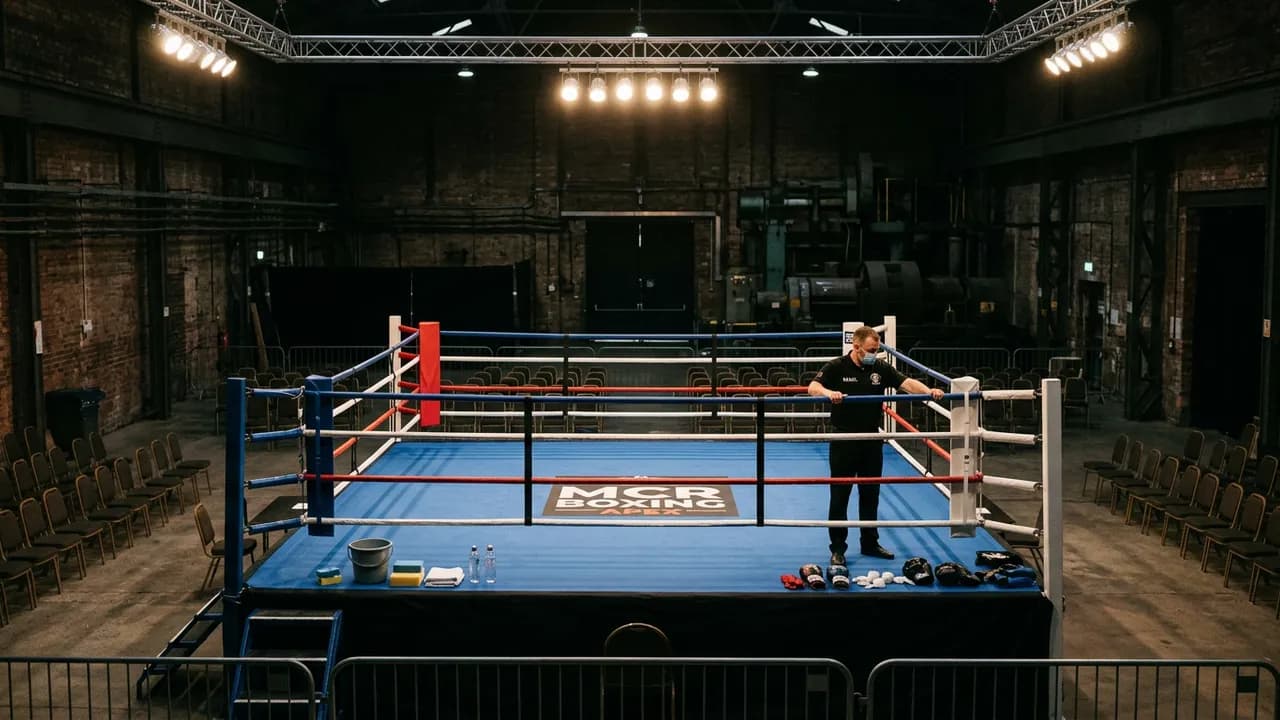
Quick Facts
| Detail | Info |
|---|---|
| Founded | 2021 |
| Location | Manchester, UK (events also in Birmingham, Amsterdam) |
| Founder | Remdizz |
| Format | Boxing with gloves, 3 rounds x 1 minute |
| Mission | "PUT DOWN THE KNIFE, USE YOUR LEFT AND RIGHT" |
| YouTube | King of the Ring UK (100,000+ subscribers) |
| TikTok | @kotr_uk |
| Website | kotr.uk |
| Social Media | Instagram: @kotr_manny, X: @kotr_manny |
Overview
King of the Ring is the United Kingdom's most prominent grassroots underground boxing promotion, and it might also be the most socially conscious fighting organization in the world. Founded in 2021 by a Manchester-based former Muay Thai fighter known as Remdizz, KOTR was built on a premise that sounds contradictory until you understand the context: controlled violence can prevent uncontrolled violence. In a city where youth violence has risen by 200 percent in recent years, Remdizz created a space where people with serious disputes can resolve them with boxing gloves instead of knives.
The organization's motto -- "PUT DOWN THE KNIFE, USE YOUR LEFT AND RIGHT" -- is not just a slogan. It is a direct intervention in a crisis that has claimed lives across Manchester and the wider United Kingdom. KOTR events regularly include moments of silence for victims of knife crime, and fighters have boxed in shirts printed with photographs of friends who have been killed.
From its origins in a back garden with foam-wrapped fence posts, KOTR has grown into an internet phenomenon with millions of YouTube views, a Channel 4 documentary, Vice coverage, and a devoted following across social media. It represents a uniquely British approach to the underground fighting phenomenon -- one that blends street culture, social activism, and combat sports into something genuinely new.
History
The Back Garden Beginning
King of the Ring launched in 2021 in the most modest way imaginable: a back garden in Manchester. The first "ring" was improvised from foam-wrapped fence posts and construction tape -- a setup so rudimentary that it could be assembled and disassembled in minutes. The fighters were local lads with genuine beefs, and the spectators were their friends and neighbors.
But the idea worked. The fights were filmed and posted online, and the combination of authentic aggression, entertaining matchmaking, and the distinctive Manchester atmosphere resonated immediately with audiences. The videos began racking up views, algorithms pushed the content to fans of professional boxing and MMA promotions, and KOTR started gaining momentum.
Rapid Growth
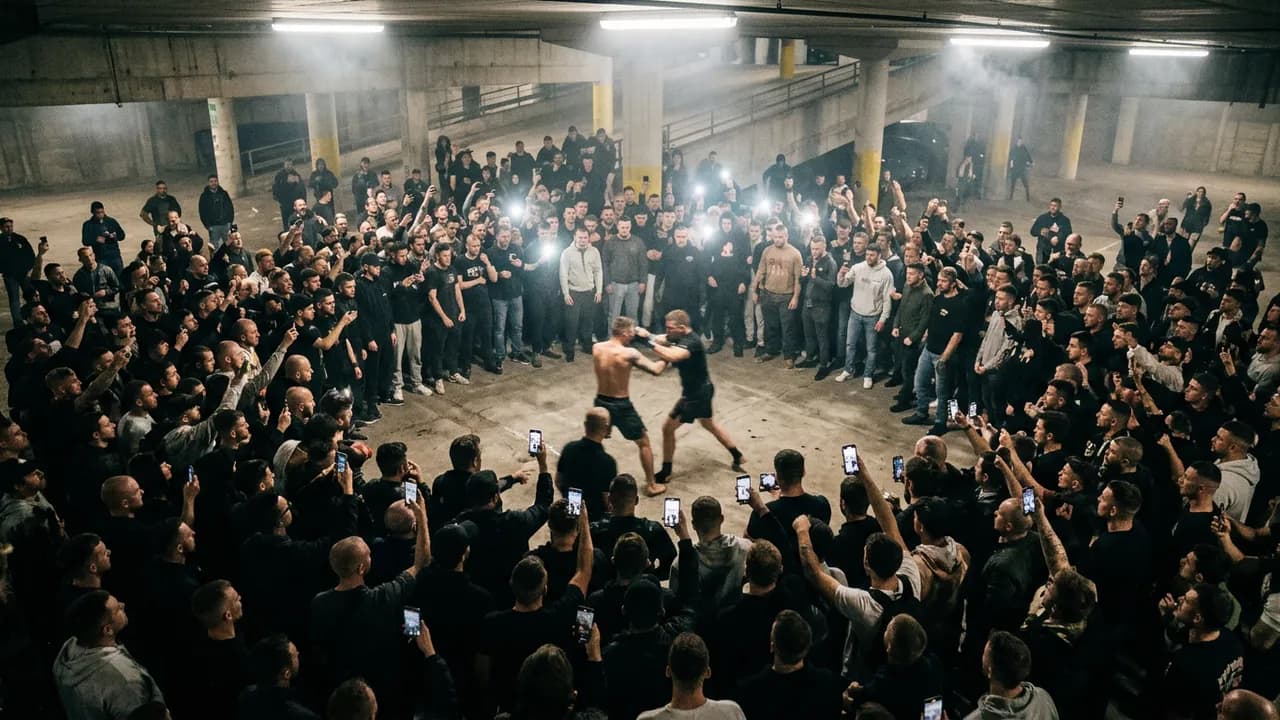
Within twelve months of that first back garden scrap, KOTR had outgrown its origins. Events moved to larger venues -- pubs, car parks, disused gyms -- and expanded geographically. Birmingham and Amsterdam hosted KOTR events, demonstrating that the concept had appeal beyond Manchester's city limits.
The YouTube channel crossed 100,000 subscribers within roughly a year of launching, an extremely impressive growth rate for a grassroots promotion with no marketing budget, no television deal, and no celebrity fighters. TikTok proved equally fertile ground, with short-form fight clips routinely going viral and driving new audiences to the full-length YouTube content.
Social Mission Deepens
As KOTR grew, so did its social mission. What began as a simple "squash beef" mechanism evolved into something more ambitious. Remdizz began positioning KOTR as a direct response to the UK's knife crime epidemic, using his platform to advocate for conflict resolution through controlled fighting rather than blade violence. Events incorporated tributes to knife crime victims, and the organization's anti-violence messaging became increasingly central to its brand identity.
Remdizz's Story
The man behind King of the Ring goes by Remdizz, and his path to founding a fight promotion is rooted in personal experience with both combat sports and street life.
The Muay Thai Career
Remdizz was a competitive Muay Thai fighter before KOTR existed. He trained and competed in the Thai boxing circuit, developing the kind of firsthand understanding of combat sports structure, matchmaking, and fighter management that would later inform how he ran his own promotion. However, injuries accumulated over a three-year career eventually forced him to step back from active competition.
The Vision
Unable to fight himself but deeply embedded in combat sports culture, Remdizz channeled his energy into building something new. He envisioned a grassroots promotion that could serve multiple purposes simultaneously: surface new talent from communities that traditional gyms and promotions overlooked, provide income opportunities for people supplying food, drinks, and equipment at events, and -- most importantly -- offer a structured alternative to the street violence consuming his city.
Where Dana White built a billion-dollar global brand, Remdizz is building something that serves a specific community in a specific crisis.
Remdizz has described himself as the "hood's Dana White," a self-comparison that captures both his ambition and his awareness of the cultural gap between the UFC's corporate machine and KOTR's street-level operation. Where Dana White built a billion-dollar global brand, Remdizz is building something that serves a specific community in a specific crisis.
Plugging the Gap
Remdizz sees KOTR as filling a void left by government austerity. Youth service provision in the United Kingdom has plunged over the past decade, with per-child funding in Manchester currently sitting at approximately 8.38 pounds annually -- compared to a national average of 37 pounds. When youth centers close, after-school programs are cut, and community support systems are hollowed out, the resulting vacuum gets filled by gang activity and street violence. KOTR, in Remdizz's view, is a community-driven response to a systemic failure.
Mission: "PUT DOWN THE KNIFE, USE YOUR LEFT AND RIGHT"
The anti-knife-violence mission is not an afterthought or a PR strategy for KOTR. It is the organizing principle of the entire operation.
Manchester, like many major UK cities, has experienced a sharp rise in knife crime over the past decade. Young people, often from disadvantaged backgrounds, are disproportionately both the victims and perpetrators of blade violence. The causes are complex -- poverty, lack of opportunity, gang culture, social media escalation, the collapse of youth services -- but the consequences are devastatingly simple: young people are dying.
KOTR's intervention is straightforward. If two people have a serious problem that is likely to escalate to weapons, they can come to a KOTR event and settle it with boxing gloves. The fight is filmed, posted on YouTube, and becomes part of the permanent record -- a digital resolution that replaces a potentially fatal physical one.
The events themselves reinforce this message:
- Moments of silence for knife crime victims are held before fight cards.
- Memorial t-shirts featuring photographs of murdered friends have been worn by fighters during bouts.
- The motto "PUT DOWN THE KNIFE, USE YOUR LEFT AND RIGHT" is prominently displayed at events and across all KOTR media.
Critics argue that KOTR simply replaces one form of violence with another. Supporters counter that there is a meaningful distinction between a consensual, supervised boxing match and a knife attack in an alleyway. The debate continues, but KOTR has created a space that did not previously exist -- and young people in Manchester are using it.
Format
Bout Structure
KOTR uses a standardized boxing format:
- 3 rounds per bout
- 1 minute per round
- Boxing gloves (standard boxing gloves, not bare-knuckle)
- Rest period between rounds
The short round duration keeps the action intense. One-minute rounds demand constant engagement -- there is no time for clinching or waiting for openings, which creates action-packed content that performs well on social media.
Fighter Selection and Matching
KOTR takes matchmaking seriously within its grassroots framework:
- Applicants are matched by age, size, and experience level
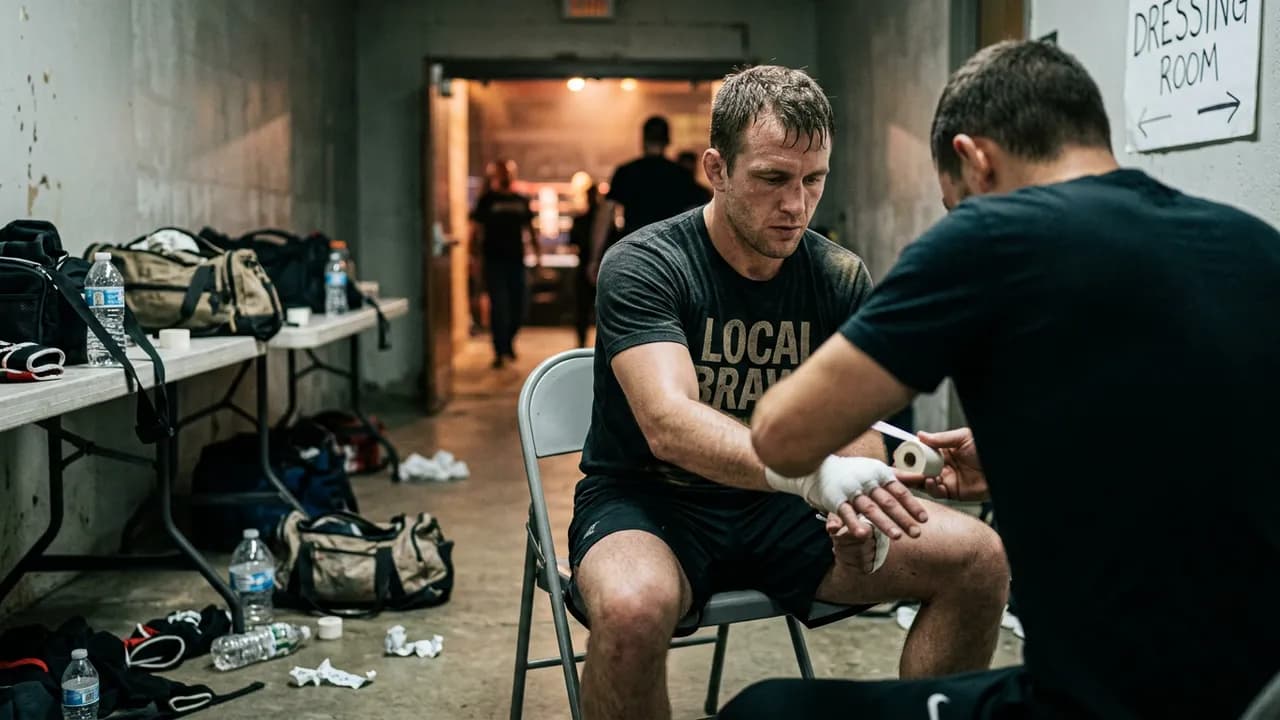
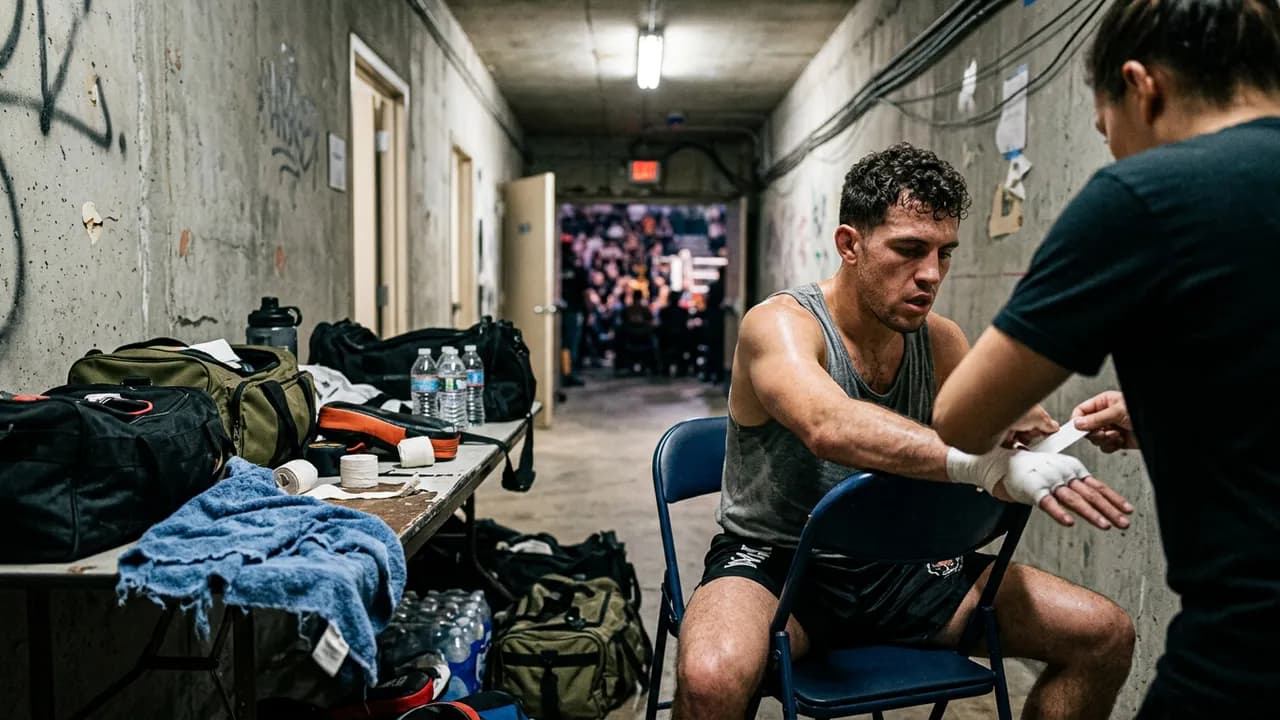
- All fighters sign waivers before competing
- A referee is present for all bouts
- Fighters who appear overmatched or unsafe can be pulled from cards
Event Structure
A typical KOTR event features:
- Multiple bouts across a single event
- 50 to 100+ spectators per event
- Professional videography and photography
- Music, commentary, and crowd atmosphere
- Events are typically held monthly
Location System
Events are not held at a fixed venue. Instead, each event takes place at a different location across Manchester and beyond, with the specific address disclosed to attendees shortly before the event via text message using postcodes.
This system serves multiple purposes. It reduces the risk of unwanted attention from authorities, creates variety in atmosphere (a pub car park feels different from a back garden or an abandoned gym), and allows KOTR to deliberately choose locations in areas with historically low levels of opportunity for young people, bringing events directly to the communities it aims to serve.
Locations that have hosted KOTR events include back gardens, pubs, car parks, and disused gyms across Manchester, as well as venues in Birmingham and Amsterdam.
YouTube and TikTok Presence
YouTube
The King of the Ring UK YouTube channel surpassed 100,000 subscribers within approximately a year of launching -- a remarkable growth trajectory for a grassroots promotion. The channel hosts full-length fight videos, event compilations, and behind-the-scenes content.
08 / Up next / TikTok
YouTube's recommendation algorithm has been a powerful growth driver, routinely pushing KOTR content to viewers who consume UFC, DAZN, Bellator, and other professional combat sports content. The combination of authentic fights, consistent monthly uploads, professional videography, and the algorithmic advantage that combat sports content enjoys has exposed KOTR to audiences far beyond Manchester.
TikTok
TikTok has proven equally important. The short-form video format is perfectly suited to KOTR's 1-minute rounds, and knockout highlights routinely go viral on @kotr_uk. The interplay between platforms is central to KOTR's growth: viral TikTok clips drive curiosity, and curious viewers migrate to YouTube for full fights, creating a self-reinforcing content funnel.
Notable Fighters
KOTR has developed its own roster of recurring fighters who have built followings through the platform. While the organization does not maintain the kind of formal rankings or championship structures seen in promotions like Streetbeefs or Top Dog FC, certain fighters have become fan favorites through their skills, personalities, or backstories.
The fighters who emerge from KOTR events are typically:
- Young men from Manchester and surrounding areas, often from disadvantaged backgrounds
- Self-taught or informally trained -- most do not come from traditional boxing gym backgrounds
- Motivated by personal disputes, competitive drive, or the desire for social media recognition
Some fighters have used their KOTR appearances as stepping stones to formal boxing training and amateur careers. Remdizz has expressed a goal of eventually providing a pipeline from KOTR events to professional opportunities for fighters who demonstrate potential.
Channel 4 Documentary and Vice Coverage
Channel 4 Documentary
KOTR was the subject of a documentary in Channel 4's "Untold" series (#UntoldC4), one of the UK's most respected documentary strands. The film explored Remdizz's operation from the inside, examining the social mission behind the fights and the complex relationship between controlled violence and community safety.
The Channel 4 documentary is available on Channel 4 Streaming and on the Channel 4 Documentaries YouTube channel. The exposure brought KOTR to a mainstream British audience that extended far beyond the combat sports and street culture communities that had initially driven its growth.
Vice Coverage
Vice published a long-form feature titled "The Underground Fight Club Racking Up Millions of YouTube Views," providing an in-depth look at KOTR's operations and the social context in which it operates. The piece introduced the promotion to Vice's global audience and placed KOTR within the broader context of grassroots responses to youth violence in the UK.
Manchester Mill
The Manchester Mill, a local investigative outlet, published a detailed piece examining KOTR's operations and their impact on the city, providing a nuanced local perspective on the phenomenon.
How to Watch
KOTR content is freely available across multiple platforms:
- YouTube: Search for "King of the Ring UK" to find the main channel. Full fights, event compilations, and behind-the-scenes content are uploaded for free.
- TikTok: Follow @kotr_uk for short-form fight clips and highlights.
- Instagram: Follow @kotr_manny for event announcements, fight clips, and behind-the-scenes content.
- Channel 4: The Untold documentary is available on Channel 4's streaming platform and the Channel 4 Documentaries YouTube channel.
- Website: kotr.uk serves as the organizational hub.
All fight content on YouTube and TikTok is free to view. KOTR does not currently operate a pay-per-view or subscription model.
How to Get Involved
As a Fighter
Fighters interested in competing at KOTR events should:
- Follow KOTR on social media: Instagram @kotr_manny and TikTok @kotr_uk are the primary communication channels.
- DM the organization: Reach out through Instagram or X to express interest.
- Be based in or willing to travel to Manchester (or whichever city is hosting the next event).
- Sign a waiver: All fighters must sign waivers before competing.
- Be matched: KOTR matchmakers will pair you with an appropriate opponent based on age, size, and experience.
As a Community Member
KOTR welcomes community involvement beyond fighting. Spectators can attend events (location postcodes are shared via text), support the anti-knife-violence mission by sharing content, or supply services such as food and drinks at events.
FAQ
Is King of the Ring legal?
KOTR operates outside the licensing of official boxing authorities in the UK, which makes its legal status somewhat ambiguous. The events are organized as consensual, unsanctioned boxing matches on private property. While not officially licensed by a boxing board, KOTR has not faced significant legal challenges, and the Channel 4 documentary coverage suggests a level of mainstream acceptance.
Do KOTR fighters get paid?
KOTR does not publicly disclose details about fighter compensation. The organization's origins as a community-driven, grassroots promotion suggest that financial rewards, if any, are modest compared to professional boxing.
How is KOTR different from KOTS?
Despite similar-sounding names, the two organizations are fundamentally different. KOTS is a no-rules, bare-knuckle, concrete-surface fight club rooted in European hooligan culture. KOTR is a gloved boxing promotion with rounds, referees, and a social mission focused on knife violence prevention. KOTR is significantly safer and more structured than KOTS.
How is KOTR different from Streetbeefs?
Both organizations share a social mission (KOTR targets knife crime; Streetbeefs targets gun violence) and a YouTube-first distribution model. The key differences are geographic (Manchester vs. Virginia), format (boxing-only vs. multiple disciplines), and cultural context (UK knife crime crisis vs. American gun violence). Both represent community-driven responses to violence epidemics in their respective countries.
What age do you have to be to fight at KOTR?
KOTR matches fighters by age and generally features young adult competitors. Specific minimum age requirements are not publicly documented, but the organization's focus on youth violence prevention suggests that fighters are typically 18 and older.
Does KOTR only hold events in Manchester?
No. While Manchester is the home base, KOTR has expanded to Birmingham and Amsterdam. Additional locations are possible as the organization continues to grow.
What happens if someone gets seriously hurt?
KOTR uses boxing gloves, employs referees who can stop fights, and uses short 1-minute rounds that limit cumulative damage. The format is designed to be intense but relatively safe by underground fighting standards. However, as an unsanctioned event without formal athletic commission oversight, the level of medical support is not equivalent to that of a licensed boxing event.