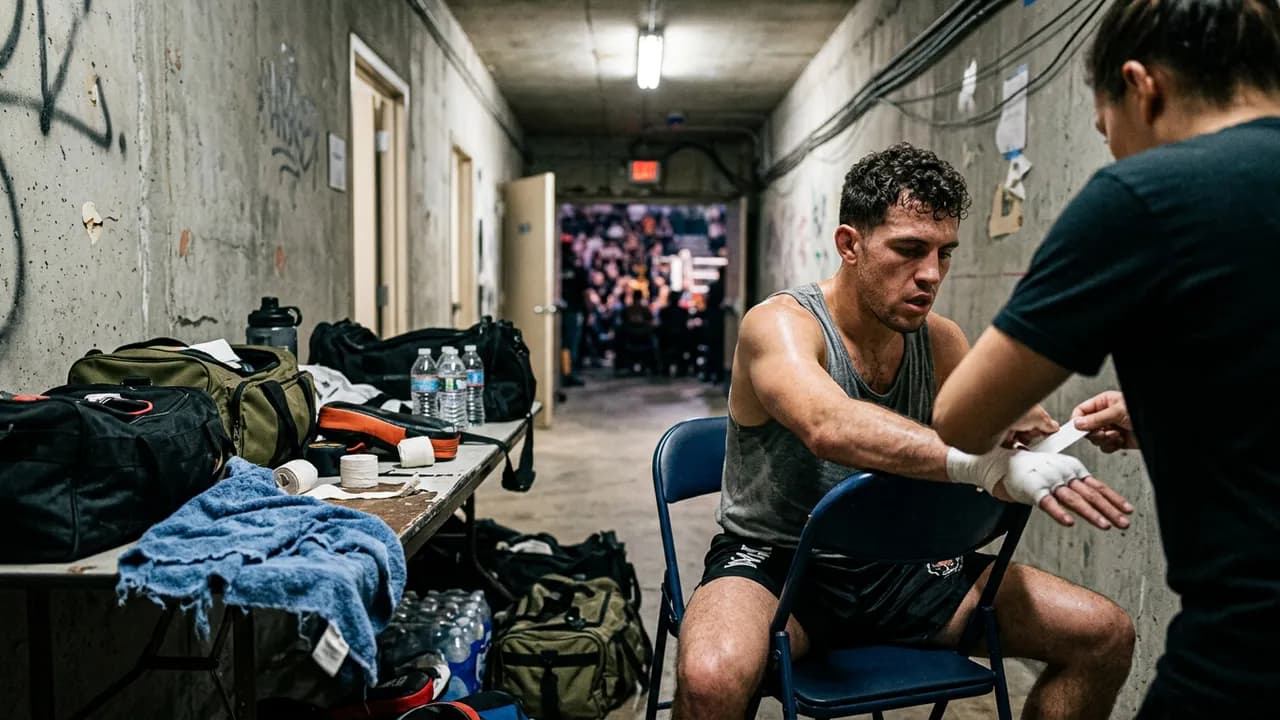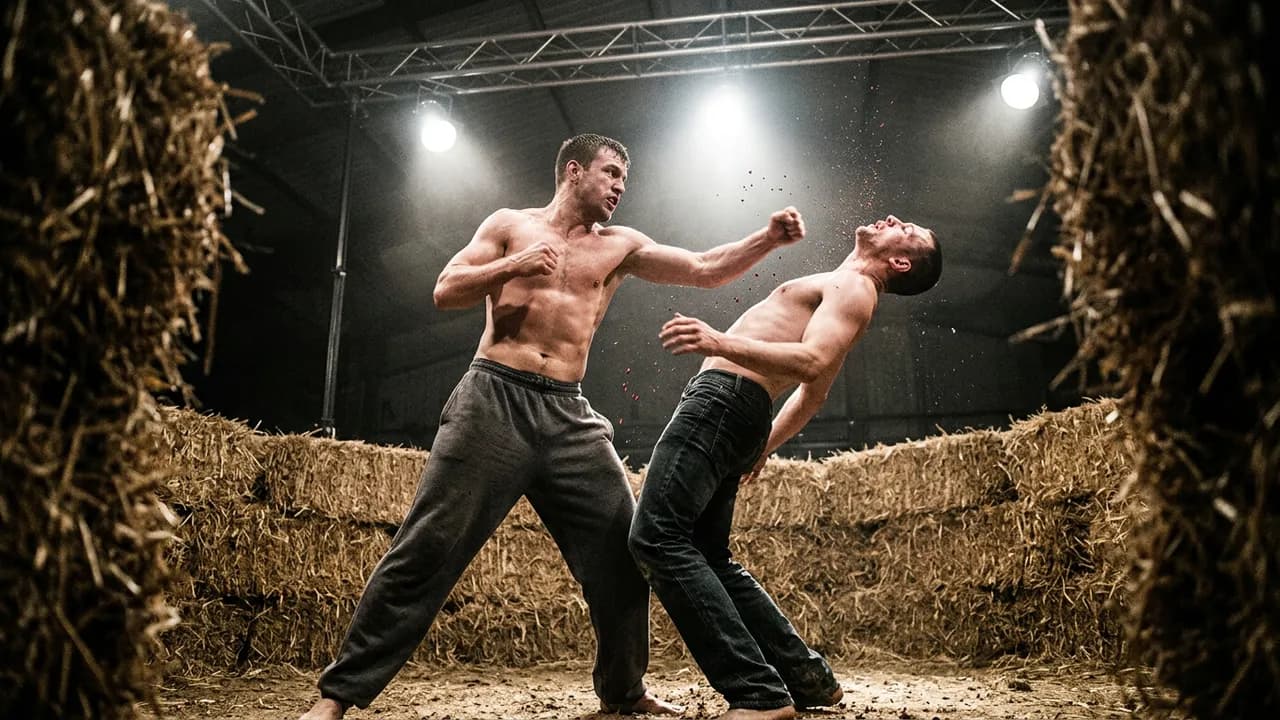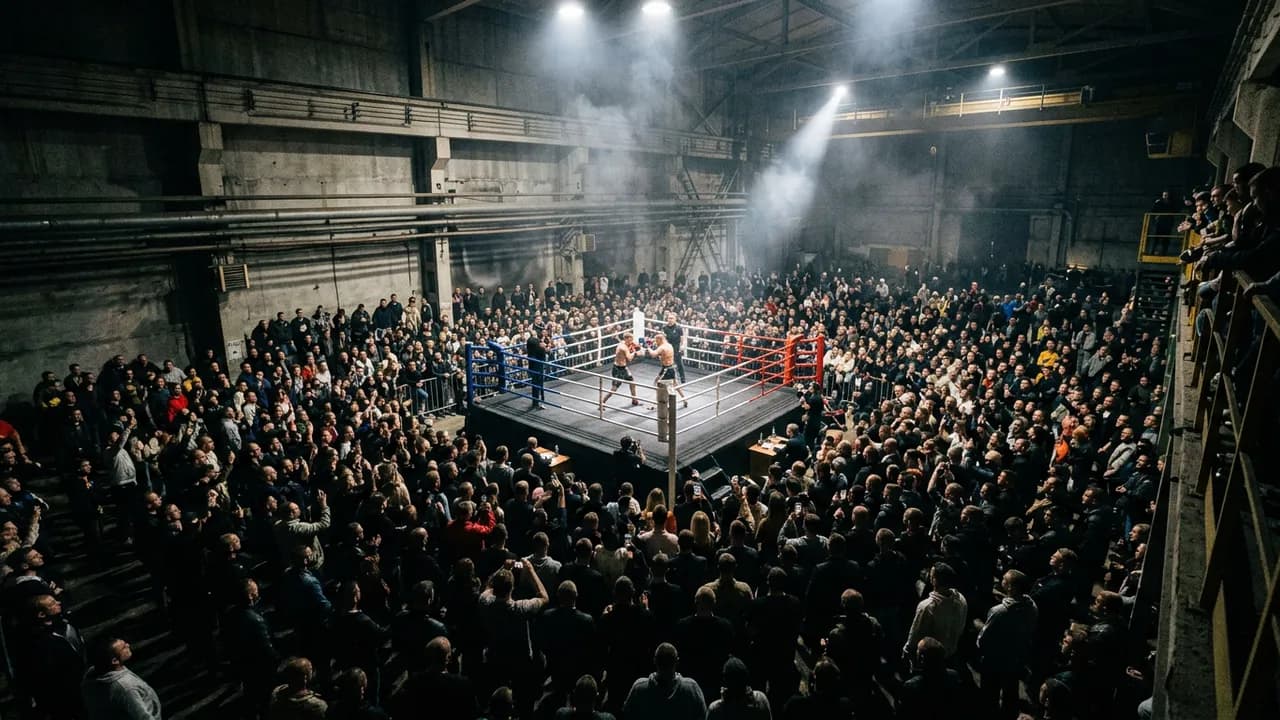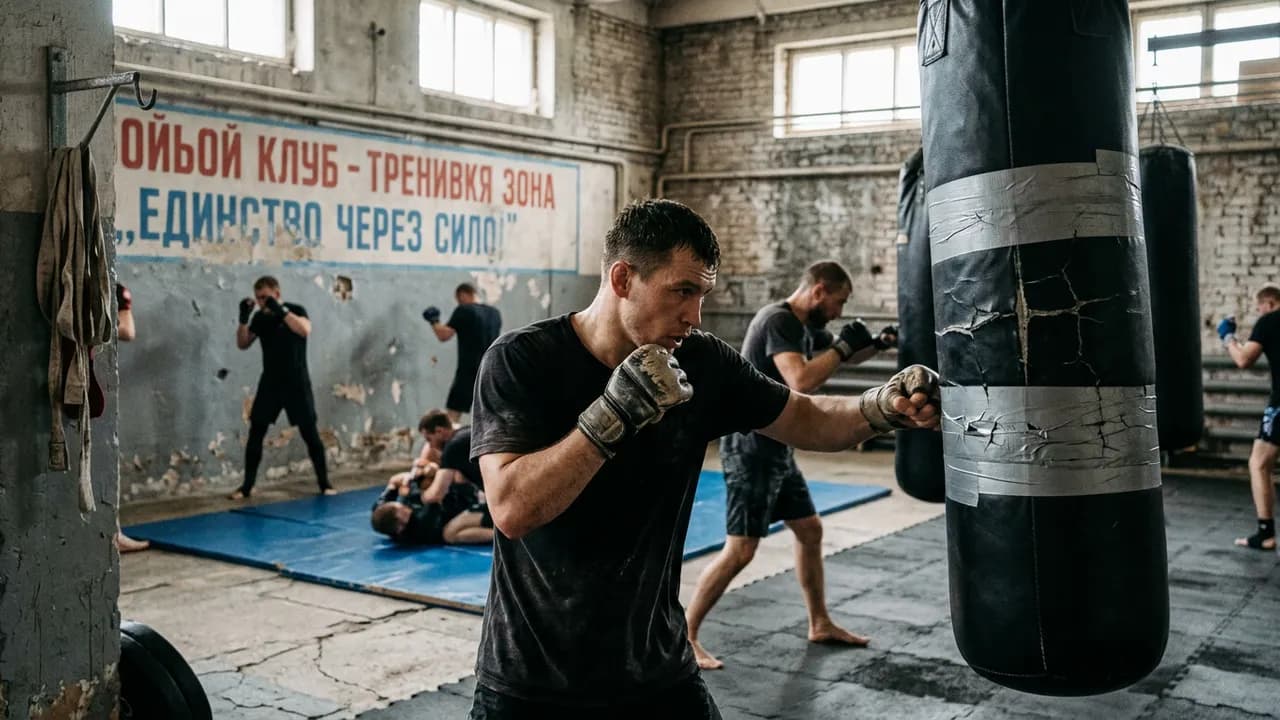
Russia is the epicenter of the global underground fighting movement. No other country produces more unsanctioned combat content, supports more grassroots fighting organizations, or draws from a deeper well of cultural tradition when it comes to settling disputes with bare fists. From the sand rings of Strelka in St. Petersburg to the hay bale arena of Top Dog FC in Moscow, from village wall-to-wall fistfights dating back centuries to the modern hooligan culture that has made Russian football firms infamous worldwide, fighting is woven into the national identity in a way that has no parallel in the West.
The numbers tell the story. Strelka has hosted more than 10,000 participants across Russia and the CIS nations, making it the largest fight club in the world. Top Dog FC has become the first and biggest bare-knuckle promotion in Eastern Europe, staging sold-out events at Moscow's CSKA Arena. The combined YouTube viewership runs into the billions. And those are just the promotions that operate publicly -- beneath them lies a sprawling ecosystem of regional fight clubs, gym challenges, hooligan matches, and informal bouts that never get filmed.
This guide covers Russia's underground fighting landscape: the organizations, the history, the culture, the legal framework, and the cities where it all happens.
History
Kulachny Boi: The Ancient Roots
To understand why underground fighting thrives in Russia, you have to go back centuries. Russian bare-knuckle fighting, known as kulachny boi (literally "fist fight"), has existed since at least the first millennium AD. It was not merely tolerated -- it was celebrated as a communal tradition, a rite of passage, and a form of entertainment that entire villages participated in.
The most iconic form of kulachny boi was the stenka na stenku, or "wall-on-wall" fight. These were mass brawls between neighboring villages or city districts, with anywhere from a dozen to several hundred participants lining up in tight formations, three or four ranks deep, and advancing on each other in coordinated waves. Each wall had a chief fighter who served as both tactical leader and morale anchor. The fights followed customary rules: no weapons, no striking a fallen opponent, no targeting the groin. But within those loose boundaries, the violence was real and the injuries were significant.
Wall-on-wall fighting was so deeply embedded in Russian culture that even the Orthodox Church's repeated attempts to suppress it had limited success. The tradition persisted through centuries of tsarist rule until it was formally outlawed in the Russian Empire in 1832. Even then, informal fistfighting continued in rural areas, carried forward by oral tradition and communal memory.
The Soviet Era
The Soviet Union channeled fighting culture into state-sanctioned combat sports. Sambo -- an acronym for samozashchita bez oruzhiya, meaning "self-defense without weapons" -- was developed in the 1920s and 1930s as a military hand-to-hand combat system, drawing from judo, wrestling, and traditional Russian fighting methods. Boxing was promoted as a proletarian sport. Wrestling academies were established across the Soviet republics.
But the suppression of informal fighting did not eliminate the impulse. Underground martial arts communities persisted, particularly after the Soviet ban on karate in 1983, which drove an entire discipline underground and created a generation of fighters accustomed to training and competing outside official channels. When the Soviet Union collapsed in 1991, the infrastructure of state-sanctioned combat sports crumbled alongside everything else, leaving a vacuum that the street was happy to fill.
The 1990s and the Rise of Informal Fighting
The chaotic 1990s in Russia saw an explosion of informal fighting culture. Economic collapse, the rise of organized crime, and a general breakdown of social order created conditions where the ability to fight was not just a hobby but a survival skill. Informal fight clubs, often associated with gyms or criminal organizations, sprang up in cities across the country. The hooligan firms attached to football clubs became increasingly organized and violent, with structured training regimens and inter-firm fights that mimicked the wall-on-wall tradition of centuries past.
This was also the era when Russia's MMA scene began to develop. Fedor Emelianenko, who would become arguably the greatest heavyweight MMA fighter in history, began his career in the late 1990s and brought international attention to Russia's combat sports depth. His success, and the success of other Russian fighters on the global stage, reinforced the cultural narrative that fighting was something Russians did better than almost anyone else.
The YouTube Revolution
Everything changed when cameras became cheap and YouTube became ubiquitous. In 2011, Strelka was founded in St. Petersburg, initially as a marketing stunt for a sporting goods store by a former associate of Fedor Emelianenko's team. The concept was simple: amateur fighters would compete in an outdoor sand ring, with no rounds and no time limits, and the fights would be filmed and uploaded to YouTube. Within a few years, the channel had crossed one million subscribers, and Strelka had expanded from St. Petersburg to events in nearly 50 cities across Russia.
The 2018 FIFA World Cup in Russia brought unprecedented international attention to the country's fighting culture.
The 2018 FIFA World Cup in Russia brought unprecedented international attention to the country's fighting culture. Western media, anticipating hooligan violence, instead discovered a structured fighting subculture that channeled aggression through organizations like Strelka. Coverage in outlets from the South China Morning Post to ESPN profiled Russia's "new-school hooligan culture," and the global audience for Russian fighting content surged.
Then came 2020, when the COVID-19 pandemic created the conditions for Top Dog FC to emerge. Founded by Danil "Regbist" Aleyev as parking lot bare-knuckle events during lockdown, Top Dog quickly evolved into a professional promotion that combined the raw aesthetic of underground fighting with production values that rivaled established combat sports organizations.
Major Organizations
Strelka
Strelka is the world's largest fight club. Founded in St. Petersburg in 2011, the organization has hosted more than 10,000 participants across Russia and the CIS nations, with a global virtual roster exceeding 40,000 fighters. The Strelka YouTube channel has accumulated over 1.5 billion views and more than 2.45 million subscribers, making it second only to the UFC in combat sports viewership.
Format: Amateur MMA in an outdoor sand ring. No rounds, no time limits, fight to finish. No elbows or knees to the head. Open to anyone willing to sign up, regardless of training background.
What makes it unique: Strelka is radically democratic. A truck driver can fight a sushi chef. A longshoreman can face a student. There are no weight classes in the traditional sense, no professional fighters, and no financial compensation for most participants. The appeal is pure: ordinary people testing themselves in genuine combat.
Current status: Strelka has expanded internationally through its partnership with TronMMA, staging events in Thailand, Hong Kong, and Singapore as part of its World Championship series. The organization registered its trademark in the United States and continues to grow its global footprint.
Top Dog Fighting Championship
Top Dog FC is the first and largest bare-knuckle boxing promotion in Eastern Europe. Founded in Moscow in 2020 by Danil "Regbist" Aleyev, the organization stages professional-level bare-knuckle events at major venues, most notably the CSKA Arena in Moscow.
Format: Bare-knuckle boxing in a hay bale ring. Three rounds of two minutes for regular bouts, five rounds of two minutes for championship fights. Six weight classes. Clinch strikes, open-palm strikes, and shoulder strikes are all permitted. After a knockdown, a fighter has ten seconds to rise.
What makes it unique: Top Dog occupies a space between underground spectacle and legitimate combat sports promotion. The hay bale ring gives events a visceral, post-apocalyptic aesthetic, while the production quality -- 4K cameras, multiple angles, state-of-the-art slow-motion -- is on par with major boxing broadcasts. Fighters compete in jeans or sweatpants rather than traditional boxing attire, reinforcing the street-fighting identity.
Current status: Top Dog has grown into a major entertainment brand in Russia, staging large-scale events with 20-fight cards and celebrity crossover bouts. The promotion has attracted crossover interest from outside the combat sports world, most notably when Slaughter to Prevail vocalist Alex Terrible headlined Top Dog 37 at the CSKA Arena in July 2025. Top Dog operates its own streaming platform at topdogfc.tv and maintains a YouTube audience exceeding 1.5 million subscribers with over 200 million views.
Other Notable Organizations
Russia's underground fighting scene extends well beyond Strelka and Top Dog FC. The country's sheer size and deep fighting culture have produced a range of regional and specialized organizations:
-
Fight Club Akhmat: Based in the Chechen Republic and named after the first president of Chechnya, Akhmat Kadyrov. FCA operates a network of MMA gyms across Russia and serves as a development pipeline for Chechen fighters, many of whom have gone on to compete in the UFC and other international promotions. The organization is heavily supported by the Chechen government and represents the intersection of state power and combat sports.
-
Regional Strelka Events: Because of Strelka's decentralized structure, dozens of regional events operate under the Strelka brand across Russia and the CIS, each with its own local organizers and fighter base.
-
Informal Hooligan Firms: Though not formal promotions, the organized fighting groups attached to Russian football clubs remain active. These firms, particularly those associated with major Moscow clubs (Spartak, CSKA, Dynamo) and St. Petersburg's Zenit, maintain training regimens and stage inter-firm matches that are rarely filmed but represent a significant layer of Russia's fighting underground.
Fighting Culture
Russia's fighting culture is unique in its depth, breadth, and social acceptance. Understanding it requires looking at several intersecting elements.
The Hooligan Tradition
Russian football hooliganism is more organized and more physically demanding than its Western European counterparts. Russian firms train specifically for fighting, with members expected to maintain fitness and combat skills. The ethos is structured confrontation -- firm against firm, with rules of engagement that echo the historical wall-on-wall tradition. The 2016 European Championship in France, where Russian hooligans clashed with English fans in Marseille, brought international attention to the discipline of Russia's hooligan fighters.
Combat Sports as National Identity
Russia produces an outsized share of the world's top combat sports athletes. Khabib Nurmagomedov, Fedor Emelianenko, Petr Yan, Islam Makhachev -- the list of world-class Russian fighters is staggering. This reflects a national infrastructure of combat sports training that begins at the youth level and extends through gyms, academies, and state-funded programs. In Dagestan and Chechnya, wrestling and martial arts are central cultural institutions.
The Social Function of Fighting
In Russian culture, fighting carries less stigma than in many Western societies. The ability to fight is viewed as a marker of character rather than a sign of dysfunction. This cultural attitude creates a permissive environment for organizations like Strelka and Top Dog to operate openly and attract participants from all walks of life.
The Content Revolution
Russia's underground fighting organizations were among the earliest to recognize YouTube and social media as distribution channels. Strelka, Top Dog, and their competitors understood that fights filmed in high quality and distributed globally could reach audiences far larger than any arena. This content-first approach has made Russia the world's leading exporter of underground fighting media.
Legal Status
Russia's legal framework for combat sports is more permissive than most Western countries, which is a significant factor in the scene's growth.
Top Dog FC operates openly, stages events at major public venues, and sells tickets and pay-per-views without apparent legal interference.
MMA was given National Sport status in Russia in September 2012, and the Russian MMA Union serves as the official regulatory body, overseeing approximately 80 accredited regional federations and around 20,000 registered amateur athletes. This formal recognition means that amateur MMA events -- including those staged by organizations like Strelka -- can operate within a legal framework, provided they meet certain baseline requirements.
Bare-knuckle fighting occupies a grayer area. Top Dog FC operates openly, stages events at major public venues, and sells tickets and pay-per-views without apparent legal interference. The practical reality in Russia is that if an organization operates with reasonable professionalism, attracts an audience, and does not generate negative publicity that embarrasses authorities, it is generally left alone.
This is not to say that anything goes. Events that are clearly dangerous, poorly organized, or associated with criminal activity can attract police attention. But the threshold for intervention is significantly higher than in countries like the United Kingdom or Australia, where unsanctioned combat events face aggressive prosecution.
The relatively permissive environment extends to content as well. Russian YouTube channels featuring real fighting content face fewer domestic restrictions than their counterparts in Western countries, though they are still subject to YouTube's global content policies, which have led to occasional takedowns and age restrictions.
How to Watch
YouTube
YouTube remains the primary distribution channel for Russian underground fighting content. The main channels to follow:
- Strelka Street Fights -- 2.45 million+ subscribers, 1.5 billion+ views. The original and still the most-watched Russian fight channel.
- Top Dog FC -- 1.5 million+ subscribers, 200 million+ views. Higher production quality, focused on bare-knuckle boxing.
Streaming Platforms
Top Dog FC operates its own streaming platform at topdogfc.tv, where events are available both live and on-demand. Major events are offered as pay-per-views, while the back catalog is accessible to subscribers.
Social Media
Both major organizations maintain active presences on Instagram, Telegram, and X (formerly Twitter). Telegram is particularly important in the Russian context, as it serves as the primary messaging and content-sharing platform for Russian-speaking audiences. Top Dog FC's Telegram channel is one of the most followed combat sports channels on the platform.
In-Person
For those in Russia, attending events in person is an option. Top Dog FC stages its major events at the CSKA Arena in Moscow, with tickets available through the organization's website and Russian ticketing platforms. Strelka events are held in various cities across Russia and are generally open to spectators, though locations and schedules are typically announced through their social media channels.
Key Cities
St. Petersburg
The birthplace of Strelka and the spiritual home of Russia's modern underground fighting movement. St. Petersburg's combination of urban grit, cultural energy, and a large population of young men with limited economic prospects created the conditions for Strelka to emerge in 2011. The city remains Strelka's primary base and continues to host regular events.
Moscow
Russia's capital is the home of Top Dog FC and the center of the country's professional combat sports infrastructure. Moscow's CSKA Arena serves as Top Dog's flagship venue, and the city's concentration of MMA gyms, boxing clubs, and combat sports media makes it the hub of Russia's fighting industry. The major football hooligan firms are also Moscow-based, with the rivalries between Spartak, CSKA, Dynamo, and Lokomotiv firms fueling a parallel fighting culture.
Grozny
The capital of Chechnya and the base of Fight Club Akhmat. Grozny represents the intersection of state-sponsored combat sports and grassroots fighting culture, with the Kadyrov government actively promoting martial arts as a tool for youth development and regional pride. The city's Akhmat MMA gyms serve as training grounds for some of Russia's most talented fighters.
Dagestan
While not a single city, the Republic of Dagestan -- and particularly its capital, Makhachkala -- deserves mention as perhaps the most fight-obsessed region on earth. Dagestan's wrestling tradition has produced a disproportionate number of world-class MMA fighters, and the culture of combat is so deeply embedded that informal fighting and grappling competitions are a regular feature of daily life. The region's influence on Russia's fighting scene is immeasurable.
Yekaterinburg and the Urals
Russia's fourth-largest city serves as a regional hub for combat sports in the Urals, with a thriving gym scene and regular amateur MMA events. The industrial cities of the Urals have historically produced tough fighters, and regional Strelka events draw large crowds.
FAQ
Is underground fighting legal in Russia?
The legal situation is nuanced. MMA has been a recognized national sport since 2012, and amateur combat events can operate within a regulatory framework overseen by the Russian MMA Union. Bare-knuckle fighting and other formats exist in a gray area but are generally tolerated as long as they maintain reasonable safety standards and operate professionally. Organizations like Strelka and Top Dog FC stage events openly and without apparent legal interference.
How big is Strelka?
Strelka is the largest fight club in the world, with more than 10,000 participants across Russia and the CIS nations and a global roster exceeding 40,000 fighters. The YouTube channel has over 2.45 million subscribers and 1.5 billion views.
What is the difference between Strelka and Top Dog FC?
Strelka is an amateur organization open to anyone, featuring MMA-style fighting in sand rings with no rounds or time limits. Top Dog FC is a professionalized bare-knuckle boxing promotion with weight classes, timed rounds, and events at major venues. Strelka is the people's fight club; Top Dog is the premium product.
Can foreigners participate in Russian fight events?
Yes. Strelka accepts applications from fighters worldwide through tronmma.com. Top Dog FC is more selective but has featured international fighters on its cards.
What is kulachny boi?
Kulachny boi is the traditional Russian bare-knuckle fighting tradition dating back over a thousand years. The most famous form is the stenka na stenku (wall-on-wall) fight, where groups from opposing villages would face off in mass brawls governed by customary rules. Formally outlawed in 1832, it persisted informally and has experienced a cultural revival in the modern era.
Where can I watch Russian fight content?
YouTube is the primary platform. Search for "Strelka Street Fights" and "Top Dog FC" for the two largest channels. Top Dog also operates its own streaming platform at topdogfc.tv. Telegram is another key platform for following Russian fight content.
Is Russian underground fighting dangerous?
All combat sports carry inherent risks. Top Dog FC employs referees, medical staff, and timed rounds, bringing it closer to sanctioned combat sports in risk management. Strelka uses sand rings that cushion falls but features open-ended bouts with no time limits. Informal events at the grassroots level carry the highest risk.