Overview
The United Kingdom did not adopt underground fighting as a modern trend. It invented the tradition. The history of organized bare knuckle combat on British soil stretches back to the early 18th century, when James Figg opened the first boxing academy in London in 1719 and the sport of prizefighting became a defining feature of English culture. The London Prize Ring Rules, codified in 1838, governed bare knuckle boxing across the English-speaking world for more than a century. And while the Marquess of Queensberry Rules eventually pushed bare knuckle fighting out of the mainstream and into the shadows, it never truly disappeared from British life -- particularly within the Traveller community, where bare knuckle combat has served as a system of dispute resolution, honor, and family pride for generations.
Today, the UK's underground fighting scene is experiencing a resurgence that draws on those deep historical roots while responding to urgent contemporary pressures. The knife crime crisis that has gripped England's cities -- with over 51,000 knife-enabled offences recorded in the year ending June 2025 -- has given rise to organizations like King of the Ring in Manchester, which channels the energy of at-risk youth into controlled fighting environments under the banner "Put down the knife, use your left and right." Meanwhile, the professional bare knuckle circuit is booming: BKB Bare Knuckle Boxing is planning its most ambitious UK schedule in history for 2026, with events at the O2, Wembley Arena, and Manchester Arena, backed by its acquisition of the UK's longest-running independent promotion, Bad to the Bone.
The UK scene is distinct from its American counterpart in important ways. It is more deeply rooted in history, more tightly bound to specific cultural communities, and more directly connected to the social crisis of knife violence. Understanding the British underground fighting landscape means understanding all three of these dimensions -- the historical, the cultural, and the urgently present.
Historical Roots
The Birth of Prizefighting
Britain is the birthplace of organized boxing. James Figg, widely recognized as the first English bare knuckle champion, established his academy in London in 1719, and for the next two centuries, prizefighting was one of the most popular spectator sports in the country. Early bouts were brutal affairs with few rules -- gouging, wrestling, and throwing were all permitted alongside punching. The sport attracted patrons from every social class, from dockhands and coal miners to aristocrats and royalty.
Broughton's Rules and the London Prize Ring
The first attempt to formalize the sport came in 1743, when champion Jack Broughton drafted a set of rules that prohibited hitting a downed opponent and introduced the concept of a count. These evolved into the London Prize Ring Rules, published in 1838 and revised in 1853, which became the global standard for bare knuckle boxing. Under these rules, a round ended when a fighter was knocked down or thrown. He then had 30 seconds to rest and eight seconds to return to the "scratch line" at the center of the ring. There were no round limits -- fights continued until one man could not answer the call to scratch. Kicking, gouging, biting, and head-butting were all fouls, but wrestling and throwing were permitted alongside bare-fisted strikes.
The London Prize Ring Rules governed some of the most famous bouts in boxing history, including Tom Cribb's legendary defense of the English championship against Tom Molineaux in 1810 and 1811. The rules remained dominant until the Marquess of Queensberry Rules were published in 1867, mandating gloves, three-minute rounds, and a ten-count for knockdowns. The last significant championship bout under London Prize Ring Rules was John L. Sullivan versus Jake Kilrain in 1889 in the United States -- but the tradition of bare knuckle fighting on British soil was far from over.
The Traveller Tradition
While mainstream boxing adopted the Queensberry Rules and moved indoors, bare knuckle fighting survived and thrived within the Irish Traveller and Romani Gypsy communities of the British Isles. For these nomadic communities, bare knuckle boxing has served for centuries as a formalized system for settling family feuds, defending clan honor, and establishing social hierarchy. Male Travellers are often expected to uphold their family's reputation through their willingness and ability to fight.
The stakes are a combination of family honor and side bets that can run into the tens of thousands of pounds.
Traveller bare knuckle bouts follow their own code of conduct: no throws, no eye gouging, no hair pulling. Each fighter has a "fair play man" who acts as a referee to ensure clean fighting. Rival families or clans may hold grudges for decades, and challenges are often issued publicly -- in recent years, frequently through YouTube videos. The stakes are a combination of family honor and side bets that can run into the tens of thousands of pounds. This tradition gained widespread public awareness through documentaries such as Knuckle (2011), which followed the Joyce, Quinn-McDonagh, and Nevin families over a 12-year period of bare knuckle feuds in Ireland and England.
The Traveller bare knuckle tradition has produced fighters of extraordinary quality. Tyson Fury, the heavyweight boxing world champion, is of Irish Traveller heritage and has spoken openly about the bare knuckle fighting culture that shaped his family's identity. The tradition represents an unbroken lineage from the London Prize Ring era to the present day -- a living connection to the origins of the sport that exists nowhere else in the world.
Major Organizations
The UK's organized fighting scene spans a range of operations, from grassroots underground promotions focused on youth violence prevention to professional bare knuckle events held at major arenas. The following are the most significant active organizations.
King of the Ring (KOTR) -- Manchester
King of the Ring is the most prominent underground fighting organization in the United Kingdom. Founded in 2022 by a Manchester promoter known as RemDizz, KOTR was conceived as a direct response to the knife crime epidemic devastating English cities. The organization's guiding philosophy is stark and unambiguous: "PUT DOWN THE KNIFE, USE YOUR LEFT AND RIGHT."
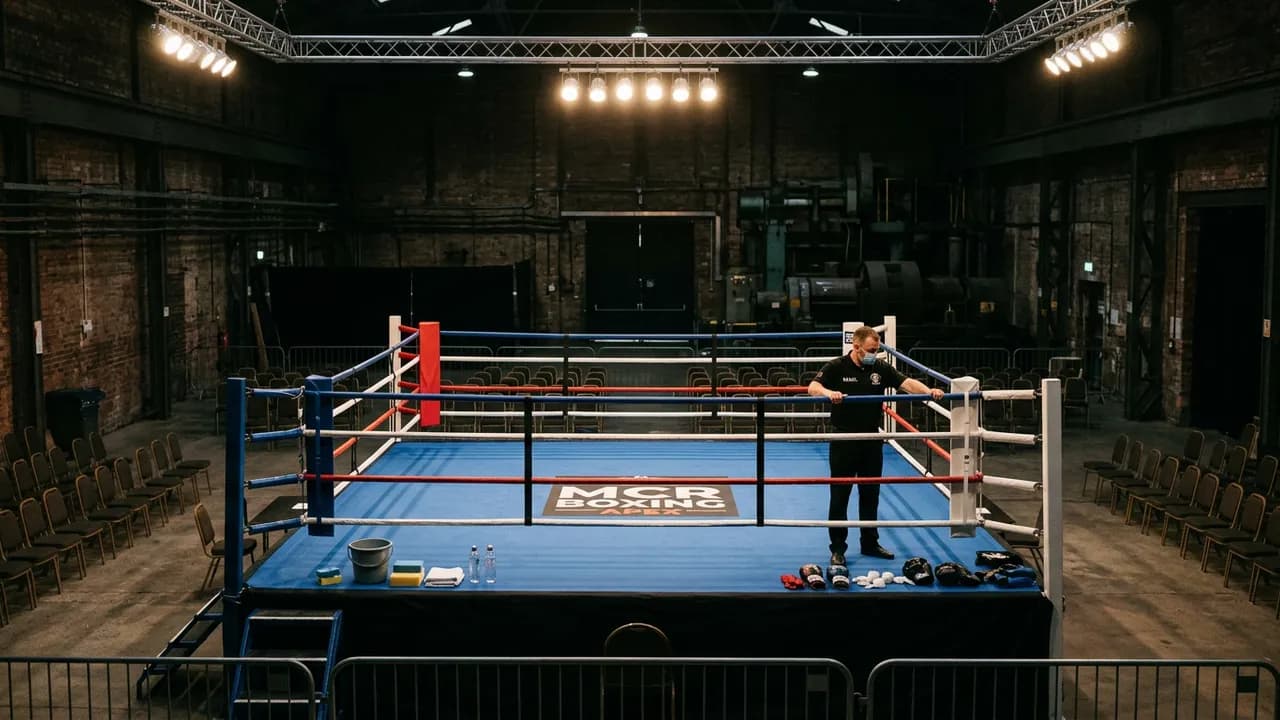
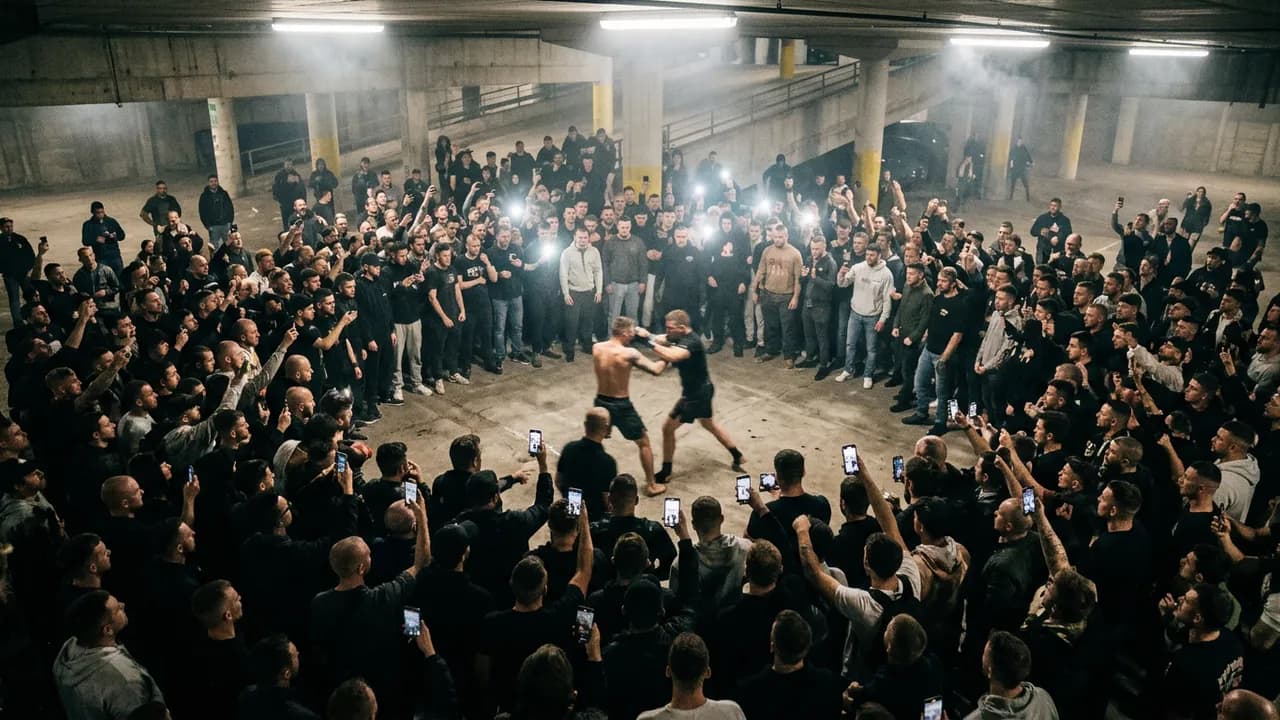
KOTR events are held in rotating locations around Manchester, with the primary venue being an old boxing gym. The format is raw and stripped back -- young men settle disputes or test themselves in supervised bouts, with previous events including moments of silence for victims of knife crime and fighters wearing shirts printed with photographs of friends lost to violence. The organization clocked over 10 million YouTube views in its first year and has become one of the most-watched underground fighting channels in Europe.
RemDizz has positioned KOTR as filling a gap left by devastating government cuts to youth services, with per-child funding in Manchester among the lowest in the country. The organization has attracted coverage from VICE, the Manchester Mill, and numerous national outlets. While its methods are controversial -- critics question whether channeling aggression into fighting truly reduces knife violence -- its cultural impact on the Manchester scene is undeniable.
BKB Bare Knuckle Boxing -- London / National
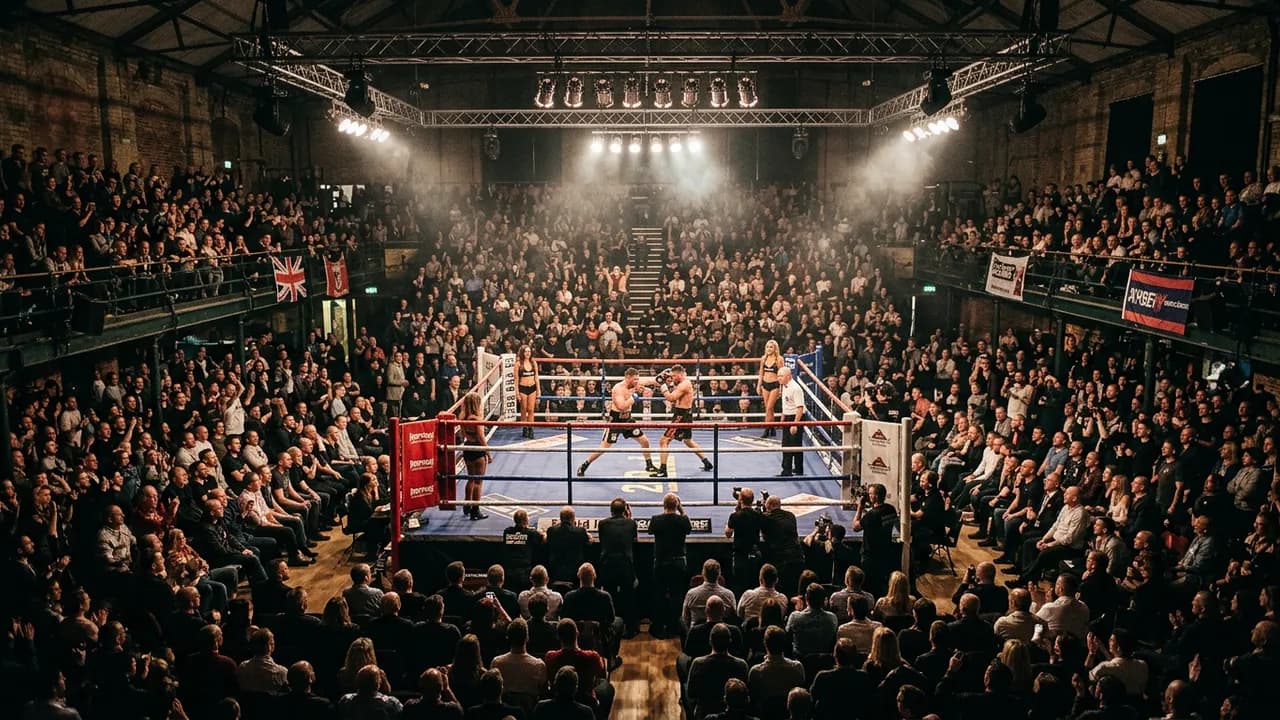
BKB Bare Knuckle Boxing is the dominant professional bare knuckle promotion operating in the United Kingdom. Founded in 2015 by Jim Freeman and Joe Smith-Brown, BKB has held events at major London venues including the indigo at the O2. The Miami promotion BYB Extreme bought BKB in May 2024 and took its name in February 2025, so BKB is now Miami-based, fights in BYB's patented triangular "Trigon" ring, and runs cards in both the US and the UK.
In a landmark move at the end of 2025, BKB acquired Bad to the Bone -- the longest-running independent bare knuckle promotion in the UK -- and appointed its founder Stefan Hanks as UK Chief Operating Officer and lead matchmaker. This consolidation gave BKB the largest roster and deepest organizational reach in the British bare knuckle market.
The 2026 season is shaping up to be the busiest in BKB's history. Confirmed plans include events at the indigo at the O2 (BKB 51, February 21, 2026), with additional shows planned at Wembley Arena and Manchester Arena. BKFC (the American bare knuckle giant) is also expanding its UK footprint, with BKFC Fight Night Newcastle scheduled for March 14, 2026, featuring a vacant UK heavyweight title fight.
UBKB -- Ultimate Bare Knuckle Boxing (Warrington)
Ultimate Bare Knuckle Boxing is a Warrington-based promotion owned and run by Shaun Smith, Amanda Smith, and Stu Armstrong. Shaun Smith gained national notoriety through viral videos and the Netflix series Bare Knuckle Fight Club, where he was dubbed "the UK's Scariest Debt Collector." UBKB operates the UK's only dedicated Academy of Bare Knuckle Boxing in Warrington, where regular open training days are held to identify and develop talent from both combat sports backgrounds and raw newcomers.
Events are held at Bowlers Exhibition Centre in Manchester's Trafford Park, and the organization is sanctioned by the WSBKB (World Series of Bare Knuckle Boxing).
UBKB fights largely follow London Prize Ring guidelines: no gloves, hands protected only by bandages, bouts restricted to two or three rounds. Events are held at Bowlers Exhibition Centre in Manchester's Trafford Park, and the organization is sanctioned by the WSBKB (World Series of Bare Knuckle Boxing). UBKB has been featured on Channel 4, Channel 5, and Spike TV, and places heavy emphasis on fighter health and safety with experienced ringside medics and a qualified doctor at every event.
Bad to the Bone (Stoke-on-Trent) -- Now Part of BKB
Bad to the Bone was founded by Stefan Hanks, a 44-year-old tattooist from Stoke-on-Trent, who turned a lifelong passion for boxing into one of Europe's biggest bare knuckle promotions. The organization staged its first show in February 2018 and grew rapidly over the following years, hosting major events at Fenton Manor Leisure Centre in Stoke-on-Trent, including shows billed as "Britain's biggest bare-knuckle festival." In December 2025, Bad to the Bone was acquired by BKB Bare Knuckle Boxing, with Hanks joining BKB on a long-term contract. The acquisition brought Bad to the Bone's champions, talent roster, and fight library under the BKB umbrella.
Spartan Bare Knuckle Fight Club (North England)
Spartan Bare Knuckle Fight Club is the UK's only licensed 8x8-foot bare knuckle pit fighting club. Operating across the north of England from a base in Oldham, Spartan stages bouts in a tiny eight-by-eight-foot area boxed off with hay bales, where two shirtless, gloveless fighters compete in close quarters with nowhere to retreat. The compressed space makes for short, explosive, and often bloody fights that frequently end in knockouts.
Over more than seven years of operation, Spartan has built a community around mental health and recovery. The club has become a form of therapy for men battling addiction, depression, and social isolation in post-industrial Northern English towns. Crowds of over 700 have attended single events. Spartan has been featured in a VICE documentary series and a Huck Magazine photo essay, and its events have been documented on Amazon Prime Video.
King of the Streets
King of the Streets is a European-based no-rules fight promotion founded in 2013 in Sweden by a group known as the Hype Crew. While not originally British, KOTS has a significant UK presence and following, with over 1.28 million YouTube subscribers and 300,000 Instagram followers. Bouts have no rounds, no time limits, and no rules beyond knockouts and submissions ending the fight. The promotion operates across multiple European locations and has drawn controversy for its unregulated, vale tudo format.
The Knife Crime Connection
The single most important social force shaping the UK underground fighting scene today is the knife crime crisis. The numbers are sobering: in the year ending June 2025, there were 51,527 knife-enabled offences recorded in England and Wales, and 196 knife-enabled homicides. While these figures represent a 5% decrease from the previous year, they remain staggeringly high. In 2024, 109 young people under 25 were murdered with a knife or sharp object, including 17 victims under the age of 16. Juveniles aged 10-17 constitute approximately 18-20% of knife crime offenders despite representing a far smaller share of the population. One in twenty teenage children in England and Wales reports having used a weapon to threaten or hurt someone in the past year.
These statistics are not abstractions to the people running underground fighting organizations in British cities. They are the reality of daily life in their communities.
King of the Ring was built explicitly as a response to this crisis. RemDizz founded KOTR in Manchester after watching serious youth violence rise by 200% in the city over a two-year period. His argument is direct: if young men have a sanctioned, supervised outlet for aggression and dispute resolution, they are less likely to reach for a blade. KOTR events include tributes to knife crime victims, and the organization frames every bout within its anti-violence mission.
The approach is not without criticism. Detractors argue that promoting fighting -- even controlled, supervised fighting -- normalizes violence and risks escalating rather than reducing aggression. Public health professionals have expressed concern about the potential for injuries in unregulated environments. But supporters, including many participants, counter that the reality on the streets is far more dangerous than anything that happens in a KOTR ring, and that the alternative to controlled violence is not peace but uncontrolled violence with knives.
Whether or not underground fighting organizations are an effective intervention against knife crime remains an open question.
This debate mirrors similar conversations happening around Streetbeefs and Backyard Squabbles in the United States, where organizations use the same logic -- channeling disputes into fistfights to prevent gun violence. The UK version is distinguished by the specific threat of knife crime, by the severity of cuts to youth services that have left communities without alternatives, and by the concentrated, visible way the crisis manifests in cities like Manchester, London, and Birmingham.
Whether or not underground fighting organizations are an effective intervention against knife crime remains an open question. What is not in question is that the crisis has fundamentally shaped the character, mission, and public perception of the UK scene.
Legal Status
The legal status of bare knuckle fighting and underground combat in the United Kingdom is genuinely complex, operating in what most legal analysts describe as a gray area.
Professional Bare Knuckle Boxing
Unlike the United States, where bare knuckle boxing has been explicitly legalized state by state through athletic commissions, the UK lacks a single, clear legal framework for the sport. The British Boxing Board of Control (BBBoC) -- the primary regulatory body for professional boxing in Britain -- has historically declined to sanction bare knuckle events, asserting in 2020 that they do not meet safety standards and are not legally recognized under its jurisdiction.
However, bare knuckle promotions operate legally by seeking licensing and regulation through alternative combat sports authorities, such as the WSBKB (World Series of Bare Knuckle Boxing) and other independent sanctioning bodies. These organizations impose safety requirements including pre-fight medical examinations, on-site medical personnel, and insurance coverage for fighters. Events are held at licensed venues and comply with the Licensing Act 2003, which governs public entertainment. In practical terms, professional bare knuckle boxing exists and thrives in the UK without BBBoC sanction, operating under alternative regulatory structures that provide a legal foundation for the sport.
Prize Fighting Law
Under older English common law, "prize fighting" -- fighting for money or entertainment -- is technically illegal. The critical legal distinction is between a "prize fight" (unlawful) and a "boxing match" or "sporting contest" (lawful). Sanctioned bare knuckle events avoid the prize fighting prohibition by operating under the framework of regulated sporting contests, complete with rules, medical oversight, and licensing. Unsanctioned events, particularly those with no medical personnel, no regulatory oversight, and cash prizes, are far more vulnerable to prosecution.
Underground and Unsanctioned Events
Fully underground events like King of the Ring occupy the most precarious legal territory. Without formal sanctioning, regulatory oversight, or medical staffing that meets professional standards, these events could be prosecuted under assault laws, public order offenses, or licensing violations. In practice, prosecution is rare -- partly because participants consent to the fighting, partly because the events often have a community-benefit framing (anti-knife violence), and partly because police resources are stretched thin. But the legal protections are thin, and both organizers and fighters accept a degree of legal risk.
The Practical Reality
The UK's approach to underground fighting enforcement is largely pragmatic. Police and prosecutors tend to focus on events that produce serious injuries, involve minors, or create public disorder, rather than pursuing every unsanctioned bout. The growth of the professional bare knuckle circuit -- with BKB staging events at the O2 and planning for Wembley and Manchester Arena -- is gradually moving the sport toward greater legitimacy and mainstream acceptance, which may eventually force a more definitive legal framework.
How to Watch
YouTube (Free)
- King of the Ring -- Full fight cards and highlights on the KOTR YouTube channel, which accumulated over 10 million views in its first year
- King of the Streets -- Full fights uploaded to their YouTube channel (1.28M subscribers)
- Spartan Bare Knuckle -- Fight footage available on YouTube and featured in VICE documentary series
Streaming and PPV
- BKB Bare Knuckle Boxing -- Live events on BKBWorld.tv; also available through Fuse TV, The Fight Network, and BeIN Sports
- BKFC UK events -- Available through the BKFC app and TrillerTV
Television and Documentaries
- UBKB -- Featured on Channel 4, Channel 5, and Spike TV
- Spartan Bare Knuckle -- Available on Amazon Prime Video
- Knuckle (2011) -- Essential documentary on Irish Traveller bare knuckle feuds, following three families over 12 years
- Bare Knuckle Fight Club (Netflix) -- Featuring UBKB's Shaun Smith
Social Media
Instagram and TikTok are primary distribution channels for UK underground fighting content. KOTR, Spartan, and BKB all maintain active social media presences with regular fight highlights and event announcements.
Key Cities
Manchester
Manchester is the capital of UK underground fighting in the 2020s. King of the Ring was born here in 2022, and the city's combination of deep boxing tradition, high knife crime rates, and decimated youth services has created the conditions for the underground scene to flourish. UBKB holds events at Bowlers Exhibition Centre in the city's Trafford Park area. Looking ahead, BKB has announced plans for events at Manchester Arena in 2026, bringing professional bare knuckle to one of the city's most prestigious venues. Manchester's role in the UK fight scene mirrors the role that Harrisonburg, Virginia, plays for Streetbeefs in the US -- it is the spiritual and operational home of the grassroots movement.
London
London is the historical heart of British bare knuckle boxing, the city where James Figg opened his academy in 1719 and where the London Prize Ring Rules were codified in 1838. Today, it serves as the primary venue for professional bare knuckle events. BKB Bare Knuckle Boxing has made the indigo at the O2 its London home, with BKB 51 confirmed for February 21, 2026. Plans for Wembley Arena events are in development. London's knife crime statistics -- the city accounts for a disproportionate share of England's knife offences -- also fuel grassroots activity, though the underground scene here is less centralized than in Manchester, spread across the city's vast geography.
Coventry
Coventry has emerged as a notable location in the UK underground fighting scene, with connections to King of the Streets events and a broader Midlands bare knuckle tradition. The city's working-class communities and combat sports culture provide a natural audience for both underground and sanctioned events.
Warrington
Warrington is home to UBKB's dedicated Bare Knuckle Boxing Academy -- the only facility of its kind in the United Kingdom. Run by Shaun Smith and the UBKB team, the academy holds regular open training days where fighters from across the North of England come to train, spar, and be assessed for inclusion on UBKB fight cards. Warrington's role in the UK bare knuckle scene is unique: it is not primarily an event venue but a training and development hub, the closest thing the UK bare knuckle world has to a permanent institutional home.
Stoke-on-Trent
Stoke-on-Trent was the base of operations for Bad to the Bone, the UK's longest-running independent bare knuckle promotion, until its acquisition by BKB at the end of 2025. Stefan Hanks built the organization from the ground up in this Midlands city, hosting major events at Fenton Manor Leisure Centre that were billed as "Britain's biggest bare-knuckle festival." While Bad to the Bone now operates under the BKB umbrella, Stoke remains significant as the city that proved a regional bare knuckle promotion could grow into a nationally recognized operation.
Oldham and the North of England
Spartan Bare Knuckle Fight Club operates out of Oldham and stages events across the wider North of England. The club's presence in post-industrial Northern towns speaks to the particular social and economic conditions that fuel underground fighting in these communities -- high unemployment, underfunded public services, addiction, and mental health challenges. Spartan's dual identity as both a fighting promotion and a community mental health resource reflects the complex social reality of the Northern English underground scene.
Frequently Asked Questions
Is bare knuckle boxing legal in the UK?
Professional bare knuckle boxing operates legally in the UK through alternative sanctioning bodies such as the WSBKB, though it is not recognized by the British Boxing Board of Control. Events held at licensed venues with proper medical oversight and regulatory sanction are lawful sporting contests. Fully unsanctioned underground events occupy a legal gray area and could theoretically be prosecuted under assault or public order laws, though this is rare in practice.
What is King of the Ring?
King of the Ring (KOTR) is a Manchester-based underground fighting organization founded in 2022 by RemDizz. It was created as a direct response to the knife crime crisis, operating under the motto "Put down the knife, use your left and right." KOTR hosts supervised bouts in rotating locations around Manchester and has amassed millions of YouTube views.
What is the connection between underground fighting and knife crime in the UK?
Several UK underground fighting organizations, most notably King of the Ring, were founded explicitly to provide an alternative to knife violence. The logic is that if young men can settle disputes with their fists in a supervised environment, they are less likely to use weapons. This approach is controversial but has gained significant community support, particularly in cities like Manchester where youth services have been severely cut.
What is the Traveller bare knuckle tradition?
The Irish Traveller and Romani Gypsy communities of the British Isles have maintained a continuous tradition of bare knuckle boxing for centuries. Fights are used to settle family feuds and defend clan honor, following a code of conduct with designated "fair play men" acting as referees. The tradition was documented in the landmark 2011 documentary Knuckle. Heavyweight boxing champion Tyson Fury is of Irish Traveller heritage.
Where can I watch UK bare knuckle and underground fights?
King of the Ring and King of the Streets upload full fights to YouTube for free. BKB Bare Knuckle Boxing streams events on BKBWorld.tv and is available on Fuse TV and BeIN Sports. UBKB has been featured on Channel 4, Channel 5, and Spike TV. Spartan Bare Knuckle is available on Amazon Prime Video. The documentary Knuckle (2011) is essential viewing for anyone interested in the Traveller tradition.
How is the UK scene different from the US scene?
The UK scene is more deeply rooted in history, with an unbroken lineage from the 18th-century London Prize Ring era through the Traveller tradition to today's modern promotions. It is also more directly connected to the knife crime crisis, which gives organizations like KOTR a social mission that distinguishes them from most American counterparts. The US scene is larger, more commercially developed, and benefits from clearer legal frameworks in many states. Both countries share the use of fighting as a community-level alternative to more dangerous forms of violence.
Can I attend live events in the UK?
Yes. Professional BKB Bare Knuckle Boxing events sell tickets through standard outlets for shows at venues like the O2 in London and Manchester Arena. UBKB events at Bowlers Exhibition Centre are also open to the public. Underground events like King of the Ring are typically announced through social media -- follow their Instagram and YouTube channels for event details. Spartan Bare Knuckle events draw large crowds across Northern England and are announced through social media.
How do I get involved as a fighter in the UK?
For professional bare knuckle, contact BKB Bare Knuckle Boxing through their website. UBKB holds open training days at their Warrington academy where fighters are assessed. For underground organizations, King of the Ring and Spartan Bare Knuckle can be contacted through social media. Prior combat sports experience is preferred but not always required, depending on the organization.