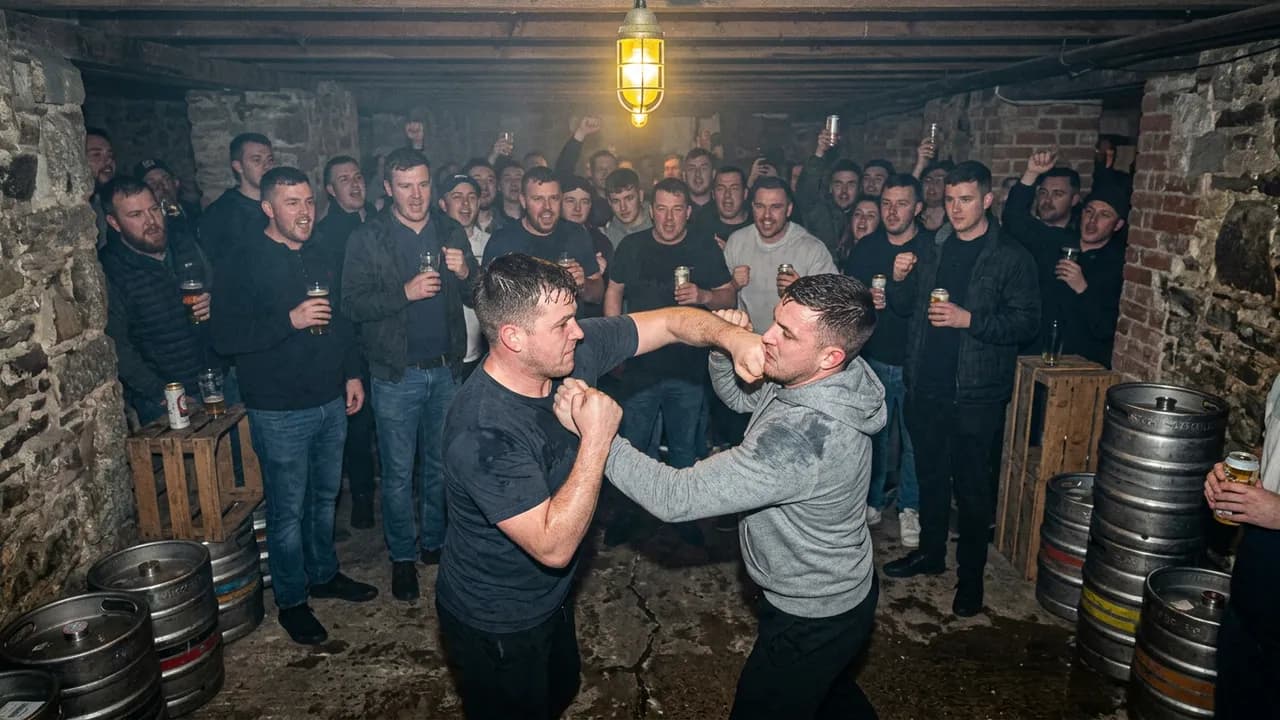
Moscow is the capital of Russian combat sports, and in recent years it has become the epicenter of the global bare knuckle fighting explosion. While St. Petersburg claims Strelka and its sand-ring amateur bouts, Moscow is home to Top Dog Fighting Championship -- the largest and most professionalized bare knuckle promotion in Eastern Europe. The distinction matters. Strelka is the people's fight club, open to anyone willing to step into a sand ring. Top Dog is the curated, high-production machine that fills arenas, signs celebrity crossover fighters, and sells pay-per-views to a global audience.
But Moscow's fighting culture extends far beyond a single promotion. The city has a combat sports infrastructure that runs from world-class MMA gyms to the most grassroots street fighting traditions, all fed by a Russian culture that has never stopped valuing the ability to fight with your bare hands.
The Rise of Top Dog Fighting Championship
Top Dog Fighting Championship was born in a parking lot. In early 2020, as COVID-19 lockdowns shuttered gyms, canceled sporting events, and left Russia's combat sports community with nowhere to compete, an amateur fighter and entrepreneur named Danil "Regbist" Aleyev saw an opportunity. He began organizing bare knuckle fights in Moscow parking lots, filming them with basic equipment, and uploading the footage online.
The timing was extraordinary. Pent-up aggression from lockdown restrictions, frustration over economic uncertainty, and a general hunger for live entertainment created the perfect conditions for a new combat sports product. Russian audiences -- already accustomed to the rawness of Strelka and the country's massive MMA following -- were primed for something that pushed the boundaries even further.
What set Top Dog apart from other parking lot fight videos was Aleyev's ambition. From the beginning, he treated the promotion not as an underground novelty but as a legitimate entertainment business. Production quality improved rapidly. The signature hay bale ring was established as the brand's visual centerpiece -- fighters competing without gloves, wearing jeans or sweatpants, inside a ring encircled by stacked hay bales that gave the whole affair the aesthetic of a post-apocalyptic arena. Weight classes were introduced. A championship structure was implemented. The parking lot fights became events.
By 2021, Top Dog fight videos were reaching millions of views on YouTube. American and European viewers discovered the promotion through social media algorithms and were immediately captivated by the combination of raw violence, high production values, and the sheer novelty of watching Russian bare knuckle fighters slug it out in a hay bale ring. Reuters covered the phenomenon, noting how Russian bare knuckle fight nights had capitalized on pandemic-era demand for unfiltered combat content.
CSKA Arena: From Parking Lots to Prime Venues
The clearest marker of Top Dog's evolution from underground operation to mainstream Moscow fixture is its home venue: the CSKA Arena. Located in Moscow, the multi-purpose arena has become the primary staging ground for Top Dog's major events, hosting fight nights that feature 20-bout cards with full production, lighting, and sound.
Top Dog 37, held at CSKA Arena on July 5, 2025, featured one of the promotion's most ambitious crossover events to date. The main event pitted founder Danil "Regbist" Aleyev against Alexander "Alex Terrible" Shikolai -- the frontman of Russian deathcore band Slaughter to Prevail. The collision of extreme music and extreme fighting drew massive attention from both combat sports and metal music communities, demonstrating Top Dog's ability to reach audiences well beyond the traditional fight fan demographic.
Top Dog 40, staged at CSKA Arena on December 27, 2025, closed out the year with another 20-fight card. The main event featured undefeated lightweight champion Kantemir "Liquidator" Kalazhokov defending his title against Ivan "Mastak" Nushkin. By this point, Top Dog events had become appointment viewing for Russian combat sports fans and a growing international audience.
The progression from parking lots to CSKA Arena in roughly five years is one of the most dramatic growth stories in modern combat sports. Top Dog did not just find an audience -- it created one, and then scaled to meet the demand.
Moscow's Combat Sports Infrastructure
Top Dog's success in Moscow is not an accident. It was made possible by the city's deep and extensive combat sports infrastructure.
MMA gyms are packed. Bare knuckle fighting videos generate millions of views from Moscow-based audiences.
Moscow is home to world-class MMA gyms, boxing academies, and wrestling training centers. The city's fighters benefit from Russia's long tradition of sambo -- the Soviet-developed martial art that combines judo, wrestling, and striking -- as well as strong amateur boxing and kickboxing programs. The talent pipeline that feeds professional promotions like the UFC, Bellator, and the Professional Fighters League also feeds Top Dog's roster.
Beyond the professional level, Moscow has a vibrant culture of informal fighting that predates any organized promotion. Russian fighting traditions stretch back centuries, from the village wall-to-wall fistfights that served as community entertainment to the modern hooligan culture surrounding football clubs. Moscow's football firms -- organized groups of supporters associated with clubs like CSKA Moscow, Spartak Moscow, and Dynamo Moscow -- have long maintained fighting traditions that blend athletic training with street combat. While these groups operate outside the law, they have contributed to a broader cultural acceptance of fighting as a legitimate form of competition and self-expression.
The result is a city where combat sports are not niche. They are mainstream. Top Dog events at CSKA Arena sell out. MMA gyms are packed. Bare knuckle fighting videos generate millions of views from Moscow-based audiences. The city's appetite for combat sports content appears to be effectively unlimited.
The Hay Bale Ring and Moscow's Fighting Aesthetic
Moscow's contribution to the underground fighting world is not just organizational -- it is visual. The Top Dog hay bale ring has become one of the most recognizable images in modern combat sports. Fighters standing shirtless in jeans, fists bare, surrounded by stacked hay bales and a roaring crowd -- the aesthetic is distinctly Russian, blending rural imagery with urban spectacle.
This visual identity is deliberate. Aleyev understood that in the crowded world of online combat sports content, distinctive visuals are essential for cutting through the noise. The hay bale ring serves a practical purpose -- the bales provide a soft boundary for fighters who get knocked into the perimeter -- but its primary function is branding. When you see a hay bale ring, you know you are watching Top Dog.
The promotion's visual language extends beyond the ring. Top Dog events feature dramatic lighting, fog machines, and walk-out productions that rival professional boxing and MMA shows. The fighters' uniform of jeans and bare fists creates a working-class aesthetic that resonates with Russian audiences and communicates a message of authenticity: these are real fighters, not sanitized athletes.
Top Dog vs. Strelka: Moscow and St. Petersburg
Moscow and St. Petersburg represent the two poles of Russian fighting culture, and their respective promotions -- Top Dog and Strelka -- embody the contrast.
Strelka is democratic, amateur, and decentralized. Anyone can fight. The sand ring is improvised. There are no rounds, no weight classes, and no production budgets. It is fighting at its most elemental -- two people in a ring, fighting until one cannot continue.
Top Dog is curated, professional, and centralized in Moscow. Fighters are selected and matched. The hay bale ring is a branded production. Weight classes and championship structures create competitive balance and narrative continuity. It is fighting as entertainment product -- engineered for maximum impact and maximum viewership.
Both models have found massive audiences. Strelka's YouTube channel has over 2.45 million subscribers and 1.5 billion views. Top Dog's most popular videos have been viewed over 13 million times individually. Together, they represent the twin pillars of Russian fighting content, and Moscow's role as Top Dog's home base ensures the city remains at the center of the movement.
The International Dimension
Top Dog's reach has expanded well beyond Moscow. The promotion now distributes content through its own streaming platform, topdogfc.tv, offering pay-per-view access to international viewers. American and European audiences who discovered Top Dog through YouTube clips can now watch full events in real time, and the promotion has actively cultivated its Western audience through English-language social media content and fighter profiles.
The Alex Terrible crossover -- bringing a globally known metal vocalist into the hay bale ring -- was a deliberate play for international attention. Terrible's fanbase extends across Europe, North America, and beyond, and his participation in Top Dog events introduced the promotion to audiences who had never previously watched bare knuckle fighting. The strategy worked: coverage in Western metal and entertainment media outlets brought Top Dog to the attention of millions of potential new viewers.
Moscow's position as Russia's media and entertainment capital makes it the natural base for this kind of international expansion. The city's infrastructure -- production studios, digital marketing talent, and global connectivity -- gives Top Dog resources that a promotion based in a smaller Russian city could not access.
The Future of Fighting in Moscow
Moscow's underground fighting scene is no longer truly underground. Top Dog fills arenas. Events are promoted openly. Fighters build public personas. The promotion operates with the infrastructure and ambition of a mainstream entertainment company, even as its product -- bare knuckle fighting in a hay bale ring -- retains the raw, transgressive energy that made it famous.
The city's combat sports culture shows no signs of cooling. The talent pipeline continues to produce fighters at every level. The audience appetite for bare knuckle content remains strong. And Top Dog's success has inspired smaller promotions and independent events throughout Moscow, creating a fighting ecosystem that extends well beyond a single organization.
For the global underground fighting community, Moscow is essential viewing. It is the city where parking lot brawls became arena events, where bare knuckle fighting became big business, and where a hay bale ring became one of the most iconic images in modern combat sports.
Related Reading
- Top Dog Fighting Championship -- Full organizational profile
- Strelka -- Russia's other major fighting organization, based in St. Petersburg
- Underground Fighting in St. Petersburg -- Moscow's counterpart in the Russian fighting scene