For 300 years, bare-knuckle boxing has existed in some form -- celebrated, outlawed, forgotten, and now revived. It is the oldest form of organized Western combat sport, predating gloved boxing by nearly two centuries. Every modern boxing technique, every fundamental of footwork and positioning, every rule governing how two fighters face each other in a ring traces its ancestry to men who fought without gloves on English soil in the 18th century.
This is the full history: from the first champion in 1719, through the golden age and the great champions, past the 129-year prohibition, to the modern revival that has made bare-knuckle fighting a legitimate, sanctioned combat sport once again.
Before the Beginning: The Roots of English Prizefighting
The First Recorded Fight (1681)
Bare-knuckle boxing did not emerge fully formed. The first documented fight in England was recorded in the London Protestant Mercury on January 6, 1681, when Christopher Monck, the 2nd Duke of Albemarle, arranged a bout between his butler and his butcher. The butcher won the prize.
Within a few years, regular pugilistic events were being held at the Royal Theatre in London. These were illegal, underground affairs with set purses, side bets, and heavy wagering. The fights were raw, unregulated, and dangerous. There were no standard rules, no weight divisions, and no consistent definition of what constituted victory. A fight ended when one man could no longer continue, when the crowd or patrons intervened, or when someone was killed.
This was the world that produced the sport's first recognized champion.
The First Champion: James Figg (1719 - 1730)
The Founding Father of Boxing
In 1719, James Figg established himself as England's first bare-knuckle champion. A physically imposing man with remarkable athleticism, Figg was not merely a fistfighter -- he was a master of what the era called "the Noble Science of Defence," which encompassed boxing, sword fighting, and quarterstaff combat.
Figg opened an academy in London where he charged for instruction in all three disciplines. His amphitheatre on Tottenham Court Road became the center of English fighting culture, attracting aristocrats, gamblers, and aspiring fighters alike.
His record was extraordinary. Over a career spanning roughly a decade, Figg fought nearly 300 bouts and never lost. He retired as undefeated champion in 1730 and spent his remaining years training the next generation of fighters. One of those students would transform the sport entirely.
The State of Fighting in Figg's Era
It is important to understand how different Figg-era prizefighting was from anything recognizable as modern boxing. There were no rounds. No rest periods. No prohibition on wrestling, throwing, or hitting a downed opponent. Fights combined punching with grappling, tripping, and various forms of roughhousing. Gouging, hair-pulling, and headbutting were common. The term "boxing" barely applied -- these were essentially no-holds-barred fights conducted with bare hands.
This would change with Figg's most famous student.
Jack Broughton and the Birth of Boxing Rules (1734 - 1750)
The Champion Who Changed Everything
Jack Broughton succeeded Figg as the dominant fighter of his generation, claiming the championship around 1734 and holding it until 1750. He was bigger than Figg, technically superior, and by all contemporary accounts, a devastating puncher.
But Broughton's greatest contribution was not his fighting. It was what happened after a fight.
The Death That Wrote the Rules
In the early 1740s, one of Broughton's opponents -- a fighter named George Stevenson -- died from injuries sustained during their bout. The death shook Broughton profoundly. Prizefighting was brutal by design, but Broughton believed it did not need to be fatal. On August 16, 1743, he drafted the first standardized rules for the sport.
Broughton's Rules (1743)
The rules were simple but revolutionary:
- Rounds ended when a fighter went down. No more beating a downed man.
- A 30-second rest period followed each knockdown. The downed fighter had to "come to scratch" -- stand within a yard of his opponent unaided -- or be declared beaten.
- No hitting below the waist. A foundational rule that persists in boxing to this day.
- No seizing an opponent below the waist. This began the separation of boxing from wrestling.
Broughton also invented "mufflers" -- padded leather hand coverings that were the direct ancestors of modern boxing gloves. These were used exclusively for training and sparring, never in actual prize bouts, but they represented the first recognition that unprotected hands posed unnecessary danger to both fighters.
03 / Up next / The London Prize Ring: The Golden Age (1838 - 1867)
Broughton's Rules governed English prizefighting for nearly a century. They did not eliminate the sport's brutality -- fights still lasted dozens of rounds and frequently resulted in serious injury -- but they imposed a structure that transformed chaotic brawling into something closer to a sport.
The London Prize Ring: The Golden Age (1838 - 1867)
The London Prize Ring Rules (1838)
By the 1830s, Broughton's Rules showed their age. Fights had grown more organized, the stakes were higher, and the sport needed a more comprehensive regulatory framework. In 1838, the British Pugilists' Protective Association drafted the London Prize Ring Rules, building on Broughton's foundation to create the definitive code for bare-knuckle boxing.
Key provisions included:
- A 24-foot square ring enclosed by ropes. This standardized the fighting area for the first time.
- A knockdown ended the round, followed by a 30-second rest and an additional 8 seconds for the fighter to return to a mark ("scratch") in the center of the ring.
- Comprehensive fouls were defined. Butting, gouging, scratching, kicking, hitting a man while down, holding the ropes, biting, and concealing stones or hard objects in the hands were all prohibited.
- Wrestling and throwing remained legal. The rules allowed fighters to grapple and throw their opponents, a feature that would later be eliminated under Queensberry Rules.
The London Prize Ring Rules were revised in 1853 to further clarify scoring and fouls, and they governed bare-knuckle boxing for over a century. Under this framework, the sport produced its greatest champions.
Tom Cribb: The People's Champion (1809 - 1822)
Tom Cribb, born in 1781 in Gloucestershire, became one of the most beloved figures in bare-knuckle history. He claimed the English championship in 1809 and held it until his retirement in 1822 -- a reign of 13 years, one of the longest in the sport's history.
Cribb's most famous bouts were his two fights against the American Tom Molineaux in 1810 and 1811. Molineaux, a formerly enslaved man who had won his freedom through fighting, traveled to England to challenge for the championship. Their first fight, held in December 1810 in freezing rain, lasted 35 rounds. Cribb won, though controversy surrounded the result -- Molineaux appeared to have knocked Cribb out in the 28th round, but Cribb's second (cornerman) accused Molineaux of concealing lead weights in his hands, buying Cribb time to recover.
The rematch in September 1811 drew an estimated 25,000 spectators -- an enormous crowd for the era. Cribb won decisively in 11 rounds. King George III presented Cribb with a jewel-encrusted belt, cementing his status as a national hero.
Jem Ward, William Thompson, and the Mid-Century Champions
Following Cribb's retirement, the championship passed through a succession of fighters who maintained the sport's popularity among the English public. Jem Ward held the title through the 1820s, known for his scientific approach to fighting. William "Bendigo" Thompson, champion from 1839 to 1850, was perhaps the most colorful figure of the era -- a southpaw fighter known for his unorthodox style, theatrical antics, and repeated run-ins with the law for fighting outside the ring.
These mid-century champions fought in an increasingly hostile legal environment. Prizefighting was technically illegal throughout this period, and bouts were staged in secret locations, often on riverbanks or in fields chosen for their distance from police jurisdiction. The sport survived through the patronage of wealthy backers and the enthusiasm of the working class.
Sayers vs. Heenan: The First World Championship (1860)
The single most important bout of the London Prize Ring era took place on April 17, 1860, in a secret field near Farnborough, Hampshire. English champion Tom Sayers -- five feet eight inches, roughly 150 pounds -- faced American champion John C. Heenan, who stood six feet two and weighed 195 pounds.
This was the first international championship in boxing history. It was illegal. It was enormous.
An estimated 12,000 spectators traveled by special trains organized clandestinely to avoid police detection. The fight lasted 42 rounds over two hours and twenty-seven minutes. Sayers fought with a broken right arm from the third round onward, targeting Heenan's eyes with his left until the American could barely see. In the 37th round, Heenan was found to be pushing Sayers' throat against the ropes, and chaos erupted. By the 42nd round, spectators invaded the ring and police moved in to stop the fight.
04 / Up next / The Fight's Legacy
The bout was declared a draw. Both men were awarded championship belts. The fight made international headlines, covered on the front pages of newspapers on both sides of the Atlantic. It remains one of the most famous bouts in boxing history, bare-knuckle or otherwise.
The Fight's Legacy
Sayers vs. Heenan demonstrated both the extraordinary appeal and the fundamental problem of bare-knuckle prizefighting. The fight drew massive public interest but also massive public outrage. The illegality, the injuries, and the chaotic ending fueled calls for reform. Within seven years, a new set of rules would begin the slow death of bare-knuckle boxing as a sanctioned sport.
The Queensberry Revolution and the Death of Bare Knuckle (1867 - 1889)
The Marquess of Queensberry Rules (1867)
In 1867, John Graham Chambers drafted a new set of rules for boxing under the patronage of John Douglas, the 9th Marquess of Queensberry. The Queensberry Rules represented a fundamental break from the bare-knuckle tradition:
- Gloves were mandatory. Fighters wore padded gloves, ostensibly for safety.
- Three-minute rounds with one-minute rest periods. Replacing the knockdown-based round system.
- A ten-count for knockdowns. If a fighter could not rise within ten seconds, the fight was over.
- Wrestling and throwing were banned. Boxing became a purely striking art.
- Weight divisions were established. No more mismatched fighters.
The Queensberry Rules did not immediately replace the London Prize Ring Rules. For over two decades, both systems coexisted, with some fighters competing under both codes. But the Queensberry format -- faster, cleaner, and more palatable to mainstream audiences and lawmakers -- gradually won out.
R v. Coney: The Legal Death Blow (1882)
The most significant legal event in bare-knuckle boxing history occurred in an English courtroom. In the case of R v. Coney (1882), the court ruled that a bare-knuckle fight constituted "an assault occasioning actual bodily harm, despite the consent of the participants." This ruling meant that everyone present at a bare-knuckle bout -- fighters, organizers, and spectators alike -- could be prosecuted.
The decision did not technically ban bare-knuckle boxing. It did something worse: it made participation a criminal offense for everyone involved. Public bare-knuckle events in England effectively ended overnight.
John L. Sullivan: The Last Bare-Knuckle Champion (1882 - 1892)
John Lawrence Sullivan was the most famous fighter in the world during the 1880s and the man who straddled both eras. Born in 1858 in Roxbury, Massachusetts, Sullivan was a force of nature -- powerful, charismatic, and willing to fight anyone, anywhere, under any rules.
Sullivan's relationship with bare-knuckle fighting is more complicated than the popular narrative suggests. He fought with gloves under Queensberry Rules as early as 1880 and only fought bare-knuckled three times in his career: against Paddy Ryan in 1882 (winning the American championship in nine rounds), against Charlie Mitchell in 1888 (a 39-round draw in Chantilly, France, fought in the rain), and against Jake Kilrain in 1889.
That third fight is the one that matters.
Sullivan vs. Kilrain: The End of an Era (July 8, 1889)
On July 8, 1889, Sullivan and Kilrain met in Richburg, Mississippi, for what would become the last heavyweight championship fought under London Prize Ring Rules. The fight took place in extreme summer heat. Sullivan, despite being out of shape and suffering from a stomach ailment during the bout, battered Kilrain for 75 rounds over two hours and sixteen minutes before Kilrain's corner threw in the towel.
It was the last bare-knuckle championship fight in the English-speaking world. Sullivan, battered by the experience, insisted his next title defense be fought under Queensberry Rules with five-ounce gloves. That fight came in September 1892 against James J. Corbett, a faster, more skilled boxer who knocked Sullivan out in the 21st round.
The Sullivan-Corbett fight marked the definitive triumph of gloved boxing over bare-knuckle. No champion after Sullivan would fight without gloves. An era was over.
The 129-Year Gap (1889 - 2018)
Bare Knuckle Goes Underground
From 1889 to 2018, bare-knuckle fighting did not disappear. It went underground. Illegal bouts continued in back rooms, barns, and private properties throughout the United States, the United Kingdom, Ireland, and Australia. Travelers and Romani communities in the British Isles maintained active bare-knuckle traditions through the entire prohibition period, with fights organized through word of mouth and attended by invitation only.
In the 1990s and 2000s, the internet gave these underground communities new visibility.
In the 1990s and 2000s, the internet gave these underground communities new visibility. Videos of bare-knuckle fights surfaced online, finding massive audiences. Kimbo Slice's backyard brawls, which began circulating in 2003, demonstrated that the appetite for ungloved fighting had never actually died -- it had simply been denied a legal outlet.
For more on the broader underground fighting movement during this period, see our complete timeline of underground fighting.
International Developments
Outside the English-speaking world, bare-knuckle and ungloved fighting continued in various forms:
- Russia developed multiple bare-knuckle traditions, from traditional kulachniy boy (fist fighting) in village festivals to the modern Strelka promotion, which launched in 2011 and allowed fighters to compete with minimal hand protection.
- Myanmar maintained the tradition of Lethwei, or Burmese bare-knuckle boxing, which permits the use of every part of the body, including headbutts, as an unbroken national sport.
- Brazil's Vale Tudo tradition, while incorporating grappling and kicks, preserved the spirit of unprotected hand combat.
These traditions ensured that bare-knuckle fighting never truly died, even as the English-language world pretended it had.
The Modern Revival (2018 - Present)
BKFC: The Return of Legal Bare Knuckle in America (2018)
The modern revival of bare-knuckle boxing as a regulated sport is almost entirely the work of one man: David Feldman.
Feldman, a 54-year-old Philadelphia native and former boxer, founded the Bare Knuckle Fighting Championship in April 2018 with a simple goal: bring bare-knuckle boxing back as a legal, state-sanctioned combat sport for the first time since Sullivan vs. Kilrain in 1889.
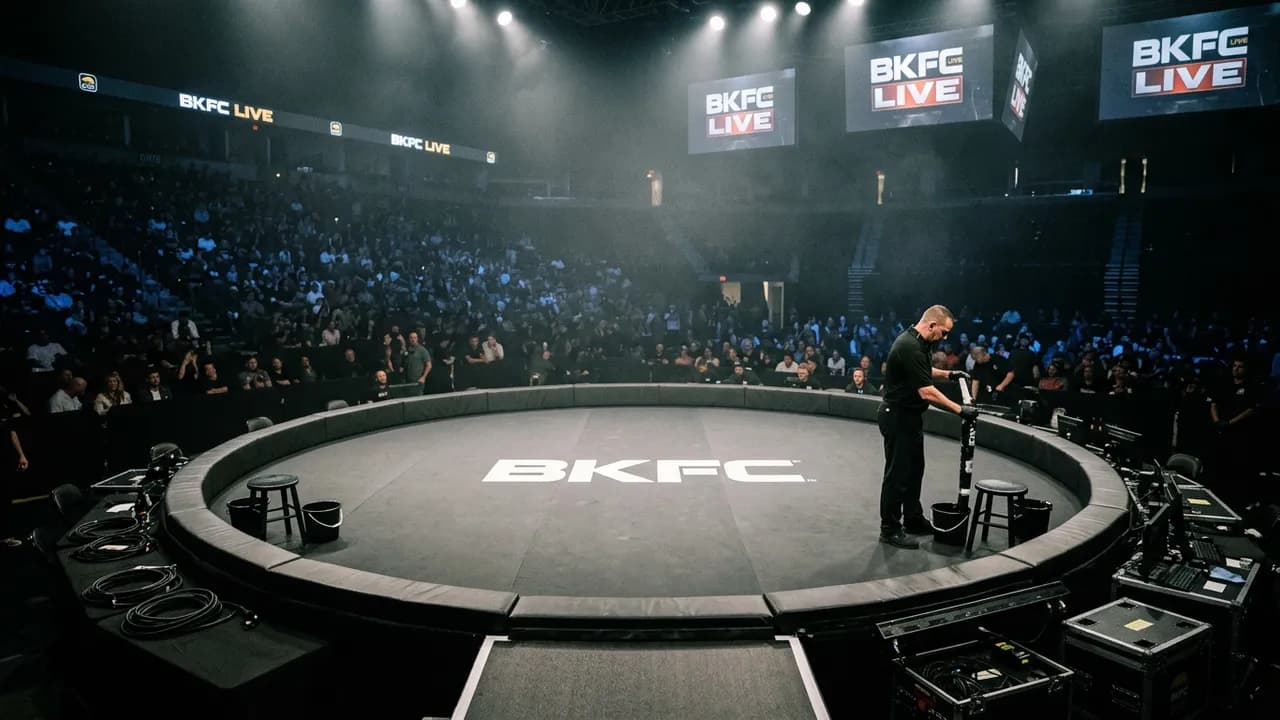
He found his opportunity in Wyoming. The Wyoming Combative Sports Commission agreed to sanction a bare-knuckle boxing event, making BKFC 1 the first legal, regulated bare-knuckle bout on American soil in 129 years.
The event took place on June 2, 2018, in Cheyenne, Wyoming. The card also featured the first sanctioned women's bare-knuckle fight in modern American history. The rules were carefully designed to balance authenticity with fighter safety:
- No gloves. Fighters wrap their hands and wrists, but wraps cannot extend within one inch of the knuckles.
- Five rounds of two minutes each. Short rounds reduce cumulative damage.
- Punches only. No kicks, elbows, knees, or grappling. Closed-fist strikes from the waist to the top of the head.
- Toe the line. At the start of each round, fighters step to marks three feet apart in the center of the ring. The referee calls "knuckle up" to begin.
- Full medical oversight. A ringside physician has authority to stop the fight at any time. Pre-fight physicals and medical screening are mandatory.
For a detailed comparison of BKFC's rules with other organizations, see our rules comparison guide.
BKB: The UK Leads the Way
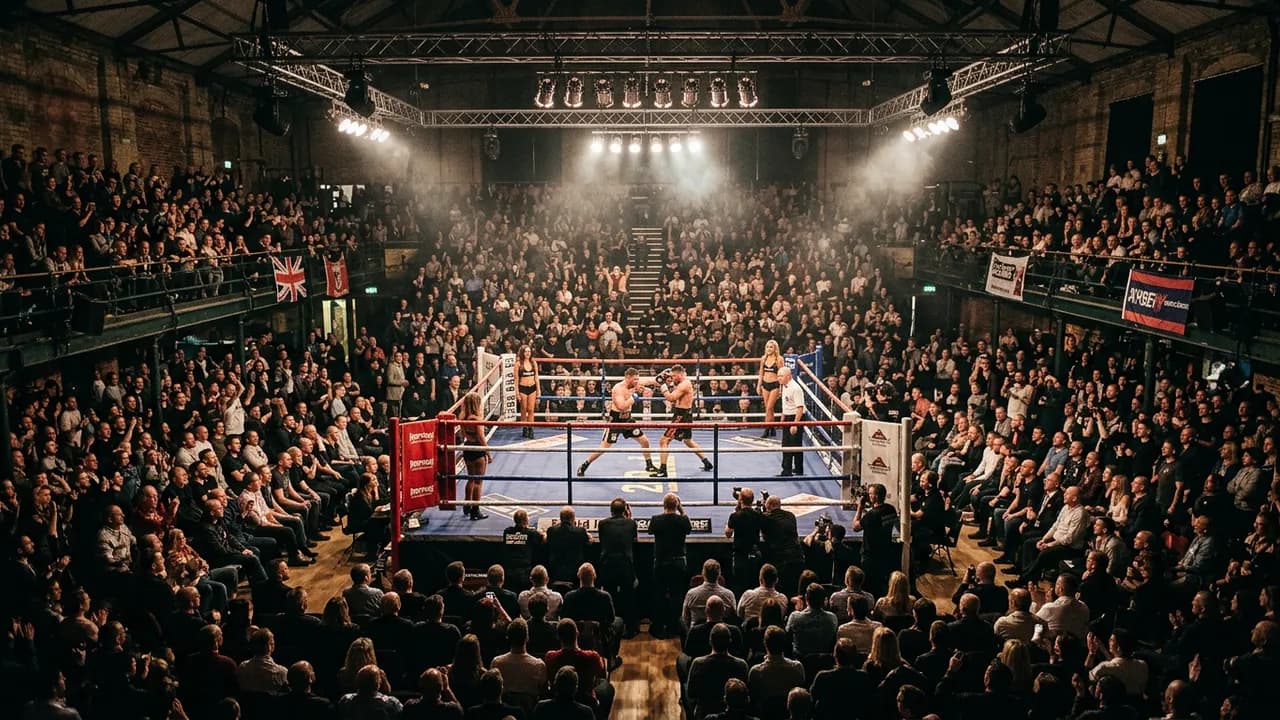
While BKFC was building its American operation, the United Kingdom had already moved first. BKB (Bare Knuckle Boxing), founded in 2015 by Jim Freeman and Joe Smith-Brown, established itself as the world's first professional bare-knuckle boxing promotion, staging events that were broadcast in over 35 countries. BKB's rules are similar to BKFC's -- punches only, hand wraps below the knuckles, fights ranging from three rounds of three minutes to seven rounds of three minutes for championship bouts. Punching in the clinch is prohibited.
In May 2024, BKB was acquired by BYB Extreme, the Miami promotion that took the BKB name in February 2025 and now runs cards in the US, the UK and Mexico.
Top Dog: The Russian Approach
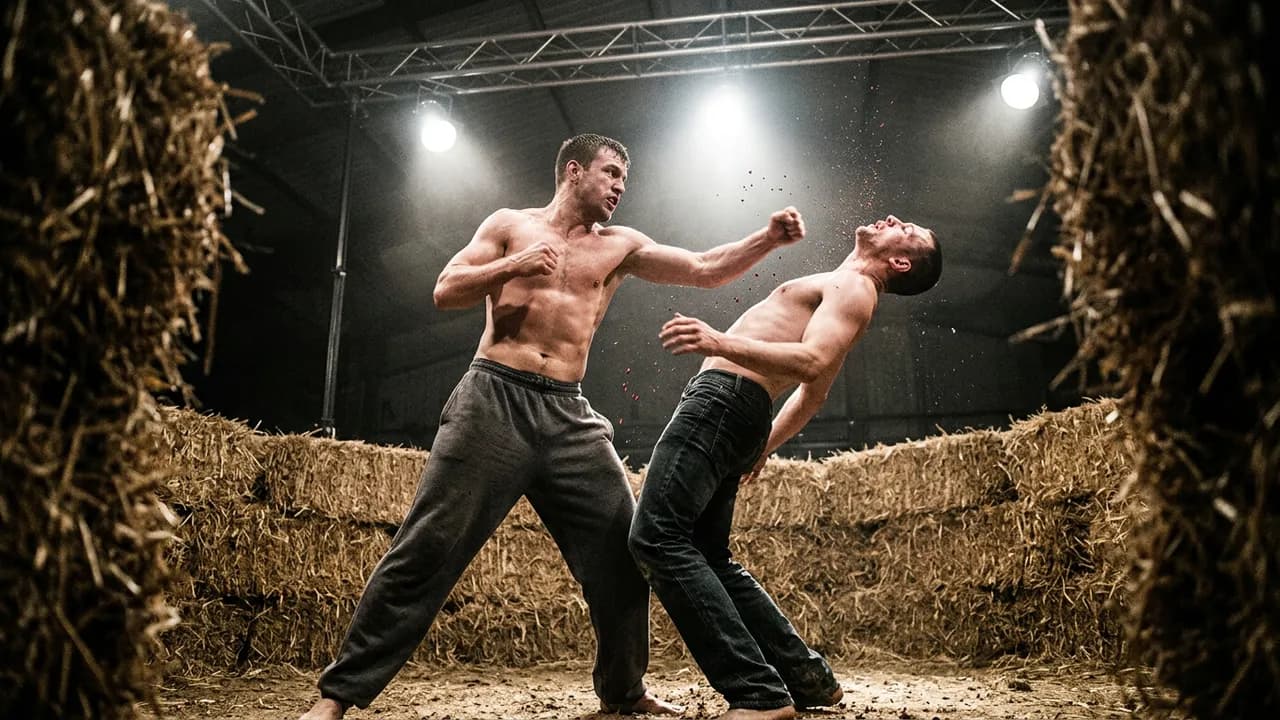
Top Dog Fighting Championship launched in Russia in 2020 with a production aesthetic that deliberately evoked the underground era. Fights took place in circles of hay bales, with fighters wearing jeans and street clothes instead of boxing trunks.
But beneath the underground styling was a professional operation. Bouts follow a structured format: three rounds of two minutes for regular fights, five rounds of two minutes for championships. Clinch strikes, open-palm strikes, and shoulder strikes are all permitted. A ten-second knockdown count applies.
Top Dog attracted highly trained boxers and kickboxers, and its YouTube channel built an enormous following. The promotion eventually moved into Moscow sports arenas while maintaining its signature raw aesthetic.
Conor McGregor and the Mainstream Tipping Point (2024)
The event that marked bare-knuckle boxing's definitive arrival in the mainstream came in April 2024, when Conor McGregor -- the biggest name in combat sports -- acquired a minority ownership stake in BKFC through McGregor Sports and Entertainment.
07 / Up next / The Current State of Bare Knuckle (2025 - 2026)
McGregor's involvement was not cosmetic. His promotional reach and global name recognition accelerated BKFC's international expansion plans dramatically. The partnership led to the announcement of a $25 million global tournament and expansion into new markets, including a groundbreaking India launch featuring a team-based bare-knuckle league format in partnership with Bollywood star Tiger Shroff.
The Current State of Bare Knuckle (2025 - 2026)
As of 2026, bare-knuckle boxing has achieved a level of legitimacy that would have seemed impossible even a decade ago:
- BKFC has held over 142 events across multiple countries, with events sanctioned by state athletic commissions in more than a dozen U.S. states.
- Weight classes mirror those in traditional boxing, from strawweight (115 lbs) to heavyweight (206+ lbs).
- The Association of Boxing Commissions approved unified rules for bare-knuckle fighting in 2024, establishing a standardized regulatory framework.
- Television and streaming deals bring bare-knuckle content to millions of viewers globally.
- Prize money has escalated dramatically, with tournament purses reaching into the millions.
The sport faces ongoing challenges. Hand injuries are more frequent than in gloved boxing, though facial lacerations -- while visually dramatic -- tend to be superficial. Critics argue that bare-knuckle fighting is inherently more dangerous than gloved boxing, while proponents counter that bare-knuckle fighters throw fewer punches per round and generate less cumulative brain trauma because the human hand, without padding, cannot sustain the same volume of heavy blows to the head.
The Science: Bare Knuckle vs. Gloved Boxing
One of the great ironies of boxing history is that the introduction of gloves may have made the sport more dangerous, not less.
Boxing gloves protect the hands, not the head. With padded gloves, a fighter can throw full-power punches to the skull repeatedly without breaking his hands. In bare-knuckle boxing, this is not possible. The human hand contains 27 small bones, and punching a skull without padding frequently results in fractures -- the so-called "boxer's fracture" of the fifth metacarpal.
As a result, bare-knuckle fighters adapt their technique. They throw fewer head shots, target the body more frequently, and rely on palm strikes and hooks to softer areas of the face rather than straight power shots to the forehead. The pace is different. The accumulation of damage is distributed differently.
Research into the long-term neurological effects of bare-knuckle versus gloved boxing is still in its early stages, but the argument that padding enables more total brain trauma has gained traction in sports medicine circles. The bare-knuckle revival has coincided with growing public awareness of chronic traumatic encephalopathy (CTE) in combat sports, and the debate over which format is ultimately safer continues.
The Champions Who Defined the Sport
No history of bare-knuckle boxing is complete without recognizing the fighters who built it:
| Champion | Reign | Significance |
|---|---|---|
| James Figg | 1719-1730 | First recognized champion; founded first fighting academy |
| Jack Broughton | 1734-1750 | "Father of Boxing"; wrote the first rules |
| Tom Cribb | 1809-1822 | Longest-reigning champion; defeated Molineaux in landmark international bouts |
| Tom Sayers | 1857-1860 | Fought in the first world championship (vs. Heenan, 1860) |
| John L. Sullivan | 1882-1892 | Last bare-knuckle heavyweight champion; bridge between eras |
| Artem Lobov | 2018-2021 | Former UFC fighter; helped legitimize the modern bare-knuckle revival |
| Dat Nguyen | 2019-present | One of BKFC's most recognized champions in the modern era |
Conclusion: Three Centuries and Counting
Bare-knuckle boxing has survived kings and courts, criminal statutes and cultural revolutions. It was the dominant combat sport on earth for two centuries, spent 129 years in exile, and has returned to legitimacy in the 21st century with the force of something that was never really gone -- only suppressed.
The sport today would be recognizable to James Figg, who stood in his London amphitheatre in 1719 and invited all comers. The rules are better. The medical oversight is incomparably superior. The fighters are more technically skilled than anything the 18th century could produce. But the fundamental act -- two people facing each other with bare hands, nothing between their knuckles and their opponent's flesh -- is unchanged.
Three hundred years of bare-knuckle boxing. The oldest combat sport in the Western world. And it is, at this moment, growing faster than at any point in its history.
Essential Bare Knuckle Boxing Videos
Three centuries of bare knuckle boxing, captured in footage from the modern revival and historical documentaries about the sport's origins.
- BKB at the O2 Arena — Professional Bare Knuckle Boxing: Professional bare knuckle fighting at London's iconic O2 Arena. The UK's BKB promotion brought the sport back to English soil in a venue that would have astonished James Figg.
- BKFC: Best Knockouts Compilation: The devastating finishes that define modern bare knuckle boxing. Bare fists, wrapped wrists, and the "toe the line" format that traces directly back to Broughton's rule of coming to scratch.
- Top Dog FC: Best Knockouts — Russian Bare Knuckle: Russia's bare-knuckle tradition, from centuries of kulachniy boy to the modern Top Dog promotion. Hay bale rings, street clothes, and fighters who hit like the champions of the London Prize Ring era.
- The History of Bare Knuckle Boxing — Documentary: A documentary tracing bare knuckle boxing from the first English prizefights through the golden age of the London Prize Ring to the modern revival.
- Sullivan vs Kilrain — The Last Bare Knuckle Championship (Historical): Historical documentary coverage of the 1889 fight that ended the bare-knuckle era -- 75 rounds in Mississippi heat, the last championship fought under London Prize Ring Rules.
For a side-by-side comparison of rules across all major bare-knuckle and underground fighting organizations, see our rules comparison guide. For the broader history of underground fighting beyond bare knuckle, see our complete timeline.