Manchester has a violence problem. Greater Manchester Police recorded 3,452 knife-related offences in 2024 alone -- a six percent increase over the previous year. The region, along with Greater London and the West Midlands, accounts for nearly half of all knife-enabled crime incidents in England and Wales. For every 100,000 people under 25 in Greater Manchester, 44 experienced a knife-enabled violence with injury offence between September 2023 and August 2024. Approximately 18 percent of offenders are juveniles aged 10 to 17.
Into this crisis stepped a former Muay Thai fighter known as Remdizz, armed with nothing more than a pair of boxing gloves and a message stamped in capital letters: "PUT DOWN THE KNIFE, USE YOUR LEFT AND RIGHT." In 2021, he founded King of the Ring in a Manchester back garden, and in doing so created something unprecedented -- an underground fight promotion built explicitly as an intervention against knife crime.
Manchester's underground fighting scene is inseparable from its violence crisis. Understanding one requires understanding the other.
The Knife Crime Crisis
Manchester's knife crime problem is not abstract. It is personal, pervasive, and disproportionately lethal for young people.
Greater Manchester sits in the North West of England, a region that recorded 6,536 knife offences in the most recent reporting period -- the highest total outside of London. Greater Manchester alone accounted for 52.8 percent of that regional figure. Operation Venture, a dedicated Greater Manchester Police team formed in December 2022, was created specifically to address serious violence with a focus on knife crime. The Greater Manchester Violence Reduction Unit coordinates a partnership approach to tackling the crisis from its root causes.
But the statistics only tell part of the story. In the communities where knife crime is most concentrated, the impact is measured in funerals, memorials, and the constant anxiety of families who know that their children face lethal risk simply by walking through their own neighborhoods. Young men in Manchester carry knives for protection, for status, and because a culture of blade violence has become self-perpetuating -- the more knives on the streets, the more people feel they need one.
It is within this context that KOTR emerged. Not as a naive attempt to solve a complex social problem with punching, but as a practical intervention in a specific dynamic: the escalation of personal disputes into stabbings.
The Birth of KOTR
King of the Ring launched in 2021 in a back garden in Manchester. The setup was improvised to the point of comedy -- foam-wrapped fence posts and construction tape formed the ring, and the first fighters were local lads with genuine grievances. But the idea behind it was deadly serious.
Remdizz, the founder, had spent time in the Muay Thai world and understood something fundamental about violence: it is often inevitable, but it does not have to be lethal. If two people have a dispute serious enough that it could end with one stabbing the other, KOTR offers an alternative -- settle it with your fists, under supervision, with gloves on, and walk away alive. Nobody dies from a one-minute round of amateur boxing. People die from knife wounds every week.
The first events were filmed and posted online. The combination of authentic aggression, Manchester's distinctive cultural energy, and the anti-knife-violence messaging resonated immediately. The videos racked up views. The YouTube channel crossed 100,000 subscribers within roughly a year -- an extraordinary growth rate for a grassroots promotion with no marketing budget, no television deal, and no celebrity fighters.
How KOTR Operates in Manchester
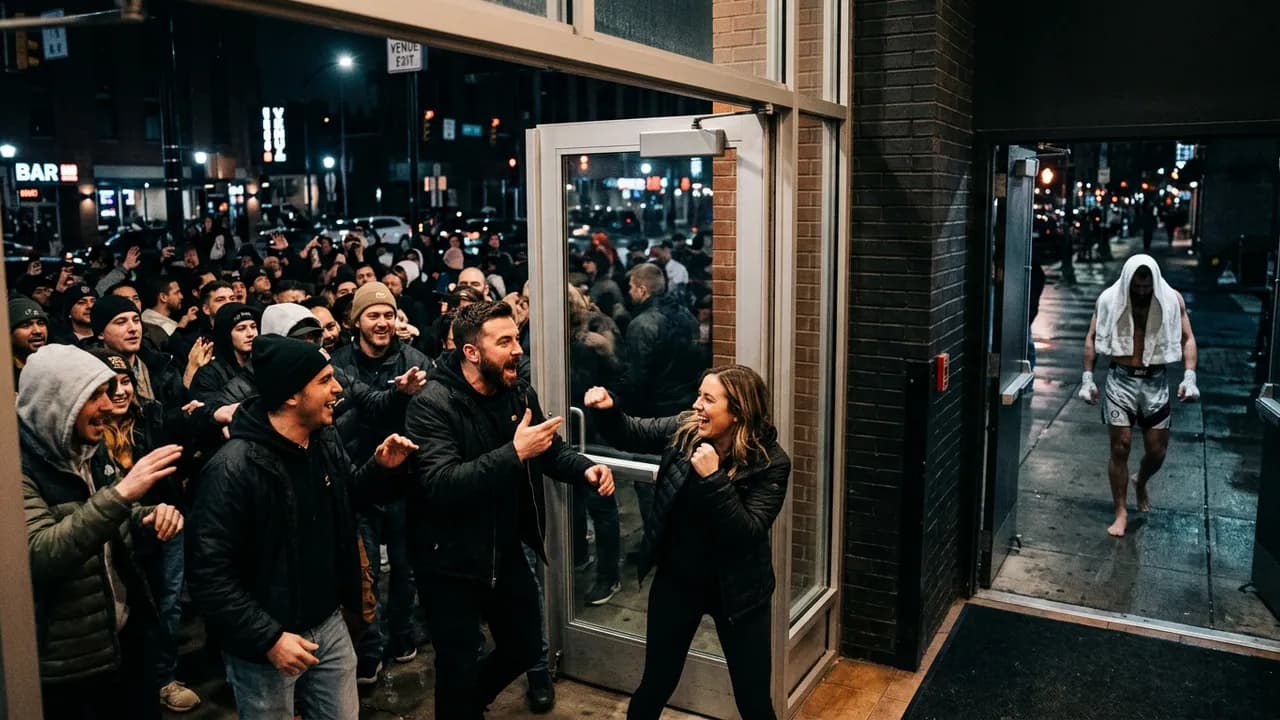
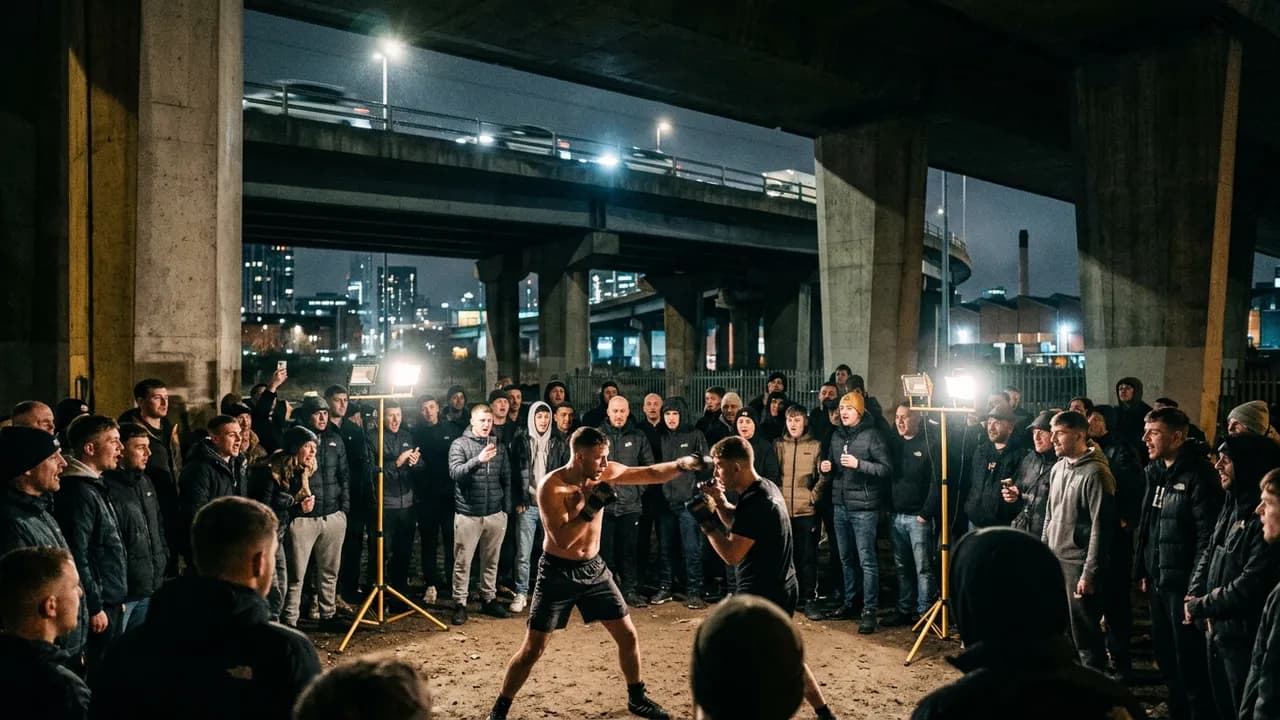
KOTR operates as a clandestine monthly event in Manchester. Locations rotate. Postcodes are sent out by text a few days before the starting bell. This is not a fixed venue operation -- it is a mobile fight promotion that pops up in pubs, car parks, community spaces, and disused gyms before disappearing again.
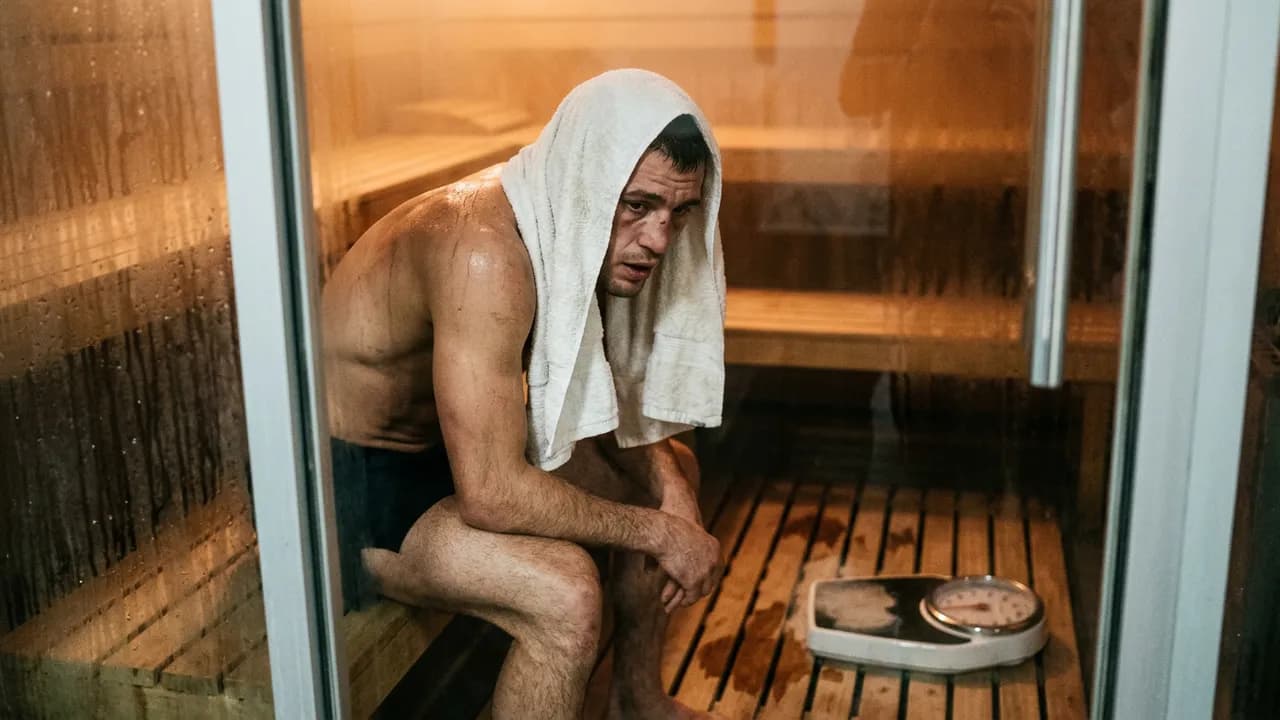
The format is simple: boxing with gloves, three rounds of one minute each. Fighters are matched by approximate size and willingness. There is no formal weigh-in, no licensing, no athletic commission oversight. What there is -- and this matters -- is Remdizz and his team actively managing the fights to prevent serious injury. Mismatches are stopped quickly. Fighters who are clearly outclassed are pulled out. The goal is resolution, not destruction.
The comments sections are filled with viewers from across the UK and beyond who have connected with KOTR's mission.
Events have incorporated moments of silence for victims of knife crime. Fighters have boxed in shirts printed with photographs of friends who have been killed. The anti-violence messaging is not an afterthought or a marketing angle -- it is woven into every aspect of the operation, from the promotional content to the atmosphere inside the venue.
The social media operation amplifies the message beyond the physical events. KOTR's TikTok clips routinely go viral, with short-form fight content driving new audiences to the full-length YouTube videos. The comments sections are filled with viewers from across the UK and beyond who have connected with KOTR's mission. For many young people, the organization represents a rare voice in their cultural landscape that explicitly advocates against knife violence while still respecting the realities of their communities.
Remdizz: The Man Behind the Movement
Remdizz -- the alias of KOTR's founder -- does not operate with the flashy persona of a fight promoter. He is more community organizer than Don King. His background in Muay Thai gave him credibility in fighting circles, but his appeal lies in his authenticity. He speaks the language of the communities most affected by knife crime, and he understands their dynamics from the inside.
His philosophy is pragmatic rather than idealistic. He does not claim that KOTR will end knife crime. He claims that it can redirect specific conflicts away from lethal outcomes. By containing violence in a controlled space -- where there are gloves, a referee, and a crowd that enforces fair play -- he provides a pressure valve for tensions that might otherwise escalate on the street.
Remdizz has been open about the challenges of running an unsanctioned fighting promotion with a social mission. There are legal grey areas, safety concerns, and the constant risk that an event could go wrong in ways that undermine the entire message. But he has also been clear about the alternative: without KOTR, the beefs do not disappear. They just get settled with blades instead of boxing gloves.
The Channel 4 Documentary and Mainstream Recognition
KOTR's profile received a significant boost when Channel 4, one of the UK's major broadcast networks, produced a documentary about the organization. The programme brought the story of KOTR to a mainstream audience, exploring both the fights themselves and the social context that produced them.
The documentary treatment was a double-edged sword. On one hand, it validated KOTR's mission and introduced the organization to viewers who might never have encountered it through YouTube or TikTok. On the other hand, mainstream media attention inevitably brought scrutiny -- questions about safety, legality, and whether unsanctioned fighting could truly function as a social intervention.
Vice also covered the story extensively, describing KOTR as "the underground fight club racking up millions of YouTube views" and profiling the tension between the organization's grassroots authenticity and its growing online fame. The Manchester Mill, a local journalism outlet, published an in-depth feature examining KOTR's place in the city's complex relationship with violence.
The media coverage has not changed how KOTR operates. Events remain monthly, locations still rotate, and the format has not been sanitized for mainstream consumption. But the attention has expanded the conversation about alternative approaches to youth violence and placed Manchester at the center of that discussion.
Manchester's Broader Fighting Culture
KOTR does not exist in a vacuum. Manchester has a deep tradition of boxing that stretches back generations. The city has produced world champions, legendary trainers, and a gym culture that permeates working-class communities. Ricky Hatton, one of Britain's most beloved boxers, is a Manchester native. The city's amateur boxing clubs have served as informal youth development programs for decades, channeling the energy of young men who might otherwise find trouble on the streets.
This boxing heritage provides the cultural infrastructure on which KOTR was built. The fighters who step into a KOTR ring are not discovering combat for the first time. Many have trained in local gyms, followed professional boxing, and grown up in a culture where the ability to handle yourself physically is respected. KOTR channels that existing culture toward a specific social purpose.
Manchester is also a city with a vibrant and sometimes volatile nightlife scene, a large student population, and the kind of socioeconomic disparities that generate friction. The city's council estates, its gang territories, and its cultural fault lines all feed into the dynamics that KOTR addresses. The underground fighting scene is not separate from Manchester's identity -- it is an expression of it.
The Impact and the Debate
The question of whether KOTR actually reduces knife crime is difficult to answer with data. There are no controlled studies, no rigorous evaluations, and the causal mechanisms are hard to isolate. What can be said is that KOTR has created a visible, culturally relevant platform that explicitly advocates against knife violence in communities where such messaging is rare and where the messengers are often dismissed as out of touch.
Critics argue that promoting fighting -- even with gloves and supervision -- normalizes violence rather than reducing it. They point to the risk of injuries, the lack of medical oversight, and the possibility that KOTR events could escalate into something more dangerous. These concerns are legitimate and deserve honest engagement.
Supporters counter that the alternative to KOTR is not peace -- it is unregulated street violence with knives. They argue that Remdizz is working within the reality of his community rather than imposing an idealized vision from the outside, and that the organization's track record of managing events without serious injury or fatality speaks for itself.
Whatever position one takes, the fact remains that Manchester's underground fighting scene, centered on KOTR, represents one of the most distinctive and socially engaged fighting movements in the world. It is a city where the fight game is not just entertainment -- it is, in the most literal sense, a matter of life and death.
Related Reading
- King of the Ring (KOTR) -- Full organizational profile
- King of the Streets (KOTS) -- The Swedish no-rules promotion that contrasts with KOTR's mission
- Streetbeefs -- Virginia's dispute-resolution fighting organization with a similar philosophy
- BKFC 94: Till vs Romero at the AO Arena -- The sanctioned end of Manchester's fight scene: BKFC's bare-knuckle card at the AO Arena, 26 September 2026