Quick Facts
| Detail | Info |
|---|---|
| Active | 2003 - 2016 |
| Location | New York City (primarily the Bronx) |
| Founder/Operator | Peter Storm |
| Format | Unsanctioned MMA / Vale Tudo |
| Access | Invitation only |
| Fighter Pay | None -- fighters competed for honor and experience |
| Total Events | 40+ over 13 years |
| Status | Defunct (closed after NY legalized MMA in 2016) |
| Notable Alumni | Frankie Edgar (UFC Champion), Bryan Vetell |
Overview
The Underground Combat League was New York City's longest-running unsanctioned mixed martial arts promotion, a secretive, invitation-only fight series that operated out of crumbling Bronx boxing gyms, Manhattan dojos, Brooklyn basements, and at least one rooftop with no safety railing. For thirteen years -- from 2003 to 2016 -- the UCL existed as the only consistent avenue for MMA competition in a state that had effectively banned the sport, offering fighters a place to test themselves and spectators an experience that no sanctioned event could replicate.
The man behind it all was Peter Storm: bouncer, judo black belt, occasional combatant in his own events, and tireless promoter of a fight series that paid no one, advertised nowhere, and operated entirely on word-of-mouth and text messages sent 24 hours before showtime. The UCL was not a business. It was not a brand. It was something closer to a calling -- a stubborn, defiant response to a state government that had decided its citizens could not be trusted to watch two consenting adults fight inside a cage.
When New York finally legalized professional MMA in April 2016, the UCL held one final bloody show in the Bronx and closed its doors forever. Storm fought on the card himself, lost by guillotine choke, and walked away from the organization he had built. The UFC booked Madison Square Garden for November. The underground era was over.
History and Origins
The New York MMA Ban
To understand the Underground Combat League, you first have to understand the political landscape that created it. In 1997, New York State enacted legislation refusing to issue licenses for "professional combative sporting events" -- the state's bureaucratic euphemism for mixed martial arts. The ban was driven by a combination of political pressure, moral panic over the early UFC's "human cockfighting" reputation, and the powerful influence of the culinary workers' union, whose leadership had a long-running feud with the UFC's parent company.
The result was that New York became the only state in America where professional MMA was explicitly prohibited. The UFC could not hold events there. Professional fighters could not compete there. And anyone who wanted to watch or participate in MMA within the state's borders was, for all practical purposes, out of luck.
But the law had a loophole. While professional MMA was banned, amateur combat sports remained unregulated. No licensing was required, no state athletic commission oversight applied, and no specific statute made it illegal for two consenting adults to fight each other in a gym as long as no one was getting paid. Peter Storm saw that loophole and drove a truck through it.
Peter Storm Builds a Fight Club
Peter Storm was not a career promoter or a combat sports entrepreneur. He was a blue-collar New Yorker who worked as a bouncer and ran his own nightclub security company. He held a judo black belt and had a fighter's temperament -- the kind of person who would rather build his own ring than wait for someone else to build one for him.
In 2003, Storm launched the Underground Combat League. The concept was stripped down to its essentials: find a venue, invite some fighters, invite some spectators, and let them fight. No purses. No sanctioning. No advertising. No state commission. Just fighters, a mat, and an audience that understood the risks.
The early UCL events were small, chaotic, and raw. Storm booked whatever venue he could find -- boxing gyms, martial arts schools, any space with a ring or a mat and an owner willing to look the other way for a few hours. The fighter pool was equally unpredictable: street fighters mixing it up with kung fu practitioners, jiu-jitsu specialists, wannabes, and the occasional legitimate talent who had no other venue to compete in.
03 / Up next / How the UCL Operated
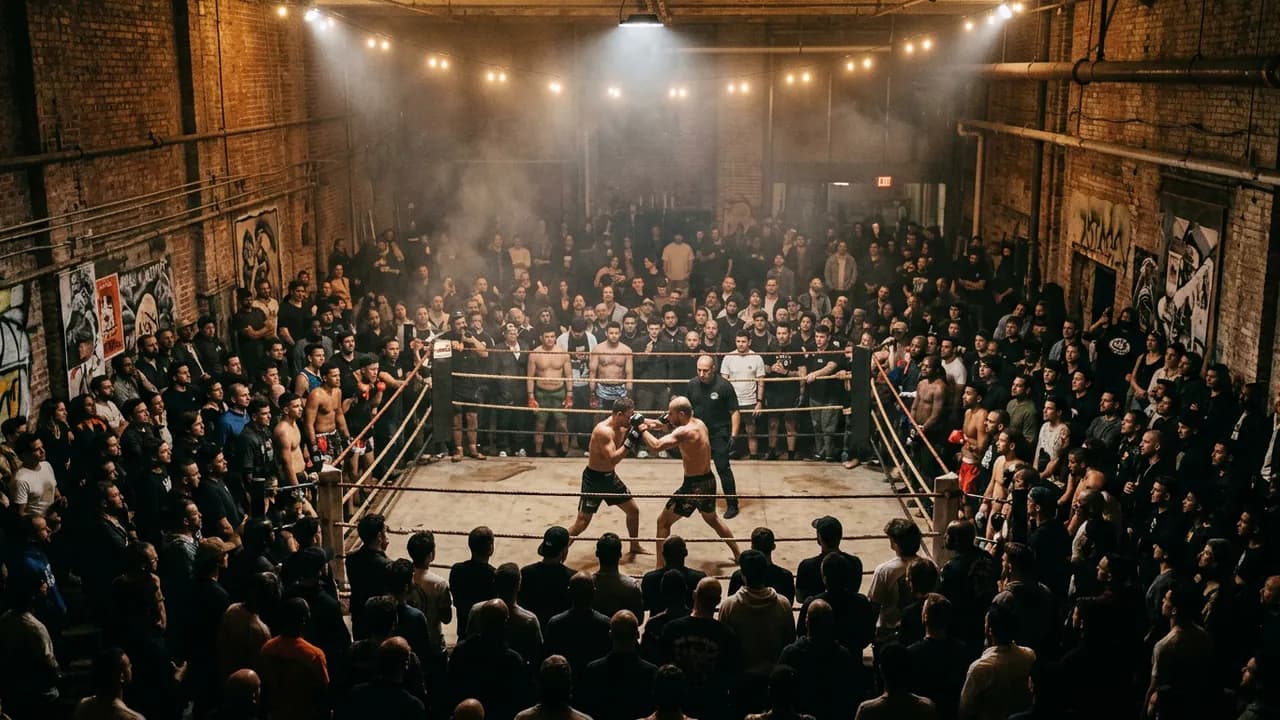
What the UCL lacked in polish, it made up for in authenticity. There was no pretense here, no corporate sponsorship, no ring girls or pyrotechnics. Just two people in a ring, a referee whose pre-fight instruction consisted of clapping his hands and telling the fighters to "fuck each other up," and an audience packed into folding chairs along the walls.
How the UCL Operated
Invitation Only
The UCL's most distinctive feature was its access model. You did not buy tickets to a UCL show. You did not find event listings online. You had to know Peter Storm, or Peter Storm had to know you. That was the price of admission.
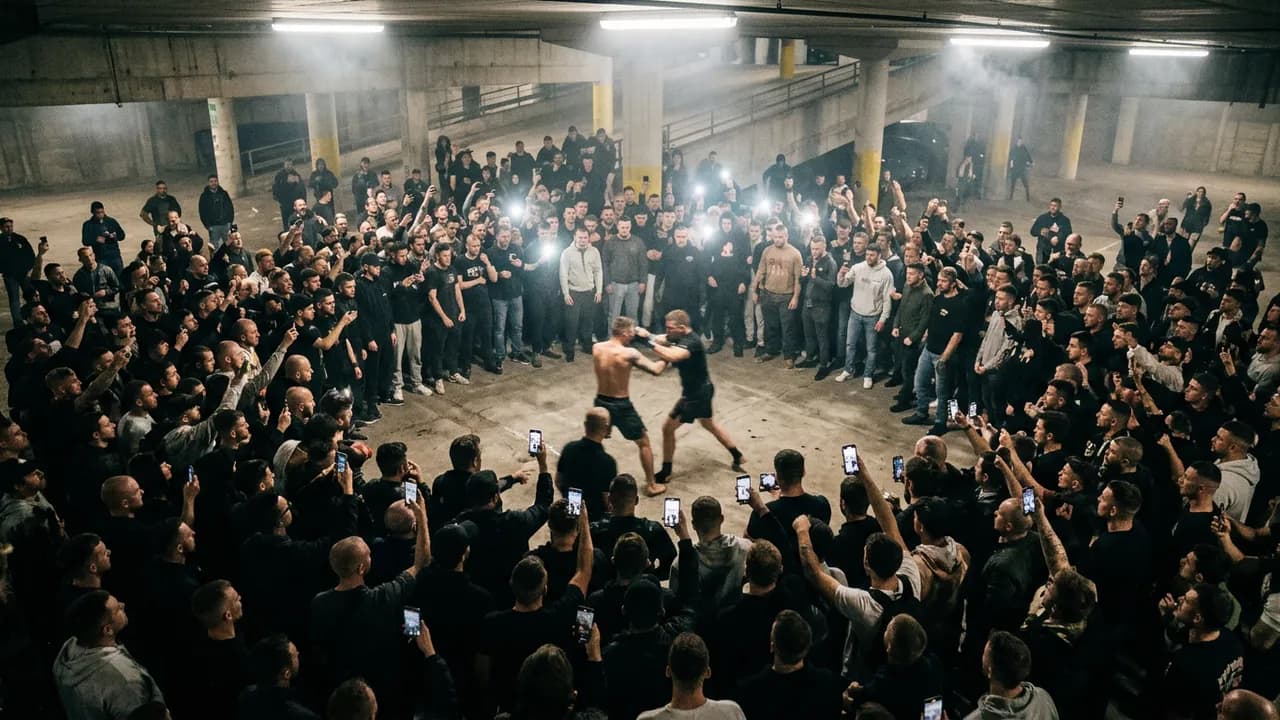
Event details were distributed through a network of text messages and emails. Spectators on Storm's list would receive a text roughly 24 hours before an event with the time and approximate location. A follow-up message closer to showtime would reveal the specific address. This system was not primarily about evading law enforcement -- Storm has maintained that the UCL was technically legal under New York's amateur combat sports framework -- but rather a practical necessity born from the difficulty of booking legitimate venues for unsanctioned fighting events.
The invitation-only model had an unintended consequence: it created an atmosphere of exclusivity and mystique that made the UCL feel like something genuinely forbidden. Attending a UCL show felt like being let in on a secret. The secrecy was part of the product.
Venues
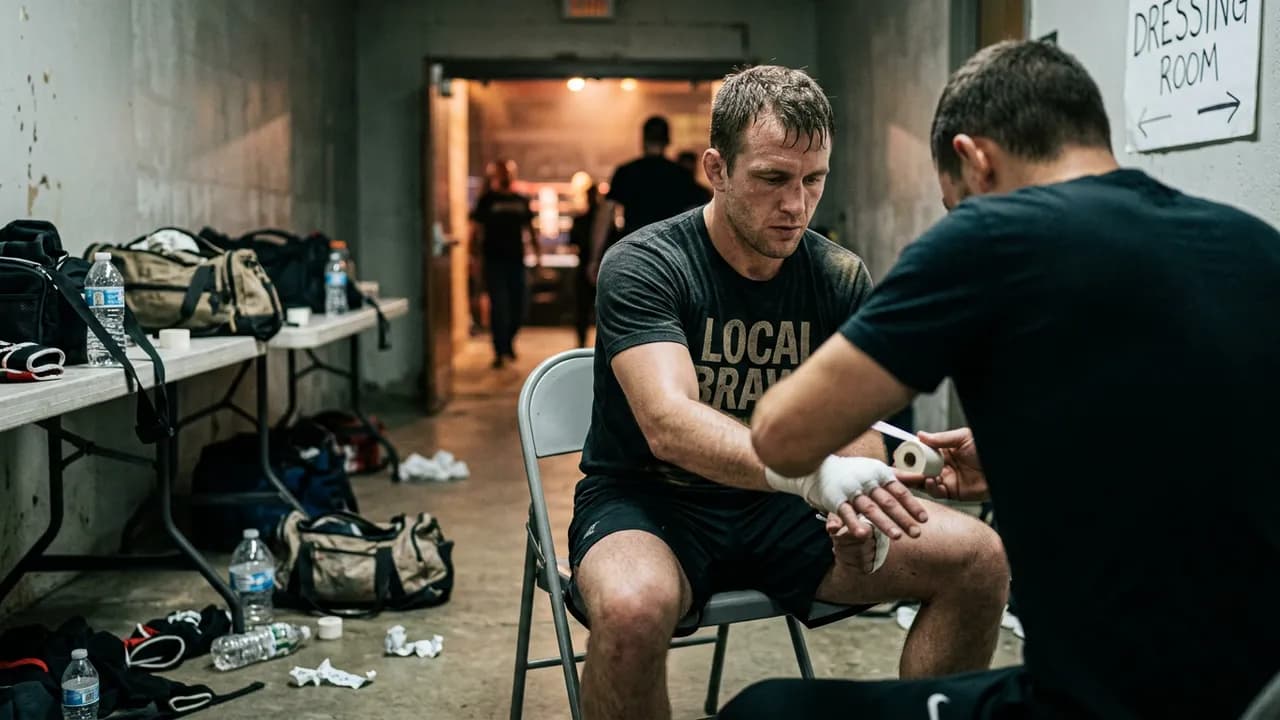
Storm favored crumbling boxing gyms, and the Bronx hoarded them. The typical UCL venue was a faded, off-hours fistic temple -- the kind of place with punching bags tied to exposed steel girders, yellowed bout announcements thumb-tacked to the walls, and a general atmosphere of sweat and decay that no amount of cleaning could erase. Blue plastic chairs would be set up for spectators. A massive steel fan would be brought in to circulate air in spaces that had never heard of air conditioning.
But the UCL was not confined to boxing gyms. Over its thirteen-year run, events were held in martial arts dojos in Manhattan, gyms in Brooklyn and Queens, and even a mosque in the Bronx. One particularly memorable bout took place on a Bronx rooftop with no safety railings and no protective matting -- a venue that would have given any state athletic commission inspector a heart attack.
The variety of locations was part of the UCL's DNA. You never knew where the next show would be, and that unpredictability added to the sense of adventure that kept spectators coming back.
Rules (or Lack Thereof)
The UCL operated under two rulesets, depending on the agreement of the fighters:
- Full Unified Rules of MMA: The standard professional ruleset used by the UFC and other sanctioned promotions
- UFC 1 "Vale Tudo" Rules: The near-anything-goes ruleset from the earliest UFC events, where the only prohibitions were biting and eye gouging
The choice of ruleset was made by the fighters themselves before each bout. This flexibility was one of the UCL's calling cards -- it attracted competitors from every martial arts discipline precisely because the rules could be tailored to accommodate different fighting styles and comfort levels.
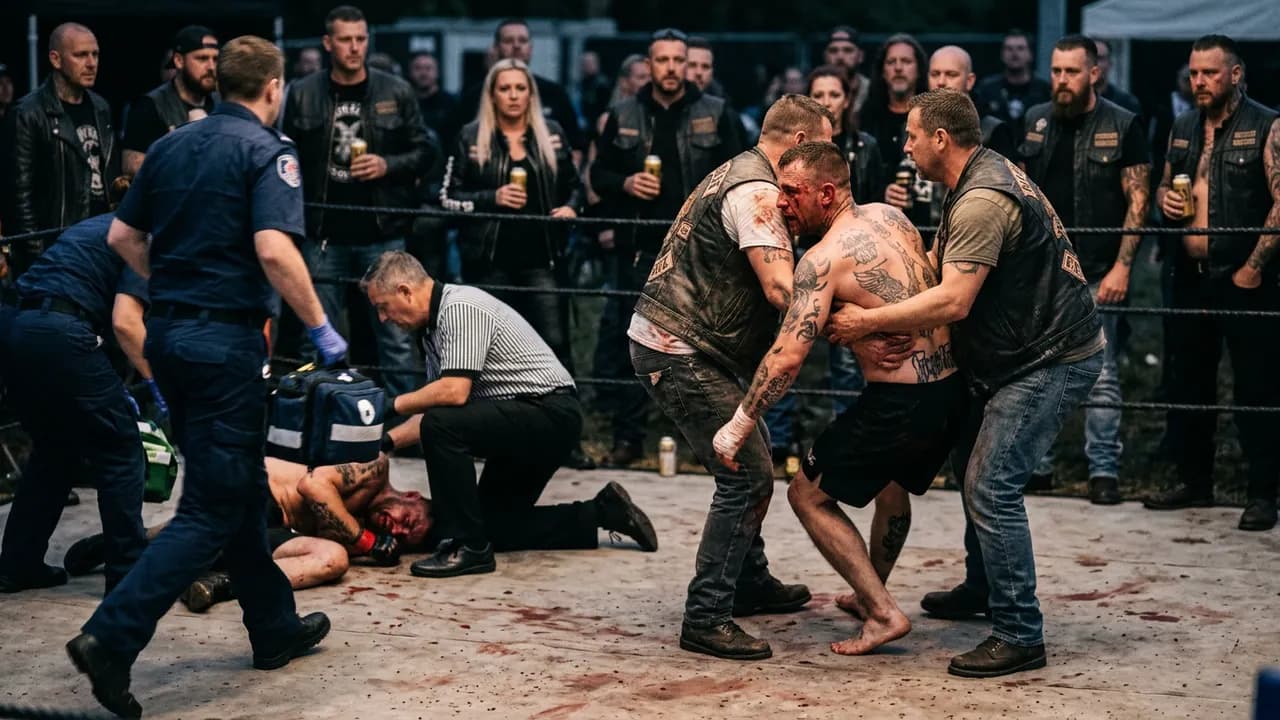
What the UCL did not have was the safety infrastructure that comes with sanctioned competition. There were no trained referees in the professional sense. There was no ringside physician. There was no blood testing, health screening, or disease prevention protocol. Fighters who were injured received cab fare to the nearest hospital -- never an ambulance. The risks were real, they were understood, and they were accepted by everyone who walked through the door.
The Fighters
Who Fought at the UCL
The UCL's fighter roster was a cross-section of New York's martial arts underground. Street fighters, kung fu practitioners, jiu-jitsu competitors, amateur boxers, curious tough guys, Wall Street brokers looking for a thrill, and the occasional legitimate MMA talent who had no sanctioned venue in which to compete -- they all found their way to Storm's shows.
The motivations were as varied as the fighters themselves. Some came for the competitive experience, viewing the UCL as the only available proving ground in a state that had outlawed professional MMA. Others came to settle personal scores. Some came because they had something to prove to themselves. And a few came simply because they liked to fight.
05 / Up next / Notable Alumni
What none of them came for was money. UCL fighters were never paid. There were no purses, no bonuses, no sponsorship deals. The fighters fought for honor, for experience, and for the respect of a room full of people who understood what it meant to step into a ring with nothing on the line except your pride.
Notable Alumni
The UCL's most famous alumnus is Frankie Edgar, who competed on the underground circuit before going on to become the UFC Lightweight Champion. Edgar, then an assistant wrestling coach at Rutgers University, used the UCL as a proving ground during the years when New York offered no other avenue for competitive MMA. His journey from Storm's cramped Bronx gyms to the UFC championship remains one of the most remarkable origin stories in professional MMA history.
Bryan Vetell is another UCL veteran who went on to compete at higher levels of the sport. The UCL served as a pipeline -- crude, unpolished, and dangerous, but a pipeline nonetheless -- feeding talent into the broader MMA ecosystem during the years when New York's ban kept the legitimate pathways shut.
Kaream Ellington became one of the UCL's most dominant and entertaining fighters. Known for his devastating Superman punch -- a technique he claimed to have perfected by imitating moves from the Street Fighter II video game -- Ellington was a fan favorite who embodied the UCL's blend of raw talent and unorthodox style. He semi-retired from the circuit at 34 with a leg injury, leaving behind a highlight reel that UCL veterans still talk about.
The Spectators
The UCL's audience was as eclectic as its fighter roster. Construction workers sat next to finance guys. Martial arts students sat next to people who had never watched a fight in their lives. And occasionally, according to multiple accounts, figures from New York's celebrity and business worlds would discreetly attend, their entourages in suits and ties, watching from the back rows of whatever gym Storm had booked that month.
One account from the UCL's final show described a group of Wall Street types who "wore suits and ties and could buy the room if they cared to." Between high-stakes deals, they had taken a train from the Financial District to the Bronx to watch a friend and coworker demolish his opponent with a series of punches and kicks. The image captures something essential about the UCL: it was a place where the usual social hierarchies dissolved, where everyone was equal in their shared appetite for raw, unfiltered combat.
Currency among UCL regulars was not measured in money. It was measured in stories -- the grisliest injury you had witnessed, the strangest venue you had attended, the most unexpected outcome you had seen. These were the things that earned you status in Storm's world.
The Final Show
The end came in August 2016, four months after New York Governor Andrew Cuomo signed Senate Bill S5949B into law, making New York the last state in America to legalize professional mixed martial arts. The UFC immediately booked Madison Square Garden for a November event. The era of underground MMA in New York was officially over.
Storm chose to go out fighting -- literally. The final UCL card was held in a Bronx boxing gym, unnamed out of respect for the owner's agreement to host the event. The atmosphere was charged with the awareness that this was the last one, that the thing they had all been part of was ending.
The first fight of the night set the tone when a stray earring piece caused a first-round injury, a reminder that the UCL's rough edges were part of its identity to the very end. The undercard played out with the usual mix of competitive bouts and mismatches, technical skill and wild haymakers.
The main event was Peter Storm himself. At 39, the man who had built the UCL from nothing stepped into the ring one final time against Brad Corbett. The fight lasted less than five minutes. Corbett locked in a standing guillotine choke, and Storm -- wheezing against the ropes -- was forced to submit. It was a fitting end: the promoter who had spent thirteen years giving fighters a place to compete chose to close out his organization not from a microphone, but from inside the ring.
"You'll never see a league like this again," Storm said afterward. He was probably right.
Legacy and Impact
The Underground Combat League's significance extends far beyond the bouts it hosted. The UCL was a pressure valve -- a response to a political environment that had made criminals out of combat sports enthusiasts. By providing an alternative to the ban, Storm gave New York's MMA community a place to exist during the long years when the state government pretended it did not.
When the UCL closed in 2016, it took with it a piece of New York's combat sports history that can never be replicated.
The fighters who passed through the UCL carried their experience into every corner of the sport. Frankie Edgar's journey from the underground to the UFC championship demonstrated that talent could emerge from the most unlikely places. The UCL proved that the demand for MMA in New York was real, persistent, and impossible to legislate away -- a reality that undoubtedly contributed to the political pressure that eventually led to legalization.
The UCL also left a cultural footprint. Jim Genia's book Raw Combat: The Underground World of Mixed Martial Arts documented the underground scene that Storm built, preserving the stories and personalities of an era that might otherwise have been forgotten. Vice, Complex, ESPN, Bloody Elbow, and Salon all published features on the UCL during its lifetime, introducing the underground fight scene to audiences who would never have received one of Storm's cryptic text messages.
Perhaps most importantly, the UCL demonstrated that fighting -- real, unsanctioned, unregulated fighting -- could be organized with a certain code of honor. There were no purses, but there was respect. There were no trained referees, but there were understood boundaries. There was no medical staff, but there was cab fare to the hospital. The UCL was dangerous, unsanctioned, and legally questionable, but it was never nihilistic. Storm ran his shows with a philosophy: this was about the fight itself, not the spectacle around it.
When the UCL closed in 2016, it took with it a piece of New York's combat sports history that can never be replicated. The conditions that created it -- a state-wide MMA ban, a promoter stubborn enough to work around it, a community hungry enough to show up in crumbling gyms on 24 hours' notice -- were unique to a specific time and place. Professional MMA now fills Madison Square Garden. The underground is gone. But the people who were there remember.
FAQ
Was the UCL legal?
The UCL operated in a legal gray area. New York banned professional MMA but left amateur combat sports unregulated. Since UCL fighters were never paid, Storm argued that his events were amateur and therefore legal. The organization was never shut down by law enforcement during its thirteen-year existence, though it operated entirely without state athletic commission oversight.
How did you attend a UCL event?
By invitation only. You had to be on Peter Storm's contact list. Event details were sent via text message roughly 24 hours before showtime, with the specific venue address revealed closer to the event. There was no public advertising or ticket sales.
Did UCL fighters get paid?
No. UCL fighters received no compensation of any kind. They fought for honor, competitive experience, and the respect of their peers. This no-payment policy was both a philosophical choice and a legal necessity, as paying fighters would have moved the events into the realm of professional competition and triggered the state's MMA ban.
Who was Peter Storm?
Peter Storm was the founder, operator, and occasional combatant of the Underground Combat League. A judo black belt who worked as a bouncer and nightclub security operator, Storm ran the UCL for thirteen years out of a personal commitment to the sport and its community. He fought in the UCL's final event in August 2016, losing by submission.
What happened to the UCL after New York legalized MMA?
The UCL held its final event in August 2016, shortly after Governor Cuomo signed the bill legalizing professional MMA in New York. Storm chose to close the organization rather than attempt to transition into the sanctioned landscape. The UCL's entire identity was built on being the underground alternative, and once the underground was no longer necessary, neither was the UCL.
Did any famous fighters compete in the UCL?
Yes. The most notable UCL alumnus is Frankie Edgar, who went on to become the UFC Lightweight Champion. Edgar competed on the underground circuit during the years when New York offered no sanctioned MMA competition. Other UCL veterans, including Bryan Vetell, also went on to compete at higher levels of the sport.
Is there a book about the UCL?
Yes. Jim Genia's Raw Combat: The Underground World of Mixed Martial Arts documents the underground MMA scene in New York, including extensive coverage of the UCL and Peter Storm. The book was published by Citadel Press and remains the definitive account of the era.
How was the UCL different from Streetbeefs?
Streetbeefs is a publicly accessible backyard fighting organization that operates openly, posts all fights on YouTube, and welcomes any fighter who meets its age requirements. The UCL was invitation-only, secretive, and operated in the legal gray area created by New York's MMA ban. Streetbeefs is community-focused conflict resolution; the UCL was an underground competitive circuit born from political prohibition.
Related Reading
- Underground Fighting in New York City
- Is Underground Fighting Legal in the USA?
- East Bay Rats Fight Night -- another long-running American fight club
- The Complete History of Underground Fighting