London is where bare knuckle fighting became a codified sport. Long before the Marquess of Queensberry imposed gloves and rounds on boxing, the London Prize Ring Rules governed how men fought for money in the English capital -- no gloves, no time limits, rounds ending when a man went down, thirty seconds to scratch a line in the dirt and prove you could continue. Those rules, formalized in 1838 and revised in 1853, shaped prizefighting for half a century. The echoes of that history reverberate through every bare knuckle event held in London today.
The modern city operates as the gravitational center of the UK bare knuckle scene. Multiple promotions run events here. Sanctioned and unsanctioned fights coexist in a legal grey zone that British authorities have historically been reluctant to clarify. And the deeper underground -- unlicensed boxing shows in hotel function rooms, traveller bare knuckle bouts on caravan sites, and no-rules fight clubs inspired by the European movement -- thrives in the shadows of a city too large and too chaotic to police completely.
History
The history of underground fighting in London is the history of prizefighting itself. In the eighteenth and nineteenth centuries, London was the undisputed capital of bare knuckle boxing. Champions like James Figg, Daniel Mendoza, and Tom Cribb fought under a set of evolving rules that began with Jack Broughton's Rules in 1743 and culminated in the London Prize Ring Rules. These contests drew crowds of thousands, attracted aristocratic patrons, and generated enormous gambling revenues.
The London Prize Ring Rules permitted throwing, allowed a fighter to go down to end a round, and had no limit on the number of rounds. Fights lasted until one man could not continue. The brutality was extraordinary -- bouts sometimes ran for hours, and deaths, while not common, were not rare either. Wrestling holds, hip throws, and cross-buttocks were legitimate tactics alongside punching.
When the Marquess of Queensberry Rules were published in 1867 and gradually adopted through the 1880s, bare knuckle fighting was pushed underground in Britain. It never disappeared. It migrated to the margins -- to traveller communities, to unlicensed boxing shows, to the criminal underworld -- where it persisted for over a century before re-emerging into public view in the 2010s.
London's traveller community maintained bare knuckle traditions through generations when the practice was invisible to mainstream culture. Fights between families, between camps, and for settling disputes were documented sporadically but remained largely hidden until the internet age. The release of films like "Snatch" and "Knuckle" brought wider attention to traveller bare knuckle culture, though the reality was always more complex and less cinematic than the portrayals suggested.
Organizations
BKB (Bare Knuckle Boxing)
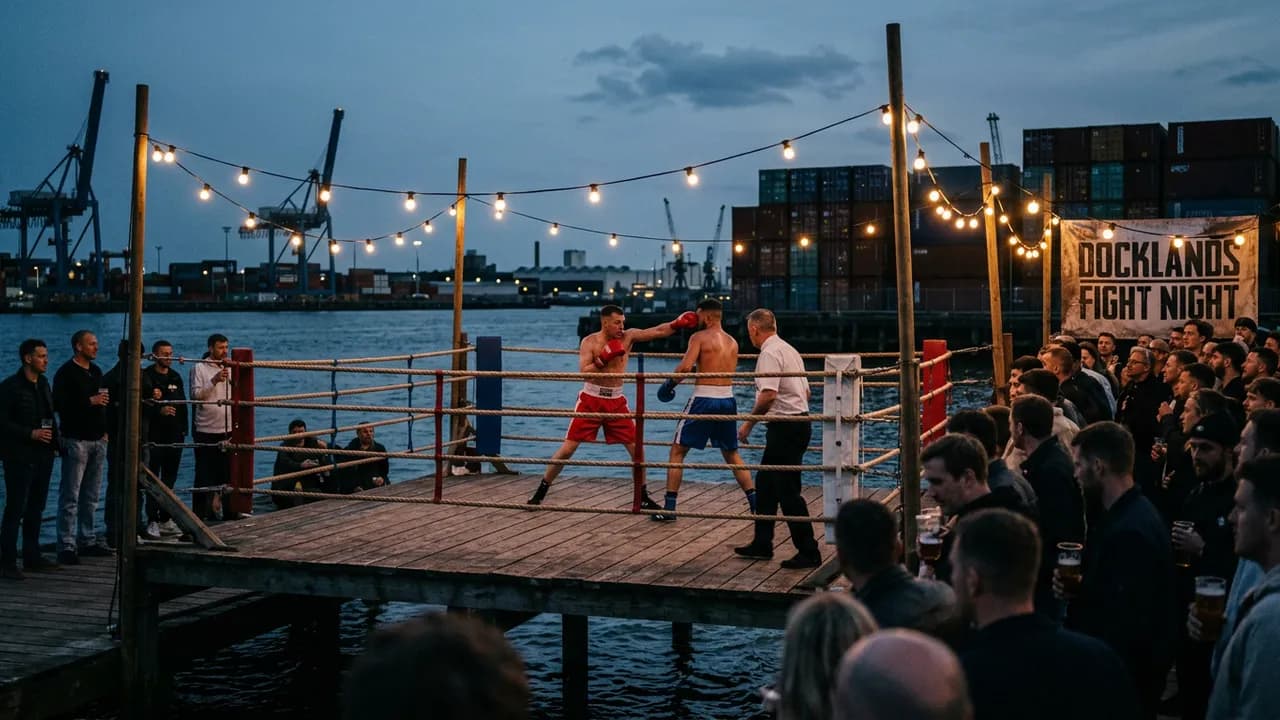
BKB has deep roots in British fighting culture and has hosted events in London venues ranging from the O2 Indigo to smaller halls across the capital. Originally founded in 2015, BKB operated as one of the pioneering promotions bringing bare knuckle fighting back into legal, regulated spaces in the UK. Following the 2024 merger with BYB Extreme -- the promotion founded by Dada 5000 in Miami -- the combined entity operates under the BKB Bare Knuckle Boxing banner with events across both the United States and the United Kingdom.
London events have featured some of the biggest names in British bare knuckle, including Jimmy Sweeney, the arguable GOAT of BKB competition and a four-division champion whose career spans the entire modern era of the sport. Barrie Jones, a two-division champion who beat Sweeney twice, has also headlined London cards.
BKFC UK
BKFC, the world's largest bare knuckle promotion, expanded into the UK market after acquiring the British Bare-Fist Boxing Association (BFBA) in 2022. BKFC UK events have been staged in London and other British cities, bringing the American promotional machine -- high production values, international streaming, and a deep fighter roster -- to a market that already had a passionate bare knuckle audience.
The arrival of BKFC in Britain created competitive tension with existing promotions. For fighters, it meant more opportunities and higher-profile cards. For established British promotions, it represented an existential threat -- a well-funded American company entering their territory with deeper pockets and broader reach.
UBKB (Ultimate Bare Knuckle Boxing)
UBKB, based in Warrington but staging events across England, has held cards in the London area. Their presence adds another layer to a bare knuckle market that, relative to the country's population, may be the most competitive in the world.
Unlicensed Boxing
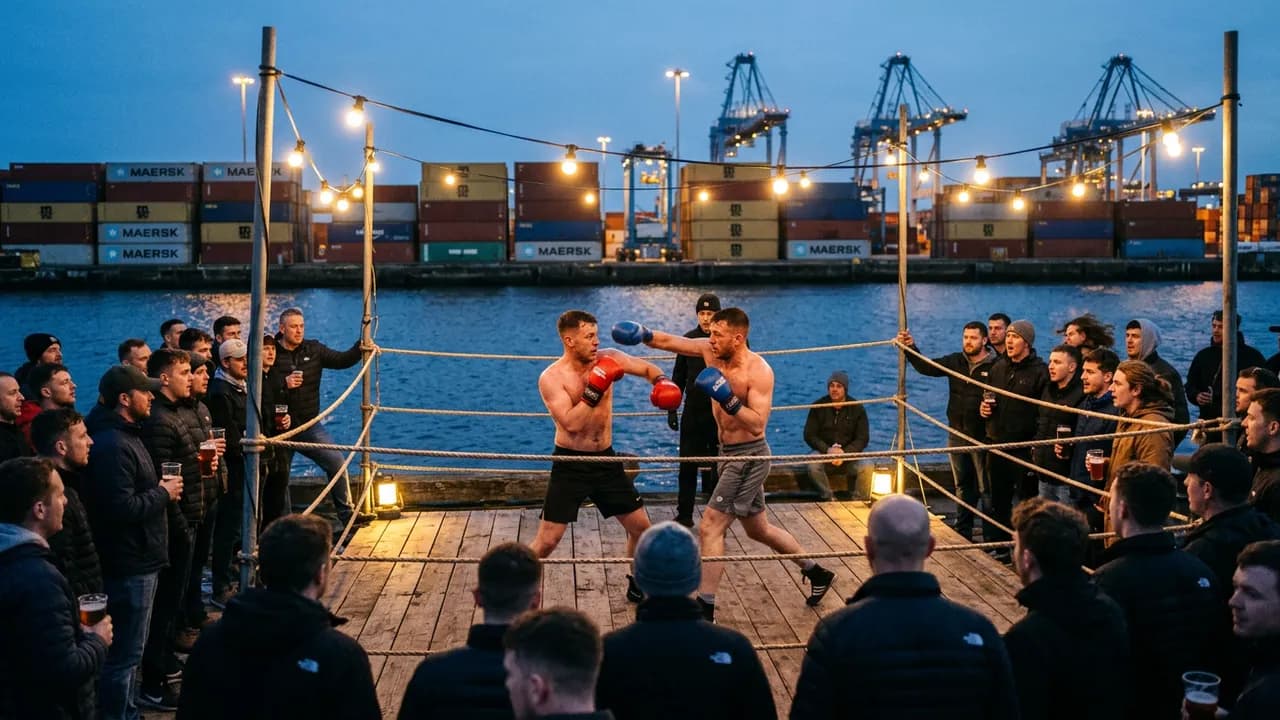
Beneath the sanctioned promotions lies London's long-standing unlicensed boxing scene. These are events held outside the jurisdiction of the British Boxing Board of Control -- shows in hotel ballrooms, social clubs, and function rooms where fighters compete without professional licenses. Unlicensed boxing occupies a legal space that is distinct from both regulated professional boxing and fully unsanctioned street fighting. Events are ticketed, fighters are often experienced, and the quality of competition can be surprisingly high.
02 / Up next / The No-Rules Underground
The unlicensed scene in London has historically served as a proving ground for fighters who cannot obtain or do not want professional licenses, and as a revenue stream for promoters operating outside the sanctioned system. It has also attracted organized crime interest, a reality that has complicated every attempt to regulate or legitimize the scene.
The No-Rules Underground
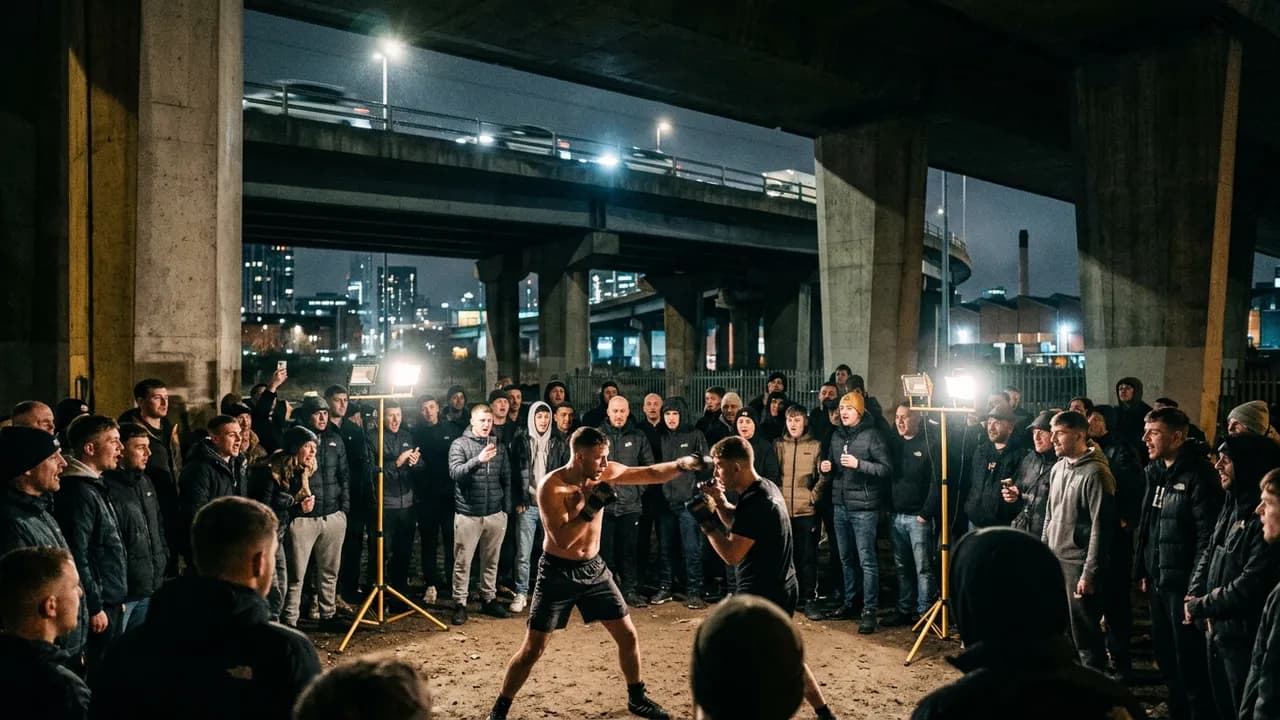
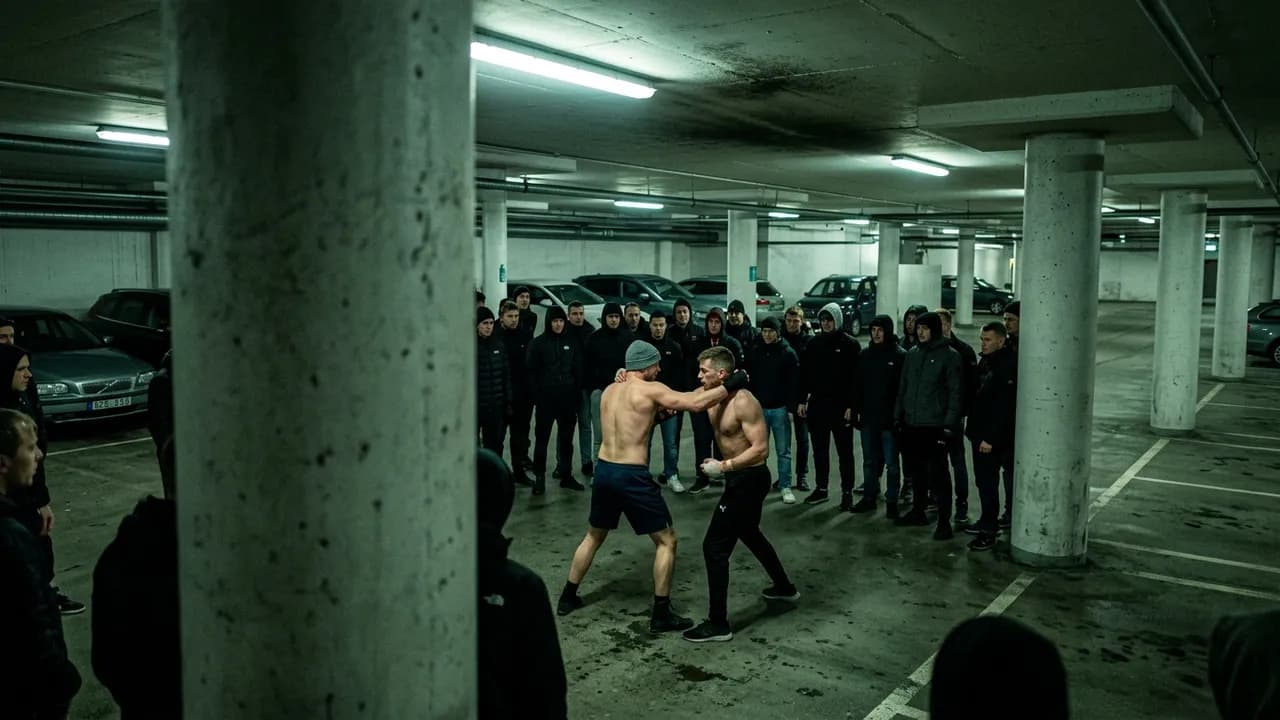
The European no-rules movement, inspired by King of the Streets in Gothenburg, has reached London. The specifics are deliberately obscured -- locations shared via encrypted messaging, events held in industrial spaces and private properties -- but the existence of no-rules fight clubs in the capital is documented through social media leaks, journalistic investigations, and the accounts of participants. London's size, its diverse population of young men drawn to combat sports, and its dense network of boxing gyms provide fertile ground for underground fighting in all its forms.
Notable Fighters
London has produced bare knuckle fighters of international caliber. Jimmy Sweeney, though associated with multiple UK venues, has fought on London cards and remains the most decorated active bare knuckle fighter in British history. His four-division championship run across BKB events is unmatched.
The city's amateur and professional boxing infrastructure -- gyms in every borough, a deep tradition of producing world-class fighters from working-class neighborhoods -- ensures a constant supply of talent that filters into the bare knuckle and underground scenes. Fighters who wash out of the professional boxing system, who age out of competitive amateur careers, or who simply prefer the rawness of bare knuckle competition find their way to London's promotions.
The traveller community continues to produce fighters whose bare knuckle skills are developed outside any formal system. These fighters occasionally cross over into sanctioned bare knuckle promotions, bringing a style of fighting shaped by generations of tradition.
How to Get Involved
London's bare knuckle scene is the most accessible in the United Kingdom. BKFC runs tryouts for prospective fighters and advertises upcoming UK events through bkfc.com. BKB accepts fighter applications through bkbbareknuckle.com. Both promotions require fighters to pass medical screenings and meet basic fitness standards.
For spectators, London bare knuckle events are ticketed and publicly advertised. Cards are announced weeks in advance, and tickets are available through standard platforms. The atmosphere at London bare knuckle events is intense but generally well-managed -- these are regulated shows, not underground brawls.
The unlicensed scene is harder to access. Events circulate through word of mouth, social media, and networks centered on specific gyms and communities. The no-rules underground is, by design, invisible to outsiders.
London also offers an extraordinary density of combat sports gyms. From the historic Repton Boxing Club in Bethnal Green to modern MMA facilities across the city, the infrastructure for training exists in virtually every neighborhood. Many of the gyms that produce bare knuckle fighters also serve as informal recruitment networks for the underground scene.
Related Cities
- Manchester -- Home of KOTR and the UK's most socially engaged underground fighting movement
- Dublin -- Irish bare knuckle traditions with deep connections to the UK scene
- Gothenburg -- Birthplace of the KOTS no-rules movement that has influenced London's underground
- Philadelphia -- BKFC headquarters, the American counterpart to London's bare knuckle culture