Thailand is synonymous with fighting. Muay Thai -- the "Art of Eight Limbs" -- is not merely a sport in Thailand; it is a national institution, a cultural identifier, and a way of life for hundreds of thousands of Thais who train, compete, and build their livelihoods around the ring. In a country where children begin fighting competitively as young as five or six, where rural villages produce world-class fighters as a matter of course, and where the two great stadiums of Bangkok -- Lumpinee and Rajadamnern -- hold the same cultural significance as Wembley or Madison Square Garden, the line between "sanctioned" and "underground" fighting blurs in ways that are unique to Thailand.
The underground fighting scene in Thailand operates on multiple levels. At the grassroots, thousands of unlicensed Muay Thai fights take place every year at temple fairs, village festivals, and informal events across the country, many involving children and teenagers fighting for small purses that represent significant income for rural families. Above this layer, a shadow economy of unlicensed adult fights caters to gamblers and fight enthusiasts who prefer the rawer, less regulated action found outside the major stadiums. And since 2021, the arrival of BKFC Asia/Thailand has introduced bare knuckle boxing to the Thai market, creating a new dimension in a country that already lives and breathes combat.
For international fighters, Thailand serves as the world's premier training destination for striking arts, and the country's permissive attitude toward fighting means that opportunities to compete -- both sanctioned and unsanctioned -- are more accessible than anywhere else on earth.
History
Muay Thai: From Battlefield to Ring
Muay Thai's origins are intertwined with the history of Thailand itself. Developed as a battlefield martial art by the warriors of the Siamese kingdoms, Muay Thai evolved over centuries from a military discipline into a formalized competitive sport. The legendary fighter Nai Khanomtom, who according to Thai tradition defeated ten Burmese fighters in succession after being captured during the fall of Ayutthaya in 1767, is celebrated as the father of the art and honored annually on March 17, National Muay Thai Day.
The transformation of Muay Thai from battlefield art to ring sport occurred gradually through the 19th and early 20th centuries. The introduction of boxing gloves (replacing the traditional hemp rope hand wraps, kard chuek), timed rounds, weight classes, and formal rules brought structure to what had been a largely unregulated form of combat. Lumpinee Boxing Stadium, opened in 1956, and Rajadamnern Stadium, opened in 1945, became the twin peaks of the sport, and holding a championship belt at either stadium remains the highest achievement in the Muay Thai world.
But the formalization of Muay Thai at the top level never eliminated informal fighting at the grassroots. Thailand is a country of 70 million people, with thousands of Muay Thai gyms scattered across 77 provinces. The vast majority of fights that take place in Thailand occur not at Lumpinee or Rajadamnern but at local events that range from fully sanctioned provincial bouts to completely informal matches organized at temple fairs and village celebrations.
The Gambling Connection
Gambling is the engine that drives much of Thailand's fighting culture, both sanctioned and underground. Betting on Muay Thai is technically illegal in Thailand (except at licensed stadiums with authorized bookmakers), but in practice it is ubiquitous. The gambling economy around Muay Thai is estimated to involve billions of baht annually, and the desire of gamblers for fresh matchups, unfamiliar fighters, and events outside the scrutiny of stadium management creates a constant demand for unofficial fights.
Unlicensed events organized primarily for gambling purposes represent a significant portion of Thailand's underground fighting scene. These events are staged at private venues, rural properties, and entertainment establishments, with the fight cards designed to create betting opportunities rather than sporting spectacle. Fighters at gambling-driven events may be professionals between sanctioned bouts, young fighters building experience, or amateurs fighting for small purses. The quality of competition varies widely, but the intensity is consistently high because fighters know that gambling interests -- and the money behind them -- demand genuine effort.
Child Fighting Controversy
One of the most controversial aspects of Thailand's fighting culture is the prevalence of child fighting. Thai children begin Muay Thai training at very young ages, and competitive fighting for children as young as five or six is common, particularly in rural areas where the purses from fights provide essential income for impoverished families.
These efforts have met fierce resistance from the Muay Thai community, which views them as threats to a cultural tradition and an economic livelihood.
Child fighting in Thailand operates in a gray area between cultural tradition and child exploitation. Advocates argue that Muay Thai provides discipline, fitness, life skills, and economic opportunity for children from disadvantaged backgrounds, and that the training and fighting are conducted with appropriate supervision and care. Critics point to the medical risks of repeated head trauma in developing brains, the exploitative economics that drive impoverished families to put children in the ring, and the lack of regulatory oversight at grassroots events.
The Thai government has made periodic efforts to regulate child fighting, including proposed legislation to raise the minimum age for competitive Muay Thai. These efforts have met fierce resistance from the Muay Thai community, which views them as threats to a cultural tradition and an economic livelihood. The result is a regulatory patchwork where the rules exist on paper but enforcement is inconsistent, particularly at the village and temple fair level where child fighting is most prevalent.
Active Organizations
Unlicensed Muay Thai Events
The backbone of Thailand's underground fighting scene is the vast network of unlicensed Muay Thai events that operate across the country.
Format: Standard Muay Thai rules, though with less standardization than sanctioned stadium events. Five rounds of three minutes is the standard, but variations exist. Clinch work, elbows, knees, kicks, and punches are all permitted. Some events allow the traditional kard chuek rope wraps instead of modern gloves, which is more dangerous and produces more cuts.
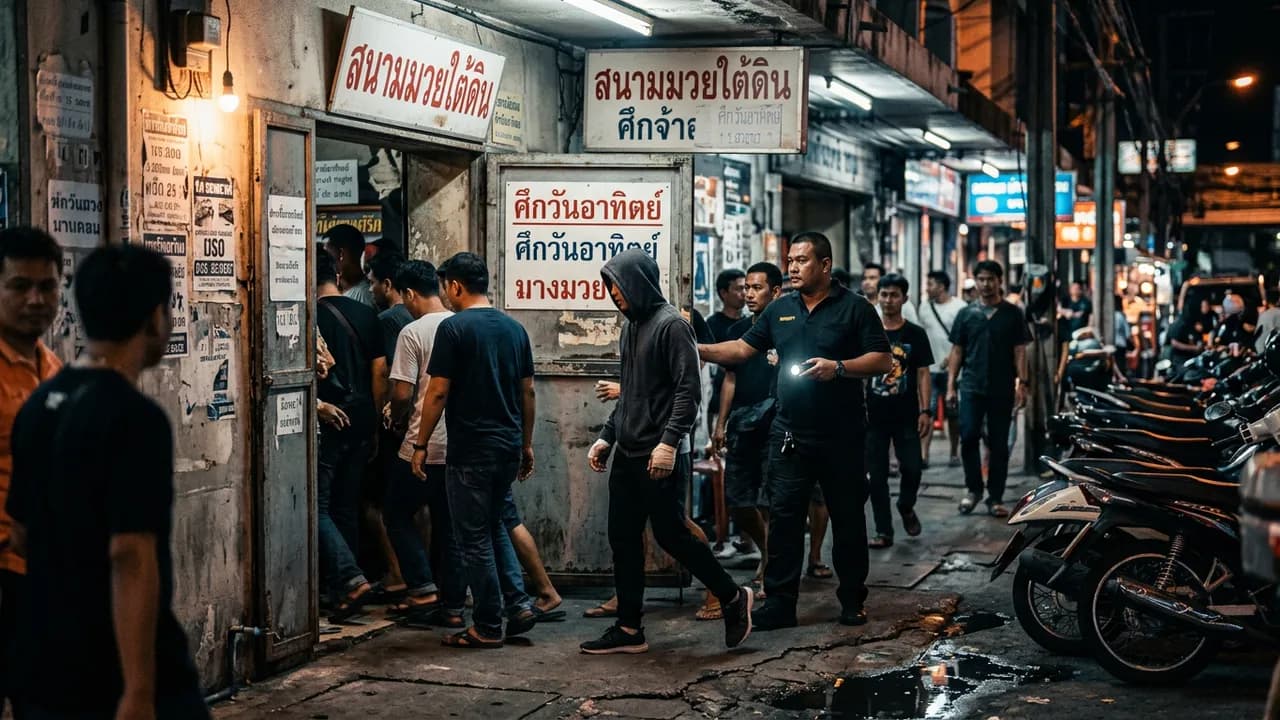
Venues: Temple fairs (ngan wat), village festivals, rural entertainment venues, and private properties. In Bangkok and tourist areas like Pattaya and Phuket, unlicensed events are staged at entertainment venues, bars, and clubs, often targeting international tourists as spectators.
Scale: Thousands of unlicensed Muay Thai events take place across Thailand annually. The exact number is impossible to quantify, but the grassroots fighting scene dwarfs the sanctioned stadium circuit in terms of sheer volume of fights.
Economic structure: Fighters at unlicensed events receive purses that range from a few hundred baht (less than $10 USD) at village fairs to several thousand baht at more established events. Gambling, rather than ticket sales or broadcast revenue, is the primary economic driver.
BKFC Asia / BKFC Thailand
BKFC Asia/Thailand represents the most significant development in Thailand's fighting landscape in recent years. Launched in 2021, BKFC's Thai operation brings the bare knuckle boxing format to a country whose fighting culture makes it a natural market.
Format: Standard BKFC bare knuckle boxing rules. Fighters compete without gloves in a circular ring, with timed rounds and professional referees. The format is pure boxing (no kicks, knees, or elbows), which distinguishes it from Muay Thai and creates a different competitive dynamic.
What makes it significant: BKFC Thailand introduces a Western bare knuckle format to a country with deep striking expertise. Thai fighters, trained from childhood in the art of striking, bring a technical foundation to bare knuckle boxing that fighters from most other countries cannot match. The combination of Thai striking skill and the raw intensity of bare knuckle boxing creates a product that appeals to both Thai and international audiences.
Scale: BKFC Thailand stages regular events, drawing from both the Thai fighter pool and international competitors. The promotion has attracted significant attention in the Thai combat sports community and has the potential to grow substantially, given the size of Thailand's fighting population and the cultural acceptance of combat sports.
Expansion context: BKFC's Thailand operation is part of the promotion's broader Asia-Pacific expansion, driven by BKFC's global growth strategy. Thailand's combination of a massive fighter pool, low operating costs, and cultural enthusiasm for fighting makes it an ideal market for bare knuckle boxing.
Strelka Thailand
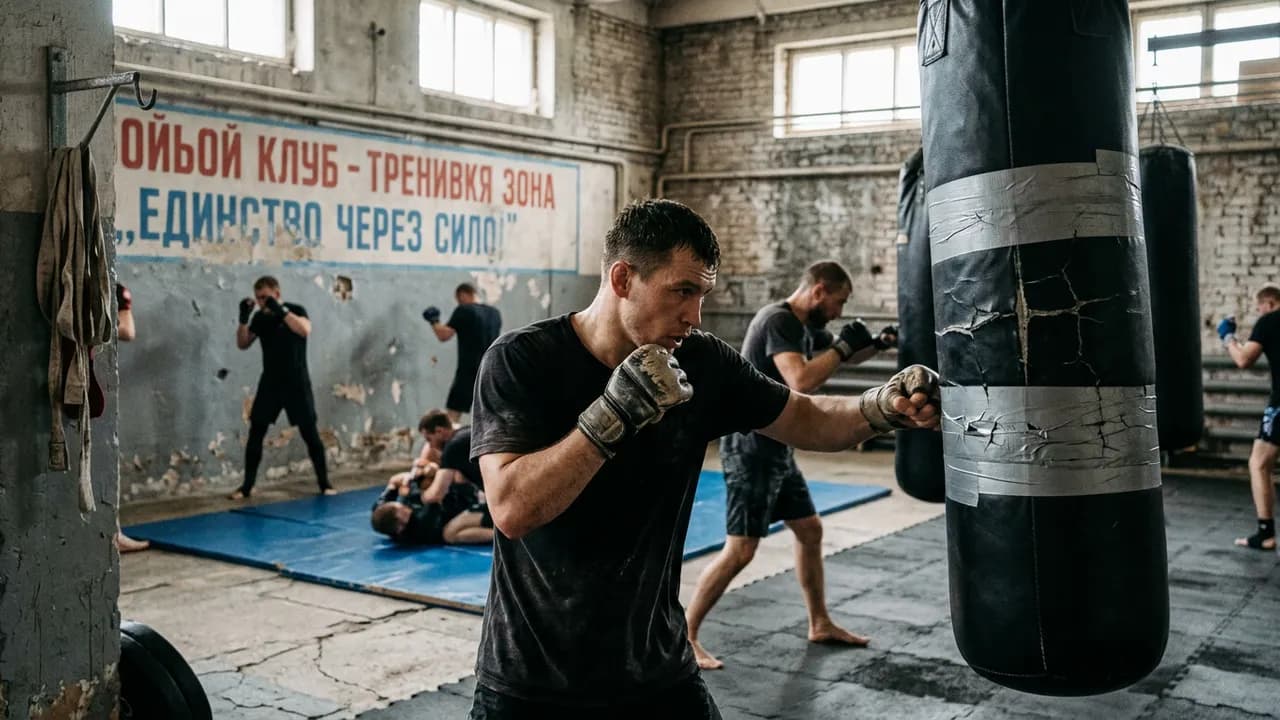
Strelka, the Russian-founded fight club that is the world's largest, has expanded into Thailand as part of its international growth through the TronMMA partnership. Strelka events in Thailand follow the organization's standard amateur MMA format -- sand ring, no rounds, fight to finish -- and draw from both the Thai fighter pool and the large community of international fighters training in Thailand.
Tourist-Oriented Events
Thailand's tourist industry has spawned a category of fighting events specifically designed for international visitors. These events, staged at bars, entertainment venues, and purpose-built facilities in tourist areas like Pattaya, Phuket, and Koh Samui, offer tourists the opportunity to watch fights and, in some cases, participate.
02 / Up next / Notable Fighters
The quality and legitimacy of tourist-oriented events vary enormously. At one end of the spectrum are well-organized events featuring trained Thai fighters competing in genuine Muay Thai bouts. At the other end are exploitative shows where untrained tourists are encouraged to fight each other or carefully controlled Thai opponents for the entertainment of a drinking crowd.
Notable Fighters
Thailand has produced tens of thousands of professional Muay Thai fighters, and the underground and unlicensed scene has contributed to the development of many who went on to achieve greatness in sanctioned competition.
The Muay Thai pipeline -- from village fairs to provincial stadiums to Lumpinee and Rajadamnern to international competition -- is one of the most efficient talent identification and development systems in combat sports. Fighters who emerge from the grassroots circuit and succeed at the stadium level have demonstrated their skills across hundreds of fights in conditions that range from informal village bouts to the most prestigious rings in the world.
In the bare knuckle context, Thai fighters competing in BKFC Thailand events bring a striking pedigree that is unmatched globally. The transition from Muay Thai to bare knuckle boxing requires adaptation -- the absence of kicks, knees, and elbows is a significant change -- but the hand speed, timing, and toughness developed through a lifetime of Muay Thai training translate powerfully to the bare knuckle format.
Legal Status
Thailand's legal framework for fighting is shaped by the centrality of Muay Thai to national culture and the practical realities of a country where fighting is deeply embedded in community life.
Professional Muay Thai is regulated by the Sports Authority of Thailand (SAT) and the World Muay Thai Council (WMC), among other governing bodies. Major stadium events operate within a formal regulatory framework that includes fighter licensing, medical requirements, and event sanctioning.
Below the professional level, the regulatory framework thins rapidly. Provincial and local events operate with varying degrees of oversight, and grassroots events at temple fairs and village celebrations frequently operate without formal sanctioning. The Thai government's approach to grassroots fighting is generally permissive, reflecting the cultural importance of Muay Thai and the practical impossibility of policing thousands of events across a country of 70 million people.
Bare knuckle boxing, introduced by BKFC Thailand, operates within a framework negotiated with Thai sporting authorities. The promotion's professional structure, safety protocols, and association with the BKFC brand provide a degree of institutional legitimacy that informal bare knuckle fighting would lack.
For international fighters, Thailand is one of the most accessible countries in the world for competitive fighting. Tourist and work visa requirements are generally manageable, and gyms throughout the country facilitate fight bookings for international students as a standard part of their business model. The regulatory scrutiny applied to fights involving foreigners varies by location, but in the major training centers -- Pattaya, Phuket, Chiang Mai, Bangkok -- fighting as a foreigner is a routine and well-established practice.
How to Get Involved
As a Spectator
Watching fights in Thailand is extraordinarily accessible. Sanctioned Muay Thai events are staged nightly at stadiums and venues across the country, with tickets available at the door or through local booking services. Lumpinee and Rajadamnern in Bangkok offer the highest level of competition, while provincial stadiums and local events provide a more grassroots experience.
For BKFC Thailand events, information is available through BKFC's social media channels and website. Events are staged at professional venues and are open to the public.
Unlicensed events and temple fair fights are accessible simply by being present. Thai temple fairs are community events, and spectators -- including foreigners -- are generally welcome. The fights are typically staged in the evening, with betting activity creating a lively atmosphere.
As a Fighter
Thailand is the world's premier destination for combat sports training. Hundreds of Muay Thai gyms across the country accept international students, offering training programs that range from casual two-week courses to intensive multi-month fight camps. The major training centers are:
- Pattaya: Home to a dense concentration of internationally oriented Muay Thai gyms, many of which facilitate fights for foreign students.
- Phuket: Major training hub with numerous gyms catering to international fighters.
- Chiang Mai: Northern Thailand's primary fight training center.
- Bangkok: The capital's gym scene includes both traditional Thai gyms and internationally oriented facilities.
For fighters seeking competitive experience, most gyms can arrange fights at local events within a few weeks of arrival. The fights are typically sanctioned at the provincial level, with appropriate medical checks and referee oversight, though the regulatory rigor is less than at major stadium events.
International fighters interested in bare knuckle boxing can explore opportunities through BKFC Thailand, which accepts applications from international competitors.
International fighters interested in bare knuckle boxing can explore opportunities through BKFC Thailand, which accepts applications from international competitors.
Related Countries
- Japan -- Historical fighting connection through the crossover between Muay Thai and Japanese kickboxing and MMA. Thai fighters have competed extensively in Japanese promotions since the 1960s.
- United States -- Home of BKFC, the parent organization of BKFC Thailand. American fighters frequently train in Thailand, and the US market drives global interest in Thai fighting.
- Australia -- Major source of international fighters training and competing in Thailand. The Australia-Thailand fighter pipeline is one of the most active in the Asia-Pacific region.
- Brazil -- Shared culture of combat sports as national identity. Brazilian Muay Thai fighters frequently train and compete in Thailand, and the cross-pollination between Muay Thai and Brazilian martial arts enriches both traditions.
- Russia -- Strelka has expanded into Thailand, and Russian fighters are a significant presence in the Thai training and competition scene. Russia and Thailand share a cultural normalization of fighting that enables their underground scenes.
FAQ
Is Muay Thai underground fighting common in Thailand?
Yes. While the most prestigious Muay Thai takes place at licensed stadiums, thousands of unlicensed events occur across Thailand annually at temple fairs, village festivals, and private venues. These grassroots events represent the majority of fights that take place in the country and are the foundation of Thailand's fighting ecosystem.
What is BKFC Thailand?
BKFC Asia/Thailand is the Thai operation of Bare Knuckle Fighting Championship, the world's largest bare knuckle boxing promotion. Launched in 2021, BKFC Thailand brings the bare knuckle boxing format to a country whose Muay Thai tradition makes it a natural market for combat sports.
Can foreigners fight in Thailand?
Yes. Thailand is the most accessible country in the world for foreign fighters seeking competitive experience. Muay Thai gyms throughout the country facilitate fight bookings for international students, and fights can typically be arranged within a few weeks of arrival. Regulatory requirements for foreign fighters are manageable, particularly in the major training centers.
Is gambling connected to Thai fighting?
Deeply. Gambling is the primary economic driver of much of Thailand's fighting scene, particularly at the grassroots level. While betting on Muay Thai is technically illegal outside licensed stadiums, it is ubiquitous in practice. The gambling economy creates demand for events and influences everything from matchmaking to fighter incentives.
How does Thailand's underground scene compare to Europe or the US?
Thailand's scene is fundamentally different because fighting is so culturally normalized that the distinction between "sanctioned" and "underground" is less meaningful than in Western countries. The volume of fighting activity in Thailand -- sanctioned, semi-sanctioned, and unsanctioned -- dwarfs any other country's scene. The grassroots Muay Thai circuit alone produces more fights annually than most countries' entire combat sports industries.
Is it safe to watch fights at temple fairs?
Temple fair fights are community events and are generally safe for spectators, including foreigners. The atmosphere is festive, and foreigners are typically welcomed with curiosity and hospitality. Standard travel safety precautions apply, particularly regarding personal belongings in crowded settings.