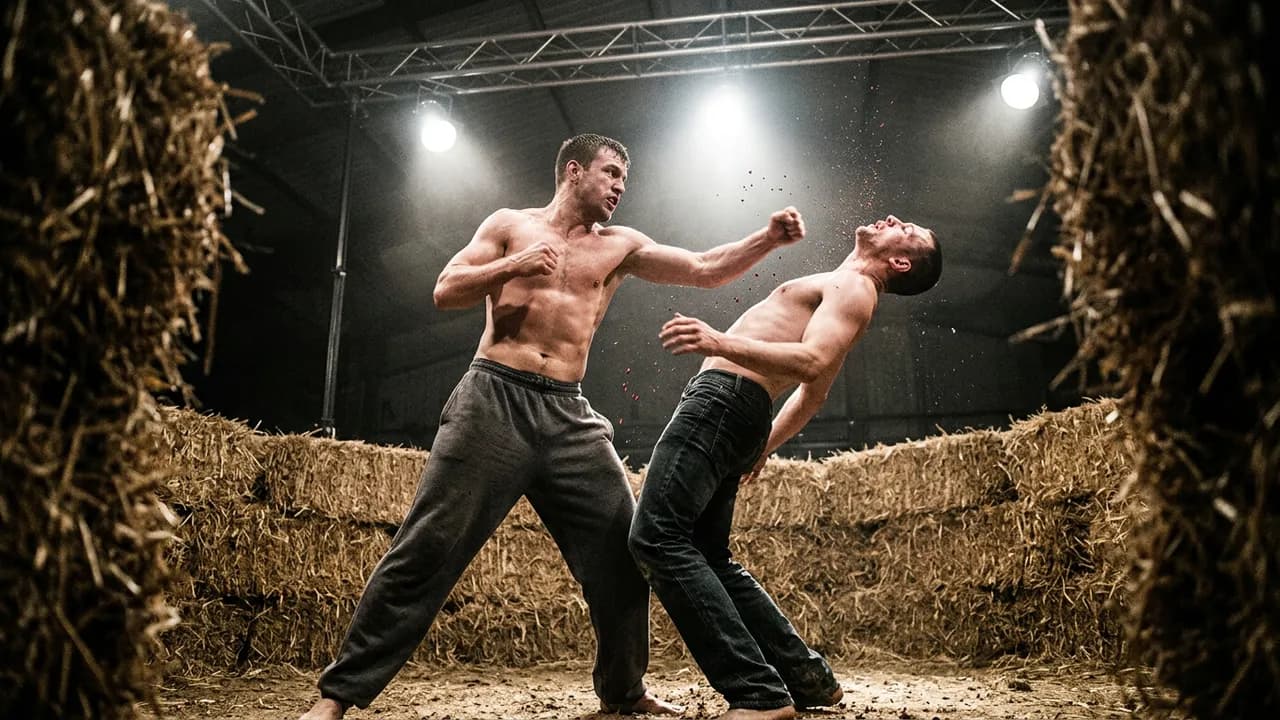
Not all fights are created equal. The difference between a BKFC bout sanctioned by a state athletic commission and a King of the Streets fight on concrete in an undisclosed European location is not just a matter of production value -- it is a fundamentally different sport with fundamentally different risks.
This guide breaks down the rules, formats, and safety requirements of every major underground and semi-regulated fighting organization operating today. Whether you are a fighter evaluating where to compete, a fan trying to understand what you are watching, or a journalist covering the scene, this is the definitive reference.
Quick Reference: Master Comparison Table
| Organization | Gloves | Rounds | Surface | Striking | Grappling | Weight Classes | Medical Staff |
|---|---|---|---|---|---|---|---|
| BKFC | None (wraps below knuckles) | 5 x 2 min | Boxing ring | Punches only | No | Yes (10 classes) | Yes (mandatory) |
| BKB | None (wraps below knuckles) | 3-7 x 3 min | Boxing ring | Punches only | No | Yes | Yes (mandatory) |
| KOTS | None | No rounds / No time limit | Concrete / varied | All strikes + eye gouging | Submissions allowed | Limited (5kg range) | No |
| Streetbeefs | Boxing or MMA gloves | Varies (typically 3 rounds) | Grass / outdoor | Varies by agreement | Varies by agreement | Informal matching | No (basic first aid) |
| Strelka | MMA or boxing gloves | 1 round / No time limit | Sand, grass, bare ground | MMA rules (no elbows to head) | Yes | Informal matching | Yes (required by Russian law) |
| Top Dog | None | 3 x 2 min (5 x 2 min title) | Hay bale circle / arena | Punches + clinch + shoulder | No ground fighting | Informal matching | Yes |
| KOTR | Boxing gloves | 3 rounds | Outdoor ring | Punches primarily | Limited | Informal matching | No (basic first aid) |
| Mahatch | None | 3 x 2 min | Sandbag ring | Punches + kicks + elbows + clinch | No ground fighting | Informal matching | Unclear |
| Gamebred | None (wraps below knuckles) | 3 x 5 min | Cage | Full MMA | Full MMA | Yes (UFC-style) | Yes (mandatory) |
| Rough N Rowdy | Boxing gloves | 3 x 1 min | Boxing ring | Punches only | No | Yes | Yes (state commission) |
Detailed Breakdown by Organization
BKFC (Bare Knuckle Fighting Championship)
Jurisdiction: United States, United Kingdom, Thailand, Mexico (expanding globally) Legal Status: Fully sanctioned by state athletic commissions Founded: 2018
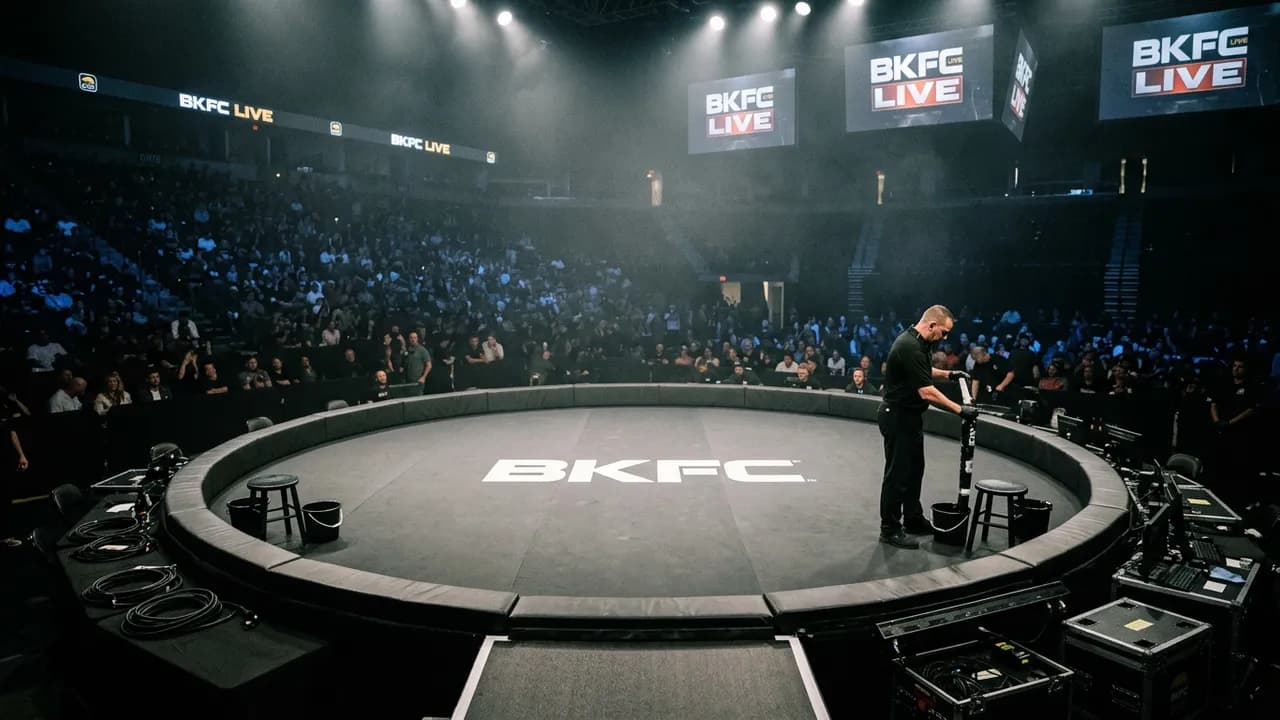
BKFC is the gold standard for regulated bare-knuckle fighting. Every event is sanctioned by a state or national athletic commission, with all the regulatory infrastructure that entails.
Format and Rounds:
- Standard bouts: 5 rounds of 2 minutes each
- Championship bouts: 5 rounds of 2 minutes
- One-minute rest between rounds
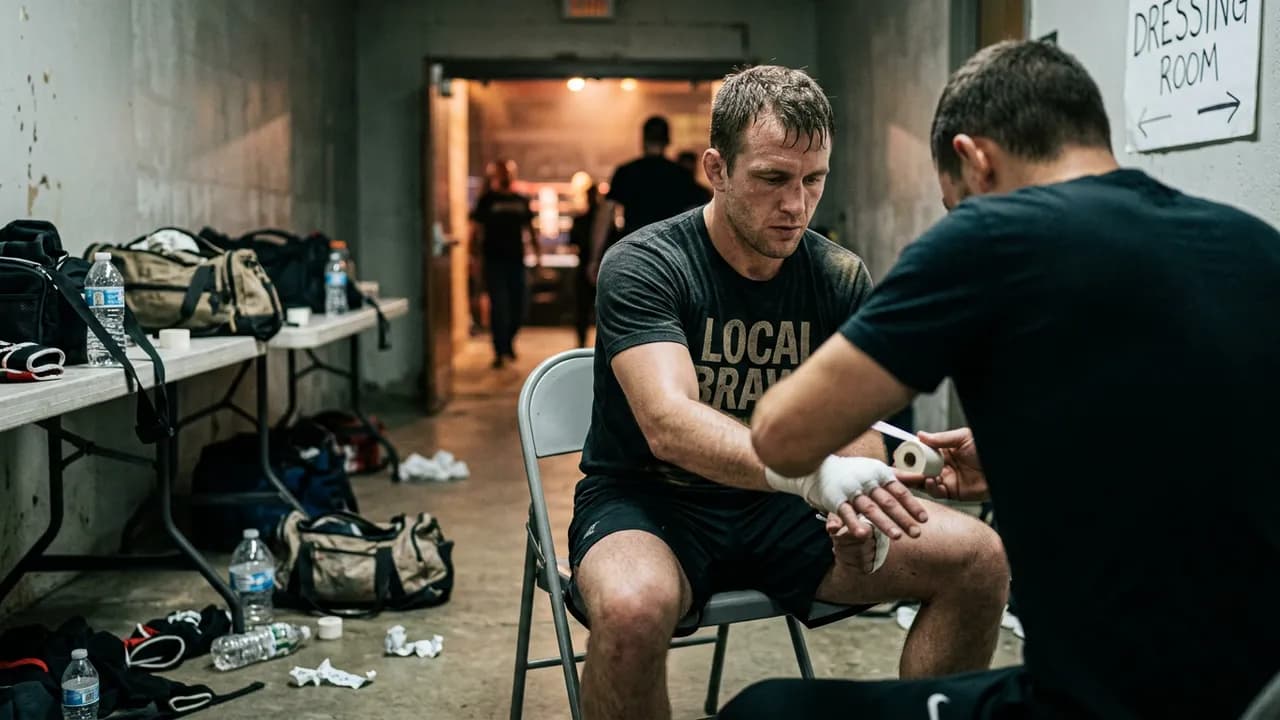
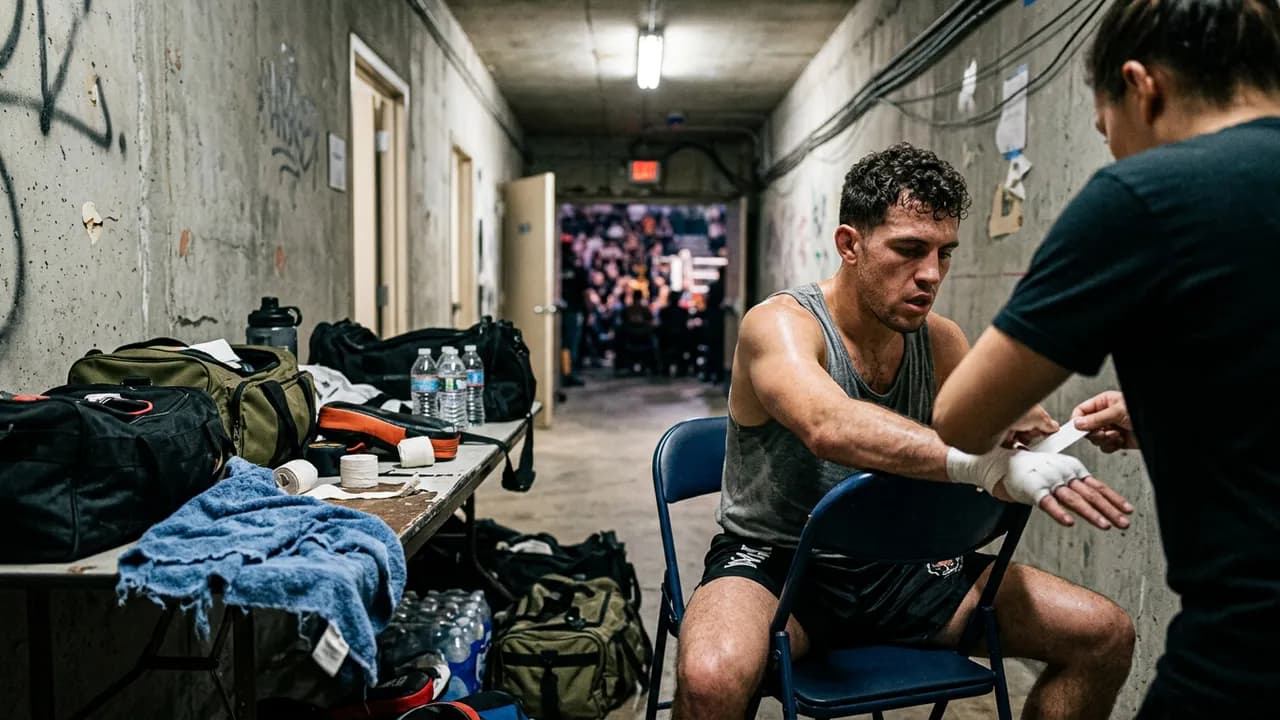
Hand Protection: Fighters may wrap and tape the wrist, thumb, and mid-hand. No gauze or tape may extend within one inch (25mm) of the knuckles. The knuckles themselves are fully exposed.
Starting Position: Unique to BKFC, fighters "toe the line" at the start of each round. Two lines are marked three feet apart in the center of the ring. Fighters place their front foot on the line, and the referee calls "knuckle up" to begin. This tradition harkens back to the London Prize Ring era, where fighters had to "come to scratch."
Allowed Techniques:
- Closed-fist punches from the waist to the top of the head
- No kicks, knees, elbows, headbutts, or grappling of any kind
- No punching in the clinch (referee breaks clinches)
Banned Techniques:
- All kicks and knee strikes
- Elbow strikes
- Headbutts
- Grappling, wrestling, and takedowns
- Holding and hitting
- Strikes to the back of the head
Weight Classes:
| Class | Weight |
|---|---|
| Strawweight | 115 lbs |
| Flyweight | 125 lbs |
| Bantamweight | 135 lbs |
| Featherweight | 145 lbs |
| Lightweight | 155 lbs |
| Welterweight | 165 lbs |
| Middleweight | 175 lbs |
| Light Heavyweight | 185 lbs |
| Cruiserweight | 205 lbs |
| Heavyweight | 206+ lbs |
Medical Requirements:
- Ringside physician mandatory at all events
- Pre-fight medical screening required
- Physician has authority to stop the fight at any time
- Post-fight medical examination
- Groin protector with cup, mouthpiece, boxing trunks, and boxing/wrestling shoes required
For the full history of BKFC and the bare-knuckle revival, see our history of bare knuckle boxing.
BKB (Bare Knuckle Boxing)
Jurisdiction: United States and United Kingdom (broadcast in 35+ countries) Legal Status: Sanctioned professional events Founded: 2015 (acquired by BYB Extreme in 2024)
BKB was the world's first professional bare-knuckle boxing promotion, founded in Britain in 2015 by Jim Freeman and Joe Smith-Brown. Miami-based since BYB Extreme bought it in 2024 and took its name, BKB runs cards in the US and the UK under a similar but distinct rule set.
Format and Rounds:
- Standard bouts: 3 rounds of 3 minutes
- Championship bouts: Up to 7 rounds of 3 minutes
- Note: BKB rounds are longer than BKFC rounds (3 minutes vs. 2 minutes)
Hand Protection: Same as BKFC: wraps permitted on the wrist, thumb, and mid-hand, with no tape or gauze within one inch of the knuckles.
Allowed Techniques:
- Closed-fist bare-knuckle punches
- Standard face-to-face punches from the waist to the top of the head
Key Difference from BKFC: Punching in the clinch is explicitly prohibited in BKB. Referees break clinches immediately. BKB tends to enforce a slightly tighter technical boxing ruleset.
Starting Position: Identical to BKFC: fighters toe the line, referee calls "knuckle up."
King of the Streets (KOTS)
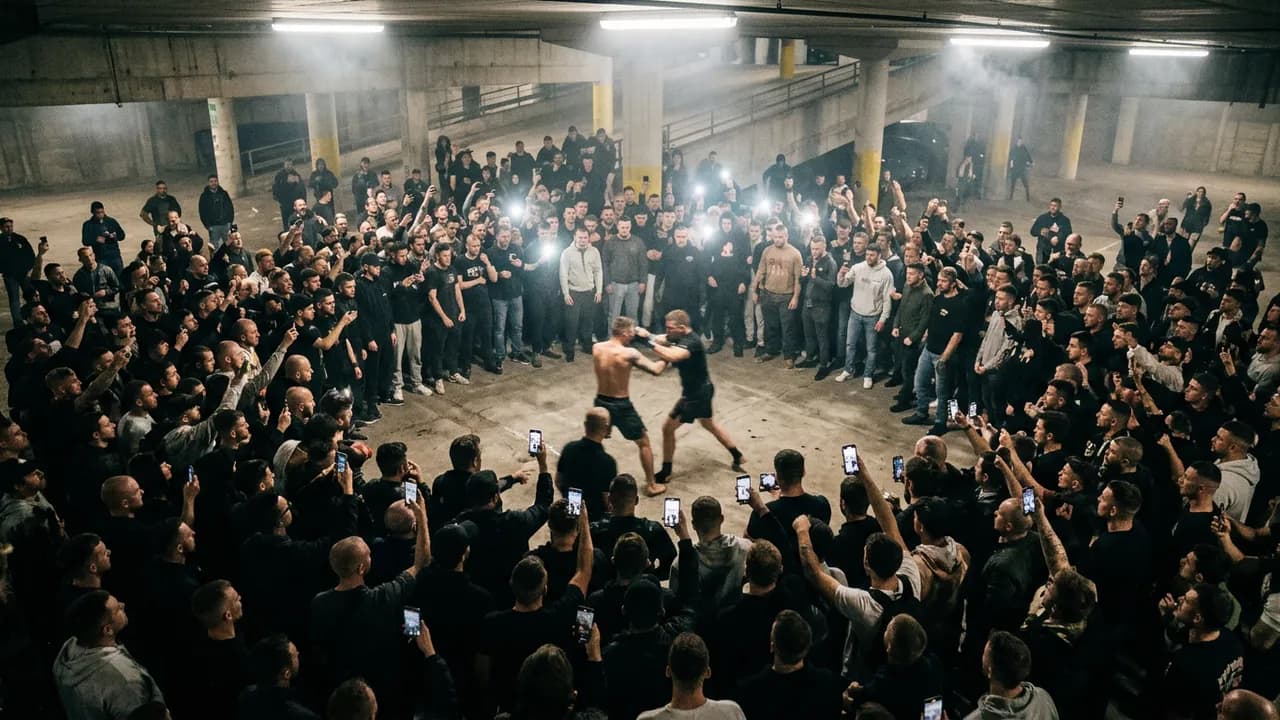
Jurisdiction: Europe (primarily Sweden, undisclosed locations) Legal Status: Unsanctioned / illegal Founded: 2013 (Gothenburg, Sweden)
KOTS is the most extreme major fighting organization in the world. Founded by an anonymous collective called "Hype Crew" with roots in European football hooligan culture, KOTS operates entirely outside the law.
Format and Rounds:
- No rounds
- No time limits
- Fights continue until finished
- Most fights last only a few minutes in practice
Hand Protection: None. No gloves, no wraps. Bare hands.
Fighting Surface: Varies by event. Fights have taken place on concrete, asphalt, and other hard surfaces. No ring -- fights occur in an open area with spectators forming the boundary.
Victory Conditions:
- Referee stoppage (TKO)
- Knockout (KO)
- Submission (tap-out) -- allowed from KOTS 118 onward
- Verbal submission
Allowed Techniques:
- All strikes: punches, kicks, knees, elbows, headbutts
- Eye gouging (allowed but fighters who win by eye gouge forfeit prize money -- rule effective December 2022)
- Submissions (added from KOTS 118+)
- Weapons (only if both fighters explicitly agree)
- Clinch fighting
Weight Classes:
- Grudge/beef fights: no weight limit
- Standard fights: maximum 5kg difference between fighters
- Over 100kg: no weight limit
Medical Requirements: None. No medical staff on site. No pre-fight screening.
Fighter Pay: Only the winner receives prize money. Losers receive nothing.
Application Process: Fighter applications are submitted via Telegram. Applicants are asked about age, height, weight, fight record, and specifically about "streetfighting/hooligan background."
Streetbeefs
Jurisdiction: United States (primarily East Coast; founded in Harrisonburg, Virginia, monthly HQ cards in Winchester, Virginia since January 2024) Legal Status: Legal gray area (no admission fee, no fighter payment = outside commission jurisdiction) Founded: 2008
Streetbeefs is the largest grassroots fighting organization in the United States, built on the philosophy of "Guns Down, Gloves Up."
Streetbeefs is the largest grassroots fighting organization in the United States, built on the philosophy of "Guns Down, Gloves Up."
Format and Rounds:
- Varies by agreement between fighters
- Typically 3 rounds
- Round length varies (commonly 2-3 minutes)
- Combat discipline chosen by mutual agreement: boxing, kickboxing, MMA, or jiu-jitsu
Hand Protection: Boxing gloves or MMA gloves, depending on the agreed format.
Fighting Surface: Primarily outdoor grass. Events have been held at various locations on the East Coast.
Allowed Techniques: Entirely dependent on the agreed format:
- Boxing rules: Punches only, standing
- Kickboxing rules: Punches and kicks
- MMA rules: Full striking and grappling
- Grappling rules: Submissions only, no strikes
Weight Classes: Informal. Fighters are matched by the organizer (Chris "Scarface" Wilmore) with an eye toward competitive parity, but there are no formal weight classes or weigh-ins.
Medical Requirements: No medical staff on site. Basic first aid supplies available. Fighters compete at their own risk.
Eligibility: Open to anyone willing to fight. Streetbeefs is notable for providing a platform for inexperienced fighters outside the formal amateur competition system.
Strelka
Jurisdiction: Russia (events in nearly 50 cities), expanding internationally Legal Status: Legal under Russian amateur combat sports regulations Founded: 2011 (St. Petersburg)
Strelka is Russia's largest grassroots fighting organization, designed to allow ordinary people to experience competitive fighting.
Format and Rounds:
- 1 round
- No time limit
- Fight continues until victory or submission
- Fighters choose their ruleset: MMA, Muay Thai, or Boxing
Hand Protection: MMA gloves or boxing gloves, depending on the chosen discipline.
Fighting Surface: Outdoor venues: sand, grass, or bare ground. No ring or cage -- fights take place in open areas.
Allowed Techniques (MMA rules):
- All strikes except elbows to the head and knee strikes to the head
- Full grappling, including takedowns and submissions
- Clinch fighting
Allowed Techniques (Boxing/Muay Thai rules):
- Follows standard boxing or Muay Thai rules depending on fighter selection
Weight Classes: Informal matching. No formal weight classes.
Medical Requirements: A medical worker must be present at every event -- this is the legal minimum for amateur MMA events in Russia.
Accessibility: Anyone can sign up. Most fighters receive no payment; the experience is the reward. This is Strelka's defining feature -- it is a platform for complete beginners alongside experienced amateurs.
Top Dog Fighting Championship
Jurisdiction: Russia Legal Status: Semi-regulated Founded: 2020
Top Dog is Russia's premier bare-knuckle promotion, combining underground aesthetics with professional-level competition.
Format and Rounds:
- Standard bouts: 3 rounds of 2 minutes
- Championship bouts: 5 rounds of 2 minutes
- Draws are possible in regular fights but not in championship fights
Hand Protection: None. Completely bare hands -- no wraps, no tape.
Fighting Surface: Originally fought in circles of hay bales in parking lots. Now held in Moscow sports arenas but maintaining the hay bale ring aesthetic.
Allowed Techniques:
- Closed-fist punches
- Open-palm strikes
- Strikes from the clinch
- Shoulder strikes (in the clinch)
- All strikes must be standing
Banned Techniques:
- Ground fighting
- Kicks
- Elbows (though enforcement varies)
- Submissions
Knockdown Rule: After a knockdown, the fighter has 10 seconds to rise. Failure to rise results in a KO loss.
Dress Code: Fighters wear jeans or sweatpants and sneakers rather than boxing trunks -- part of the promotion's deliberate street-fight aesthetic.
King of the Ring UK (KOTR)
Jurisdiction: United Kingdom (Manchester) Legal Status: Legal gray area Founded: 2021
KOTR is the UK's fastest-growing grassroots fighting brand, built on the motto "Put Down the Knife, Use Your Left and Right."
Format and Rounds:
- Typically 3 rounds
- Round length varies by event and matchup
Hand Protection: Boxing gloves (standard size).
Fighting Surface: Outdoor ring. Originally a back garden setup with foam-wrapped fence posts and construction tape; has since upgraded to more professional outdoor ring configurations.
Allowed Techniques:
- Primarily boxing rules (punches only)
- Standing only
- Some events feature variations depending on fighter agreement
Weight Classes: Informal matching by the promoter (known as Remdizz).
Medical Requirements: Basic first aid available. No formal medical staff requirement.
Philosophy: KOTR explicitly positions itself as a violence-reduction initiative, providing a controlled outlet for disputes that might otherwise escalate to knife crime.
Mahatch Fighting Championship
Jurisdiction: Ukraine Legal Status: Semi-regulated Founded: 2020
Mahatch is Ukraine's entry into the bare-knuckle fighting scene, featuring a distinctive sandbag ring and street-clothes aesthetic.
Format and Rounds:
- 3 rounds of 2 minutes
- Draws are possible
Hand Protection: None. Bare hands, no wraps.
Fighting Surface: A ring constructed from sandbags, evoking early 20th-century underground fights.
Allowed Techniques:
- Bare-knuckle punches
- Kicks
- Elbow strikes
- Clinch striking
- Standing only
Banned Techniques:
- Ground fighting
- Submissions
Knockdown Rule: 10 seconds to rise after a knockdown.
Dress Code: Jeans and sneakers are mandatory (with occasional exceptions for special bouts).
Notable Events: Mahatch gained international attention when former UFC fighter Artem Lobov competed on its platform in 2021, losing to Ukrainian boxer Denys Berinchyk.
Gamebred Bareknuckle MMA
Jurisdiction: United States, Dominican Republic (expanding) Legal Status: Sanctioned by athletic commissions Founded: 2023
Gamebred, founded by UFC veteran Jorge Masvidal, is the only major promotion combining full MMA rules with bare-knuckle fighting.
Format and Rounds:
- 3 rounds of 5 minutes
- Standard MMA round structure
Hand Protection: Wraps permitted on the lower half of the hands and wrists. Knuckles are fully exposed. No padded gloves.
Fighting Surface: Standard MMA cage.
Allowed Techniques:
- Full unified rules of MMA apply
- All strikes: punches, kicks, knees, elbows
- Full grappling: takedowns, ground control, submissions
- Ground-and-pound (bare-knuckle)
Key Differences from Gloved MMA:
- Higher knockout rate due to unpadded knuckle contact
- More submissions per event (fighters cannot maintain grip/control as effectively without gloves)
- Different defensive dynamics on the ground (fighters "slip like blankets" without glove friction)
Weight Classes: Standard MMA weight classes (UFC-style divisions).
Medical Requirements: Full athletic commission oversight, including ringside physicians, pre-fight medicals, and drug testing.
2026 Tournament Structure: Two 16-man tournaments announced for 2026 -- one at heavyweight, one at lightweight -- each carrying a $500,000 grand prize.
Rough N Rowdy
Jurisdiction: United States (primarily West Virginia) Legal Status: Fully sanctioned by the West Virginia State Athletic Commission Founded: Pre-2018 (acquired by Barstool Sports)
3 rounds Boxing gloves
Rough N Rowdy occupies a unique niche: fully regulated amateur boxing events designed for fighters with little to no experience.
Format and Rounds:
- 3 rounds of 1 minute each
- Extremely short rounds by any standard
Hand Protection: Standard boxing gloves.
Fighting Surface: Standard boxing ring.
Allowed Techniques:
- Standard amateur boxing rules
- Punches only
- Standing only
Eligibility Requirements: Strict amateur limits. Fighters with more than five combined wins in amateur boxing, kickboxing, or MMA are ineligible. Toughman and Rough N Rowdy bouts do not count toward this limit.
Weight Classes: Yes. Fighters are matched by weight.
Medical Requirements: Full state athletic commission oversight. All events comply with West Virginia boxing regulations.
Event Structure: Typically 15-20 fights per card, with entertainment elements including ring girl contests and commentary from Barstool Sports personalities.
Key Comparisons by Category
Safety Spectrum: Most to Least Regulated
- BKFC / BKB / Rough N Rowdy -- Full athletic commission oversight, mandatory medical staff, drug testing, pre-fight physicals
- Gamebred -- Full athletic commission oversight with MMA-specific safety protocols
- Strelka -- Medical worker required by Russian law; basic safety protocols
- Top Dog / Mahatch -- Medical presence reported but not consistently verified; semi-professional safety measures
- Streetbeefs / KOTR -- Basic first aid; no formal medical oversight
- KOTS -- No medical staff, no safety infrastructure, fights on concrete
Technique Spectrum: Most to Least Restrictive
- BKFC / BKB / Rough N Rowdy -- Punches only, no clinch work
- KOTR -- Primarily punches, standing only
- Top Dog -- Punches plus clinch strikes and shoulder strikes
- Mahatch -- Punches, kicks, elbows, clinch strikes (no ground)
- Streetbeefs -- Varies by agreement (boxing through full MMA)
- Strelka -- MMA minus elbows/knees to the head
- Gamebred -- Full MMA, bare knuckle
- KOTS -- Virtually no restrictions; eye gouging and weapons by agreement
Surface Danger
The fighting surface is an underrated factor in fighter safety:
- Ring with canvas (BKFC, BKB, Rough N Rowdy): Lowest impact risk from falls
- Cage with mat (Gamebred): Low impact risk, standard MMA safety
- Hay bale circle (Top Dog): Moderate cushioning on boundary impact
- Sandbag ring (Mahatch): Moderate boundary impact
- Grass/outdoor (Streetbeefs, KOTR, Strelka): Variable -- softer than hard surfaces but uneven terrain
- Sand/bare ground (Strelka): Variable -- sand provides some cushioning
- Concrete/asphalt (KOTS): Maximum danger -- falls on concrete carry serious concussion and fracture risk
Choosing Where to Fight: A Fighter's Guide
If you are considering competing in any of these organizations, the questions to ask yourself are straightforward:
If you want maximum safety and career progression: BKFC or Gamebred. Full commission oversight, professional contracts, and the potential to build a legitimate combat sports career.
If you want grassroots experience with basic safety: Streetbeefs or KOTR. Gloves are worn, the atmosphere is controlled, and the organizations have strong reputations for matching fighters fairly.
If you want to test yourself in an open-access format: Strelka. Anyone can sign up, medical staff is present, and the ruleset allows you to choose your discipline.
If you want a spectacle with amateur boxing rules: Rough N Rowdy. State-sanctioned, short rounds, designed for beginners.
If you want pure, unregulated combat: KOTS. No safety net, no guarantees, no rules worth mentioning. Understand the risks before you step on that concrete.
The Regulatory Future
The trend in underground fighting is unmistakable: movement toward regulation. The Association of Boxing Commissions approved unified bare-knuckle rules in 2024. More states and countries are sanctioning events every year. Organizations that once operated in legal gray areas are seeking official recognition.
This does not mean underground fighting will disappear. KOTS, Streetbeefs, and their counterparts exist because they serve needs that regulated promotions cannot -- accessibility, community dispute resolution, and the raw, unfiltered experience that draws millions of viewers to YouTube.
The future is likely a spectrum: fully regulated promotions at the top, semi-regulated grassroots organizations in the middle, and genuinely underground fights at the edges. The rules will differ. The risks will differ. But the fights will continue.
For the complete history of how these organizations emerged, see our timeline of underground fighting. For the specific history of bare-knuckle boxing and its revival, see our history of bare knuckle boxing.