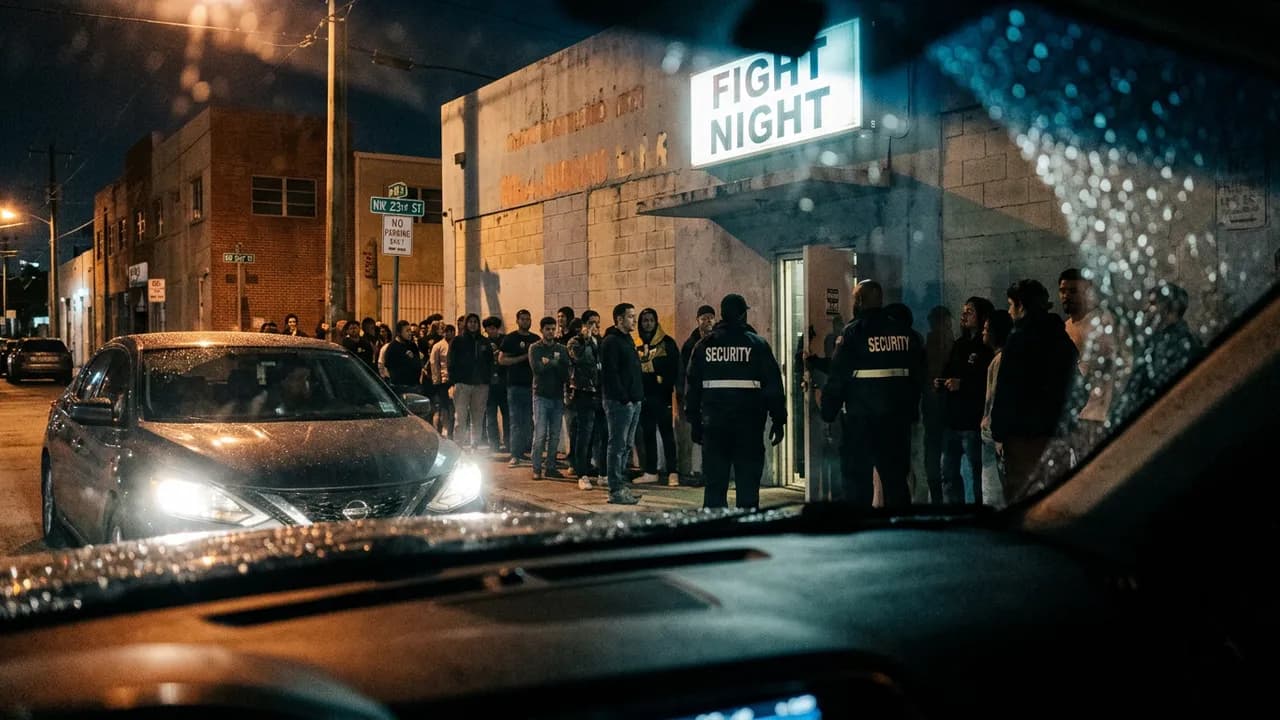
Miami is where underground fighting went viral. Before YouTube algorithms shaped entertainment, before influencer boxing became a business model, before bare knuckle promotions sold pay-per-views -- there was a man named Kevin Ferguson standing shirtless in a backyard in Perrine, Florida, beating the consciousness out of anyone willing to stand in front of him. The videos spread across the early internet like a brushfire, and nothing about combat sports content was ever the same.
The city that gave the world Kimbo Slice also produced Dada 5000, the Dawg Fight documentary, the BYB Extreme promotion, and ultimately Jorge Masvidal's Gamebred Bareknuckle MMA. Miami is not just a city with an underground fighting scene. It is the city that proved underground fighting could be a global phenomenon.
The Perrine Foundation
To understand Miami's role in the history of underground fighting, you have to understand West Perrine. This suburban neighborhood in southwest Miami-Dade County covers less than two square miles, but it packs a devastating concentration of poverty, unemployment, and violence into that small footprint. Over 73 percent of residents are African American. More than a third are unemployed. Violent crime is a daily reality.
In neighborhoods like Perrine, fighting is not a hobby or a spectator sport. It is a survival skill, a social currency, and sometimes the only form of entertainment available. Long before anyone thought to film it, backyard fighting was a fixture of life in Miami's roughest communities. Impromptu scraps in parking lots, yards, and empty lots served as both conflict resolution and recreation. The fighters were not athletes pursuing glory -- they were neighbors, rivals, and sometimes friends working out aggression in the only arena available to them.
This was the world that produced both Kimbo Slice and Dada 5000, two men who grew up blocks apart, attended the same high school, and would ultimately follow parallel paths from the same streets to very different destinations.
Kimbo Slice: The Man Who Started It All
Kevin "Kimbo Slice" Ferguson did not invent backyard fighting. But he invented the idea that backyard fighting could make you famous.
Born in the Bahamas and raised in the Cutler Ridge and Perrine neighborhoods of Miami-Dade County, Ferguson was a physically imposing figure who worked as a bouncer and bodyguard before his fighting videos began circulating online in the early 2000s. The footage was raw and unpolished -- shaky cameras, makeshift rings, crowds of spectators pressed in close around two men fighting with bare fists or minimal wraps. But Ferguson's combination of size, power, and charisma was undeniable. He knocked people out with a ferocity that transcended the grainy video quality, and viewers could not look away.
By 2003, Kimbo Slice videos were among the most-watched content on the early internet. At a time when YouTube did not yet exist, his fights spread through forums, email chains, and file-sharing sites. By some estimates, his backyard fighting clips were viewed over 70 million times before he ever stepped into a professional cage. He was, in many ways, the first viral fighter -- a man whose fame was built entirely outside the traditional infrastructure of boxing promoters, television networks, and athletic commissions.
Kimbo's success opened a door that could never be closed. He proved that raw, unfiltered combat had a massive audience, and that the audience did not care whether the fights were sanctioned, promoted, or produced to professional standards. What mattered was authenticity. The fights were real, the violence was real, and the stakes -- reputation, respect, and physical safety -- were real.
Ferguson eventually transitioned to professional MMA, competing in the UFC, Bellator, and EliteXC. His professional career was uneven, but his cultural impact was permanent. When he passed away in June 2016 at the age of 42, he left behind a legacy that extended far beyond his win-loss record. He had single-handedly created the template for internet-era underground fighting fame.
Dada 5000 and the Dawg Fight Era
While Kimbo Slice was the face, Dhafir "Dada 5000" Harris was the architect. Growing up blocks away from Ferguson in Perrine, Harris traveled the world as part of Kimbo's crew, serving as his bodyguard during the early years of Slice's rise. But when Kimbo's management team buried video of Dada's own spectacular backyard fighting debut -- reportedly fearing that Harris would overshadow their rising star -- the two men's paths diverged.
At Bellator 149 in February 2016, the two Perrine natives faced each other in the cage.
Dada 5000 did not leave the backyard fighting world. He took it over. Returning to Perrine, Harris transformed himself into the promoter, matchmaker, and impresario of the neighborhood's underground fighting scene. He organized fights, recruited fighters, built a following, and created an infrastructure for backyard combat that went beyond individual brawls into something approaching an organized promotion.
This era was captured in the 2015 documentary Dawg Fight, directed by Billy Corben. The film follows Dada 5000 as he orchestrates no-holds-barred fights in the backyards and empty lots of Perrine, offering a sobering portrait of a community where fighting represents one of the few paths to recognition and respect. The documentary was critically acclaimed for its unflinching depiction of both the brutality of the fights and the socioeconomic conditions that produced them. When it landed on Netflix, it introduced the Perrine backyard fighting scene to a global audience.
The Kimbo-Dada rivalry eventually reached its conclusion in professional combat. At Bellator 149 in February 2016, the two Perrine natives faced each other in the cage. Kimbo Slice won by third-round TKO in a fight widely regarded as one of the worst in MMA history -- both men were clearly past their physical primes, and the bout was more spectacle than sport. Dada 5000 collapsed after the fight, suffering cardiac arrest, severe dehydration, and kidney failure. He was removed from the ring on a stretcher.
The fight was ugly. But it was also the culmination of a story that had begun in the backyards of Perrine more than a decade earlier, and it underscored the human cost of a scene that the internet had turned into entertainment.
BYB Extreme and the Professionalization of Backyard Fighting
The legacy of Miami's backyard fighting scene did not end with Kimbo and Dada. It evolved into something more organized. BYB Extreme Fighting Series -- the initials standing for "Backyard Brawls" -- emerged as an attempt to professionalize the raw, unsanctioned combat that had defined the Perrine scene. The promotion took the aesthetics and energy of backyard fighting and wrapped them in a sanctioned, regulated framework.
Dada 5000 himself became involved with BYB, appearing at events and lending his credibility as the godfather of the scene. The promotion staged events in unconventional venues, including a memorable show aboard a battleship, and built a following among fans who craved the authenticity of backyard fighting but wanted it delivered with at least a baseline of fighter safety.
In early 2025, BYB Extreme underwent a significant transformation, merging with London-based Bare Knuckle Boxing and rebranding as BKB Bare Knuckle Boxing. The rebrand came with a VICE TV distribution deal, marking yet another step in the journey from Perrine backyards to mainstream media. The DNA of Miami's underground fighting scene now runs through an international bare knuckle promotion with transatlantic reach.
Jorge Masvidal and Gamebred Bareknuckle MMA
If Kimbo Slice proved that backyard fighting could create internet fame, Jorge Masvidal proved it could create a legitimate career -- and then a business empire.
Masvidal grew up fighting in the streets and backyards of Miami, competing in unsanctioned bouts before transitioning to professional MMA. His journey from the same neighborhoods that produced Kimbo and Dada to the main event of UFC pay-per-views is one of the most compelling origin stories in modern combat sports. Unlike many fighters who downplay their street fighting past, Masvidal has always embraced it. His nickname, "Gamebred," is a direct reference to his roots.
In 2023, Masvidal launched Gamebred Bareknuckle MMA, the first and only professional bareknuckle MMA promotion in the United States. The promotion operates under the Unified Rules of MMA but without gloves -- a format that Masvidal has described as "pure fighting" and a return to the essence of what he grew up doing in Miami. Events have featured former UFC champions and top-tier talent competing for $500,000 tournament prizes, with shows staged at major Florida venues including Amerant Bank Arena in Sunrise.
Gamebred Bareknuckle MMA is the most direct line from Miami's underground fighting past to its professional fighting present. Masvidal came up in the same backyard scene as Kimbo and Dada, and he has built a promotion that channels that raw energy into a sanctioned, high-production product. The circle from Perrine to pay-per-view is complete.
Miami's Fighting DNA
Miami's underground fighting legacy is not just historical. It is genetic. The city continues to produce fighters, promoters, and content creators who carry the DNA of the backyard scene forward. The combination of factors that made Perrine a crucible for combat -- poverty, limited opportunity, a culture that respects physical toughness, year-round outdoor weather, and proximity to a massive media market -- has not changed.
What has changed is the infrastructure. Where Kimbo Slice had shaky camcorder footage and early internet forums, today's Miami fighters have smartphones, social media algorithms, and a proven path from viral clips to professional contracts. The city's combat sports ecosystem now includes professional MMA gyms, BKFC events, Gamebred shows, and a deep talent pool fed by the same communities that produced the original backyard brawlers.
Miami did not just contribute to the underground fighting movement. It created it. Every backyard fighting video on YouTube, every bare knuckle promotion selling pay-per-views, every street fighter who parlayed viral fame into a professional career -- all of it traces back to a shirtless man in a Perrine backyard, throwing punches while someone held a camera. The city's place in the history of underground fighting is not just significant. It is foundational.
Related Reading
- Gamebred Bareknuckle MMA -- Jorge Masvidal's Miami-based bareknuckle MMA promotion
- BKB Bare Knuckle Boxing -- The promotion that evolved from BYB Extreme's backyard roots
- BKFC -- The largest bare knuckle boxing promotion in the world
- Backyard Squabbles -- Los Angeles' answer to the Miami backyard tradition