The underground fighting scene has never been bigger. What started with grainy camcorder footage on early YouTube has evolved into a global ecosystem of promotions pulling millions of views, signing former UFC fighters, and blurring the line between underground spectacle and legitimate combat sports.
This ranking evaluates the 10 most significant underground and bare-knuckle fighting organizations in the world as of 2026, scored across five categories:
- Audience Size: YouTube subscribers, social media following, PPV buys, live attendance
- Fighter Quality: Skill level of the roster, presence of known fighters, depth of talent
- Production Quality: Camera work, commentary, event staging, overall presentation
- Cultural Impact: Influence on the broader fighting world, media coverage, mainstream recognition
- Influence on the Scene: Role in shaping the underground fighting landscape, trendsetting, longevity
Each organization is ranked on a composite of these factors. The list spans true underground operations with no sanctioning to professional promotions that grew directly from underground roots.
1. Streetbeefs
Location: Harrisonburg, Virginia, USA Founded: 2008 YouTube Subscribers: 4.2 million Format: Boxing, MMA, kickboxing (backyard) Website: streetbeefshq.com
Streetbeefs is the most important underground fighting organization ever created, and it sits at number one not because of production quality or fighter pedigree, but because of its unmatched cultural impact and audience reach.
Founded by Chris "Scarface" Wilmore -- a former convict who sustained burn scars in a childhood house fire -- Streetbeefs began with a simple premise: give people a controlled environment to settle personal disputes with fists instead of firearms. The motto "fists up, guns down" became the organization's defining philosophy.
Over 18 years, Streetbeefs has accumulated more than 1.3 billion YouTube views and 4.2 million subscribers, making it the most-watched underground fighting channel in the world. The organization now operates across four independently run branches on the East Coast.
What sets Streetbeefs apart is its community mission. This is not a promotion designed to make money or create stars -- it is a harm-reduction project that happens to produce compelling fight content. The fighters are everyday people: construction workers, students, people with grudges, people who just want to test themselves. That authenticity is the reason Streetbeefs has outlasted dozens of imitators.
Strengths: Largest audience of any underground organization, unmatched cultural influence, 18 years of continuous operation, genuine community mission. Weaknesses: Low production quality compared to professional operations, inconsistent fighter skill levels, no path to professional competition.
2. BKFC (Bare Knuckle Fighting Championship)
Location: USA (global operations) Founded: 2018 Format: Bare-knuckle boxing (sanctioned) Website: bkfc.com
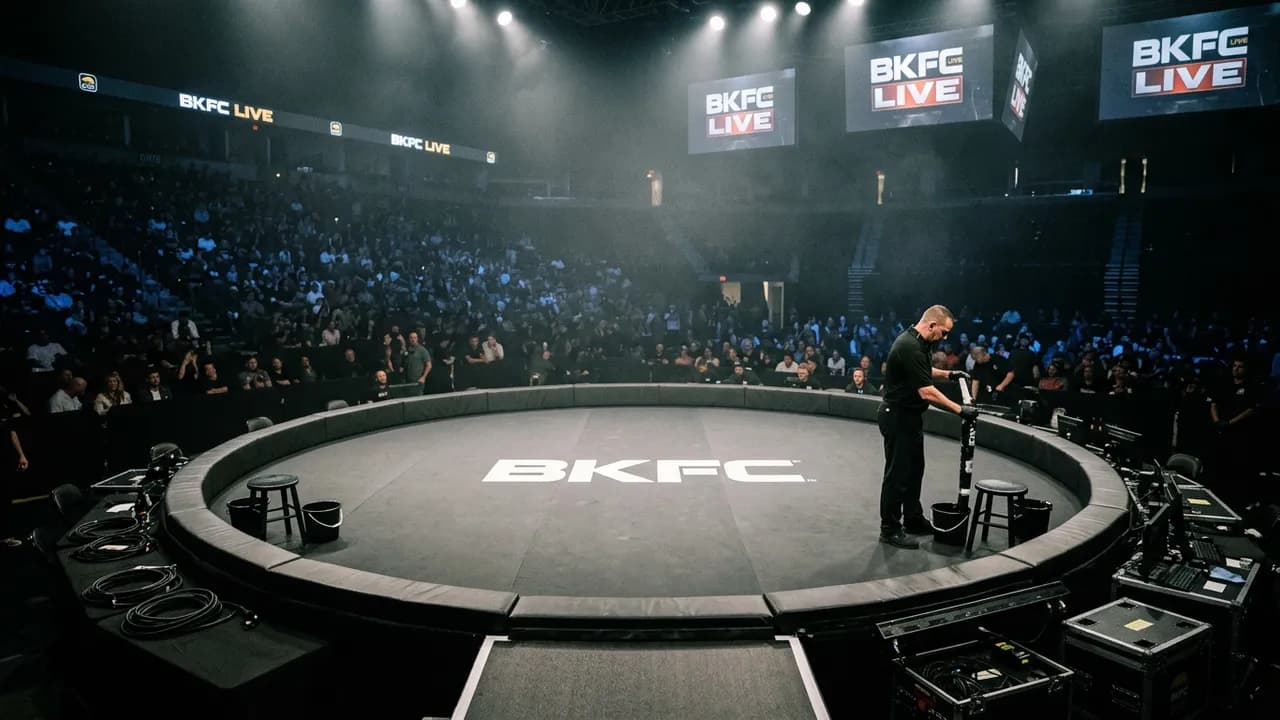
BKFC sits at the intersection of underground culture and professional legitimacy. When it held its first event in June 2018, it became the first promotion to stage an official, state-sanctioned bare-knuckle boxing event in the United States since 1889 -- a gap of 129 years.
The numbers tell the story of BKFC's rise. The promotion saw a 100% increase in overall attendance in 2024, surpassed 250 million in social media reach, expanded to over 60 countries, and started 2025 with five consecutive sellouts. Events in markets like Salt Lake City draw upward of 10,000 fans.
BKFC's inaugural event also featured the first American-sanctioned women's bare-knuckle fight in modern history, establishing the promotion as a pioneer in multiple dimensions. The roster has attracted former UFC, Bellator, and boxing professionals seeking a new challenge -- or a second act.
Is BKFC truly "underground"? Purists would say no -- the events are sanctioned, regulated, and held in arenas. But BKFC's DNA is underground. Bare-knuckle fighting was forced underground for over a century by the adoption of the Queensberry Rules. BKFC brought it back to the surface, and its success has legitimized the broader bare-knuckle and underground fighting ecosystem.
Strengths: State-sanctioned legitimacy, global reach (60+ countries), high-profile fighters, strong attendance and PPV numbers, professional production. Weaknesses: Pricing may exclude the casual YouTube audience, some argue sanctioning removes the "underground" appeal.
3. King of the Streets (KOTS)
Location: Gothenburg, Sweden (events across Europe) Founded: ~2013 YouTube Subscribers: 500,000+ Format: No-rules fighting on concrete Website: N/A (primarily YouTube and social media)
KOTS is the most notorious underground fighting organization in the world. The tagline says it all: "No decisions. No rules. No rounds."
By 2018, prominent hooligans from across Europe were signing up for KOTS brawls, which regularly draw a million views on YouTube.
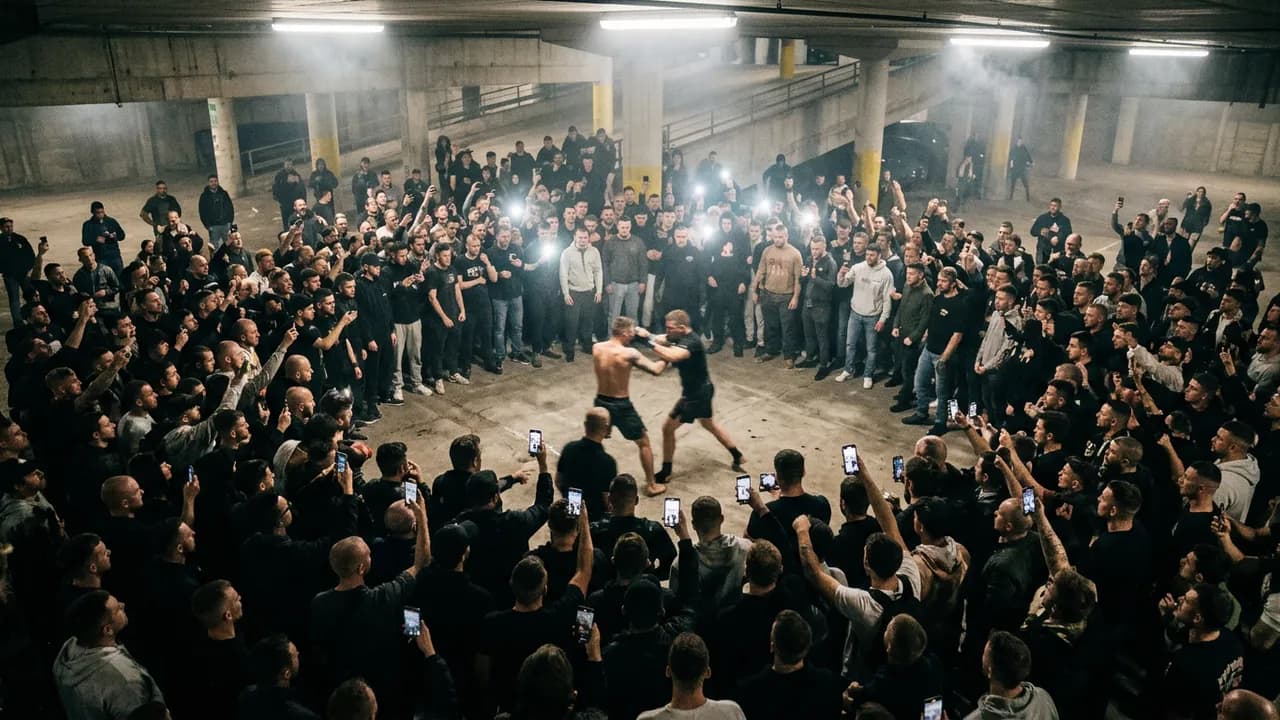
Founded in Gothenburg, Sweden around 2013, KOTS fights take place on concrete floors. Fighters' hands are bare. Headbutts, strikes to the spine, and techniques banned by every sanctioned combat sport are permissible. Fights end only by knockout, submission, or a fighter quitting. There are no judges, no scorecards, and no time limits.
By 2018, prominent hooligans from across Europe were signing up for KOTS brawls, which regularly draw a million views on YouTube. The organization's connection to European football hooligan culture and, more controversially, to far-right extremist movements has been extensively documented. A Swedish investigative report by Sports Politika exposed the alliance between KOTS, violent soccer hooliganism, and neo-Nazi networks.
None of this has slowed KOTS's growth. The YouTube channel has surpassed 500,000 subscribers, and individual fight videos routinely crack seven figures in views. The raw, unfiltered brutality of KOTS content generates the kind of engagement that algorithm-driven platforms reward.
KOTS ranks third because its cultural impact on the underground scene is enormous -- it has defined what "no rules" fighting looks like in the modern era -- but its audience and scale remain smaller than Streetbeefs and BKFC.
Strengths: Unmatched notoriety, high engagement per video, has defined the aesthetic of modern no-rules fighting, strong cultural impact. Weaknesses: Controversial associations with far-right movements, no safety infrastructure, legal vulnerability, smaller total audience.
4. Strelka
Location: St. Petersburg, Russia (events in 50+ cities) Founded: 2011 YouTube Subscribers: 1 million+ Format: Amateur MMA / standup fighting on sand
Strelka is the biggest fight club in Russia and one of the largest in the world, with more than 10,000 participants across Russia and the CIS countries. The name means "arrow" or "meeting point" in Russian -- a reference to the traditional locations where street fights were arranged.
The format is straightforward: no rounds, a sand ring instead of canvas, and the fight stops only when one fighter surrenders or cannot continue. Fights can be standup only or full MMA. Only amateurs and semi-professionals are allowed to compete, and Strelka's matchmakers carefully evaluate fighters before pairing them by approximate skill and size.
Strelka's YouTube channel has exceeded one million subscribers, and the organization has claimed to be second only to the UFC in YouTube views among fighting organizations. In 2025, Strelka expanded internationally with a World Championship series featuring semifinals in Thailand, Hong Kong, and Singapore, partnering with the American firm TronMMA.
The combination of massive scale, international expansion, and a surprisingly systematic approach to matchmaking makes Strelka one of the most significant underground operations globally. What separates it from a fully professional promotion is the amateur-only roster and the absence of sanctioning body oversight.
Strengths: Massive scale (50+ cities, 10,000+ participants), international expansion, strong YouTube presence, systematic matchmaking. Weaknesses: Limited international name recognition outside Russia, amateur-only format caps fighter quality, geopolitical factors may limit Western expansion.
5. Top Dog Fighting Championship
Location: Moscow, Russia Founded: 2020 YouTube Subscribers: 1.5 million+ Format: Bare-knuckle fighting in a hay bale ring
Top Dog FC is Russian bare knuckle's best-kept secret -- though with 1.5 million YouTube subscribers and individual videos exceeding 13 million views, it is not much of a secret anymore.
The promotion began in 2020, broadcasting fights from parking lots during the pandemic. The format was immediately distinctive: fighters compete bare-knuckle in a circle of hay bales, wearing jeans or sweatpants instead of boxing trunks. The aesthetic was deliberately underground -- raw, industrial, stripped of the polish that defines mainstream combat sports.
But the fighters are anything but amateur. Every Top Dog competitor has a trained background in boxing, kickboxing, or MMA. Naim "Samurai" Davudov, a Top Dog standout, has been ranked number six on Bare Knuckle Nation's pound-for-pound list. The combination of professional-level skill with a gritty underground presentation is exactly what makes Top Dog compelling.
The promotion has since moved from parking lots to Moscow sports arenas, renting out proper venues while maintaining its underground aesthetic. This upward trajectory -- combined with growing Western awareness -- positions Top Dog as one of the most dynamic organizations in the underground space.
Strengths: High fighter quality, distinctive aesthetic, rapid growth, strong YouTube presence (1.5M subscribers), most-watched video at 13M+ views. Weaknesses: Limited to Russia, language barrier restricts Western audience, relatively short track record (founded 2020).
6. BKB (BKB Bare Knuckle Boxing)
Location: Miami, Florida (cards in the US, UK and Mexico) Founded: 2015 Format: Bare-knuckle boxing (sanctioned in some jurisdictions) Website: bkbbareknuckle.com
Founded in 2015 by Jim Freeman and Joe Smith-Brown, BKB hosted over 40 events before being acquired by BYB Extreme in May 2024.
BKB is the dominant bare-knuckle boxing promotion in the United Kingdom and a major force globally. Founded in 2015 by Jim Freeman and Joe Smith-Brown, BKB hosted over 40 events before being acquired by BYB Extreme in May 2024. BYB Extreme -- founded by former MMA fighter Dhafir "Dada 5000" Harris and NASCAR team owner Mike Vazquez -- rebranded entirely under the BKB name in February 2025.
The combined entity has been on an aggressive expansion path. In late 2025, BKB acquired Bad To The Bone (BTTB), the longest-running independent bare-knuckle fighting promotion in the United Kingdom, and appointed Stefan Hanks as UK COO and matchmaker. This consolidation has positioned BKB as the clear market leader for bare-knuckle boxing in the UK, with ambitions to challenge BKFC globally.
BKB operates in a space between underground and fully sanctioned. Some events carry commission approval; others operate in territories where bare-knuckle regulations are less defined. This hybrid status gives BKB the credibility of regulation with the edginess of the underground.
Strengths: UK market dominance, aggressive acquisition strategy, growing roster through BTTB merger, international ambitions. Weaknesses: Smaller global audience than BKFC, brand confusion from multiple mergers and name changes, still establishing identity post-rebrand.
7. Rough N Rowdy
Location: West Virginia, USA (touring events) Founded: Originally a local tradition; acquired by Barstool Sports in 2017 Format: Amateur boxing Website: roughnrowdybrawl.com
Rough N Rowdy is the most commercially successful amateur fighting operation in the United States. What began as a small-town West Virginia tradition in the "forgotten town" of Welch -- where untrained fighters squared off against childhood friends while the crowd cheered for their favorite ring girl -- has become a national PPV phenomenon under Barstool Sports.
The numbers are impressive for an amateur event. Individual RNR cards feature 20 to 50+ fights, sold as live PPV for $20. One five-hour tournament drew 41,000 PPV buys. The promotion now produces more than 12 live events per year, touring across the United States.
Rough N Rowdy's appeal is its chaotic amateurism. The fighters are bartenders, construction workers, office workers, and random people who signed up on a dare. The skill level is low by design, which creates unpredictable, crowd-pleasing brawls. Combined with Barstool's massive media reach and irreverent commentary style, RNR has found a lucrative niche between professional boxing and barroom entertainment.
Strengths: Strong PPV numbers (41,000+ buys per event), Barstool Sports media machine, accessible price point, high entertainment value, touring model. Weaknesses: Intentionally low fighter quality limits combat sports credibility, entirely dependent on Barstool's brand and audience, limited international reach.
Watch Rough N Rowdy on YouTube
8. Gamebred Bareknuckle MMA
Location: Miami, Florida, USA Founded: 2021 Format: Bareknuckle MMA (sanctioned) Website: gamebredbareknuckle.com
Gamebred Bareknuckle MMA is the first and only professional bareknuckle MMA league in the United States, founded by retired UFC superstar Jorge Masvidal. The premise: strip MMA down to its primal essence by removing the gloves.
Fights follow the Unified Rules of MMA with modifications -- no gloves, three five-minute rounds, no kicks or knees to the head of downed opponents. The format sits in a unique space between bare-knuckle boxing (standup only) and traditional MMA (with gloves), offering something genuinely novel.
Gamebred has attracted a roster that would be the envy of most mid-tier MMA promotions. Former UFC fighters Junior dos Santos, Fabricio Werdum, Roy Nelson, Alan Belcher, and Anthony Smith have all competed under the Gamebred banner. In 2026, the promotion is running dual $500,000 tournaments at lightweight and heavyweight, with events scheduled for April and May in Miami.
Masvidal's star power and the novelty of gloveless MMA give Gamebred significant potential, but the promotion is still establishing itself. Eight events in five years is a modest pace, and the PPV model has not yet matched the viewership of free YouTube-based organizations.
Strengths: Unique format (only professional bareknuckle MMA league), high-profile fighters, Jorge Masvidal's name recognition, $500K tournament structure in 2026. Weaknesses: Modest event frequency (8 events in 5 years), still building consistent audience, high dependence on Masvidal's personal brand.
Watch Gamebred Bareknuckle MMA on YouTube
9. The Scrapyard
Location: Gig Harbor, Washington, USA Founded: 2020 Format: Backyard kickboxing, MMA, boxing Website: N/A (primarily YouTube and Instagram)
The Scrapyard is the Pacific Northwest's biggest backyard fighting operation and one of the fastest-growing underground organizations in the United States. Operating out of a wooded lot in Gig Harbor, Washington, The Scrapyard hosts monthly events featuring kickboxing, MMA, and boxing -- with summer events sometimes including up to 50 fights in a single day.
The Instagram account has surpassed 1.5 million followers, and the YouTube channel is closing in on one million subscribers.
The Scrapyard's growth has been explosive. The Instagram account has surpassed 1.5 million followers, and the YouTube channel is closing in on one million subscribers. The organization has worked with high-profile figures including former UFC flyweight champion Demetrious "Mighty Mouse" Johnson and YouTube phenomenon IShowSpeed.
What distinguishes The Scrapyard from many backyard operations is its commitment to safety within an unregulated framework. Washington's reputation for tolerating mutual combat rests on a Seattle city ordinance rather than state law, so the location offers little real legal cover. The organization employs volunteer referees, judges, and medics at every event. Fighters must check in at a medical tent before and after their match, and participants must be between 18 and 60 years old.
Organizer Steve Hagara has built The Scrapyard into a legitimate community institution while maintaining the raw, grassroots energy that makes backyard fighting appealing. The combination of safety consciousness, celebrity collaborations, and massive social media growth makes The Scrapyard one to watch.
Strengths: Rapid growth (1.5M Instagram followers, approaching 1M YouTube subscribers), safety-conscious for a backyard operation, celebrity collaborations. Weaknesses: Single-location operation limits scale, dependent on one organizer, still building toward the audience size of top-tier organizations.
Watch The Scrapyard on YouTube
10. Calcio Storico Fiorentino
Location: Florence, Italy Founded: 16th century (modern revival in 1930) Format: 27-on-27 combat sport (football, rugby, wrestling, bare-knuckle fighting) Website: N/A (operated by the city of Florence)
Calcio Storico is the oldest organized fighting event still in existence, and it is unlike anything else on this list. Three matches are played each year in Florence's Piazza Santa Croce during the third week of June, culminating in a final on June 24, the feast of Saint John the Baptist.
The sport combines football, rugby, wrestling, and bare-knuckle boxing into a 50-minute, 27-versus-27 brawl on a sand-covered field. Four teams -- Blue (Santa Croce), White (Santo Spirito), Red (Santa Maria Novella), and Green (San Giovanni) -- represent the historic quarters of Florence. The stated objective is to get a ball into the opposing team's net, but the physical combat between players dominates the action.
Sucker punches, kicks to the head, and gang-ups are now banned -- rules added after centuries of injuries and occasional fatalities. A 2007 brawl resulted in 50 players being arrested and a one-year ban of the event. The reported injury rate is approximately 50 percent per match.
Calcio Storico's ranking here reflects cultural impact rather than modern audience size or production value. This is a 500-year-old blood sport that survived wars, political upheaval, and Mussolini's Italy. It is the historical ancestor of every organized fighting event on this list, and it continues to draw thousands of spectators to Florence every June.
Strengths: 500+ years of history, massive cultural significance, unique format (27v27), annual spectacle that draws international attention. Weaknesses: Only three events per year, no digital distribution strategy, geographically fixed to Florence, not growing in the way modern organizations are.
Honorable Mentions
Several organizations narrowly missed the top 10:
- Felony Fights: Historically significant but no longer actively operating. Featured fights between convicted felons with no rules. Attracted major controversy and legal action.
- Dada 5000's Backyard Fights: The backyard fighting career of Dhafir "Dada 5000" Harris helped popularize the format before his involvement in BYB Extreme and BKB.
- Kimbo Slice's Backyard Fights: Not an organization per se, but Kevin "Kimbo Slice" Ferguson's early-2000s backyard fight videos were arguably the catalyst for the entire modern underground fighting movement on the internet.
Methodology
Organizations were evaluated on a composite score across five equally weighted categories:
| Category | Weight |
|---|---|
| Audience Size | 20% |
| Fighter Quality | 20% |
| Production Quality | 20% |
| Cultural Impact | 20% |
| Influence on the Scene | 20% |
Rankings reflect the state of the scene as of March 2026 and will be updated as the landscape evolves. The underground fighting ecosystem is dynamic -- organizations rise and fall rapidly, and a single viral moment can reshape the hierarchy overnight.
For definitions of terms used in this article, see our Underground Fighting Glossary. For answers to common questions about the scene, visit our Underground Fighting FAQ.