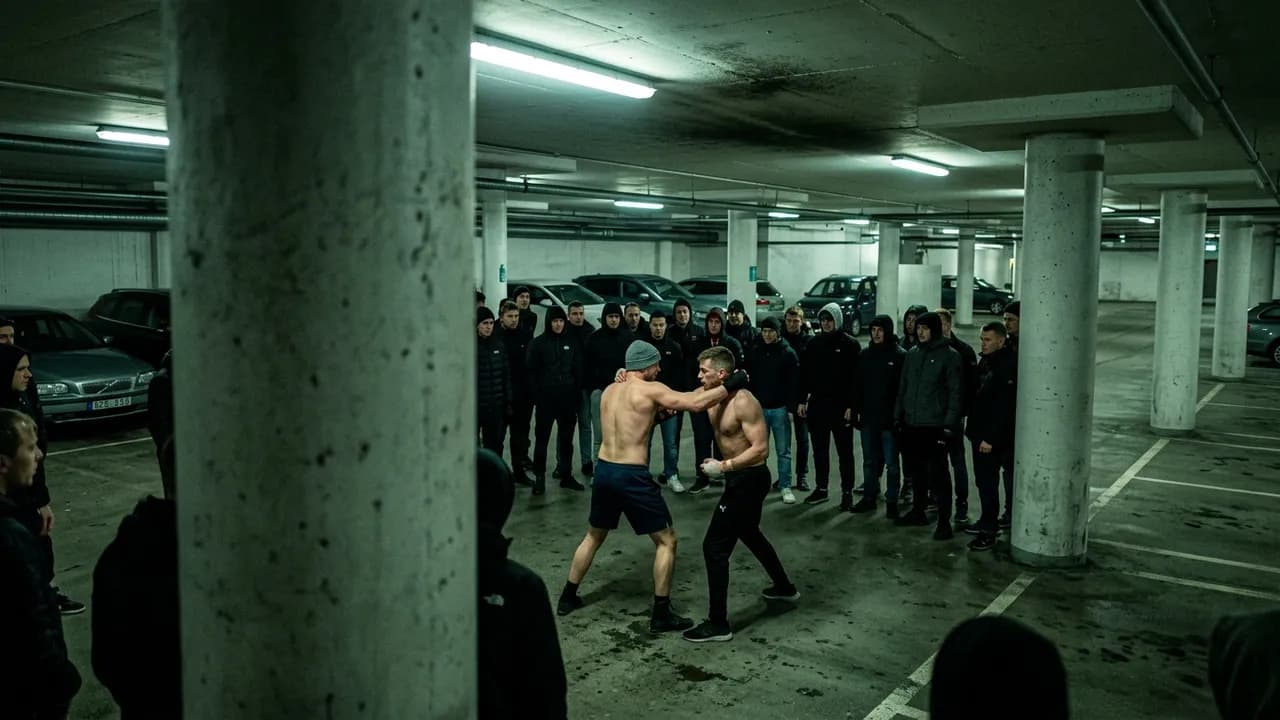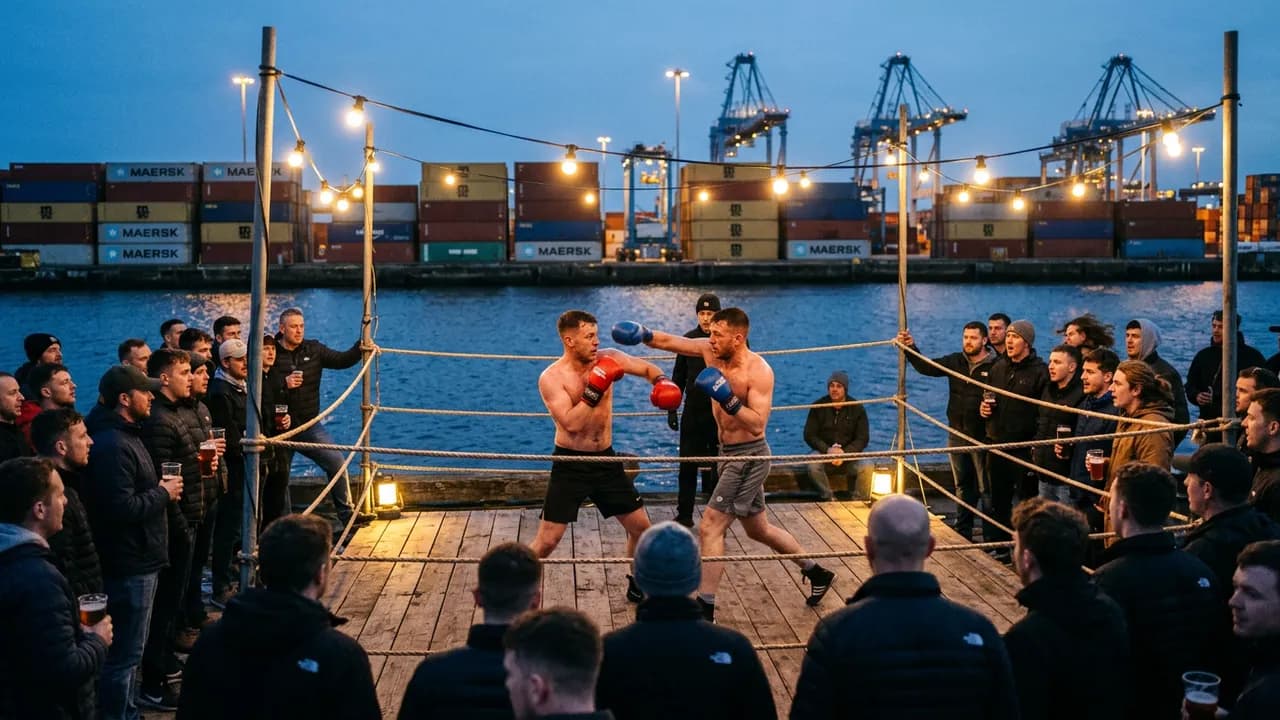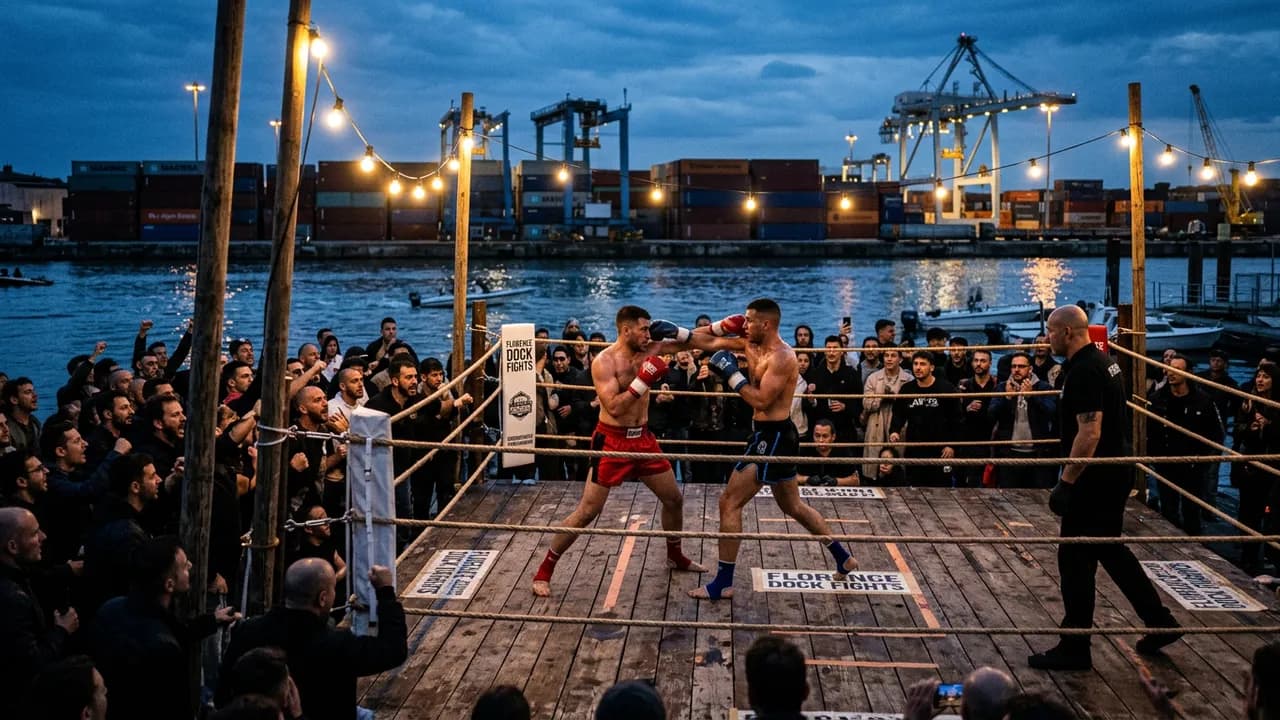
Florence is the cradle of the Renaissance, the city of Brunelleschi's dome and Botticelli's brushstrokes, a place synonymous with the highest achievements of Western civilization. It is also the home of Calcio Storico Fiorentino -- a sport so violent, so unrelentingly brutal, that it makes every other form of organized fighting on this site look like a controlled exercise in restraint.
Calcio Storico is not underground in the conventional sense. It is played annually in Piazza Santa Croce, one of the most famous public squares in Italy, in front of thousands of spectators, with the full endorsement of the city government. It is also not modern. The game dates to the sixteenth century, and its current form preserves a level of sanctioned violence that would be illegal in virtually any other sporting context in the Western world. Head-butting, punching, elbowing, choking, and kicking are all permitted. Twenty-seven men on each side fight for fifty minutes on a sand-covered field with almost no protective equipment. The result is something that exists in a category entirely its own -- part sport, part combat, part civic ritual, and wholly Florentine.
History
The origins of Calcio Storico are rooted in the military training exercises and public spectacles of Renaissance Florence. The game is believed to derive from the Roman sport of harpastum, filtered through centuries of Florentine civic culture. By the fifteenth and sixteenth centuries, it had become an established tradition among the Florentine aristocracy and their supporters. Matches were played in the city's major piazzas, with teams representing the four historical quarters of Florence.
The most famous match in the game's history took place on February 17, 1530, during the Siege of Florence by the forces of Emperor Charles V and Pope Clement VII. While the city was under bombardment, the Florentines staged a Calcio Storico match in Piazza Santa Croce as an act of defiance -- a message to the besieging army that the city's spirit could not be broken by military force. The match has become a foundational myth of Florentine identity, a demonstration that the game is inseparable from the city's sense of itself.
After centuries of intermittent play, Calcio Storico was formally revived in the 1930s under Benito Mussolini's fascist government, which promoted traditional Italian sports and spectacles as expressions of national identity. The revival gave the game its modern structure: annual matches played during the third week of June, with the four historical teams competing in a tournament format.
The game was suspended for a year in 2007 after a particularly violent match degenerated into a fifty-player brawl that exceeded even the sport's extraordinarily high tolerance for violence. The incident prompted a review of the rules and led to modest reforms, but the essential character of Calcio Storico -- organized, sanctioned, and extreme violence -- remained intact.
Organizations
The Four Historical Teams
Calcio Storico is not run by a fight promotion or a sporting federation in the modern sense. It is organized by the city of Florence and governed by traditions that predate every institution currently involved. The four teams represent the four historical quarters of Florence, each with its own colors, traditions, and fiercely loyal supporters.
Santa Croce (Azzurri / Blues): The team of the quarter that contains Piazza Santa Croce itself, the venue for all modern Calcio Storico matches. The Azzurri are the home team in every meaningful sense, playing in front of their own neighborhood.
Santo Spirito (Bianchi / Whites): Representing the Oltrarno district on the south bank of the Arno River, the Bianchi draw from a quarter known for its artisan traditions and working-class character. Santo Spirito has a reputation for fielding physically imposing teams.
Santa Maria Novella (Rossi / Reds): The team of the quarter surrounding the great Dominican church. The Rossi carry the colors of one of Florence's most prominent historical neighborhoods.
San Giovanni (Verdi / Greens): Named for the Baptistery of San Giovanni, the spiritual heart of Florence. The Verdi represent the city's central quarter and carry the association with Florence's most sacred civic monument.
The rivalries between these four teams are not manufactured for entertainment. They are rooted in centuries of neighborhood identity and civic competition. Players are required to have been born in, or to have long-term residency in, the quarter they represent. There are no transfers, no free agency, and no salaries. Calcio Storico is strictly amateur and unpaid. The players fight for their neighborhood, for honor, and for the continuation of a tradition that predates the modern nation of Italy by three hundred years.
The Game
A Calcio Storico match is fifty minutes of continuous play on a sand-covered field erected in Piazza Santa Croce. Each team fields twenty-seven players. There are no substitutions -- if a player is injured and cannot continue, his team plays on shorthanded.
Thousands of spectators fill the temporary stands erected around the field.
The official objective is to score goals by throwing or kicking a ball into the opposing team's net. In practice, the game is as much about fighting as it is about scoring. Players are permitted to use their fists, elbows, heads, and feet against opponents. Sucker punches are prohibited, as are kicks to the head of a downed opponent, but the range of permissible violence is vast. Wrestling, choking holds, and sustained ground-and-pound are all within the rules.
The result is a spectacle that resembles a medieval battlefield more than a modern sporting event. Matches regularly produce broken bones, concussions, and lacerations. The sand field becomes streaked with blood. Players who are knocked unconscious are carried off to the sides while the game continues around them. The violence is not incidental to the sport -- it is the sport, or at least half of it.
The atmosphere in Piazza Santa Croce during the tournament is extraordinary. Thousands of spectators fill the temporary stands erected around the field. The teams march in wearing historical costumes. Drummers and flag-throwers perform. The pageantry is Renaissance in origin and execution, a deliberate recreation of the civic spectacles that accompanied the original matches five hundred years ago. And then the whistle blows, and the pageantry gives way to fifty minutes of controlled mayhem.
Notable Fighters
Calcio Storico does not produce fighters in the professional sense. The players are amateur, unpaid, and largely unknown outside Florence. But within the city, the calcianti -- the players -- are figures of enormous local prestige. Being selected to represent your quarter in the annual tournament is one of the highest honors available to a Florentine, comparable in local significance to playing for a professional sports team.
The anonymity of the players outside Florence is itself significant. In an era when underground fighters build social media followings and parlayed internet fame into professional careers, the calcianti remain purely local figures. Their fame does not extend beyond the city walls. Their motivation is not content creation or career advancement -- it is the continuation of a tradition that has outlasted empires, plagues, and wars.
How to Get Involved
Calcio Storico is not open to outsiders. Participation is restricted to residents of the four historical quarters of Florence. The selection process is managed by each team's organizational structure, and earning a place on the roster requires both demonstrated fighting ability and legitimate ties to the neighborhood.
For spectators, the annual tournament during the third week of June is the primary point of access. Tickets for Piazza Santa Croce are available through the city of Florence and authorized sellers, though demand consistently outstrips supply. The matches are among the most sought-after spectacles in Italy, attracting both Florentine locals and international visitors.
Those who cannot attend in person can find footage of Calcio Storico matches on YouTube and various sports documentary platforms. The game has been featured in numerous documentaries and television programs, including coverage by international sports networks fascinated by the combination of historical pageantry and extreme violence.
For combat sports enthusiasts visiting Florence outside the June tournament, the city offers a standard range of boxing and martial arts gyms. However, the unique appeal of Florence for the underground fighting world is Calcio Storico itself -- there is nothing else like it anywhere on earth.
Related Cities
- Gothenburg -- Birthplace of King of the Streets, another fighting tradition rooted in a specific city's identity
- Berlin -- Holmgang events draw on medieval combat traditions, a different branch of Europe's fighting heritage
- Dublin -- Irish bare knuckle traditions share Calcio Storico's emphasis on cultural identity and generational continuity