The world of underground fighting has its own language -- a dense vocabulary pulled from centuries of bare-knuckle prizefighting, Brazilian vale tudo, Russian street fight culture, and the modern backyard brawl scene. Whether you are watching Streetbeefs for the first time or deep into the KOTS rabbit hole, knowing the terminology separates the casual viewer from the informed one.
This glossary covers 65+ terms spanning historical prizefighting slang, modern underground fight culture, organizational jargon, and combat terminology. Entries are arranged alphabetically for quick reference.
A
Ammy / Amateur A fighter who competes without professional licensing or sanctioning body oversight. Most backyard and underground organizations exclusively feature amateur fighters. Strelka specifically prohibits professional fighters from competing.
Anything Goes A broad descriptor for fights with minimal or no rules. Sometimes used interchangeably with "no rules," though even the most extreme organizations typically prohibit at least one or two actions (biting, eye gouging, etc.). See also: Vale Tudo.
B
Backyard Fighting Any organized fighting that takes place in an informal outdoor setting -- a literal backyard, a field, a parking lot, or any venue outside a licensed arena. Streetbeefs is the most recognized backyard fighting organization in the world, founded in Harrisonburg, Virginia in 2008 and holding its monthly cards in Winchester, Virginia since January 2024.
Bare Knuckle Fighting without boxing gloves. Fighters may or may not use hand wraps depending on the organization. Bare-knuckle fighting predates gloved boxing by centuries and has experienced a massive resurgence through organizations like BKFC, BKB, and Top Dog FC.
Beef / Beef Fight A fight arranged to settle a personal dispute or grudge. The term is central to Streetbeefs, whose entire founding mission was giving people a controlled environment to settle "beefs" with fists instead of guns. The phrase "fists up, guns down" encapsulates this philosophy.
BKB Bare Knuckle Boxing. A bare-knuckle promotion founded in Britain in 2015 by Jim Freeman and Joe Smith-Brown. BYB Extreme acquired it in 2024 and took the BKB name in 2025; it is now Miami-based and runs cards in the US and the UK. See: BKB profile.
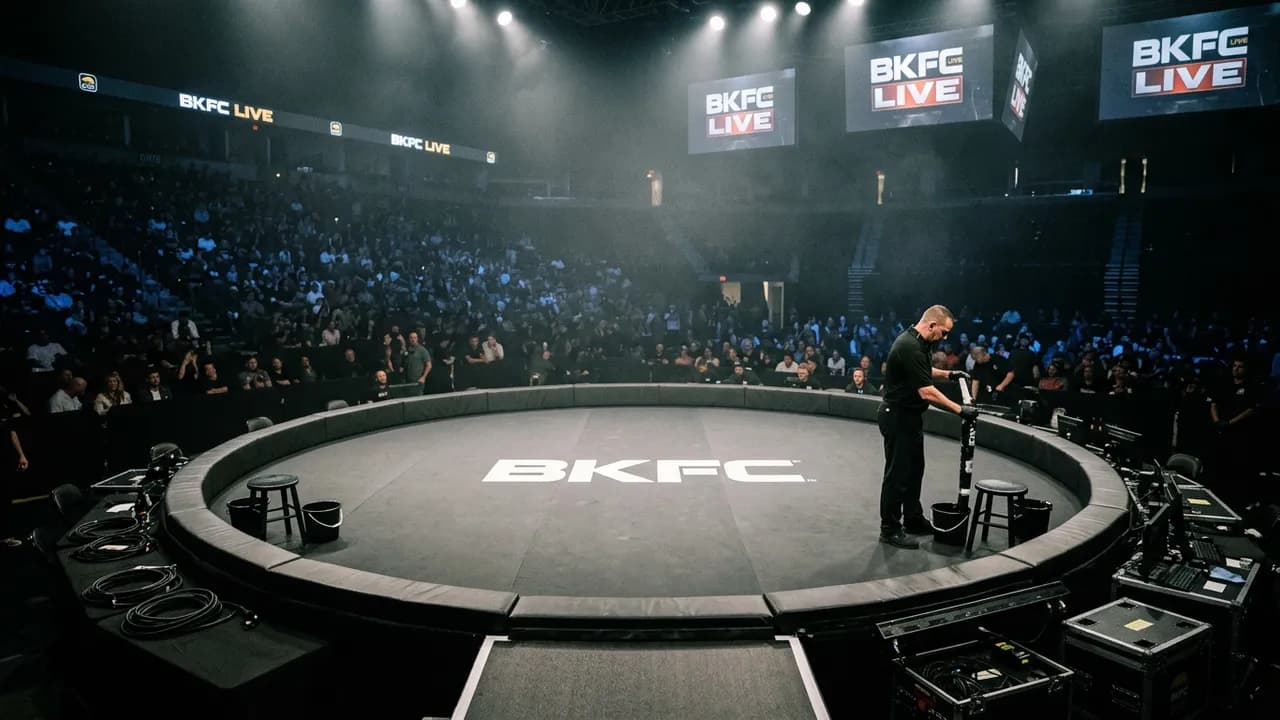
BKFC Bare Knuckle Fighting Championship. The first promotion to hold a state-sanctioned bare-knuckle boxing event in the United States since 1889. Founded in 2018, BKFC has grown into a global operation spanning 60+ countries. See: BKFC profile.
Blood Round An informal term for a fight round where visible bleeding occurs. In some underground contexts, first blood may trigger a stoppage or side bet. Originates from the bare-knuckle era when "first blood" was a common wagering proposition.
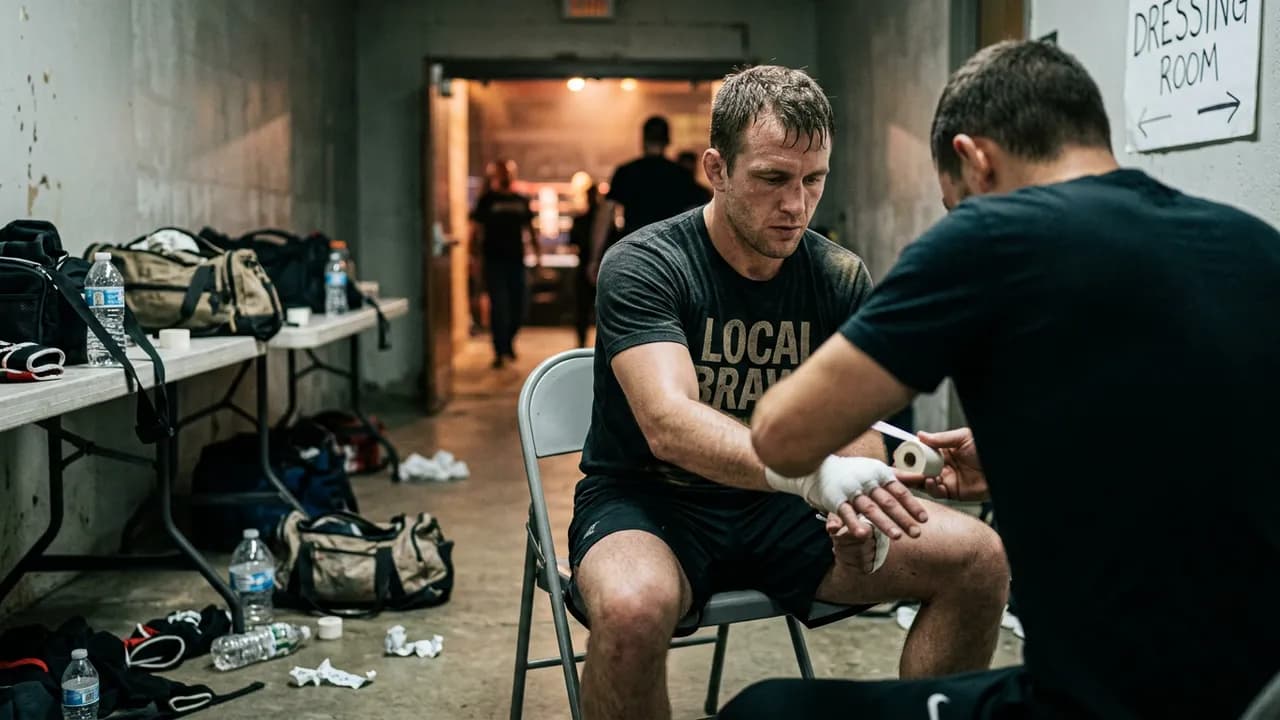
Bottle Man / Bucket Man The corner assistant responsible for providing water and basic aid between rounds. In backyard fighting, this role is typically informal -- someone handing over a water bottle and a towel. The historical equivalent was the "second," who served a similar function in prizefights.
Broughton Rules The first codified rules of boxing, drafted by English champion Jack Broughton in 1743. Broughton's Rules established the concept of a defined fighting area, a count for downed fighters, and prohibitions on hitting a man when down. These rules governed prizefighting for nearly a century before the London Prize Ring Rules replaced them.
Bucket Brigade A slang term for the informal support crew that accompanies a fighter to an underground or backyard event. Unlike a professional corner team with a licensed cutman and coach, the bucket brigade might consist of friends carrying a towel, a water jug, and a first-aid kit.
C
Calcio Storico An ancient Florentine sport combining elements of football, rugby, wrestling, and bare-knuckle boxing. Played annually in Florence, Italy since the 16th century, the game pits four teams of 27 players each against one another on a sand-covered field. Sucker punches, kicks to the head, and gang-ups are banned, but virtually everything else is legal. Often cited as the oldest organized fighting sport still in existence. See: Calcio Storico profile.
Card The full lineup of fights scheduled for an event. A "stacked card" means the lineup features compelling matchups. Organizations like Rough N Rowdy routinely produce cards with 20 or more fights.
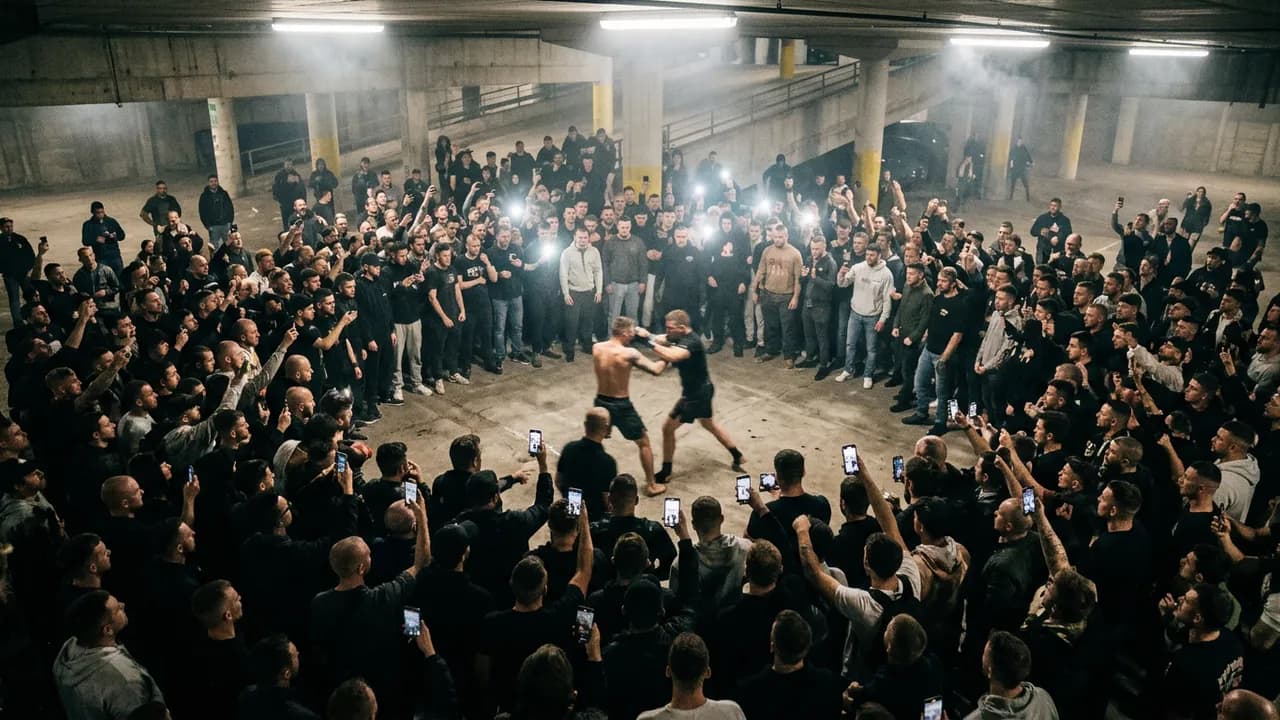
Cement / Concrete Fighting Fighting on a hard, unpadded surface -- typically a concrete floor. KOTS is the most prominent organization where fights take place directly on concrete, adding a layer of danger far beyond what occurs on canvas or grass.
03 / Up next / D
Circle The fighting area in organizations that do not use a traditional ring or cage. Top Dog FC uses a circle of hay bales. Strelka uses a sand circle. The circle replaces the squared ring as the combat boundary.
Clinch A close-range grappling position where both fighters are standing and locked together. In bare-knuckle boxing, clinch fighting is generally more permissible than in gloved boxing. Fighters can throw punches from the clinch position -- a throwback to historical prizefighting rules.
Come to Scratch A phrase from the London Prize Ring era. A line was scratched in the dirt at the center of the ring, and at the start of each round, both fighters had to walk to the line and place their toes against it. A fighter who could not "come to scratch" within eight seconds after the 30-second rest period was declared the loser. The phrase lives on in everyday English as "up to scratch."
Crossed A historical bare-knuckle term for a fighter who has agreed in advance to lose the fight. A "crossed" fighter takes a dive, typically for money. The equivalent modern term is "throwing a fight" or "taking a dive."
D
Dojo Storm The practice of walking into a martial arts school and challenging the instructor or top student to a fight. Dojo storming was a key feature of early vale tudo culture in Brazil, where the Gracie family famously challenged practitioners of other fighting styles to prove the effectiveness of Brazilian Jiu-Jitsu.
Donnybrook A wild, chaotic brawl involving multiple participants. Named after the Donnybrook Fair in Dublin, Ireland, which was notorious for its drunken fights. In modern underground fighting, the term sometimes describes disorganized multi-man events.
E
Exhibition A fight conducted for entertainment or demonstration purposes rather than competitive record. Some underground organizations classify their events as exhibitions to navigate legal gray areas around sanctioning and licensing.
F
Felony Fights A now-defunct underground fighting operation that emerged around 2005 in California, featuring fights between convicted felons with minimal rules. The organization attracted controversy and legal scrutiny. See: Felony Fights profile.
Fight Club A generic term for any organized underground fighting group. Popularized in mainstream culture by Chuck Palahniuk's 1996 novel and its 1999 film adaptation. In reality, fight clubs range from informal backyard setups to highly produced operations like Streetbeefs or KOTS.
First Blood A betting proposition or stoppage criterion based on the first visible cut or bleeding. In the bare-knuckle era, first blood was one of the most popular side bets. Some modern underground organizations still use first blood as a potential ending condition.
G
Gate The total revenue generated from ticket sales at a live event. In underground fighting, many events have no physical gate because they operate on a free-admission or invite-only basis, generating revenue instead through YouTube views and sponsorships.
Gloveless MMA Mixed martial arts fought without padded gloves. Distinguished from bare-knuckle boxing by the inclusion of kicks, takedowns, and ground fighting. Gamebred Bareknuckle MMA is the most prominent professional gloveless MMA promotion.
Gracie Challenge Open invitations issued by members of the Gracie family of Brazil, challenging martial artists of any style to no-holds-barred fights. The Gracie Challenges were a driving force behind the development of vale tudo and, eventually, the founding of the UFC.
H
Hay Bale Ring A fighting enclosure formed by stacking hay bales in a circle or square. Top Dog FC in Russia is the most well-known organization to use a hay bale ring, creating a rustic aesthetic that reinforces the underground atmosphere. The hay bales serve as both a boundary and a cushion if fighters are pushed to the edge.
Holmgang Originally a medieval Scandinavian legal duel fought on a small island or demarcated area, with strict weapon and shield protocols. In the modern era, the name has been adopted by an illegal European fight club based in Germany where participants fight with medieval weapons and minimal protective gear. See: Most Dangerous Fight Clubs.
Hype Crew The entourage that accompanies a fighter, serving to build energy and intimidate opponents. In underground and backyard fighting, the hype crew often doubles as the fighter's corner team, security detail, and camera crew. A loud hype crew can influence crowd momentum and, in unregulated settings, even referee decisions.
I
Invitational An event where fighters are selected by organizers rather than applying through open registration. KOTS operates largely on an invitational basis, with matchmakers scouting fighters from hooligan firms and combat sports gyms.
K
KO Only A fight format where the only way to win is by knockout. No decisions, no submissions, no draws. KOTS operates under a KO-only format -- fights continue until someone is stopped, quits, or cannot continue.
10 / Up next / L
KOTS King of the Streets. A Swedish-origin underground fighting organization founded around 2013 in Gothenburg. Known for its concrete fighting surface, no-rules format, and connections to European football hooligan culture. See: KOTS profile.
L
London Prize Ring Rules A set of boxing rules published in 1838 and revised in 1853, governing bare-knuckle prizefighting for over a century. These rules established the scratch line, 30-second rest periods, and the concept of a round ending when a fighter was knocked or thrown down. The London Prize Ring Rules were eventually replaced by the Marquess of Queensberry Rules, which introduced gloves and timed rounds.
M
Matchmaker The person responsible for pairing fighters for bouts. In underground fighting, the matchmaker's role is critical because there are no official rankings or records to consult. A good matchmaker creates competitive, entertaining fights; a bad one creates mismatches. Streetbeefs founder Chris "Scarface" Wilmore served as the original matchmaker for his organization.
Mutual Combat The popular idea that two consenting adults can agree to fight without committing assault. No US state has a true mutual combat law. Washington's reputation comes from a Seattle city ordinance rather than state law, and no rule requires a police officer to oversee the fight. Texas has a consent defense to assault that fails if either participant sustains serious bodily injury. Many backyard fighting organizations operate in legal gray areas that touch on mutual combat principles.
N
NHB (No Holds Barred) An older term for fights with minimal rules, commonly used in the 1990s to describe early UFC events and vale tudo. The term predates "MMA" as the standard descriptor for mixed-rules fighting. NHB events were the direct predecessors of modern mixed martial arts.
No Rules A fight format with no codified regulations. In practice, even "no rules" organizations enforce certain baseline prohibitions. KOTS advertises "no rules" but fights are still stopped when a fighter is clearly finished.
O
Open Challenge A public invitation for anyone to step up and fight. Open challenges are common in backyard organizations where the roster is fluid. Some organizations hold open-challenge events where fighters show up without a pre-arranged opponent and are matched on the spot.
P
P4P (Pound for Pound) A ranking methodology that evaluates fighters regardless of weight class, determining who is the most skilled relative to their size. In underground fighting, P4P rankings are informal and often debated because there are no centralized records. Bare Knuckle Nation maintains a P4P list for bare-knuckle fighters across organizations.
Pit The sunken or enclosed area where fights take place in certain underground organizations. Used interchangeably with "ring" or "circle" depending on the organization's setup.
Prizefighting Fighting for money. The term dates to the bare-knuckle era when fighters literally fought for a cash prize. Historically, prizefighting was illegal in most jurisdictions, pushing the sport underground. Modern bare-knuckle and underground organizations continue the prizefighting tradition, though purses vary wildly -- from $50 at informal backyard events to six figures at BKFC.
Purse The predetermined payment a fighter receives for competing. In underground fighting, purses are often minimal or nonexistent. Streetbeefs fighters historically received no purse at all, fighting purely to settle disputes. At the professional end, BKFC fighters can earn significant purses comparable to mid-level MMA paydays.
Q
Queensberry Rules The Marquess of Queensberry Rules, published in 1867, which introduced gloves, three-minute rounds, the ten-count, and weight classes to boxing. The Queensberry Rules effectively ended the bare-knuckle era in professional boxing and remain the foundation of modern boxing regulations. Their introduction pushed bare-knuckle fighting underground for over a century.
R
Ring The designated fighting area, regardless of its actual shape. In underground fighting, the "ring" might be a roped-off section of a backyard, a chalk circle on concrete, a hay bale enclosure, or a sand pit. The term is borrowed from traditional boxing and used loosely.
Ring Rust The deterioration of a fighter's skills and timing due to extended inactivity. Ring rust is common in underground fighting because events are irregular and fighters may go months between bouts.
Rough N Rowdy An amateur boxing event series originating in West Virginia, acquired by Barstool Sports in 2017. Features untrained or minimally trained fighters in short bouts. Sold as PPV events that regularly draw tens of thousands of buys. See: Rough N Rowdy profile.
S
Sand Ring A fighting area covered or bordered with sand. Strelka uses sand as its fighting surface, and Calcio Storico is played on a sand-covered field. Sand provides some cushion compared to concrete but creates additional friction and footing challenges.
18 / Up next / T
Sanctioned An event that has been approved and regulated by a state athletic commission or equivalent governing body. Sanctioned events require pre-fight medical examinations, licensed referees, ringside physicians, and ambulance services. The opposite of sanctioned is "unsanctioned," which describes most underground fighting.
Seconds A fighter's corner team during a bout. In historical prizefighting, a fighter was allowed two seconds who could enter the ring between rounds to provide aid. The term survives in boxing tradition but is rarely used in underground contexts, where "corner" or "crew" is more common.
Smoker An unlicensed, unsanctioned fight card held privately. Smokers have existed since the early 20th century as a way for fighters to gain experience outside of official competition. The term comes from the smoke-filled rooms where these events were historically held. Gym smokers remain common in boxing and MMA.
Squabble / Squab Slang for a fight, particularly a spontaneous or street-level altercation. "Let's squabble" is an invitation to fight. The term is widely used in urban fight culture and on social media. In some backyard organizations, "squabble" specifically refers to a short, intense exchange with minimal setup.
Strelka A Russian street fighting organization founded in 2011 in St. Petersburg. The name means "arrow" or "meeting point" in Russian, referencing the traditional meeting spots where street fights were arranged. Strelka hosts amateur MMA events in nearly 50 cities across Russia and has over one million YouTube subscribers. See: Strelka profile.
T
Tap Out The act of physically tapping an opponent or the mat to signal submission and end the fight. In organizations that allow ground fighting and submissions, the tap out is the most common finish on the ground. Some KO-only organizations do not recognize tap outs.
Toe the Line Like "come to scratch," this phrase originates from the London Prize Ring, where fighters had to place their toes on a line at the start of each round to prove they were fit to continue. A fighter who could not toe the line lost the bout. The phrase is now used in everyday English to mean "conform to standards."
Top Dog FC A Russian bare-knuckle promotion that began broadcasting fights in early 2020 from parking lots and has grown into a major production, now renting Moscow sports arenas. Fights take place in a hay bale ring. The YouTube channel has over 1.5 million subscribers. See: Top Dog FC profile.
Trigon A three-sided fighting enclosure used in some underground and experimental combat sports promotions. The triangular shape creates unique tactical dynamics, as fighters must manage angles differently than in a square ring or circular cage. The Trigon format remains niche but has appeared in select European underground events.
U
Underground Any fighting activity that operates outside the official regulatory framework of state athletic commissions and sanctioning bodies. Underground fighting exists on a spectrum, from fully illegal operations with zero safety measures to semi-organized events that follow self-imposed rules but lack government oversight.
Unsanctioned An event held without the approval of a regulatory body. Unsanctioned does not necessarily mean illegal -- the legality depends on local assault and consent law, how the event is structured, and whether it is classified as a sporting event. Most backyard and underground organizations operate in an unsanctioned capacity.
V
Vale Tudo Portuguese for "anything goes." A Brazilian combat sport with origins in the early 1900s, characterized by minimal rules and open-style fighting. Vale tudo is the direct ancestor of modern MMA. The Gracie family's vale tudo challenges in Brazil led directly to the creation of the UFC in 1993. From the 1960s through the 1990s, vale tudo existed largely as an underground subculture in Brazil.
W
Walkout A fighter's entrance to the fighting area. In underground contexts, walkouts range from a fighter simply stepping off the sidewalk into a backyard ring to elaborate productions with music and entourage. Top Dog FC and KOTS have developed distinctive walkout styles that contribute to the atmosphere.
Warm Body Derogatory term for a fighter who has been brought in primarily to lose -- an uncompetitive opponent selected to make the other fighter look good. The opposite of a well-matched fight. Warm bodies are a persistent problem in underground fighting where there are no ranking systems or official records.
Y
Yard Shorthand for the fighting venue, particularly in backyard fighting culture. Streetbeefs refers to its primary location as "Satan's Backyard." The term carries connotations of informality and community -- fighters are "coming to the yard" rather than "entering the arena."
Z
Zero-Padding Fighting with absolutely no hand protection -- no gloves, no wraps, no tape. While bare-knuckle organizations like BKFC allow wrist wraps, zero-padding means nothing at all on the hands. KOTS and some street fighting operations mandate fully bare hands.
Key Organizational Abbreviations
| Abbreviation | Full Name | Type |
|---|---|---|
| BKFC | Bare Knuckle Fighting Championship | Professional bare-knuckle boxing |
| BKB | BKB Bare Knuckle Boxing | Professional bare-knuckle boxing (UK) |
| KOTS | King of the Streets | Underground no-rules fighting |
| RNR | Rough N Rowdy | Amateur boxing events |
| GBKMMA | Gamebred Bareknuckle MMA | Professional gloveless MMA |
| TDFC | Top Dog Fighting Championship | Bare-knuckle fighting (Russia) |
| IVC | International Vale Tudo Championship | Historical vale tudo promotion |
| NHB | No Holds Barred | Generic term / fight format |
Historical Timeline of Key Terms
Understanding when certain terms entered the lexicon helps contextualize the evolution of underground fighting:
- 1743: Broughton Rules codified -- "seconds," "scratch line" enter the vocabulary
- 1838: London Prize Ring Rules published -- "come to scratch," "toe the line" formalized
- 1867: Queensberry Rules published -- "round," "count," "weight class" standardized
- 1910s-1960s: Vale tudo emerges in Brazil -- "anything goes" enters fighting language
- 1993: UFC 1 held -- "no holds barred," "octagon" enter mainstream
- 2005: Felony Fights emerges -- "underground fighting" gains cultural visibility
- 2008: Streetbeefs founded -- "beef fight," "backyard fighting," "yard" gain traction
- 2011: Strelka founded -- "sand ring," "street fight league" emerge in Russia
- 2013: KOTS founded -- "concrete fighting," "KO only," "no rules" take modern form
- 2018: BKFC holds first sanctioned event -- "bare knuckle" returns to mainstream combat sports
- 2020: Top Dog FC gains YouTube traction -- "hay bale ring" enters the vocabulary
This glossary will be updated as new organizations emerge and the vocabulary of underground fighting continues to evolve. If a term is missing, it likely belongs to a regional or organization-specific lexicon that has not yet crossed into wider use.