Quick Facts
| Detail | Info |
|---|---|
| Founded | 2020 |
| Location | Gig Harbor, Washington |
| Founder | Steve "Fire Chicken" Hagara |
| Format | Boxing, kickboxing, MMA |
| YouTube Subscribers | Approaching 1 million |
| Instagram Followers | 1.5 million+ |
| Parent Organization | Streetbeefs |
| Events | Monthly (year-round, rain or shine) |
| Social Media | YouTube, Instagram, Facebook, Threads |
Overview
The Scrapyard is the Pacific Northwest's largest and most prominent backyard fighting organization. Based out of a wooded lot in Gig Harbor, Washington, it operates as an official branch of Streetbeefs, the Virginia-founded backyard fighting empire that pioneered the "Guns Down, Gloves Up" movement. Since its founding in 2020 by Steve "Fire Chicken" Hagara, The Scrapyard has exploded from a small regional fight club into a social media powerhouse with over 1.5 million Instagram followers and a YouTube channel approaching one million subscribers.
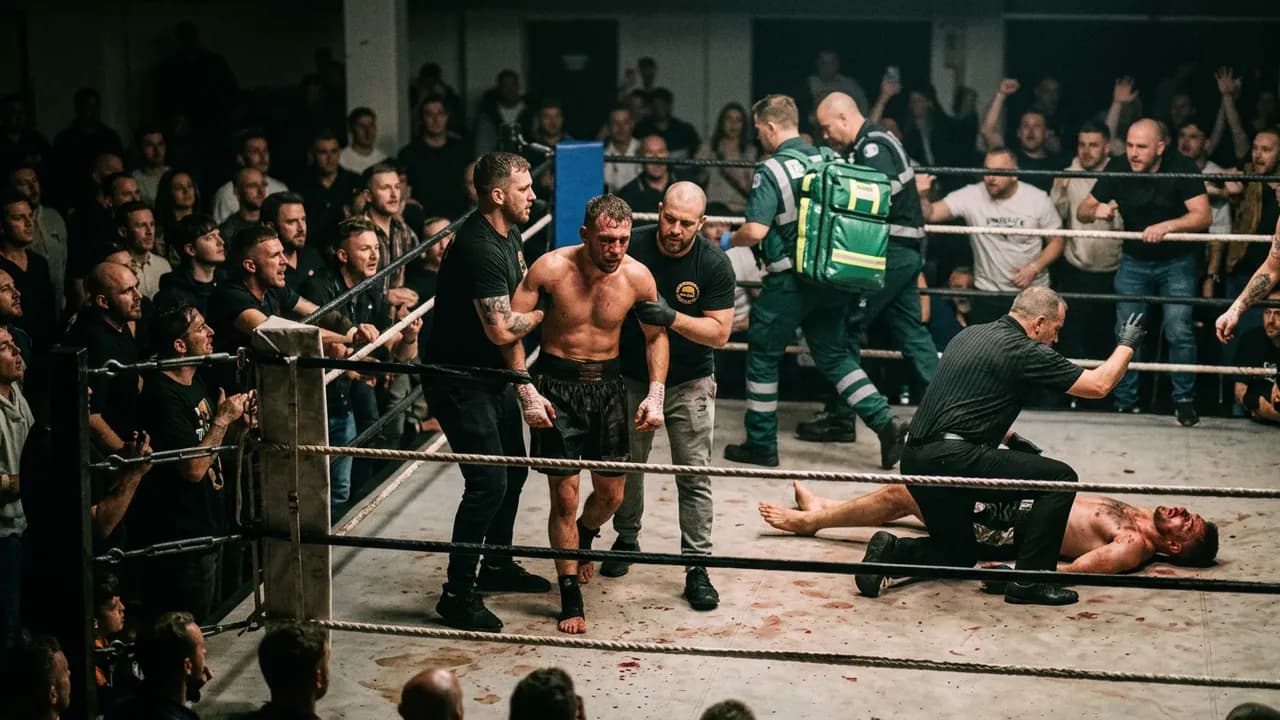
What makes The Scrapyard significant within the broader backyard fighting landscape is its combination of professional production values and grassroots authenticity. Hagara has built something that feels simultaneously polished and raw -- a fight club where the cage sits under the trees, where referees and medics volunteer their time, and where fighters show up not for a paycheck but for the experience, the community, and the chance to test themselves. During summer events, The Scrapyard can run upwards of 50 fights in a single day, drawing competitors and spectators from across the region and beyond.
History and Origins
The Scrapyard's origin story begins with a road trip. Steve Hagara -- a former semi-professional MMA fighter, wrestling coach, and boxer -- made the journey from Washington State to Harrisonburg, Virginia, to visit the original Streetbeefs operation run by Christopher "Scarface" Wilmore. Hagara had been a fan of the Streetbeefs YouTube channel and wanted to see the organization firsthand. What he found in Virginia was more than just backyard scrapping. He found a community built around combat, mutual respect, and the simple idea that people who need to fight should have a safe place to do it.
Hagara came home to the Pacific Northwest with a vision. He wanted to bring the Streetbeefs model to the West Coast, but he wanted to put his own stamp on it. Where traditional gyms felt competitive and transactional -- places where, as Hagara has described it, "everyone's kind of against everybody" and the atmosphere is "strictly business" -- The Scrapyard would be different. It would be laid back. It would be fun. It would be the kind of place where a first-time fighter and a seasoned veteran could share the same card, the same cage, and the same post-fight handshake.
In 2020, Hagara officially launched The Scrapyard as a sanctioned branch of the Streetbeefs network. The timing was notable. The world was locked down, gyms were shuttered, and combat sports communities everywhere were looking for ways to stay active. An outdoor fight club in the woods of Gig Harbor, where social distancing happened naturally and the cage was open to the sky, turned out to be exactly the right thing at exactly the right time.
The early days were humble. Hagara served as promoter, matchmaker, referee, and cameraman all at once, filming fights on a handheld GoPro and uploading shaky cellphone footage to YouTube. The production quality was raw, the audio was rough, and the viewer counts were modest. But the fights were real, the energy was genuine, and the audience grew.
Growth and Social Media Explosion
The Scrapyard's trajectory from small-time backyard operation to social media juggernaut is one of the more remarkable growth stories in the underground fighting world. The organization's Instagram account surpassed 1.5 million followers, a number that puts it in the same conversation as established professional promotions. The YouTube channel, meanwhile, has steadily climbed toward the one-million subscriber mark, fueled by a consistent pipeline of fight content that ranges from full event replays to individual bout highlights.
The production quality has evolved dramatically since those early GoPro days. The Scrapyard now broadcasts with a full live stream setup complete with commentators, slow-motion replays, and multiple camera angles. Hagara still keeps the GoPro in hand during fights -- diving around the cage to capture the action up close -- but the overall presentation has matured into something that looks and feels like a legitimate combat sports broadcast. Pay-per-view events through the Millions platform have added another revenue stream and distribution channel, bringing The Scrapyard's fights to audiences who want more than what the free YouTube uploads provide.
04 / Up next / Format and Rules
This growth has not gone unnoticed by mainstream media. In 2025, OPB (Oregon Public Broadcasting) and KUOW published a feature story on The Scrapyard, exploring how the fight club "delivers more than punches" and examining the community that has formed around Hagara's operation. The piece highlighted the diversity of participants, the safety protocols in place, and the personal stories of fighters who found something at The Scrapyard that no traditional gym could offer. For an organization that started in someone's backyard, national public radio coverage represents a significant milestone.
Format and Rules
The Scrapyard follows the same foundational framework that governs all Streetbeefs branches, with strict adherence to state martial arts regulations and a set of safety protocols that belie the organization's rugged appearance.
Disciplines
Fighters at The Scrapyard can compete in three disciplines:
- Boxing: Contested with 12-ounce boxing gloves under standard boxing rules
- Kickboxing: Contested with 12-ounce boxing gloves, with kicks permitted
- Mixed Martial Arts (MMA): Contested with 4-ounce MMA gloves under a full MMA ruleset
Matchmaking
One of the most important jobs at any Scrapyard event belongs to the matchmakers. Fighters are paired based on weight and experience level, a process designed to produce competitive bouts rather than mismatches. A first-time fighter will not be thrown in with a seasoned competitor unless both parties agree and the matchmakers are satisfied that safety will not be compromised.
Safety Protocols
Despite the backyard setting, The Scrapyard takes fighter safety seriously:
- Medical Tent: Fighters must check in with the on-site medical team before and after every match
- Volunteer Referees: Trained referees are present for all fights and have full authority to stop bouts
- Judges: Volunteer judges score all fights that go the distance
- Medics: On-site medical personnel are available throughout every event
- Age Requirement: All fighters must be between 18 and 60 years old
- Rules Briefing: The rules for each discipline are explained to all fighters before the event begins
What Stays the Same
Like every Streetbeefs branch, The Scrapyard does not pay its fighters, does not charge admission to spectators, and operates on private property with the consent of all participants. This framework keeps the organization outside the regulatory jurisdiction of state athletic commissions while ensuring that the fights remain legal, consensual, and voluntary.
Fight Day at The Scrapyard
A typical Scrapyard event unfolds in the wooded lot near Gig Harbor where the organization has set up permanent shop. The fights happen rain or shine -- this is the Pacific Northwest, after all, and if you waited for sunshine you would never fight at all. Monthly events draw a steady stream of competitors and spectators, and during the summer months the cards can swell to staggering proportions, with as many as 50 fights taking place in a single day.
Fighters sign up in advance through The Scrapyard's Facebook page. On fight day, they check in at the medical tent, confirm their weight and experience level, and get matched with an opponent. The atmosphere is more community barbecue than professional sporting event -- people milling around, catching up with regulars, sizing up the competition. There is a casualness to the proceedings that masks the intensity of what happens inside the cage.
When the fights begin, Hagara is everywhere at once. He plays ringleader, hyping up the crowd and introducing the fighters. He plays cameraman, GoPro in hand, weaving around the cage to capture every angle. He plays coach, offering encouragement to nervous first-timers. And he plays host, making sure the event runs smoothly and that every participant -- win or lose -- walks away from the experience feeling like they got something out of it.
The fights themselves range from sloppy but enthusiastic boxing matches between newcomers to technically polished MMA bouts between experienced competitors. That range is part of The Scrapyard's appeal. You might see a 40-year-old concrete worker stepping into the cage for the first time in one fight, followed by a seasoned kickboxer looking to sharpen his skills in the next. The card is unpredictable, the skill levels vary wildly, and that chaos is exactly what keeps the audience coming back.
Community and Culture
The community dimension of The Scrapyard is what elevates it beyond a simple fight club. Hagara has consistently emphasized that The Scrapyard is meant to be a place where people from all walks of life can come together around a shared interest in combat sports. It is not about machismo or proving who is the toughest. It is about self-improvement, camaraderie, and giving people a constructive outlet.
At a 2025 event profiled by OPB, 40-year-old Curtis Muldrow competed in his first MMA match.
That philosophy attracts a remarkably diverse cross-section of participants. The Scrapyard's roster includes men and women, young adults and middle-aged competitors, experienced martial artists and complete beginners. Volunteer Justine White drives from Oregon every month to help out at events -- cleaning gloves, organizing equipment -- and also steps into the cage as a fighter. She has spoken publicly about how The Scrapyard helped her feel "more confident that I can handle myself in unexpected situations," a sentiment echoed by many participants.
The post-fight culture is equally telling. Opponents who just spent three rounds trying to knock each other out routinely embrace afterward, exchange compliments, and make plans to train together. This is not performance -- it is the natural result of an environment that treats combat as a shared experience rather than a zero-sum contest. At a 2025 event profiled by OPB, 40-year-old Curtis Muldrow competed in his first MMA match. His opponent, John McLellan from Shoreline, lost the fight but spoke with visible pride about the experience, noting that stepping into the cage proved something both to himself and to everyone watching. The two men became friendly after the bout, embodying the spirit that Hagara has worked to cultivate.
The Scrapyard and the Streetbeefs Network
The Scrapyard exists within the broader Streetbeefs ecosystem, a network of affiliated branches that share the same founding philosophy, operational model, and commitment to community-based combat sports. Other branches include Streetbeefs West Coast (Las Vegas/California) and Streetbeefs Pound 4 Pound (Tidewater, Virginia), each operating semi-independently while adhering to core Streetbeefs principles.
What The Scrapyard has accomplished within this network is notable. While the original Streetbeefs operation in Virginia remains the mothership -- with over 4 million YouTube subscribers and national media coverage from ESPN, The Washington Post, and The New York Times -- The Scrapyard has arguably become the most successful branch operation. Its 1.5 million Instagram followers and near-million YouTube subscribers represent audience numbers that most independent combat sports promotions would envy.
The relationship between The Scrapyard and the parent organization is symbiotic. Streetbeefs provides the brand recognition, the operational playbook, and the credibility that comes with being part of a nationally known organization. The Scrapyard, in turn, extends the Streetbeefs footprint into the Pacific Northwest and demonstrates that the model is scalable and exportable -- that the same grassroots formula that worked in rural Virginia can thrive in the woods of western Washington.
Legacy and Impact
The Scrapyard's impact extends beyond the fights themselves. In a region without a major backyard fighting scene prior to 2020, Hagara has built something from nothing -- a thriving combat sports community, a content machine, and a gathering place for people who might otherwise have no access to competitive fighting outside of expensive gyms and sanctioned amateur circuits.
The organization has also demonstrated the viability of the Streetbeefs branch model. If a former semi-pro fighter in Gig Harbor can build a million-follower operation in less than six years, the playbook is clearly replicable. The Scrapyard serves as proof of concept for anyone considering launching a Streetbeefs branch in their own community.
Looking ahead, The Scrapyard's trajectory suggests continued growth. The live streaming capabilities, the PPV offerings, and the ever-expanding social media presence all point to an organization that is professionalizing without losing the grassroots energy that made it special in the first place. Whether The Scrapyard eventually evolves into something beyond a backyard fight club or remains exactly what it is -- a monthly gathering of fighters in the woods of Washington State -- the community it has built is already its most lasting achievement.
FAQ
Is The Scrapyard legal?
Yes. The Scrapyard operates as a legal backyard fighting organization in compliance with Washington State martial arts regulations. Fighters are not compensated, no admission is charged to spectators, and all matches take place on private property with the consent of all participants.
How do I sign up to fight at The Scrapyard?
Fighters can sign up through The Scrapyard's Facebook page. You will need to be between 18 and 60 years old and must check in with the on-site medical team before competing.
Do fighters get paid at The Scrapyard?
No. Like all Streetbeefs branches, The Scrapyard does not pay its fighters. This is a core principle of the organization and a legal necessity that keeps events outside the jurisdiction of state athletic commissions.
How often are fights held?
The Scrapyard holds events monthly, year-round, regardless of weather. Summer events tend to be the largest, with up to 50 fights on a single card.
Is The Scrapyard part of Streetbeefs?
Yes. The Scrapyard is an official branch of the Streetbeefs network, founded with the endorsement of the parent organization and operating under the same rules and philosophy.
Where can I watch Scrapyard fights?
Fights are available on YouTube (Streetbeefs Scrapyard channel), Instagram (@streetbeefs_scrapyard), and through PPV events on the Millions platform. Most content is free to watch.
Who is Fire Chicken?
Fire Chicken is the nickname of Steve Hagara, the founder and operator of The Scrapyard. Hagara is a former semi-professional MMA fighter, wrestling coach, and boxer who launched The Scrapyard in 2020 after visiting the original Streetbeefs operation in Virginia.
What combat sports can I compete in?
The Scrapyard offers boxing (12-ounce gloves), kickboxing (12-ounce gloves with kicks), and MMA (4-ounce gloves). Fighters choose their discipline when signing up.
Do I need experience to fight at The Scrapyard?
No prior experience is required. The matchmaking process takes experience level into account, so first-time fighters will be paired with opponents of similar skill. Many participants compete at The Scrapyard as their first-ever combat sports experience.