Quick Facts
| Detail | Info |
|---|---|
| Historic Tradition | Calcio Storico Fiorentino (est. ~1470s, rules codified 1580) |
| Location | Florence (Calcio Storico); Bologna, Prato, and other cities (Strelka Italy) |
| Calcio Storico Format | 27 vs. 27, 50 minutes, sand field, head-butting/punching/choking allowed |
| Annual Schedule | 3 matches in the 3rd week of June, final on June 24 |
| Modern Organization | Strelka Italy (branch of Strelka) |
| Strelka Italy Venues | Bologna (Via del Selciatore), Prato (GISPI Rugby field) |
Overview
Italy's relationship with organized violence is older, deeper, and more culturally embedded than that of almost any other European nation. While most countries' underground fighting scenes are measured in years or decades, Italy can trace its tradition of sanctioned brutality back more than five centuries to the streets of Renaissance Florence, where teams of young men battered each other with fists, elbows, and headbutts in what remains one of the most violent sporting events on the planet: Calcio Storico Fiorentino.
This is not some relic confined to history books. Calcio Storico is played every June in Piazza Santa Croce, in the heart of Florence, in front of thousands of spectators, with the full endorsement of the city government. It is broadcast on regional television and streamed internationally. It is, in every meaningful sense, an officially sanctioned form of mass combat that permits techniques -- punching, choking, headbutting, elbowing -- that would be illegal in virtually any other sporting context on earth. It exists because Florence has decided that 500 years of tradition outweigh modern sensibilities about acceptable levels of violence.
But Calcio Storico is only one part of Italy's fighting landscape. In more recent years, the international expansion of Strelka, the Russian-born street fighting championship, has established a foothold in Italian cities like Bologna and Prato, bringing the modern underground fighting format to a country that already understood organized violence on an instinctive level.
Together, these two phenomena -- one ancient, one modern -- make Italy one of the most fascinating case studies in the global underground fighting scene.
Calcio Storico Fiorentino: The World's Oldest Fight Club
History
The origins of Calcio Storico are debated by historians, but the broad outlines are agreed upon. The sport descends from the Roman game of harpastum, a ball game played by Roman legionaries that combined elements of what we would now recognize as rugby, football, and wrestling. As the Roman Empire gave way to the Italian city-states of the Middle Ages, the game evolved into something distinctly Florentine.
The first Calcio Storico on record was played in the 1470s. By the end of the fifteenth century, the game had become a popular pastime among young Florentine aristocrats, played nightly between Epiphany and Lent in the piazzas and open spaces of the city. The sport attracted players from the highest echelons of Florentine society. Several future popes -- including Pope Clement VII, Pope Leo XI, and Pope Urban VIII -- are recorded as having played Calcio Storico in their youth. It was not a game for the lower classes; it was the entertainment of Florence's ruling elite.
The official rules of the game were codified in 1580 by Giovanni de' Bardi, a Florentine count, in a treatise that formalized the positions, scoring system, and permissible conduct. De' Bardi's rules gave the game a structure that has survived, with modifications, for nearly half a millennium.
The most famous match in the sport's history took place on February 17, 1530, during the Siege of Florence by the forces of Holy Roman Emperor Charles V. With enemy troops surrounding the city walls, the Florentines made a deliberate and audacious statement of defiance: they organized a game of Calcio Storico in Piazza Santa Croce, in full view of the besieging army. The message was clear -- Florence would not be intimidated, and its traditions would not be abandoned, even under threat of conquest. This match is commemorated every year with a special "Game of the Siege" on February 17.
The sport fell into relative obscurity in the centuries that followed, but it was revived in 1930 during the Fascist era under Benito Mussolini, who recognized its value as a symbol of Italian strength and tradition. Since that revival, Calcio Storico has been played continuously every June in Florence, surviving world wars, social upheaval, and one notable suspension in 2007 when a match devolved into such extreme violence that 50 of the 54 players on the field ended up in court on assault charges. The sport was banned for a year before being reinstated with marginally stricter oversight.
The Four Teams
Calcio Storico is organized around the four historic neighborhoods -- or quartieri -- of Florence, each of which fields a team identified by a distinctive color:
03 / Up next / How the Game Works
Santa Croce -- Azzurri (Blues) Representing the neighborhood surrounding the Basilica of Santa Croce, the Blues are one of the most storied teams in the sport's history. Santa Croce is home to the Piazza Santa Croce itself, the traditional venue for all Calcio Storico matches, giving the Azzurri the distinction of always playing on what is effectively their home ground.
Santo Spirito -- Bianchi (Whites) The Whites represent the neighborhood south of the Arno River, centered around the Basilica of Santo Spirito. The Oltrarno district has historically been the artisan quarter of Florence, and the Bianchi carry that blue-collar identity into the sand.
Santa Maria Novella -- Rossi (Reds) Named for the great Dominican basilica near the city's main train station, the Reds represent the western quarter of Florence's historic center. The neighborhood has undergone significant transformation over the centuries, but its team remains a fierce competitor in the annual tournament.
San Giovanni -- Verdi (Greens) The Greens take their name from the Baptistery of San Giovanni, one of Florence's oldest and most important religious structures, located adjacent to the Duomo. San Giovanni is the spiritual heart of Florence, and the Verdi carry the weight of that significance.
The rivalries between these four teams are not the manufactured feuds of professional sports. They are generational antagonisms rooted in neighborhood identity, family loyalty, and centuries of accumulated grievance. Florentines are born into their quartiere, and their allegiance to its Calcio Storico team is a matter of blood, not choice.
How the Game Works
Each team fields 27 players, divided into four positions:
- Datori indietro (Goalkeepers): 4 players positioned at the back
- Datori innanzi (Fullbacks): 3 players forming the defensive line
- Sconciatori (Halfbacks): 5 players in the midfield
- Corridori (Forwards): 15 players who serve as both attackers and fighters
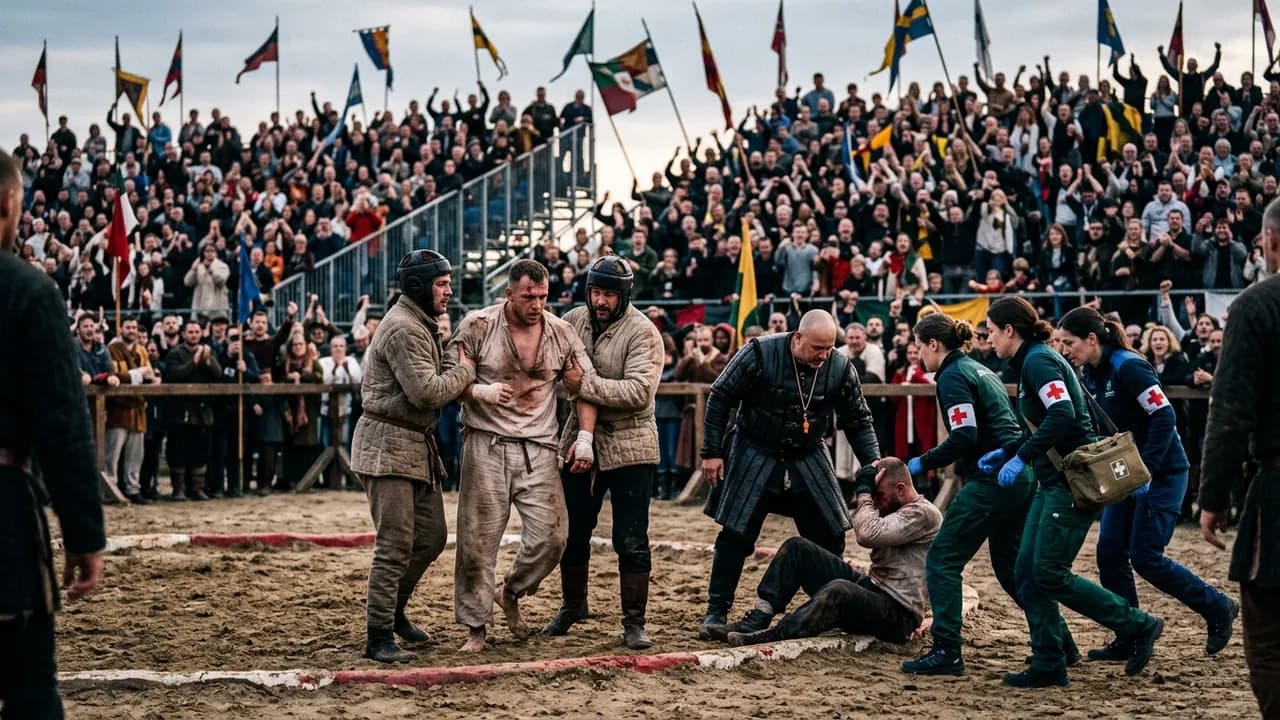
The match lasts 50 minutes and is played on a rectangular field of sand laid down in Piazza Santa Croce, approximately 100 meters long and 50 meters wide. The surface is covered entirely in sand, which serves both as a historical recreation of period conditions and as a practical concession to the extraordinary violence of the game.
The objective is simple: score more "cacce" (goals) than the opposing team by getting the ball into the opponent's goal, which runs the width of the field at each end. A successful goal is worth one point. A missed shot that goes over the goal awards the opposing team half a point, a "mezza caccia," which adds a layer of strategy to shooting decisions.
But the ball is almost secondary to the fighting. The 15 corridori from each team -- 30 fighters in total -- spend the majority of the match engaged in hand-to-hand combat. Their purpose is to physically dominate and incapacitate opposing players, opening up space for their teammates to advance the ball. This is not incidental contact or strategic fouling. It is sustained, deliberate, bare-knuckle combat that constitutes the core spectacle of the event.
What Is Allowed
The rules of Calcio Storico, such as they are, permit a staggering range of violence:
- Punching: Full-force bare-knuckle strikes to the head and body
- Headbutting: Direct headbutt attacks are legal
- Elbowing: Elbow strikes are permitted
- Choking: Chokeholds and strangulation techniques are allowed
- Kicking: Kicks to the body are permitted
- Wrestling: Takedowns, throws, and ground-and-pound techniques are all legal
- Tackling: Full-contact tackles from any angle
What Is Banned
The restrictions that do exist are minimal:
- Sucker punches: Striking an opponent who is not facing you or not engaged in combat is prohibited
- Kicks to the head: Direct kicks targeting the head are banned (a relatively recent addition prompted by serious injuries)
- Group attacks: More than one player attacking a single opponent simultaneously is forbidden, though enforcement of this rule is notoriously inconsistent
- No substitutions: Once a player is injured or ejected, they cannot be replaced. Teams must continue with reduced numbers, which means that strategically injuring opposing players to create a numerical advantage is a legitimate and widely employed tactic
The Violence
The level of violence in Calcio Storico is not exaggerated by journalists or sensationalized by documentaries. It is, by any objective measure, extreme. Players endure concussions, lacerations, fractures, dislocated joints, and broken noses as a matter of routine. The sand surface, while softer than concrete, does little to cushion the impact of a 200-pound man being driven into the ground by a headbutt or body slam.
Notable incidents include:
- A player having his spleen removed after sustaining internal injuries during a match, as documented by National Geographic
- Renzo Carli, who had part of his ear bitten off during a tournament game
- The 2007 tournament, in which a match escalated into such uncontrolled violence that 50 of the 54 players ended up facing criminal assault charges, leading to the sport's one-year suspension
The injuries are accepted -- even expected -- by the calcianti (players). National Geographic's coverage noted that players "endure the concussions and lacerations and fractures simply because it is what Florentines have always done." There is no monetary compensation for playing. The traditional prize for the winning team is a Chianina calf -- a breed of Tuscan cattle -- though in modern times this has sometimes been replaced by a communal dinner and a commemorative drape. The calcianti fight for honor, for their neighborhood, and for the continuation of a tradition that predates the discovery of the Americas.
Training and Player Demographics
Teams practice three times per week for approximately three months before the June tournament. Each team maintains a roster of 60 to 70 players, though only 27 can take the field for any given match. The selection process is competitive and can be a source of intense internal politics within each quartiere.
To be eligible to play, a calciante must be born in Florence or have been a resident of the city for at least 10 years.
To be eligible to play, a calciante must be born in Florence or have been a resident of the city for at least 10 years. This residency requirement ensures that the sport remains rooted in genuine Florentine identity rather than attracting mercenary fighters from outside the city. The players come from all walks of life -- butchers, lawyers, students, laborers -- united by their neighborhood allegiance and their willingness to absorb punishment for the honor of their quartiere.
ESPN described the sport as "part football, part MMA, part historical recreation," and that assessment captures the hybrid nature of the event. The calcianti are not professional athletes. Many have day jobs that they return to on Monday morning, bruised and battered from the weekend's combat. But within the context of the tournament, they are warriors carrying on a tradition that stretches back to the Renaissance.
When and Where to Watch
Calcio Storico is held annually in the third week of June, with the following schedule:
- Semi-final 1: Typically the second or third Saturday of June
- Semi-final 2: The following day (Sunday)
- Final: Always June 24, the Feast of San Giovanni Battista (St. John the Baptist), the patron saint of Florence
All matches are played in Piazza Santa Croce. The semi-final matchups are drawn on Easter Sunday, adding months of anticipation before the June tournament.
The matches are preceded by a historical costume parade (the Corteo Storico) through the streets of Florence, featuring hundreds of participants in Renaissance attire, flag-throwers, musicians, and representatives of each quartiere. The parade transforms the city center into a living museum before the violence begins.
Matches are broadcast locally on Toscana TV and Firenze TV, with international streaming available through DAZN. Tickets to the live event are available but sell out quickly, particularly for the June 24 final.
In 2025, the schedule featured Rossi vs. Azzurri on June 14 and Bianchi vs. Verdi on June 15, with the final on June 24. The 2026 final is confirmed for June 24.
Strelka Italy: The Russian Fight Club Comes to Italy
Overview
While Calcio Storico represents the ancient end of Italy's fighting spectrum, Strelka Italy represents the modern. Strelka, the world's largest fight club with more than 40,000 fighters on its global roster and 2.45 million YouTube subscribers, was founded in St. Petersburg, Russia, in 2011. In recent years, the organization has expanded internationally, and Italy has become one of its most active European outposts.
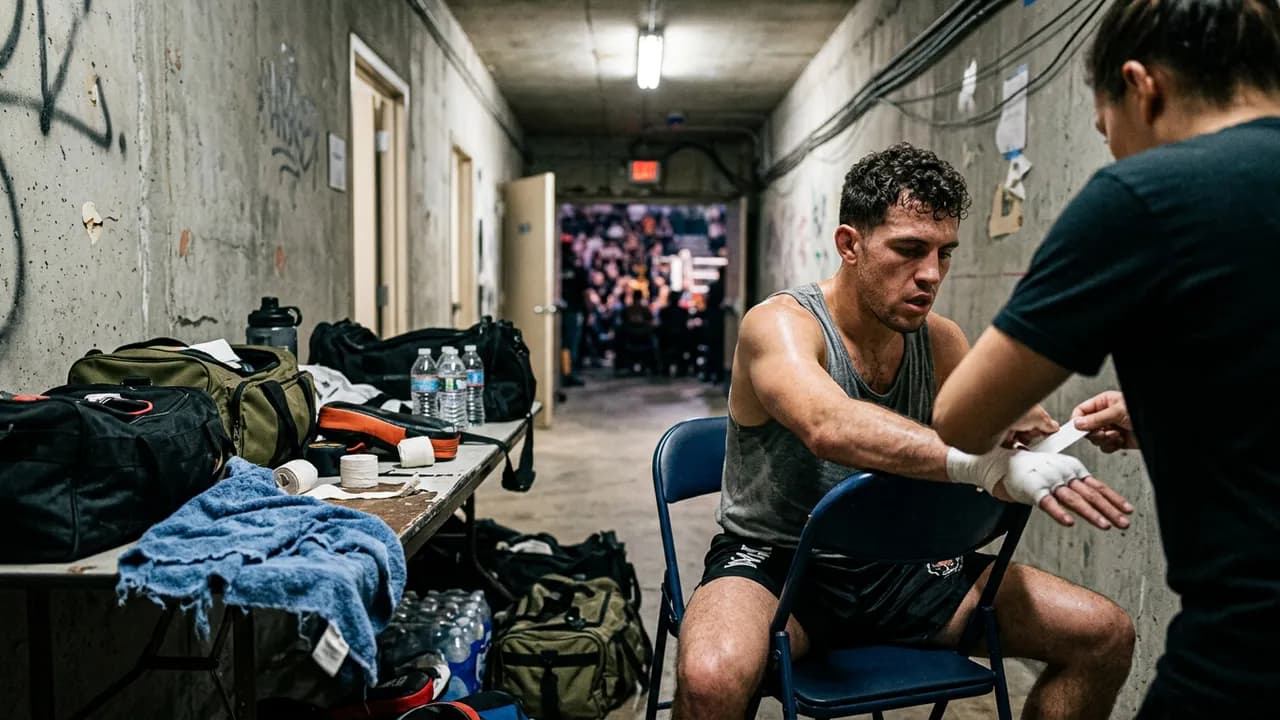
Strelka Italy operates under the organizational umbrella of the global Strelka brand, following the same basic format: outdoor street fighting on sand, open to amateurs, with the winner taking home a cash prize. Events are organized by local promoters who operate under the Strelka name and follow its established rules and branding.
Format
Strelka fights follow modified MMA rules that are more permissive than sanctioned amateur competition but significantly more structured than the no-rules formats used by organizations like KOTS or FPVS:
- No rounds: Each fight is a single continuous bout
- No elbows to the head: Elbow strikes targeting the head are prohibited
- No knees to the head: Knee strikes to the head are also banned
- Fight to finish: Bouts end by knockout, submission, or referee stoppage
- Sand surface: Fighting takes place on sand, grass, or other outdoor surfaces, providing significantly more cushioning than concrete
The Strelka format is designed to be accessible to amateurs. Fighters do not need professional credentials or extensive training to participate. The system is deliberately democratic: sign up, show up, and fight.
Events in Italy
Strelka Italy has held events in multiple Italian cities, with Bologna emerging as the primary hub for the organization's operations in the country. Key events include:
Bologna -- Big Red Machine (February 2024) Strelka's first major event in Bologna took place on February 17, 2024, at the Big Red Machine clubhouse on Via del Selciatore 15. This event marked the formal arrival of the Strelka brand in the Emilia-Romagna region and established Bologna as the organization's Italian base of operations.
Bologna -- RIOBET World Selection (November 2025) A larger-scale event was held on November 23, 2025, at the same Via del Selciatore venue, as part of the RIOBET Sports Betting Street Fight World Championship series. This event represented Strelka Italy's integration into the broader global championship structure.
04 / Up next / Organization and Structure
Bologna -- New Year Event (December 2025) An additional event was scheduled for December 31, 2025, continuing Strelka Italy's regular programming in Bologna.
Prato -- GISPI Rugby Field (September 2025) Strelka Italy expanded beyond Bologna with an event at the GISPI Rugby training field (Via di Coiano 19) in Prato, near Florence, on September 13, 2025. This event, organized through local fight club ASD Fight Club Xboxing based in Florence, demonstrated the organization's growing footprint in Tuscany.
Organization and Structure
Strelka Italy operates through a decentralized model that mirrors the broader Strelka approach. Local organizers handle event logistics, venue selection, fighter recruitment, and day-of-event management, while operating under the Strelka brand and following its established rules. The global organization provides the branding, the platform (videos are uploaded to Strelka's YouTube channel and the tronmma.com website), and the connection to the worldwide championship structure.
Fighters interested in competing at Strelka Italy events can register through the tronmma.com website, which serves as the organization's global registration and fighter database platform. The registration process is straightforward: provide basic personal information, select your weight range, and indicate your willingness to fight.
Italy's Fighting Culture in Context
Why Italy?
The question of why Italy has proven fertile ground for both ancient and modern fighting traditions is worth examining. Several cultural and social factors contribute.
Historical continuity. Italy's relationship with organized violence is not a modern phenomenon imposed from outside. It is woven into the cultural fabric of the peninsula. From the gladiatorial games of ancient Rome to the martial traditions of the medieval city-states to the factional violence of Renaissance Florence, the Italian peninsula has a documented history of ritualized combat spanning more than two millennia. Calcio Storico is simply the most visible surviving expression of this tradition.
Campanilismo. The Italian concept of campanilismo -- fierce loyalty to one's local community, neighborhood, or city -- provides the social infrastructure that makes events like Calcio Storico possible. The rivalries between Florence's four quartieri are not manufactured for entertainment; they are genuine expressions of local identity that have persisted for centuries. This same intense localism translates into passion for combat events that represent neighborhood or regional pride.
Football culture. Italy's football ultras culture, while distinct from the British hooligan tradition, shares many of the same characteristics: organized group identity, territorial loyalty, willingness to engage in violence, and deep suspicion of authority. The ultras of Serie A clubs like Lazio, Roma, Inter, and Fiorentina have long operated as parallel social structures with their own codes of honor and their own forms of organized combat. This infrastructure provides a natural pipeline into underground fighting.
Masculinity and honor. Italian culture, particularly in the south but also in traditional communities throughout the peninsula, places significant emphasis on concepts of masculine honor, physical courage, and the willingness to stand and fight. These values align naturally with the ethos of combat sports and underground fighting.
The Spectrum of Violence
Italy's fighting landscape spans a remarkable range, from the fully sanctioned and historically embedded Calcio Storico to the modern, internationally connected Strelka Italy events. This spectrum illustrates a broader truth about underground fighting: it does not exist in a vacuum. It is always a product of the cultural, historical, and social conditions of the place where it occurs.
In Italy, the line between "underground" and "mainstream" is blurred in ways that are unique. Calcio Storico is technically not underground at all -- it is a government-endorsed, publicly held, televised event. But the level of violence it permits would be classified as criminal assault in virtually any other context. It is, in effect, a sanctioned fight club operating in plain sight, protected by the armor of tradition.
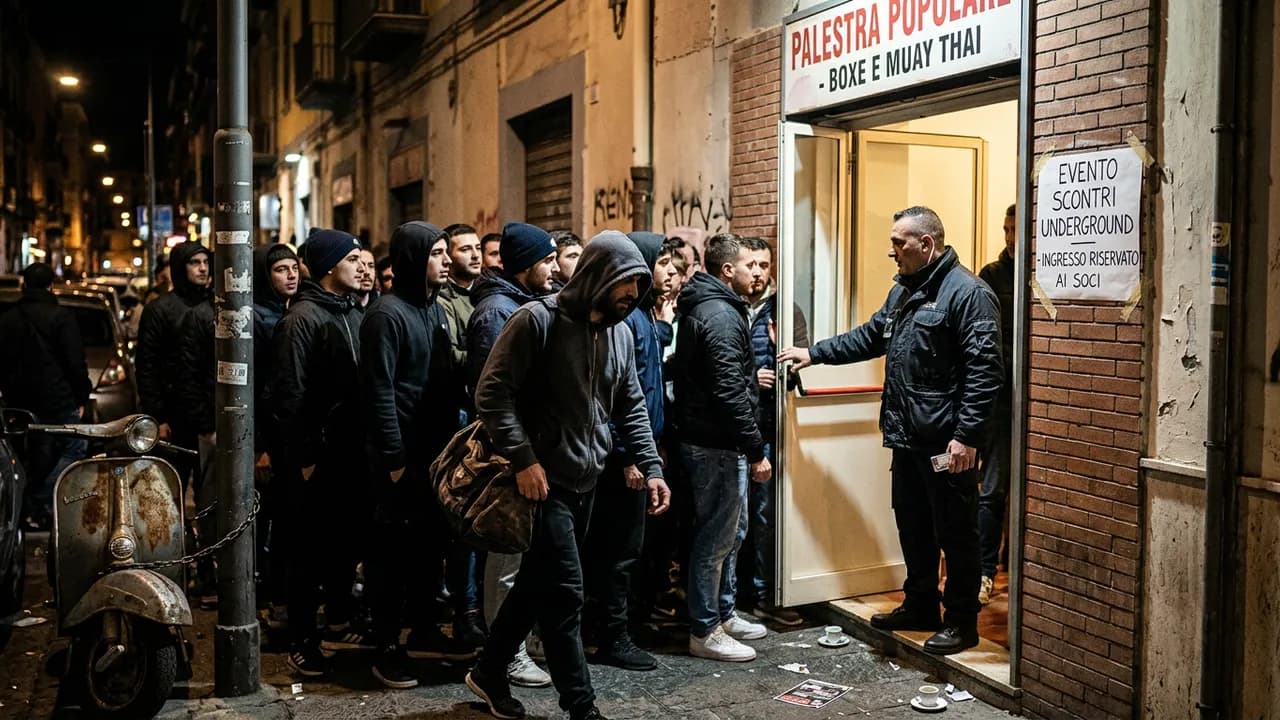
Strelka Italy, by contrast, operates in the more familiar territory of unsanctioned amateur combat. But even here, the Italian context is distinctive. Strelka events in Italy are organized through local sports associations (like ASD Fight Club Xboxing in Florence) that maintain a veneer of athletic legitimacy, operating in the gray area between amateur sport and unlicensed fighting.
Comparing Italy's Fighting Scene
Calcio Storico vs. Modern Underground Fighting
| Aspect | Calcio Storico | Strelka Italy |
|---|---|---|
| Age | 500+ years | Active since ~2024 |
| Format | 27 vs. 27, ball game with fighting | 1 vs. 1 MMA-style |
| Surface | Sand | Sand/grass/outdoor |
| Legality | Government-sanctioned | Gray area |
| Techniques | Punching, headbutting, choking allowed | Modified MMA rules |
| Participants | Florentine residents only | Open registration |
| Compensation | None (traditional Chianina calf for winners) | Cash prize for winners |
| Schedule | 3 matches per year (June) | Multiple events throughout year |
Italy vs. Other European Fighting Scenes
Italy occupies a unique position in the European underground fighting landscape. While countries like Sweden (KOTS), Russia (Strelka), and France (FPVS) have developed their fighting scenes primarily through modern, internet-driven movements, Italy's fighting culture is rooted in centuries of unbroken tradition.
The French Riviera's FPVS fights on concrete with no rules and no gloves -- a modern format born from social media and hooligan culture.
The French Riviera's FPVS fights on concrete with no rules and no gloves -- a modern format born from social media and hooligan culture. Italy's Calcio Storico fights on sand with minimal rules and no gloves -- an ancient format born from Renaissance-era civic pride. The formats are superficially similar (bare-knuckle, minimal rules, ritualized combat) but culturally distinct. FPVS is a product of twenty-first-century alienation and digital culture. Calcio Storico is a product of fifteenth-century Florentine identity.
The Future of Fighting in Italy
Italy's fighting scene is likely to continue evolving along both its ancient and modern tracks.
Calcio Storico faces ongoing tensions between tradition and modernization. The 2007 ban demonstrated that even Florence's tolerance for violence has limits, and each tournament carries the risk of an incident severe enough to trigger another suspension. The sport's governing body has implemented incremental rule changes over the years -- the ban on kicks to the head and the prohibition on group attacks are both relatively recent additions -- and further restrictions may follow as medical understanding of traumatic brain injury continues to advance. But the cultural weight of 500 years of tradition makes fundamental change difficult. Calcio Storico is not merely a sport in Florence; it is a part of the city's identity, and Florentines will resist any reforms that they perceive as diluting that identity.
Strelka Italy is positioned for continued growth. The organization's decentralized model makes expansion relatively simple -- all that is required is a local organizer, a venue, and willing fighters. The events in Bologna and Prato suggest that the Italian market is receptive to the Strelka format, and further expansion to other cities seems likely. The global Strelka brand provides credibility, infrastructure, and an audience that local Italian fight promoters could not achieve independently.
New organizations may emerge. Italy's combination of fighting tradition, ultras culture, and working-class masculinity makes it a natural environment for the kind of grassroots fight clubs that have proliferated across northern Europe. The success of KOTS in Sweden, FPVS in France, and similar organizations in Germany, England, and Poland suggests that Italy may develop its own homegrown no-rules fight clubs in the years to come, separate from both the historic Calcio Storico and the imported Strelka format.
For now, Italy remains one of the most compelling chapters in the global story of underground fighting -- a country where a game played by Renaissance popes and a street fighting championship born in post-Soviet Russia coexist on the same peninsula, separated by 500 years of history but united by the same fundamental human impulse to test oneself in combat.
Related Content
- Strelka -- The world's largest fight club, with an active Italian branch
- King of the Streets (KOTS) -- The Swedish organization that pioneered no-rules concrete fighting
- Underground Fighting in France -- FPVS and the No Rules movement on the French Riviera
- Streetbeefs -- America's backyard fighting organization
- Top Dog Fighting Championship -- Russia's professional bare-knuckle promotion
FAQ
Is Calcio Storico a real sport or a reenactment?
Calcio Storico is emphatically a real sport, not a historical reenactment or theatrical performance. The violence is genuine, the injuries are real, and the competition is fierce. While the event includes historical elements -- the Renaissance costume parade, the traditional ritual -- the matches themselves are authentic, full-contact combat between teams representing Florence's four historic neighborhoods.
Can tourists attend Calcio Storico?
Yes. Calcio Storico matches are open to the public and held in Piazza Santa Croce in Florence. Tickets are available for purchase but sell out quickly, especially for the June 24 final. The event is free to watch on regional television (Toscana TV and Firenze TV) and available internationally through DAZN.
Can anyone play Calcio Storico?
No. Players must be born in Florence or have been residents of the city for at least 10 years. Each of the four teams recruits from its respective quartiere, and selection is competitive, with rosters of 60-70 players for only 27 starting positions per match.
How do I sign up for Strelka Italy?
Fighters can register through the tronmma.com website, which serves as Strelka's global registration platform. The process requires basic personal information and a willingness to fight. Events are held in multiple Italian cities, with Bologna as the primary venue.
Has anyone died playing Calcio Storico?
There are no confirmed deaths in the modern era of the sport (post-1930 revival). However, serious and life-altering injuries have occurred, including organ damage requiring surgical removal. The historical record suggests that fatal injuries were a factor in the sport's pre-modern decline, and the official rules note that the restrictions on kicks to the head and group attacks were implemented specifically to reduce the risk of fatal outcomes.
Is Strelka Italy legal?
Strelka Italy operates in a legal gray area. Events are organized through local sports associations that provide a framework of amateur athletic activity, but the unsanctioned nature of the fights and the absence of formal athletic commission oversight place the events outside the boundaries of regulated combat sports. The legality may vary depending on local jurisdiction and the specific circumstances of each event.
When is the next Calcio Storico tournament?
The 2026 Calcio Storico final is confirmed for June 24, 2026, the Feast of San Giovanni Battista. Semi-final dates are typically announced in the spring. Matchups are drawn on Easter Sunday.