Underground fighting generates more questions than almost any other corner of combat sports. The legal gray areas, the safety concerns, the allure, the risk -- it is a world that fascinates millions of viewers but remains misunderstood by most of them.
This FAQ covers the 30 most common questions about underground fighting, from the basics of legality and safety to the specifics of how fighters get paid, how organizations operate, and what separates the legitimate from the reckless.
General Questions
1. What is underground fighting?
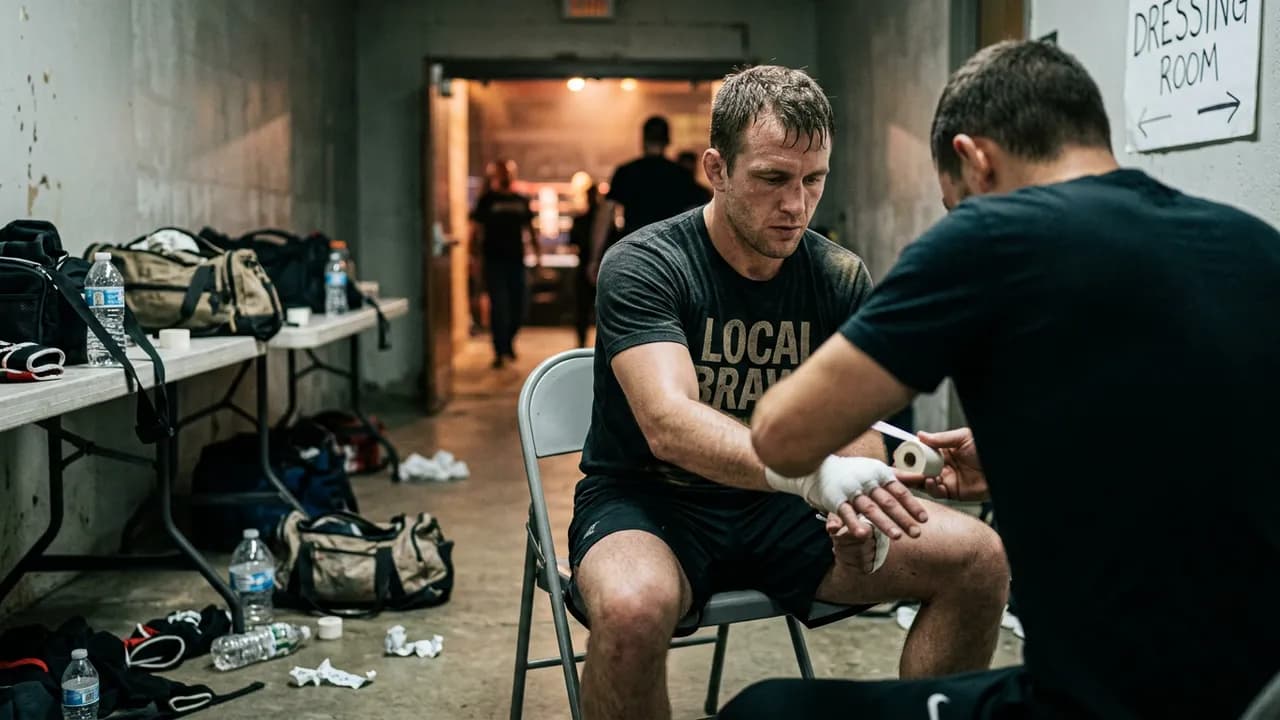
Underground fighting is any organized combat that takes place outside the oversight of official athletic commissions and regulatory bodies. It exists on a broad spectrum. At one end, you have fully illegal, no-rules brawls with zero safety measures. At the other, you have well-organized backyard operations like Streetbeefs that follow self-imposed rules, use referees, and provide basic medical support -- but still operate without government sanctioning.
The term "underground" does not necessarily mean the fighting is hidden. Many of the biggest underground organizations in the world broadcast openly on YouTube, with channels reaching millions of subscribers. The "underground" label refers to the regulatory status, not the visibility.
2. Is underground fighting real?
Yes. Underground fighting is not a Hollywood invention. Organizations like Streetbeefs (4.2 million YouTube subscribers), KOTS (500,000+ YouTube subscribers), Strelka (1 million+ YouTube subscribers), and Top Dog FC (1.5 million+ YouTube subscribers) collectively produce hundreds of fights per year, all of which are filmed and published online.
Beyond organized operations, informal street fights and gym smokers happen in every major city. Underground fighting has existed in various forms for centuries -- it is as real as combat sports get.
3. How is underground fighting different from MMA or boxing?
The key differences are regulatory oversight, safety infrastructure, and rules:
- Sanctioned MMA/Boxing: Governed by state athletic commissions. Requires pre-fight medical exams, licensed referees, ringside physicians, ambulance services, drug testing, and adherence to unified rules. Fighters carry professional records.
- Underground Fighting: No commission oversight. Rules (if any) are set by the organization. Medical support ranges from nonexistent to basic first-aid tents. No drug testing in most cases. Fighters rarely carry official records.
The fighting itself can look similar -- striking, grappling, submissions -- but the infrastructure around it is fundamentally different.
4. When did underground fighting start?
Underground fighting predates organized sport. Bare-knuckle prizefighting in England dates to the early 1700s, with the first codified rules (Broughton's Rules) published in 1743. In Brazil, vale tudo ("anything goes") fighting traces back to the 1910s, when circus promoters staged cross-discipline bouts as sideshows.
The modern underground fighting scene as we know it -- YouTube-based, globally visible, personality-driven -- emerged in the mid-2000s with the rise of platforms that allowed fight footage to spread virally. Streetbeefs was founded in 2008, Strelka in 2011, and KOTS around 2013.
Legality
5. Is underground fighting legal?
It depends on where you are and how the event is structured. In most U.S. states, organizing or participating in unsanctioned fighting events is illegal. Under New York State Penal Code, for example, a person cannot consent to being assaulted -- striking and injuring another person is assault whether or not both parties agreed to fight.
However, legal gray areas exist. Some organizations classify their events as "exhibitions" or "mutual combat" rather than sanctioned sporting events. The enforcement of these laws also varies wildly by jurisdiction.
6. What is mutual combat, and where is it legal?
Mutual combat is the popular idea that two consenting adults can agree to fight without facing assault charges. In practice, no US state has a true mutual combat law. The two states usually named work like this:
- Washington: There is no state mutual combat statute. The reputation comes from a Seattle city ordinance that treats fighting as an offence only when it happens in a public place and risks injury to bystanders or damage to property. It does not stop a state assault charge, and there is no rule that a police officer oversees the fight.
- Texas: Penal Code 22.06 lets a defendant argue consent after an assault charge, but the defense fails if the fight threatened or caused serious bodily injury.
In most other states, consent is no defense to an assault that causes real injury. Oregon's code goes further and denies self-defense for force that is the product of "combat by agreement" not specifically authorized by law.
7. Can you get arrested for underground fighting?
Yes. In jurisdictions where unsanctioned fighting is illegal, participants, organizers, and even spectators can face criminal charges. Charges may include assault, battery, disorderly conduct, or operating an illegal sporting event. In California, it is specifically illegal to participate in, instigate, or encourage an unregulated fight, sparring, or boxing exhibition.
Many smaller operations, particularly those in rural areas or on private property, operate for years without legal interference.
In practice, enforcement varies. Large events that draw attention or result in serious injury are more likely to attract law enforcement interest. Many smaller operations, particularly those in rural areas or on private property, operate for years without legal interference.
8. Have any underground fighting organizations been shut down?
Yes. Felony Fights, which featured fights between convicted felons with no rules, faced significant legal scrutiny and law enforcement action. Numerous smaller, local fight clubs have been raided and shut down by police across the United States, United Kingdom, and Europe.
However, the biggest YouTube-based organizations have largely avoided shutdown. Streetbeefs has operated continuously since 2008. KOTS has operated since approximately 2013 despite its connections to hooligan culture and far-right movements in Europe. The decentralized, digital nature of modern underground fighting makes it difficult for authorities to suppress.
Safety and Health
9. How dangerous is underground fighting?
Significantly more dangerous than regulated combat sports. The absence of pre-fight medical screenings means fighters with undetected conditions (brain injuries, heart conditions, blood-borne diseases) may compete. The lack of ringside physicians means injuries go untreated during bouts. The absence of standardized rules means fighters face techniques that regulated sports have banned for safety reasons.
The danger level varies enormously by organization. Streetbeefs and The Scrapyard have referees, basic medical support, and enforced rules. KOTS, with its concrete surface and minimal rules, sits at the extreme end of the risk spectrum.
10. Have people died in underground fights?
Deaths in underground fighting are documented but rare in organized settings. The four documented deaths in modern MMA history that occurred outside the United States all took place in unsanctioned fights -- a statistic that underscores the danger of fighting without proper medical oversight.
The true number of deaths in completely unregulated street fights and informal brawls is impossible to calculate because many go unreported. In Calcio Storico, the 500-year-old Florentine sport, fatalities have occurred across its long history, which led to the banning of sucker punches and kicks to the head.
11. What safety measures do underground organizations use?
It varies drastically:
- High safety (relative to the scene): Streetbeefs, The Scrapyard, and Rough N Rowdy use referees, enforce rules (no strikes to downed opponents, gloves required in some formats), and provide medical staff or first-aid tents. The Scrapyard requires fighters to check in at a medical tent before and after each fight.
- Moderate safety: Strelka and Top Dog FC have referees and fight stoppages, but the rule sets are loose and medical infrastructure is limited.
- Minimal safety: KOTS fights on concrete with bare hands, no rounds, and virtually no rules beyond whatever the fighters agree to. Medical support is minimal at best.
12. Do underground fighters get drug tested?
Almost never. Drug testing requires regulatory infrastructure, laboratory partnerships, and funding that underground organizations do not have and do not seek. There is no USADA equivalent in the underground fighting world.
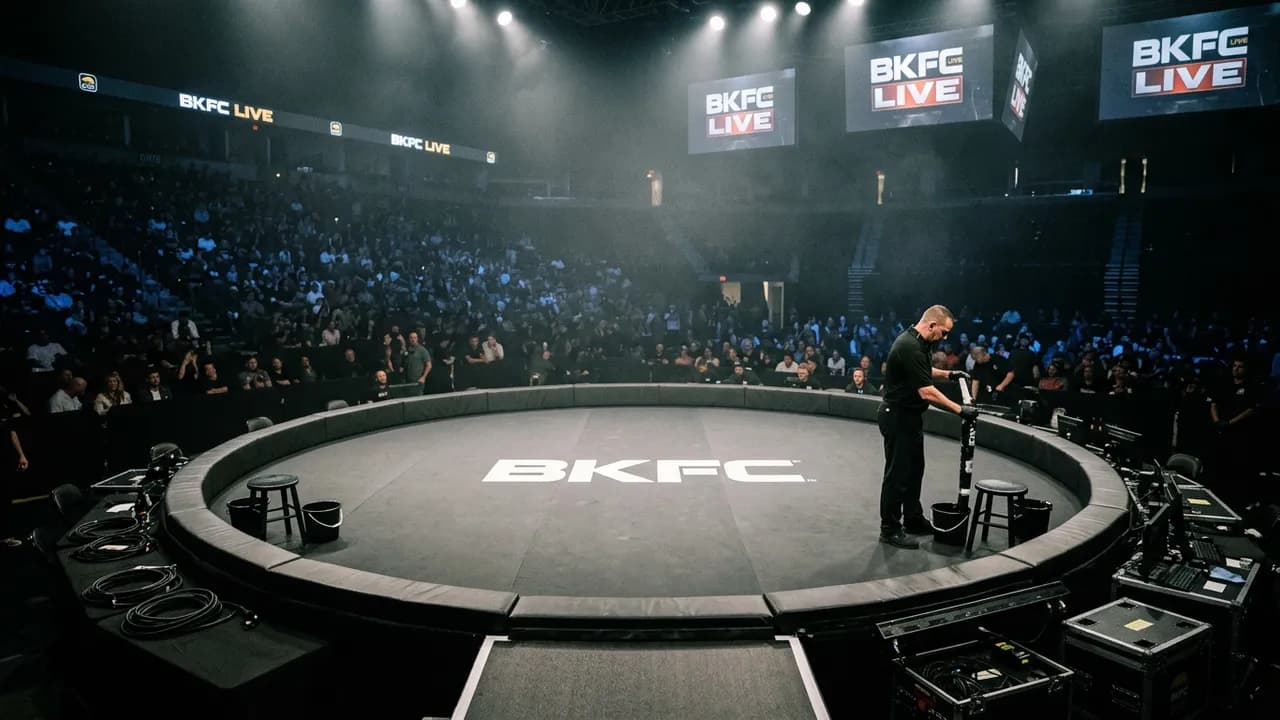
At the professional end, BKFC conducts drug testing as required by state athletic commissions for sanctioned events. But the vast majority of underground organizations operate on an honor system -- or no system at all.
13. What injuries are most common in underground fighting?
The most common injuries mirror those in regulated combat sports but tend to be more severe due to the lack of protective equipment and safety rules:
- Hand and wrist fractures: Extremely common in bare-knuckle fighting. The human hand was not designed to repeatedly strike a skull at full force without padding.
- Facial lacerations: Bare knuckles cut more easily than gloves. Cuts over the eyes are frequent.
- Concussions and traumatic brain injuries: The greatest long-term risk. Without medical stoppages and concussion protocols, fighters may continue competing with undiagnosed brain injuries.
- Broken noses and orbital fractures: Standard in any striking-based combat.
- Joint injuries: Common in organizations that allow grappling and submissions.
Getting Involved
14. How do you join an underground fighting organization?
The process varies by organization:
- Streetbeefs: Contact through their website (streetbeefshq.com) or social media. Streetbeefs has four independently run branches, each with its own application process. Fighters must agree to the rules and sign waivers.
- The Scrapyard: Located in Gig Harbor, Washington. Holds monthly events where fighters show up, check in at the medical tent, and can be matched on the spot. Participants must be between 18 and 60.
- Strelka: Registration is available through TronMMA.com. After analysis of a fighter's capabilities, Strelka forms pairs of approximately equal strength.
- Rough N Rowdy: Apply through the Rough N Rowdy website. No experience is required -- the promotion actively seeks untrained fighters.
- KOTS: Largely invitational. Fighters are typically recruited through connections to European hooligan networks or combat sports gyms.
15. Do you need training to fight in an underground organization?
It depends on the organization. Rough N Rowdy specifically markets itself as a venue for people with no fighting experience. Streetbeefs accepts fighters of all skill levels, including complete beginners settling personal disputes.
04 / Up next / 16. Is there an age requirement for underground fighting?
However, stepping into any fight without training dramatically increases your risk of injury. Organizations like Strelka and Top Dog FC predominantly feature fighters with boxing, kickboxing, or MMA backgrounds, and an untrained person would be at severe disadvantage and serious risk.
16. Is there an age requirement for underground fighting?
Most organized underground operations require fighters to be at least 18 years old. The Scrapyard sets a range of 18 to 60. Streetbeefs requires participants to be legal adults.
Unorganized street fights and informal operations may have no age verification whatsoever, which is one of the many safety concerns surrounding the least regulated end of the spectrum.
17. Do women fight in underground organizations?
Yes. Women compete across multiple underground and bare-knuckle organizations:
- BKFC held the first American-sanctioned women's bare-knuckle fight in modern history at its inaugural 2018 event.
- Streetbeefs has featured women's fights since its early years. The organization's mission statement explicitly references a "brotherhood/sisterhood" of fighters.
- Strelka and Top Dog FC have featured women's bouts.
- Rough N Rowdy regularly includes women on its cards.
Women's participation in underground fighting has grown significantly alongside the broader growth of women's combat sports.
18. Can you make a career out of underground fighting?
A sustainable career is extremely difficult in pure underground fighting. Most backyard and underground fighters receive no payment at all, or very small purses. Streetbeefs fighters historically fought for no money -- the fights were about resolving disputes, not earning income.
However, underground fighting can serve as a launching pad. Fighters who build a following through YouTube-based organizations sometimes transition to professional promotions. BKFC, which sits at the sanctioned end of the bare-knuckle spectrum, pays its top fighters significant purses. Gamebred Bareknuckle MMA is running $500,000 tournaments in 2026.
The most realistic path: build a reputation and audience in underground settings, then leverage that into professional opportunities.
Watching and Following
19. How do you watch underground fights?
YouTube is the primary platform. The major organizations maintain active channels:
- Streetbeefs: 4.2 million subscribers, over 1.3 billion total views
- Top Dog FC: 1.5 million+ subscribers
- Strelka: 1 million+ subscribers
- KOTS: 500,000+ subscribers
Some events are available as pay-per-view. Rough N Rowdy sells PPV through Barstool Sports, with individual events reaching 41,000+ buys. BKFC offers PPV through its own platform and broadcast partners.
Live attendance is possible for some organizations. The Scrapyard holds open monthly events in Gig Harbor, Washington. Rough N Rowdy tours various U.S. cities. BKFC holds arena events with ticketed admission.
20. What are the biggest underground fighting channels on YouTube?
By subscriber count (as of early 2026):
- Streetbeefs -- 4.2 million subscribers
- Top Dog FC -- 1.5 million+ subscribers
- The Scrapyard -- approaching 1 million subscribers
- Strelka -- 1 million+ subscribers
- KOTS -- 500,000+ subscribers
These numbers fluctuate. Strelka has claimed to be second only to the UFC in YouTube views among fighting organizations, though that claim is difficult to verify independently.
21. Are there underground fighting documentaries or shows?
Yes, several:
- "The Secret World of Fight Clubs: Untold" -- Channel 4 documentary exploring underground fighting in the UK and Europe
- "The Cage" (2024) -- Swedish film/series based on KOTS and the intersection of underground fighting with hooligan culture and far-right extremism
- ESPN feature on Streetbeefs -- Long-form profile of Chris "Scarface" Wilmore and the Streetbeefs organization
- HuffPost feature -- Investigative piece on attending a Streetbeefs event firsthand
- Various independent documentaries on YouTube covering Strelka, Top Dog FC, and regional fight clubs
Fighter Experience
22. How much do underground fighters get paid?
Payment varies enormously:
- No pay: Streetbeefs fighters traditionally receive no purse. Fights are arranged to settle disputes, not for money.
- Minimal pay: Informal underground events may pay fighters as little as $50-$200 per fight.
- Moderate pay: Rough N Rowdy and mid-tier organizations pay fighters modest amounts, typically a few hundred to a few thousand dollars.
- Professional pay: BKFC pays its top fighters five and six-figure purses. Gamebred Bareknuckle MMA is running $500,000 tournaments in 2026, with individual payouts that rival mid-level UFC compensation.
Revenue for YouTube-based organizations comes primarily from ad revenue and sponsorships rather than gate receipts or PPV sales.
23. What weight classes exist in underground fighting?
Most underground organizations do not enforce strict weight classes. Fighters are matched based on approximate size and experience rather than certified weigh-ins. This can result in significant size disparities.
06 / Up next / 24. What rules are most common in underground fighting?
At the more organized end:
- BKFC uses standard boxing weight classes with official weigh-ins
- Strelka matches fighters of "approximately equal strength" based on their assessment
- Streetbeefs attempts to match fighters by size but does not enforce formal weight classes
- KOTS has no weight classes -- fights are arranged regardless of size differential
24. What rules are most common in underground fighting?
The most common ruleset across organized underground operations includes:
- Gloves or bare knuckles (varies by organization)
- No weapons
- No eye gouging
- No biting
- No strikes to the groin (sometimes)
- Referee can stop the fight
- Fighter can submit or quit verbally
Beyond these basics, rules diverge sharply. Some organizations allow ground fighting and submissions; others are standup only. Some allow headbutts and knees to downed opponents; others prohibit them. The lack of standardization is one of the defining characteristics of underground fighting.
25. What happens if you get badly hurt in an underground fight?
This is one of the most serious concerns in underground fighting. In sanctioned events, a commission-designated physician is ringside and an ambulance with medical personnel is on standby. In underground settings, the response to serious injury depends entirely on the organization:
- Best case: The organization has a medical tent with basic supplies and calls 911 for serious injuries. The Scrapyard has volunteer medics at every event.
- Worst case: There is no medical support. An injured fighter relies on bystanders to call emergency services. Response time in rural or isolated locations can be significant.
Fighters in underground organizations typically sign waivers accepting risk, but the legal enforceability of these waivers varies by jurisdiction. Health insurance rarely covers injuries sustained in unsanctioned fighting events.
Organizations and Culture
26. What are the biggest underground fighting organizations in the world?
The top 10 underground fighting organizations by combined influence, audience, and cultural impact:
- Streetbeefs -- USA (Virginia)
- BKFC -- USA (global)
- KOTS -- Sweden/Europe
- Strelka -- Russia
- Top Dog FC -- Russia
- BKB -- United Kingdom
- Rough N Rowdy -- USA
- Gamebred Bareknuckle MMA -- USA
- The Scrapyard -- USA (Washington)
- Calcio Storico -- Italy (Florence)
For detailed rankings and analysis, see our full breakdown of the top 10 organizations.
27. What is the most dangerous underground fighting organization?
KOTS (King of the Streets) is widely considered the most dangerous active underground fighting organization. Fights take place on concrete, hands are bare, there are no rounds, no decisions, and virtually no rules. Headbutts, strikes to the spine, and techniques banned by every sanctioned combat sport are permissible. The only way a fight ends is by knockout, submission, or a fighter quitting.
For a deep dive into the most extreme organizations, see The Most Dangerous Fight Clubs in the World.
28. How is underground fighting different from backyard fighting?
The terms overlap but are not identical:
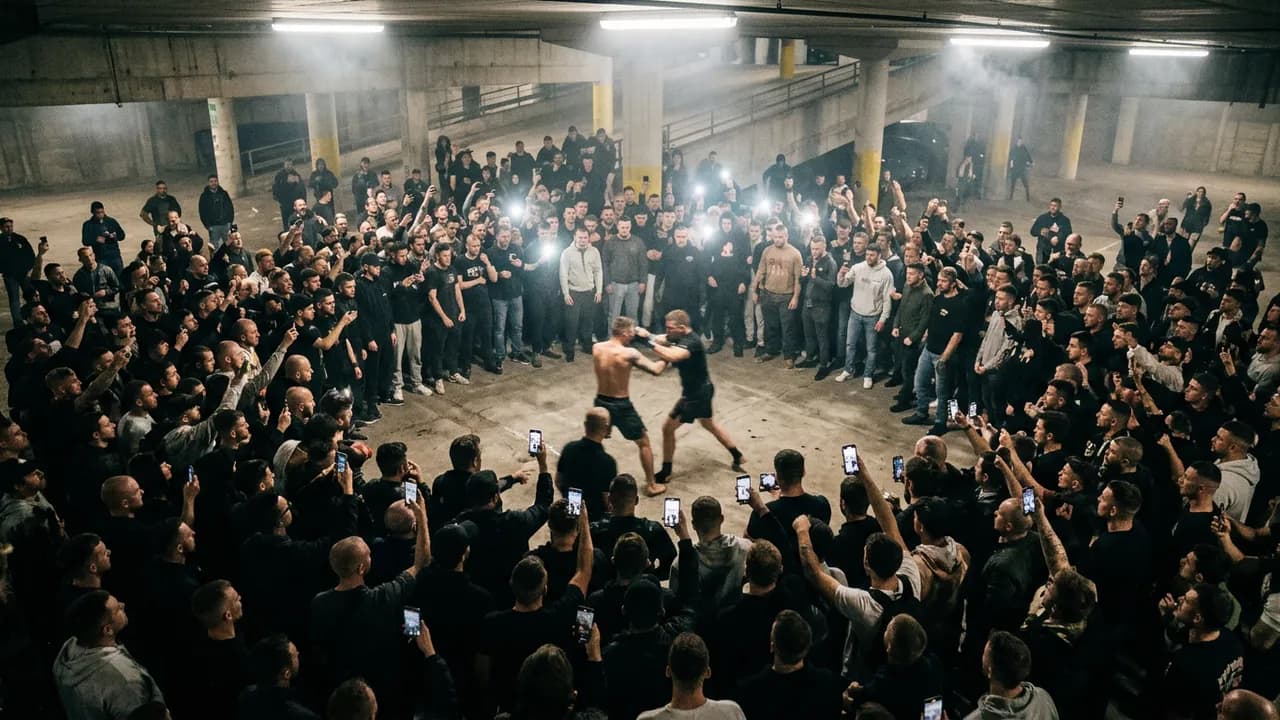
- Backyard fighting specifically refers to organized events held in outdoor, informal venues -- actual backyards, fields, parking lots. Streetbeefs and The Scrapyard are backyard organizations.
- Underground fighting is the broader category encompassing any unsanctioned combat, regardless of venue. KOTS fights indoors on concrete. Strelka uses various outdoor and indoor venues. Both are underground but neither is "backyard" in the traditional sense.
All backyard fighting is underground, but not all underground fighting is backyard.
29. Is underground fighting growing or shrinking?
Growing -- significantly. Multiple indicators point to sustained expansion:
- Audience growth: BKFC reported a 100% increase in overall attendance and 250 million+ social media reach in 2024, with expansion into 60+ countries. Streetbeefs has accumulated over 1.3 billion YouTube views.
- New organizations: Gamebred Bareknuckle MMA launched in 2021 and is running $500,000 tournaments in 2026. New regional organizations continue to emerge.
- Mainstream crossover: Former UFC fighters like Jorge Masvidal, Junior dos Santos, and Anthony Smith are now competing in or promoting bare-knuckle and underground events.
- Production quality: Organizations like Top Dog FC have moved from parking lot recordings to arena productions with professional camera work, indicating growing budgets and audiences.
The combination of YouTube accessibility, social media virality, and the public's appetite for raw combat suggests the underground fighting scene will continue expanding.
30. What is the future of underground fighting?
Several trends are shaping the future:
- Professionalization: The line between "underground" and "sanctioned" continues to blur. BKFC started in the bare-knuckle underground and is now a fully sanctioned, globally operating promotion. More organizations may follow this path.
- Regulation: As underground fighting grows in visibility, regulatory pressure will likely increase. Some organizations may seek sanctioning voluntarily to legitimize their operations and reduce legal risk.
- Technology: Better camera equipment, streaming infrastructure, and social media algorithms are making it easier for new organizations to reach audiences. The barrier to entry for starting an underground fighting operation has never been lower.
- Globalization: Strelka is hosting world championships across Asia. BKFC operates in 60+ countries. KOTS draws fighters from across Europe. Underground fighting is no longer a local phenomenon.
- Athlete crossover: As more established MMA and boxing athletes participate in bare-knuckle and underground events, the talent level and legitimacy of these organizations will continue to rise.
The underground fighting scene in 2026 is larger, more visible, and more diverse than at any point in its history. Whether that growth leads to greater safety and professionalization or simply more unregulated risk remains the central question facing the community.
Have a question we did not cover? See our Underground Fighting Glossary for terminology or browse our organization profiles for details on specific promotions.