Quick Facts
| Detail | Info |
|---|---|
| Official Name | Calcio Storico Fiorentino |
| Location | Piazza Santa Croce, Florence, Italy |
| Origins | 16th century (rules codified 1580); revived 1930 |
| Format | 27 vs. 27 players, 50-minute matches on sand |
| Teams | Santa Croce (Blues), Santo Spirito (Whites), Santa Maria Novella (Reds), San Giovanni (Greens) |
| Schedule | 3 matches annually, third week of June; final on June 24 |
| Status | Strictly amateur, unpaid |
| Allowed Tactics | Head-butting, punching, elbowing, choking, tackling |
| Banned Tactics | Sucker punches, kicks to the head, ganging up |
| Tickets | Sold online via Ticketone; 29-80 EUR |
Overview
Every June, in the shadow of the Basilica di Santa Croce in Florence, Italy, fifty-four men in Renaissance-era costumes walk onto a field of sand and proceed to beat each other senseless for civic pride. There is no prize money. There are no professional contracts. There are no substitutions. There is only a ball, two goals, and a set of rules so permissive that head-butting, punching, elbowing, and choking are all explicitly legal.
This is Calcio Storico Fiorentino -- literally "historic football of Florence" -- and it is, by virtually any measure, the most violent organized sport on the planet. It is also one of the oldest, with roots stretching back to the Roman gladiatorial training game of harpastum and a formal rulebook dating to 1580. The sport predates modern soccer, rugby, and American football. It predates the concept of a "sport" as the modern world understands it. And it has survived the Renaissance, the Napoleonic Wars, two World Wars, fascism, a one-year ban for excessive violence, and the relentless march of modernity to remain exactly what it has always been: a brutal, beautiful, uncompromising expression of Florentine identity.
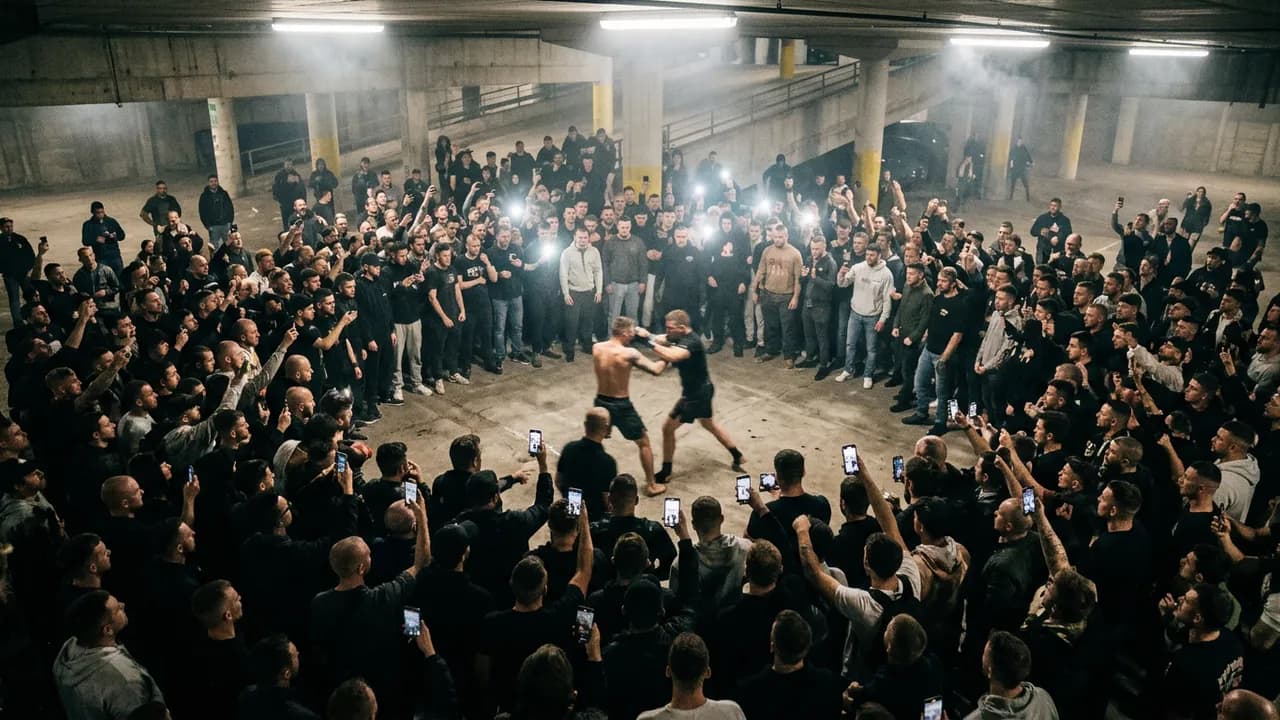
For those familiar with operations like Streetbeefs or King of the Streets, Calcio Storico occupies a completely different universe. This is not a grassroots fighting organization born from social media culture. This is a 500-year-old tradition backed by the full institutional weight of one of Europe's most storied cities, played by men who train year-round for three matches and receive nothing in return except the right to represent their neighborhood in the most ancient and savage team sport still played on earth.
History
Ancient Roots
The origins of Calcio Storico stretch far deeper than the Renaissance. The sport is widely believed to descend from harpastum, a ball game played by Roman legionaries as physical training. When Rome established the colony of Florentia in 59 BC, they brought their games with them.
By the Middle Ages, the game had evolved into something recognizably Florentine. Young men gathered in piazzas to play a chaotic ball game combining elements of what would later become soccer, rugby, and bare-knuckle fighting. The aristocracy embraced it -- Pope Clement VII, Pope Leo XI, and Pope Urban VIII were all said to have played in their youth.
Giovanni de' Bardi and the Rules (1580)
In 1580, Giovanni de' Bardi, Count of Vernio, published the first formal rulebook: Discorso sopra 'l giuoco del Calcio Fiorentino. It established the framework that still governs the sport -- two teams of 27, a rectangular sand field, goals at either end. The rules were not designed to limit violence. They were designed to organize it.
The Match of 1530: Defiance Under Siege
The most famous match in Calcio Storico history took place on February 17, 1530, during the Siege of Florence by Emperor Charles V. With enemy troops camped in the surrounding hills, Florentine soldiers abandoned their posts on the city walls and marched into Piazza Santa Croce to play. It was a deliberate act of defiance -- staged in full view of the besieging army, with musicians reportedly positioned on rooftops to ensure the enemy heard the celebration. The match has become a founding myth of Florentine identity, and the annual tournament still commemorates it.
Decline and the Mussolini Revival (1930)
After centuries of regular play, Calcio Storico gradually declined and had effectively ceased as an organized annual event by the early 1900s. In 1930, Benito Mussolini's fascist regime revived the game as part of its campaign to glorify Italy's martial past. The revival was successful enough that the game outlasted the regime. After World War II, Calcio Storico continued as an annual tradition, gradually shedding its fascist associations and reasserting itself as a purely Florentine institution.
The Modern Era
In the decades since, Calcio Storico has grown into one of Florence's most significant cultural events, drawing tens of thousands of spectators each June. The sport has attracted international media attention from outlets including ESPN, Netflix (which featured it in the documentary series Home Game), and numerous European sports networks. It has also attracted controversy, most notably in 2007, when a mass brawl involving approximately 50 players led city authorities to ban the tournament for a year and impose sweeping rule changes in its aftermath.
The Four Teams
Calcio Storico is not a sport you join by signing up. It is a sport you are born into. The four teams represent the four historic neighborhoods (quartieri) of Florence, and to play, you must have been born in Florence or have been a resident for at least ten years. Each team carries centuries of neighborhood pride, rivalry, and identity.
- Santa Croce -- Azzurri (Blues): Representing the neighborhood surrounding the Basilica di Santa Croce, where the matches are played. The Blues carry the distinction of playing on their home ground every year.
- Santo Spirito -- Bianchi (Whites): Representing the Oltrarno district on the south bank of the Arno. Traditionally the most working-class quartiere, the Whites carry a reputation for toughness.
- Santa Maria Novella -- Rossi (Reds): Representing the area around the great Dominican basilica near the main train station. Perennial contenders with a passionate fanbase.
- San Giovanni -- Verdi (Greens): Named for the Baptistery of San Giovanni adjacent to the Duomo. The Greens represent the central quartiere and carry the weight of the city's most iconic landmark.
The rivalries are generational. Families pass down their allegiance, and a semifinal between bitter neighborhood rivals can feel less like a sporting event and more like a controlled riot -- which, in a sense, is exactly what it is.
Format and Rules
The Field
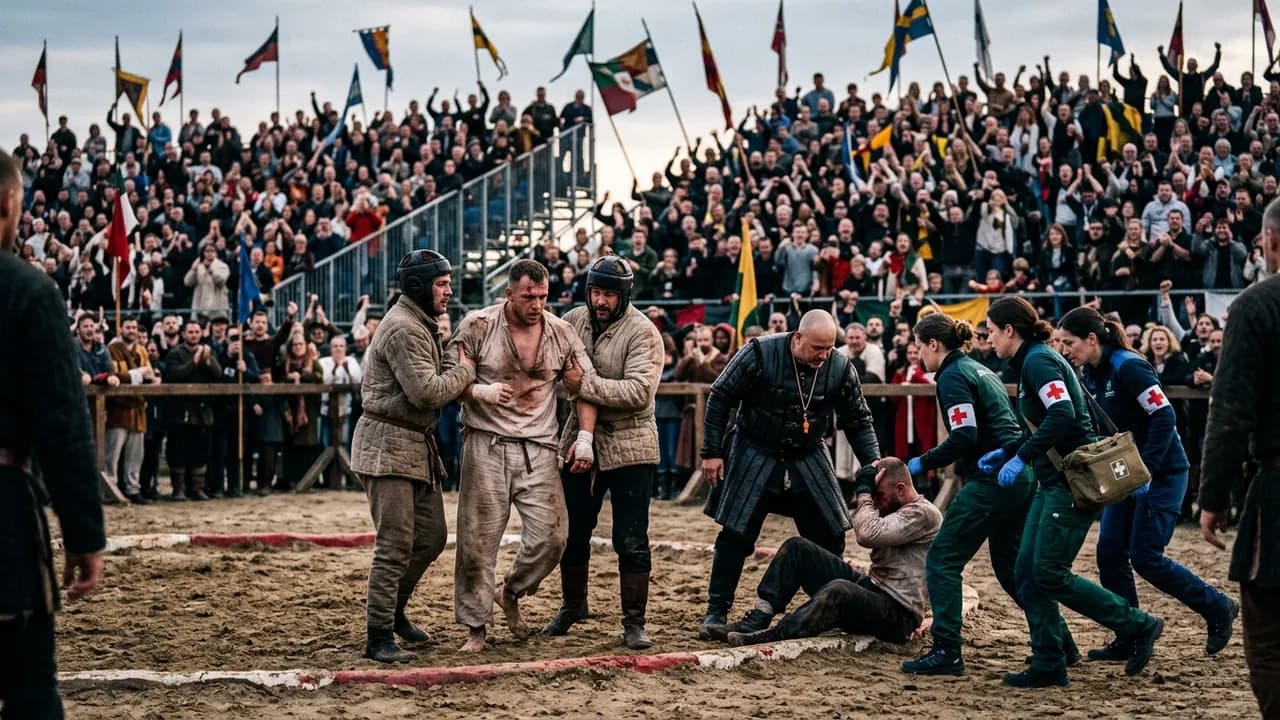
Matches are played on a temporary sand-covered field in Piazza Santa Croce. The field measures approximately 100 meters by 50 meters, with a white center line dividing it into two halves and a goal net running the full width of each end. The sand absorbs impact, reduces friction injuries, and gives the game its distinctive visual character as players throw each other to the ground in clouds of dust.
Team Composition
Each team fields 27 players with no substitutions for any reason. If a player is carried off or expelled, his team plays shorthanded. This creates a secondary tactical dimension: deliberately injuring opponents is a legitimate strategy.
4 Datori indietro
The 27 players are divided into four positional groups:
- 4 Datori indietro (Goalkeepers)
- 3 Datori innanzi (Fullbacks)
- 5 Sconciatori (Halfbacks)
- 15 Innanzi / Corridori (Forwards): The fighters and ball-carriers
What Is Allowed
The rules permit tactics that would constitute assault in any other sport: punching (open and closed fist), head-butting, elbowing, choking, tackling, wrestling, and tripping. The fifteen corridori on each side spend much of the match engaged in hand-to-hand combat to incapacitate opponents and create openings for teammates to advance the ball.
What Is Banned
Following the 2007 crisis, the following are prohibited: sucker punches (all strikes must be against an engaged opponent), kicks to the head, ganging up (multiple players attacking one opponent), and attacks on grounded players not actively fighting.
Scoring
A goal is called a caccia, scored by throwing or kicking the ball over the goal. A missed shot that sails over the net awards a half-point (mezza caccia) to the opposing team. Teams switch ends after each caccia. A cannon blast signals the start and each goal.
Match Duration
Each match lasts 50 minutes with no halves, timeouts, or overtime.
Tournament Structure
The annual tournament consists of three matches played during the third week of June:
- Semifinal 1: Held on a Saturday in mid-June
- Semifinal 2: Held the following day, Sunday
- The Final: Always played on June 24, the Feast of San Giovanni (Saint John the Baptist), the patron saint of Florence
The pairings for the semifinals are determined by a drawing. The two winning teams advance to the final, which is the climactic event of the Florentine summer. The winners of the final receive the traditional prize: a Chianina cow -- one of the most prized cattle breeds in Tuscany. The cow is symbolic rather than practically useful for most modern players, but the tradition endures.
The tournament is accompanied by a historical procession (Corteo Storico) through Florence featuring hundreds of participants in Renaissance costume, drummers, and flag-throwers. The procession transforms the city center into a living museum before the violence begins.
Notable Moments
The Siege Match (February 17, 1530)
The defining moment in Calcio Storico history. With Charles V's Imperial forces laying siege to the Republic of Florence, the city's defenders staged a match in Piazza Santa Croce as a deliberate act of defiance, positioning musicians on rooftops to ensure the enemy heard their celebration. The match has become the foundational myth of the sport and is commemorated annually.
The 2007 Ban
A mass brawl during the 2006 tournament escalated beyond even the sport's permissive boundaries, with approximately 50 players involved in a melee that resulted in court proceedings. City authorities canceled the 2007 tournament entirely. The ban led to sweeping rule changes: a prohibition on players with criminal convictions, a residency requirement, and new rules against sucker punches, kicks to the head, and ganging up. The sport returned in 2008 under stricter oversight.
Netflix and ESPN
The Netflix documentary series Home Game (2020) introduced Calcio Storico to a global audience, and international interest in attending spiked dramatically. ESPN described the sport as "part football, part MMA, part historical recreation" and called it "a brutal sight to behold."
How to Watch
In Person
Attending Calcio Storico is a bucket-list experience, but it requires planning. Here is what you need to know:
Dates: The tournament takes place during the third week of June, with the final always on June 24.
Location: All matches are held in Piazza Santa Croce, in front of the Basilica di Santa Croce in central Florence. Temporary bleachers are erected around the sand field.
Tickets: Tickets are sold exclusively online through Ticketone and typically go on sale in early to mid-June. Prices range from approximately 29 to 80 EUR depending on the match (semifinals vs. final) and seating location. Tickets sell out extremely fast -- often within minutes of going on sale. The final on June 24 is the hardest ticket to obtain.
Tips for attending:
- Book early. Tickets sell out within minutes. Be online the moment sales open.
- Arrive early. Arriving early ensures a better view and a chance to see the Corteo Storico procession.
- Prepare for the sun. Late June in an Italian piazza with minimal shade. Bring water, sunscreen, and a hat.
- Expect real violence. This is not a reenactment. Players sustain genuine injuries. Blood is common.
On Screen
For those who cannot make it to Florence: the Netflix documentary series Home Game features a full episode on Calcio Storico. YouTube has numerous full matches and highlight compilations -- search "Calcio Storico" for community-uploaded footage of past tournaments (there is no single official YouTube channel). RAI and other Italian networks periodically broadcast matches, and the official Calcio Storico social media channels share highlights and tournament updates. For more background, see the Calcio Storico Wikipedia page.
Cultural Significance
Calcio Storico is not merely a sport -- it is an identity marker for Florence. Tourists can view the David and cross the Ponte Vecchio, but they cannot play Calcio Storico. The residency requirement ensures the sport belongs exclusively to Florentines.
Calcio Storico has survived for 500 years precisely because it is a civic ritual, not a commercial enterprise.
For the players, there is no money, no contract, no sponsorship. The only reward is the honor of representing your neighborhood. This amateurism is not a limitation -- it is the point. Calcio Storico has survived for 500 years precisely because it is a civic ritual, not a commercial enterprise. In this sense, it shares something fundamental with organizations like Strelka and Streetbeefs: the recognition that controlled violence can serve a social function. For a broader look at combat sports traditions around the world, see our history of underground fighting and the complete guide to underground fighting. The difference is one of scale and history. Streetbeefs has been doing this for two decades. Calcio Storico has been doing it for five centuries.
FAQ
Is Calcio Storico real fighting or is it staged?
It is entirely real. Players sustain genuine injuries including broken bones, concussions, lacerations, and dislocations. There is nothing theatrical about the combat. The violence is authentic, consensual, and frequently shocking to first-time spectators.
Can anyone play Calcio Storico?
No. Players must be born in Florence or have been residents of the city for at least ten years. Players with criminal convictions are excluded. Each team is organized by its respective quartiere (neighborhood), and selection is managed by the team leadership. This is not a sport you can sign up for as an outsider.
Do players get paid?
No. Calcio Storico is strictly amateur. Players receive no financial compensation of any kind. The winning team receives a Chianina cow as a traditional prize, but individual players compete solely for the honor of representing their neighborhood.
Has anyone died playing Calcio Storico?
Historical records suggest fatalities occurred in earlier centuries. Modern safety measures have reduced the risk, but serious injuries -- broken bones, concussions, dislocations -- occur in virtually every match.
Why was the tournament banned in 2007?
A mass brawl during the 2006 tournament involving approximately 50 players resulted in court proceedings. City authorities canceled the 2007 edition and implemented new rules banning players with criminal records and prohibiting sucker punches, kicks to the head, and multi-player attacks.
How do I get tickets?
Tickets are sold exclusively online through Ticketone in early to mid-June. Prices range from 29 to 80 EUR and sell out within minutes. Set a reminder for the exact on-sale date.
When are the matches played?
Two semifinals in mid-June (Saturday and Sunday) and the final on June 24, the Feast of San Giovanni, typically at 6:00 PM local time.
Is Calcio Storico connected to modern soccer?
Etymologically, yes -- "calcio" is the Italian word for both this game and modern football. Historically, the connection is debated, but Calcio Storico has far more in common with combat sports than anything played on a modern pitch.
Where is Piazza Santa Croce?
In the historic center of Florence, in front of the Basilica di Santa Croce, approximately a 15-minute walk from the Duomo.