Ireland fights. This is not a stereotype -- it is a historical fact embedded in the culture of a nation that has produced more world boxing champions per capita than almost any country on earth and whose diaspora shaped the development of prizefighting across the English-speaking world. Dublin, as the capital and largest city, sits at the center of an Irish fighting culture that stretches from the organized world of professional boxing to the oldest and most enduring bare knuckle traditions in Western Europe.
The Irish traveller community has maintained an unbroken tradition of bare knuckle fighting for generations. Fair fights between families, between clans, and for the settlement of disputes have been a feature of traveller culture for as long as anyone can document. Dublin, with its significant traveller population and its position as the crossroads of Irish life, has been a focal point for this tradition. And now, layered on top of the indigenous bare knuckle culture, the European no-rules movement inspired by King of the Streets has found fertile ground in Ireland -- a country where the willingness to fight has never been in short supply.
History
Dublin's fighting history is inseparable from Ireland's broader story. In the eighteenth and nineteenth centuries, Irish fighters were among the most prominent bare knuckle boxers in the world. Dan Donnelly, who fought and defeated English champion George Cooper at the Curragh of Kildare in 1815, became a national hero. The Irish dominance of bare knuckle fighting followed the diaspora to America, where Irish immigrants formed the backbone of the early American prizefighting scene. John L. Sullivan, the last bare knuckle heavyweight champion, was of Irish descent. The tradition was not merely sporting -- it was a form of national identity, a way for the Irish to assert themselves in countries where they were marginalized.
Within Ireland, the traveller community preserved bare knuckle fighting as a living tradition long after it had been pushed underground by legal prohibition. Traveller fights -- known as "fair fights" -- are organized affairs with their own protocols. Challenges are issued formally, often through intermediaries. The fights are conducted by agreed-upon rules, typically bare knuckle with no wrestling or grappling. Spectators serve as witnesses and enforcers of fair play. The outcomes are accepted as binding resolutions to whatever dispute prompted the fight.
The documentary "Knuckle" (2011), directed by Ian Palmer, brought international attention to traveller bare knuckle fighting by documenting a twelve-year feud between the Quinn McDonagh and Joyce families. The film revealed the sophistication of the fair fight system -- the formal challenges, the neutral locations, the code of honor -- and challenged simplistic portrayals of traveller fighting as mere thuggery.
Dublin has served as both a venue for traveller fights and a base for the fighters themselves. The city's traveller halting sites and housing estates have produced generations of bare knuckle fighters whose skills are developed within the community and passed down through family lines.
Organizations
Irish No-Rules Fight Clubs
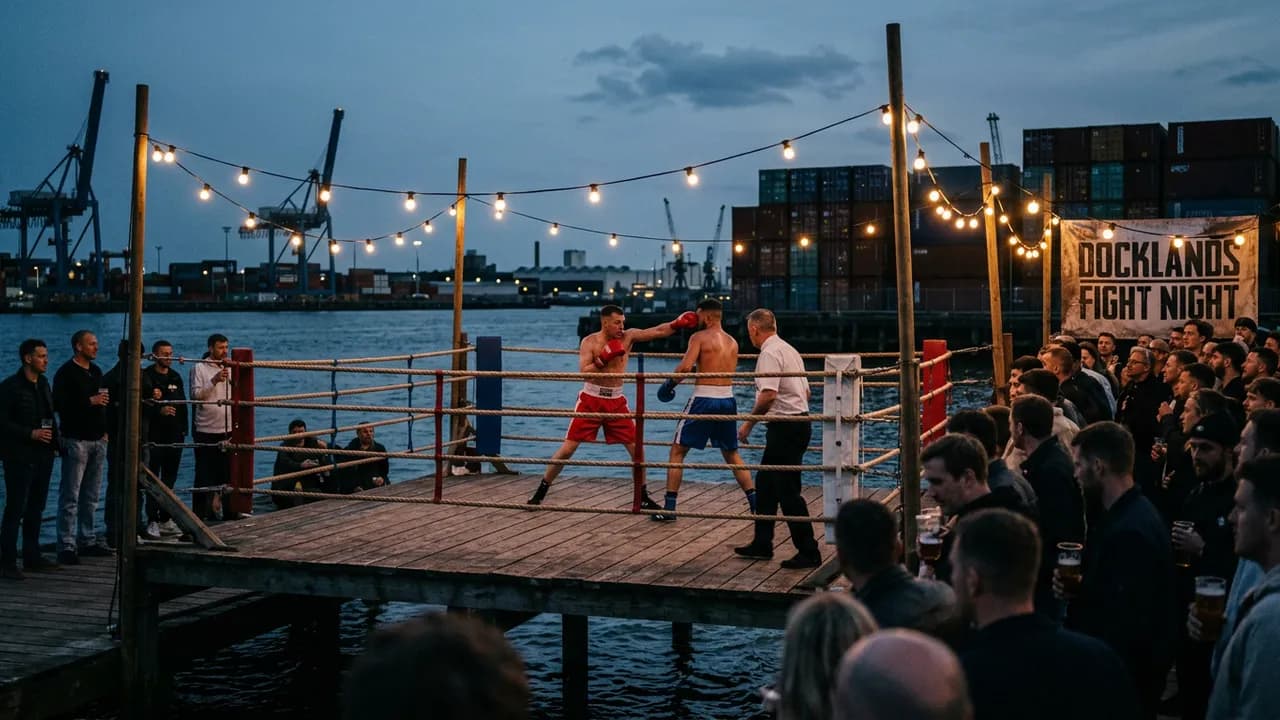
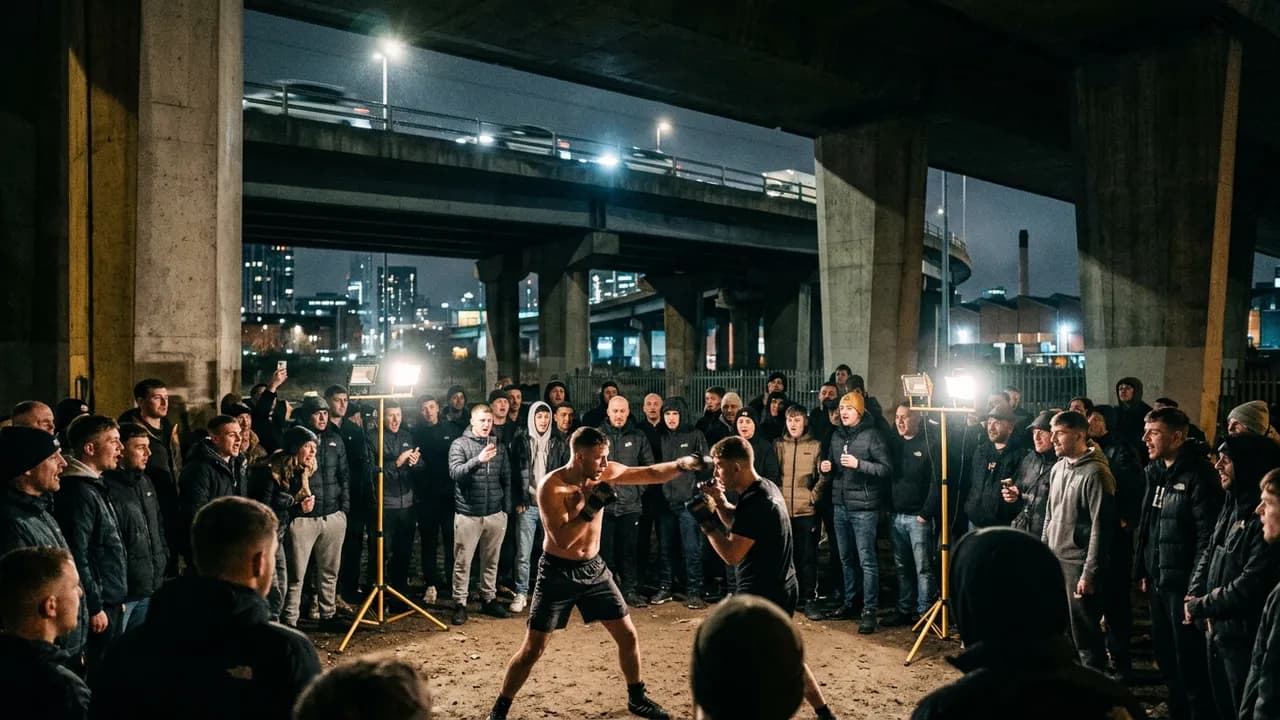
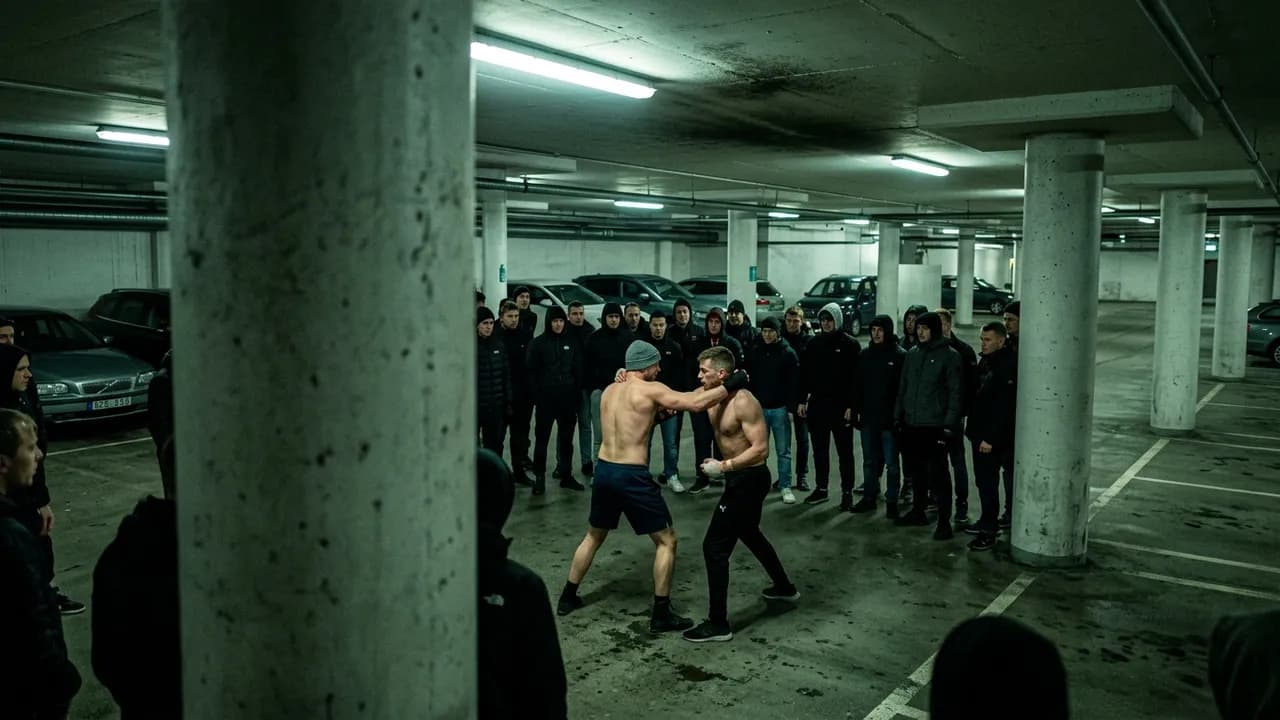
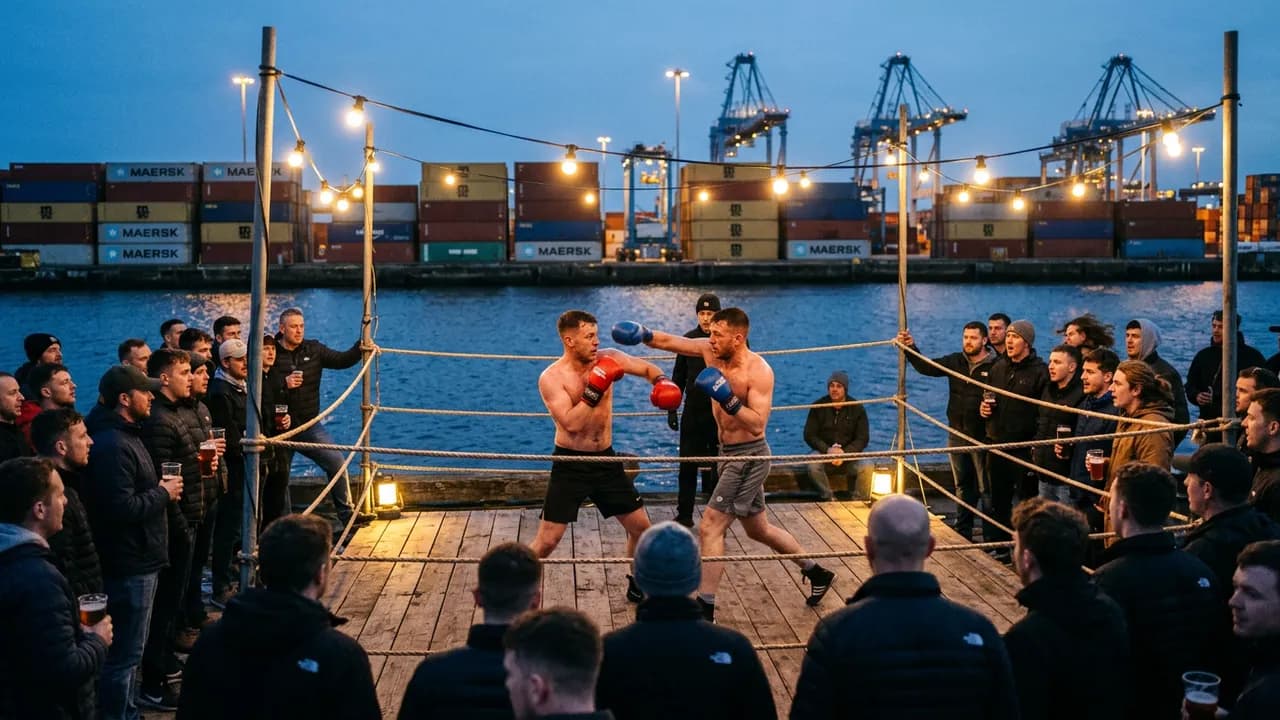
The European no-rules movement, catalyzed by KOTS in Gothenburg, has found an enthusiastic reception in Ireland. Irish fight clubs inspired by the KOTS model operate in Dublin and other Irish cities, staging events that follow the no-rules format -- fights on hard surfaces, no gloves, minimal restrictions on techniques.
Ireland's pre-existing culture of bare knuckle fighting and physical confrontation means that the no-rules movement did not arrive in a vacuum. It landed in a country with an established tradition of unsanctioned combat and a population that views fighting with less moral panic than many of its European neighbors. The Irish no-rules scene benefits from this cultural context, drawing fighters who may have experience in traveller fair fights, amateur boxing, or simply the street-level toughness that characterizes working-class Dublin.
The organizational structure mirrors the broader European model -- encrypted communication for event details, rotating locations, and a network of trusted participants who vouch for newcomers. Dublin's size and urban density provide both an audience and the anonymity needed for clandestine events.
Bare Knuckle Promotions
Ireland has also seen interest from sanctioned bare knuckle promotions. BKFC has explored the Irish market, recognizing that a country with Ireland's fighting traditions represents a natural audience for professional bare knuckle competition. The success of Irish fighters in international boxing -- from Katie Taylor to Conor McGregor to Carl Frampton -- demonstrates the depth of talent available.
The traveller bare knuckle tradition operates independently of any promotion.
BKB, with its UK operations, has also drawn Irish fighters and potentially Irish audiences. The proximity of Ireland to the UK bare knuckle scene -- a short flight from Dublin to any major British city -- means that Irish fighters can access British promotions with relative ease.
The traveller bare knuckle tradition operates independently of any promotion. Fair fights are organized within the community by community members, without reference to promoters, platforms, or outside organizations. This tradition predates every modern bare knuckle promotion by generations and will likely outlast them all.
Boxing Infrastructure
Dublin's boxing infrastructure is among the finest in Europe for a city its size. Clubs like the Crumlin Boxing Club -- which produced Katie Taylor, the most decorated female amateur boxer in history before she became a unified professional world champion -- serve as community anchors and talent development pipelines. The Irish Amateur Boxing Association oversees a competitive structure that feeds into international competition.
This boxing infrastructure indirectly supports the underground scene. Fighters trained in Dublin's amateur boxing clubs carry those skills into whatever fighting context they choose -- sanctioned competition, unsanctioned events, traveller fair fights, or no-rules clubs. The technical quality of Irish fighting, shaped by one of the strongest amateur boxing programs in the world, elevates the level of competition across all contexts.
Notable Fighters
Dublin's fighting heritage is vast, but the underground scene's notable fighters are largely anonymous by design.
The traveller community has produced legendary bare knuckle fighters whose names circulate within Irish culture but who remain unknown to the broader international fighting world. The Quinn McDonaghs, the Joyces, the Nevins, and other fighting families have produced generations of bare knuckle competitors. The 2011 documentary "Knuckle" brought some of these names to wider attention, but the fair fight tradition remains primarily an internal affair.
In the professional world, Ireland's extraordinary output of boxing champions demonstrates the depth of the fighting gene pool. Conor McGregor, who became the first simultaneous two-division UFC champion and later became a part-owner of BKFC, is Dublin-born and trained. His trajectory from Dublin's Crumlin neighborhood to global combat sports stardom illustrates the pathway that exists from Irish street-level fighting culture to the highest levels of professional competition.
The no-rules fighters operating in Dublin remain anonymous for practical and legal reasons. Their reputations exist within the community, built on performances witnessed by those present rather than distributed through social media.
How to Get Involved
Dublin offers multiple entry points into the fighting world. For those seeking structured, legal competition, the city's boxing clubs provide world-class training and a clear pathway to amateur and professional competition. The Irish Amateur Boxing Association can direct prospective boxers to clubs throughout Dublin.
MMA gyms, including Straight Blast Gym (where Conor McGregor trained), offer training in mixed martial arts. The Irish MMA scene is well-developed and produces fighters who compete at the highest professional levels.
For those drawn to the bare knuckle world, BKFC tryouts and events provide a sanctioned pathway. The promotion's global reach and growing presence in the UK and Ireland make it the most accessible option for fighters who want to compete without gloves under regulated conditions.
The traveller bare knuckle tradition is not accessible to outsiders. Fair fights are organized within the community, by the community, for the community. The no-rules scene operates through closed networks that require trust and personal connections to access.
Anyone considering involvement in unsanctioned fighting in Ireland should be aware of the legal framework. Irish law does not provide clear protection for consensual fighting outside sanctioned sporting events, and participants face potential criminal charges.
Related Cities
- London -- The UK bare knuckle capital with deep connections to the Irish fighting diaspora
- Manchester -- KOTR and the UK underground scene that shares Irish cultural influences
- Gothenburg -- Birthplace of KOTS, the movement inspiring Irish no-rules fight clubs
- Philadelphia -- BKFC headquarters, the promotion with growing interest in the Irish market