Philadelphia has always been a fighting city. The town that produced Joe Frazier, that built the Rocky steps into a pilgrimage site, that treats toughness as a civic virtue and softness as a character flaw -- this is the city that brought bare knuckle fighting back from the dead. When BKFC held its inaugural event in April 2018, it staged the first legal, sanctioned bare knuckle boxing match in the United States since 1889. The gap was 129 years. The location was deliberate. If bare knuckle fighting was going to return to America, it was going to return through Philadelphia.
The city's relationship with combat is not metaphorical. Philadelphia's murder rate, its street violence, its neighborhood beefs -- these are realities that shape daily life in large sections of the city. But Philadelphia also channels that aggression through an extraordinary network of boxing gyms, amateur programs, and professional training facilities that have produced more world champions per capita than almost any city in the country. Bare knuckle fighting arrived in this ecosystem not as something foreign, but as a return to fundamentals.
History
Philadelphia's boxing history is so extensive that it could fill volumes. The city produced Smokin' Joe Frazier, who trained at the PAL gym on North Broad Street and became heavyweight champion of the world. Bernard Hopkins, who began boxing while incarcerated and went on to become one of the greatest middleweight champions in history, made Philadelphia his home. The Blue Horizon, a small venue on North Broad Street that hosted boxing from 1961 to 2010, was considered one of the finest fight venues in the world -- a place where the crowd was so close to the ring that fighters could feel the spectators breathing.
Before all of this, Philadelphia was a center of bare knuckle prizefighting in the eighteenth and nineteenth centuries. The city's waterfront, its immigrant communities, and its working-class neighborhoods produced fighters and audiences for bare knuckle bouts that operated outside the law but with the tacit acceptance of communities that viewed fighting as a natural form of competition and dispute resolution.
The 129-year gap between the last legal bare knuckle event in 1889 and BKFC's first event in 2018 was not a period of inactivity. Bare knuckle fighting continued in Philadelphia's underground -- in gyms, on private property, and within communities that never stopped settling differences with their fists. What BKFC did was bring it back into the light.
Organizations
BKFC (Bare Knuckle Fighting Championship)
BKFC is headquartered in Philadelphia and represents the most significant development in American bare knuckle fighting since the sport was effectively banned in the late nineteenth century. Founded in April 2018, the promotion has grown into the world's largest bare knuckle organization, with events across the United States and international expansion into the UK and Thailand.
The BKFC model is fully sanctioned. Events are held under the jurisdiction of state athletic commissions, fighters undergo medical screening, and bouts are officiated by licensed referees and judges. The promotion operates with nine male weight classes from flyweight to heavyweight and three female divisions from strawweight to featherweight. This is professional, regulated prizefighting -- the critical difference being the absence of gloves.
The organization received a seismic boost in 2024 when Conor McGregor and McGregor Sports and Entertainment became part-owners. McGregor's involvement brought international media attention, mainstream sports coverage, and the kind of celebrity association that transforms a niche promotion into a global brand. For a sport that had existed in legal limbo for over a century, the McGregor investment represented a definitive statement of legitimacy.
BKFC's Philadelphia events carry a special significance. The city is home turf -- where the promotion was born, where its organizational infrastructure is based, and where the energy of the local fight community infuses events with an intensity that is difficult to replicate in other markets. Philadelphia crowds at BKFC events are notoriously passionate, bringing the same blue-collar intensity that made the Blue Horizon legendary.
The promotion's Instagram following exceeds two million, and its events stream to a global audience. BKFC has produced genuine stars -- Austin Trout (the pound-for-pound number one, a former professional boxing world champion who transitioned to bare knuckle), Christine Ferea (widely regarded as the female bare knuckle GOAT and flyweight champion), Britain Hart (who has headlined more BKFC events than any other fighter), and Luis Palomino (a two-division champion).
The Amateur and Gym Scene
Beneath BKFC's professional operation lies a thriving amateur combat sports scene that feeds the bare knuckle world. Philadelphia's boxing gyms -- from Joe Hand's Gym in Northern Liberties to the countless neighborhood facilities scattered across the city -- produce fighters who view bare knuckle as a viable career path. BKFC's tryout system draws heavily from this pool, offering Philadelphia-trained fighters a route to professional competition that does not require the traditional boxing promotional apparatus.
The city's MMA scene is also robust, with multiple gyms offering mixed martial arts training that occasionally intersects with the bare knuckle world.
The city's MMA scene is also robust, with multiple gyms offering mixed martial arts training that occasionally intersects with the bare knuckle world. Fighters who trained for MMA but prefer the standing combat of bare knuckle fighting find a natural home in BKFC.
Unsanctioned Activity
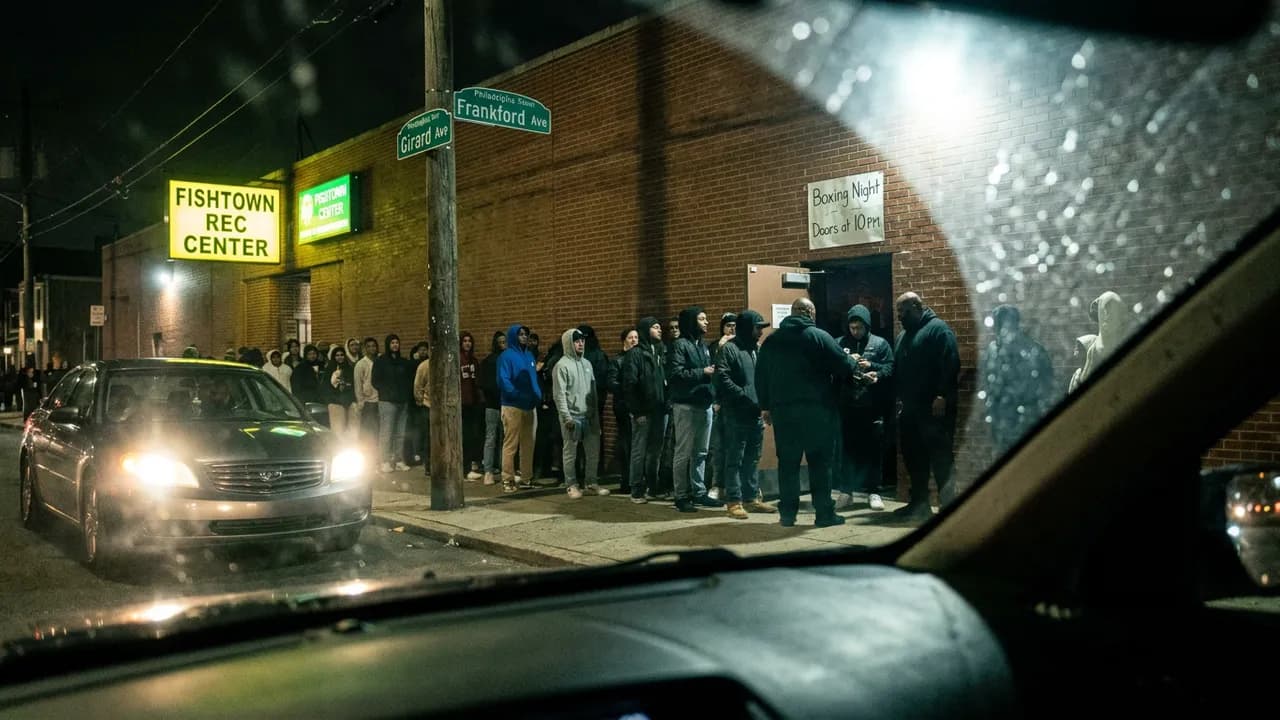
Philadelphia's underground fighting extends beyond the sanctioned world of BKFC. The city has a history of unlicensed boxing events, informal gym wars, and neighborhood fights that exist outside any organizational framework. These activities are harder to document and impossible to regulate, but they form part of the broader fighting ecosystem from which BKFC draws its energy and its fighters.
Notable Fighters
Philadelphia's contribution to the bare knuckle world is best measured through the BKFC fighters who have called the city home or emerged from its fight scene.
Austin Trout is BKFC's pound-for-pound number one fighter. A former WBA super welterweight world champion in professional boxing, Trout's transition to bare knuckle fighting brought instant credibility and a level of technical skill that elevates every card he appears on. His presence in BKFC validates the sport as a legitimate destination for elite combat athletes.
Christine Ferea has established herself as the greatest female bare knuckle fighter in the world. As BKFC's flyweight champion, her dominance in the division has made her a star within the promotion and a symbol of what women's bare knuckle fighting can become.
Britain Hart holds the record for the most main event appearances in BKFC history. The strawweight champion has been one of the promotion's most reliable draws, combining fighting skill with the kind of charisma that translates through screen and into arenas.
Luis Palomino, a two-division BKFC champion, represents the crossover fighter -- someone who has competed at the highest levels of both MMA and bare knuckle fighting and excelled in both.
How to Get Involved
Philadelphia is the best city in the United States for anyone interested in bare knuckle fighting. BKFC is headquartered here, and the promotion's tryout events -- where aspiring fighters can audition for a spot on the roster -- are regularly held in the Philadelphia area. Applications are accepted through bkfc.com.
For spectators, BKFC events in Philadelphia are ticketed and publicly advertised. The promotion announces event dates well in advance, and the city's passionate fight audience means that Philadelphia cards are consistently among the best-attended on the BKFC schedule.
The city's boxing gyms offer world-class training for anyone serious about developing the skills needed for bare knuckle competition. Philadelphia's gym culture is legendarily demanding -- the training is hard, the sparring is real, and the community does not tolerate pretenders. For fighters, this is a feature, not a bug.
Related Cities
- London -- The historic capital of bare knuckle fighting, now hosting BKFC UK events alongside domestic promotions
- New York -- The neighboring East Coast city with its own underground fighting history through the UCL
- Miami -- Where Kimbo Slice and Dada 5000 launched the backyard fighting movement that preceded the bare knuckle revival
- Las Vegas -- The traditional fight capital of America, where BKFC also stages major events