Australia has a fighting culture that runs deeper than its reputation as a land of beaches and barbecues might suggest. Beneath the surface of one of the world's most prosperous and stable democracies lies a combat subculture shaped by the country's frontier origins, its blue-collar identity, its deep connection to British and Irish fighting traditions, and a national character that prizes physical toughness, directness, and the willingness to "have a go."
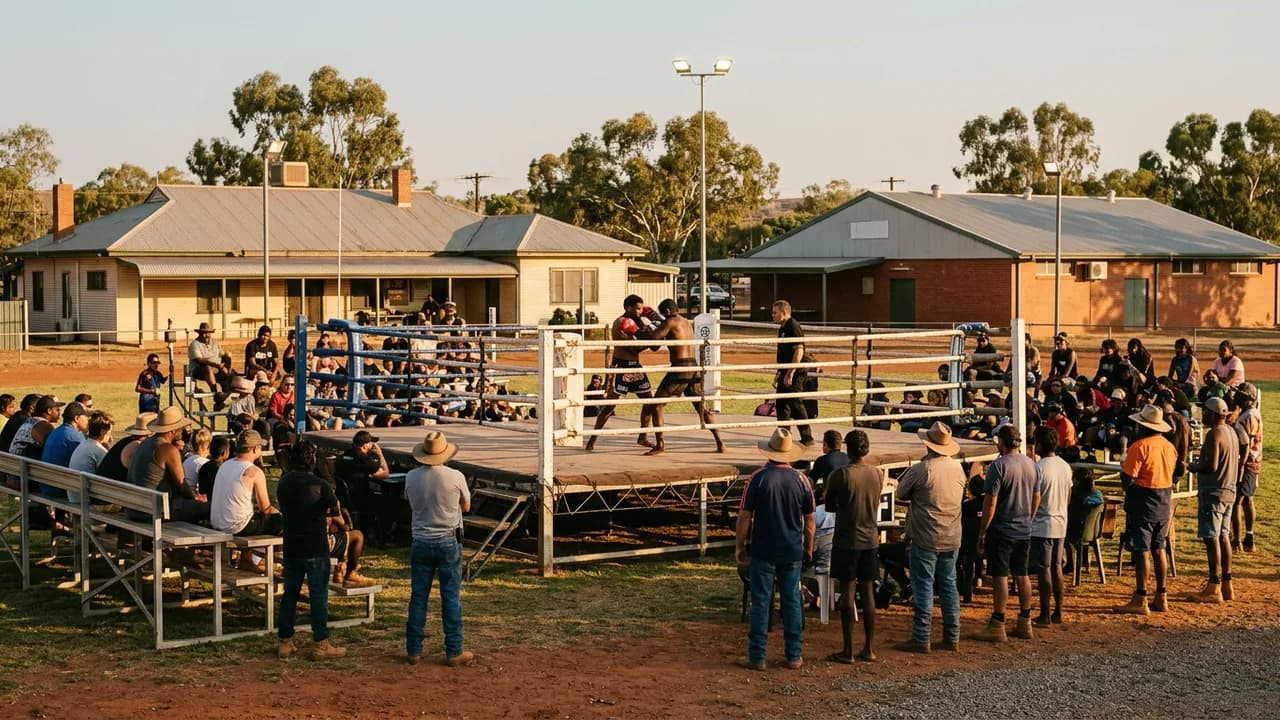
The Australian underground fighting scene is anchored by a thriving backyard boxing culture that has exploded in visibility through social media. From suburban backyards in Western Sydney to rural properties in Queensland and the outback, informal boxing and MMA events draw participants from across the social spectrum -- tradesmen, soldiers, miners, gym rats, and ordinary blokes looking to test themselves. The format is simple: a ring or marked-off area, gloves or bare fists, and a willingness to fight.
Beyond backyard boxing, Australia hosts an underground MMA scene that has operated in the shadows of the country's sanctioned combat sports infrastructure for decades. Unlicensed events, gym challenges, and informal tournaments have thrived in cities and regional towns alike, driven by a demand for competitive fighting that exceeds the capacity of sanctioned promotions to supply. And the bare knuckle boxing movement, which has exploded globally through organizations like BKFC and UK promotions like BKB, is beginning to make inroads in Australia.
History
Colonial Roots and Bare Knuckle Traditions
Australia's fighting culture traces directly to the British and Irish convicts and settlers who founded the colony. The bare knuckle boxing tradition that thrived in 18th- and 19th-century Britain crossed the ocean with the First Fleet, and by the early colonial period, prize fighting was a popular and well-attended form of entertainment in the settlements of New South Wales and Van Diemen's Land (Tasmania).
The goldfields of the 1850s intensified the fighting culture. Mining camps, populated by tough, hard-drinking men from across the world -- British, Irish, Chinese, American, continental European -- became hotbeds of bare knuckle boxing. Fights were staged for money, for honor, and for entertainment, often with large stakes wagered by spectators. The goldfields produced some of Australia's earliest sporting heroes, men whose fighting reputations were a source of regional and national pride.
Larry Foley, known as the "Father of Australian Boxing," was the dominant bare knuckle fighter of the 1870s and 1880s. His career bridged the transition from bare knuckle prize fighting to gloved boxing under the Marquess of Queensberry rules, and his influence on Australian boxing culture -- through both his fighting and his teaching -- was profound. Foley's gymnasium in Sydney became the training ground for a generation of Australian boxers who competed internationally.
The Pub Fight Tradition
Australian pub culture has always included a fighting element. The "pub brawl" is a fixture of Australian social mythology, celebrated in folk songs, literature, and film. While most pub fights are spontaneous and disorganized, Australia has a tradition of more structured fighting at pubs and social clubs, where informal boxing matches are staged as entertainment for patrons.
The country pub fight tradition was particularly strong in rural and outback Australia, where isolation, alcohol, and the physical demands of agricultural and mining work created conditions where fighting was a normal part of social life. The annual shows and rodeos that punctuate the calendar of rural Australian communities often included boxing tents -- traveling exhibitions where professional and semi-professional boxers would take on local challengers for prize money.
Boxing Tents: The Traveling Fight Clubs
The Australian boxing tent is one of the most distinctive fighting traditions in the world. From the late 19th century through the latter half of the 20th century, traveling boxing tents toured Australia's rural show circuit, setting up at agricultural shows, fairs, and rodeos. Inside the tents, professional fighters would issue challenges to local men, offering prize money to anyone who could last a specified number of rounds or achieve a knockout.
The boxing tents served multiple functions. They were entertainment, they were a proving ground for aspiring fighters, and they were a social institution that brought together communities across racial and class lines. Indigenous Australian boxers, in particular, found in the tents a rare arena where their skill and courage were recognized and rewarded on equal terms.
01 / Up next / Modern Backyard Boxing
The tent boxing tradition declined through the late 20th century as changing safety regulations, insurance costs, and shifting social attitudes made the format increasingly difficult to sustain. Fred Brophy's boxing tent, which toured Queensland until the 2010s, was the last of its kind and became a nationally recognized cultural institution before its retirement. But the spirit of the boxing tent -- come one, come all, step in and test yourself -- lives on in Australia's backyard boxing culture.
Modern Backyard Boxing
The modern Australian backyard boxing scene emerged in the early 2010s, driven by the same forces that created similar movements worldwide: social media distribution, cultural appetite for authentic combat, and a community of fighters who found sanctioned competition either inaccessible or insufficiently exciting.
Australian backyard boxing events are staged in suburban backyards, on rural properties, in warehouse spaces, and at community venues. The format varies -- some events use boxing gloves and standard boxing rules, others incorporate MMA techniques, and some are essentially bare knuckle with hand wraps. What unites them is the informality: no sanctioning body, no regulatory oversight, and no professional infrastructure beyond a ring (or ropes, or a circle of spectators) and a willingness to fight.
Social media, particularly Instagram, TikTok, and YouTube, has given Australian backyard boxing a visibility that far exceeds its physical footprint. Fight clips from Australian events regularly go viral, and several Australian backyard boxing accounts have accumulated large followings. The aesthetic of Australian backyard fighting -- sun-bleached, casually violent, distinctly ocker -- has found an international audience.
Active Organizations
Backyard Boxing Networks
Australia does not have a single dominant underground fighting organization comparable to Streetbeefs in the United States or KOTS in Europe. Instead, the scene is fragmented across multiple informal networks, each organized around a particular geographic area, gym, or social group.
Format: Most backyard boxing events follow a boxing format with gloves, though some incorporate kickboxing or MMA elements. Events that use bare knuckles or minimal hand wrapping exist but are less common than gloved formats, partly because of the legal risk associated with bare knuckle fighting in Australia.
Venues: Suburban backyards, rural properties, warehouse spaces, and occasionally licensed venues that host "amateur boxing nights" that exist in the gray area between sanctioned and unsanctioned events.
Participant profile: Australian backyard boxing draws from a broad demographic. Tradesmen, military personnel, miners, students, gym enthusiasts, and anyone looking for a fight can participate. The culture is generally inclusive, with events welcoming participants regardless of experience level, though matchmaking tends to pair fighters of similar size and apparent ability.
Social media presence: Multiple Australian backyard boxing accounts operate on Instagram, TikTok, and YouTube, sharing fight footage and promoting upcoming events. These accounts serve as the primary marketing and recruitment tools for the scene.
Underground MMA
Australia's underground MMA scene operates beneath the country's well-developed sanctioned MMA infrastructure. Events are staged at gyms, warehouses, and private properties, typically organized by gym owners or fight promoters who operate outside the state athletic commission framework.
Format: MMA rules, though with less standardization than sanctioned events. Some underground MMA events closely mirror the rules of professional MMA (gloves, rounds, referee stoppages), while others are looser, allowing techniques or conditions that would not be permitted in a sanctioned bout.
Scale: Underground MMA events range from small gym shows with a handful of fights to larger events with full cards and paying spectators. The scene is most active in Sydney, Melbourne, Brisbane, and Perth, where the concentration of MMA gyms creates a large pool of fighters and a ready audience.
Emerging Bare Knuckle Scene
Australia's bare knuckle boxing scene is in its early stages, lagging behind the US and UK but growing in interest. The global visibility of BKFC, combined with Australia's historical connection to bare knuckle fighting traditions, has created demand for domestic bare knuckle events.
Australian fighters interested in bare knuckle competition have primarily traveled to compete internationally, appearing on cards in the UK and Asia. The establishment of BKFC Asia and the promotion's expansion into the Asia-Pacific region have created closer opportunities for Australian bare knuckle fighters.
Domestically, informal bare knuckle events have been staged in various locations, though the aggressive legal framework governing unsanctioned fighting in Australia (discussed below) makes organized bare knuckle events riskier to stage than in countries with more permissive regulatory environments.
Notable Fighters
Australia has produced world-class fighters across boxing, MMA, and kickboxing, many of whom came up through informal or semi-sanctioned fighting before reaching the professional level.
03 / Up next / Legal Status
The backyard and underground scene has produced fighters who have transitioned to professional MMA and boxing, though the pathway is less documented than in countries like the United States or Brazil. Australian gyms with strong underground connections -- particularly in Western Sydney, Melbourne's western suburbs, and Brisbane's outer suburbs -- have served as pipelines between informal fighting and professional competition.
Indigenous Australian fighters deserve particular mention. The boxing tent tradition provided Indigenous fighters with opportunities to compete and earn recognition in an era when they were excluded from much of Australian public life. Modern Indigenous boxing -- exemplified by world champions like Lionel Rose, Jeff Fenech (of mixed heritage), and Anthony Mundine -- draws from a fighting culture that includes both the formal boxing tradition and informal community fighting.
Legal Status
Australia has one of the most aggressive legal frameworks for combating unsanctioned fighting in the developed world. Combat sports are regulated at the state and territory level, with each jurisdiction maintaining its own combat sports authority or commission.
In New South Wales, the Combat Sports Act 2013 requires that all combat sports events be sanctioned by a recognized governing body and comply with extensive safety requirements including medical personnel, qualified referees, and fighter licensing. Staging or participating in an unsanctioned combat event can result in significant fines and potential criminal charges.
Victoria, Queensland, Western Australia, and the other states and territories have similar, though not identical, regulatory frameworks. The common thread is that organized fighting outside sanctioned frameworks is illegal, and authorities have demonstrated a willingness to investigate and prosecute unsanctioned events, particularly when they result in injury or attract public attention.
The aggressive legal environment has shaped Australia's underground scene in several ways. First, it has pushed much of the scene further underground, with organizers using encrypted communications and private properties to avoid detection. Second, it has created a tendency toward formats that are more defensible legally -- boxing with gloves, rather than bare knuckle or no-rules fighting -- on the theory that events resembling sanctioned boxing carry lower legal risk. Third, it has driven some Australian fighters to compete internationally, traveling to countries with more permissive legal environments for unsanctioned combat.
The legal framework has not eliminated underground fighting, but it has made Australia's scene smaller and more clandestine than it might otherwise be, given the country's deep fighting culture and large combat sports participation base.
How to Get Involved
As a Spectator
Australian backyard boxing events are promoted primarily through social media, particularly Instagram and TikTok. Following Australian combat sports and backyard boxing accounts is the most reliable way to learn about upcoming events. Some events are open to spectators who arrive at the announced location; others require a personal connection to the organizing network.
For sanctioned combat sports, Australia hosts regular professional and amateur boxing, MMA, and kickboxing events in all major cities. These events are accessible through standard ticketing platforms and provide high-quality combat sports entertainment within a legal framework.
As a Fighter
Australia's combat sports gym infrastructure is excellent, with boxing, MMA, kickboxing, and BJJ gyms available in all major cities and many regional centers. Developing skills through a legitimate gym is the essential first step for any aspiring fighter.
Entry into the backyard and underground scene typically occurs through gym networks and social connections. Fighters with established reputations in gym sparring or amateur competition are more likely to be invited to participate in informal events.
For bare knuckle fighting, Australian fighters can seek opportunities through international promotions -- particularly BKFC and its Asia-Pacific operations -- or through the emerging domestic scene, which is most active in Sydney and Melbourne.
International options include applying to organizations like Streetbeefs (which accepts applications from anywhere in the world through streetbeefshq.com) or traveling to compete in events in Thailand, where the regulatory environment is more permissive.
Related Countries
- United States -- The American backyard boxing and underground fighting scene, particularly Streetbeefs and Backyard Squabbles, provides the closest parallel to Australia's backyard culture.
- United Kingdom -- Australia's fighting traditions trace directly to British and Irish settlers, and the UK's bare knuckle scene is a model for Australia's emerging interest in the format.
- Thailand -- A primary training and competition destination for Australian fighters, particularly in Muay Thai and MMA. BKFC Asia/Thailand provides bare knuckle opportunities in the Asia-Pacific region.
- Japan -- Historical connection through the development of MMA in both countries, with Australian fighters competing in Japanese promotions.
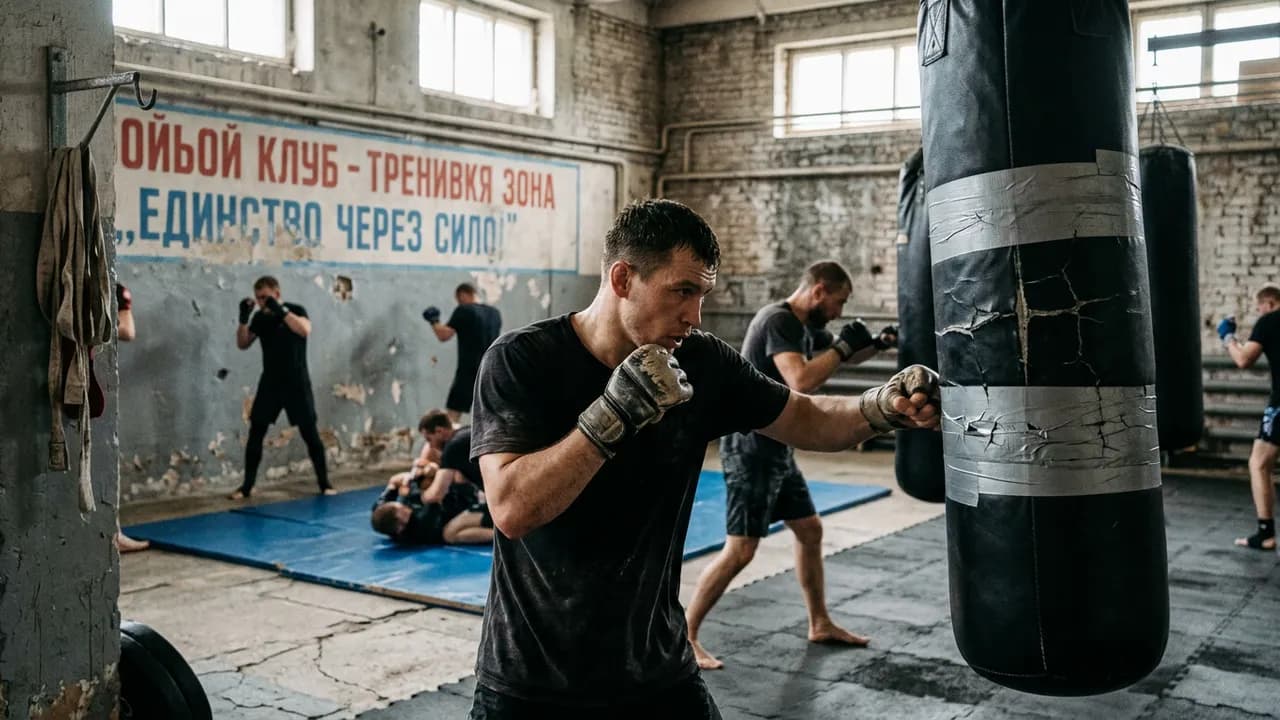
- Russia -- The global leader in underground fighting content. While culturally distinct, the Russian model of filming and distributing fight content has influenced how Australian underground fighting is marketed and consumed.
FAQ
Is backyard boxing legal in Australia?
No. Organized combat events outside sanctioned frameworks are illegal in all Australian states and territories. Each state has specific combat sports legislation that requires events to be sanctioned, with qualified officials, medical personnel, and fighter licensing. Staging or participating in unsanctioned events can result in fines and criminal charges.
How big is the Australian underground fighting scene?
The scene is significant but fragmented. There is no single dominant organization; instead, multiple informal networks operate across the country, centered on gyms, geographic communities, and social groups. The scene is most active in Sydney, Melbourne, Brisbane, and Perth, with additional activity in regional areas with strong boxing or fighting traditions.
What is the boxing tent tradition?
Australian boxing tents were traveling exhibitions that toured the country's show circuit from the late 19th century through the 2010s. Professional fighters would challenge local men to step into the ring, offering prize money to anyone who could go the distance. The tents were a proving ground for aspiring fighters and a cultural institution, particularly important for Indigenous Australian boxers.
Is there bare knuckle boxing in Australia?
The bare knuckle scene in Australia is small but growing. Most bare knuckle activity involves Australian fighters traveling to compete internationally, particularly through BKFC and UK-based promotions. Domestic bare knuckle events have been staged informally, but Australia's aggressive legal framework for unsanctioned fighting limits the growth of an organized domestic scene.
How does Australian underground fighting compare to the US or UK?
Australia's underground scene is smaller and more clandestine than those in the United States or United Kingdom, primarily due to more aggressive legal enforcement against unsanctioned fighting. The cultural appetite for fighting is comparable, but the legal environment pushes the scene further underground and discourages the emergence of publicly visible organizations like Streetbeefs or KOTR.