The question "is underground fighting legal?" does not have a simple answer. It depends on where you are, what kind of fighting you are talking about, how the event is organized, and whether anyone gets seriously hurt. A backyard boxing match between two consenting adults in Texas exists in a fundamentally different legal universe than a no-rules concrete fight in Sweden or an unsanctioned bare knuckle bout in New York.
This guide provides the most comprehensive legal breakdown of underground fighting available anywhere. We cover the United States state by state, the United Kingdom's unique licensing framework, and every major European and international jurisdiction where underground fighting organizations operate. This is not legal advice. It is an informational resource for understanding the legal landscape that underground fighters, promoters, and fans navigate.
United States
The United States has no single federal law governing combat sports. Instead, each state regulates fighting through its own athletic commission, and the legality of unsanctioned fighting depends on state law. This creates a patchwork of legal environments that range from relatively permissive to strictly prohibitive.
The Federal Level
There is no federal law that specifically criminalizes participation in unsanctioned fighting. However, federal law does come into play in certain contexts:
- The Professional Boxing Safety Act of 1996 and its 2000 amendment (the Muhammad Ali Boxing Reform Act) impose requirements on professional boxing, including state commission approval. These laws apply specifically to professional boxing and do not directly address MMA, bare knuckle fighting, or amateur/underground events.
- Interstate commerce laws could theoretically be applied to underground fight promotions that sell pay-per-view across state lines, though this has not been tested significantly in court.
- Tax evasion is a federal concern when fight purses and event revenues go unreported, which is common in the underground scene.
Mutual Combat States
No US state has a law that makes a consensual fight legal. A few have narrower provisions — consent defenses that stop at serious injury, and one city ordinance — and these are the most favorable legal environment for underground fighting in the United States, though they come with significant limitations. The full state-by-state breakdown, with the statute or case behind each entry, is in Mutual Combat Laws by State.
Texas
Texas has the clearest consent statute in the country. Under Texas Penal Code Section 22.06, the victim's effective consent is a defense to prosecution for assault, aggravated assault or deadly conduct when:
- The conduct did not threaten or inflict serious bodily injury, or
- The victim knew the conduct was a risk of their occupation, recognized medical treatment, or a recognized scientific experiment
The defense is not available when the offense is part of joining or staying in a criminal street gang. Colorado's criminal code (C.R.S. 18-1-505) has a similar consent defense, also limited to injuries that are not serious.
This means that two people who agree to fight in Texas may have a legal defense against assault charges, provided nobody suffers serious bodily injury and no deadly weapons are involved. However, this defense applies to the participants. It does not necessarily protect promoters who organize events, charge admission, or profit from the fights. Organized underground fight events in Texas still occupy a legal gray area, as they may run afoul of state athletic commission regulations even if the individual fights could be defended under mutual combat.
Washington
Washington is the state most associated with mutual combat, but the association comes from one city. Seattle Municipal Code 12A.06.025 makes fighting an offence when it happens in a public place and creates a substantial risk of injury to non-participants or damage to property; a fight that does neither falls outside that ordinance. Washington state law is narrower: in State v. Shelley (1997) the Court of Appeals accepted consent as a defense to assault only for injuries that are a reasonably foreseeable hazard of an athletic contest. The Seattle ordinance does not stop a state assault charge, anywhere in Washington.
The Scrapyard operates out of Gig Harbor, Washington, and is often described as benefiting from the state's reputation on mutual combat. That reputation is larger than the law: Washington has no statute that covers organized events with spectators and commercial distribution, and a serious injury exposes any fight to a felony assault charge.
Oregon
Oregon is often listed as a mutual combat state. Its statute says the opposite. ORS 161.215(1)(c) denies the justification of self-defense when "the physical force involved is the product of a combat by agreement not specifically authorized by law." An agreed fight is not a defense in Oregon — it is written into the code as a reason force is not justified. The only authorized route is a bout licensed by the state athletic commission. (New York and Colorado carry the same sentence in their self-defense statutes.)
Strictly Prohibitive States
New York
New York has one of the most restrictive legal environments for unsanctioned fighting in the country. Under the New York State Penal Code, a person cannot legally consent to being assaulted. This means that mutual combat is not a defense to assault charges in New York. Any fighting that causes physical injury, regardless of consent, can be prosecuted as assault.
01 / Up next / California
Additionally, New York's State Athletic Commission tightly regulates all combat sports. Organizing an unsanctioned fight event in New York can result in criminal charges for the promoter and participants.
California
California law explicitly criminalizes participation in unsanctioned fighting. Under California Penal Code Section 412, it is illegal for any person to participate in, engage in, instigate, aid, encourage, or do any act to further an unregulated fight, sparring match, or boxing exhibition. Violation is a criminal misdemeanor punishable by:
- Up to one year in county jail
- Up to $1,000 in fines
This statute applies broadly to both participants and organizers, and it does not distinguish between different types of fighting. Backyard Squabbles, which operates in Los Angeles, exists in a legally precarious position under California law.
Massachusetts
Massachusetts prohibits all forms of prizefighting, including bare knuckle fighting, outside of events sanctioned by the state athletic commission. The state's laws are among the strictest in the country regarding unsanctioned combat.
States Where BKFC Is Sanctioned
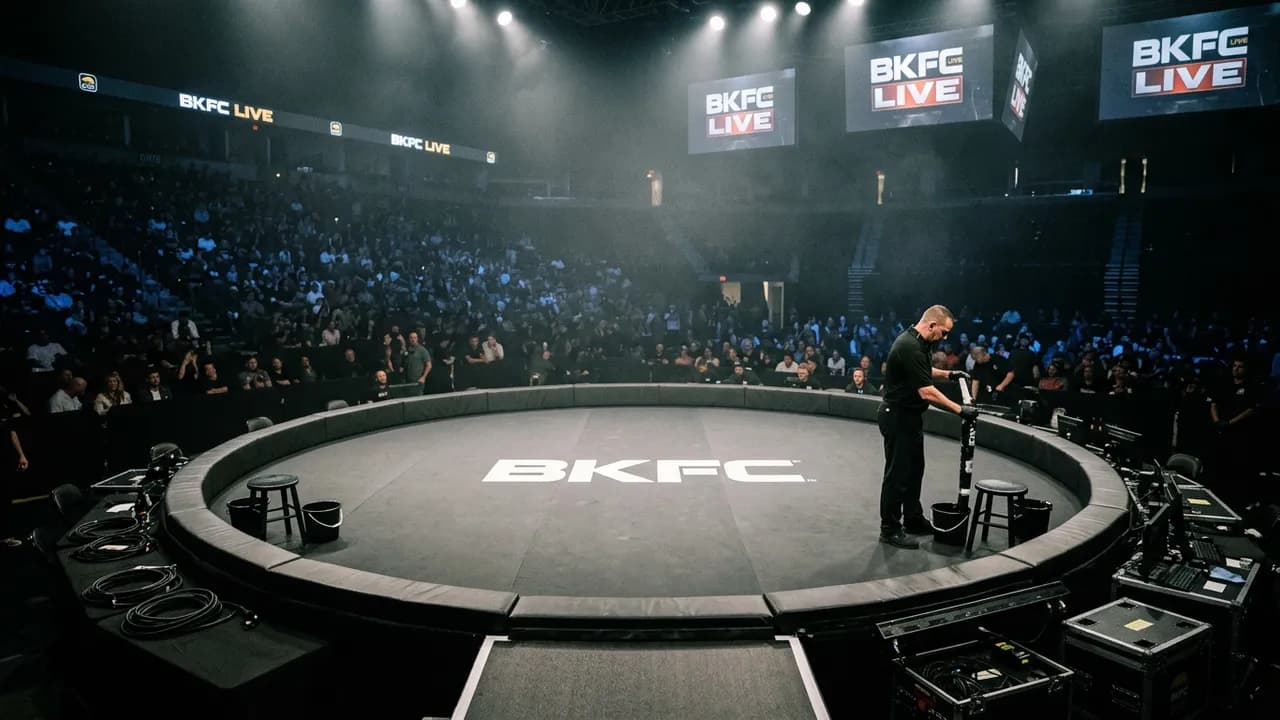
BKFC has obtained sanctioning from athletic commissions in multiple states, demonstrating that bare knuckle fighting can be conducted legally within the existing regulatory framework. As of 2026, BKFC has been sanctioned in:
- Wyoming (first state to sanction, June 2018)
- Mississippi
- Montana
- New Hampshire
- Florida
- Massachusetts (2026 — BKFC 92 at Fenway Park was the state's first sanctioned bare-knuckle event)
- And additional states that have followed
The fact that BKFC can operate legally while unsanctioned bare knuckle events remain illegal highlights the critical distinction between sanctioned and unsanctioned fighting. The fighting itself is not necessarily illegal; what matters is whether it takes place under the authority of a recognized regulatory body.
The Gray Area: Backyard Fighting
Organizations like Streetbeefs operate in a persistent gray area. Streetbeefs' model of using gloves, referees, and basic rules, combined with its philosophy of violence prevention ("Guns Down, Gloves Up"), has helped it avoid legal trouble for over 15 years of operation. Several factors work in Streetbeefs' favor:
- Fights use protective equipment (gloves, sometimes headgear)
- A referee is present who can stop the fight
- Fighters consent to participate
- The organization's stated purpose is community violence reduction
- Events take place on private property
However, none of these factors provide a definitive legal shield. The organization operates in Virginia, which does not have an explicit mutual combat statute, and Virginia's State Boxing, Wrestling, and Martial Arts Commission technically has jurisdiction over organized combat sports events. The most likely explanation for Streetbeefs' continued operation is a combination of prosecutorial discretion (law enforcement choosing not to pursue charges) and the difficulty of distinguishing organized backyard fighting from informal sparring.
United Kingdom
The United Kingdom has a complex and evolving relationship with bare knuckle and underground fighting, shaped by the country's deep historical roots in prizefighting and its Traveller community's enduring bare knuckle tradition.
The Legal Framework
In England and Wales, the legality of fighting is governed primarily by the Offences Against the Person Act 1861 and subsequent case law. The key legal principle was established in R v Brown (1994), in which the House of Lords ruled that a person cannot consent to actual bodily harm (ABH) or above, with exceptions for recognized sports.
This creates a crucial question: is bare knuckle fighting a "recognized sport" for purposes of the consent exception? The answer has evolved over time.
BKB Licensing
Bare knuckle boxing achieved a degree of official recognition in the UK when events began being licensed through local authorities. BKB has held events under various licensing arrangements, arguing that bare knuckle boxing is a legitimate sporting activity with historical precedent in the United Kingdom.
The licensing process varies by local authority, and there is no single national framework specifically governing bare knuckle boxing. Some local councils have granted entertainment licenses for bare knuckle events, while others have refused.
KOTR and the Gray Area
KOTR (King of the Ring) operates in the gray area between the UK's unlicensed boxing tradition and its legal framework. The UK has a long history of "unlicensed boxing," which refers to boxing events that take place outside the jurisdiction of the British Boxing Board of Control (BBBofC) but are not necessarily illegal.
Unlicensed boxing occupies a legal gray area because:
- The BBBofC is a private body, not a government regulator. Its authority derives from tradition and industry consensus, not from statute.
- Fighting can be legal if it falls within the scope of a recognized sport and the participants consent.
- Local authorities can license events as entertainment.
This means that KOTR events may be lawful if conducted under appropriate licensing, but events that result in serious injury could expose promoters and participants to criminal liability.
Traveller Bare Knuckle Fighting
The Irish Traveller and Romani communities in the UK have a centuries-old tradition of bare knuckle fighting to settle disputes. These fights, often called "fair fights," take place on roadsides, in fields, and on private land. They are generally illegal under UK law but are rarely prosecuted unless they result in serious injury or cause public disorder.
02 / Up next / Russia
The Traveller bare knuckle tradition exists largely outside the framework of organized underground fighting, though some participants have crossed over into organizations like BKFC and BKB.
Russia
Russia has one of the most permissive legal environments for underground and semi-sanctioned fighting in the world. This permissiveness has allowed organizations like Top Dog FC, Strelka, and Our Way FC to operate with relative openness and grow to enormous audiences.
The Legal Framework
Russia's approach to combat sports regulation differs fundamentally from the Western model:
- Amateur MMA is recognized as an official sport by the Russian Ministry of Sport, which provides a regulatory framework that can encompass many forms of organized fighting.
- The Russian MMA Union (recognized by the Ministry of Sport) provides a degree of institutional legitimacy to combat sports events that would be considered unsanctioned in other countries.
- Russian criminal law does not have the same tradition of prosecuting consensual fighting that exists in Western Europe and the Anglophone world.
How Russian Organizations Operate
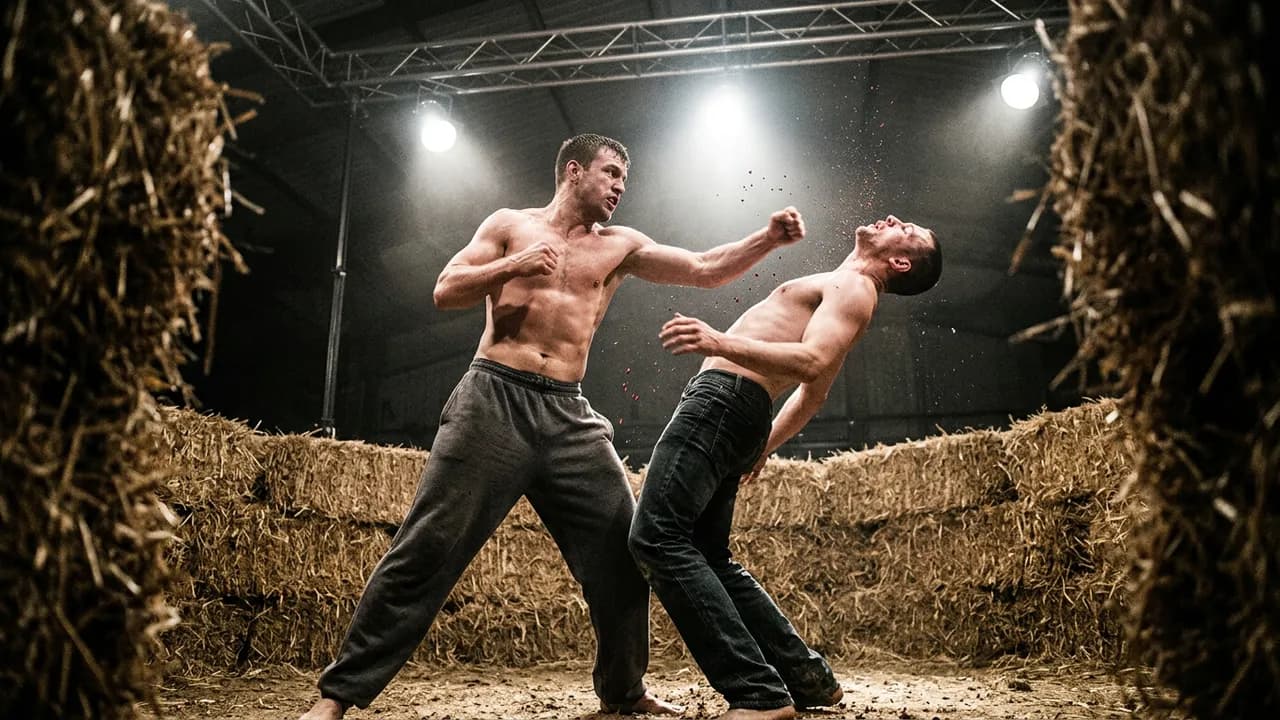
Top Dog FC operates relatively openly in Moscow, holding events in venues that range from the original parking lot with hay-bale ring to proper arenas. The organization's YouTube channel has over 6 million subscribers, and its events are promoted publicly on social media. This level of openness would be difficult or impossible in most Western countries.
Strelka stages mass street fight tournaments, often in outdoor locations in St. Petersburg and other cities. While the specific format of organized mass brawls is not sanctioned under Russia's amateur MMA framework, the organization operates with far less concern about law enforcement than its European counterparts.
The key factors enabling this openness include:
- Russia's cultural acceptance of fighting as a form of dispute resolution and entertainment
- The broad umbrella of the amateur MMA designation, which can be stretched to cover many formats
- Less aggressive prosecutorial approaches to consensual violence
- The economic reality that fight organizations bring money, employment, and international attention
Limitations
Russian permissiveness has limits. Events that result in deaths or serious injuries can attract law enforcement attention. Events that are associated with organized crime, hooliganism, or political activity may be targeted. And the regulatory environment can shift rapidly depending on political priorities.
Sweden
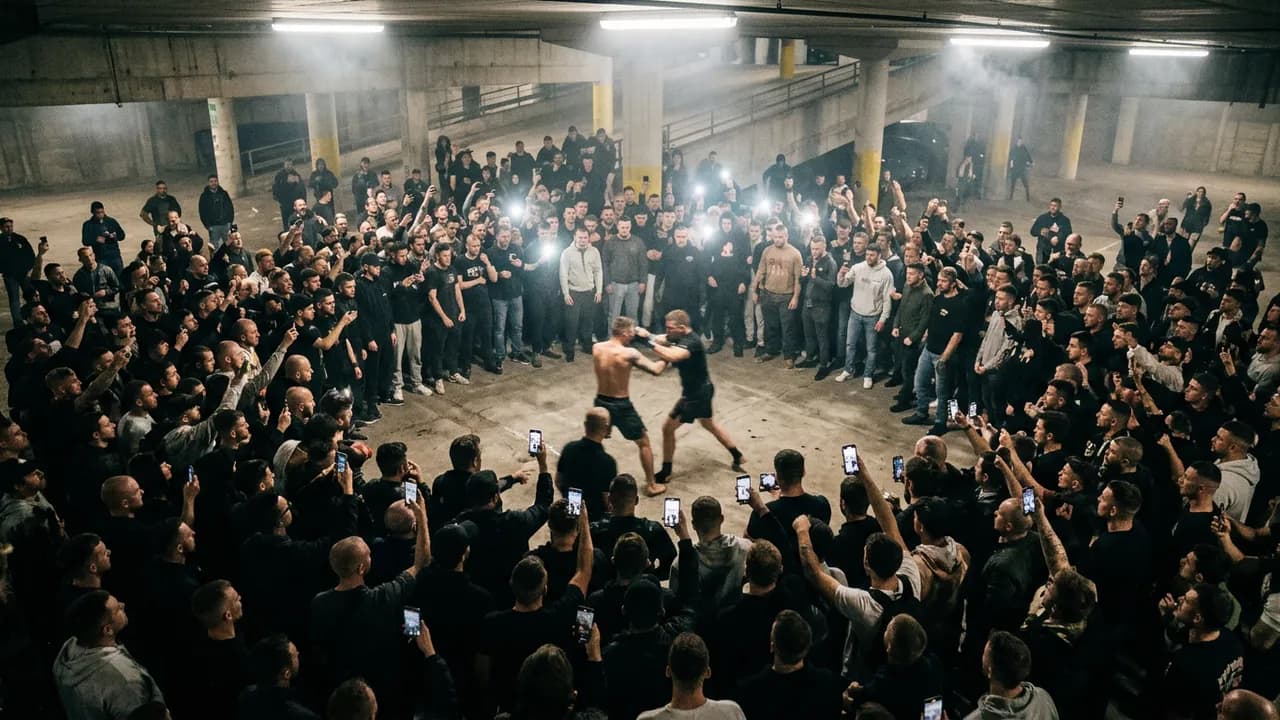
Sweden is the birthplace of KOTS (King of the Streets), the most prominent no-rules fighting organization in the world. Despite this, or perhaps because of it, Sweden has one of the most hostile legal environments for underground fighting in Europe.
The Legal Framework
Under Swedish law, assault is a criminal offense regardless of consent. Swedish law does not recognize a general right to consent to being harmed. This means that:
- Participants in underground fights can be charged with assault
- Organizers can be charged with aiding and abetting assault
- Spectators could potentially face charges for being accessories
The Swedish Sports Confederation (Riksidrottsfoerbundet) regulates recognized combat sports, and any fighting that takes place outside this framework is unsanctioned and potentially criminal.
How KOTS Operates
KOTS responds to Sweden's legal hostility by operating entirely underground:
- Event locations are kept secret until shortly before the event
- Events move between different locations to avoid detection
- The organization operates from undisclosed locations
- Fighters and organizers use pseudonyms and take steps to avoid identification
- Events have been held across multiple European countries, not just in Sweden
Swedish law enforcement has attempted to shut down KOTS events, but the organization's operational security has allowed it to continue operating for over a decade. The cat-and-mouse dynamic between KOTS and Swedish authorities is a defining feature of the organization's identity and brand.
France
France has a strictly prohibitive legal environment for underground fighting. FPVS, the French no-rules fighting organization, operates illegally and faces serious criminal consequences if its organizers are identified.
The Legal Framework
French law criminalizes participation in and organization of unsanctioned fighting through several statutes:
- Voluntary assault (Coups et blessures volontaires) under Articles 222-7 through 222-16 of the French Penal Code covers all forms of intentional physical violence, with penalties scaling based on the severity of injury
- Organizing illegal sporting events can result in additional charges under French sports law
- Endangering the life of another (mise en danger de la vie d'autrui) under Article 223-1 can be charged against organizers who create conditions where serious injury or death is foreseeable
The penalties for organizing underground fights in France are severe. If a participant suffers permanent injury or death, the organizer can face years in prison.
FPVS and the French Scene
FPVS operates in France despite this legal environment, following the KOTS model of operational secrecy. Events are held at undisclosed locations, participants use pseudonyms, and videos are distributed online through channels that are difficult for French authorities to control.
05 / Up next / Denmark
The French underground fighting scene is smaller than its Scandinavian and Eastern European counterparts, partly because of the aggressive legal environment and partly because France's combat sports culture is oriented toward sanctioned disciplines like boxing, judo, and savate.
Denmark
Denmark criminalizes underground fighting under its assault laws, and UUF (Underground Unarmed Fighting) operates illegally.
The Legal Framework
Danish criminal law treats unsanctioned fighting as assault. Under the Danish Criminal Code (Straffeloven), assault is punishable even when both parties consent. Denmark follows the same general principle as Sweden: consent is not a defense to criminal assault charges.
The penalties for participating in or organizing underground fights in Denmark include:
- Fines
- Imprisonment for up to 3 years for assault (higher for aggravated assault)
- Additional charges for organizing illegal events
UUF Operations
UUF emerged as part of the broader Scandinavian no-rules fighting movement inspired by KOTS. Like its Swedish predecessor, UUF operates covertly, using secret locations and online distribution to avoid law enforcement. Danish authorities have taken an active interest in suppressing underground fighting events.
Germany
Germany has a strict legal framework that makes organized underground fighting clearly illegal. While Germany has a robust combat sports scene with sanctioned boxing, kickboxing, and MMA events, unsanctioned fighting falls outside this framework and is subject to criminal prosecution.
The Legal Framework
Under German law:
- Assault (Koerperverletzung) under Section 223 of the German Criminal Code (StGB) is punishable by up to 5 years imprisonment
- Consent can serve as a defense to simple assault under Section 228 StGB, but only if the act does not violate "good morals" (gute Sitten). German courts have consistently held that organized fighting outside of recognized sporting frameworks violates good morals, meaning consent is not a valid defense
- Dangerous assault (Gefaehrliche Koerperverletzung) under Section 224 carries penalties of 6 months to 10 years
The "good morals" clause is the critical legal mechanism. Even if both fighters consent, German courts can and do find that the nature of underground fighting, particularly no-rules formats, is contrary to good morals and therefore not protected by consent.
Holmgang in Germany
Holmgang events in Germany face aggressive legal opposition. The combination of strict assault laws, the "good morals" limitation on consent, and Germany's generally effective law enforcement makes organized underground fighting more difficult to sustain in Germany than in many other European countries.
Italy
Italy presents a unique case because of Calcio Storico, the 500-year-old Florentine tradition that involves levels of violence far exceeding what modern combat sports regulation would permit.
Calcio Storico: The Legal Exception
Calcio Storico is legal. It is sanctioned by the city of Florence and operates as an official cultural event with a schedule, rules (such as they are), and public participation. The tournament takes place annually in June in the Piazza Santa Croce, with teams representing Florence's four historic quarters.
The violence in Calcio Storico would be criminal in virtually any other context. Players punch, kick, elbow, and wrestle opponents in a chaotic team sport with minimal refereeing. Broken noses, dislocated shoulders, and knockouts are routine. Yet the event continues because:
- It is protected as a cultural and historical tradition
- The city of Florence officially sanctions and organizes it
- Italian law provides exceptions for recognized sporting and cultural events
- The tradition predates modern Italian criminal law
Underground Fighting Beyond Calcio Storico
Outside of Calcio Storico, Italy's laws regarding unsanctioned fighting are similar to those in other Western European countries. Organizing or participating in underground fights can be prosecuted as assault under Italian criminal law. However, Italy's enforcement priorities and the cultural acceptance of certain forms of violence (as evidenced by Calcio Storico) create a somewhat more permissive environment than northern European countries like Sweden or Denmark.
Other Countries
Australia
Australia criminalizes unsanctioned fighting under its assault laws. Each state and territory has its own combat sports commission that regulates sanctioned events. Fighting outside this framework is illegal, though mutual combat in some circumstances may not be prosecuted.
Canada
Canada's Criminal Code includes assault provisions that apply to unsanctioned fighting. However, Section 83 of the Criminal Code provides an exception for consensual fights: "No person is guilty of an assault by reason of... a prize fight if he is one of the contestants." This provision creates a complex legal situation where the fight itself may be legal but organizing or promoting it may not be.
Japan
Japan's legal framework is relatively permissive regarding consensual fighting, and the country's deep martial arts culture provides cultural legitimacy to various forms of combat. Underground events exist but are generally lower-profile than their Western counterparts.
Thailand
Thailand's approach to fighting is shaped by the cultural significance of Muay Thai. While sanctioned Muay Thai is well-regulated, underground fighting events exist throughout the country, particularly in rural areas where informal bouts take place at temples, festivals, and village events.
Key Legal Concepts
Consent as a Defense
The fundamental legal question in every jurisdiction is whether a person can consent to being assaulted. Jurisdictions fall into three categories:
-
Consent is a valid defense (Texas, Colorado, Russia, some Australian states): If both parties agree to fight, consent can be raised as a defense to an assault charge, provided certain conditions are met (no serious injury, no weapons). It is argued after a charge — it does not prevent one.
-
Consent is limited (UK, Germany, Canada): Consent can be a defense to minor assault but not to assault causing actual bodily harm or above. Sports exceptions exist for recognized sports.
-
Consent is not a defense (New York, Sweden, Denmark, France): A person cannot legally consent to being assaulted, regardless of the circumstances. Fighting is illegal regardless of mutual agreement.
The Sanctioning Distinction
The single most important legal distinction in the underground fighting world is between sanctioned and unsanctioned events. A bare knuckle fight under BKFC rules in a state where BKFC is sanctioned is legal. The exact same fight, with the exact same rules and safety measures, conducted without athletic commission approval would be illegal.
10 / Up next / Prosecutorial Discretion
This distinction drives the entire legal landscape. Organizations that operate within the sanctioning framework, like BKFC, have legal protection. Organizations that operate outside it, by choice or because no framework exists for their format, face criminal liability.
Prosecutorial Discretion
In practice, the legality of underground fighting is determined as much by prosecutorial discretion as by the letter of the law. Many underground fight events that are technically illegal are never prosecuted because:
- Law enforcement has higher priorities
- The participants are willing and no one files a complaint
- The fights do not result in serious injury
- Prosecution would be difficult (identifying participants, proving lack of consent)
- Community sentiment may favor the events (as with Streetbeefs' violence reduction mission)
This gap between the law as written and the law as enforced is the space in which most underground fighting organizations operate.
Legal Risk by Organization Type
| Type | Example Orgs | Typical Legal Risk | Key Legal Issues |
|---|---|---|---|
| No-Rules / Concrete | KOTS, FPVS | Very High | Illegal in virtually every jurisdiction; serious injury risk increases criminal liability |
| Backyard with Rules | Streetbeefs, The Scrapyard | Moderate | Gray area; gloves and rules reduce risk; private property helps; mutual combat laws may apply |
| Unsanctioned Bare Knuckle | Top Dog FC, Mahatch FC | Moderate to High | Depends heavily on jurisdiction; Russia permissive, Western Europe prohibitive |
| Sanctioned Bare Knuckle | BKFC | Low | Legal where sanctioned; athletic commission oversight provides protection |
| Semi-Pro / Amateur | Rough N' Rowdy | Low to Moderate | Varies by jurisdiction; entertainment licensing may apply |
| Historical / Cultural | Calcio Storico | Very Low | Protected by tradition, city sanctioning, and cultural exception |
Watch on YouTube: The Legal Spectrum in Action
These YouTube videos illustrate the full legal spectrum of underground fighting, from clearly illegal no-rules events to legitimate sanctioned promotions. Watching them provides a visceral understanding of what each legal category actually looks like in practice.
Illegal: No-Rules Fighting
- KOTS: Simon vs Ronin -- No-rules fighting on concrete in Scandinavia. Illegal in every jurisdiction where it takes place. Watch on the KING OF THE STREETS channel to see what organizations operating completely outside the law look like.
Gray Area: Backyard Fighting
-
Streetbeefs Top Knockouts -- Backyard fighting with gloves and referees in Virginia. Technically unsanctioned but has operated openly for over 15 years without prosecution. Watch on Streetbeefs.
-
Kimbo Slice vs Big D -- The original viral backyard fight from Miami. No gloves, no sanctioning, but the participants were willing and no charges were ever filed. This video launched an entire industry that continues to operate in legal gray areas.
Gray Area: Unsanctioned Bare Knuckle (Permissive Jurisdictions)
-
Top Dog FC Best Knockouts -- Bare knuckle fighting operating openly in Russia, where the legal environment is more permissive than in Western countries. Watch on Top Dog Fighting.
-
Strelka -- Petrantsov -- Russian street fighting tournaments that operate in the open. The contrast with European no-rules organizations that must hide from law enforcement is striking. Watch on Tron MMA.
Sanctioned: Legitimate Bare Knuckle
- BKB at the O2 Arena -- A sanctioned bare knuckle event at one of London's biggest venues. Licensed, regulated, and legal. The same bare fists, but an entirely different legal status from KOTS or Strelka.
Conclusion
The legality of underground fighting is a patchwork of national laws, local regulations, cultural traditions, and prosecutorial choices. There is no universal answer to the question "is underground fighting legal?" The same fight that would be perfectly legal in a BKFC-sanctioned event in Mississippi could result in felony charges in New York. The same bare knuckle bout that operates openly on YouTube in Russia would lead to criminal prosecution in Sweden.
For fighters, promoters, and fans, understanding the legal landscape is essential. The consequences of getting it wrong range from fines and misdemeanor charges to years in prison, depending on where you are and how severely someone is injured.
For the most comprehensive overview of the underground fighting world, see our Ultimate Guide to Underground Fighting. For details on specific organizations and where they operate, visit our Complete Guide to Street Fighting Organizations Worldwide.