Quick Facts
| Detail | Info |
|---|---|
| Founded | 1994 (club); 1996 (Fight Night) |
| Location | San Pablo Avenue, Oakland, California |
| Founder | Trevor Latham |
| Format | Boxing in a ring at the motorcycle clubhouse |
| Slogan | "Support Consensual Bloodshed" |
| Philosophy | Community building through controlled combat |
| Book | Bullies: A Friendship by Alex Abramovich (2016) |
| Website | eastbayrats.com |
Overview
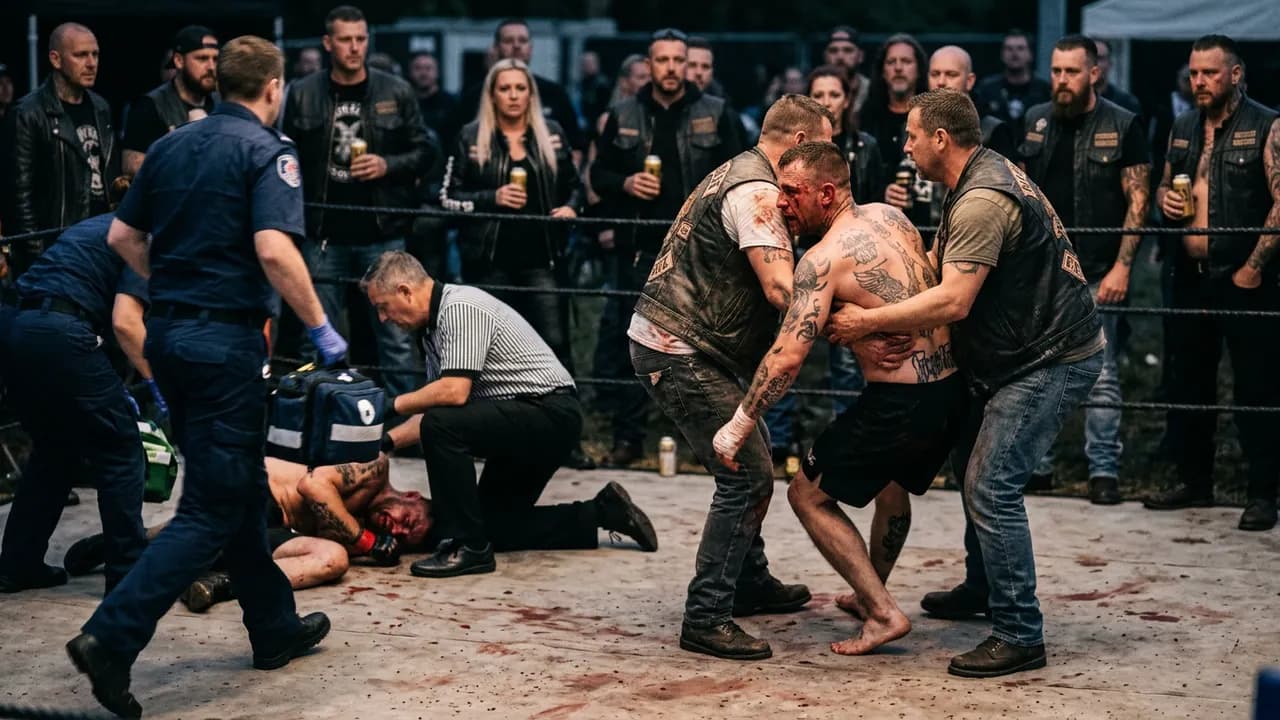
Tucked behind a converted barbershop on San Pablo Avenue in West Oakland sits one of the longest-running underground fight operations in the United States. Every Friday, the East Bay Rats Motorcycle Club opens its clubhouse doors and invites the public to do something most of polite society considers unthinkable: climb into a boxing ring and hit a stranger as hard as they can.
Fight Night, as it is simply known, has been running since 1996. Three decades of sweat, blood, and broken noses have transformed what started as an informal scrap between bikers into a genuine Oakland institution -- a place where tech workers, construction laborers, artists, teachers, and people from every walk of life converge to test their courage in the ring or roar from the sidelines. The club's slogan, "Support Consensual Bloodshed," is not a joke. It is a philosophy, a community ethos, and a surprisingly effective form of social bonding that has kept the East Bay Rats relevant in a city that has changed almost beyond recognition since the club's founding.
Unlike most organized fight operations that have emerged in the social media era, the East Bay Rats did not build their reputation on YouTube algorithms or viral clips. They built it the old-fashioned way: by showing up, every single week, and giving people a place where violence is honest, consensual, and cathartic. In a landscape that includes operations like Streetbeefs, Rough-N-Rowdy, and King of the Ring, the East Bay Rats occupy a unique position as the original Friday night fight club -- a place where the motorcycle club world and the broader community meet in a boxing ring and, against all odds, become neighbors.
History and Origins
The Birth of the Rats
The East Bay Rats Motorcycle Club was founded in 1994 by Trevor Latham, a charismatic Oakland native whose vision of a motorcycle club diverged sharply from the outlaw biker template. Latham and his friends were products of the Bay Area's punk and counterculture scene of the 1980s -- a world of mohawks, tattoos, and flat-black motorcycles held together with zip ties and safety wire. The aesthetic owed more to Mad Max than to the Hells Angels. Latham has said that watching The Road Warrior as a kid was one of the formative experiences of his life, and that post-apocalyptic sensibility permeated the club from the beginning.
The name itself tells the story. A "rat bike" is a motorcycle stripped of chrome and pretension -- dinged, dented, patched together, and ridden hard. The make and model of your bike did not matter when you prospected for the East Bay Rats. What mattered was that you could keep up on rides. This egalitarian attitude extended beyond motorcycles. From its founding, the East Bay Rats were racially inclusive at a time when most motorcycle clubs in America were still rigidly segregated along racial lines. Black, white, Latino, Asian -- the only color that mattered was the oil staining your jeans.
The club set up its permanent clubhouse in a former barbershop near the corner of Thirtieth Street and San Pablo Avenue, one of the oldest streets in the East Bay, formerly the Camino Real. Weekly rides and barbecues gradually escalated into more ambitious events: flaming beer bottle bowling, car smash parties, scooter jumping over fire pits, and television-smashing sessions that drew crowds of curious onlookers from across Oakland.
Fight Night Is Born
In 1996, two years after the club's founding, Latham added what would become the defining feature of the East Bay Rats: a boxing ring behind the clubhouse. The initial format was not strictly boxing -- early events included jiu-jitsu and submission wrestling alongside standup fighting. But over time, the format settled into a boxing-centric model with gloves, and Fight Night was born.
The concept was rooted in a belief that Latham has articulated consistently for three decades: everyone has a fire in them. If people can let that fire out in the ring, in a controlled and consensual environment, maybe they will not hit their wives, their kids, or get into fights in public. It is the same harm-reduction philosophy that underpins organizations like Streetbeefs, though Latham arrived at it years earlier and from a completely different cultural starting point.
03 / Up next / Format and Rules
Fight Night was never intended to produce professional fighters or generate revenue. It was intended to build community. And on that metric, it has succeeded spectacularly.
Format and Rules
How Fight Night Works
Fight Night operates on a deceptively simple model. On Friday evenings, the East Bay Rats open their clubhouse and set up the boxing ring in the yard behind the building. A crowd gathers -- regulars, newcomers, curious spectators, and people who have come specifically to fight. Anyone who wants to step into the ring can sign up.
The rules are minimal but meaningful:
- Gloves are required. Fighters wear boxing gloves. This is not a bare-knuckle operation.
- No rounds. Unlike conventional boxing, Fight Night bouts do not operate on a timed round system. Fights continue until one participant surrenders or someone in authority stops the action.
- Anyone can bail. A fighter is allowed to quit at any time, for any reason, without stigma. There is no shame in knowing your limit.
- No knockouts required. The goal is not to render your opponent unconscious. The fight ends when someone gives up, which means the underdog can outlast a more skilled or powerful opponent simply by refusing to quit.
- Men fight men, women fight women. While the events are open to all comers, matchups generally follow gender lines.
- No experience necessary. You do not need to be a trained fighter to step into the ring. Many Fight Night participants have never thrown a punch before in their lives.
The Atmosphere
What makes Fight Night distinct from other underground fighting operations is the atmosphere. This is not a somber, hyper-focused combat sports event. It is a party. The clubhouse functions as a bar, live bands frequently play, and the crowd is a cross-section of Oakland's wildly diverse population. Enthusiasts of every code, color, and fashion sense surround the ring. Tech workers stand next to bikers. Artists drink with construction workers. The fights are the main event, but the community that forms around them is the real product.
The East Bay Express, Oakland's alt-weekly newspaper, named Fight Night the "Best Place to Watch the Fight" -- a tongue-in-cheek acknowledgment that the event had transcended its biker-club origins to become a legitimate Oakland cultural attraction.
The "Bullies" Connection
The East Bay Rats' story reached a national audience through one of the most unlikely narrative arcs in modern nonfiction. In the early 2000s, a New York journalist named Alex Abramovich pitched a story about the club's fight nights to GQ magazine. The personal connection was extraordinary: as a fourth grader on Long Island, Abramovich had been bullied by a kid named Trevor Latham -- the same Trevor Latham who now ran the East Bay Rats.
In 2006, Abramovich traveled to Oakland and confronted his childhood bully for the first time in decades. The encounter led him to return in 2010 for a more ambitious project. The result was Bullies: A Friendship, published in 2016 -- a nonfiction book that used the Rats as a lens to examine Oakland's history, America's relationship with violence, and the strange alchemy by which a bully and his victim could become friends. NPR profiled the book extensively, describing it as "a story of friendship, booze, and brawls in an Oakland biker bar."
The book elevated the East Bay Rats from local curiosity to nationally known institution.
Philosophy: Support Consensual Bloodshed
The East Bay Rats' slogan -- "Support Consensual Bloodshed" -- sounds like provocation, and it is. But it also encapsulates a genuine philosophical position about the role of controlled violence in community life.
Latham's argument, which he has made consistently for decades, is straightforward: human beings are wired for physical confrontation. Denying that impulse does not make it disappear -- it makes it fester. By providing a space where people can fight voluntarily, with rules and safety measures, the club gives that impulse a healthy outlet. The alternative, Latham argues, is that the impulse expresses itself in destructive ways -- domestic violence, bar fights, road rage, and worse.
This places the East Bay Rats in an intellectual lineage that includes Streetbeefs, whose founder Chris "Scarface" Wilmore arrived at a similar conclusion in Virginia with the motto "Fists Up, Guns Down." The difference is that Latham got there first, without YouTube to amplify his message. For more on organizations that share this philosophy, see our guide to backyard fighting organizations and the Oakland underground fighting scene.
06 / Up next / Notable Moments
The inclusivity of the club reinforces this philosophy. The ring is the great equalizer: it does not care about your job title, your neighborhood, or your bank account. It only cares about whether you have the courage to step through the ropes.
Notable Moments
The GQ Story (2006)
Alex Abramovich's initial GQ feature on the East Bay Rats brought the first wave of national media attention to Fight Night and introduced the concept of "consensual bloodshed" to a mainstream audience.
The NPR Feature and Bullies (2016)
The publication of Bullies: A Friendship and NPR's extensive coverage of the book cemented the East Bay Rats' reputation as more than a biker fight club. The book was reviewed by KQED, the East Bay Express, and numerous national publications, transforming the Rats into a symbol of Oakland's gritty, inclusive, DIY culture.
Three Decades of Fight Night
Perhaps the most notable thing about Fight Night is its longevity. Since 1996, the event has run nearly every Friday -- through economic booms and busts, through Oakland's dramatic gentrification, through the rise and fall of countless other underground fighting operations. Most fight clubs burn out fast. The East Bay Rats just keep showing up.
East Bay Express Recognition
The club's fight nights have been repeatedly recognized by the East Bay Express in their annual "Best Of" polls, a testament to how deeply embedded the event has become in Oakland's cultural fabric.
How to Watch
In Person
Fight Night takes place at the East Bay Rats clubhouse on San Pablo Avenue in West Oakland, near the intersection with Thirtieth Street. Events are held on Friday evenings. There is typically no formal admission charge, though the club operates as a bar and donations are welcome.
The atmosphere is casual and welcoming to newcomers, but a few practical notes are worth mentioning:
- Arrive early. The area around the ring fills up fast, and once it is packed, sightlines are limited.
- Bring cash. The bar operates on a cash basis.
- Be respectful. This is a motorcycle club's home turf. The Rats are welcoming, but basic courtesy goes a long way.
- Do not film without permission. Check with club members before pulling out your phone or camera.
Online
The East Bay Rats maintain a web presence at eastbayrats.com and are active on social media, including Instagram. While Fight Night footage does circulate online -- including clips on YouTube -- the club has never pursued a content strategy comparable to operations like Streetbeefs or Rough-N-Rowdy. The experience is fundamentally an in-person one, and the club has been content to keep it that way. There is no dedicated official YouTube channel; search "East Bay Rats Fight Night" on YouTube for community-uploaded footage.
The East Bay Rats and Oakland
It is impossible to understand the East Bay Rats without understanding Oakland. When the club was founded in 1994, the city was deep in the grip of a crack epidemic and a murder rate that made national headlines. The Rats were not trying to fix Oakland's problems -- they were trying to carve out a space where their particular brand of working-class, motorcycle-riding, punk-influenced community could survive. Fight Night was an extension of that effort: a space where the aggression that permeated the city could be channeled into something that brought people together rather than tearing them apart.
As Oakland gentrified through the 2000s and 2010s, the East Bay Rats became something of an anachronism -- a reminder of the city's rougher, more authentic past. Tech workers and transplants discovered Fight Night and became regulars. The ring became a place where old Oakland and new Oakland could meet on equal terms, which is to say, with their fists up and their pretensions down.
FAQ
Is Fight Night open to the public?
Yes. Fight Night is open to anyone who shows up at the East Bay Rats clubhouse on Friday evenings. You do not need to be a member of the club or know anyone in the organization to attend.
Do you have to be a trained fighter to participate?
No. Fight Night is open to anyone willing to step into the ring, regardless of experience level. Many participants have never been in a fight before. Gloves are provided, and fighters are matched as fairly as possible.
Is Fight Night legal?
The East Bay Rats operate their fight nights as consensual boxing events on private property. California law regarding mutual combat is more nuanced than states like Virginia, where organizations like Streetbeefs benefit from explicit statutory protections. The Rats have operated Fight Night for three decades without significant legal interference, though the legal status of such events is always subject to interpretation by local law enforcement.
How is Fight Night different from Streetbeefs?
While both organizations share a philosophy that controlled, consensual fighting can benefit communities, there are significant differences. Streetbeefs is a media operation built around YouTube content and offers multiple combat sports disciplines. Fight Night is a weekly, in-person event tied to a specific motorcycle club's clubhouse and focused primarily on boxing. Streetbeefs emphasizes conflict resolution; Fight Night emphasizes community building and personal courage. Streetbeefs is organized across multiple branches nationwide; Fight Night happens in one place, every Friday.
Are the East Bay Rats a gang?
No. The East Bay Rats are a motorcycle club, not an outlaw motorcycle gang. While the line between the two can be blurry in popular perception, the Rats have always been transparent about their operations and open to the public. The club is racially inclusive, community-oriented, and does not engage in the criminal enterprises associated with outlaw motorcycle organizations.
What is the book Bullies about?
Bullies: A Friendship by Alex Abramovich (2016) tells the story of Abramovich's reconnection with Trevor Latham, who had bullied him as a child on Long Island. The book uses the Rats and Fight Night as a lens to examine Oakland's history and the unlikely friendships that can emerge from confrontation.
Can women fight at Fight Night?
Yes. Women are welcome to participate and are matched against other women. Fight Night is open to all genders, races, and backgrounds.
Where is the clubhouse?
The East Bay Rats clubhouse is located on San Pablo Avenue in West Oakland, near the intersection with Thirtieth Street. The exact address can be confirmed through the club's website or social media channels.