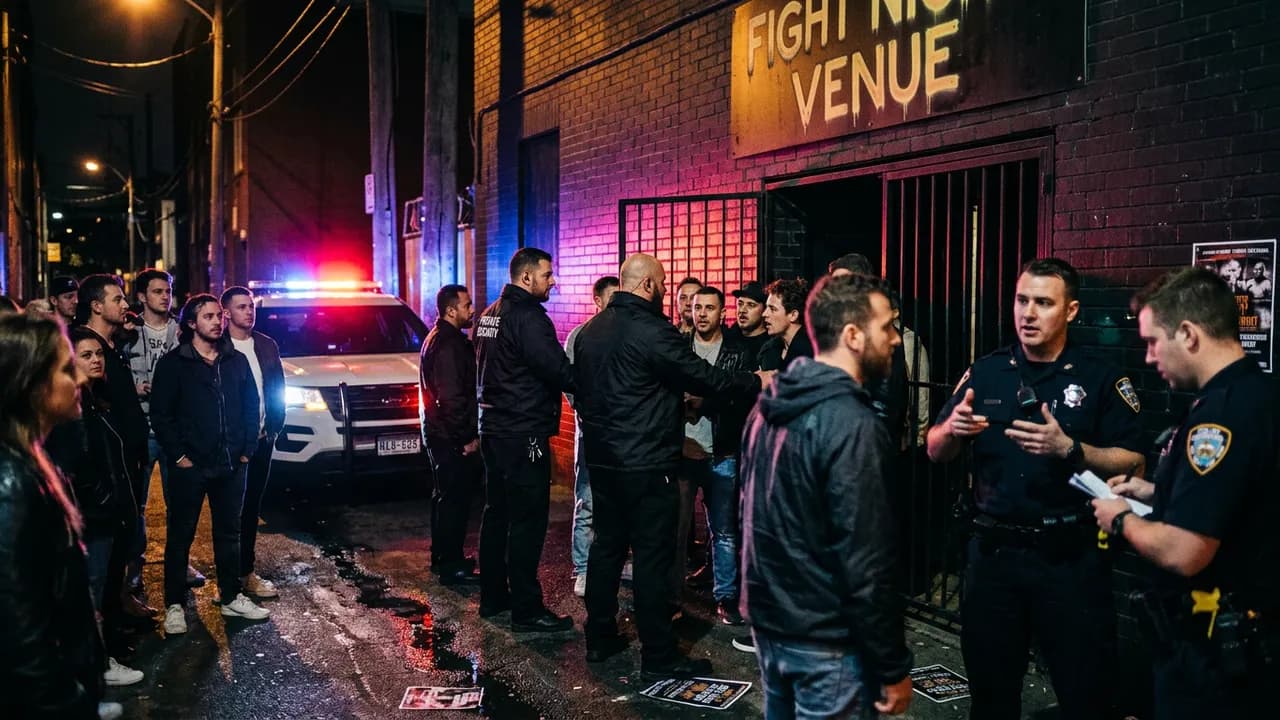
Fighter compensation in underground fighting ranges from literally zero to six-figure paydays, depending on the organization, the fighter's profile, and the level of the event. The answer to "do underground fighters get paid?" is: some do, most do not, and the gap between the top and the bottom is enormous.
This FAQ breaks down fighter pay across every major underground and bare knuckle fighting organization.
Do Streetbeefs fighters get paid?
No. Streetbeefs fighters receive no payment. The organization was founded on the principle that fights are for settling disputes, not making money. The absence of payment is also a legal strategy -- by keeping money out of the equation, Streetbeefs avoids classification as a professional sporting event subject to athletic commission jurisdiction.
Streetbeefs generates revenue through YouTube ad income from its channel (4.2 million subscribers, 1.3 billion+ views), but this revenue goes to sustaining the operation, not to fighters.
Some Streetbeefs fighters have leveraged their visibility into professional opportunities. ATrain (Alan Stephenson) built a 6-5 professional MMA record. Memnon Warrior was signed by professional management. But these outcomes are the exception, and they result from individual initiative rather than organizational support.
Do BKFC fighters get paid?
Yes, significantly. BKFC is a fully sanctioned professional promotion that pays guaranteed purses:
- Entry-level fighters: $2,000 - $5,000
- Mid-card fighters: $5,000 - $20,000
- Contenders: $20,000 - $75,000
- Champions: $75,000 - $250,000+
- Top stars: $250,000 - $500,000+
Paige VanZant has said BKFC paid her ten times the $40,000 to show and $40,000 to win she got in the UFC; BKFC has not released her purse. Christine Ferea's only commission-released purse is $22,500, from BKFC 28 in 2022. BKFC also awards discretionary performance bonuses for outstanding fights.
For a detailed breakdown, see our BKFC fighter pay guide.
Do KOTS fighters get paid?
KOTS (King of the Streets) fighters generally receive no purse for fighting. The organization generates revenue through YouTube, memberships, and PPV content, but the fighters themselves typically fight for reputation and the respect of the community rather than financial compensation.
KOTS has experimented with premium content and memberships through its website, but fighter payment has not been a significant part of the operation. This is consistent with the organization's roots in European hooligan culture, where fighting was always about honor and testing rather than money.
Do Strelka fighters get paid?
Most Strelka fighters receive no payment. The promotion is explicitly positioned as an amateur, grassroots operation where the experience of competition is the primary reward. Fighters are regular people -- truck drivers, taxi drivers, students -- who fight for the adrenaline and the test, not for a paycheck.
Fighters who achieve viral fame through Strelka may benefit indirectly through social media followings and recruitment by professional organizations, but these outcomes are rare.
Do Top Dog FC fighters get paid?
Top Dog FC is believed to pay its fighters, though specific purse figures are not widely published. The promotion's scale -- arena events in Moscow, a dedicated streaming platform, professional production quality -- suggests a financial infrastructure that includes fighter compensation.
However, Top Dog FC purses are believed to be substantially lower than BKFC's top-tier paydays. The Russian market has different economic dynamics, and the promotion's revenue base, while significant, does not yet match the resources available to BKFC with Conor McGregor's ownership stake.
Do Rough N Rowdy fighters get paid?
Yes, though amounts are modest. Rough N Rowdy pays its amateur fighters, with purses typically in the hundreds to low thousands of dollars per fight. The promotion generates significant revenue through PPV sales (reported buy rates of 41,000+ at $19.99 per event) and its partnership with Barstool Sports, but the amateur-focused format keeps individual fighter payouts relatively low.
Rough N Rowdy's value proposition for fighters is not primarily financial. The promotion offers the experience of fighting in a professional-quality production, potential exposure to Barstool Sports' massive audience, and the entertainment value of the event itself.
Do Gamebred Bareknuckle MMA fighters get paid?
Yes, and potentially very well. Gamebred Bareknuckle MMA, Jorge Masvidal's promotion, is running $500,000 tournaments in 2026 with 16-man brackets at heavyweight and lightweight. Tournament winners receive payouts that rival mid-level UFC compensation.
01 / Up next / Do BKB fighters get paid?
Individual fight purses outside the tournament format are not widely published, but the tournament prize money positions Gamebred as one of the highest-paying promotions in the bare knuckle and underground fighting space.
Do BKB fighters get paid?
Yes. BKB (Bare Knuckle Boxing), which merged with BYB Extreme in 2024, pays its fighters as a professional promotion. Specific purse figures are not widely published, but fighters at the championship level -- like four-division champion Jimmy Sweeney and two-division champion Barrie Jones -- earn purses consistent with professional bare knuckle competition.
BKB purses are generally believed to be lower than BKFC's top-tier paydays, reflecting the promotion's smaller scale and revenue base.
Do KOTR fighters get paid?
King of the Ring in Manchester does not pay fighters significant purses, if any. The organization operates in a similar model to Streetbeefs -- fights are staged as community events rather than professional sporting competitions, and the absence of payment helps maintain the organization's informal, grassroots character.
Do Calcio Storico players get paid?
No. Calcio Storico is strictly amateur. Players compete for the honor of their Florence neighborhood, and the winning team's prize is a Chianina steer rather than a financial payout. The amateur status is enforced as a condition of the event's cultural designation, which provides its legal protection.
What is the overall pay landscape in underground fighting?
The pay landscape breaks down into clear tiers:
Tier 1: Professional promotions ($2,000 - $500,000+)
These promotions pay guaranteed purses, operate under athletic commission oversight (in most cases), and offer the highest earning potential for fighters.
Tier 2: Semi-professional operations ($100 - $5,000)
- Rough N Rowdy
- Top Dog FC
- Various regional promotions
These organizations pay fighters, but purses are modest and few fighters earn enough to sustain themselves solely through fighting.
Tier 3: Unpaid organizations ($0)
- Streetbeefs
- Strelka
- KOTS
- KOTR
- Calcio Storico
- Most regional and local fight clubs
The majority of underground fighters worldwide fight for free. No purse, no bonus, no financial compensation of any kind.
Is the pay gap in underground fighting fair?
This is the central ethical question of the underground fighting business model. Organizations like Streetbeefs generate millions of dollars in YouTube ad revenue from content produced by fighters who earn nothing. KOTS monetizes fight footage featuring fighters who absorb the physical risk without financial compensation. The revenue flows to the organization; the risk stays with the fighters.
Defenders argue that fighters choose to participate voluntarily, that no one is forced to fight, and that many fighters derive non-financial value (dispute resolution, community, personal testing) from the experience. Critics counter that the fighters who create the content that generates the revenue should receive a share of that revenue, and that the absence of payment exploits people who have limited economic options.
The debate mirrors the broader conversation about fighter pay in professional combat sports, where the UFC's approximately 18-20% revenue share for fighters has drawn decades of criticism. In underground fighting, the revenue share is often 0%, which makes the disparity even starker.
Can underground fighting lead to a paying career?
Yes, but the pathway is narrow. The most realistic career trajectory:
- Build skills and reputation through an underground organization (Streetbeefs, Strelka, regional fight clubs)
- Develop an audience through social media, YouTube appearances, and fight footage
- Attract attention from professional promotions (BKFC, Gamebred, professional MMA or boxing)
- Transition to sanctioned competition where purses and career infrastructure exist
This pathway has worked for fighters like ATrain (Streetbeefs to professional MMA), and the growing pipeline from underground to professional competition is one of the most positive developments in the scene. But for every fighter who transitions successfully, hundreds fight for free with no professional prospects.
The underground scene functions as an unpaid development league for professional bare knuckle and combat sports. Whether this is exploitation or opportunity depends on your perspective -- and, increasingly, on whether the fighters themselves believe they are being treated fairly.
For more on the economics of underground fighting, see our business model analysis or our BKFC fighter pay guide.