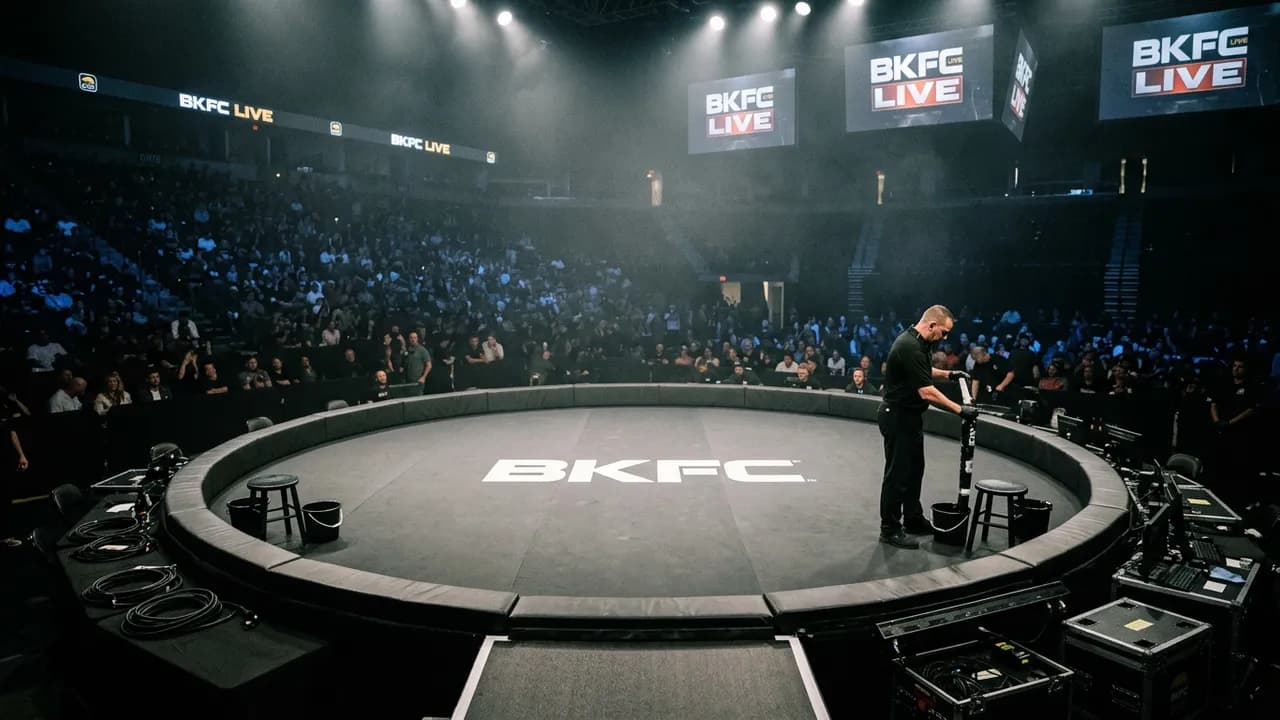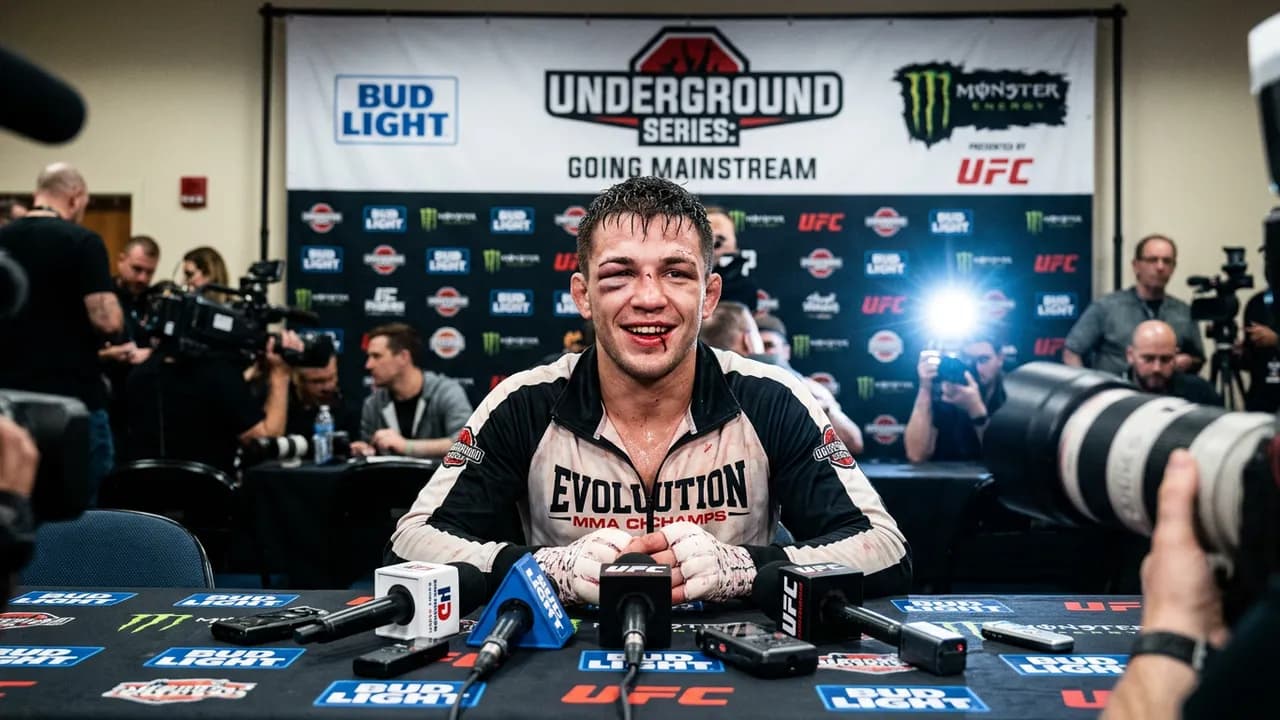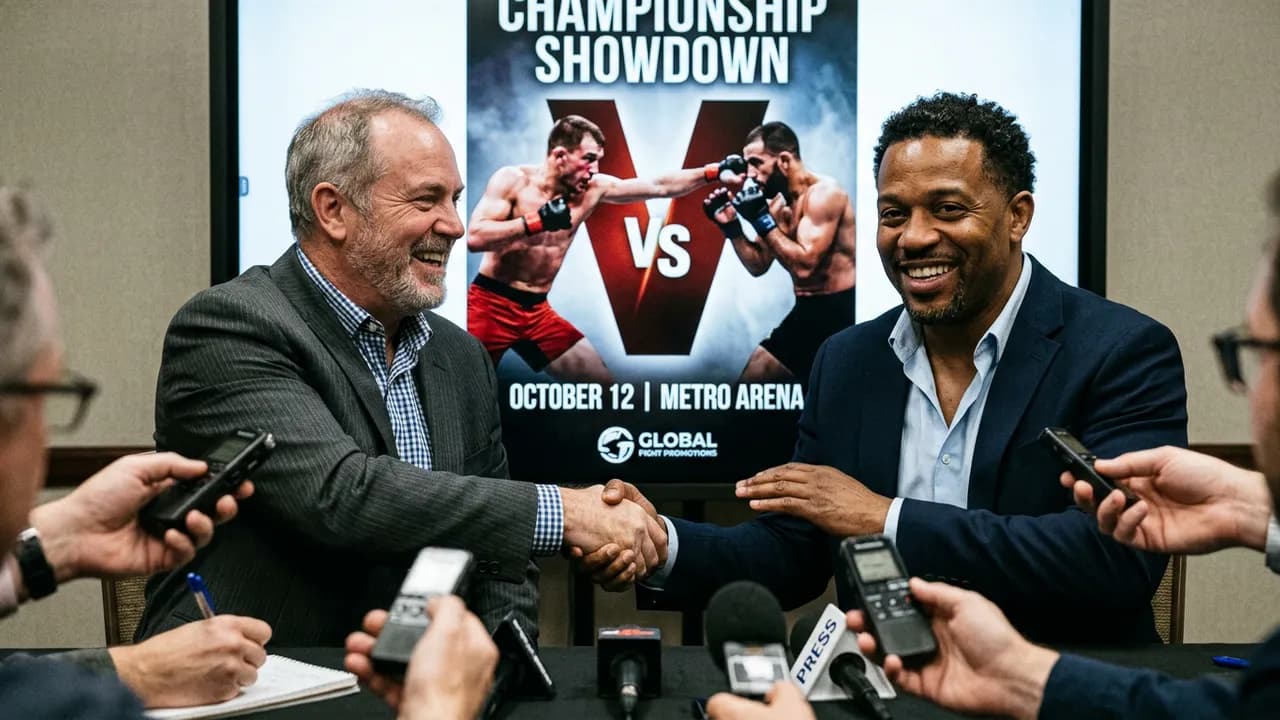
In April 2024, Conor McGregor did something that altered the trajectory of bare knuckle fighting more decisively than any single punch thrown in a BKFC ring. He bought into it. Through McGregor Sports and Entertainment, the most famous fighter on the planet acquired a minority ownership stake in the Bare Knuckle Fighting Championship, transforming himself from a combat sports athlete into a combat sports proprietor and, in the process, transforming BKFC from a growing niche promotion into something that suddenly had the attention of the entire sporting world.
The move was not charity. It was not nostalgia. It was a business decision rooted in McGregor's understanding -- earned through years of being the UFC's most bankable star -- that the real money in combat sports lives on the ownership side of the table. And it was a signal to the fighting industry, the media, and the public that bare knuckle fighting had crossed a threshold of commercial legitimacy that made it worth a billionaire's investment.
Two years later, the impact of that decision is visible in almost every dimension of BKFC's operation. The promotion is bigger, richer, more international, and more ambitious than it was before McGregor arrived. Whether it is better -- for fighters, for fans, for the long-term health of the sport -- is a more complicated question.
The Business Logic: Why McGregor Chose Bare Knuckle
To understand why McGregor invested in BKFC rather than starting his own promotion, buying into an existing MMA organization, or simply remaining a fighter, you need to understand the economics of combat sports ownership.
The UFC sold to Endeavor in 2016 for approximately $4 billion. By 2024, Endeavor valued the UFC at roughly $12 billion before merging it into a new entity with WWE. Those numbers demonstrated that combat sports promotions -- when properly scaled -- can generate extraordinary returns. McGregor watched the Fertitta brothers buy the UFC for $2 million in 2001 and sell it for $4 billion fifteen years later. He watched Dana White's minority stake become worth hundreds of millions. He learned the lesson.
BKFC represented a ground-floor opportunity. The promotion was already the largest bare knuckle organization in the world, operating in multiple countries with a dedicated fanbase and growing pay-per-view numbers. But it was still relatively small compared to the UFC or major boxing promotions, meaning an ownership stake was affordable and the upside was enormous. McGregor was buying low with the intention of building high.
There was also the matter of brand alignment. McGregor's personal brand -- brash, unapologetic, rooted in the raw physicality of fighting rather than the corporate polish of mainstream sports -- fit bare knuckle fighting better than almost any other sport. His Irish heritage connected to the centuries-old tradition of bare-knuckle prizefighting that produced legends like John L. Sullivan and Daniel Donnelly. The marriage of McGregor's personal mythology and bare knuckle fighting's primal appeal was, from a marketing standpoint, nearly perfect.
The Immediate Impact: Attention and Capital
The first and most obvious effect of McGregor's investment was attention. Conor McGregor is one of the most recognizable athletes on Earth. His social media following exceeds 100 million across platforms. When he announced the BKFC ownership stake, every major sports media outlet covered it. ESPN, Yahoo Sports, The Athletic, Sky Sports, BT Sport -- publications and networks that had given bare knuckle fighting minimal or dismissive coverage suddenly had to cover it because McGregor was involved.
That attention translated directly into commercial outcomes. BKFC reported a 100% increase in overall attendance in 2024 and claimed 250 million social media impressions -- numbers that would have been unthinkable before McGregor's involvement. Sponsorship inquiries increased. Broadcast partner interest grew. The promotion's ability to book arena venues in new markets expanded because venue operators recognized the McGregor name as a guarantee of ticket sales and media coverage.
The capital injection, while not publicly quantified, was significant. BKFC's ability to fund international expansion, increase fighter purses, invest in production quality, and launch new initiatives like the $25 million global tournament all reflected a financial position that was substantially stronger than it had been before McGregor's investment.
The Global Expansion: From American Promotion to Worldwide Brand
Perhaps the most consequential aspect of McGregor's impact has been the acceleration of BKFC's international expansion. Before McGregor, BKFC operated primarily in the United States with a growing presence in the United Kingdom and Thailand. After McGregor, the promotion's global ambitions became dramatically more aggressive.
03 / Up next / The $25 Million Global Tournament
The headline announcement was the India launch. In 2025, BKFC unveiled a partnership with Bollywood star Tiger Shroff to bring bare knuckle fighting to India through a team-based league format -- a structural innovation unprecedented in bare knuckle fighting's history. The concept involved franchised teams competing in a league structure, borrowing from the model that has made cricket's Indian Premier League one of the most valuable sporting properties in the world. The target market -- India's 1.4 billion people, a rapidly growing sports entertainment economy, and a cultural tradition of martial arts dating back millennia -- represented a potentially transformative expansion of BKFC's addressable audience.
McGregor's involvement was critical to making the India deal happen. His global name recognition opened doors that BKFC founder David Feldman, for all his promotional skill, could not have opened alone. International media companies, venue operators, and potential broadcast partners who would not have taken a meeting with a bare knuckle promotion took the meeting because McGregor was on the other side of the table.
The expansion extended beyond India. BKFC events in Dubai, Thailand, the United Kingdom, and Mexico all benefited from the increased profile that McGregor's ownership provided. The promotion now claims operations in over 60 countries -- a geographic footprint that puts it in the conversation with major boxing promotions and approaches the UFC's global reach, at least in terms of the number of markets touched if not yet in terms of depth within each market.
The $25 Million Global Tournament
The single most ambitious initiative to emerge from the McGregor era is the $25 million global tournament announced in late 2025. The tournament represents the largest single investment in competitive bare knuckle fighting in the sport's modern history, and its structure signals BKFC's intention to compete for mainstream attention rather than remaining a niche curiosity.
The tournament draws fighters from BKFC's global roster, with qualifying rounds in multiple countries feeding into a championship bracket. The total prize pool of $25 million dramatically exceeds anything previously offered in bare knuckle fighting and compares favorably to purses in mid-level professional boxing. For context, most BKFC fighters earn between $2,000 and $50,000 per fight, with only top champions reaching six figures. A tournament offering seven-figure payouts to winners fundamentally changes the economics for participating fighters.
The tournament also serves a strategic purpose beyond its immediate competitive value. By creating a single, high-stakes narrative arc that spans multiple events and countries, BKFC is borrowing from the playbook of the UFC's tournament formats, boxing's championship unification bouts, and even professional golf's FedEx Cup structure. The goal is to create appointment viewing -- events that casual fans feel compelled to watch because the stakes are genuinely meaningful and the narrative is easy to follow.
Whether the $25 million tournament succeeds in attracting mainstream attention will depend on execution. The concept is sound. The financial commitment is real. The question is whether bare knuckle fighting's core product -- two people hitting each other without gloves -- can sustain a narrative complex enough to justify the investment.
Fighter Pay: Rising Tides and Persistent Gaps
McGregor's involvement has coincided with a meaningful increase in fighter compensation at the top of the BKFC card. The largest commission-released BKFC purse is Mike Perry's $600,000 at KnuckleMania IV in April 2024. Paige VanZant publicly stated that her BKFC contract was worth roughly ten times her UFC compensation. The promotion's ability to pay these purses is directly connected to the increased revenue that McGregor's involvement has generated.
But the pay picture is more complicated beneath the surface. Entry-level BKFC fighters still earn modest purses -- often a few thousand dollars for their first professional bare knuckle bout. The pay gap between headline fighters and undercard fighters remains substantial, and the promotion has not implemented a minimum purse structure that would guarantee a baseline income for all competitors.
McGregor has spoken publicly about his desire to improve fighter compensation, positioning himself as a fighter-first owner who understands the economics of being on the wrong side of the promoter-fighter divide. Whether that rhetoric translates into structural changes in how BKFC distributes revenue to its fighters is an open question. McGregor's own experience -- earning hundreds of millions as the UFC's biggest draw while watching the Fertitta brothers earn billions as owners -- presumably informs his understanding of where the real money flows in combat sports.
05 / Up next / Legitimacy and the Mainstream Question
The tension between McGregor's identity as a former fighter and his role as a current owner is one of the defining dynamics of his BKFC tenure. Fighters who join BKFC because of McGregor's presence may expect fighter-friendly economics. Whether they receive them will determine whether McGregor's ownership is transformative for the athletes or merely transformative for the business.
Legitimacy and the Mainstream Question
One of the most significant effects of McGregor's involvement has been the acceleration of bare knuckle fighting's journey toward mainstream legitimacy. Before McGregor, bare knuckle fighting existed in a cultural space somewhere between legitimate sport and underground spectacle. Athletic commissions sanctioned BKFC events, but mainstream sports media covered them inconsistently at best. The general public, to the extent it was aware of bare knuckle fighting at all, associated it more with backyard brawls and Kimbo Slice videos than with professional sport.
McGregor's involvement changed the conversation. When the most famous fighter in the world puts his money and reputation behind a sport, that sport moves toward legitimacy whether the establishment wants it to or not. Sports business analysts began covering BKFC as a serious commercial entity. Major media outlets assigned reporters to the bare knuckle beat. The conversation shifted from "Is bare knuckle fighting real?" to "How big can bare knuckle fighting get?"
This legitimacy has practical consequences. Additional state athletic commissions have moved to sanction bare knuckle events. International regulatory bodies have engaged with BKFC's expansion plans. The promotion's ability to secure arena bookings, broadcast deals, and corporate sponsorships has improved as bare knuckle fighting has shed some of its outlaw reputation.
However, the relationship between McGregor and legitimacy is paradoxical. McGregor's own public persona -- the legal controversies, the trash talk, the cultivated image of controlled chaos -- is not entirely compatible with the kind of corporate respectability that full mainstream integration would require. He brings eyeballs and credibility within the fighting world, but he also brings the volatility and unpredictability that make some corporate partners nervous. Whether that tension helps or hurts BKFC in the long run depends on which version of McGregor the public and the business community ultimately see.
The Competitive Landscape: What McGregor's BKFC Means for Other Organizations
McGregor's investment in BKFC has had ripple effects across the entire underground and bare knuckle fighting landscape.
For other sanctioned bare knuckle promotions -- BKB in the United Kingdom, Valor Bare Knuckle in the United States -- the McGregor era has been a double-edged sword. The increased attention on bare knuckle fighting benefits the entire sport, driving new fans to all promotions. But BKFC's enhanced financial position and global profile make it harder for smaller promotions to compete for top fighters, broadcast deals, and sponsorship dollars. The rich-get-richer dynamic that has characterized the UFC's dominance of MMA is beginning to replicate itself in bare knuckle fighting, with BKFC playing the role of the dominant incumbent.
For underground organizations like Streetbeefs, KOTS, and Strelka, the effect is less direct but still significant. The professionalization of bare knuckle fighting under BKFC creates a clearer pathway for underground fighters to transition to sanctioned competition -- a pipeline that benefits both the underground scene (by giving its best fighters somewhere to go) and BKFC (by providing a talent development ecosystem it does not have to fund directly). Gamebred Bareknuckle MMA, Jorge Masvidal's promotion, occupies a middle ground as both a competitor and a fellow traveler in the broader effort to bring raw combat sports into the mainstream.
The competitive question is whether the bare knuckle fighting market is large enough to support multiple well-funded promotions or whether BKFC's McGregor-enhanced position will create a winner-take-all dynamic. History suggests the latter -- the UFC absorbed, outlasted, or marginalized every significant MMA competitor it faced -- but bare knuckle fighting's lower barriers to entry and the diversity of formats within the sport may support a more fragmented ecosystem than MMA has developed.
What Comes Next: The McGregor Effect in Year Three and Beyond
As McGregor's ownership enters its third year in 2026, several trajectories are becoming clear.
The global expansion will continue. The India launch, if successful, could add tens of millions of potential fans to BKFC's audience. Additional markets in Southeast Asia, the Middle East, and Latin America are likely targets. The team-based league format being pioneered in India may be replicated in other regions if it proves commercially viable.
The $25 million tournament will test whether bare knuckle fighting can sustain the kind of high-stakes, season-long narrative that drives engagement in other sports.
The $25 million tournament will test whether bare knuckle fighting can sustain the kind of high-stakes, season-long narrative that drives engagement in other sports. If the tournament delivers on its promise -- compelling matchups, meaningful stakes, and genuine athletic drama -- it could become an annual tentpole event that anchors BKFC's calendar and provides a reliable draw for broadcast partners and sponsors.
Fighter pay will continue to rise at the top of the card while remaining a source of tension at the bottom. The absence of a fighters' union or collective bargaining mechanism means that pay negotiations remain individualized, favoring fighters with leverage and leaving those without it to accept whatever terms are offered. Whether McGregor uses his influence to push for structural improvements in fighter compensation -- or whether his ownership incentives pull him toward maximizing profitability -- will be a defining test of his stated commitment to fighters' interests.
The fundamental question remains: can one person, no matter how famous, transform an entire sport? McGregor changed MMA as a fighter. He generated more pay-per-view revenue, more media attention, and more cultural conversation than any fighter in the UFC's history. But changing a sport as an owner requires different skills, a longer time horizon, and a willingness to invest in institutional infrastructure rather than personal mythology.
The early returns are promising. BKFC is bigger, more visible, and more ambitious than it was before McGregor arrived. The sport of bare knuckle fighting has more legitimacy, more money, and more attention than at any point since John L. Sullivan fought Jake Kilrain in 1889. Whether that momentum sustains -- whether it translates into a genuinely sustainable sport rather than a temporary spectacle powered by one man's fame -- is the question that the next several years will answer.
What is already undeniable is this: Conor McGregor bet on bare knuckle fighting, and the sport has not been the same since.