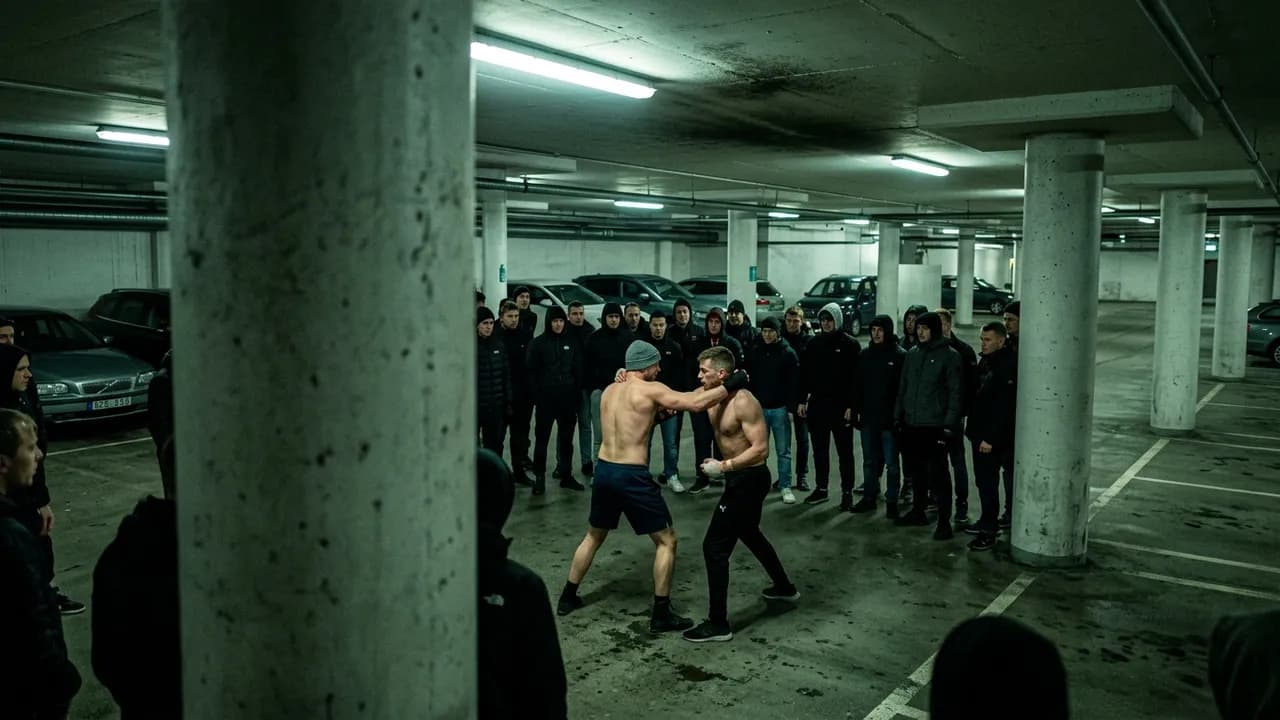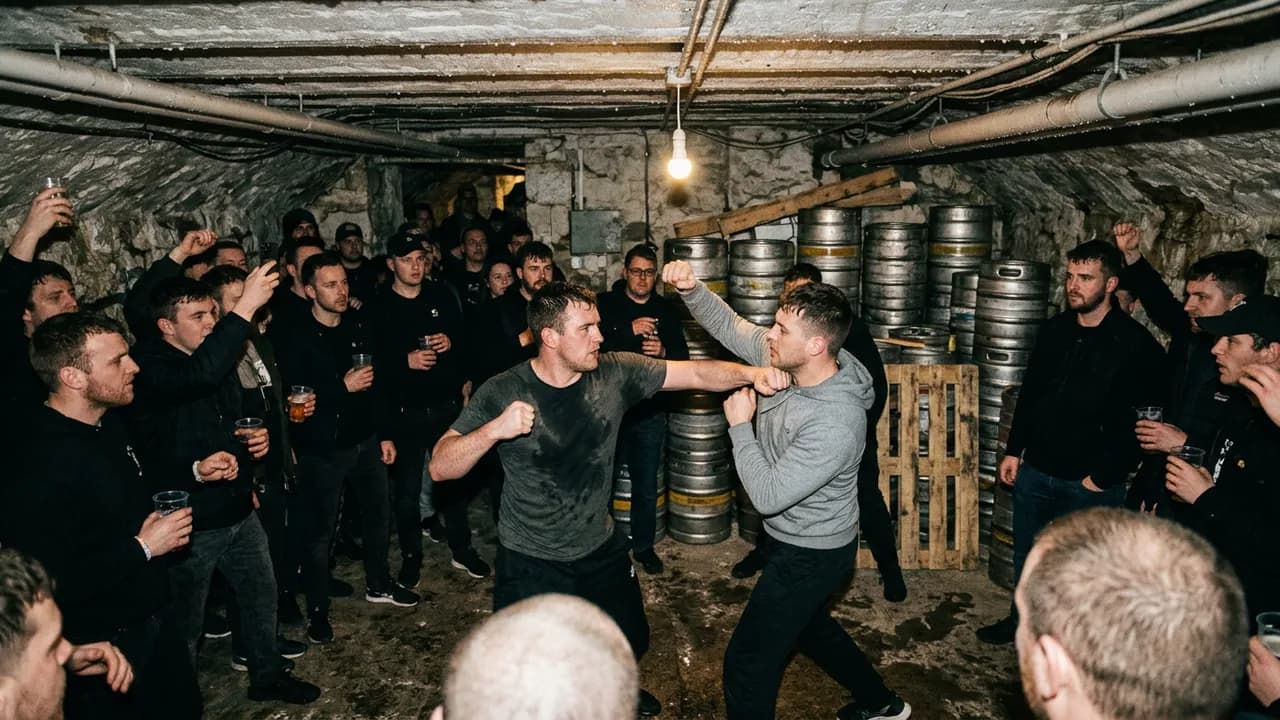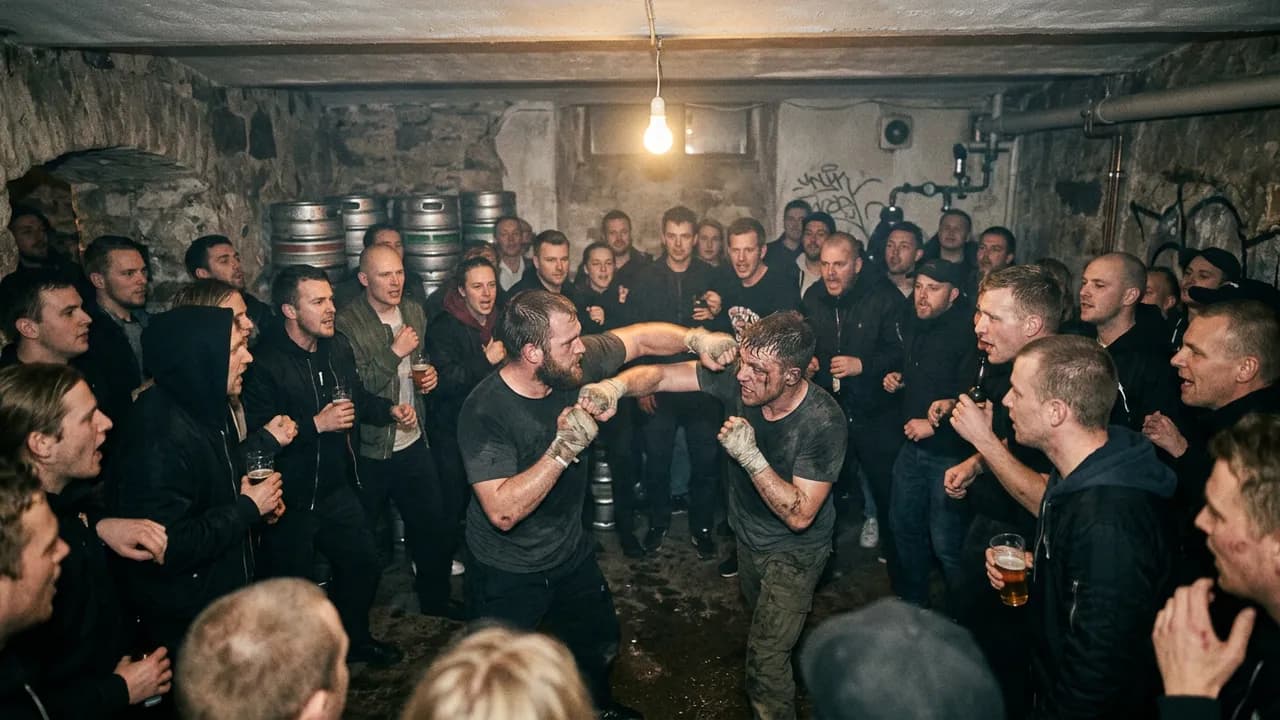
Denmark does not fit the profile of a country with an underground fighting problem. The Scandinavian welfare state, with its universal healthcare, low poverty rates, and high social trust, is not the environment that typically produces fight clubs. And yet Copenhagen -- the capital, the most cosmopolitan Danish city, the place where hygge is supposedly a way of life -- has become a center of underground fighting activity that has drawn international attention and alarmed Danish authorities.
Ultimate Underground Fights, known as UUF, operates across Denmark from abandoned warehouses, industrial halls, and vacant lots. The fights are bare knuckle, the locations are secret, and the participants are not the marginalized youth or gang members that populate the stereotype of underground fighting. They are mechanics, office workers, fathers -- ordinary Danish citizens who have chosen to step into makeshift cages and fight under conditions that would be unrecognizable in any sanctioned combat sport.
History
Denmark's relationship with combat sports has historically been conservative. The country has a professional boxing tradition, a growing MMA scene, and the standard infrastructure of European combat sports regulation. What it did not have, until relatively recently, was an underground fighting movement.
The emergence of UUF appears to be connected to two developments. The first is the broader European no-rules movement catalyzed by King of the Streets in nearby Gothenburg, Sweden. KOTS, which launched in 2013 and gained massive traction from 2018 onward, demonstrated that there was an enormous audience for unregulated fighting content. The proximity of Sweden -- Gothenburg is just a few hours from Copenhagen by train -- meant that the KOTS influence reached Denmark quickly and directly.
The second development is the growth of social media platforms that enable underground organizations to recruit fighters and build audiences without any traditional media infrastructure. UUF's presence on TikTok (@uufights) and Instagram (@uufights2022, with approximately 19,000 followers) allows the organization to promote its events and attract participants through channels that are difficult for authorities to monitor or control.
UUF's existence was brought to wider public attention through the Danish podcast "Undergrunden: Den danske fightclub," which investigated the organization and its activities. The podcast revealed the scope of underground fighting in Denmark -- a phenomenon that had been largely invisible to mainstream Danish society.
Organizations
Ultimate Underground Fights (UUF)
UUF is the primary underground fighting organization operating in Denmark. The format is no gloves and no weapons, with basic protective equipment limited to shoes and mouthguards. Fights take place in makeshift cages erected in abandoned warehouses, industrial halls, and other locations selected for their remoteness from public view.
Communication is managed through encrypted messaging services. Locations and dates are shared only with vetted participants and spectators. Events can draw up to one hundred spectators -- a significant crowd for a clandestine operation in a country with Denmark's population and law enforcement infrastructure.
What distinguishes UUF from purely local fight clubs is its international dimension. The organization has flown in fighters from other countries, suggesting connections to the broader European underground fighting network. UUF is listed on the KOTS website, indicating at least an informal affiliation with the Swedish no-rules movement that has spawned similar organizations across the continent.
The fighters who participate in UUF events are, by the accounts available, surprisingly ordinary. The Danish podcast investigation revealed that participants include people with conventional jobs and stable lives -- not the criminal underclass that might be expected. The motivation appears to be a combination of adrenaline-seeking, personal testing, and the appeal of participation in something forbidden. In a society as regulated and orderly as Denmark, the transgressive nature of underground fighting may itself be part of the attraction.
The KOTS Connection
Copenhagen's underground fighting scene cannot be understood without reference to King of the Streets in Gothenburg. KOTS birthed the European no-rules movement in 2013, and its influence has radiated outward across the continent. Denmark, sharing a cultural space with Sweden and connected by the Oresund Bridge, was among the first countries outside Sweden to develop its own no-rules fighting scene.
The KOTS model -- fights on hard surfaces, no rounds, no decisions, minimal rules, content distributed through YouTube and social media -- has been adopted and adapted across Europe. UUF represents the Danish variant, modified to suit local conditions and operating with a degree of organizational sophistication that reflects the movement's maturation.
02 / Up next / Danish Authorities' Response
The relationship between UUF and KOTS appears to be one of affiliation rather than direct control. UUF operates independently within Denmark but is recognized as part of the broader KOTS ecosystem. This network structure -- autonomous local organizations connected by a shared philosophy and informal relationships -- is characteristic of the European no-rules movement and makes it resilient against attempts at suppression.
Danish Authorities' Response
The Danish authorities have taken a dim view of underground fighting. Denmark's strict regulations on combat sports mean that unsanctioned fighting events are unambiguously illegal. The encrypted communication methods used by UUF and the rotating locations make enforcement difficult, but the public exposure through the podcast and social media has increased pressure on law enforcement to act.
The legal situation in Denmark differs from some other European countries in that even consensual fighting outside sanctioned events can be prosecuted. The argument that two adults have agreed to fight does not provide the same legal protection in Denmark that it might in jurisdictions with weaker regulatory frameworks.
Notable Fighters
UUF does not publicly identify its fighters in the way that larger organizations maintain rosters and records. The anonymity is both practical -- protecting participants from legal consequences -- and cultural, reflecting the underground ethos that values the experience of fighting over the accumulation of public recognition.
The fighters who have been identified through podcast investigations and social media leaks include men from various walks of Danish life. The diversity of participants -- not limited to any single demographic, economic class, or criminal background -- suggests that the appeal of underground fighting in Denmark cuts across social boundaries.
International fighters who have been brought to Denmark for UUF events represent the organization's ambition to operate beyond purely local competition. These imported fighters connect the Danish scene to the broader European network and elevate the level of competition above what a small national scene might otherwise produce.
How to Get Involved
UUF operates through encrypted channels that are not publicly accessible. The organization's TikTok (@uufights) and Instagram (@uufights2022) accounts provide a window into its activities but do not serve as direct recruitment platforms in the way that more open organizations like Streetbeefs or BKFC accept applications through their websites.
For those interested in combat sports in Copenhagen through legal channels, the city offers a well-developed infrastructure. Danish boxing clubs, MMA gyms, and martial arts schools provide training opportunities across all disciplines. The Danish combat sports scene, while smaller than those of larger European countries, is technically proficient and well-regulated.
The KOTS website -- kingofthestreets.com -- lists affiliated organizations and may provide a pathway for connecting with the broader European no-rules network, though access requires navigating membership walls and the inherent opacity of underground organizations.
Copenhagen residents interested in the underground scene should be aware of the legal implications. Danish law treats unsanctioned fighting differently from jurisdictions where private consensual combat occupies a legal grey area. Participation carries real legal risk.
Related Cities
- Gothenburg -- Birthplace of KOTS and the no-rules movement that directly inspired UUF
- Stockholm -- Another Scandinavian city in the KOTS orbit with its own underground dynamics
- Berlin -- Germany's underground fighting scene shares European no-rules movement connections
- Warsaw -- Poland's fight club scene draws from similar KOTS-inspired roots
- Dublin -- Irish no-rules fighting with connections to the same European network