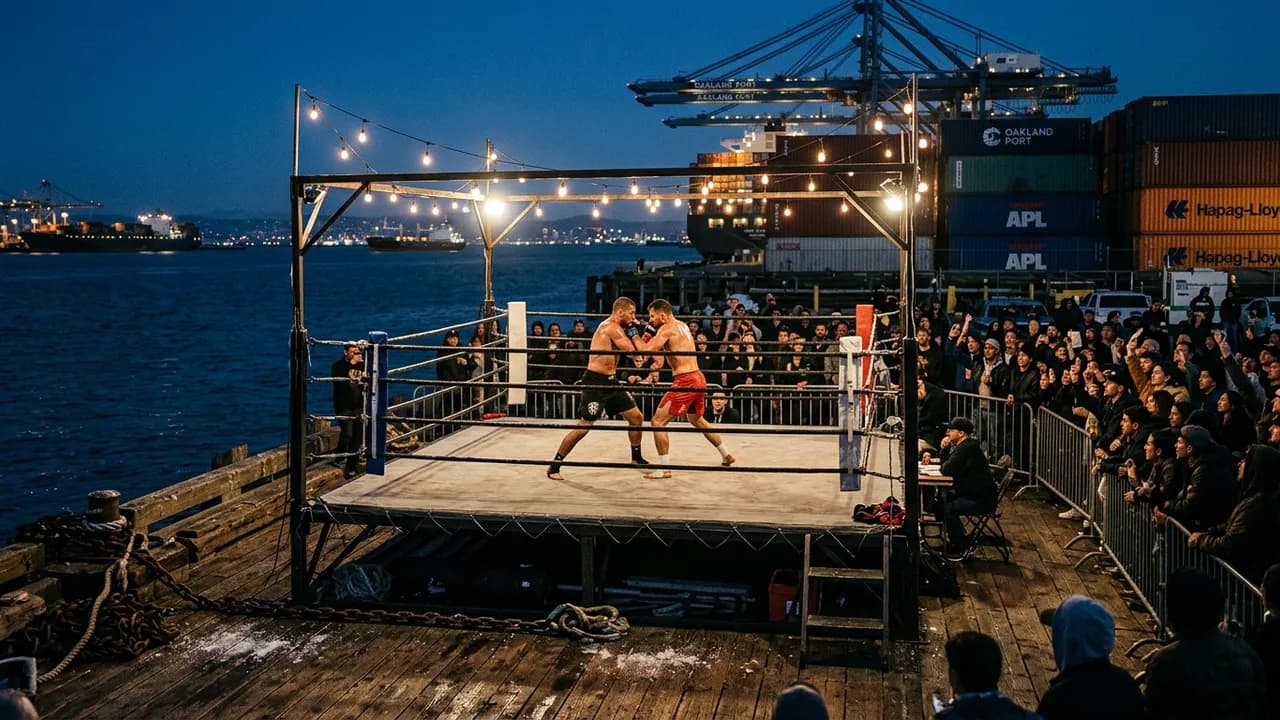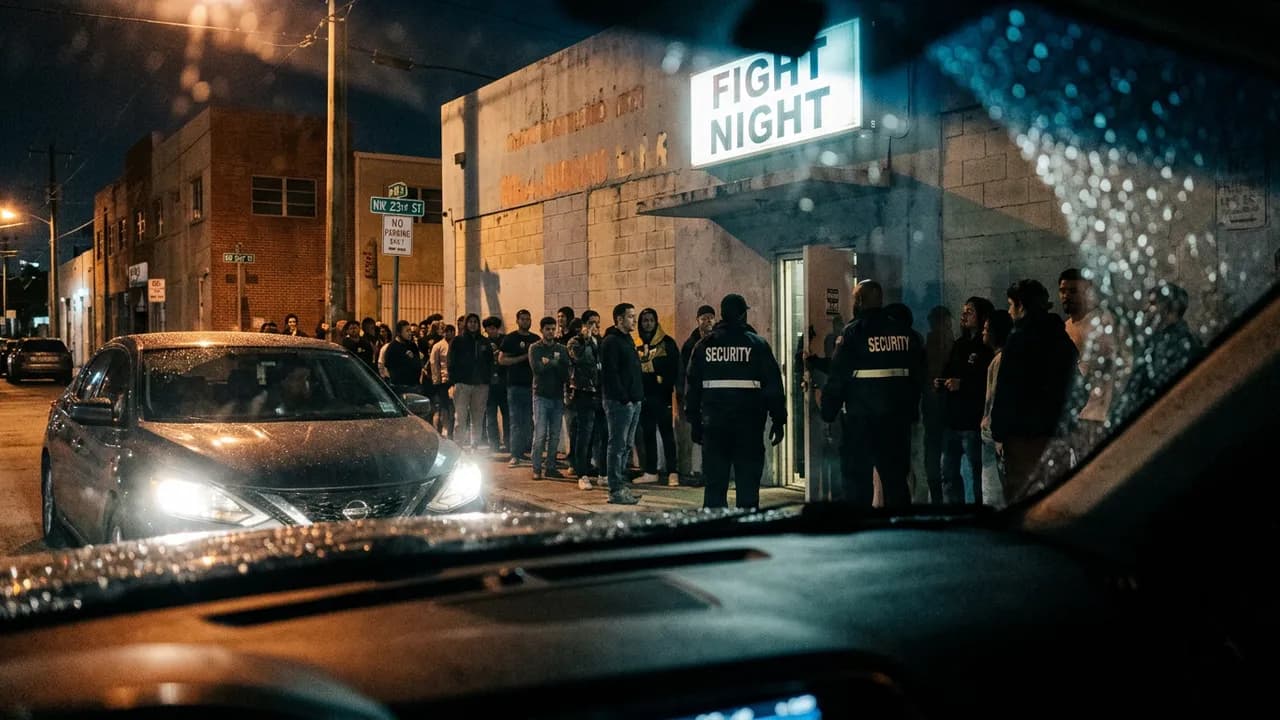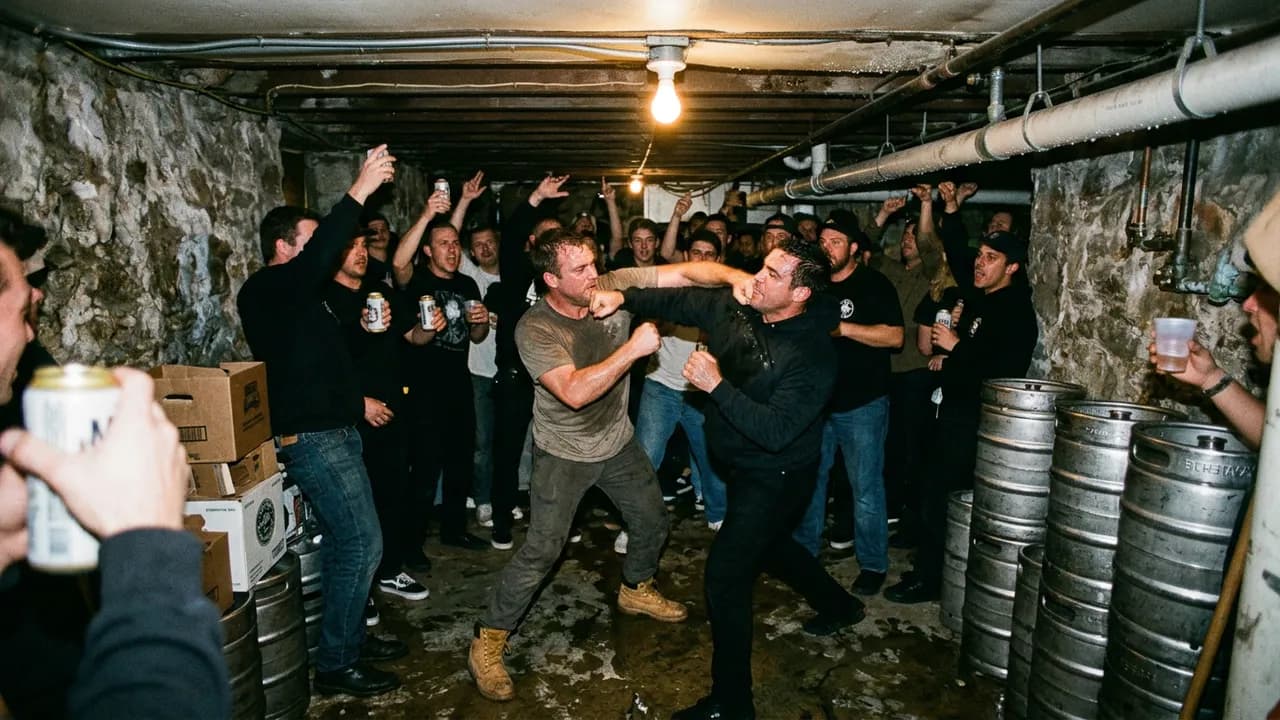
Los Angeles has always been a city where violence is geography. Neighborhoods separated by a few blocks can belong to different worlds, governed by different rules, marked by different colors. In a city where gang territory is measured in street corners and where gun violence has shaped entire generations, the idea of channeling conflict through fists rather than firearms is not naive idealism -- it is a survival strategy with a growing body of evidence behind it.
The most visible expression of this strategy is Backyard Squabbles, a South Los Angeles promotion that emerged during the COVID-19 pandemic with a message borrowed from the streets themselves: "Guns down, squabble up." The phrase is not a slogan invented by a marketing team. It is the language of communities where shooting someone is easier than fighting them, and where the decision to squabble -- to settle a dispute with hands instead of weapons -- is an act of restraint that can save lives.
History
Los Angeles has a layered fighting history that encompasses professional boxing, underground MMA, backyard brawling, and the informal combat traditions of its diverse communities. The city's professional boxing legacy is legendary -- the Forum, the Staples Center (now Crypto.com Arena), and the Great Western Forum have hosted some of the most significant fights in the sport's history. But the underground scene has always existed in parallel, drawing from the same pool of fighters and the same neighborhoods that produce professional talent.
Backyard fighting in LA predates social media by decades. In the barrios of East Los Angeles and the neighborhoods of South Central, informal boxing matches have been a fixture of community life for as long as anyone can remember. Block parties, quinceañeras, and neighborhood gatherings have included impromptu boxing as a form of entertainment and dispute resolution. The fights were rarely organized in any formal sense -- two men, a pair of gloves borrowed from somebody's garage, and a circle of spectators.
The internet era transformed this informal tradition into content. By the mid-2010s, footage of LA street fights and backyard boxing was circulating on WorldStarHipHop and YouTube, accumulating millions of views. The demand was enormous, but the supply was chaotic -- random clips without context, fights with no organization, and no mechanism for connecting fighters with audiences in a structured way.
Backyard Squabbles filled that gap. Founded around 2020 during the COVID pandemic -- when gyms were closed, professional boxing was suspended, and the streets were more dangerous than ever -- the promotion established a backyard ring in South Los Angeles and began hosting organized amateur boxing and MMA events.
Organizations
Backyard Squabbles
Backyard Squabbles is the anchor of LA's organized underground fighting scene. Operating out of South Los Angeles, the promotion runs events in backyard rings with a format that blends amateur boxing and MMA competition. The setup is modest -- a ring, gloves, mouthguards, and a crowd -- but the organization behind it is deliberate.
The promotion's philosophy centers on providing an alternative to gun violence. In a city where the Los Angeles Police Department has documented hundreds of gang-related shootings annually, the idea that a fistfight between willing participants is preferable to a drive-by shooting is not controversial within the communities where Backyard Squabbles operates. The promotion's social media presence, primarily through Instagram at @backyardsquabbles, serves as both a promotional platform and a messaging vehicle. Content from the events has also appeared on TrillerTV, bringing the backyard fights to a broader streaming audience.
The fighters who compete in Backyard Squabbles are not professional athletes. They are men and women from the neighborhood -- aspiring boxers looking for ring experience, workers settling personal disputes, and people who simply want to test themselves in a controlled environment. The promotion has produced several notable competitors, including Albert "Black Blade" Marion, Hector "Aztec Warrior" Herrera (who serves as both trainer and fighter), "Granndaddy" (an undefeated MMA fighter within the promotion), and Valinda Hernandez, the only female fighter to compete regularly.
The Broader Backyard Scene
Backyard Squabbles is the most visible but far from the only backyard fighting operation in Los Angeles. The city's sheer size -- nearly four million people in the city proper, thirteen million in the metropolitan area -- means that multiple informal fighting operations exist simultaneously. Some are organized by boxing trainers who want to give their fighters experience. Others are more spontaneous, growing out of neighborhood rivalries or personal conflicts.
02 / Up next / Professional and Semi-Professional Crossover
Streetbeefs West Coast, an offshoot of the Virginia-based Streetbeefs organization, has operated in the broader Southern California region. The Streetbeefs model -- dispute resolution through supervised fighting on private property -- has resonated with West Coast communities that face similar dynamics of interpersonal violence.
Professional and Semi-Professional Crossover
Los Angeles is also a major market for sanctioned combat sports. BKFC has staged events in the Los Angeles area, and the city's deep bench of professional boxing and MMA talent creates a constant flow of fighters between the sanctioned and unsanctioned worlds. Fighters who cannot get professional bouts, who are between contracts, or who want to compete without the restrictions of athletic commission oversight find their way to the backyard scene.
The proximity of major MMA gyms -- from the Gracie Academy in Torrance to Black House in Gardena -- means that technically skilled fighters are always within reach of the underground scene. This elevates the level of competition in LA's backyard fights beyond what might be expected from informal events.
Notable Fighters
The fighters of Los Angeles's underground scene are defined by their circumstances as much as their skills.
Albert "Black Blade" Marion has become one of the most recognizable names in the Backyard Squabbles promotion, competing regularly and building a following through the organization's social media content.
Hector "Aztec Warrior" Herrera occupies a dual role as both fighter and trainer, representing the kind of grassroots coaching that has always been central to LA's boxing culture. His work with younger fighters connects the backyard scene to the broader tradition of community-based boxing instruction.
"Granndaddy" stands out as an undefeated MMA fighter within Backyard Squabbles, demonstrating that the promotion attracts competitors with genuine skills and serious competitive ambitions.
Valinda Hernandez holds a unique position as the only female fighter competing regularly in Backyard Squabbles events, breaking into a scene that is overwhelmingly male and doing so with the full support of the promotion's community.
The Violence Reduction Question
The claim that underground fighting reduces broader community violence is difficult to prove with data, but the logic is intuitive in the context of Los Angeles. When two people have a dispute that might otherwise escalate to a shooting, the availability of a supervised fighting alternative can intervene in the escalation chain. The fight still happens, but nobody dies.
This is the same logic that drives Streetbeefs in Virginia, King of the Ring in Manchester, and violence intervention programs across the United States. The difference in LA is the scale of the problem. Los Angeles is one of the largest cities in the world, with gang dynamics that are among the most complex and lethal anywhere. The backyard scene cannot solve this. What it can do -- and what its proponents argue it does -- is redirect individual conflicts away from lethal outcomes, one squabble at a time.
How to Get Involved
Backyard Squabbles maintains an active Instagram presence at @backyardsquabbles, where upcoming events are announced and fighter applications are managed. The promotion operates on private property in South Los Angeles, with event details shared through social media channels.
For fighters looking to compete in the sanctioned world, Los Angeles offers an embarrassment of riches in terms of training facilities. The city's boxing gyms, MMA academies, and wrestling programs provide pathways for anyone serious about developing their skills before stepping into any ring, sanctioned or otherwise.
BKFC events in the greater Los Angeles area are announced through bkfc.com, and the promotion runs tryouts for prospective fighters in multiple US cities.
Related Cities
- Oakland -- Northern California's East Bay Rats Fight Night, a different strain of the same West Coast underground culture
- Miami -- Where Kimbo Slice pioneered the backyard fighting video that inspired everything that followed
- Harrisonburg -- Streetbeefs' birthplace, the Virginia organization whose dispute-resolution model mirrors Backyard Squabbles' philosophy
- Chicago -- Another major American city with deep boxing roots and a growing underground scene