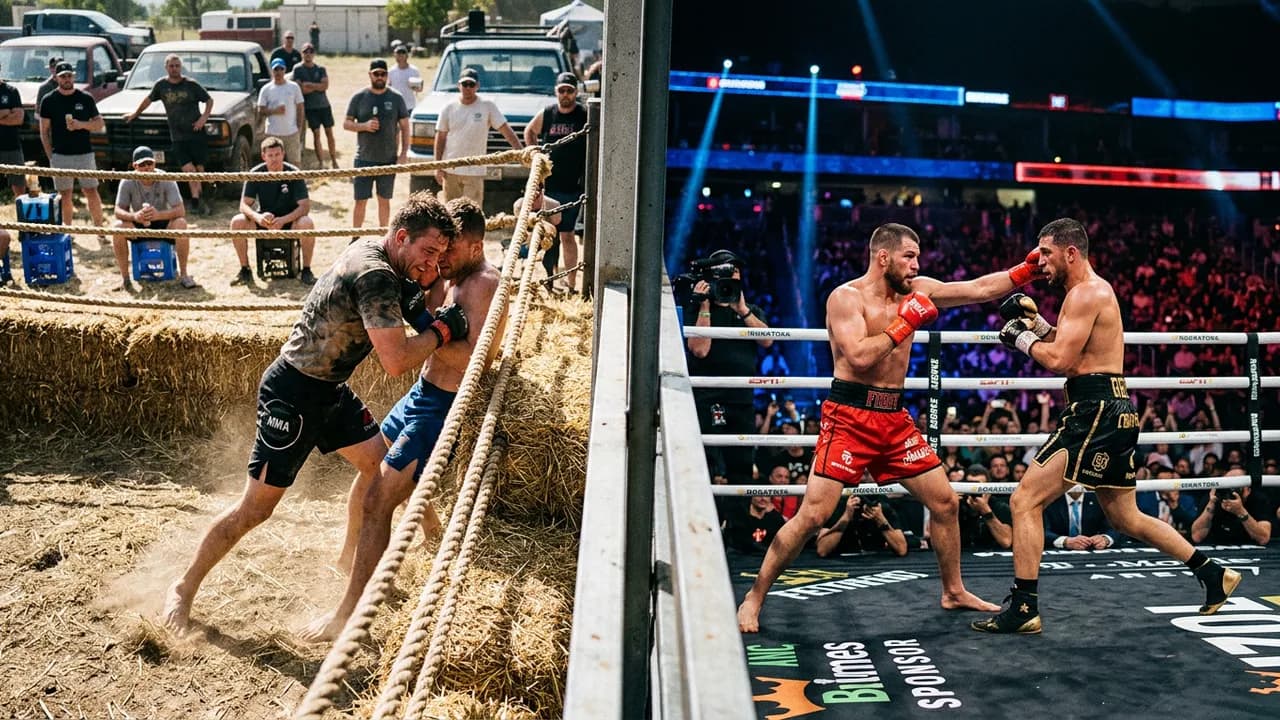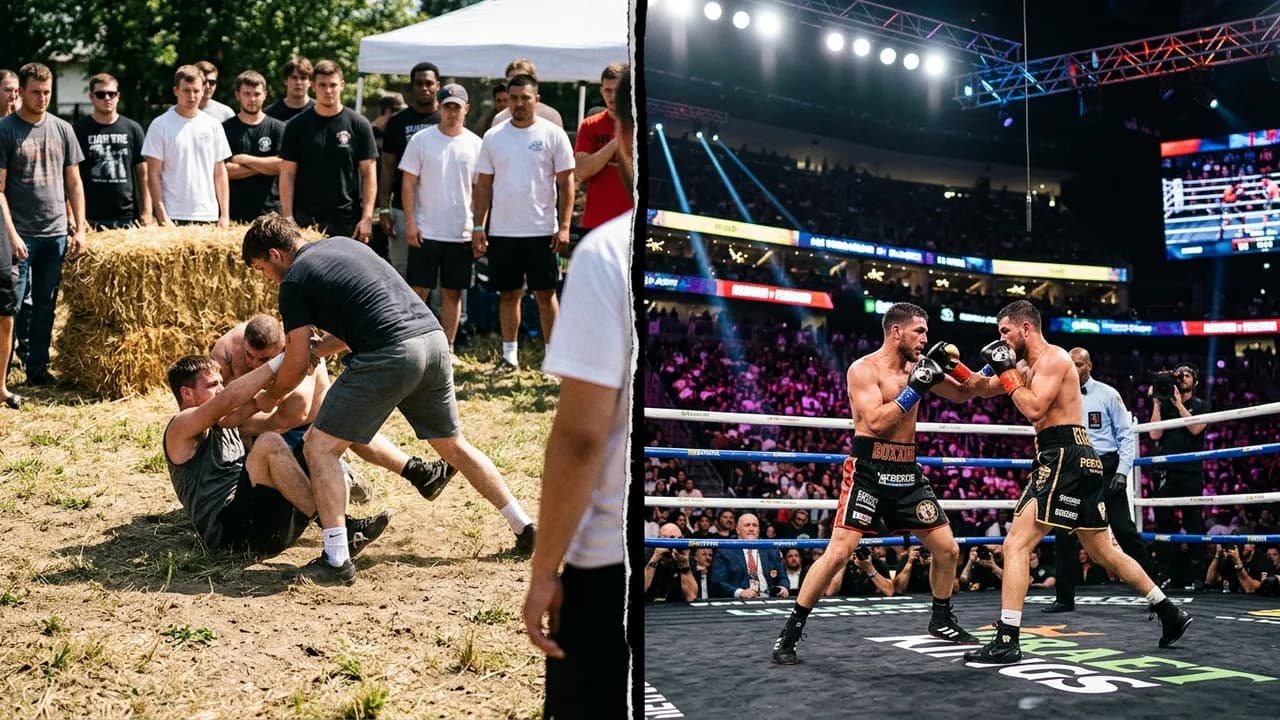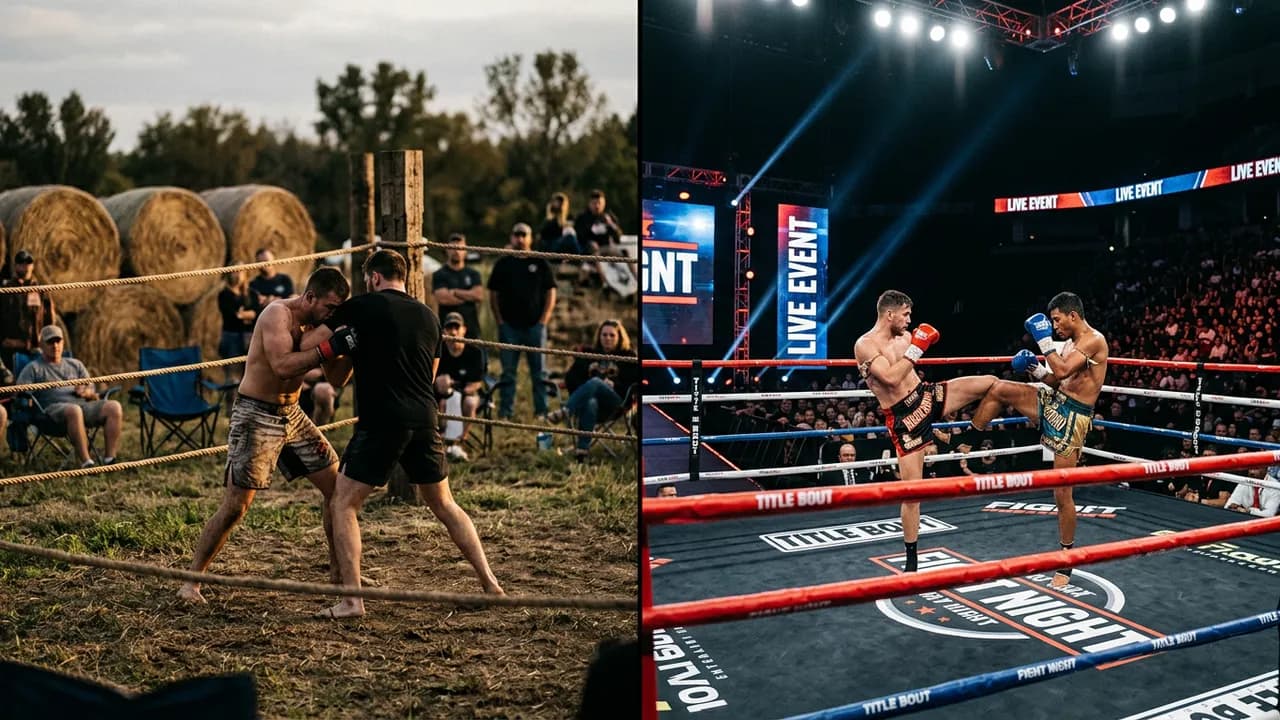
Western Europe's underground fighting scene is shaped by two organizations that share a geography, a subculture, and absolutely nothing else in terms of purpose. King of the Ring (KOTR), the Manchester-based fight club born in a back garden in 2021, exists to combat youth knife crime with boxing gloves and structure. King of the Streets (KOTS), the Swedish no-rules fight club founded in 2013, exists to stage the most extreme unsanctioned fighting available on the continent. Their names even sound similar. Their realities could not be further apart.
Both emerged from the same broader European underground fighting culture. Both drew their early participants from communities where physical violence was already a reality. Both built their audiences on social media. But the motivations, rules, safety records, and cultural impacts of these two organizations represent opposite ends of the spectrum for what underground fighting can be.
Origins and Philosophy
King of the Ring (KOTR)
KOTR was founded in 2021 in Manchester, UK by "Remdizz", a former Muay Thai fighter who started the operation in his back garden. The founding motivation was specific and urgent: youth knife crime in Manchester had risen an estimated 200%, and young men were dying in street disputes that escalated from fists to blades. Remdizz's answer was to give those young men a place to fight with their hands instead.
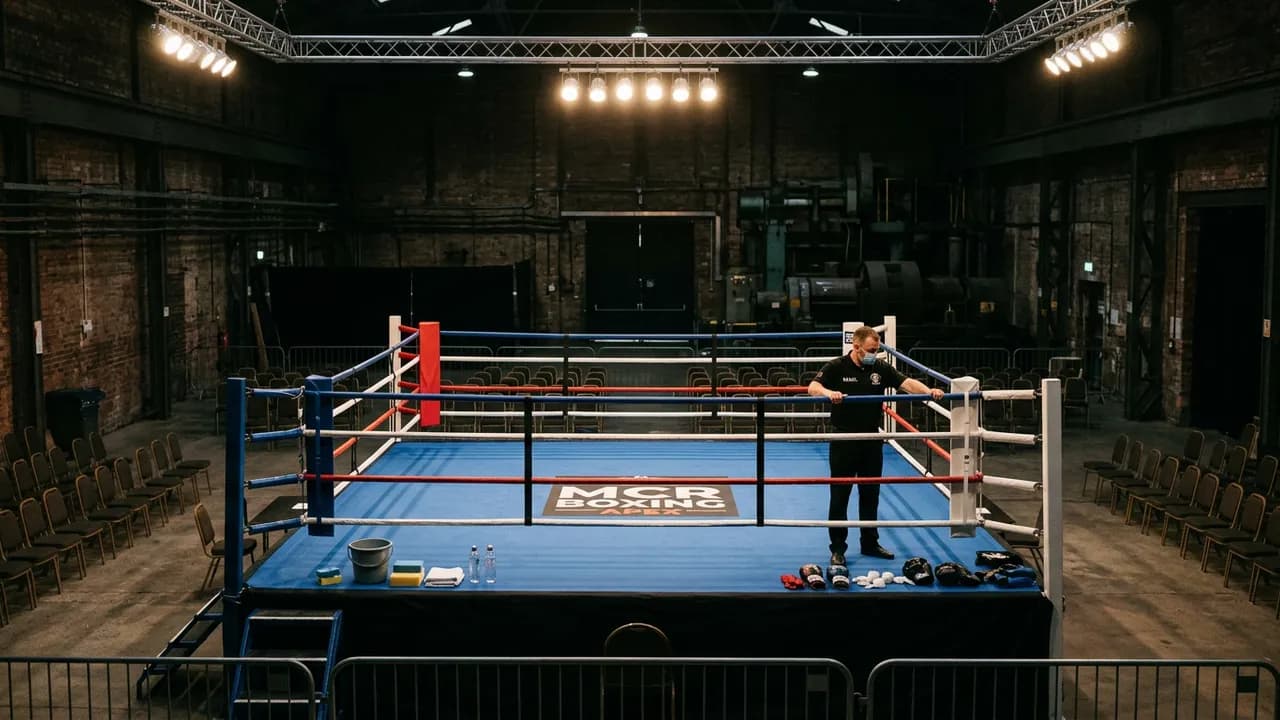
The motto -- "PUT DOWN THE KNIFE, USE YOUR LEFT AND RIGHT" -- is not marketing. It is the literal mission statement. KOTR events provide boxing gloves, a ring made of foam-wrapped fence posts, and a structured three-round format for young men who might otherwise carry weapons. The philosophy directly parallels Streetbeefs' "Fists up, guns down" model, adapted for the specific crisis of British knife violence.
KOTR has been featured in a Channel 4 documentary and a Vice article, receiving mainstream media coverage that has been broadly sympathetic to its anti-violence mission. Events are held at rotating secret locations across Manchester, with postcodes sent by text to participants and attendees days before each event.
King of the Streets (KOTS)
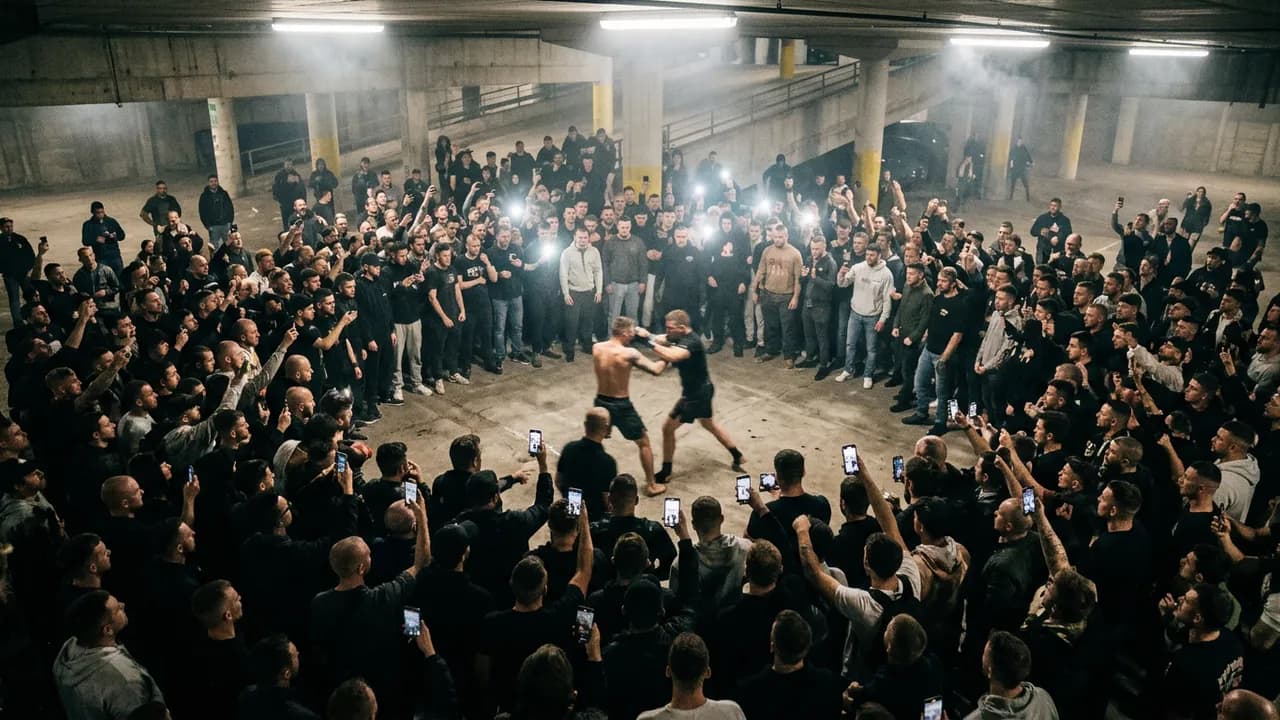
KOTS was founded in 2013 in Gothenburg, Sweden by the anonymous Hype Crew, a collective of hooligans, organized criminals, and street fighters. The philosophy is maximalist violence: no rules, no rounds, no gloves, no soft surfaces. Fights take place on bare concrete, and nearly every technique is permitted including headbutts, soccer kicks, and eye gouging.
KOTS did not emerge to solve a social problem. It emerged to monetize and spectacularize extreme fighting. The organization's connections to European football hooligan culture and, per reporting, to far-right extremist and neo-Nazi circles, position it as a deeply controversial entity that thrives on notoriety rather than community approval.
KOTS birthed the broader "No Rules" fighting movement across Europe in 2018, spawning unaffiliated copycat clubs in Germany, England, Ireland, France, Denmark, and Poland. The anonymous leadership, secret locations, and Telegram-based coordination are practical responses to operating illegally in most jurisdictions.
Rules and Format
| Aspect | KOTR | KOTS |
|---|---|---|
| Rounds | 3 rounds x 1 minute | None -- continuous until stoppage |
| Time Limits | 1-minute rounds | None |
| Gloves | Boxing gloves | None |
| Fighting Surface | Ground/outdoor area | Bare concrete |
| Ring Structure | Foam-wrapped fence posts | Open area |
| Allowed Techniques | Boxing (punching) | Strikes, grappling, headbutts, soccer kicks, eye gouging |
| Ground Fighting | No | Yes |
| Eye Gouging | No | Allowed (forfeit prize money since Dec 2022) |
| Win Conditions | Decision, TKO, KO | KO, TKO, submission, verbal submission |
| Weight Classes | Informal matching | Loosely matched |
| Attire | Standard (gloves mandatory) | Anything |
The rules contrast is as stark as it gets in underground fighting.
KOTR runs one-minute boxing rounds -- short, explosive, and designed for untrained or lightly trained young fighters who do not have the conditioning for longer formats. The boxing-only ruleset keeps the action standing, reduces the severity of potential injuries, and makes the sport accessible to participants who may have zero martial arts training. The foam-wrapped fence posts that form the ring are a safety measure, not a professional standard, but they demonstrate intent to minimize harm.
KOTS has effectively no rules. The concrete surface is not a compromise -- it is a deliberate choice that the organization has explicitly defended, insisting that "authentic No Rules fights have to be fought on concrete only." This single decision elevates the danger level of every KOTS fight beyond anything KOTR could produce even if it wanted to.
Safety and Medical Provisions
| Safety Factor | KOTR | KOTS |
|---|---|---|
| Medical Staff | Not extensively documented | Not reported |
| Protective Gear | Boxing gloves, mouthguards | None |
| Fighting Surface | Ground/outdoor | Concrete |
| Round Duration | 1 minute (limits cumulative damage) | Unlimited |
| Referee | Active refereeing | Present for stoppages |
| Ring Boundaries | Foam-wrapped posts | None |
| Age Focus | Young adults, anti-knife-crime demographic | All adults |
KOTR's safety profile is meaningfully better than KOTS's by every available metric. The one-minute rounds dramatically limit cumulative damage. Boxing gloves reduce hand injuries and facial lacerations compared to bare knuckle fighting. The prohibition on ground fighting eliminates the risk of ground-and-pound damage and the head-on-surface impacts that make KOTS so dangerous.
KOTS fights on concrete with no protective equipment, no round limits, and no medical staff publicly reported at events. The safety gap between these two organizations is not marginal -- it is categorical.
Audience and Cultural Impact
KOTR
KOTR's audience is built on YouTube and TikTok (@kotr_uk), platforms that serve its target demographic of young British men. The fights are raw, the production is minimal, and the energy is communal -- you can hear the crowd, feel the stakes, and sense the neighborhood context in every video.
The Channel 4 documentary and Vice coverage brought KOTR to a broader audience and framed it within the knife crime narrative that dominates British social policy conversations. This media positioning protects KOTR from the kind of criticism that pure-violence organizations attract. When your stated mission is saving kids from stabbings, mainstream media gives you a sympathetic hearing.
KOTR's cultural impact is local but significant. In Manchester's communities, where knife crime affects real families, the organization provides a visible alternative. The postcodes-by-text distribution model creates an underground community feel while keeping events accessible to those who need them most.
KOTS
KOTS commands a larger global audience with over 1 million YouTube subscribers and 671,000+ Instagram followers. The audience skews toward hardcore combat sports fans, hooligan culture enthusiasts, and viewers attracted to extreme content. KOTS's cultural impact is measured in notoriety rather than community benefit.
The KOTS documentary film and the organization's role in spawning the "No Rules" movement across Europe demonstrate significant cultural influence -- but it is influence in the direction of more extreme fighting, not community improvement. The connections to far-right movements have drawn criticism from mainstream combat sports media and added a political dimension that KOTR entirely avoids.
Social Mission vs. Spectacle
This is the fundamental divide. KOTR and KOTS both stage unsanctioned fights for audiences. But the purpose behind those fights defines everything else about how the organizations operate.
KOTR's mission is harm reduction. The organization exists because knife crime is killing young men in Manchester, and Remdizz believes that giving those young men a controlled outlet for physical aggression can save lives. Every design decision -- the short rounds, the boxing gloves, the foam-wrapped ring, the rotating locations -- serves this mission. The fighting is the mechanism, not the product.
KOTS's mission is extreme entertainment. The organization exists because there is a market for no-rules fighting on concrete, and the Hype Crew built a product to serve that market. Every design decision -- the concrete surface, the no-rules format, the anonymous leadership, the pay-per-view model -- serves the goal of maximum spectacle. The violence is the product.
Neither organization is dishonest about what it is. KOTR does not pretend to be a professional fighting promotion. KOTS does not pretend to be a community service. The honesty makes the comparison cleaner.
Legal Status
KOTR
KOTR operates in a legal gray area in the UK. The rotating secret locations and text-message coordination suggest awareness of potential legal exposure, but the organized nature of the events -- with gloves, referees, and safety measures -- provides some protection under the argument of consensual combat. The mainstream media coverage has been uniformly positive, which creates a soft buffer against prosecution. It is difficult for authorities to shut down an organization that Channel 4 just profiled as saving kids from knife crime.
KOTS
KOTS operates illegally in virtually every jurisdiction where it stages events. The anonymous leadership, encrypted communication, and secret locations are all direct responses to ongoing legal exposure. Despite operating illegally across Europe for over a decade, KOTS has continued staging events, demonstrating that the combination of anonymity, mobility, and audience demand makes enforcement difficult.
Side-by-Side Summary
| Category | KOTR | KOTS |
|---|---|---|
| Founded | 2021, Manchester, UK | 2013, Gothenburg, Sweden |
| Founder | Remdizz (former Muay Thai fighter) | Anonymous (Hype Crew) |
| Motto | "Put down the knife, use your left and right" | N/A (maximum violence ethos) |
| Philosophy | Anti-knife-crime, community safety | Extreme fighting spectacle |
| Rounds | 3 x 1 minute | None |
| Gloves | Boxing gloves | None |
| Surface | Ground/outdoor | Concrete |
| Techniques | Boxing only | Nearly unlimited |
| YouTube | Growing (millions of views) | 1M+ subscribers |
| Media Coverage | Channel 4, Vice (positive) | Documentary film (controversial) |
| Legal Status | Gray area (UK) | Illegal in most jurisdictions |
| Political Links | None | Far-right/hooligan connections reported |
| Cultural Role | Harm reduction tool | Entertainment product |
The Verdict
KOTR and KOTS share a label -- "underground fight club" -- and almost nothing else.
KOTR is a social intervention dressed as a fight club. Remdizz built it because young men in Manchester are dying from knife wounds, and he believed that giving them a place to fight with their fists could save lives. The short rounds, the boxing gloves, the foam barriers, and the community atmosphere all serve that mission. KOTR is not trying to be the most extreme thing on the internet. It is trying to be the most useful thing on the block. The Channel 4 documentary and Vice coverage validate that its message is reaching beyond the Manchester neighborhoods it directly serves.
KOTS is a fight club in the purest sense of the term. It exists because violence is a product, and extreme violence is a premium product. The concrete, the no-rules format, the hooligan recruitment pipeline, and the anonymous leadership all serve the goal of delivering the most unregulated fighting experience available in Europe. KOTS is not apologizing for what it is, and its million-plus subscribers confirm that the market it serves is real.
The comparison is not about which is "better." It is about what underground fighting can be when it serves community versus when it serves spectacle. KOTR proves that unsanctioned fighting can be a force for genuine social good. KOTS proves that unsanctioned fighting can be a thriving entertainment business. Both are true simultaneously, and the gap between them defines the moral range of underground fighting.
For more on these organizations, see our profiles on King of the Ring and King of the Streets. For another community-focused comparison, read our Streetbeefs vs Backyard Squabbles breakdown.
Watch and Learn More
YouTube Channels
- KOTR Official -- King of the Ring Manchester fights
- KOTS Official -- King of the Streets no-rules fighting
Recommended Fights
- KOTS: Simon Henriksen vs Ronin -- KOTS's greatest fighter in action
Official Sites
- KOTS Official Site -- Event info and fighter profiles
External Coverage
- Sports Politika: Inside KOTS -- Investigative piece on Sweden's fight club
Read More on UNSANCTIONED FIGHTS
- King of the Ring (KOTR) -- Manchester's anti-knife-violence fight club
- King of the Streets (KOTS) -- Europe's most extreme fighting organization
- Top 10 KOTS Fighters -- The greatest no-rules fighters ranked
- Simon Henriksen Fighter Profile -- KOTS's undefeated champion
- KOTS vs Streetbeefs -- Opposite ends of underground fighting
- No-Rules Organizations Ranked -- All no-rules orgs compared
- Who Runs KOTS? The Hype Crew Story -- The anonymous collective behind KOTS