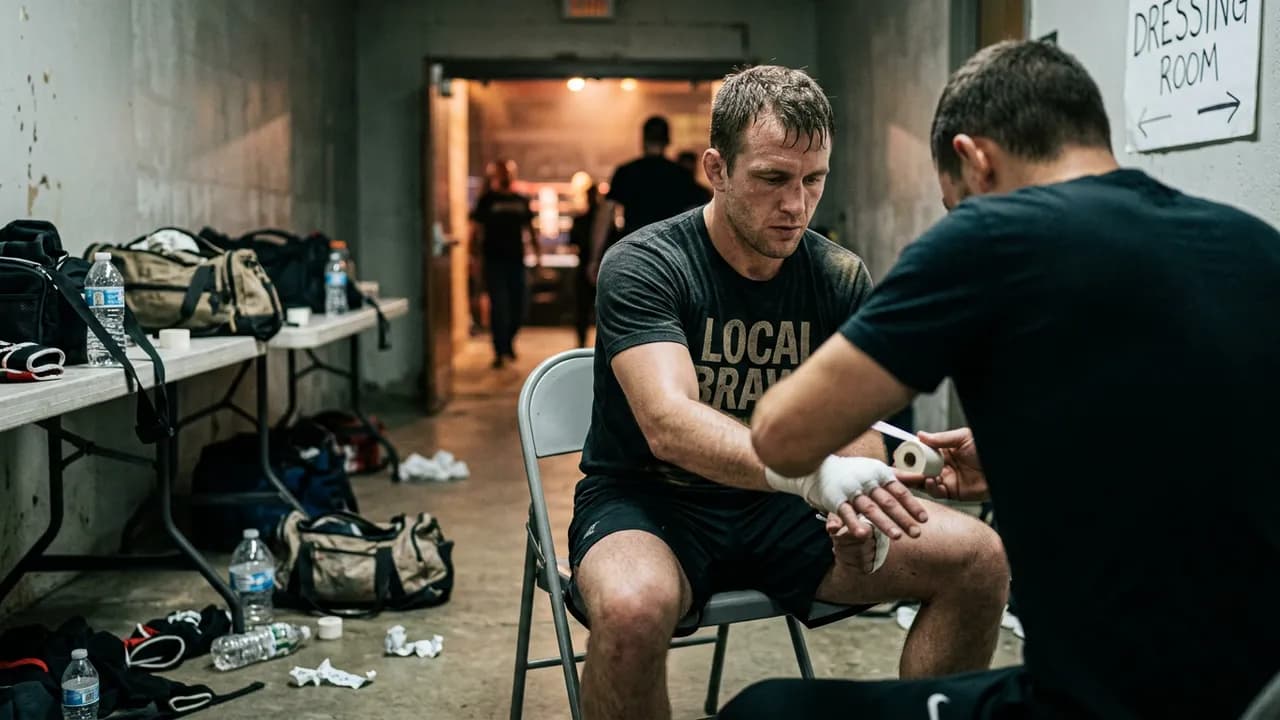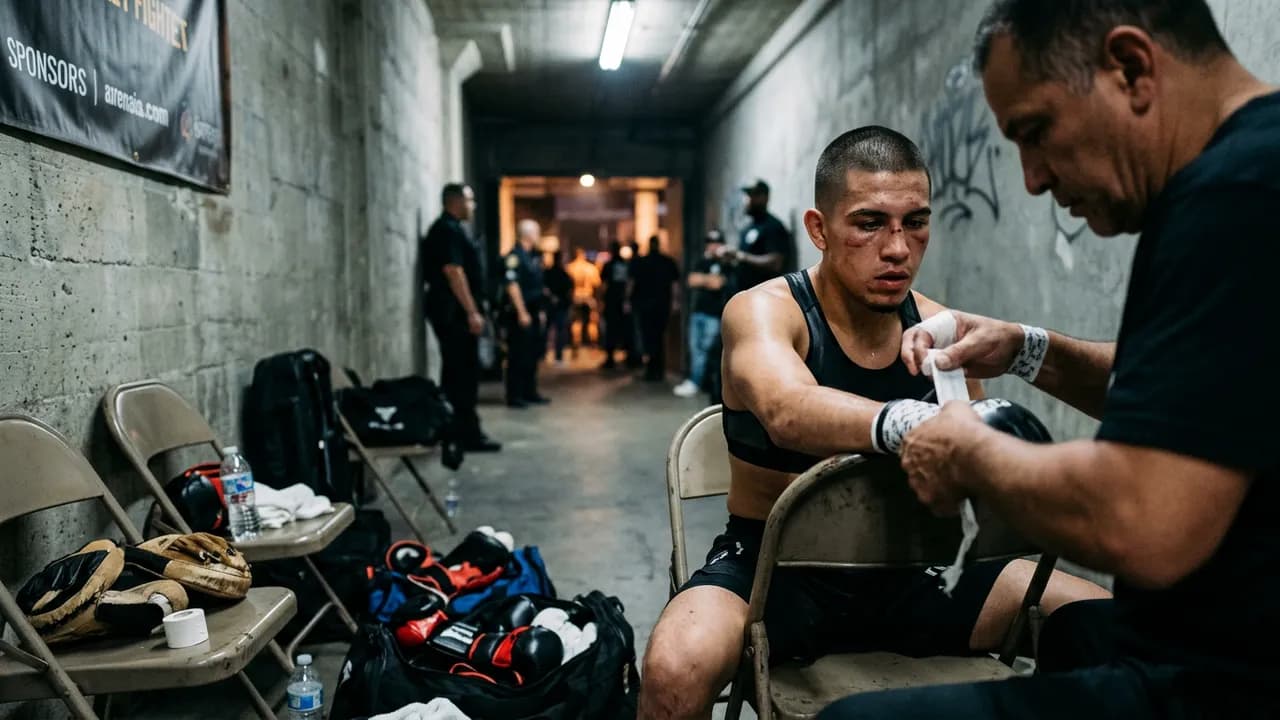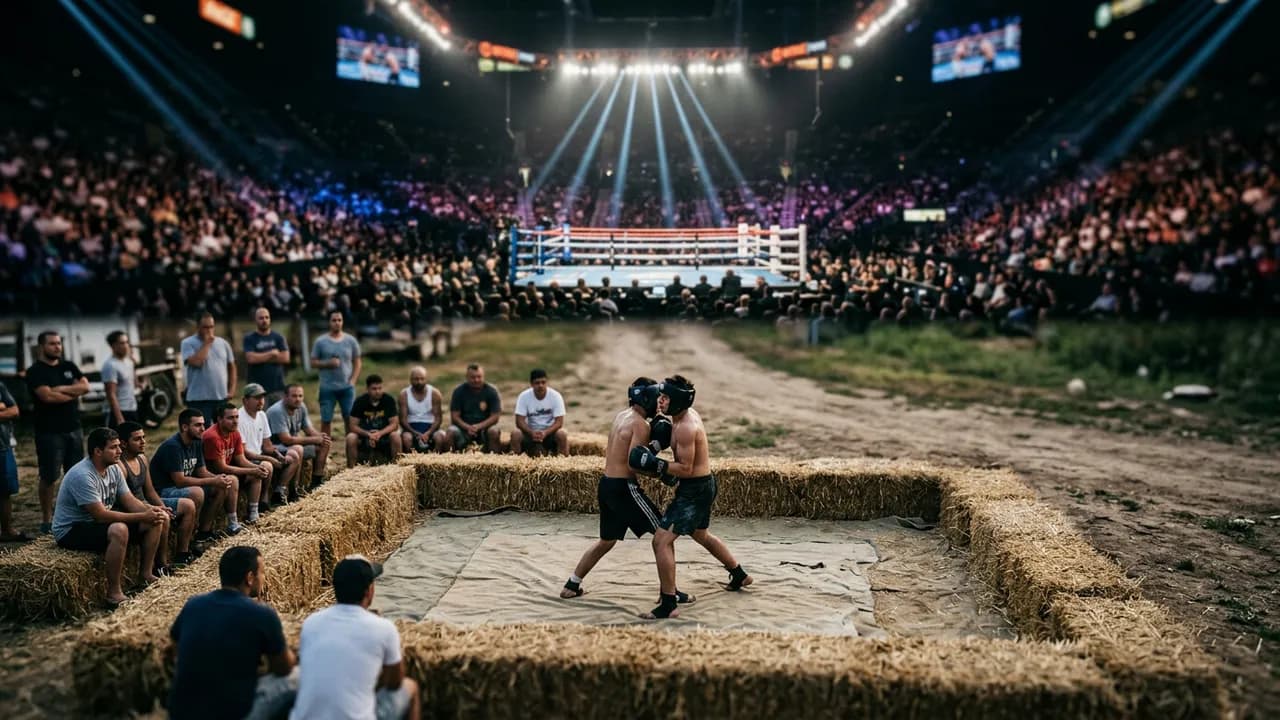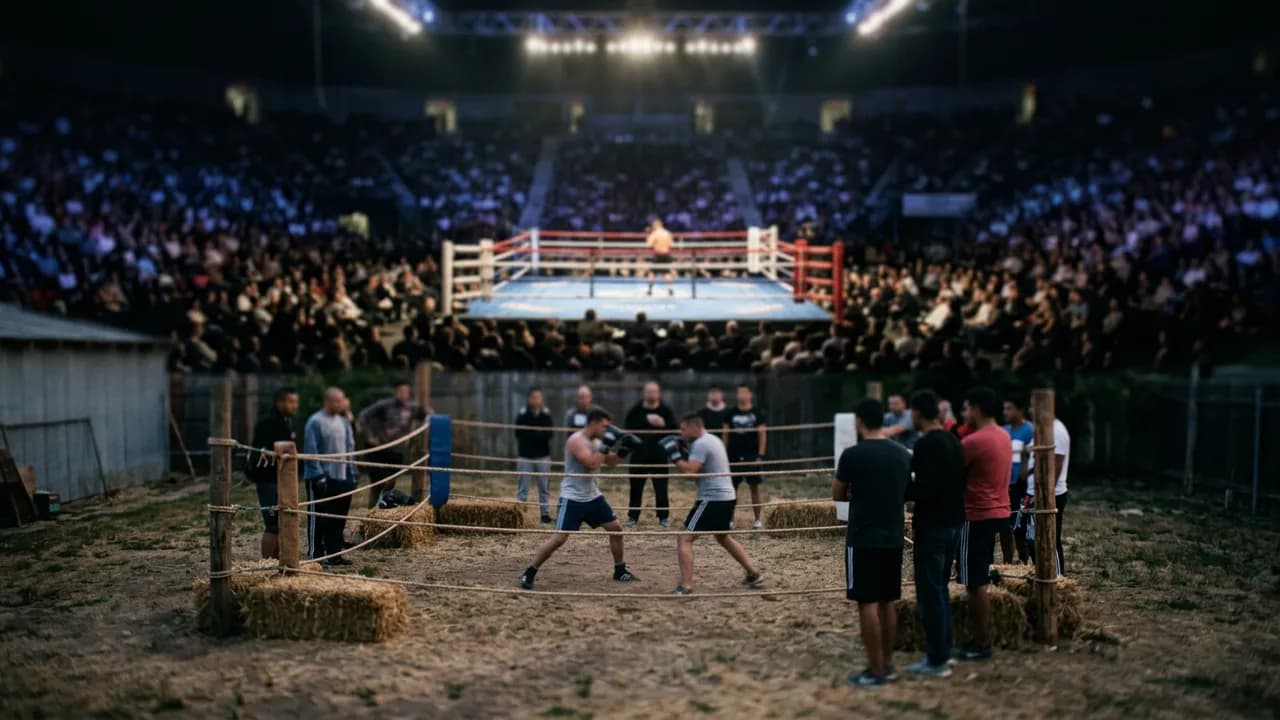
America's backyard fighting scene has two distinct poles, separated by geography, era, and scale but united by a strikingly similar mission. Streetbeefs, the East Coast institution born in Virginia in 2008, built the blueprint for community-driven backyard fighting and became one of the most-watched fighting channels on YouTube. Backyard Squabbles, the South Los Angeles operation that emerged during the COVID-19 pandemic around 2020, took that same concept and rooted it in West Coast street culture.
Both organizations exist to give their communities an alternative to gun violence. Both put regular people in a ring on private property and let them settle disputes or test themselves under rules. Both reject the professional combat sports model in favor of grassroots accessibility. But the differences in how they grew, who they serve, and where they stand in the broader landscape reveal how the same idea plays out in fundamentally different American environments.
Origins and Philosophy
Streetbeefs
Streetbeefs was founded in 2008 in Harrisonburg, Virginia by Christopher "Scarface" Wilmore, whose personal history of street violence and incarceration gave him a clear-eyed understanding of what happens when disputes have no outlet. His founding motto -- "Fists up, guns down" -- became the organizing principle for everything Streetbeefs would become.
The idea was radical in its simplicity. Instead of letting neighborhood beefs escalate to shootings, give people a place to fight under rules. Set it up on private property. No money changes hands. No admission is charged. Fighters wear gloves, a referee watches, and when the fight is over, both parties walk away. The dispute is settled.
What started as a literal backyard operation expanded into a multi-branch organization with locations including the original Harrisonburg headquarters, Streetbeefs West Coast (California/Las Vegas, run by Martin Rubio and Alex Chernard), Streetbeefs Pound 4 Pound (Tidewater, VA, run by Cornflake), and Streetbeefs Scrapyard (Gig Harbor, WA). Streetbeefs has been profiled by ESPN, The New York Times, The Washington Post, The New Yorker, and HuffPost -- uniformly positive coverage that frames Wilmore as an unconventional peacemaker.
Backyard Squabbles
Backyard Squabbles was born in South Los Angeles around 2020, emerging during the COVID-19 pandemic when conventional outlets for young men's aggression were shut down. The founding motto -- "Guns down, squabble up" -- is functionally identical to Streetbeefs' philosophy, and that is not coincidental. Streetbeefs proved the concept. Backyard Squabbles adapted it for LA.
The organization was built from the ground up within South LA's street culture, serving a community where gun violence is endemic and where the gap between teenage arguments and homicides can be a matter of hours. Backyard Squabbles provides a ring, gloves, rules, and an audience. The fighters are locals -- young men and women from the neighborhood who want to test themselves or settle scores without weapons.
The pandemic timing was critical. With gyms closed, community centers shuttered, and young people stuck at home with rising frustration, Backyard Squabbles filled a void that no other institution in South LA was addressing.
Rules and Format
| Aspect | Streetbeefs | Backyard Squabbles |
|---|---|---|
| Formats | Boxing, kickboxing, MMA, jiu-jitsu | Boxing and MMA |
| Rounds | 3 rounds (standard) | Timed rounds |
| Gloves | Yes (boxing or MMA) | Yes (boxing or MMA) |
| Fighting Surface | Grass, dirt, outdoor area | Backyard ring setup |
| Weight Classes | Informal size matching | Informal size matching |
| Prohibited | Biting, eye gouging, throat strikes, cursing | Standard safety prohibitions |
| Win Conditions | Decision, TKO, KO, submission | Decision, TKO, KO, submission |
| Referee | Yes (active refereeing) | Yes |
| Title System | 3+ wins required for title contention | Developing competitive structure |
Both organizations run similar rulesets -- gloved combat with active refereeing, timed rounds, and standard prohibitions on the most dangerous techniques. Streetbeefs offers more format variety with dedicated kickboxing and jiu-jitsu options alongside boxing and MMA. Backyard Squabbles focuses primarily on boxing and MMA.
Streetbeefs' no-cursing rule is a distinctive cultural marker that Backyard Squabbles does not replicate. Wilmore enforces decorum as aggressively as he enforces fight rules, creating an atmosphere of competitive respect that extends beyond the physical combat. Backyard Squabbles operates within the norms of South LA street culture, which has its own codes of respect but expresses them differently.
Scale and Reach
| Metric | Streetbeefs | Backyard Squabbles |
|---|---|---|
| YouTube Subscribers | 4.39 million | Smaller YouTube presence |
| Total YouTube Views | 1.4+ billion | Growing |
| Primary Platform | YouTube | Instagram (@backyardsquabbles, 20K+), TrillerTV |
| Total Videos | 3,600+ | Growing library |
| Branches | 4 (VA, CA/LV, Tidewater VA, WA) | Single location (South LA) |
| Years Active | 17+ years | ~6 years |
| Media Coverage | ESPN, NYT, WashPost, New Yorker | Limited mainstream coverage |
| Content Model | Free on YouTube | Instagram/TrillerTV distribution |
The scale difference is enormous, and it is primarily a function of time. Streetbeefs has been operating since 2008 and has had nearly two decades to build its audience, refine its model, and accumulate over 3,600 fight videos. Backyard Squabbles is roughly six years old and is still in a growth phase.
The platform strategies differ significantly. Streetbeefs built its empire on YouTube, where long-form fight content thrives and the algorithm rewards consistent uploads. Backyard Squabbles has leaned more heavily on Instagram for community building and TrillerTV for content distribution -- platforms that serve different audiences and offer different monetization paths.
Fighter Profiles
Streetbeefs Fighters
Streetbeefs fighters are everyday people from Harrisonburg and surrounding areas -- construction workers, retail employees, military veterans, and students. The skill range runs from complete beginners to experienced amateurs. Notable fighters include ATrain (Alan Stephenson), considered the best Streetbeefs fighter with a 6-5 professional MMA record; Delvin Hamlett, the undefeated 205-pound champion at 8-0; and Shinigami (Daniel Uribe), a karate specialist with an 8-2 record.
The title system requires fighters to accumulate three or more wins with strong showings before becoming eligible for title fights, creating a genuine competitive hierarchy within the amateur framework.
Backyard Squabbles Fighters
Backyard Squabbles fighters come from South LA's neighborhoods. Notable names include Albert "Black Blade" Marion, Hector "Aztec Warrior" Herrera (who functions as both trainer and fighter), "Granddaddy" (an undefeated MMA fighter within the organization), and Valinda Hernandez, the organization's only female fighter at the time of this writing.
The inclusion of Hernandez is notable. While Streetbeefs has featured women fighters, Backyard Squabbles having a female fighter participating actively in the same cards as male fighters speaks to the organization's inclusive culture. Herrera's dual role as trainer and fighter suggests a more hands-on developmental approach, where experienced members actively help newer fighters improve.
Community Impact
Streetbeefs
Streetbeefs' community impact has been documented extensively by mainstream media. The organization exists in Harrisonburg, a mid-sized Virginia city where Wilmore's presence is well-known and the police department has publicly affirmed the legality of Streetbeefs events. The Harrisonburg Police Department has never cited or intervened in Streetbeefs events, reflecting a community-level acceptance that Wilmore has carefully cultivated over fifteen years.
The broader impact is measurable in the fighters who have used Streetbeefs as a stepping stone into sanctioned amateur and professional careers in boxing and MMA. The organization functions as both conflict resolution mechanism and developmental platform.
Backyard Squabbles
Backyard Squabbles operates in South Los Angeles, a community where gun violence statistics are not abstractions. The organization's impact is harder to quantify but is visible in the events themselves -- young men who might otherwise settle disputes with weapons are instead putting on gloves and fighting under rules. The COVID-era origin gave the organization urgency. When every other outlet closed, Backyard Squabbles opened.
The aspiration to give fighters ring experience who might eventually pursue combat sports careers mirrors Streetbeefs' developmental function but operates in a different competitive ecosystem. LA's proximity to professional boxing and MMA gyms means Backyard Squabbles fighters have access to a professional pipeline that small-town Virginia cannot match.
Legal and Safety Framework
| Factor | Streetbeefs | Backyard Squabbles |
|---|---|---|
| Legal Status | Established legal gray area (no pay, private property) | Similar legal positioning |
| Fighter Pay | None (by design) | None |
| Admission Fee | None | None |
| Medical Staff | Registered nurse, trained staff | Basic safety provisions |
| Drug/Alcohol Policy | Strictly prohibited at events | Not publicly detailed |
| Police Relations | Publicly affirmed by local PD | Not publicly detailed |
| Age Requirement | 18+ with ID | 18+ |
Streetbeefs has the advantage of 17 years of precedent and explicit local law enforcement endorsement. Wilmore has been meticulous about maintaining the legal structure that keeps Streetbeefs operating -- no money, no admission, private property, consenting adults. Backyard Squabbles appears to operate under a similar framework but without the same public track record of law enforcement acceptance.
Side-by-Side Summary
| Category | Streetbeefs | Backyard Squabbles |
|---|---|---|
| Founded | 2008, Harrisonburg, VA | ~2020, South Los Angeles |
| Motto | "Fists up, guns down" | "Guns down, squabble up" |
| Philosophy | Conflict resolution, community | Anti-violence alternative, fighter development |
| Formats | Boxing, kickboxing, MMA, BJJ | Boxing, MMA |
| Branches | 4 across USA | Single location |
| YouTube | 4.39M subs, 1.4B views | Growing |
| Primary Platform | YouTube | Instagram, TrillerTV |
| Media Coverage | Extensive mainstream | Limited |
| Fighter Pay | None | None |
| Years Active | 17+ | ~6 |
| Notable Fighters | ATrain, Delvin Hamlett, Shinigami | Black Blade, Aztec Warrior, Granddaddy |
| Female Fighters | Yes | Yes (Valinda Hernandez) |
| Title System | Established (3+ wins required) | Developing |
The Verdict
Streetbeefs and Backyard Squabbles are the same idea born in different Americas.
Streetbeefs is the proven model -- 17 years of operation, mainstream media endorsement, explicit police approval, 4.39 million YouTube subscribers, and a multi-branch structure that has replicated the concept across the country. Wilmore built the template for legal, community-driven backyard fighting, and nothing in the space has come close to matching the scale and cultural impact of what he created. Streetbeefs is the institution.
Backyard Squabbles is the next generation -- younger, hungrier, and rooted in a community where the anti-violence mission is arguably even more urgent. South LA's gun violence statistics make Harrisonburg's look modest by comparison, and an organization that gives young men an alternative to pulling triggers is doing work that transcends entertainment. The pandemic-era origin story gives it a rawness and urgency that Streetbeefs, in its maturity, has partially outgrown.
What Backyard Squabbles needs is time. Streetbeefs did not become an institution overnight. It took years of consistent events, thousands of uploaded fights, and careful legal navigation to build what it is today. If Backyard Squabbles can sustain its mission, grow its audience, and maintain the anti-violence philosophy that justifies its existence, it has the potential to become the West Coast equivalent of what Streetbeefs built on the East Coast.
The east coast-west coast parallel is not just geographic convenience. It reflects a fundamental truth about American backyard fighting: the need for it exists everywhere, and the communities that need it most are building their own answers.
For more on these organizations, see our profiles on Streetbeefs and Backyard Squabbles. For how Streetbeefs compares to other amateur fighting, read our Streetbeefs vs Rough N' Rowdy breakdown.
Watch and Learn More
YouTube Channels
- Streetbeefs -- 4.2 million subscriber original
- Backyard Squabbles -- South LA's rising fight club
Recommended Fights
- Streetbeefs Top 5 Knockouts -- The best from the original yard
- Streetbeefs: Blackie Chan vs Meyham -- Classic Streetbeefs bout
External Coverage
- ESPN: Streetbeefs Feature -- ESPN's in-depth Streetbeefs profile
Read More on UNSANCTIONED FIGHTS
- Streetbeefs Organization Profile -- Full Streetbeefs breakdown
- Backyard Squabbles Organization Profile -- South LA's "Guns Down, Squabble Up" operation
- The Scrapyard -- Another Streetbeefs offspring in the Pacific Northwest
- Top 10 Streetbeefs Fighters -- The greatest yard fighters
- Chris "Scarface" Wilmore -- Streetbeefs founder
- Streetbeefs: Zero to 4 Million -- The growth story
- East Bay Rats vs Streetbeefs -- American fight club comparison