Paris is a city of contradictions, and its underground fighting scene is one of the sharpest. The capital of haute cuisine, of fashion weeks, of the Enlightenment itself -- Paris is also a city of banlieues, of youth unemployment, of riot police firing tear gas at Yellow Vest protestors, and of a hooligan subculture that has historically been among the most violent in European football. Into this tension has emerged a no-rules fighting movement that draws on all of these elements -- the aggression of the suburbs, the code of the terraces, and the French capacity for turning rebellion into culture.
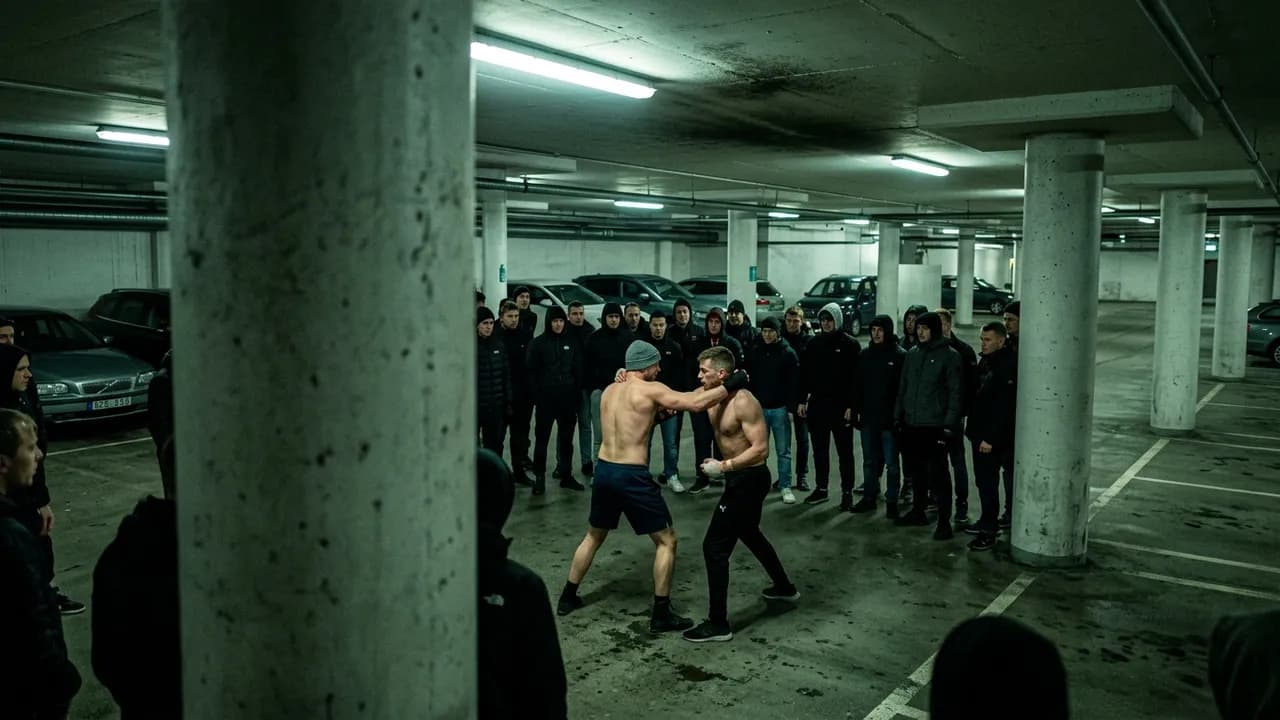
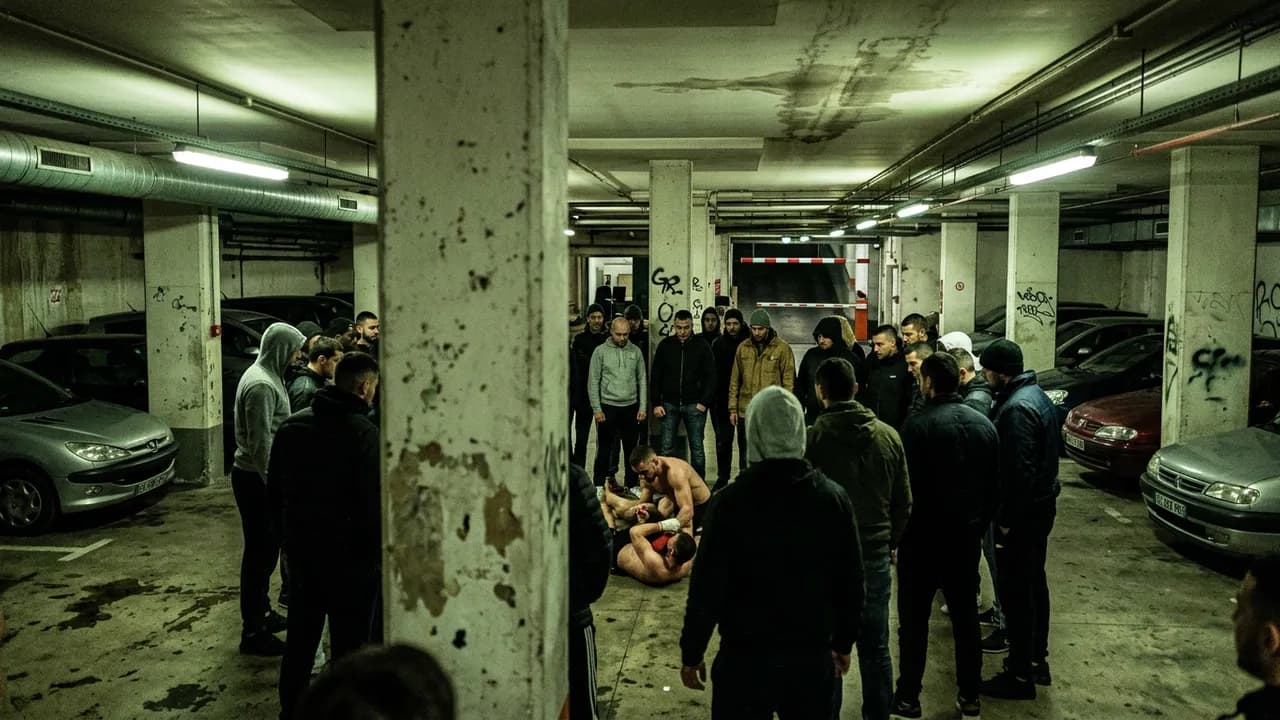
FPVS is the most visible manifestation of this movement. Operating primarily in the south of France but connected to a network that extends into Paris and beyond, the organization stages no-rules fights on concrete surfaces with no gloves, no referees in the traditional sense, and rules that mirror the KOTS movement's anything-goes philosophy. The fights are recruited through Telegram, filmed for content, and distributed through channels that exist at the margins of social media platforms that are perpetually deleting and re-emerging.
History
France has a complex relationship with combat sports. The country is the birthplace of savate, the elegant French boxing system that incorporates kicks and was codified in the nineteenth century. French boxing (as savate is formally known) remains a respected sport with an established federation, championship structure, and international competition circuit. But France is also a country where street violence has deep cultural roots -- from the barricades of the Revolution to the suburban riots of 2005 to the ongoing tensions between police and young men in the banlieues.
The hooligan subculture has been a particularly potent driver of underground fighting in France. French football hooliganism -- associated with clubs like Paris Saint-Germain, Olympique de Marseille, and OGC Nice -- has a long and violent history. The ultra and hooligan groups that organize around these clubs have their own internal hierarchies, codes of honor, and traditions of interpersonal combat. When the European no-rules movement emerged through KOTS in 2018, it found a ready audience in French hooligan culture.
The connection between hooliganism and underground fighting in France is not incidental. Many of the participants in French no-rules events come from hooligan backgrounds or adjacent social circles. The culture of organized violence for its own sake -- fighting not for money, not for titles, but for the experience and the respect of peers -- translates directly from the terraces to the fight ring. Or, more precisely, to the concrete floor of whatever industrial space or rural clearing has been selected for the event.
Organizations
FPVS
FPVS represents the French contribution to the European no-rules movement. The organization was founded by two young Frenchmen known as Leon and Victor, reportedly in their early twenties at the time of the organization's establishment. The youthfulness of the founders reflects a broader pattern in the no-rules movement -- these are organizations built by young men for young men, operating outside the institutional frameworks that govern established combat sports.
The format mirrors the KOTS model: no rules, no gloves, fights on concrete or hard surfaces. The similarities are not coincidental -- FPVS is part of the broader no-rules movement that KOTS catalyzed, though the organization operates independently and is not directly affiliated with the Swedish operation.
Recruitment happens through Telegram, the encrypted messaging platform that has become the default communication channel for underground fighting organizations across Europe. Prospective fighters and spectators connect through channels that are shared within trusted networks -- a system that provides security through obscurity and makes it extremely difficult for authorities to infiltrate or shut down events.
The participants are predominantly young men between eighteen and twenty-five, drawn from working-class backgrounds. Construction workers, restaurant servers, and manual laborers make up a significant portion of the fighter pool. These are not professional athletes or martial arts specialists -- they are ordinary young men who have chosen to test themselves in the most extreme form of consensual combat available.
FPVS events incorporate rituals that give them a cultural specificity beyond simple fighting. National anthems are sometimes played. Fighters wrap their hands in a deliberate, ceremonial manner. There is a culture of respect between combatants that coexists with the brutality of the fights themselves. This combination of violence and honor is characteristic of the broader no-rules movement and distinguishes it from random street fighting.
The Broader French Underground
FPVS is the most documented French no-rules organization, but it is not the only one. The no-rules movement has spawned multiple fight clubs across France, operating in various cities and regions. Paris, as the country's largest city and cultural center, is a natural hub for this activity, though the specifics of Parisian fight clubs are more difficult to document than organizations that operate in smaller communities.
The French MMA scene also contributes to the underground.
The French MMA scene also contributes to the underground. France was notably late to legalize professional MMA -- the sport was not officially sanctioned until 2020 -- and the years of prohibition created dynamics similar to New York's ban on MMA from 1997 to 2016. During the period when MMA was illegal, unsanctioned events filled the gap, and some of that underground infrastructure persists even after legalization.
French savate gyms, boxing clubs, and the growing number of MMA facilities in Paris and other cities provide the training base from which underground fighters emerge. The technical quality of French fighters, shaped by the country's established combat sports traditions, means that the underground scene benefits from a pool of competent competitors.
Hooligan Fight Clubs
Beyond the organized no-rules movement, France has a tradition of hooligan fight clubs that operate entirely outside any promotional structure. These are arranged fights between members of rival hooligan firms, conducted in forests, fields, and industrial areas outside city centers. The fights are not filmed for content, not organized by promoters, and not accessible to outsiders. They exist purely within the hooligan subculture and are governed by the internal codes of the firms involved.
Paris Saint-Germain's hooligan groups have been among the most notorious in French football, with a history of violence that extends back decades. The overlap between this subculture and the organized no-rules movement creates a fighting ecosystem in Paris that operates on multiple levels -- from the relatively structured events of FPVS-style organizations to the purely clandestine encounters between hooligan firms.
Notable Fighters
The French no-rules scene does not produce publicly recognized fighters in the way that organizations with YouTube channels and social media campaigns do. FPVS fighters are known primarily within the community -- their reputations built through fights witnessed by those present rather than through content distributed to mass audiences.
Leon and Victor, the founders of FPVS, are the most identifiable figures in the French movement. Their role in establishing a French variant of the no-rules model has given them prominence within the European underground fighting network.
The anonymity of French underground fighters reflects both practical considerations -- legal risk in a country where unsanctioned fighting is clearly illegal -- and cultural values. The French no-rules scene, influenced by hooligan culture, places emphasis on the act of fighting rather than the accumulation of fame. Fighters earn respect within their communities without seeking recognition from the broader public.
How to Get Involved
The French underground fighting scene is accessible primarily through Telegram channels and personal networks. FPVS recruits fighters through encrypted messaging, and access to events requires connections within the community. The organization's social media presence is intermittent and subject to platform enforcement actions.
For those interested in combat sports in Paris through legal channels, the city offers world-class training in boxing, savate, MMA, and various martial arts. The legalization of professional MMA in France in 2020 has opened new avenues for sanctioned competition, and Paris hosts regular MMA events under the oversight of the French Boxing Federation.
BKFC has not yet established a regular presence in France, but the promotion's international expansion could eventually bring sanctioned bare knuckle events to Paris. The French market -- with its deep combat sports culture and large population of young fight fans -- represents a significant opportunity for bare knuckle promotions.
The KOTS website may provide connections to the broader European no-rules network, though navigating the underground requires patience, discretion, and an acceptance of the legal risks involved.
Related Cities
- Gothenburg -- Birthplace of KOTS and the no-rules movement that directly inspired French fight clubs
- Berlin -- Germany's underground scene shares the hooligan connections and KOTS influence
- London -- UK's underground scene with similar hooligan-fighting crossover dynamics
- Warsaw -- Poland's fight club scene emerges from comparable hooligan culture
- Copenhagen -- UUF Denmark represents another European nation's response to the no-rules movement