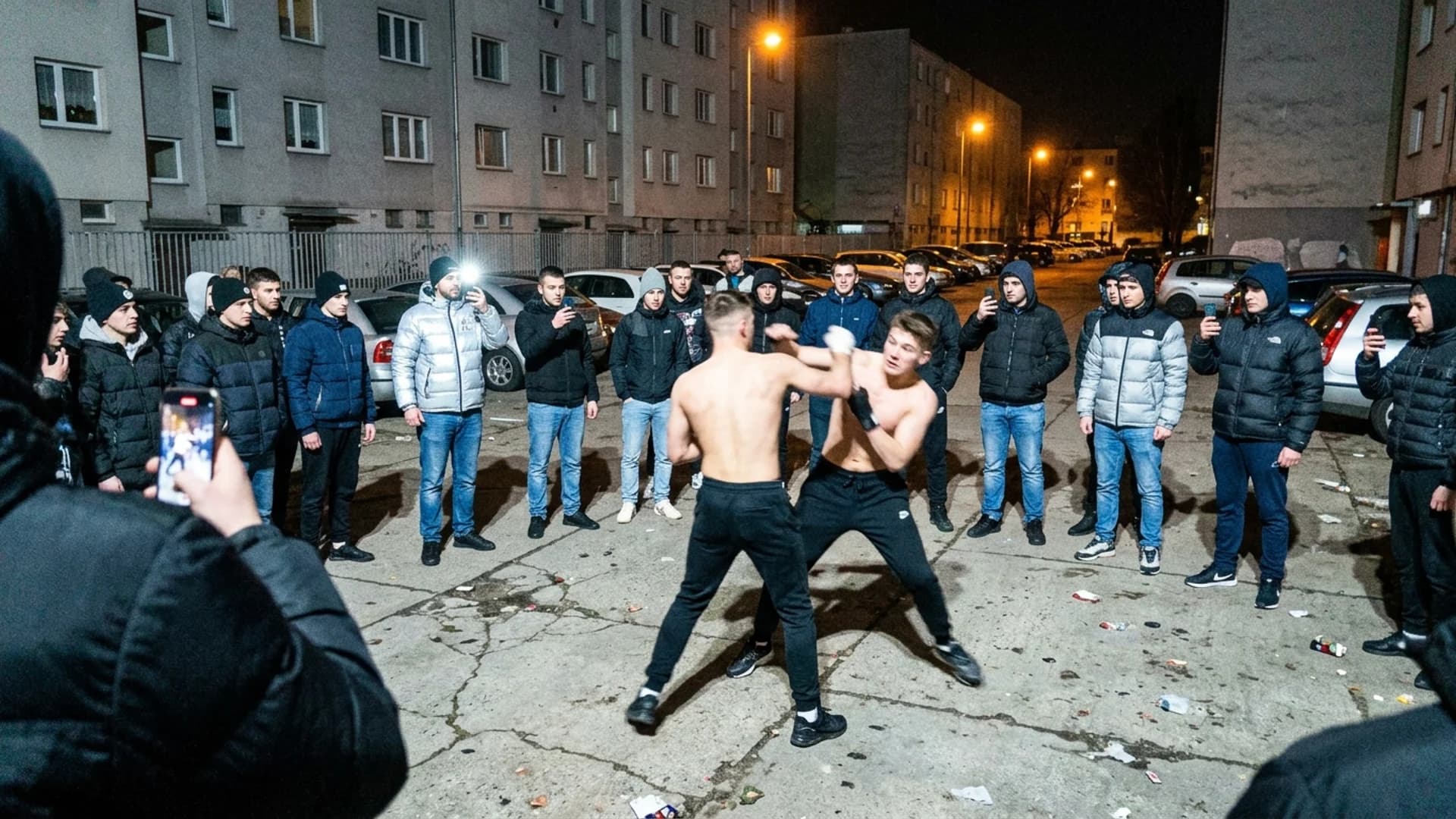
Weight classes exist in combat sports for a simple reason: size matters. A 250-pound man punching a 150-pound man is not a competitive fight -- it is an assault with a predictable outcome. Weight classes create competitive parity by ensuring that fighters face opponents of similar size, which produces better fights, fairer outcomes, and fewer injuries caused by gross physical mismatches.
In mainstream combat sports, weight classes are universal and standardized. The UFC, professional boxing, and virtually every major sanctioned promotion sorts fighters into defined divisions with strict weight limits enforced through mandatory weigh-ins. The underground and alternative fighting world is different. Some organizations have adopted formal weight class systems. Others use informal matching. And some have no weight restrictions at all, matching fighters based on willingness rather than physical parity.
This guide compares how weight classes operate across every major underground and semi-regulated fighting organization, explaining the systems, the logic behind them, and the practical consequences for fighters and viewers.
The Spectrum: From Full Weight Classes to No Weight Restrictions
At a high level, organizations fall into four categories:
- Formal weight classes with named divisions and weigh-ins -- BKFC
- Defined weight classes without the same level of regulatory infrastructure -- Top Dog
- Informal matching by the promoter -- Streetbeefs, KOTR, Strelka, Mahatch
- No weight classes or minimal restrictions -- KOTS
Each approach carries tradeoffs between competitive fairness, accessibility, and organizational complexity.
BKFC: The Most Comprehensive System (9 Male, 3 Female)
BKFC operates the most detailed weight class system in bare-knuckle and underground fighting, with 9 male divisions and 3 female divisions.
Male Divisions
| Division | Weight Limit |
|---|---|
| Strawweight | 115 lbs |
| Flyweight | 125 lbs |
| Bantamweight | 135 lbs |
| Featherweight | 145 lbs |
| Lightweight | 155 lbs |
| Welterweight | 165 lbs |
| Middleweight | 175 lbs |
| Light Heavyweight | 185 lbs |
| Cruiserweight | 205 lbs |
| Heavyweight | 206+ lbs |
Female Divisions
| Division | Weight Limit |
|---|---|
| Strawweight | 115 lbs |
| Flyweight | 125 lbs |
| Featherweight | 145 lbs |
Key observations:
BKFC's weight class limits differ slightly from standard boxing and MMA at several divisions. The most notable difference is Welterweight at 165 lbs (compared to 170 lbs in the UFC) and Middleweight at 175 lbs (compared to 185 lbs in the UFC). These adjustments reflect the specific competitive ecosystem of bare-knuckle fighting.
The 9 male divisions create a granular system where the maximum weight difference between adjacent classes is typically 10 to 20 pounds. This reduces the likelihood of significant size mismatches within a division. The 3 female divisions are fewer but cover the weight ranges where female bare-knuckle fighters are most active.
BKFC enforces its weight classes through mandatory weigh-ins supervised by the state athletic commission. Missing weight carries consequences, just as it does in professional boxing or MMA.
Why it works: BKFC is a professional promotion with contracted fighters, regular events, and a deep enough roster to fill multiple divisions. The infrastructure exists to support formal weight classes because the business model demands it -- championship belts, rankings, and title fights require defined divisions.
For full details on BKFC's rules and format, see our BKFC rules guide.
Top Dog: 6 Weight Classes
Top Dog uses a six-division weight class system, making it the second most structured organization in terms of weight management.
While the exact weight limits for all six divisions have not been consistently published in English-language media, Top Dog maintains separate competitive divisions with championship belts at each weight. Fighters are sorted into divisions by weight, and matchmaking occurs within those divisions.
Six divisions is fewer than BKFC's twelve but significantly more than the informal matching used by most grassroots organizations. The system allows Top Dog to create meaningful championship narratives and competitive hierarchies at each weight while maintaining a simpler administrative structure than a promotion with ten or more divisions.
Why it works: Top Dog has grown into a professional-tier promotion with arena events, a dedicated streaming platform, and a roster of recognizable fighters. Six weight classes provide enough structure for competitive integrity without the administrative burden of managing a dozen divisions in a non-English-speaking market.
For full details on Top Dog's rules and format, see our Top Dog FC rules guide.
Streetbeefs: Informal Matching by the Promoter
Streetbeefs does not use formal weight classes. There are no named divisions, no weigh-ins, and no scales. Fighters are matched by founder Chris "Scarface" Wilmore and his team based on a subjective assessment of competitive parity.
Factors considered in Streetbeefs matching include:
- Approximate body weight (self-reported or visually estimated)
- Apparent physical fitness
- Known or claimed fighting experience
- The discipline being contested (boxing, kickboxing, MMA, or grappling)
- Fighter preference and availability
The absence of formal weight classes is a deliberate choice. Streetbeefs exists to serve anyone who wants to fight, regardless of their size. Formal weight classes would require infrastructure (scales, weigh-in protocols, division management) that the organization has chosen not to maintain. They would also create situations where a fighter could be told "we don't have anyone at your weight" -- which contradicts Streetbeefs' open-door philosophy.
The tradeoff: Informal matching relies on the promoter's judgment, which is subjective. Two fighters who weigh the same can have wildly different skill levels, and a 10-pound weight difference that seems minor on paper can be significant in a fight. Mismatches happen. The short rounds and gloved format mitigate the consequences, but they do not eliminate them.
Despite the lack of formal weight classes, Streetbeefs does maintain a title system where fighters with 3 or more wins can compete for division championships. These divisions are loosely organized by weight range, creating an informal but functional competitive structure.
For full details, see our Streetbeefs rules guide.
KOTS: No Weight Classes (With a 5kg Guideline)
KOTS takes the most extreme approach to weight matching of any major fighting organization. There are no formal weight classes, no named divisions, and no weigh-ins in the traditional sense.
However, KOTS is not entirely weight-blind. The organization imposes the following guidelines:
| Situation | Weight Rule |
|---|---|
| Standard fights | Maximum 5kg (11 lbs) difference between fighters |
| Grudge / beef fights | No weight limit |
| Over 100kg (220 lbs) | No weight limit |
The 5kg guideline for standard fights is a meaningful restriction in theory. Eleven pounds is a smaller differential than you would find between some adjacent weight classes in professional boxing or MMA. But the enforcement mechanism is unclear -- KOTS does not operate under the oversight of an athletic commission, and there is no independent verification of fighter weights.
The exception for grudge fights is significant. KOTS was born from European hooligan culture, where personal disputes do not come with weight classes. If two people have a genuine beef and want to settle it in a KOTS fight, their respective sizes are irrelevant. This exception ensures that KOTS can serve its original purpose -- settling real disputes -- without being constrained by competitive fairness considerations.
The exception for fighters over 100kg effectively creates an open-weight heavyweight class. Above 220 pounds, all fighters are treated as the same division, which can produce matchups with substantial weight differentials between very large men.
For full details, see our KOTS rules guide.
Strelka: No Weight Classes (Matchmaker Judgment)
Strelka does not use formal weight classes. Like Streetbeefs, fighters are paired by matchmakers who attempt to create competitive fights based on their assessment of each fighter's size and ability.
The critical difference between Strelka and an organization with formal weight classes is the absence of weigh-ins. Fighters are not required to step on a scale. The matchmaker's assessment is based on visual estimation, self-reported weights, and whatever other information is available. This approach is consistent with Strelka's mission of providing a fighting platform for anyone who wants to participate -- the lowest possible barrier to entry.
With over 10,000 participants across nearly 50 cities, Strelka's informal matching system has been tested at enormous scale. The results are generally competitive -- the matchmakers have extensive experience pairing fighters -- but mismatches are inevitable in any system that relies on judgment rather than objective measurement.
For full details, see our Strelka rules guide.
Other Organizations
KOTR (King of the Ring)
KOTR uses informal matching by the promoter (Remdizz). No formal weight classes, no weigh-ins. The grassroots nature of the events and the relatively small pool of available fighters at any given event make informal matching the practical choice. See our KOTR rules guide.
Mahatch FC
Mahatch uses informal matching. No formally published weight classes. Fighters are paired by the promotion's matchmakers based on overall assessment. See our Mahatch rules guide.
Rough N Rowdy
Rough N Rowdy matches fighters by weight under state athletic commission oversight. The commission ensures that matchups are fair in terms of size, which provides a layer of independent verification that grassroots organizations lack. See our Rough N Rowdy rules guide.
Calcio Storico
Calcio Storico does not use weight classes. Players are selected for their neighborhood team based on ability and availability, not weight. A team of 27 players naturally includes a range of body types. See our Calcio Storico rules guide.
Comparison Table: Weight Class Systems
| Organization | System | Divisions | Weigh-Ins | Weight Differential Control |
|---|---|---|---|---|
| BKFC | Formal | 9 male + 3 female | Yes (commission-supervised) | Strict -- fighters compete within defined class |
| Top Dog | Formal | 6 | Yes | Fighters compete within defined class |
| Rough N Rowdy | Semi-formal | Weight-matched | Yes (commission-supervised) | Commission ensures fair matching |
| Streetbeefs | Informal | None (titles by loose weight range) | No | Promoter judgment |
| Strelka | Informal | None | No | Matchmaker judgment |
| KOTR | Informal | None | No | Promoter judgment |
| Mahatch | Informal | None | No | Matchmaker judgment |
| KOTS | Minimal | None (5kg guideline) | No | 5kg max differential for standard fights |
| Calcio Storico | None | N/A (team sport) | No | N/A |
Why Weight Classes Matter More Without Gloves
The importance of weight classes is amplified in bare-knuckle fighting. In gloved combat sports, the padding on the gloves distributes impact force and reduces the cutting ability of strikes. A smaller fighter wearing 10-ounce boxing gloves can absorb punches from a larger opponent more safely than the same fighter taking bare-knuckle shots from the same opponent.
Without gloves, every pound of additional mass translates more directly into striking power and durability. A heavyweight's bare-knuckle punch carries force that is concentrated on a smaller surface area (the knuckles) and delivered without the shock-absorbing buffer of padding. The larger fighter also has a structural advantage in clinch work, pushing, and general physical confrontation that is not moderated by gloves.
This is why the organizations with the most permissive weight policies -- KOTS (bare-knuckle, 5kg guideline with exceptions) -- also tend to be the ones with the most extreme outcomes. A 220-pound man fighting a 190-pound man in a gloved boxing ring is a manageable mismatch. The same mismatch on concrete with bare fists and no rounds is a genuinely dangerous situation.
The Case for Informal Matching
Despite its limitations, informal matching has a legitimate place in grassroots fighting. The argument is straightforward:
- Accessibility. Formal weight classes require infrastructure that grassroots organizations do not have or do not want.
- Flexibility. An experienced matchmaker can account for factors beyond weight -- skill, conditioning, experience, fighting style -- that a scale cannot measure.
- Speed. Events can be organized quickly without the logistical overhead of weigh-ins, weight cuts, and division management.
- Philosophy. Some organizations, particularly those rooted in street-fight culture, view weight classes as contrary to their ethos. A real fight does not come with a weigh-in.
The tradeoff is fairness. Informal matching will always produce more mismatches than formal weight classes. The question is whether the benefits of accessibility and flexibility outweigh the costs of occasional lopsided fights.
The Future of Weight Classes in Underground Fighting
The trend in the broader combat sports world is toward more structure, more regulation, and more formal weight classes. The Association of Boxing Commissions approved unified bare-knuckle boxing rules in 2024, which include weight class provisions. As more underground organizations seek legitimacy, sponsorship, and mainstream audience, the pressure to adopt formal weight class systems will increase.
Organizations like Strelka and Streetbeefs, which pride themselves on accessibility, will face a tension between their open-door philosophy and the competitive fairness that formal weight classes provide. Organizations like KOTS, which are built on the rejection of formal structure, will likely continue operating outside the weight-class paradigm entirely.
The result will be a spectrum -- from BKFC's 12 divisions at the structured end to KOTS's near-absence of weight restrictions at the other -- with most organizations falling somewhere in between, adopting as much structure as their audience and identity will support.
For a complete side-by-side comparison of all rules across organizations, see our rules comparison guide.