King of the Streets bills itself as a "no rules" fighting organization. That phrase has made it the most controversial combat sports platform in the world, drawing equal parts fascination and horror from viewers who watch fighters compete on concrete without gloves, without rounds, and without a time limit. But "no rules" is not entirely accurate. Even KOTS operates with a framework -- a thin one, but a framework nonetheless. Understanding what that framework actually permits, and where its few boundaries lie, is essential to understanding why KOTS occupies a category entirely its own in the world of fighting.
This page covers the ruleset only. For what the acronym means, who the Hype Crew are, where the events are held and how the promotion makes money, read the full King of the Streets profile.
The Two Formats: No Rules and K.O. Only
KOTS operates under two distinct fight formats, both of which fall under its broader "no rules" umbrella but differ in meaningful ways.
No Rules Format
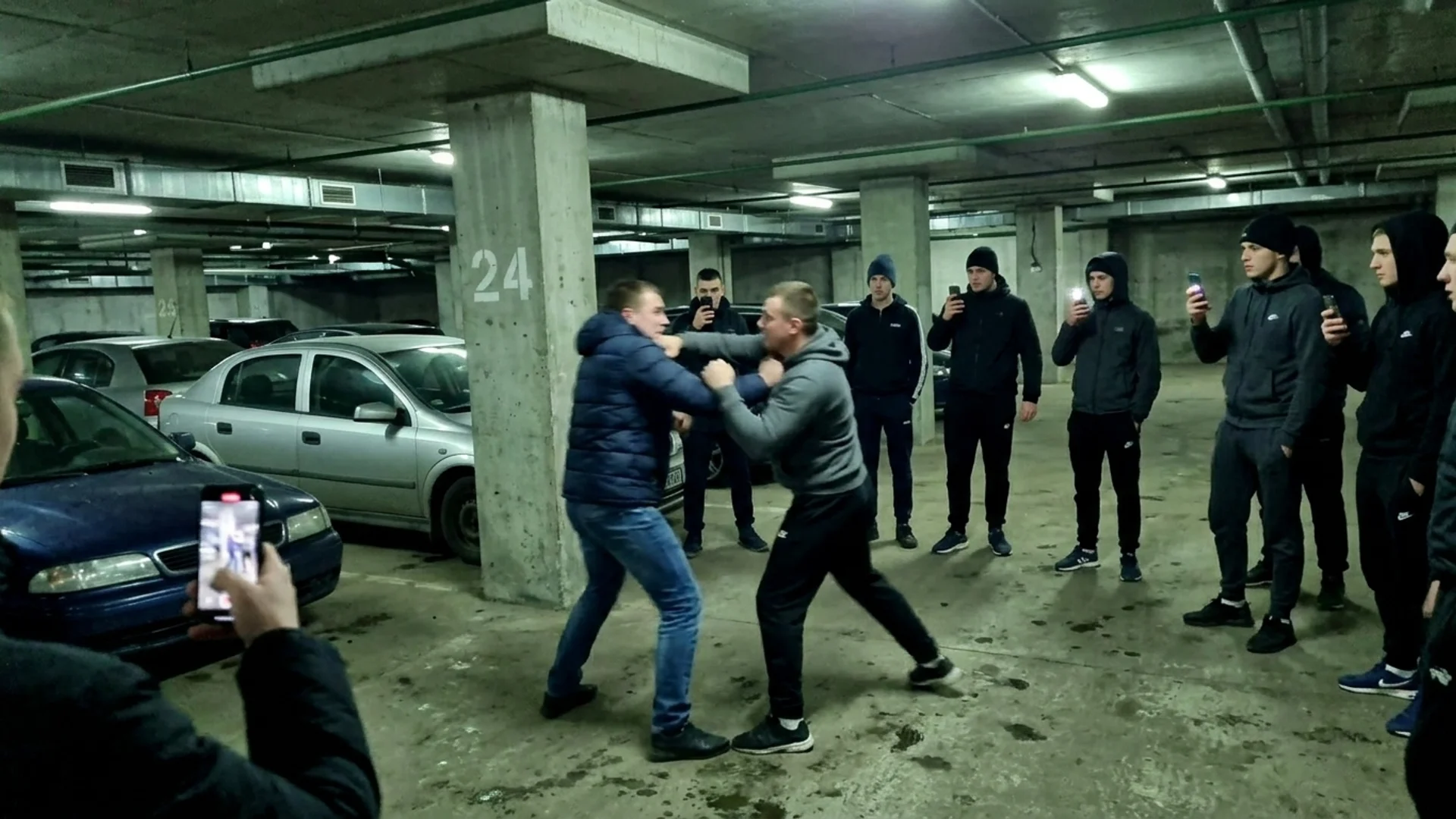
The No Rules format is the one that built KOTS's reputation. In this format, virtually every technique in combat is legal. Fighters may punch, kick, knee, elbow, headbutt, clinch, and grapple. Eye gouging is permitted. Biting is permitted. Head stomps on a downed opponent are permitted. Choking and submissions have been allowed since KOTS 118. If both fighters explicitly agree before the fight, weapons can be introduced.
There are no rounds. There is no time limit. The fight continues until one fighter is knocked out, submitted, verbally surrenders, or the referee determines that a fighter can no longer continue. In practice, most No Rules fights end within a few minutes. The sheer intensity of ungloved, unrestricted combat on a hard surface does not lend itself to extended bouts. Fighters gas quickly, and the absence of gloves means hands break on skulls, cuts open faster, and knockouts arrive with less warning.
K.O. Only Format
The K.O. Only format strips things down even further. As the name indicates, the only recognized path to victory is a knockout. A fighter must render their opponent unable to continue through strikes. Submissions, verbal surrenders, and referee stoppages for accumulated damage are not part of the equation in the purest interpretation of this format, though in practice the referee retains some authority to intervene if a fighter is clearly incapacitated and absorbing unnecessary punishment.
The K.O. Only format tends to produce fights that are both shorter and more violent. Without the possibility of a submission or a tactical verbal surrender, fighters have no exit strategy other than putting the other person unconscious or being put unconscious themselves.
What Is Actually Allowed
The full list of techniques permitted under KOTS rules reads like a catalog of everything banned in regulated combat sports.
LEGAL AT KOTS
- Headbutts
- Eye gouging (prize-money penalty)
- Biting
- Head stomps on a downed opponent
- Elbows, knees, kicks to the head
- Chokes & submissions (since KOTS 118)
- Weapons (only if both fighters agree)
ACTUALLY OFF-LIMITS
- Striking a clearly unconscious fighter
- More than one-on-one
- ...and that is essentially the entire list
Everything banned in regulated combat sports is, more or less, the KOTS highlight reel.
Striking:
- Closed-fist punches to all targets, including the back of the head
- Open-palm strikes
- Elbow strikes, including spinning elbows and downward elbows
- Knee strikes to the head, body, and legs
- Kicks to all areas, including the head of a downed opponent
- Headbutts
- Head stomps on downed opponents
- Shoulder strikes in the clinch
Grappling (from KOTS 118 onward):
- Takedowns
- Submissions (chokes, joint locks)
- Clinch fighting with strikes
Other:
- Eye gouging (with a financial penalty -- see below)
- Biting
- Choking
- Weapons (only if both fighters agree before the bout)
What is genuinely not allowed:
KOTS has never published a formal rulebook, which is itself part of the point. The organization's identity is built on the absence of codified restrictions. However, there are observed norms: fights are one-on-one, a downed fighter who is clearly unconscious should not continue to be struck (though enforcement is inconsistent), and the referee has the authority to wave off a fight. These are conventions rather than rules, enforced by social expectation rather than regulatory penalty.
The Fighting Surface: Concrete
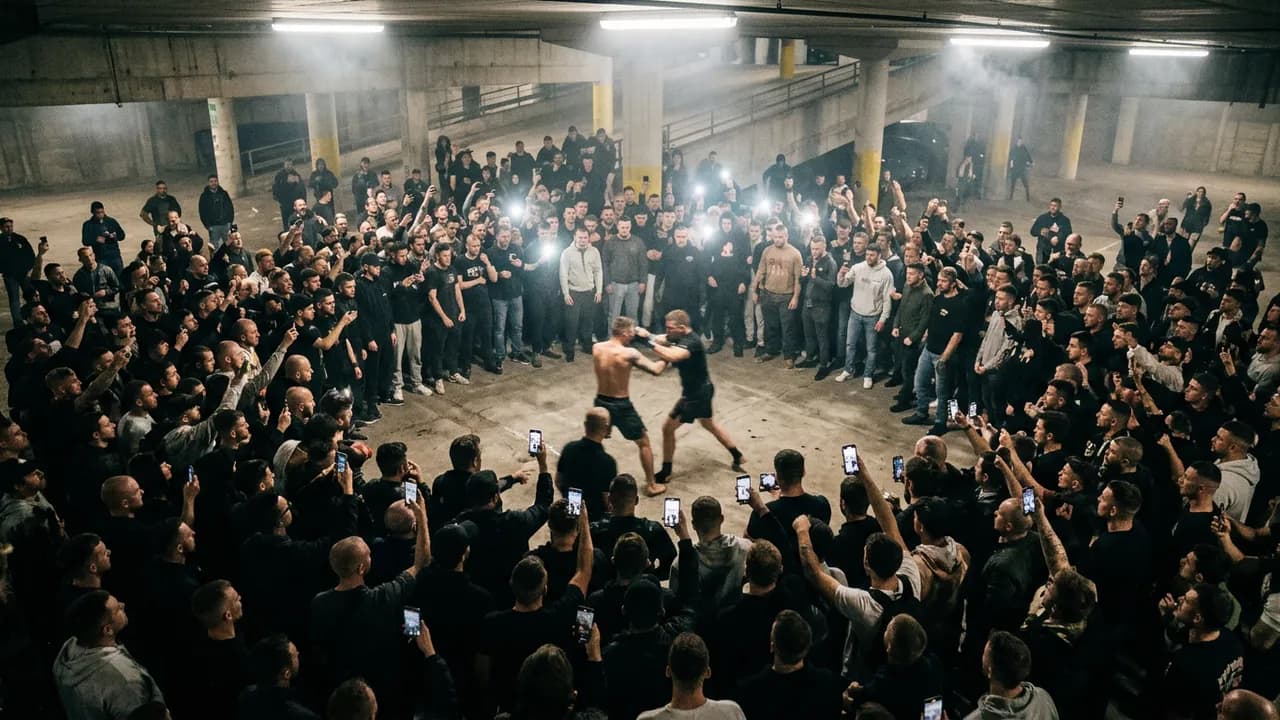
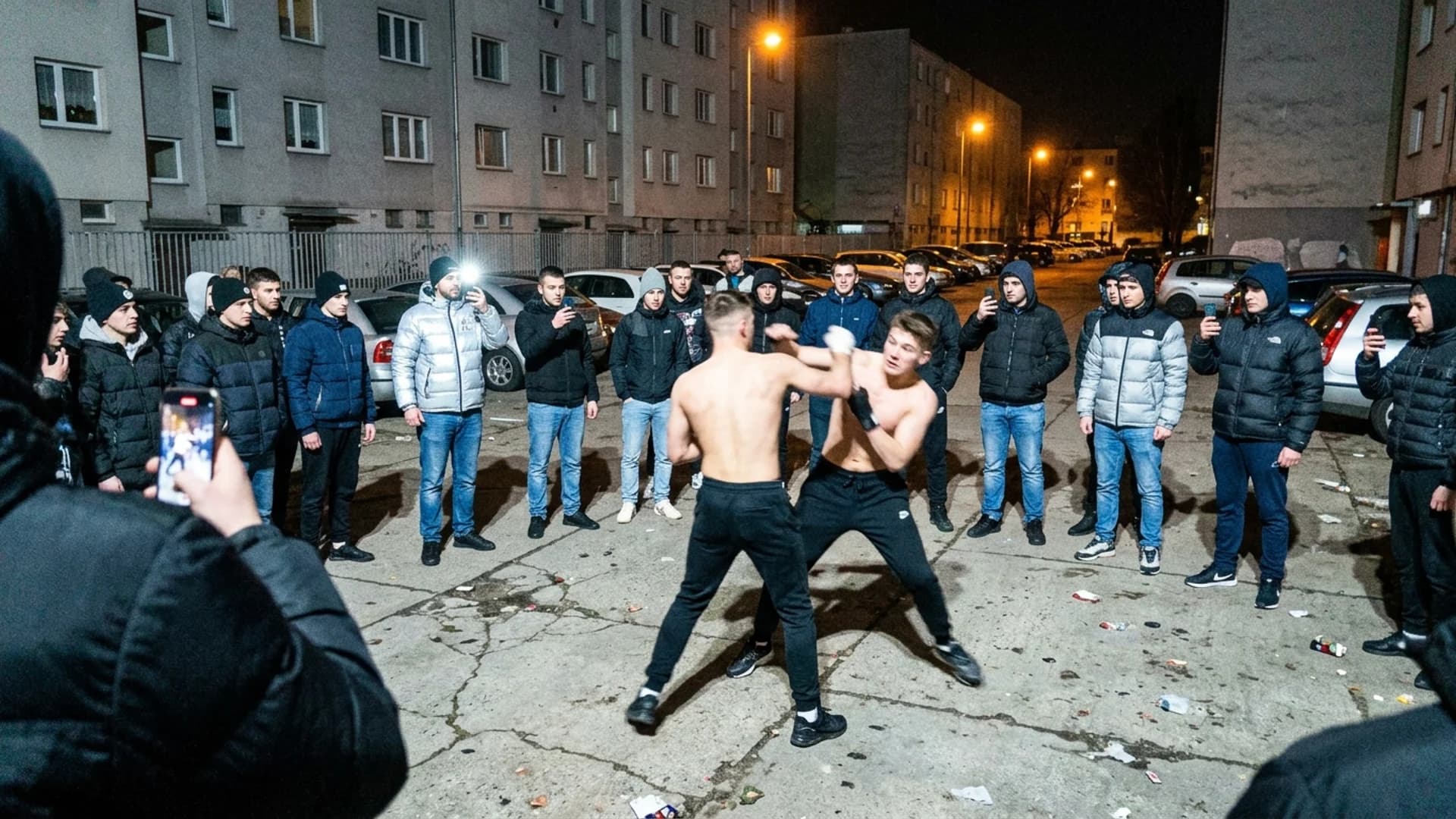
Perhaps the single most dangerous element of a KOTS fight is not what the fighters do to each other but what they land on when they fall. KOTS fights take place on concrete, asphalt, or other hard surfaces at undisclosed locations across Europe. There is no ring, no cage, no canvas, and no padding of any kind. Spectators form the boundary of the fighting area in a loose circle.
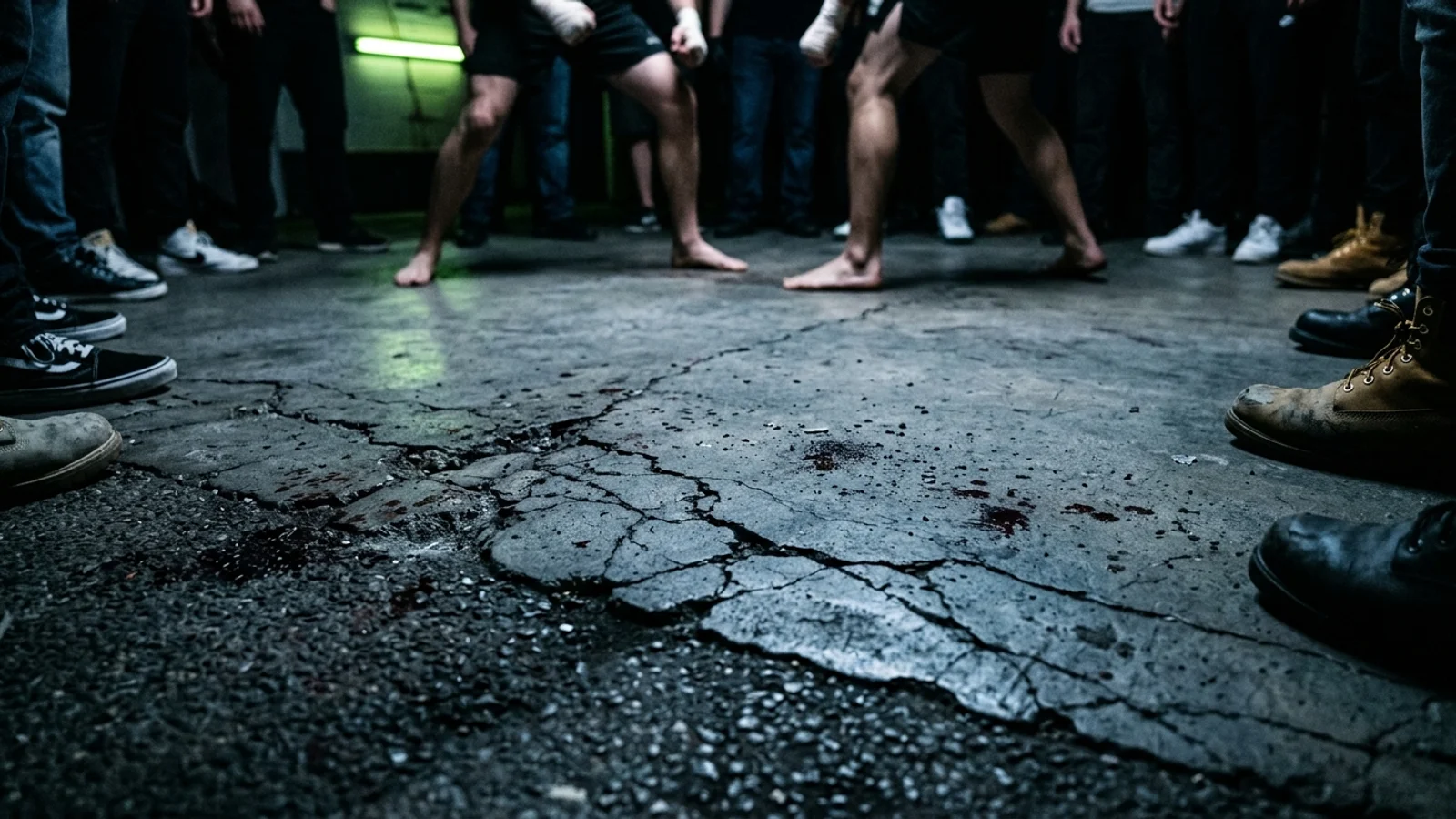
The implications are severe. A knockout that drops a fighter to a canvas-covered ring in BKFC or a matted cage in sanctioned MMA is a medical event. The same knockout on concrete, where the back of the skull strikes an unyielding surface at velocity, is a potentially life-altering or life-ending one. The secondary impact -- the head hitting the ground after a knockout -- is widely understood in neurology to be more dangerous than the strike that caused the initial loss of consciousness. KOTS fights take place on the worst possible surface for this secondary impact.
In sanctioned bouts, the canvas and padded floor absorb the fall. At KOTS, the unprotected head meets concrete at full velocity. Neurologists widely consider that secondary impact more dangerous than the punch that caused the knockout — and KOTS stages every fight on the worst possible surface for it.
Fights have also been held on asphalt and other hard outdoor surfaces. The location rotates and is disclosed to spectators only via encrypted Telegram channels shortly before the event.
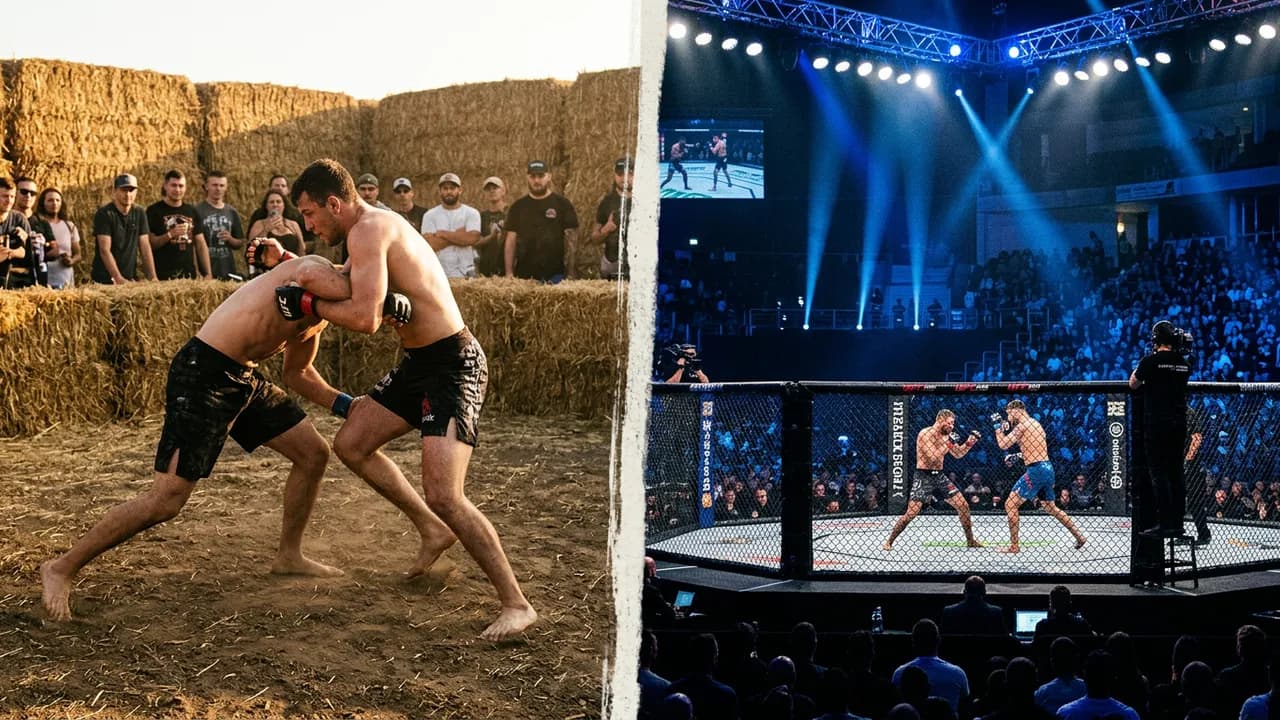
The surface is one of the few things that varies across the Hype Crew network. UUF (Ultimate Underground Fights), the affiliated Danish club, runs the same no-rules format inside a makeshift cage rather than on open concrete, which changes how fights are contained but not what is permitted inside them.
No Rounds, No Time Limits
KOTS fights do not have rounds. There is no bell, no stool in the corner, no sixty-second break for a cutman to work on a laceration. The fight begins and continues without interruption until it ends. There is no time limit. A fight that lasts thirty seconds receives the same structural treatment as one that lasts fifteen minutes.
In reality, the absence of rounds and time limits is less radical than it sounds. KOTS fights are overwhelmingly short. The combination of bare fists, an unrestricted ruleset, concrete underfoot, and fighters who often lack the cardio conditioning of professional athletes means that most bouts are decided within three to five minutes. Extended technical battles are rare because the format does not reward them. Everything about the environment -- the surface, the lack of gloves, the legal techniques -- pushes fights toward rapid, decisive conclusions.
The December 2022 Eye Gouging Rule
In December 2022, KOTS implemented what may be its only formally announced rule change. Eye gouging remained legal, but a financial consequence was attached: any fighter who wins a bout by means of eye gouging forfeits their prize money.
This is significant for several reasons. First, it confirmed that eye gouging was, and continues to be, a legal technique in KOTS competition. The rule did not ban the practice. A fighter can still gouge an opponent's eyes during a bout without being disqualified. Second, it revealed that KOTS's anonymous operators recognized eye gouging as a line worth discouraging, even within their framework. Third, it exposed the financial incentive structure: in KOTS, only the winner receives prize money. The loser gets nothing. Forfeiting prize money for an eye gouge victory means the fighter endured the risk of a KOTS bout and won, but walks away with the same compensation as the loser -- zero.
The rule functions as a soft deterrent rather than a prohibition. It acknowledges that eye gouging, while permitted, is a technique the organization would prefer fighters not rely on.
Weight Classes: Barely Existent
KOTS does not use formal weight classes in the traditional sense. Fighters are not sorted into divisions with fixed upper and lower limits. However, KOTS does impose a weight differential restriction for standard fights: opponents must be within 5 kilograms (approximately 11 pounds) of each other.
There are two exceptions. Grudge fights -- bouts arranged to settle a personal dispute between two specific individuals -- carry no weight restriction. If two people want to fight each other, their respective sizes are irrelevant to the matchmaking. Similarly, fights between competitors who both weigh over 100 kilograms (220 pounds) have no weight differential limit. Above that threshold, KOTS treats all heavyweights as a single open class.
This approach reflects the organization's origins in European hooligan culture, where real street confrontations do not come with weigh-ins. The 5-kilogram guideline exists to prevent the most egregious mismatches, but the latitude given to grudge fights and heavyweights ensures that KOTS retains a less structured feel than any sanctioned promotion.
For a broader look at how weight classes operate across the underground fighting landscape, see our weight class comparison guide.
No Medical Staff, No Safety Net
KOTS does not provide ringside physicians, pre-fight medical screening, or post-fight medical examinations. There is no medical staff on site. Fighters compete at their own risk, which is considerable given the concrete surface, the absence of gloves, and the legal techniques described above.
This places KOTS at the absolute bottom of the safety spectrum in organized fighting. For comparison, BKFC requires a ringside physician with authority to stop the fight, pre-fight medical screening for every competitor, and post-fight medical examinations. Even Strelka, which operates as a grassroots amateur organization in Russia, is required by law to have a medical worker present at every event. KOTS has no such requirement and makes no pretense of meeting one.
This is the distinction that gets lost in the argument about gloves. The research on whether bare knuckle boxing is safer than boxing is drawn from sanctioned events with ringside physicians, pre-fight screening and mandatory suspensions. None of those conditions hold at KOTS, so none of that data transfers to it.
Fighter Applications and Recruitment
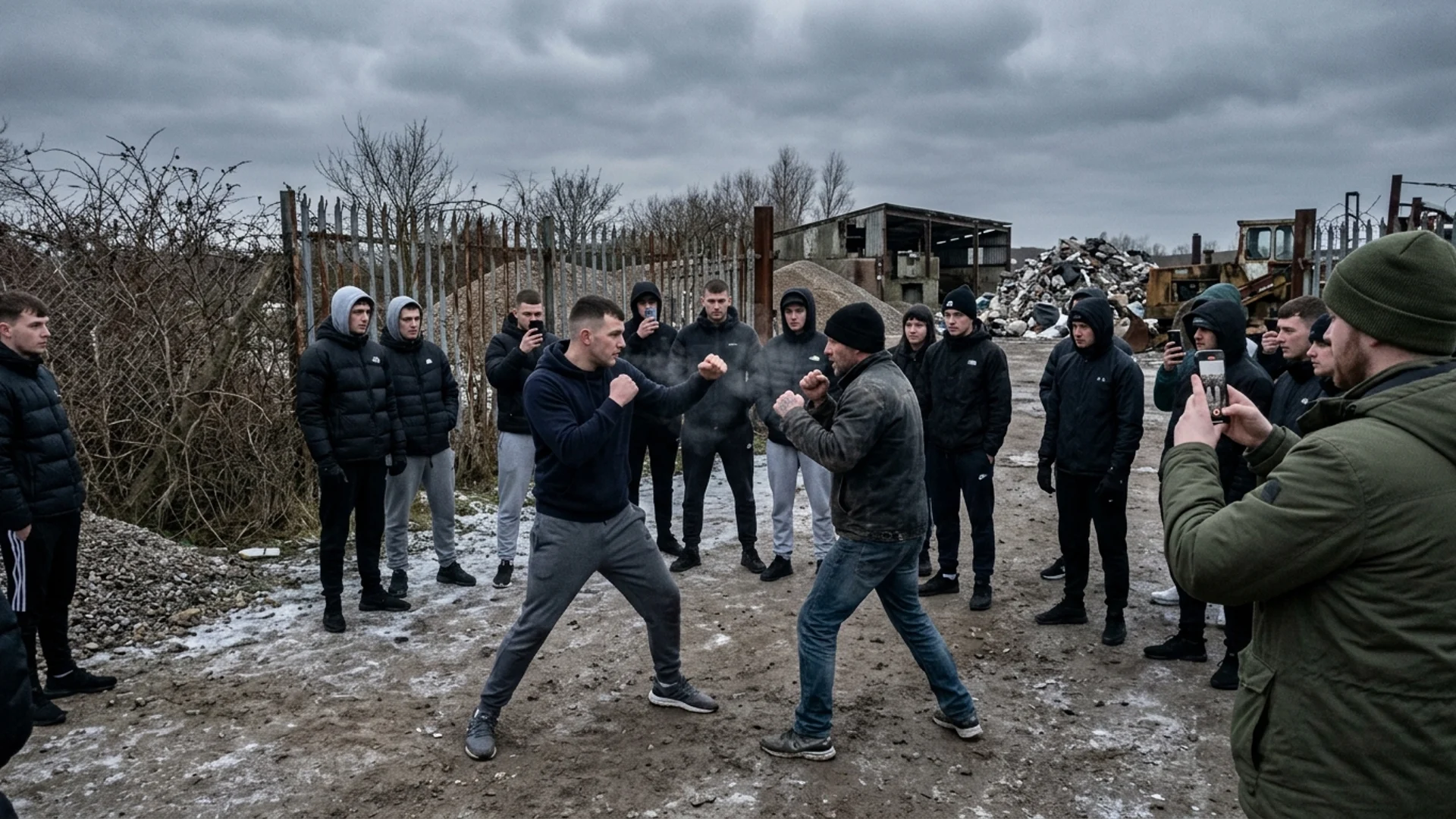
Fighters apply to compete in KOTS through the organization's website and Telegram channels. The application process asks for age, height, weight, fight record, and -- notably -- whether the applicant has a "streetfighting/hooligan background." This question is not incidental. KOTS was founded by an anonymous collective called Hype Crew with roots in European football hooligan culture, and the organization explicitly values real-world fighting experience alongside or instead of formal martial arts training.
The Bottom Line
"No rules" is a marketing phrase, but it is not far from the truth. KOTS permits techniques that every other major fighting organization in the world -- from the UFC to Streetbeefs -- explicitly bans. The December 2022 eye gouging rule is not a prohibition but a financial disincentive. The concrete surface amplifies the danger of every technique that is used. The absence of medical staff means that the consequences of that danger are borne entirely by the fighters themselves.
For anyone comparing KOTS to other organizations, see our complete rules comparison guide.
For the full history and profile of King of the Streets, see our KOTS organization page. You can also explore the best KOTS fights of all time and our KOTS major events guide.
Related
- Underground Fighting by City: where underground and bare-knuckle cards actually run, city by city.