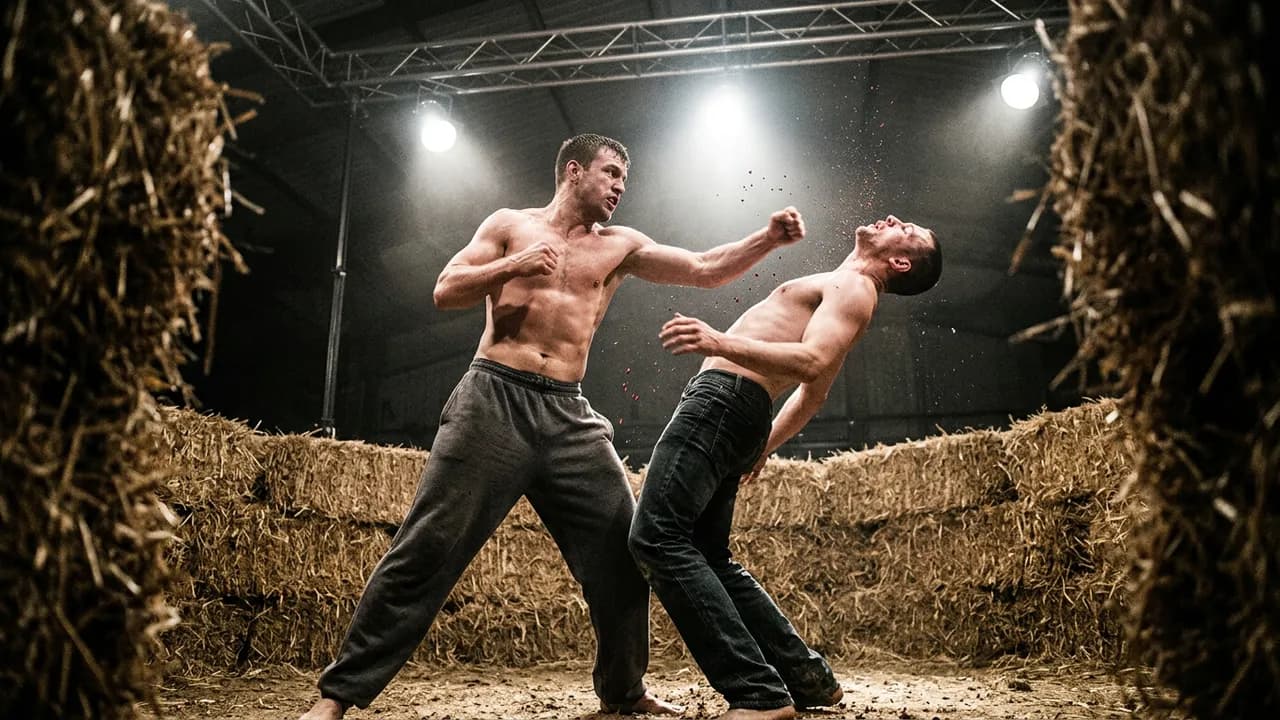
Top Dog Fighting Championship is the first and largest bare-knuckle fighting promotion in Eastern Europe. Founded around 2019 in Moscow, it has grown from parking lot fights surrounded by hay bales to headlining events at the CSKA Arena, one of Moscow's premier sports venues. What distinguishes Top Dog from other bare-knuckle promotions is its deliberate fusion of professional-level competition with an aesthetic rooted in street culture -- fighters wear jeans and sneakers, not boxing trunks and shoes, and the hay bale ring remains the organization's visual signature even in arena settings.
But beneath the street-fight styling is a ruleset that is more structured than it appears at first glance. Top Dog operates with defined rounds, a six-division weight class system, specific restrictions on techniques, and a knockdown count. Understanding these rules explains why Top Dog has been able to attract high-level fighters while maintaining the underground energy that built its audience.
The Hay Bale Ring
The hay bale ring is Top Dog's most recognizable feature. Originally, fights took place in parking lots with large round hay bales arranged in a circle to form the boundary of the fighting area. As the organization grew and moved into arenas, the hay bale ring came with it -- not out of logistical necessity but as a branding choice. The hay bales define the space where the fight takes place, functioning like the ropes of a boxing ring or the fence of an MMA cage, but with a deliberately unpolished appearance.
The ring is circular, which has tactical implications. Unlike a square boxing ring, where fighters can be trapped in corners, a circular boundary means fighters can only be pressed against the wall in a uniform way. There are no corners to cut off, no right angles to exploit. This changes the dynamics of pressure fighting and ring generalship.
The hay bales themselves provide some cushioning when a fighter is pushed back against the boundary, but they are not a soft landing. A fighter knocked backward into hay bales at velocity will feel it. The floor of the ring area varies by event -- in arena settings, it is typically a hard surface, which adds to the danger of knockdowns.
Round Structure
Top Dog uses a round-based format, unlike the open-ended formats of Strelka or KOTS.
Regular Bouts
- 3 rounds of 2 minutes each
- Rest periods between rounds (duration varies by event)
- Draws are possible if neither fighter finishes the other and judges score the bout even
Championship Bouts
- 5 rounds of 2 minutes each
- Rest periods between rounds
- No draws -- championship fights must produce a winner. If the fight goes to the judges, a winner must be declared
The two-minute round is shorter than the three-minute rounds used in professional boxing or the five-minute rounds used in MMA. This compressed format favors aggression over patience. Two minutes is not enough time for extended feeling-out periods, technical counter-fighting, or the gradual implementation of a game plan. Fighters who succeed in Top Dog tend to come forward, apply pressure, and look for finishes early.
The possibility of draws in regular bouts is notable. In many combat sports organizations, draws are rare or impossible by design. Top Dog allows them in non-championship contests, which means a fighter can compete in a tough three-round bout and leave without a loss on their record if the action was evenly matched. Championship fights, however, demand a definitive result.
Bare Knuckle: No Wraps, No Tape
Top Dog fighters compete with completely bare hands. There are no gloves, no wraps, and no tape of any kind. This is a more extreme standard than BKFC, which permits wrapping and taping of the wrist, thumb, and mid-hand (with only the knuckles exposed). In Top Dog, the entire hand is unprotected.
Fighting with truly bare hands changes the sport in several ways. Bare knuckles are smaller and harder than gloved fists, which means they can slip through guards more easily and cause cuts more readily. But bare hands are also more fragile. A full-power punch that lands flush on the forehead -- one of the hardest bones in the body -- can fracture the metacarpals in the hand. Fighters who rely on power punching in Top Dog must balance aggression with the practical reality that their hands are unprotected weapons that can break on their target.
03 / Up next / Allowed Techniques
The absence of any wrapping also means there is no wrist support. Boxing wraps provide structural reinforcement to the wrist joint, helping it absorb the shock of impact. Without wraps, wrist injuries are a persistent risk, particularly for fighters who throw hooks and uppercuts at full power.
Allowed Techniques
Top Dog's ruleset is more permissive than traditional boxing but more restrictive than MMA or even some other bare-knuckle promotions.
Allowed:
- Closed-fist punches to the head and body
- Open-palm strikes
- Strikes from the clinch (punching while holding the opponent)
- Shoulder strikes in the clinch
- All techniques must be executed while both fighters are standing
Banned:
- Ground fighting of any kind -- if a fighter goes to the ground, the referee stands them up
- Kicks
- Elbows (though enforcement has varied -- some events appear to tolerate elbow strikes, while others penalize them)
- Submissions
- Headbutts
- Strikes to the back of the head
- Strikes to the groin
- Strikes to a downed opponent
The allowance of clinch strikes and shoulder strikes is significant. In BKFC, clinches are broken immediately by the referee, and no punching in the clinch is permitted. In Top Dog, the clinch is a legitimate offensive position. A fighter who pins their opponent against the hay bales can unload short punches, shoulder strikes, and dirty boxing techniques without the referee separating them. This creates a more physical, grinding style of fighting than the stand-at-range exchanges that define BKFC.
The inconsistent enforcement of elbow rules is worth noting. Top Dog exists in a semi-regulated space where rules are established by the promotion rather than by an external athletic commission. Without an independent regulatory body reviewing tape and issuing fines for rules violations, enforcement depends on the referee's judgment in the moment. In practice, elbows appear in some fights without consequence and are penalized in others.
Six Weight Classes
Top Dog uses a six-division weight class system, making it one of the more structured underground fighting organizations in terms of weight management. While the exact weight limits have not always been formally published in English-language media, the organization matches fighters by weight and maintains separate competitive divisions.
This system gives Top Dog a structural advantage over organizations like Strelka and KOTS, which rely on informal matching or impose only broad weight differential limits. Six weight classes allow fighters to compete against opponents of similar size and create meaningful championship belts at each division.
For a detailed comparison of weight class systems across underground fighting, see our weight class guide.
The Knockdown Rule
When a fighter is knocked down in Top Dog, they have 10 seconds to return to their feet. If they cannot rise within the count, the fight is over and the knockdown is ruled a knockout. This is consistent with traditional boxing knockdown rules and provides a clear, objective mechanism for ending a fight.
The 10-second count also functions as a brief recovery window. A fighter who is hurt but not unconscious has a defined period to collect themselves and decide whether to continue. In organizations without a knockdown count, such as KOTS, a downed fighter may be struck on the ground (which is legal there but banned in Top Dog) or may simply be declared finished at the referee's discretion.
The Dress Code: Jeans and Sneakers
One of Top Dog's most distinctive features is its mandatory dress code. Fighters wear jeans or sweatpants and sneakers rather than boxing trunks and boxing shoes. This is not optional -- it is a deliberate branding decision that reinforces the promotion's street-fight identity.
The dress code has practical implications. Jeans restrict leg movement compared to boxing trunks or MMA shorts. They are heavier, less breathable, and less flexible. A fighter wearing jeans cannot move their legs with the same freedom as one wearing athletic shorts, which subtly affects footwork, pivoting, and defensive movement. Sneakers provide less ankle support than boxing shoes and have different traction characteristics on the fighting surface.
These constraints are accepted as part of the Top Dog experience. The organization is not trying to optimize athletic performance -- it is trying to create fights that look and feel like they could happen on a street corner, even when they are taking place in a Moscow arena in front of thousands of spectators.
Judging and Decisions
When a regular bout goes the distance (three rounds) without a knockout or referee stoppage, the fight goes to the judges. Top Dog uses a panel of judges who evaluate the action and render a decision. Draws are permitted in regular bouts.
If a championship fight goes the full five rounds, the judges must declare a winner.
Championship fights cannot end in a draw. If a championship fight goes the full five rounds, the judges must declare a winner. The specific scoring criteria used by Top Dog judges have not been formally published, but the general evaluation appears to follow common combat sports conventions: effective striking, aggression, ring control, and overall dominance.
Medical Presence
Top Dog has medical staff present at events, particularly at arena shows. This places it above organizations like KOTS (no medical staff) and Streetbeefs (basic first aid only), though the extent of medical protocols -- pre-fight screening, post-fight examinations, drug testing -- is not comprehensively documented.
As a semi-regulated organization operating in Russia, Top Dog is not subject to the same athletic commission oversight that governs BKFC in the United States or Rough N Rowdy under the West Virginia State Athletic Commission. The medical provisions reflect the promotion's own standards rather than external regulatory requirements.
How Top Dog Compares
Top Dog sits at an interesting intersection in the bare-knuckle landscape. It is more structured than KOTS or Strelka, with defined rounds, weight classes, and a knockdown count. But it is less regulated than BKFC, operating without external athletic commission oversight and with inconsistent enforcement of some rules. The clinch-striking allowance and street-clothes dress code give it a rougher, more physical character than the cleaner boxing-focused style of BKFC.
For fighters, Top Dog represents a middle tier: more professional than a YouTube fight channel, with real prize money and a growing audience, but without the full regulatory infrastructure of a commission-sanctioned promotion. For viewers, it offers bare-knuckle fighting with enough structure to be coherent and enough rawness to feel dangerous.
For the full history and fighter profiles of Top Dog, see our Top Dog FC organization page. For a complete rules comparison across all organizations, see our rules comparison guide.