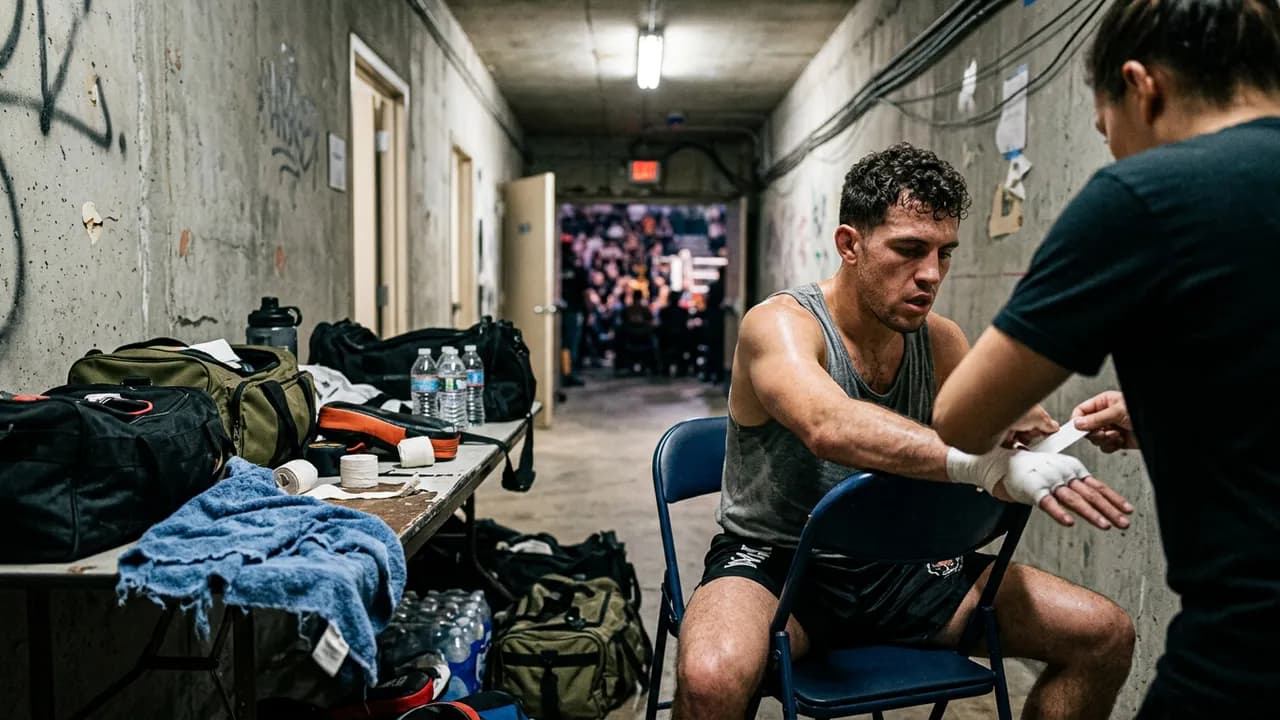
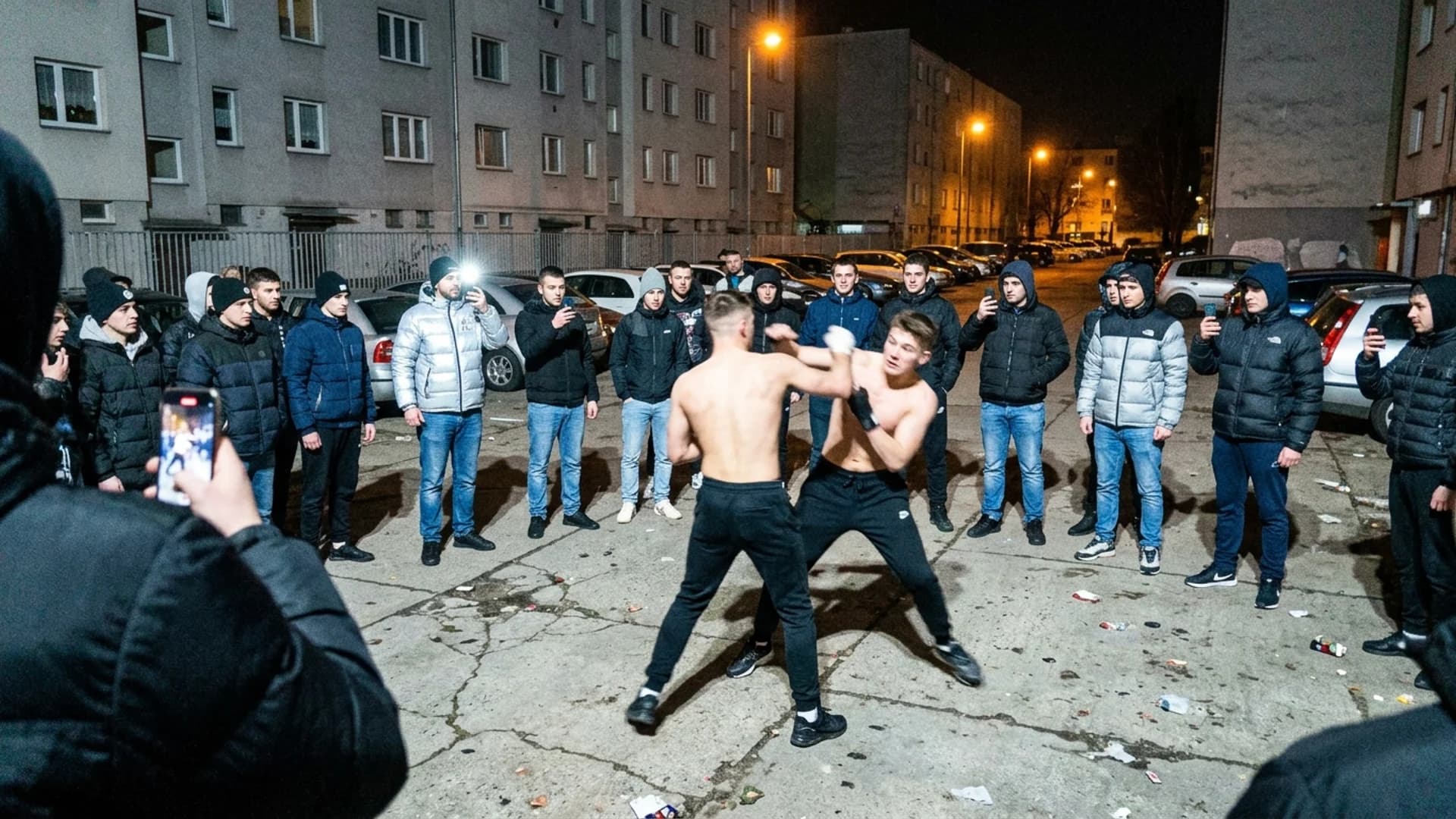
Strelka is the largest grassroots fighting organization in the world. Founded in St. Petersburg in 2011, it has hosted over 10,000 participants across nearly 50 Russian cities, generated 1.2 billion YouTube views, and built the second most-watched combat sports channel on the platform after the UFC. What makes Strelka remarkable is not spectacle or brutality but accessibility: anyone can sign up, and most fighters receive no payment. The experience is the reward.
But accessibility does not mean anarchy. Strelka operates under a defined set of rules that sit somewhere between traditional amateur MMA and the unregulated formats of organizations like KOTS. Understanding those rules -- what is allowed, what is restricted, and how fights are structured -- is essential to understanding why Strelka has become the gateway to competitive fighting for tens of thousands of ordinary Russians.
The Sand Ring
The most visually distinctive element of a Strelka fight is the surface. Strelka fights take place outdoors on sand, grass, or bare ground. There is no ring. There is no cage. There is no elevated platform, no ropes, no fencing. Fighters compete in an open area, typically marked out in the sand, with spectators forming the perimeter.
Sand is the most common surface, and it is a deliberate choice. Sand provides more cushioning than concrete or asphalt, reducing the danger of secondary head impacts when a fighter is knocked down. It also creates a more unstable footing than a flat canvas or mat, which changes the dynamics of striking and grappling. Fighters cannot plant their feet with the same confidence, takedowns are harder to execute cleanly, and standing back up from the ground is more physically demanding. The sand ring is not just a visual signature -- it is a functional element that shapes how every Strelka fight unfolds.
Some Strelka events have also been held on grass or bare ground, depending on the venue and the region. The outdoor setting is consistent across all events.
No Rounds, No Time Limits
Strelka fights are conducted as a single continuous round with no time limit. The fight begins and does not stop until one fighter wins. There is no bell signaling a break, no corner advice between rounds, and no opportunity to recover on a stool while a cutman addresses a cut.
This single-round, no-time-limit format is one of Strelka's defining characteristics and one of the features that separates it from virtually every sanctioned combat sports organization in the world. In BKFC, fighters compete in five two-minute rounds. In Top Dog, the format is three two-minute rounds. In the UFC, bouts are three or five rounds of five minutes each. Strelka dispenses with all of that. The fight ends when it ends.
In practice, most Strelka fights are relatively short. The combination of amateur-level conditioning, the physical demands of fighting on sand, and the emotional intensity of an open-air bout means that many fights are decided within a few minutes. Extended bouts do occur, particularly when two evenly matched fighters are both conditioned enough to sustain output, but they are the exception rather than the norm.
Victory Conditions: Fight to Finish
A Strelka fight ends in one of the following ways:
- Knockout (KO): A fighter is rendered unconscious or unable to continue by strikes.
- Technical Knockout (TKO): The referee determines that a fighter is taking excessive damage and cannot intelligently defend themselves.
- Submission: A fighter taps out or verbally submits to a choke, joint lock, or other submission hold.
- Verbal surrender: A fighter indicates they do not wish to continue.
- Referee stoppage: The referee intervenes to end the fight for safety reasons.
- Inability to continue: A fighter indicates through their physical state that the fight should be stopped.
There are no judges. There are no scorecards. There is no possibility of a decision. Every Strelka fight produces a definitive winner. If both fighters are standing and still willing to fight, the fight continues. The format eliminates the possibility of a boring decision win and ensures that every bout ends with a clear conclusion -- which is a significant part of the format's appeal on YouTube, where the algorithm rewards decisive finishes.
Allowed Techniques: MMA-Style With Restrictions
Fighters who enter Strelka can choose their ruleset: MMA, Muay Thai, or boxing. The MMA ruleset is by far the most common and is the one most closely associated with the Strelka brand.
Under MMA Rules
Allowed:
- Punches to the head, body, and legs (standing and on the ground)
- Kicks to the head, body, and legs
- Clinch fighting with strikes
- Takedowns (single-leg, double-leg, trips, throws)
- Ground control and ground-and-pound
- Submissions (chokes, arm locks, leg locks, and all standard submission techniques)
- Knees to the body
- Elbows to the body
Restricted:
- No elbows to the head
- No knees to the head
These two restrictions are the most significant technical difference between Strelka's MMA ruleset and the Unified Rules of Mixed Martial Arts used in the UFC and most major MMA promotions worldwide. The ban on elbows and knees to the head substantially reduces the risk of cuts and severe concussive trauma, which is a meaningful safety consideration for an organization where many participants have limited or no fighting experience.
Banned:
- Strikes to the groin
- Strikes to the spine
- Fish-hooking
- Eye gouging
- Biting
- Hair pulling
- Small joint manipulation
Under Boxing Rules
Strelka fights conducted under boxing rules follow standard boxing conventions: punches only, no clinch striking, standing fighting only. Fighters wear boxing gloves.
Under Muay Thai Rules
Fights conducted under Muay Thai rules permit punches, kicks, elbows, knees, and clinch fighting in accordance with standard Muay Thai conventions.
Hand Protection: Gloves Required
Unlike KOTS, Top Dog, or Mahatch, Strelka fighters do not compete bare-knuckle. Fighters wear MMA gloves (for MMA rules) or boxing gloves (for boxing rules). The specific glove weight varies by event, but the use of some form of padded hand protection is consistent.
05 / Up next / Weight Classes: Informal Matching
This is another important safety consideration. MMA gloves provide less padding than boxing gloves but still distribute impact across a larger surface area than a bare fist, reducing the likelihood of facial fractures and severe cuts for both the striker and the person being struck. The gloves also protect the fighter's hands, which is relevant given that Strelka participants include people who need functional hands for their day jobs -- truck drivers, lawyers, office workers, and tradespeople.
Weight Classes: Informal Matching
Strelka does not use formal weight classes. There are no named divisions, no weigh-in protocols, and no fixed weight limits. Instead, matchmakers pair fighters of approximately equal size and perceived strength. The goal is competitive parity, not bureaucratic precision.
This informal approach works within the context of Strelka's mission. The organization exists to give ordinary people the experience of competitive fighting. Strict weight classes would introduce a barrier to entry -- the need for a formal weigh-in, the possibility of missing weight, the bureaucratic overhead of managing divisions. By keeping matching informal, Strelka maintains the low barrier to entry that is its defining feature.
That said, the informal system is imperfect. Mismatches occur. A matchmaker's judgment about "equal strength" is subjective, and the difference between a 180-pound office worker with no training and a 180-pound amateur boxer is enormous regardless of what the scale says. Strelka's matchmaking is an art, not a science, and the results are occasionally lopsided.
For a detailed comparison of how different organizations handle weight, see our weight class guide.
Amateur Only: No Professional Fighters
Strelka is explicitly designed for amateurs. The organization positions itself as a platform for regular people -- not professional fighters, not trained martial artists, but truck drivers from Bryansk (like Andrei Petrantsov, whose knockout earned 24 million YouTube views), restaurant workers, students, and office employees who want to know what it feels like to compete in a real fight.
This amateur focus shapes every aspect of the organization. The single-round format means that fighters do not need the deep cardio conditioning required for a multi-round professional bout. The restricted elbow and knee rules reduce the risk of the most severe injuries. The gloves protect hands that need to function at work on Monday. The informal weight matching prioritizes accessibility over competitive rigor.
Professional fighters and those with extensive competitive records do occasionally appear at Strelka events, but the organization's core identity and its core audience are built around watching ordinary people test themselves.
Medical Requirements: Legally Mandated
Under Russian law, amateur MMA events must have a medical worker present. Strelka complies with this requirement. A medical professional is on site at every event, which places Strelka above organizations like KOTS (no medical staff) and Streetbeefs (basic first aid only) on the safety spectrum, though below fully sanctioned promotions like BKFC where a ringside physician with stop authority, pre-fight medical screening, and post-fight examinations are all mandatory.
The medical presence is the minimum required by law. Strelka does not advertise comprehensive medical protocols, pre-fight physicals, or post-fight screening beyond what Russian regulations mandate.
Registration and Accessibility
Anyone can sign up to fight at Strelka through the organization's registration portal at tronmma.com. The application process is straightforward, and the barrier to entry is deliberately low. Fighters are not required to have a prior record, formal training, or affiliation with a gym. This open-door policy is Strelka's central feature and its greatest appeal: it is the fighting organization where anyone, regardless of background, can step into the sand ring and compete.
Events take place across nearly 50 cities in Russia and CIS countries, making Strelka geographically accessible in a way that no other grassroots fighting organization can match. The scale is staggering -- over 10,000 participants and counting.
How Strelka Compares
Strelka occupies a middle ground in the underground fighting landscape. It is more restrictive than KOTS (which permits eye gouging, headbutts, and head stomps on concrete) but less restrictive than sanctioned promotions like BKFC (which limits fighters to punches only). It is more structured than Streetbeefs (where the ruleset is negotiated fight by fight) but less structured than Top Dog (which has defined round lengths and a six-division weight class system).
What sets Strelka apart is not its rules but its scale and its mission. No other fighting organization in the world has put 10,000 ordinary people into a competitive fighting environment. The rules exist to make that possible -- to create a framework that is permissive enough to feel like a real fight but restrictive enough that a truck driver from Bryansk can walk into the sand ring and walk out again on Monday morning.
For the full history and profile of Strelka, see our Strelka organization page. For a side-by-side rules comparison with other organizations, see our rules comparison guide.