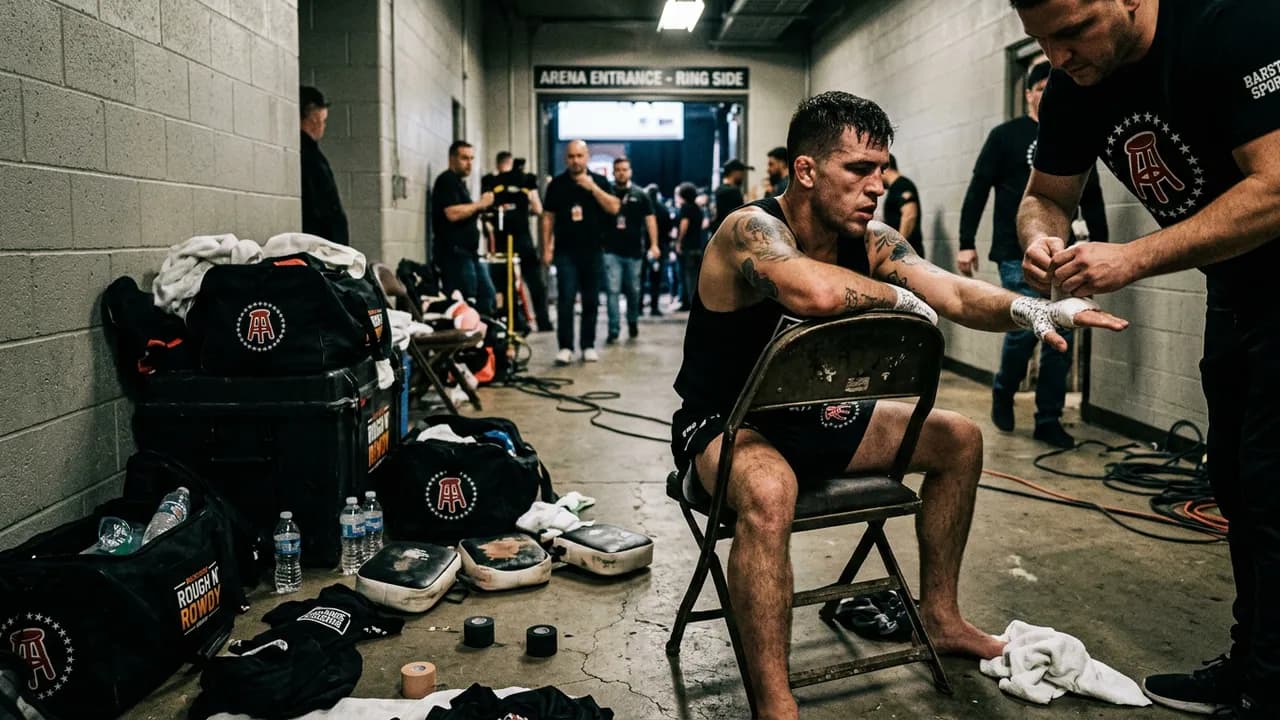
Rough N Rowdy occupies a unique position in the fighting landscape: it is fully sanctioned by a state athletic commission, operates under real boxing rules with real referees, and is designed for fighters who have little to no experience in combat sports. Acquired by Barstool Sports and promoted by Dave Portnoy and Dan "Big Cat" Katz, Rough N Rowdy has become a PPV spectacle that routinely draws 41,000 or more pay-per-view buys per event, with plans for 12 or more events per year.
Created by Christopher MacCorkle Smith and rooted in West Virginia's Toughman competition tradition, Rough N Rowdy proves that you can take complete amateurs, put them in a regulation boxing ring with gloves, and produce an event that is simultaneously legitimate, entertaining, and commercially viable. Understanding the rules explains why this format works and what separates it from both professional boxing and the truly underground organizations on the other end of the spectrum.
State Athletic Commission Sanction
Every Rough N Rowdy event is sanctioned by the West Virginia State Athletic Commission. This means:
- State-appointed officials oversee the event, including referees and judges
- Fighters must be licensed by the commission for the event
- Results are officially recorded by the sanctioning body
- Commission inspectors verify ring conditions, equipment, and compliance with regulations
- Insurance requirements must be met by the promotion
- Drug testing can be conducted as required by the commission
- Fines and suspensions can be issued for rules violations
This level of regulatory oversight places Rough N Rowdy in the same regulatory category as BKFC and professional boxing, and at the opposite end of the spectrum from organizations like KOTS (entirely unsanctioned), Streetbeefs (legal gray area, no commission oversight), and KOTR (grassroots, no commission involvement).
The state commission sanction is not a formality. It means that the West Virginia State Athletic Commission has reviewed Rough N Rowdy's format, approved its rules, and agreed that the events are safe enough to be conducted under its authority. The commission assumes responsibility for the integrity and safety of the events it sanctions, which means Rough N Rowdy must meet standards that purely underground organizations are not subject to.
Round Structure: 3 Rounds x 1 Minute
Rough N Rowdy fights are conducted under the following format:
- 3 rounds
- 1 minute per round
- Rest periods between rounds
The total maximum fighting time is three minutes -- the shortest standard format in any commission-sanctioned combat sports event. This extreme brevity is the core of the Rough N Rowdy concept. The fighters are amateurs. Many have never been in a boxing ring before the night of the event. One-minute rounds are short enough that even a fighter with no cardio conditioning can sustain output for the entire round, and three rounds are few enough that the total damage absorbed in a bout is limited.
The short format also drives the entertainment value. One-minute rounds produce urgency. Fighters who know they have 60 seconds to make an impression do not jab from range and look for openings -- they swing. The result is often chaotic, aggressive, and visually spectacular, which is precisely what the Barstool Sports audience expects.
For comparison, KOTR uses the same 3 x 1 minute format, though without commission sanction. BKFC uses 5 x 2 minute rounds. Professional boxing typically uses 3-minute rounds over 4 to 12 rounds.
Boxing Gloves, No Headgear
Rough N Rowdy fighters wear standard boxing gloves but no headgear. This combination deserves attention because it differs from most amateur boxing formats.
In traditional amateur boxing (as governed by USA Boxing or the International Boxing Association), fighters typically wear headgear. The headgear does not prevent concussions -- studies have shown it has minimal impact on brain injury -- but it does reduce cuts and visible facial damage. The removal of headgear in Rough N Rowdy increases the likelihood of cuts, swelling, and visible damage, which contributes to the event's visual spectacle.
The boxing gloves themselves are standard size, providing the same hand protection and force distribution as any boxing match. Gloves protect both the puncher's hands and the target's face relative to bare-knuckle strikes, and their use is consistent with the state athletic commission's requirements for fighter safety.
03 / Up next / Allowed Techniques: Standard Amateur Boxing
This no-headgear, yes-gloves combination places Rough N Rowdy between the fully protected amateur boxing experience (headgear + gloves) and the bare-knuckle formats of BKFC, Top Dog, and Mahatch (no headgear, no gloves).
Allowed Techniques: Standard Amateur Boxing
Rough N Rowdy follows standard amateur boxing rules:
Allowed:
- Closed-fist punches to legal targets (front and sides of the head, front and sides of the body above the belt)
- Standard boxing footwork and defensive techniques
Banned:
- All kicks
- All knee strikes
- All elbow strikes
- Headbutts
- Holding and hitting
- Clinching (referee breaks clinches)
- Grappling and wrestling
- Low blows
- Rabbit punches (strikes to the back of the head)
- Hitting a downed opponent
The technique restrictions are identical to those in professional and amateur boxing. Rough N Rowdy is, at its core, a boxing event. The fighters wear gloves, the ring is a standard boxing ring, the referee enforces boxing rules, and the only legal offensive technique is the punch. This simplicity is part of the appeal for inexperienced fighters -- there are no ground-game variables, no kick defense concerns, and no submission threats to account for.
Eligibility: Amateur Limits
Rough N Rowdy enforces strict eligibility requirements to maintain its amateur character:
- Fighters with more than five combined wins in amateur boxing, kickboxing, or MMA are ineligible to compete
- Previous Toughman and Rough N Rowdy bouts do not count toward this five-win limit
This rule is designed to prevent experienced fighters from entering a field of novices and creating dangerous mismatches. A fighter with 10 amateur boxing wins has a level of experience that would give them an enormous advantage over someone stepping into a ring for the first time. The five-win cap ensures that the competitive pool remains genuinely amateur.
The exemption for Toughman and Rough N Rowdy bouts is a practical necessity. Without it, a fighter who competed in several Rough N Rowdy events would become ineligible for future events, which would contradict the organization's interest in developing returning fighters who build a following across multiple cards. The exemption allows fighters to have a Rough N Rowdy "career" without aging out of eligibility.
Weight Classes: Matched by Weight
Rough N Rowdy matches fighters by weight, though the specific weight class structure is less formally defined than in professional boxing or BKFC. The promotion pairs fighters of similar size to minimize mismatches. Given the amateur nature of the competition, precise weight cutting is not expected or common -- fighters typically compete at or near their natural weight.
The weight matching serves the same purpose as formal weight classes in professional combat sports: competitive parity and fighter safety. A significant size mismatch in a boxing ring, even with gloves and short rounds, can produce dangerous outcomes.
Medical Requirements: Full Commission Oversight
As a commission-sanctioned event, Rough N Rowdy is subject to the West Virginia State Athletic Commission's medical requirements:
- Ringside physician present at all events with authority to stop any fight
- Pre-fight medical screening for all competitors
- Post-fight medical evaluation available
- Medical suspension protocols for fighters who suffer significant damage
These requirements are non-negotiable. The commission mandates them as a condition of sanctioning the event, and the promotion has no authority to waive or modify them. A ringside physician who determines that a fighter should not continue has absolute authority to stop the bout, overriding the referee, the fighters, and the promotion.
This medical infrastructure is the single biggest difference between Rough N Rowdy and grassroots organizations like Streetbeefs or KOTR, which operate without formal medical oversight.
The Fighting Surface: Standard Boxing Ring
Rough N Rowdy fights take place in a standard boxing ring with:
- Canvas-covered floor with padding beneath
- Ropes and corner posts (padded)
- Standard ring dimensions
The ring is the same equipment used in professional boxing matches. The padded canvas floor provides cushioning for knockdowns, significantly reducing the risk of secondary head impacts compared to the concrete used by KOTS or the hard outdoor surfaces used by many grassroots organizations. A fighter who is knocked down in a Rough N Rowdy ring lands on a surface designed to absorb impact, not on concrete or asphalt.
Event Structure and Entertainment Format
A typical Rough N Rowdy card features 15 to 20 fights, making it one of the largest fight cards in any combat sports format. The high number of bouts is possible because each fight is short (maximum three minutes of action) and the amateur talent pool is large.
The event is produced as a Barstool Sports PPV broadcast, priced at $19.99 per event.
The event is produced as a Barstool Sports PPV broadcast, priced at $19.99 per event. Commentary is provided by Dave Portnoy, Big Cat (Dan Katz), and rotating Barstool personalities. The atmosphere is deliberately rowdy and entertainment-focused, with ring-girl contests and crowd interaction supplementing the fighting.
This entertainment packaging distinguishes Rough N Rowdy from virtually every other fighting organization on this list. KOTS is presented as gritty and dangerous. BKFC is presented as a serious professional sport. Strelka is presented as a grassroots proving ground. Rough N Rowdy is presented as a party where the main attraction happens to be amateur boxing. The rules are real, the commission oversight is real, but the vibe is deliberately unserious.
Toughman Tradition
Rough N Rowdy is a descendant of the Toughman competition tradition, which has roots in West Virginia and Appalachian culture dating back decades. Toughman events featured amateur boxers -- often with no training whatsoever -- competing in short-round boxing matches for small prizes and local bragging rights. Barstool Sports' acquisition of Rough N Rowdy brought national media attention, PPV distribution, and a larger audience to a format that had existed regionally for years.
The Toughman heritage explains the format's design philosophy: short rounds, amateur fighters, no headgear, lots of heart, and not much technique. It is boxing distilled to its most primal form -- two people in a ring, gloves on, seeing who wants it more.
How Rough N Rowdy Compares
Rough N Rowdy is the most regulated amateur fighting platform on this list, with full state commission oversight, mandatory medical staff, and official recording of results. It is also the most entertainment-focused, with Barstool Sports' media machine turning amateur boxing into mainstream PPV content.
Its closest comparisons:
- KOTR: Same round format (3 x 1 min), same amateur focus, but KOTR operates without commission sanction
- BKFC: Same commission-sanctioned framework, but BKFC fighters are professionals competing bare-knuckle
- Streetbeefs: Same amateur demographic, but Streetbeefs has no commission oversight and offers multiple combat formats
What makes Rough N Rowdy unique is the combination: commission-sanctioned amateur boxing with professional production, no headgear, and an entertainment-first presentation that treats the fights as content rather than sport. The rules exist to keep it safe. The commission exists to keep it legal. Everything else exists to keep it fun.
For the full history and profile of Rough N Rowdy, see our Rough N Rowdy organization page. For a side-by-side rules comparison with other organizations, see our rules comparison guide.