The modern underground fighting movement has a traceable history with identifiable origin points, key figures, and pivotal moments. While humans have been fighting outside the law for as long as laws have existed, the scene as we know it today, built on viral video, YouTube channels, social media followings, and a global network of organizations, began in a specific time and place: Miami, Florida, in 2003, when a 6'2", 225-pound bouncer named Kevin Ferguson stepped into a backyard and somebody pressed record.
What follows is a comprehensive timeline of modern underground fighting, from Kimbo Slice's first viral fight to the sprawling global industry that exists in 2026.
Prehistory: Before Kimbo (Pre-2003)
Underground fighting did not begin with the internet. It has existed for centuries in various forms, and any honest history of the modern scene must acknowledge its roots.
Bare Knuckle Prizefighting (1700s-1889)
The London Prize Ring was the original underground fighting organization. Bare knuckle prizefighting was the dominant form of boxing from the 1700s through the late 1800s, operating largely outside the law in England and later in the United States. These fights were the direct ancestor of modern boxing, and they established the template that underground fighting still follows: willing combatants, spectators, wagers, and a disregard for the legal framework that nominally prohibited such events.
The era ended with the adoption of the Marquess of Queensberry Rules in 1867, which introduced gloves, timed rounds, and a formal regulatory structure. Bare knuckle boxing went underground, where it remained for over a century.
Vale Tudo (1920s-1990s)
In Brazil, Vale Tudo ("anything goes") fights had been taking place since the 1920s, pitting fighters of different martial arts against each other with minimal rules. The Gracie family, which had developed Brazilian Jiu-Jitsu, used Vale Tudo matches as proving grounds for their art. These fights were the direct ancestors of modern MMA.
In 1993, Rorion Gracie and Art Davie took the Vale Tudo concept to the United States and created the Ultimate Fighting Championship, staging the first event in Denver, Colorado. The early UFC was essentially a televised version of Brazilian underground fighting, with no weight classes, no time limits, and minimal rules. It was the most mainstream that "underground" fighting had ever been.
Pre-Internet Underground (1990s-early 2000s)
Throughout the 1990s, underground fight scenes existed in cities worldwide. The East Bay Rats motorcycle club in Oakland, California, began hosting fight nights around 1994, creating one of the longest-running underground fight events in the United States. In cities from New York to Los Angeles to London to Tokyo, informal fight clubs operated in basements, warehouses, and backyards. But without the internet, these scenes remained truly local. You had to know someone to find them, and there was no way for a fighter or promoter to build an audience beyond the people who showed up in person.
That changed in 2003.
Act I: The Kimbo Slice Era (2003-2008)
2003: The Big Bang
The modern underground fighting movement begins with a single video. In a backyard in Miami, Florida, Kevin "Kimbo Slice" Ferguson, a bouncer and bodyguard with no formal fighting training, stepped up to fight a man in a bareknuckle brawl. Someone filmed it. Someone uploaded it to the early internet.
Watch the fight that started it all: Kimbo Slice vs Big D -- This is the video that launched the modern underground fighting movement. Raw, unfiltered, and unforgettable.
The video went viral in a way that few things had gone viral before. This was before YouTube existed, before the concept of "going viral" was part of the common vocabulary. The video spread through file-sharing sites, forums, and email chains. Kimbo Slice became one of the first viral video stars in history.
What made Kimbo's fights compelling was not just the violence. It was the authenticity. Here was a massive, imposing man fighting real fights in real backyards against real opponents, no scripts, no referees, no safety nets. The rawness was the appeal. In an era when professional boxing felt increasingly corporate and UFC was still a niche product, Kimbo Slice offered something that felt unfiltered and real.
2004-2006: The Backyard Empire
More backyard fights followed. Kimbo fought a series of opponents in Miami-area backyards and parking lots, and each video racked up millions of views. By 2006, Rolling Stone had profiled him as "The King of the Web Brawlers." Kimbo Slice had proven something that would define the next two decades of combat sports: there was a massive audience for raw, unpolished fighting, and the internet could deliver that audience without the permission of any broadcaster, promoter, or athletic commission.

During this period, Dhafir "Dada 5000" Harris emerged from the same Miami scene and began organizing his own backyard fights in Perrine, Florida. The Dada 5000 scene would later be documented in the 2015 Netflix film Dawg Fight, directed by Billy Corben.
2007: Kimbo Goes Mainstream
Kimbo Slice's viral fame attracted the attention of mainstream combat sports. In 2007, he began training in mixed martial arts and signed with EliteXC, a professional MMA promotion that saw Kimbo as its biggest draw. Kimbo's MMA debut, a first-round TKO victory over Bo Cantrell on June 23, 2007, was broadcast on Showtime and drew significant viewership.
2008: EliteXC and the Streetbeefs Founding
Two pivotal events occurred in 2008:
Kimbo on CBS: On October 4, 2008, EliteXC put Kimbo Slice on CBS primetime television, making it the first MMA event broadcast on a major American network. The card drew 4.86 million viewers. But Kimbo was knocked out in 14 seconds by Seth Petruzelli, and EliteXC folded shortly afterward. The episode demonstrated both the mainstream potential of underground fighting figures and the risks of building a promotion around a single viral star.
Streetbeefs is founded: In Harrisonburg, Virginia, Christopher "Scarface" Wilmore founded Streetbeefs with a simple concept: if you have a beef with someone, come to the backyard and fight it out with gloves and a referee instead of pulling a gun. The philosophy was "Guns Down, Gloves Up." Wilmore could not have known it at the time, but he was creating what would become the largest backyard fighting organization in the world.
Act II: The YouTube Explosion (2008-2017)
The Platform Arrives
YouTube launched in 2005 and reached critical mass by 2008. For the first time, anyone with a camera could upload video content and reach a global audience for free. This was the infrastructure that underground fighting needed to become a global phenomenon. Before YouTube, underground fights were local events with limited distribution. After YouTube, they were content.
2008-2012: Streetbeefs Grows
Streetbeefs began uploading fight videos to YouTube and found an audience almost immediately. The formula was simple and compelling: real people with real grievances fighting under real (if informal) rules in a real backyard. No script, no entrance music, no pay-per-view wall. Just fights.
The organization's subscriber count grew steadily. Wilmore's charismatic presence as a host and his genuine commitment to the violence-prevention philosophy gave Streetbeefs a moral framework that distinguished it from other underground fight content. Streetbeefs was not just entertainment; it was a community service, at least in Wilmore's framing.
2011: Strelka Emerges in Russia
Around 2011, Strelka emerged in St. Petersburg, Russia, bringing a distinctly Russian format to the underground fighting world: organized mass street fights. Strelka's format drew from Russia's organized hooligan culture, where firms (organized groups of football supporters) engaged in planned, consensual mass fights.
Watch on YouTube: Strelka -- Petrantsov showcases the technical skill that emerged from Russia's street fighting tournaments, available on the Tron MMA channel.
Strelka's videos featured dozens of men fighting simultaneously in outdoor locations, often in orderly group formations. The scale was unlike anything else in the underground fighting world. Individual one-on-one fights were also staged. The videos spread rapidly on YouTube, introducing a global audience to Russian street fighting culture and establishing Russia as a major center of the underground fighting world.
2013: KOTS Is Born
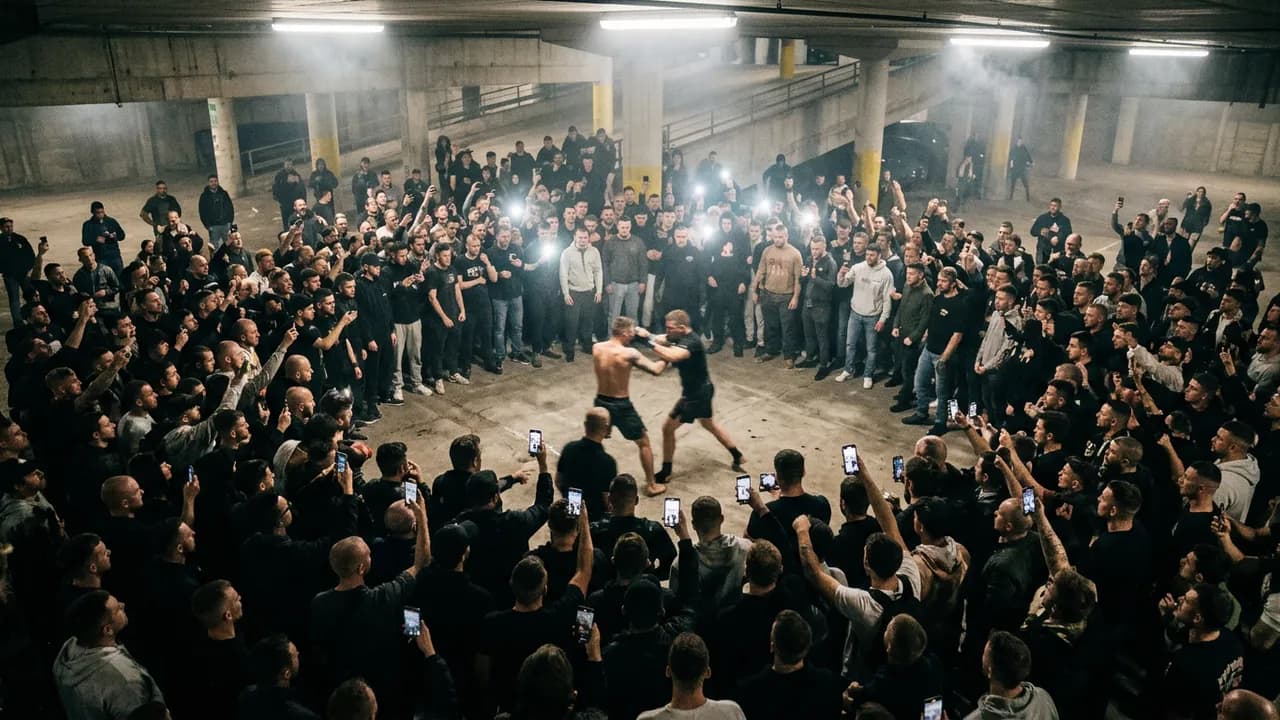
In 2013, in Gothenburg, Sweden, a group of men began organizing and filming fights on bare concrete with no gloves, no rounds, no time limits, and virtually no rules. King of the Streets (KOTS) was born.
KOTS represented something new in the underground fighting world: a deliberate, philosophical commitment to the most extreme possible format. While other organizations added safety measures (gloves, referees, rules), KOTS stripped them away. The concrete surface was not incidental; it was ideological. KOTS argued that fighting on concrete was the only "real" fighting, because the concrete punished every mistake in a way that no padded surface ever could.
The organization's early videos were raw and unpolished, filmed in parking garages and on warehouse floors. But the extremity of the format attracted an audience that found other underground fighting too tame. Today, the KING OF THE STREETS YouTube channel remains the primary archive of KOTS fights, including landmark bouts like Simon "The Savage" vs Ronin.
2015: The Underground Goes to Netflix
Two events in 2015 brought underground fighting to wider attention:
Dawg Fight releases on Netflix: Billy Corben's documentary about Dada 5000 and the Perrine, Florida, backyard fighting scene premiered on Netflix, introducing millions of mainstream viewers to the world of organized backyard fighting. The film was critically well-received and painted a nuanced portrait of the economic and social conditions that gave rise to backyard fighting in Black communities in South Florida.

BKB/BYB Extreme forms: BKB/BYB Extreme was established with its patented triangular Trigon ring, bringing bare knuckle boxing to a new format. The organization would go on to broadcast events on VICE TV, bridging the underground and mainstream media worlds.
2016: Kimbo Dies, Dada Nearly Dies
On February 19, 2016, Kimbo Slice and Dada 5000 fought at Bellator 149 in Houston, Texas. The fight, which was supposed to be the culmination of a rivalry that began in the Miami backyard scene, was widely regarded as one of the worst fights in MMA history. Both men were exhausted and barely functional. Kimbo won by TKO in the third round. Dada 5000 collapsed after the fight and went into cardiac arrest, requiring emergency medical treatment. He survived.
On June 6, 2016, Kimbo Slice died at the age of 42. The official cause of death was heart failure. Kevin Ferguson, the man who started the modern underground fighting movement, was gone.
Kimbo's death was a watershed moment. The man who had proven that underground fighting could attract millions of viewers was dead at 42, a reminder of the physical toll that a life of fighting extracts. But the movement he had started was now too large and too decentralized to depend on any single figure.
2017: Rough N' Rowdy and the Entertainment Model
Rough N' Rowdy, backed by Barstool Sports, began staging amateur boxing events around 2017. The format was different from anything else in the underground world: short fights (3 rounds of 1 minute), untrained fighters, professional production, and a party atmosphere. Rough N' Rowdy demonstrated that underground fighting could be packaged as mainstream entertainment without losing its raw appeal.
Act III: The Modern Era (2018-2022)
2018: BKFC and the Bare Knuckle Revolution
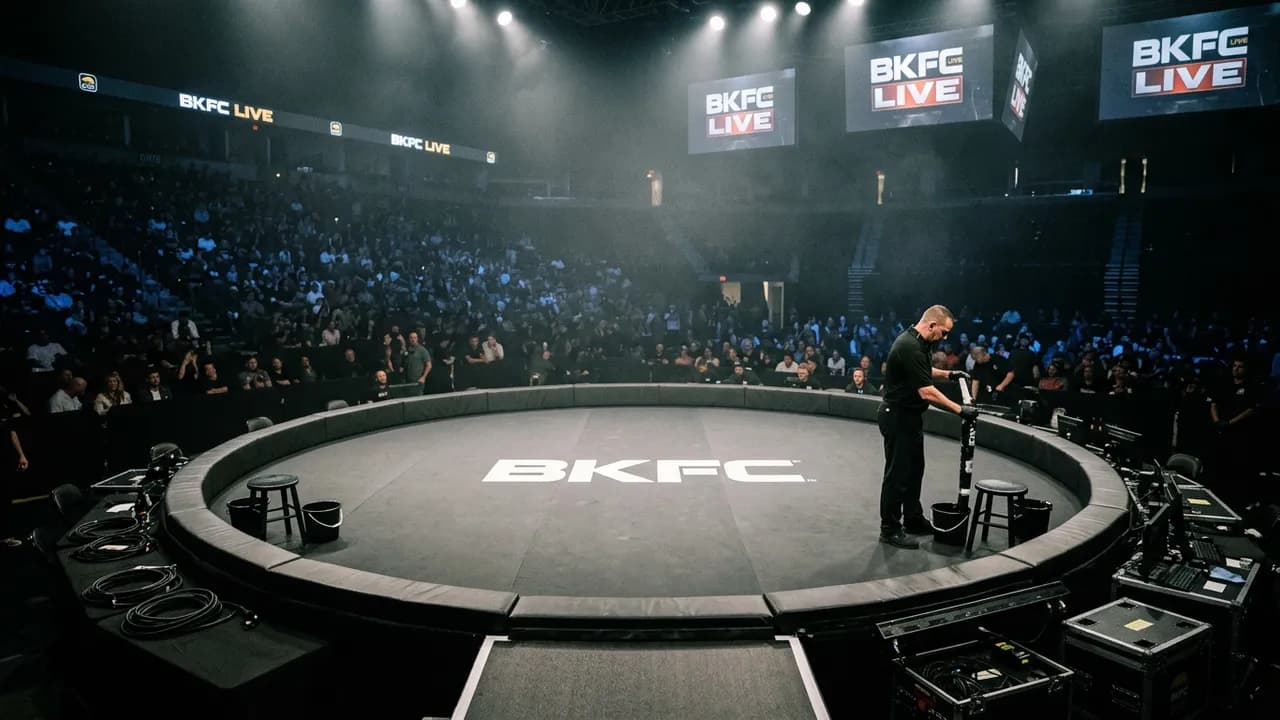
On June 2, 2018, Bare Knuckle Fighting Championship (BKFC) held its first event in Cheyenne, Wyoming. It was the first legally sanctioned bare knuckle boxing event in modern American history. The Wyoming State Athletic Commission's decision to sanction the event was a breakthrough that legitimized bare knuckle fighting as a regulated sport rather than an underground curiosity.
The first BKFC card featured fighters from boxing and MMA backgrounds, and the event attracted significant media attention. The promotion proved that bare knuckle fighting could be conducted safely (or at least safely enough) under athletic commission oversight, with licensed referees, ringside physicians, and drug testing.
BKFC's founding was the single most consequential event in the modern history of underground fighting, because it created a pathway from the underground to legitimacy. For the first time, fighters who had come up in backyard and street fighting scenes had a sanctioned, legal promotion that featured the same raw, ungloved fighting they were accustomed to, but with real purses, real broadcasts, and legal protection.
2019: Top Dog FC Arrives
Around 2019, Top Dog FC emerged in Moscow, Russia, with a format that would make it one of the most-watched fighting organizations in the world. Early events featured bare knuckle fights in a ring made of hay bales in a parking lot. Fighters wore jeans (a mandatory dress code that became the organization's signature) and fought without gloves.
Top Dog FC's production quality was higher than most underground operations from the start, and it improved rapidly. The organization's YouTube channel grew at an extraordinary pace, eventually surpassing 6 million subscribers. Top Dog proved that an underground fighting organization could compete with professional promotions in terms of production value while maintaining the raw, authentic atmosphere that the audience craved.
2020: The Pandemic Boom
The COVID-19 pandemic was an accelerant for underground fighting. When sanctioned combat sports shut down in early 2020, the underground kept fighting. Several factors combined to create a boom:
- Sanctioned events stopped. UFC, boxing, and professional MMA promotions suspended operations for weeks or months. Fans starved for fighting content turned to the underground.
- Underground events continued. Organizations like Streetbeefs, KOTS, and various backyard fight clubs kept operating because they had no athletic commissions to answer to. There were no commissioners to shut them down, no venue contracts to break, no insurance policies to void.
- YouTube consumption surged. With billions of people locked at home, YouTube viewership exploded. Underground fighting channels saw massive subscriber growth.
- New organizations launched. The pandemic era saw the founding or rapid growth of several organizations, including The Scrapyard (founded 2020), Mahatch FC (~2020), and numerous smaller operations.
The Scrapyard, started by Tony Johnson near Gig Harbor, Washington, was a pandemic-era success story. Launched in 2020 when there was little other fighting content available, The Scrapyard grew rapidly on YouTube and Instagram, attracting fighters from across the Pacific Northwest.
The organization would later gain additional attention for continuing to operate even as war engulfed Ukraine in 2022.
Mahatch FC emerged in Kyiv, Ukraine, with its distinctive sandbag ring and mandatory sneakers policy. The organization would later gain additional attention for continuing to operate even as war engulfed Ukraine in 2022.
2021-2022: Expansion and Diversification
The period from 2021 to 2022 saw the underground fighting world expand in every direction:
KOTS spreads across Europe: KOTS expanded from its Swedish base to hold events across multiple European countries. The no-rules fighting model inspired imitators, including FPVS in France, UUF in Denmark, and Holmgang events in Scandinavia and Germany.
Streetbeefs passes 4 million subscribers: Streetbeefs surpassed 4 million YouTube subscribers, cementing its position as the most-watched backyard fighting channel in the world. The organization expanded with a West Coast branch in Las Vegas.
Top Dog goes to arenas: Top Dog FC moved from parking lots to arena events, scaling up its production while maintaining its underground aesthetic. The organization's YouTube subscriber count continued to climb toward and past 6 million.
BKFC goes international: BKFC held events outside the United States, demonstrating that sanctioned bare knuckle fighting had international demand.
The Ukraine conflict: Russia's invasion of Ukraine in February 2022 affected the underground fighting world directly. Mahatch FC continued operating in wartime Kyiv, and several fighters from Russian and Ukrainian organizations found themselves on opposite sides of a real conflict after years of competing in the same circuits.
Act IV: Mainstreaming and the Current Era (2023-2026)
2023: Gamebred Launches
Jorge Masvidal, the former UFC star whose own career began in backyard fights (his amateur record includes fights in various underground venues before his professional MMA career), founded Gamebred Bareknuckle MMA. The organization combined bare knuckle fighting with full MMA rules in a tournament format with prize pools up to $500,000.
Masvidal's involvement was significant because he represented the full circle of underground fighting: a man who came up fighting in backyards, achieved fame and fortune in the UFC, and then returned to his roots by founding an organization that operated in the space between underground and mainstream. Gamebred Bareknuckle MMA attracted experienced MMA fighters who were willing to compete without gloves for the significant prize money.
2024: Conor McGregor Buys Into BKFC
In 2024, Conor McGregor acquired a minority ownership stake in BKFC. The most commercially successful fighter in MMA history investing in bare knuckle fighting was a signal that the mainstream combat sports world now viewed the underground-adjacent space as a legitimate business opportunity.
McGregor's investment brought unprecedented mainstream media attention to BKFC and to bare knuckle fighting generally. The move also raised BKFC's profile among casual combat sports fans who had never previously engaged with bare knuckle content.
2024-2025: The Platform Wars
As underground fighting's audience grew, the question of where and how to distribute content became increasingly important. The landscape diversified:
- YouTube remained the primary platform for most organizations, but its content moderation policies created ongoing tension with violent fight content.
- Pay-per-view models were adopted by BKFC, Top Dog FC, KOTS, and others, creating direct revenue streams.
- Telegram became an important distribution channel, particularly for European organizations operating illegally.
- BitChute and alternative platforms provided hosting for content that YouTube removed or demonetized.
- Organization-specific apps and websites (like the BKFC app) created direct relationships between organizations and their audiences.
2025-2026: The Current Landscape
As of 2026, the underground fighting world is larger, more diverse, and more commercially significant than at any point in its history. Several trends define the current moment:
The underground-to-mainstream pipeline is established. Fighters now have a recognizable career path from backyard fights to underground organizations to semi-sanctioned events to fully sanctioned promotions like BKFC. This pipeline did not exist a decade ago.
Production quality continues to rise. The gap between underground fighting content and mainstream combat sports broadcasts has narrowed dramatically. Organizations like Top Dog FC and BKFC produce content that rivals anything from the UFC or professional boxing in terms of camera work, editing, and presentation.
The no-rules movement continues to grow. KOTS and its imitators have expanded despite aggressive law enforcement opposition. The philosophical appeal of no-rules fighting, the argument that it represents the purest form of combat, continues to attract fighters and audiences.
Bare knuckle fighting is mainstreaming. BKFC's success and Conor McGregor's investment have moved bare knuckle fighting from the fringe to the edges of the mainstream. Former UFC champions compete in BKFC, and the promotion's events receive coverage from major sports media outlets.
05 / Up next / Timeline: Key Dates in Underground Fighting History
The global network is denser. New organizations continue to emerge in countries and regions that previously had no organized underground fighting scene. The underground fighting world is no longer concentrated in the United States, Russia, and Scandinavia; it is genuinely global.
Timeline: Key Dates in Underground Fighting History
| Year | Event |
|---|---|
| 1700s | Bare knuckle prizefighting established in England |
| 1838 | London Prize Ring Rules published |
| 1867 | Marquess of Queensberry Rules introduced; bare knuckle goes underground |
| 1920s | Vale Tudo fights begin in Brazil |
| 1993 | First UFC event; Vale Tudo goes mainstream |
| ~1994 | East Bay Rats begin hosting fight nights in Oakland |
| 2003 | Kimbo Slice's first viral backyard fight |
| 2005 | YouTube launches, creating the infrastructure for viral fight content |
| 2007 | Kimbo Slice signs with EliteXC, begins professional MMA career |
| 2008 | Streetbeefs founded; Kimbo on CBS; EliteXC folds |
| ~2011 | Strelka emerges in St. Petersburg, Russia |
| 2013 | KOTS founded in Gothenburg, Sweden |
| 2015 | Dawg Fight premieres on Netflix; BKB/BYB Extreme forms |
| 2016 | Kimbo Slice dies at age 42 |
| ~2017 | Rough N' Rowdy launches with Barstool Sports |
| 2018 | BKFC holds first sanctioned bare knuckle event (June 2, Wyoming) |
| ~2019 | Top Dog FC emerges in Moscow |
| 2020 | COVID-19 pandemic accelerates underground fighting growth; The Scrapyard and Mahatch FC founded |
| ~2021 | FPVS emerges in France; KOTS expands across Europe |
| 2022 | Russia-Ukraine conflict impacts Eastern European scene; Mahatch continues in wartime |
| 2023 | Gamebred Bareknuckle MMA launches |
| 2024 | Conor McGregor acquires minority stake in BKFC |
| 2025-2026 | Underground fighting reaches its largest-ever global audience and organizational diversity |
The Figures Who Shaped the Movement
Kimbo Slice (Kevin Ferguson, 1974-2016)
Kimbo Slice is the founding figure of modern underground fighting. His backyard fights in Miami were among the first viral videos in internet history, and his journey from the backyard to professional MMA demonstrated the mainstream potential of underground fighters. Kimbo's death in 2016 was a loss for the entire fighting community, but the movement he started has far outlived him.
Christopher "Scarface" Wilmore
The founder of Streetbeefs, Wilmore created the template for community-oriented backyard fighting with his "Guns Down, Gloves Up" philosophy. His organization has grown to over 4.2 million YouTube subscribers and has inspired numerous imitators.
Jorge Masvidal
Before he was a UFC star, Jorge Masvidal was a backyard fighter. His street fighting roots are documented in videos that circulate widely in the underground fighting community. By founding Gamebred Bareknuckle MMA, Masvidal closed the circle, using his mainstream fame and resources to create an organization that operates in the space he came from.
Dada 5000 (Dhafir Harris)
Dada 5000 was Kimbo Slice's contemporary in the Miami backyard fighting scene and organized his own events in Perrine, Florida. His scene was documented in the 2015 Netflix film Dawg Fight. His rivalry with Kimbo Slice and their infamous fight at Bellator 149 are key chapters in the underground fighting story.
Watch the History on YouTube
The entire history of underground fighting can be traced through key videos available on YouTube. These clips are historical documents that capture the movement at its defining moments.
The Videos That Made History
| Era | Video | Why It Matters |
|---|---|---|
| 2003 | Kimbo Slice vs Big D | The first viral underground fight video. The moment that started the modern movement. |
| 2008+ | Streetbeefs Top Knockouts | The best of the world's largest backyard fighting channel, documenting 15+ years of grassroots fighting. |
| 2011+ | Strelka -- Petrantsov | The Russian street fighting revolution that brought organized mass brawls and tournaments to a global audience. |
| 2013+ | KOTS: Simon vs Ronin | The pinnacle of no-rules fighting. The most skilled fighter in KOTS history on concrete. |
| 2015+ | BKB at the O2 Arena | Bare knuckle boxing filling one of London's biggest venues, proving the sport could go mainstream. |
| 2019+ | Top Dog FC Best Knockouts | Russia's bare knuckle powerhouse delivering knockout after knockout in the hay-bale ring. |
YouTube Channels That Document the History
- Streetbeefs -- The longest-running video archive of backyard fighting (since 2008)
- Tron MMA / Strelka -- Russian street fighting from 2011 onward
- KING OF THE STREETS -- The no-rules movement from 2013 onward
- Top Dog Fighting -- The evolution from parking lot fights to arena events
- BKFC -- The bare knuckle legitimization era
What Comes Next
The history of underground fighting is still being written. Several questions will define the next chapter:
- Will more underground organizations follow BKFC's path to sanctioning and legitimacy?
- Will governments succeed in suppressing no-rules fighting, or will organizations like KOTS continue to outmaneuver law enforcement?
- Will the audience continue to grow, or will the mainstreaming of bare knuckle fighting satisfy the demand that once drove people to the underground?
- Will a fighter emerge from the underground who achieves the cultural impact of Kimbo Slice?
Whatever the answers, the underground fighting movement has proven that it is not a fad. It has survived the death of its founding figure, the hostility of governments, and the competition of a billion-dollar professional fighting industry. It is a permanent part of the combat sports landscape.
For a comprehensive overview of the current scene, see our Ultimate Guide to Underground Fighting. For details on every organization operating today, see our Complete List of Every Underground Fighting Organization.