The mythology of combat sports is full of stories about fighters who came from nothing. No gym memberships, no amateur tournaments, no coaches in their corner -- just raw talent tested in parking lots, backyards, and street corners before the world ever heard their name. Some of these stories are exaggerations. But some of them are true, and the fighters behind them went on to compete at the highest levels of professional mixed martial arts.
The pathway from underground fighting to professional MMA is not a structured pipeline. There is no official "backyard to UFC" development program. But the path exists, and it has been walked by enough fighters to be documented and studied. This article examines how that transition works -- the case studies of fighters who made the jump, the practical steps required, and the realities of turning informal combat experience into a professional fighting career.
The Case Studies: Fighters Who Made the Transition
Kimbo Slice: The Template
Kevin Ferguson, known as Kimbo Slice, is the original backyard-to-professional crossover story. In the early 2000s, grainy videos of Kimbo fighting in backyards in the Perrine neighborhood of Miami circulated on early internet forums and video platforms. These clips -- featuring a massive, bearded man knocking out opponents in unregulated street fights -- became some of the first viral fight videos on the internet.
Kimbo's underground fame attracted the attention of professional fight promoters. He transitioned first to professional MMA, debuting with Cage Fury Fighting Championships in 2007 and then signing with EliteXC, where he headlined a CBS-broadcast event in 2008 that drew over 6.5 million viewers -- one of the largest audiences in MMA history at the time. Kimbo later competed in the UFC, appearing on The Ultimate Fighter Season 10 in 2009, and eventually fought in Bellator before his death in 2016.
What Kimbo's path illustrates:
- Viral fame creates leverage. Kimbo's internet popularity gave him negotiating power that his actual fighting credentials alone would not have provided. Promoters wanted him because he put eyes on the product.
- Raw toughness is not enough. Kimbo's professional career was uneven. His backyard experience gave him power and aggression but not the technical foundation needed to compete consistently against trained professionals. His losses to Seth Petruzelli and Matt Mitrione exposed the gap between street-tested toughness and professional-level skill.
- The brand matters. Kimbo understood, perhaps better than any fighter of his era, that combat sports is entertainment. He cultivated a persona and a brand that transcended his win-loss record.
Jorge Masvidal: From Backyard to BMF
Jorge Masvidal grew up in Miami and was fighting in backyard and street settings as a teenager. Videos of a young Masvidal competing in backyard MMA fights, including a well-known bout against the late Kimbo Slice-affiliated fighter Ray, circulated on underground fight forums years before Masvidal became a professional.
Unlike Kimbo, Masvidal used his underground experience as a springboard into formal training. He began training at the American Top Team gym in South Florida and launched a professional MMA career at age 18, competing in small regional shows before working his way through Bellator, Strikeforce, and eventually the UFC.
Masvidal became one of the biggest stars in MMA history. His five-second knockout of Ben Askren at UFC 239 in 2019, his victory over Nate Diaz for the inaugural BMF title, and his main event bouts against Kamaru Usman made him one of the most marketable fighters in the sport.
What Masvidal's path illustrates:
- Underground experience provides a foundation, not a destination. Masvidal did not try to build a career fighting in backyards. He used that experience as motivation and as a proving ground, then invested years in professional-level training.
- Formal training is non-negotiable. Masvidal's success in the UFC was built on world-class technique developed at one of the best MMA gyms on the planet. His backyard origins gave him toughness and an authentic story, but his skills were forged through disciplined, coached training.
- The path is long. From backyard fights as a teenager to headlining UFC pay-per-view events, Masvidal's journey took nearly two decades of continuous competition and development.
Other Notable Transitions
Dhafir "Dada 5000" Harris: Another Miami backyard fighting figure who followed Kimbo Slice's model into professional MMA. Dada 5000 built an underground following through street fight videos before competing in Bellator, most notably against Kimbo Slice in a 2016 bout that became infamous for its lack of technical quality. His career illustrates the risk of transitioning to professional combat sports without sufficient technical development.
01 / Up next / The Practical Steps: How to Make the Transition
Charlie Zelenoff: While not a professional fighter in any meaningful sense, Zelenoff became one of the most viral figures in underground fighting through his self-filmed confrontations and the attention they generated. His story serves as a cautionary tale about the gap between internet fame and actual fighting ability.
Streetbeefs to regional MMA: Multiple fighters from the Streetbeefs ecosystem have transitioned to amateur and professional MMA. While none have reached the UFC as of this writing, the visibility provided by Streetbeefs' YouTube channel has served as a launchpad for fighters who went on to compete in regional promotions.
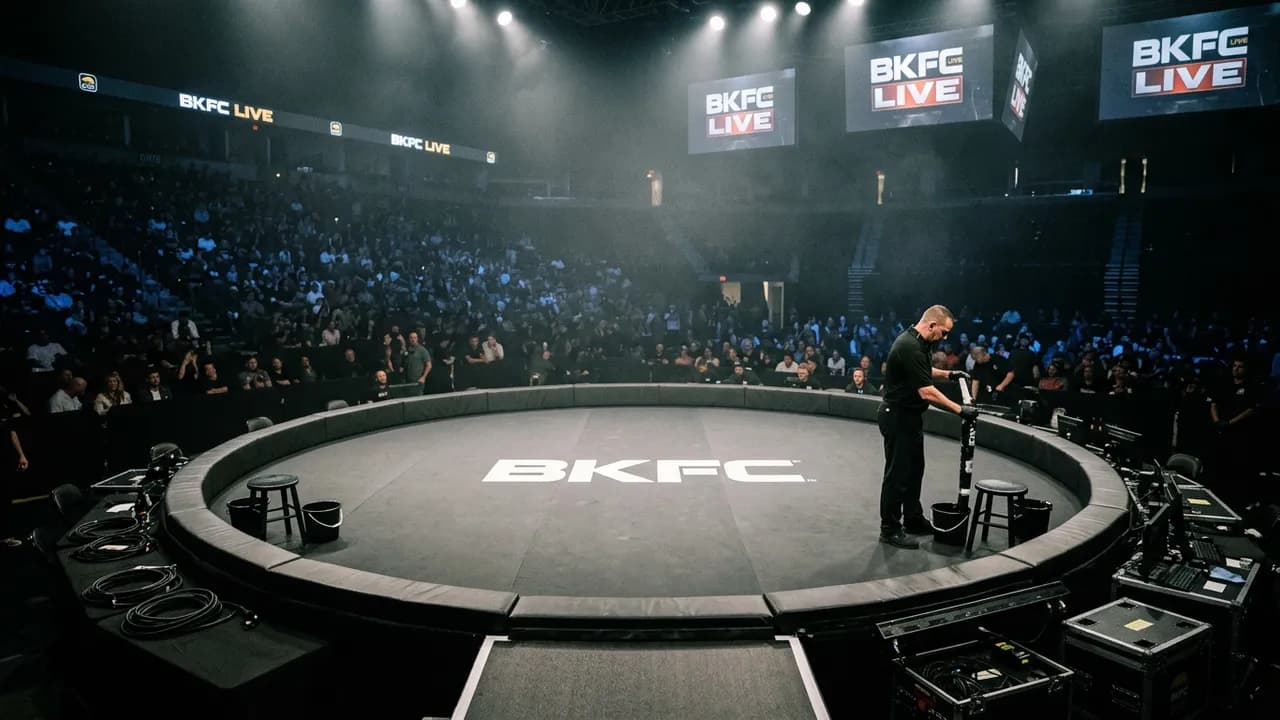
BKFC crossovers: Several fighters have used BKFC as either a stepping stone to or a second career after professional MMA. Eddie Alvarez, a former UFC and Bellator champion, transitioned to BKFC. Mike Perry moved from the UFC to become one of BKFC's biggest stars. These careers demonstrate that the boundary between underground-adjacent promotions and mainstream combat sports is increasingly permeable.
The Practical Steps: How to Make the Transition
Step 1: Get Into a Real Gym
This is the most important step, and there is no shortcut. Backyard fighting tests your heart, your toughness, and your willingness to compete. It does not teach you how to fight at a professional level. Professional MMA requires:
- Striking technique -- boxing, Muay Thai, or kickboxing training from qualified coaches
- Grappling technique -- Brazilian jiu-jitsu and wrestling are essential at every level of professional MMA
- MMA-specific training -- the integration of striking and grappling in a unified fighting system
- Strength and conditioning -- periodized, sport-specific physical development
Find a reputable MMA gym with experienced coaches and an active competition team. Train consistently -- five to six days per week -- for a minimum of one to two years before considering your first professional or sanctioned amateur fight.
The underground fighter training guide provides a comprehensive framework for building a fighter's skill set and conditioning, but it is not a substitute for in-person coaching at a quality gym.
Step 2: Compete in Sanctioned Amateur MMA
Every state with an athletic commission offers an amateur MMA competition pathway. Amateur MMA provides:
- A verifiable fight record that professional promoters and commissions can reference
- Experience fighting under standardized rules with licensed referees and judges
- Medical oversight including pre-fight physicals and ringside physicians
- A progressively challenging competitive environment as you move from local to regional to national-level amateur competition
Organizations like USA Boxing, USA Wrestling, and the International Mixed Martial Arts Federation (IMMAF) provide structured amateur competition frameworks. At the regional level, promotions across the country host amateur MMA events on a regular basis.
Build a meaningful amateur record -- ideally 5 to 10 fights -- before turning professional. The amateur phase is where you discover your strengths, address your weaknesses, and develop the fight IQ that separates amateurs from professionals.
Step 3: Turn Professional
Once you have an amateur record and the endorsement of your coaching team, you can apply for a professional MMA license through your state's athletic commission. Requirements vary by state but typically include:
- A completed application with your amateur fight record
- Medical clearances (physical exam, blood work, brain scan in some states)
- Coach or gym affiliation that can vouch for your training and readiness
- Payment of licensing fees
Your first professional fights will be on small regional shows. This is normal. Every UFC champion started on small cards in front of a few hundred people. The regional circuit is where you build your professional record, develop your skills against increasingly skilled opponents, and attract the attention of larger promotions.
Step 4: Build Your Record and Your Brand
Professional MMA success requires two parallel tracks: fighting ability and marketability.
On the fighting side:
- Win your regional fights convincingly. Finishes (knockouts and submissions) are more valuable than decisions because they demonstrate the kind of exciting, definitive fighting that promoters want on their cards.
- Accept fights against increasingly challenging opponents. A 10-0 record against hand-picked opponents with losing records is less impressive to major promotion matchmakers than an 8-2 record against quality competition.
- Continue improving technically. The fighters who stagnate at the regional level do so because they stop developing. The fighters who ascend are the ones who are noticeably better with each fight.
On the marketing side:
- Build a social media following. Post training content, fight highlights, and behind-the-scenes footage. Tag promotions, fighters, and media outlets. Make yourself visible.
- Develop a persona. This does not mean being fake -- it means knowing who you are as a fighter and communicating that clearly. Are you a knockout artist? A submission specialist? A grinder? A trash talker? An underdog? Your story is part of your value to a promotion.
- Create content. Film your journey. Document your training camps, your fight preparations, and your actual fights. A fighter with a YouTube channel or an active Instagram following brings a built-in audience to any promotion they join.
Step 5: Get Noticed
Major promotions scout talent through several channels:
- Regional promoters who feed fighters to larger organizations. Build relationships with the promoters you work with on the regional circuit. Many regional promotions have informal or formal relationships with larger organizations.
- Social media. UFC and Bellator matchmakers actively scout social media for prospects. A viral highlight or a compelling fighter story can lead to direct contact.
- Management. As your record builds, consider working with a reputable manager who has relationships with major promotion matchmakers. A good manager can open doors that cold outreach cannot.
- The Contender Series model. The UFC's Dana White's Contender Series and similar programs at other promotions are specifically designed to evaluate and sign up-and-coming fighters. Earning a spot on one of these shows is a direct pathway to a major promotion contract.
- Underground-to-pro pipeline organizations. Some organizations like BKFC and Rough N Rowdy serve as intermediate platforms between underground fighting and mainstream combat sports. Strong performances at these promotions generate visibility with scouts and matchmakers.
The Skills Gap: What Underground Fighting Teaches and What It Does Not
What Underground Fighting Teaches
- How to manage fear and adrenaline. There is no substitute for the experience of actually fighting another person. Backyard and underground fighters have already crossed the psychological barrier that stops many trained martial artists from ever competing.
- Toughness and resilience. Fighting in uncontrolled environments, often with minimal safety equipment, builds a baseline of physical and mental durability.
- Comfort with chaos. Professional MMA is structured, but fights are inherently chaotic. Fighters with underground experience are typically more comfortable in scrambles, messy exchanges, and unpredictable situations.
- An authentic story. In a sport that values narratives, having a genuine background in grassroots or underground fighting is a marketable asset. Promotions and fans respond to authenticity.
What Underground Fighting Does Not Teach
- Technical precision. Backyard fights reward aggression and power. Professional MMA rewards technique, timing, and tactical intelligence. The skills that dominate in a backyard -- throwing wild, powerful punches -- are the same skills that get you knocked out by a trained counter-striker at the professional level.
- Defensive sophistication. Underground fighters often have minimal defensive training. At the professional level, defense -- head movement, footwork, takedown defense, guard work -- is what keeps you healthy and extends your career.
- Grappling depth. Most underground fighting organizations are striking-focused. Professional MMA requires deep grappling skills. A fighter with no wrestling or jiu-jitsu background will be overwhelmed on the ground.
- Game planning and fight IQ. Professional fighters study their opponents, develop specific game plans, and make tactical adjustments during fights. This strategic layer is largely absent from underground fighting.
- Career management. Weight cutting, training periodization, injury management, contract negotiation, and media obligations are all part of professional fighting that underground experience does not prepare you for.
The Timeline: How Long Does the Transition Take?
There is no fixed timeline, but here is a realistic framework based on the careers of fighters who have made the transition:
| Phase | Duration | Focus |
|---|---|---|
| Underground/backyard fighting | Variable | Discovering that you want to compete |
| Formal gym training | 1-2 years minimum | Building technical skills and conditioning |
| Amateur MMA competition | 1-2 years (5-10 fights) | Building a verified record, developing fight IQ |
| Regional professional MMA | 2-4 years (8-15 fights) | Building a professional record, attracting attention |
| Major promotion | If achieved | Competing at the highest level |
From the moment a backyard fighter walks into a gym for the first time, reaching a major professional promotion like the UFC or Bellator typically takes a minimum of four to six years of dedicated training and competition. Many fighters take longer. Some never make it, not because they lack talent or toughness, but because the attrition rate in professional combat sports is enormous.
The Honest Reality
For every Kimbo Slice or Jorge Masvidal, there are thousands of underground fighters who never made the transition to the professional level. The reasons vary: injuries, financial constraints, life circumstances, or simply the realization that the gap between backyard fighting and professional MMA is wider than expected.
The underground fighting scene -- Streetbeefs, Strelka, The Scrapyard, Backyard Squabbles, and the dozens of smaller operations around the world -- provides a valuable proving ground. It tests your heart, gives you a taste of real competition, and can reveal whether you have the kind of drive and appetite for combat that a professional career demands.
But the backyard is a starting point, not a destination. The fighters who successfully transition treat their underground experience as the first chapter of a much longer story -- one that requires years of disciplined training, structured competition, and continuous improvement.
If you are an underground fighter considering the transition to professional MMA, the path begins with one step: walk into a gym, find a coach, and start learning. Everything else follows from that decision.
Resources for the Transition
- How to Train for Underground Fighting -- foundational training guide
- Mental Preparation for Underground Fighting -- psychological preparation for competition
- How to Become a Bare Knuckle Fighter -- career pathway for bare knuckle-specific fighters
- How to Try Out for BKFC -- tryout guide for the largest professional bare knuckle promotion
- How to Join Streetbeefs -- getting started with the largest backyard fighting organization