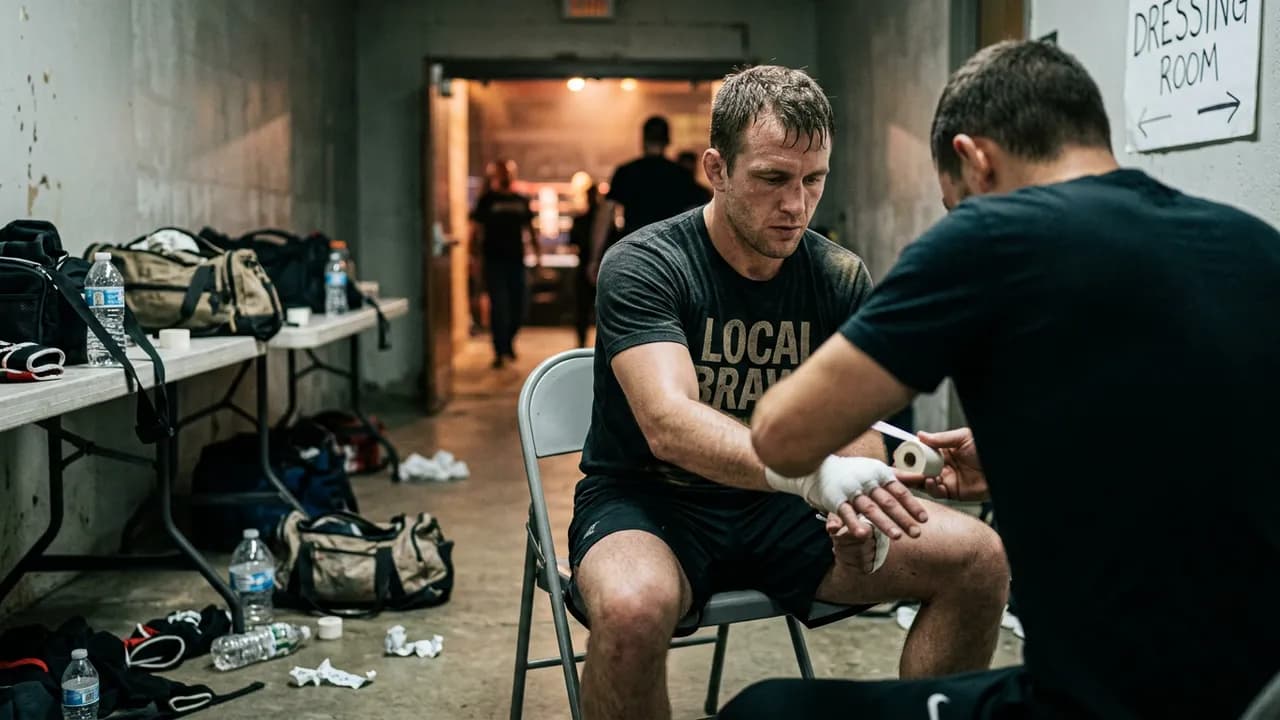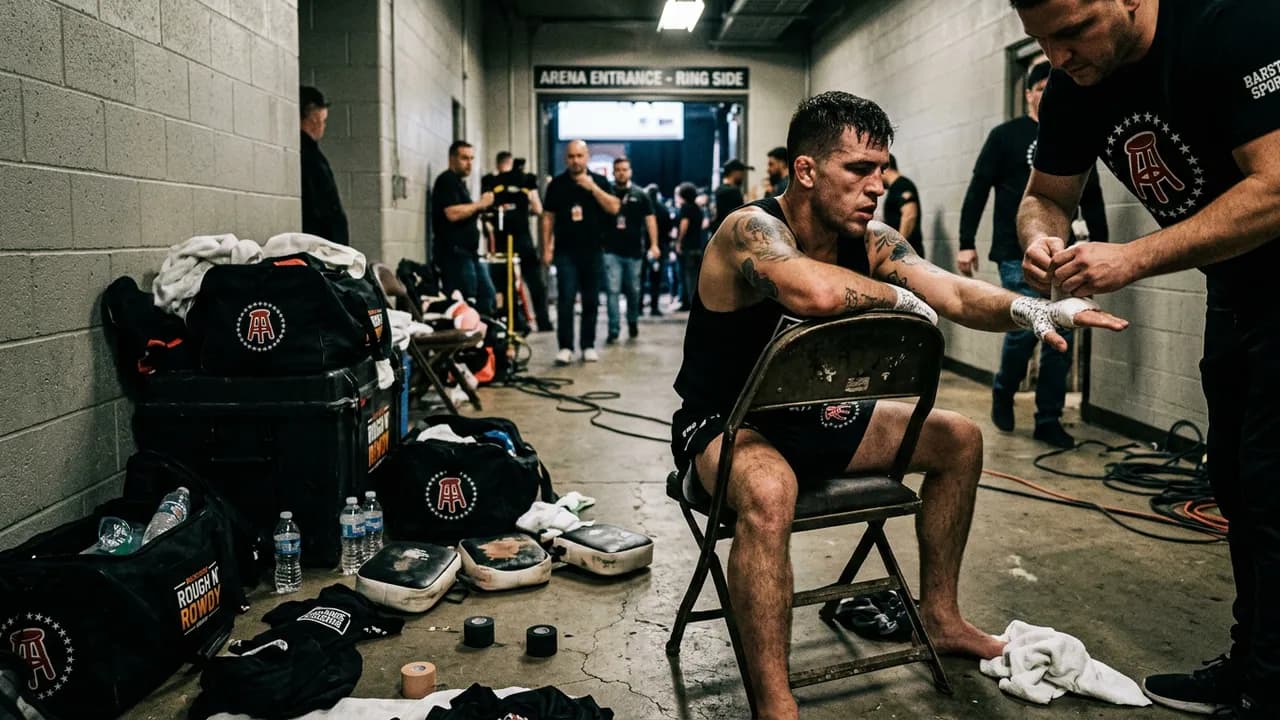
The physical preparation for a fight gets all the attention. The training camps, the conditioning protocols, the sparring sessions, the weight cuts -- these are the visible, measurable elements that fill Instagram highlight reels and training montages. But ask any experienced fighter what the hardest part of competition is and the answer is almost never about the body. It is about the mind.
The mental challenge of fighting is universal. It does not matter whether you are stepping into a Streetbeefs backyard in Virginia, a Rough N Rowdy boxing ring in West Virginia, a Strelka outdoor arena in Russia, or the hay bale ring at a Top Dog event in Moscow. The same psychological forces are at work: fear, adrenaline, self-doubt, and the primal discomfort of voluntarily walking into a situation where another person is going to try to hurt you.
This guide is about the part of fighting that happens between your ears. It covers the psychological challenges that every combat sports competitor faces and the specific techniques and strategies that fighters use to manage them.
Understanding Fear in Fighting
Fear Is Normal
Every fighter experiences fear before a fight. Every single one. The fighters who claim otherwise are either lying or have fought so many times that they have learned to relabel the sensation as something else -- excitement, anticipation, readiness. But the underlying physiological response is the same.
Fear before a fight is not a sign of weakness. It is a sign that your brain is functioning correctly. Your brain's threat-detection system -- centered in the amygdala -- has correctly identified that you are about to engage in an activity that carries real risk of physical harm. The fear response is your brain's way of screaming at you to reconsider. That is its job.
The goal is not to eliminate fear. That is neither possible nor desirable. The goal is to manage it -- to acknowledge the fear, to understand what it is doing to your body, and to perform despite its presence.
The Physiology of Fear
When your brain perceives a threat, it triggers a cascade of physiological responses collectively known as the fight-or-flight response:
- Adrenaline (epinephrine) floods your system. Your heart rate accelerates, your breathing quickens, your pupils dilate, and blood is redirected from your digestive system to your muscles.
- Cortisol is released. This stress hormone sharpens your alertness but, in excess, impairs fine motor control and cognitive processing.
- Your muscles tense. This prepares you for explosive movement but can also make you stiff and slow if the tension is excessive.
- Tunnel vision may develop. Peripheral awareness narrows as your brain focuses intently on the perceived threat.
- Time perception shifts. Stressful situations often make time feel like it is moving slower (or, conversely, like events are happening too fast to process).
These responses are designed to help you survive a sudden physical threat. The problem is that a fight is not a sudden threat -- it is a prolonged, voluntary engagement that requires sustained technical skill, strategic thinking, and cardiovascular endurance. The fight-or-flight response, left unmanaged, burns through your energy reserves at an unsustainable rate and degrades the fine motor skills that make your technique effective.
Adrenaline Management
The Adrenaline Dump
The single most common experience reported by first-time fighters -- across every organization, every format, every skill level -- is the adrenaline dump. It happens in the first 30 to 60 seconds of the fight. Your body, flooded with adrenaline, goes into overdrive. You throw everything you have, moving at a frantic pace with maximum intensity. And then, abruptly, you crash. Your legs feel heavy. Your arms feel like they are filled with wet sand. You cannot catch your breath. You are gassed out, and the fight has barely started.
The adrenaline dump ruins more first fights than any lack of technical skill. A fighter with moderate ability but controlled adrenaline will almost always beat a fighter with superior technique who gases out in 30 seconds.
Techniques for Managing Adrenaline
1. Controlled Breathing
Breathing is the single most powerful tool you have for regulating your physiological state. When adrenaline spikes your heart rate and triggers rapid, shallow breathing, consciously slowing and deepening your breath sends a signal to your nervous system that the threat level is manageable.
Box breathing is the gold standard technique used by military special forces, first responders, and combat athletes:
- Inhale through your nose for four seconds
- Hold your breath for four seconds
- Exhale through your mouth for four seconds
- Hold empty for four seconds
- Repeat
Practice box breathing daily -- not just before fights, but as a regular habit. The more familiar the pattern is to your nervous system, the more effectively it will work under the extreme stress of fight night.
2. Progressive Muscle Relaxation
During the fight, focus on exhaling sharply with every punch you throw. This is called combat breathing or "breathing with your strikes." It serves a dual purpose: it ensures you are breathing (many fighters unconsciously hold their breath during exchanges, which accelerates fatigue) and it helps you maintain rhythm and composure.
2. Progressive Muscle Relaxation
Tension is the enemy of effective fighting. Tight shoulders, a clenched jaw, and rigid limbs drain energy and reduce the speed and fluidity of your movements.
Before your fight, systematically tense and then release each major muscle group:
- Tense your fists tightly for five seconds, then release completely
- Shrug your shoulders up to your ears for five seconds, then drop them
- Clench your jaw for five seconds, then let it go slack
- Tense your legs for five seconds, then relax
This technique teaches your body the difference between tension and relaxation and gives you the ability to consciously release tension when you notice it building during a fight.
3. Pre-Fight Physical Warm-Up
A thorough warm-up before your fight burns off some of the excess adrenaline and brings your body to an optimal activation level. Shadow boxing, pad work, light jogging, and dynamic stretching all raise your heart rate gradually and channel the nervous energy into productive movement rather than letting it build up as static tension.
Do not skip the warm-up. Walking from a cold, anxious state directly into a fight maximizes the shock of the adrenaline dump. A warm, primed body handles the transition to fight intensity far more smoothly.
Visualization and Mental Rehearsal
What Visualization Is
Visualization is the practice of mentally rehearsing your fight in vivid, detailed imagery. You close your eyes and see yourself -- in first person -- executing your game plan. You see your jab landing. You feel your feet moving. You hear the crowd. You see your opponent's reactions and you respond to them.
Why It Works
Neuroimaging research has demonstrated that the brain activates many of the same neural pathways during vivid mental rehearsal as it does during actual physical performance. Visualization does not replace physical training, but it supplements it by reinforcing the motor patterns and decision-making sequences you have trained in the gym.
More practically, visualization prepares your brain for the experience of fighting. The more vividly and frequently you have mentally rehearsed a fight, the less novel and shocking the actual experience feels. Novelty is a major contributor to the stress response -- your brain panics partly because it does not know what to expect. Visualization reduces that novelty.
How to Practice
Set aside 10 to 15 minutes each day in the weeks leading up to your fight. Find a quiet space, close your eyes, and walk through your fight from beginning to end:
- See the venue. Visualize the fighting area, the crowd, the cameras. If you know what the venue looks like (from YouTube footage of previous events), use that imagery. If not, construct a plausible scene.
- Feel the walk-out. Visualize yourself walking to the fighting area. Feel the adrenaline, the nerves, the energy of the crowd. Practice managing your breathing as you walk out.
- See the opening seconds. Visualize the referee starting the fight. See yourself moving forward with composure, establishing your jab, controlling distance.
- Rehearse your game plan. See yourself executing the specific combinations, defensive movements, and strategies you have trained. If you plan to work behind the jab and throw the cross when your opponent drops their guard, see that sequence in vivid detail.
- Visualize adversity. This is critical. Do not only visualize things going perfectly. See yourself getting hit. See yourself getting hurt. See yourself tired in the late rounds. And then see yourself responding -- recovering your composure, adjusting your tactics, fighting through the adversity. This is where mental toughness is built.
- Visualize the finish. See the fight ending with your hand raised. Feel the relief, the satisfaction, the accomplishment.
Building a Pre-Fight Routine
Why Routines Matter
A pre-fight routine creates a sense of control and familiarity in what is otherwise an unpredictable, high-stress environment. When your brain is anxious and searching for stability, a familiar sequence of actions provides an anchor.
Professional fighters across every discipline rely on pre-fight routines. These routines are not superstition -- they are functional psychological tools that transition the mind from a state of anxiety to a state of focused readiness.
Building Your Routine
Your pre-fight routine should cover the final one to two hours before your fight. It should include:
Physical elements:
- A structured warm-up (shadow boxing, pad work, light movement)
- Dynamic stretching
- Hand wrapping (if applicable to your format)
Mental elements:
- A visualization session (5 to 10 minutes)
- Controlled breathing (box breathing or similar)
- A music playlist or specific audio that puts you in the right mental state -- many fighters use headphones to block out external noise and control their auditory environment
Practical elements:
- Equipment check (mouthguard, cup, gloves, wraps)
- Hydration and light nutrition (a small amount of water and easily digestible carbohydrates)
Practice your routine before sparring sessions and training fights so that it is second nature on fight night. The routine itself should be calming and focusing, not a source of additional stress.
Managing Self-Doubt
The Inner Critic
Self-doubt is the quieter, more insidious cousin of fear. It does not hit you all at once like adrenaline. It creeps in during the days and weeks before a fight, whispering questions: What if I am not ready? What if I get knocked out? What if I embarrass myself?
05 / Up next / Techniques for Managing Self-Doubt
Every fighter hears this voice. The difference between fighters who perform well and fighters who crumble is not the presence or absence of self-doubt -- it is how they respond to it.
Techniques for Managing Self-Doubt
Preparation as confidence. The single most effective antidote to self-doubt is thorough preparation. When the voice in your head says "you are not ready," you need to be able to answer it with evidence: the hours in the gym, the sparring rounds, the conditioning work, the technical drills. Preparation does not guarantee victory, but it provides a factual foundation for confidence.
Process focus over outcome focus. Self-doubt feeds on outcome anxiety -- the fear of losing, of getting hurt, of public humiliation. Shift your focus from the outcome to the process. Instead of thinking "I need to win," think "I need to execute my jab, move my feet, and control my breathing." Focusing on specific, controllable actions displaces the abstract anxiety about results.
Acceptance. Accept that self-doubt is part of competition. Do not fight it. Do not try to suppress it. Acknowledge it, and then redirect your attention to your preparation and your game plan. The doubt does not go away, but it stops running the show.
Talk to other fighters. If you have access to a gym community or training partners who have competed, talk to them about their experiences with pre-fight anxiety. Discovering that every fighter feels the same way normalizes the experience and reduces its power.
Fight Night Psychology
The Walk-Out
The walk from the back to the fighting area is one of the most psychologically intense moments in combat sports. Everything is real now. The crowd, the cameras, the opponent -- it is all happening.
Use your pre-fight routine and controlled breathing to manage this moment. Focus on your feet. Focus on your breathing. Do not scan the crowd or look for your opponent. Stay in your own space until the fight begins.
The First Exchange
The first time you get hit in a fight -- or the first time you throw a punch and feel it land -- is a psychological reset. All the anxiety, the anticipation, the what-ifs dissolve into the immediate reality of combat. Many fighters describe a sense of calm settling over them once the first exchange happens. The thing they were afraid of has happened, and they are still standing.
If you get hit hard early, do not panic. Reset your guard, move your feet, and breathe. Getting hit is part of fighting. Your response to getting hit is what defines your performance.
Mid-Fight Composure
As the fight progresses, stay focused on the present moment. Do not think about the scorecards. Do not think about the crowd. Do not think about what might happen next. Focus on what is happening right now: where your opponent is, what they are doing, and what your next action should be.
If you are winning, do not get reckless. If you are losing, do not panic. Execute your game plan one technique at a time.
Post-Fight Mental Health
The Emotional Aftermath
Regardless of the outcome, a fight produces an intense emotional response. Winners experience euphoria. Losers experience a range of emotions from disappointment to shame to relief that it is over. Both are normal.
The days after a fight can bring unexpected emotional lows -- a phenomenon sometimes called "post-fight depression." The adrenaline is gone, the goal you trained for has been achieved (or missed), and your body and mind are recovering from an extreme experience. This is normal and temporary.
Healthy Processing
- Talk about the experience. Debrief with your coach, training partners, friends, or family. Processing the experience verbally helps your brain integrate it.
- Review your performance objectively. Watch the footage of your fight with your coach. Identify what you did well and what you can improve. Treat it as a learning experience, not a judgment of your worth.
- Rest. Give your body and mind adequate recovery time before returning to intense training. The mental recovery is as important as the physical recovery.
- Decide on next steps when you are ready. Do not make decisions about your fighting future in the immediate emotional aftermath. Give yourself time to process before deciding whether to compete again.
The Bottom Line
Mental preparation is not a nice-to-have supplement to physical training. It is a fundamental component of fight preparation that determines whether your physical skills actually show up when it matters. Fear, adrenaline, and self-doubt are universal experiences in combat sports. The fighters who manage them effectively perform closer to their potential. The fighters who do not, regardless of their physical talent, underperform or break down entirely.
Start training your mind with the same intentionality that you train your body. Practice controlled breathing. Visualize daily. Build a pre-fight routine. Normalize the fear. And when fight night comes, trust that the work you have done -- physical and mental -- has prepared you for the moment.
For physical preparation guidance, see the underground fighter training guide. For organization-specific application guides, see our articles on Streetbeefs, BKFC, Rough N Rowdy, and King of the Streets.