You have been watching the fights on YouTube for months. You have told yourself that you could do it. And now you have decided to stop watching from the sidelines and actually step into a ring, a backyard, or whatever patch of ground happens to be the arena.
Good. But before you sign up for anything, you need to understand exactly what you are getting into -- and prepare accordingly. Walking into your first underground fight without proper preparation is not tough, it is reckless. The fighters who perform well on their debuts are not the ones with the most courage. They are the ones who put in the work before fight night and made smart decisions about where, when, and how to compete.
This guide covers everything you need to do before your first fight, from choosing the right organization to the final hours before you step in.
Step 1: Choose the Right Organization
Not all underground fighting organizations are created equal. The rule sets, safety standards, experience levels, and culture vary enormously. Choosing the right organization for your first fight is arguably the most important decision you will make.
For Complete Beginners
If you have limited or no combat sports experience, start with organizations that cater to amateurs and prioritize safety:
-
Streetbeefs: The gold standard for first-time fighters. Streetbeefs matches opponents by weight and experience level, requires government-issued ID to confirm age (18+), and has a referee present for every fight. You can choose from boxing, kickboxing, MMA, or grappling. The sign-up process is straightforward -- join their Facebook group or visit streetbeefshq.com.
-
The Scrapyard: A Streetbeefs affiliate in Gig Harbor, Washington, operating under the same safety standards. Monthly events with boxing, kickboxing, Muay Thai, BJJ, and MMA. Sign up through the Facebook group "Streetbeefs Scrapyard."
-
Rough N Rowdy: Barstool Sports' amateur boxing event series specifically recruits untrained fighters for three-round boxing bouts. If you want a pure boxing experience with a big crowd and a PPV production, this is your entry point.
What to Avoid for Your First Fight
Do not start with organizations that allow no-rules or minimal-rules fighting. King of the Streets operates under a vale tudo-style rule set where knockouts are frequent and the fighting is intense. Similarly, organizations that do not match by weight class or experience level are not appropriate for a debut. Work your way up.
Step 2: Give Yourself Enough Training Time
The single biggest mistake first-time fighters make is signing up for a fight before they have put in adequate training time. The widely recommended minimum is at least six months of consistent training in at least one combat sport before taking your first fight. If you have zero prior experience in boxing, kickboxing, wrestling, or any martial art, push that to a full year.
This is not about being in perfect shape. It is about developing the fundamental skills and reflexes that will keep you safe when someone is trying to hit you in the face.
What to Train
At minimum, you need competency in:
- Striking fundamentals: Proper stance, basic punches (jab, cross, hook, uppercut), footwork, head movement, and basic defense (blocking, slipping, parrying). For a deeper breakdown, see our training guide.
- Basic grappling defense: Even if you are fighting in a boxing-only format, understanding how to maintain your balance and avoid being taken down if things get chaotic is valuable.
- Cardio and conditioning: You need to be able to sustain high-intensity output for the duration of your fight. Most amateur bouts are two to three rounds of two to three minutes each. That does not sound like a lot until you are in there.
Where to Train
Join a legitimate gym. A boxing gym, an MMA gym, a Muay Thai gym -- whatever aligns with the format you plan to fight in. Training at home with YouTube tutorials is better than nothing, but it is not a substitute for live instruction and, critically, for sparring.
Step 3: Start Sparring Early
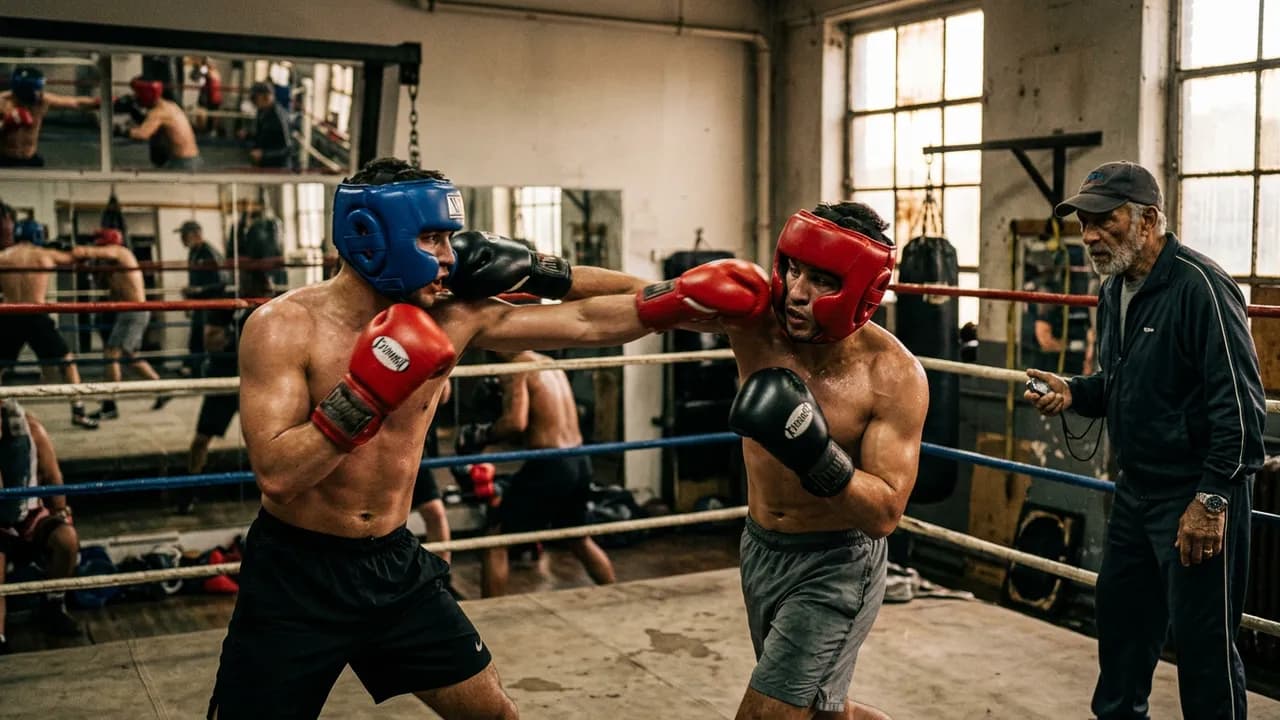
Sparring is non-negotiable. You cannot adequately prepare for a fight without having been hit and having hit someone who is actively trying to hit you back. Shadowboxing and bag work build technique, but they do not prepare you for the psychological and physical reality of a live opponent.
Guidelines for Sparring
- Start light: Your early sparring sessions should be controlled and technical, not wars. The goal is to develop timing, distance management, and defensive reactions.
- Spar with better partners: Training with people who are more skilled than you accelerates your learning. They will expose your weaknesses in a controlled environment rather than on fight night.
- Spar under fight conditions: In the weeks leading up to your fight, do rounds that match the duration and intensity of your upcoming bout. If your fight is three two-minute rounds, spar three two-minute rounds.
- Wear proper gear: Full sparring should include headgear, mouthguard, 16-ounce gloves, and a cup. Do not skip any of it.
Step 4: Get Your Body Right
Physical Conditioning
Your conditioning program should be tailored to the demands of fighting, which means a combination of:
- Cardiovascular endurance: Long runs, cycling, or swimming at moderate intensity (30-60 minutes, three to four times per week).
- High-intensity interval training (HIIT): Sprints, burpees, battle ropes, and circuit training that mimics the explosive, intermittent nature of a fight.
- Strength training: Compound movements -- squats, deadlifts, bench press, pull-ups, rows. You do not need to be a powerlifter, but functional strength matters.
- Core work: A strong core is essential for generating power, absorbing body shots, and maintaining balance.
Weight Management
If the organization you are fighting for uses weight classes, understand what weight class you will be competing in and plan accordingly. Drastic weight cuts are dangerous and should be avoided entirely for your first fight. Fight at or near your natural weight.
Medical Clearance
Get a physical examination before you fight. Some organizations require it; all fighters should do it regardless. Make sure you do not have any conditions that could put you at serious risk.
Step 5: Mental Preparation
The mental side of fighting is where most first-timers fall apart. The adrenaline dump that hits you when you step in front of a live opponent for the first time is unlike anything you have experienced. Your heart rate spikes, your breathing becomes shallow, your limbs feel heavy, and your brain starts screaming at you to get out. This is a normal biological response to perceived danger, and it will absolutely destroy your performance if you are not prepared for it.
Techniques That Work
- Visualization: In the weeks leading up to your fight, spend 10-15 minutes daily visualizing the fight in detail. See yourself walking to the ring, touching gloves, throwing your first combinations, responding to getting hit, and finishing the fight. Visualization primes your nervous system and reduces the shock of the actual experience.
- Controlled breathing: Practice box breathing (inhale four seconds, hold four seconds, exhale four seconds, hold four seconds) and incorporate it into your training. Use it between rounds and during any break in action.
- Acceptance: Accept that you will get hit. Accept that it will hurt. Accept that you might lose. Once you have made peace with those realities, the fear loses most of its power.
- Process focus: Do not fixate on winning or losing. Focus on executing specific techniques and following your game plan round by round.
Managing Fight Night Anxiety
Almost every fighter experiences anxiety before a fight, including professionals with dozens of bouts on their records. The goal is not to eliminate the anxiety but to channel it. Nervous energy is just unused adrenaline. If you have prepared properly, your body knows what to do -- your job is to get your mind out of the way.
Step 6: Know What to Bring
On fight day, you need to show up with the right gear and the right mindset. Here is your checklist:
Mandatory Gear
- Government-issued photo ID (most organizations require proof you are 18 or older)
- Mouthguard (absolutely non-negotiable; a boil-and-bite mouthguard costs under $5 and could save your teeth)
- Athletic cup / groin protector (most organizations require this for male fighters)
- Hand wraps or boxing gloves (depends on the organization and format; check the specific requirements)
- Athletic shoes or wrestling shoes (some organizations fight barefoot; confirm in advance)
- Comfortable athletic clothing (shorts and a compression shirt, or whatever the organization permits)
Recommended Items
- Vaseline (to apply to the face before fighting; reduces the likelihood of cuts from friction)
- Water and sports drinks (stay hydrated throughout the day)
- A towel
- Spare clothing (for after the fight)
- First aid basics (bandages, antiseptic, ice packs)
- A corner person (a friend, training partner, or coach who can advise you between rounds and throw in the towel if needed)
What NOT to Bring
- Ego that writes checks your preparation cannot cash
- Friends who will pressure you to fight recklessly or refuse to stop
- Alcohol or drugs of any kind (most organizations prohibit fighting under the influence, and you should want to be sober for your own safety)
Step 7: Understand What to Expect on Fight Day
Before the Fight
- Arrive early. Give yourself time to settle in, warm up, and get familiar with the environment.
- Check in with the organizers. Show your ID, sign any waivers, confirm your weight class and opponent, and clarify the rules.
- Warm up properly. Light shadowboxing, dynamic stretching, and pad work (if you brought a partner) will get your muscles ready and calm your nerves.
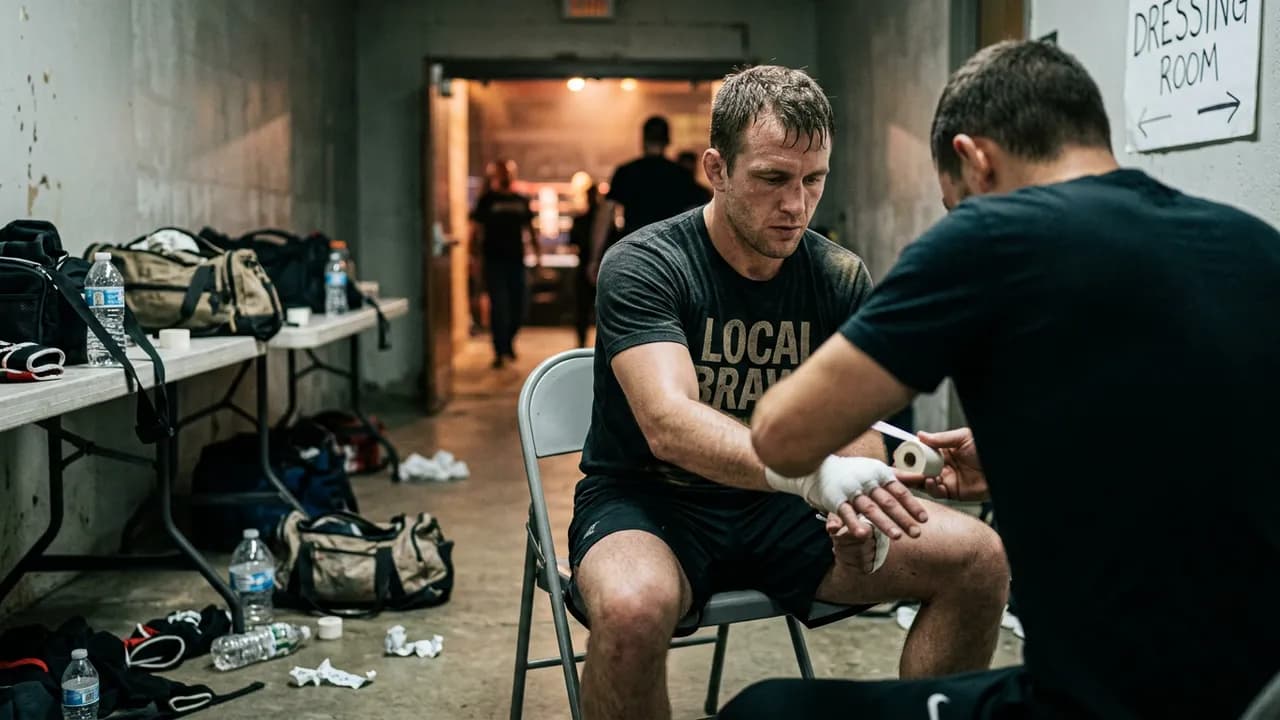
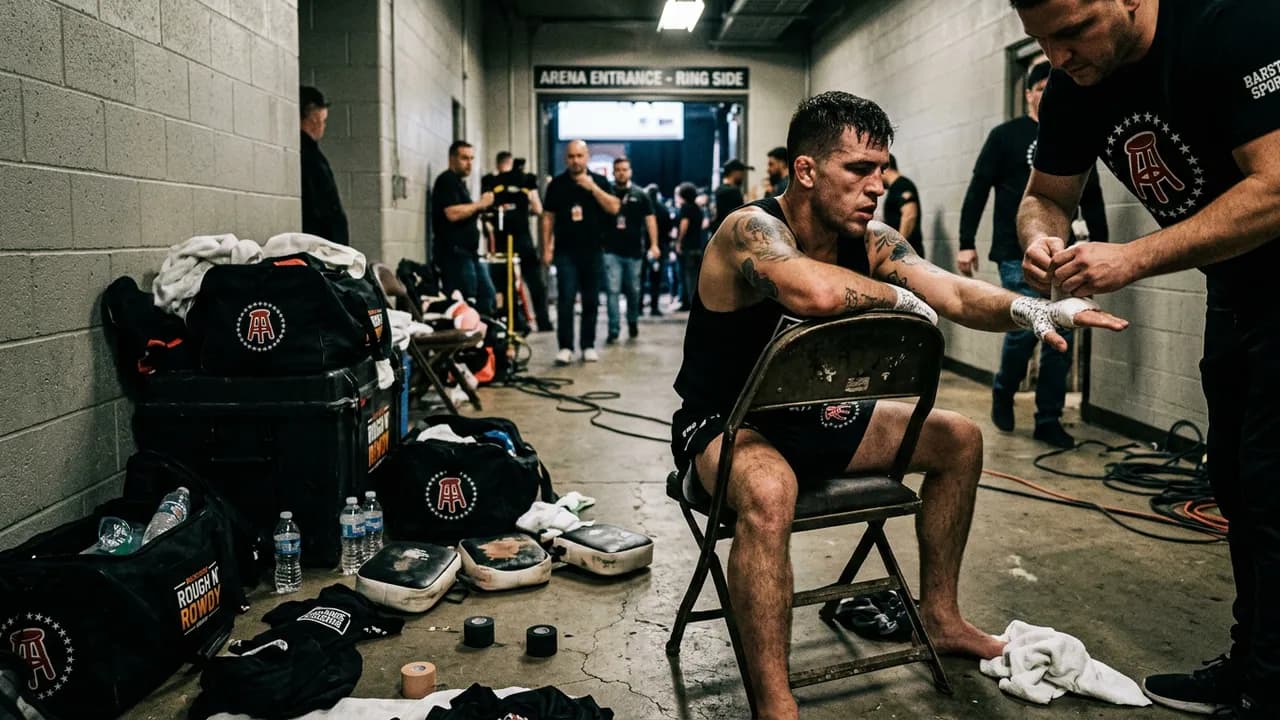
- Wrap your hands (if applicable). If you are fighting with gloves, wrap your hands before gloving up. If you are in a bare knuckle format, follow the wrapping rules for that organization. See our hand wrapping guide for details.
During the Fight
- Start slow. The number one mistake first-timers make is going full speed in the first 30 seconds, burning through their adrenaline, and having nothing left by the end of the first round. Feel your opponent out. Establish your jab. Find your range.
- Breathe. Exhale with every punch. Breathe between exchanges. A fighter who stops breathing is a fighter who gasses out.
- Keep your hands up. Under the stress of a real fight, your guard will drop. Consciously remind yourself to bring your hands back to your face after every combination.
- Listen to your corner. If you brought a corner person, trust their eyes. They can see things you cannot when you are in the middle of the action.
- Do not panic if you get hurt. You will get hit. It will sting. Clinch if you need time, move laterally, and recover.
After the Fight
- Show respect to your opponent. Win or lose, shake hands or embrace. The underground fighting community is small, and sportsmanship matters.
- Get checked out. If you took significant head shots, had any loss of consciousness, or feel dizzy, nauseous, or confused, seek medical attention immediately. Do not dismiss potential concussion symptoms.
- Cool down and hydrate. Your body just went through an extreme physical event. Drink water, eat something, and give yourself time to come down from the adrenaline.
Safety First: Non-Negotiable Rules
Fighting is inherently dangerous. Underground fighting, which operates outside the oversight of state athletic commissions and without mandatory ringside physicians, carries additional risks. Minimize those risks by following these rules:
- Never fight without a referee present. No exceptions.
- Never fight an opponent who significantly outweighs you or has vastly more experience.
- Never fight under the influence of alcohol or drugs.
- Always wear a mouthguard and cup.
- Have a plan for medical emergencies. Know where the nearest hospital is. Have someone present who can call 911 if needed.
- Stop if something feels seriously wrong. A cracked rib, a dislocated shoulder, impaired vision -- these are not things to fight through. There is no title on the line. Live to fight another day.
The Bottom Line
Your first underground fight will be one of the most intense experiences of your life. The fighters who have the best outcomes -- win or lose -- are the ones who train seriously, prepare mentally, choose the right organization, and respect the inherent dangers of what they are doing.
Do not rush it. Put in the work. Show up prepared. And when the moment comes, trust your training and let your hands go.
For a detailed training plan, read our Underground Fighter's Training Guide. For gear recommendations, see Essential Gear for Bare Knuckle Fighting.