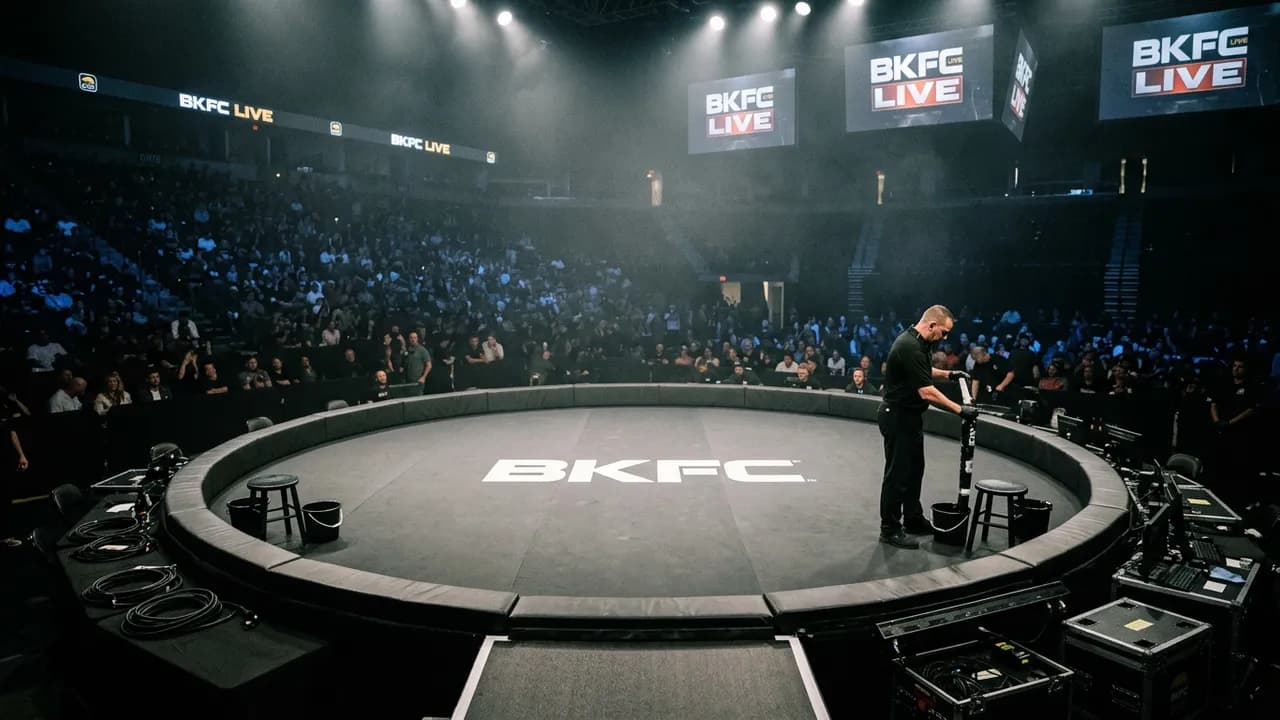
Bare Knuckle Fighting Championship (BKFC) is the largest professional bare knuckle boxing promotion in the world. Founded in 2018 by David Feldman, BKFC operates as a fully licensed, state-regulated combat sports promotion, with events sanctioned by state athletic commissions across the United States and in international markets. Unlike underground or semi-sanctioned organizations, BKFC fighters compete under the authority of the same regulatory bodies that oversee professional boxing and MMA.
BKFC has grown rapidly -- fueled by marquee signings like Mike Perry, Eddie Alvarez, and the organization's partnership with Conor McGregor -- into a promotion that regularly fills arenas and generates significant pay-per-view revenue. For fighters who want to compete at the highest level of bare knuckle boxing, BKFC is the destination.
The promotion actively scouts new talent through open tryouts, the Prospects Series, and fighter submissions. This guide covers every step of that process.
Understanding BKFC's Structure
Before applying, understand what makes BKFC different from other fighting organizations.
Full Athletic Commission Sanctioning
Every BKFC event is sanctioned by a state athletic commission. This means:
- Pre-fight medical examinations are required. Fighters undergo physicals, blood work (including tests for HIV, Hepatitis B, and Hepatitis C), and may require an ophthalmological exam and brain MRI depending on the state.
- Ringside physicians are present at every event and have the authority to stop fights.
- Drug testing is conducted in accordance with state commission requirements.
- Licensed referees and judges officiate all bouts.
- Insurance is provided for fighters competing on BKFC cards.
This regulatory framework means that the pathway to fighting at BKFC involves more administrative steps than applying to an unsanctioned organization, but it also means significantly greater fighter protections.
The Format
BKFC fights are bare knuckle boxing. Fighters wear wrist wraps but no gloves. Bouts take place in a circular ring (no corners) and are typically five rounds of two minutes each, with championship fights potentially going longer. Only punches are legal -- no kicks, elbows, knees, or grappling.
Fighter Pay
BKFC pays its fighters. Entry-level fighters can expect purses starting in the range of $2,000 to $5,000 per fight, with pay scaling upward significantly for established fighters and headliners. Performance bonuses for knockouts and Fight of the Night awards supplement base pay. The promotion's growing revenue stream suggests continued improvement in fighter compensation.
The Tryout Application Process
Step 1: Submit Your Fighter Inquiry at BKFC.com
The official starting point is the BKFC fighter inquiry form, accessible at bkfc.com/tryouts (or through the "Fighter Tryouts" link on the main BKFC website). This form is BKFC's primary intake channel for new fighter prospects.
The form asks for:
- Full name
- Date of birth and age
- Weight and height
- Contact information (email and phone number)
- Location (city and state -- this determines which tryout sessions you are eligible for)
- Combat sports experience -- this is critical. Include your full record in any sanctioned combat sport: professional or amateur boxing, MMA, kickboxing, Muay Thai, or any other recognized discipline. List specific promotions, opponents, and outcomes if possible.
- Fight footage -- links to video of your fights are strongly encouraged. BKFC's matchmaking team reviews submitted footage as part of the evaluation process.
- Social media handles -- your Instagram, TikTok, YouTube, or other platforms where the promotion can assess your following and content.
Submit the form and wait for contact from the BKFC tryouts management team. They will reach out when a tryout session is scheduled in your region.
Step 2: Receive a Tryout Invitation
BKFC holds open tryout sessions in cities across the United States throughout the year. The locations and dates of these tryouts rotate, and not every city hosts tryouts on a regular schedule. When a session is scheduled near you, the tryouts team will contact applicants in that region with the details.
Tryout invitations include:
- Date, time, and location of the tryout
- What to bring (typically your own hand wraps, mouthguard, and athletic attire -- the promotion provides the rest)
- Any pre-tryout requirements (such as having an up-to-date physical or medical clearance)
Step 3: Attend the Tryout
BKFC tryouts are structured evaluations designed to assess whether a fighter has the skills, physicality, and entertainment value to compete on the BKFC roster.
What happens at a BKFC tryout:
- Registration and check-in. You arrive at the tryout venue, sign in, and complete any required paperwork, including liability waivers and medical questionnaires.
- Pad work and bag work. You will be asked to demonstrate your striking skills on pads held by BKFC trainers or evaluators, and on heavy bags. This is your chance to show your technique, power, speed, and combination fluency. Evaluators are watching your fundamentals: hand positioning, footwork, defensive movement, and punching mechanics.
- Controlled sparring. The centerpiece of the tryout is controlled sparring with other tryout participants. This is not a full fight -- the intensity is moderated and evaluators are watching your ability to apply your skills against a live opponent. They assess your composure, ring IQ, defensive capability, and willingness to engage.
- Fitness evaluation. Your conditioning will be assessed, either through specific drills or simply through how well you hold up across the pad work and sparring portions of the tryout.
- Interview and assessment. BKFC staff, which may include matchmakers, trainers, and in some cases BKFC President David Feldman himself, will speak with you about your background, goals, and fighting style. This is also where your personality and camera presence are evaluated -- BKFC is a media product and fighters who are compelling off-camera as well as on it have an advantage.
Step 4: Post-Tryout Evaluation
After the tryout, the BKFC team reviews all participants and determines which fighters are viable prospects for the roster. Not everyone who attends a tryout will be offered a contract or even a follow-up opportunity. The evaluation criteria include:
- Technical skill -- clean boxing fundamentals are essential
- Power -- BKFC's audience loves knockouts, and fighters with genuine stopping power are premium commodities
- Durability -- the bare knuckle format is unforgiving, and fighters need to demonstrate they can absorb punishment and continue fighting
- Conditioning -- gassing out is immediately visible and disqualifying at the professional level
- Entertainment value -- personality, energy, and the ability to engage an audience matter in a promotion that depends on PPV sales and social media engagement
- Marketability -- a compelling backstory, a strong social media presence, or a built-in fanbase all increase your value to the promotion
Step 5: The Prospects Series
BKFC has launched the Prospects Series as an intermediate step between open tryouts and a full roster contract. Fighters who impress at tryouts may be selected to compete in Prospects Series events, where they fight in front of BKFC leadership and matchmakers in what functions as the bare knuckle equivalent of a professional sports combine.
02 / Up next / Medical Requirements
Strong performances in the Prospects Series can lead to a contract offer and a spot on a main BKFC event card.
Medical Requirements
Because BKFC operates under state athletic commission oversight, fighters must meet medical licensing requirements before they can compete. These requirements vary by state but typically include:
- Physical examination by a licensed physician within a specified timeframe (usually within 30 to 90 days of the fight)
- Blood work including CBC, metabolic panel, HIV test, and Hepatitis B and C tests
- Ophthalmological exam (dilated eye exam) -- required in most states for combat sports licensing
- Brain MRI or CT scan -- some states require a brain scan, particularly for first-time licensees or fighters over a certain age
- EKG or cardiac screening -- required by some state commissions
These medical requirements apply to all fighters on BKFC cards, including tryout participants who advance to the Prospects Series or main roster. The costs of these exams are typically the fighter's responsibility, though BKFC may assist in certain cases.
Preparation for the Tryout
Technical Preparation
Your striking fundamentals need to be sharp. BKFC evaluators have seen hundreds or thousands of fighters -- they can identify clean technique immediately and they can spot deficiencies just as fast.
Focus areas:
- Straight punches. The jab and cross are the foundation of bare knuckle boxing. Straight punches land with the structurally strongest part of the fist and are less likely to cause hand injuries than hooks and uppercuts.
- Body work. BKFC fights reward fighters who attack the body. The midsection is a safer target for bare fists than the skull, and cumulative body damage slows opponents down.
- Head movement. Without the larger blocking surface that boxing gloves provide, head movement becomes your primary defensive tool. Slipping, bobbing, weaving, and pulling back are essential.
- Footwork. The circular ring eliminates corners, so you need to be comfortable fighting in 360 degrees. Practice lateral movement, pivots, and angle creation.
Physical Preparation
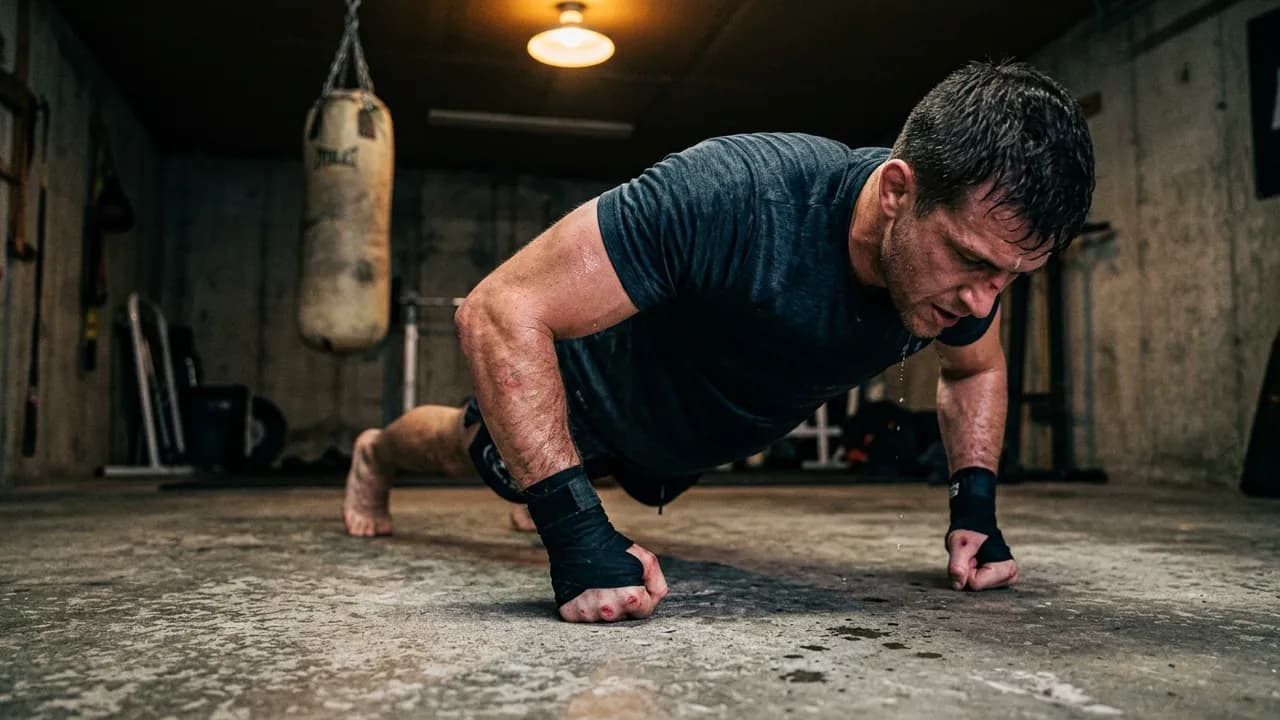
Show up to the tryout in fighting shape. Conditioning is immediately visible and impossible to fake:
- Build a strong aerobic base through running, cycling, or rowing (minimum 30 minutes of sustained moderate cardio, four times per week)
- Layer anaerobic interval training on top: sprint intervals, heavy bag rounds, and high-intensity circuit work
- Strength train twice per week with an emphasis on compound lifts and explosive movements
Hand Conditioning
If you are coming from a gloved boxing or MMA background, your hands are not conditioned for bare knuckle impact. Begin a progressive hand conditioning program at least three to six months before your tryout. The bare knuckle fighter career guide provides a detailed hand conditioning protocol.
Mental Preparation
The tryout environment is high-pressure. You are being evaluated by the people who will decide whether you get a professional fighting contract. Managing your nerves, staying composed during sparring, and presenting yourself confidently in the interview portion all matter. Visualize the tryout, practice your combinations under pressure, and remind yourself that nervousness is normal and manageable.
Alternative Pathways to BKFC
Direct Signing Based on Record
Fighters with established professional records in boxing, MMA, kickboxing, or other combat sports may bypass the tryout process entirely. If you have a notable record and verifiable fight footage, you can submit your credentials through the BKFC website or reach out to the promotion directly. BKFC's roster is populated with former UFC veterans, professional boxers, and experienced Muay Thai fighters who were signed based on their existing records.
Social Media Scouting
BKFC matchmakers actively scout social media for talent. A viral knockout video, an impressive training highlight, or a compelling fighter persona on Instagram or TikTok can attract attention from the promotion. Build your digital presence, tag @bareknucklefc in your content, and make it easy for scouts to find you.
Networking at Events
Attend BKFC events in person. Meet fighters, trainers, and promotion staff. The combat sports world operates heavily on personal connections, and a face-to-face introduction with a matchmaker or trainer who can vouch for you carries more weight than any online application.
Regional and Underground Experience
Competing at organizations like Streetbeefs, Rough N Rowdy, or The Scrapyard builds visible, documented experience that BKFC scouts monitor. Several current BKFC fighters were discovered through their performances in grassroots and semi-sanctioned promotions.
Frequently Asked Questions
Do I need professional fighting experience to try out?
Not necessarily, but the vast majority of successful BKFC tryout candidates have some form of competitive combat sports experience -- amateur boxing, professional MMA, kickboxing tournaments, or documented fights at other organizations. Walking in with zero competition experience is a significant disadvantage.
How old do I need to be?
You must be at least 18 years old. State athletic commissions set age requirements, and most require fighters to be 18 or older.
Does BKFC hold tryouts outside the United States?
BKFC has expanded internationally, and international tryouts or fighter scouting events have been held in various markets. Check the BKFC website for current tryout locations and announcements.
What if I do not pass the tryout?
You can try again. Many successful BKFC fighters did not make it on their first tryout attempt. Continue training, continue competing, and reapply when the next tryout cycle comes around.
Is bare knuckle fighting legal?
BKFC operates under full state athletic commission sanctioning. Their events are legal, regulated, and licensed in every jurisdiction where they compete. Bare knuckle fighting has been explicitly sanctioned by numerous state commissions across the United States.
How long does the tryout process take from application to fight?
Timelines vary. From submitting your initial inquiry to attending a tryout could be weeks or months, depending on the tryout schedule. From a successful tryout to your first fight could be additional weeks to months as medical clearances, matchmaking, and event scheduling are finalized.
Summary
The path to fighting at BKFC begins with the fighter inquiry form at bkfc.com/tryouts. The promotion evaluates prospects through structured tryout sessions that assess striking technique, power, conditioning, durability, and entertainment value. Standout tryout performers may advance to the Prospects Series before earning a roster contract. Fighters with established professional records may be signed directly.
BKFC's status as a fully sanctioned promotion means more administrative requirements than unsanctioned organizations -- medical exams, blood work, and state licensing -- but it also means proper fighter protections, professional officiating, and legitimate compensation.
For detailed preparation guidance, see the bare knuckle fighter career guide and the underground fighter training guide.